AI Vision Inspection For Every Line, Not Just The Pilot
Jidoka's factory AI connects to your PLCs and MES, works with your existing cameras, and allows your own team to manage the system. Start with one production line, then expand to additional lines, SKUs, or plants on the same platform. No line rebuilds, no dedicated data science team, and no pilots limited to a single line.
Every Product Right. Every Process Right. From Day One.

Trusted by leading manufacturers and supply chain companies worldwide













Manual quality control is hurting your reputation and bottom line


Why Vision AI Pilots Stall Before the Second Line
Many vision AI projects prove detection on one line, then stall. US plants run lean crews across multiple shifts, and one quality escape can bring a retailer chargeback or a corrective action request from an OEM. You may have added cameras and MES dashboards for Industry 4.0 already, yet final quality still rests on sampling, fixed rules, and tired eyes late in a shift. Three gaps keep a pilot from becoming a rollout and keep first pass yield below target.

Pilots Never Connect to Your Controls
"A model that works in the demo still has to reach your reject gate and your MES."
Result: a pilot that never leaves the first station.

Every New SKU Restarts the Project
"Rule-based vision inspection systems need retuning at each SKU changeover."
a mini-project. Plants that run many SKUs feel this first, and automated inspection systems that cannot adapt to variation trade speed for accuracy.
Result: retuning work that grows with every new part.

Lean Crews Cannot Run Another Expert Tool
"Few plants can staff a vision engineer on every shift."
through 2033. A system that needs a specialist to tune it stalls on the shift when that specialist is not there.
Result: a rollout that waits on a few experts.
How Jidoka Makes First-Time-Right Manufacturing Default
Across both product inspection and operational workflows, Jidoka delivers closed-loop Vision
AI that sees, decides, and acts in real time, and takes a pilot from one line to every plant without starting over.
AI for Manufacturing That Checks the Part and the Process
Jidoka's industrial AI covers two layers of your operation. KOMPASS™ AI, our AI product inspection system, checks what you make. NAGARE™ AI verifies how each step is done. Run one or both on the same plant floor.
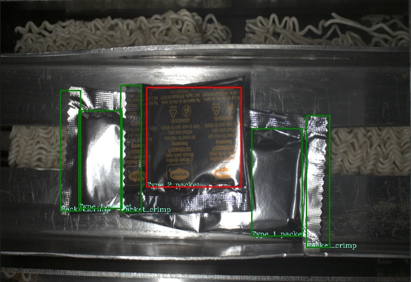
AI vision inspection compares each part with its specifications as it moves down the line. It detects surface flaws, incorrect dimensions, faulty codes, and missing parts before packing.

Factory AI monitors operations at manual and semi-automated stations, checks each step against the SOP, and prompts operators whenever something goes wrong. It verifies the process, not the person.
Tailored Vision Inspection & Process Optimisation for Every Industry
Jidoka combines vision inspection systems for manufacturing with intelligent process optimization to boost accuracy, speed, and productivity. From real-time defect detection to logistics inspection automation, our solutions adapt to industry-specific needs.

Achieve 99.5% accuracy in OEM & component inspection and assembly verification with Jidoka’s vision inspection system for manufacturing. Kompass detects surface defects, missing parts, and label errors with real-time defect detection, while Nagare ensures precise assembly with automated process control. Improve throughput, reduce recalls, and maintain compliance in high-speed automotive manufacturing lines.

Ensure consistent product quality with AI vision inspection for packaging, labeling, and sealing in FMCG production. Kompass delivers image-based quality inspection at high speeds, while Nagare supports workflow optimization in packing and kitting. Prevent mislabeling, reduce waste, and maintain brand reputation in fast-moving consumer goods manufacturing.

Boost operational accuracy with vision inspection systems for logistics. Kompass automates logistics inspection for labeling, barcodes, and product verification, while Nagare improves inventory record accuracy with automated counting. Reduce errors in picking, packing, and shipping, ensuring smooth, cost-effective warehouse operations.

Guarantee compliance with quality control using vision systems in pharmaceutical packaging and assembly. Kompass ensures label and text verification for regulatory standards, while Nagare enables process optimisation for kit assembly. Minimize product recalls, prevent counterfeiting, and maintain strict production integrity in pharmaceutical manufacturing.

Achieve defect-free electronics production with machine vision systems that detect soldering issues, missing components, and assembly errors. Kompass offers inline vision inspection for precision, while Nagare streamlines assembly workflows. Improve product reliability, reduce warranty claims, and maintain quality in fast-paced electronics manufacturing.

Strengthen quality assurance with smart camera inspection for diverse manufacturing processes. Kompass enables real-time defect detection across assembly lines, while Nagare supports continuous process improvement. Minimize downtime, improve output quality, and reduce production waste across varied industrial applications.
Our Industry Impact
48+
Trusted Customers Worldwide
6
Served Industry Verticals
100+
Successful Implementations
300Mn+
Product Inspections Every Day
Five Reasons Plant Teams Scale With Jidoka

Run on the Equipment You Already Own

Expand Line by Line Without a New Project

Let Your Quality Team Retrain the System

Keep Video and Data on Your Network

Give Your Quality Team Root-Cause Evidence




Real Results from Industry Leaders


AI Vision Inspection FAQs for US Manufacturers
How does AI vision inspection work on a production line?

AI vision inspection, also called AI visual inspection or automatic visual inspection, uses industrial cameras and vision AI models to judge each part as it passes. The model compares each image with what a good part looks like and sends a pass or reject signal to your line controls within the cycle time. KOMPASS™ AI detects defects with 99.5% accuracy, compared to about 90% for manual inspection.
How is AI machine vision different from rule-based vision inspection systems?
Rule-based systems judge parts against thresholds an engineer sets by hand, so each new SKU or lighting change needs retuning. AI machine vision learns from example images, which lets it handle natural variation and catch defect types no one wrote a rule for. Jidoka deployments show up to 40% fewer false rejections and about 33% more throughput.
Can automated inspection run on the cameras and PLCs we already have?
Yes. An AI visual inspection system from Jidoka runs on existing industrial cameras and connects to PLCs, conveyors, reject gates, and the MES and ERP systems in your Industry 4.0 stack. If a station needs new optics, Modular Vision Infrastructure adds the camera mounting, so automated inspection goes live without a line rebuild.
Does AI vision inspection help with FDA labeling rules and US retailer label requirements?
Yes. AI vision inspection reads lot codes, expiration dates, UPC barcodes, and label content on each unit and stores an image of each check. That record supports FDA labeling requirements for regulated products and the label rules that retailers in the United States set in their supplier agreements.
How long does an AI inspection system take to learn a new product?
KOMPASS™ AI learns a new part from fewer than 10 good samples, so you don't need a library of defect images before go-live. The system also keeps a digital twin of each inspected part with its image history for traceability.
What ROI does automated quality inspection deliver?
Jidoka customers see payback from automated inspection in under 12 to 18 months. The return comes from 10 to 15% less rework and scrap, up to 40% fewer false rejects, 15 to 30% savings on recalls and downstream costs, and more than $30,000 per line per year in QC labor moved to higher-value work.
CONNECT WITH OUR EXPERTS
Maximize Quality & Productivity with Our Vision Inspection System for Manufacturing and Logistics.


