Manufacturers lose millions every year because of simple errors. A bad seal or a blurry label ruins a perfect product. You need a fast way to stop these mistakes. Modern packaging inspection solves this problem by using AI vision inspection.
It finds a packaging defect detection issue before the item leaves your floor. Use automated quality control to catch a seal failure detection error or a print quality control slip.
This prevents expensive recalls and keeps your brand strong. Machines identify tiny flaws throughout the entire production run. Dependable packaging inspection works.
How Packaging Inspection Works: Technologies and Detection Methods
Modern packaging inspection uses a combination of high-tech tools to catch errors that human eyes miss. These systems integrate directly with your production lines to monitor every item without slowing down your output.
By combining different detection methods, you create a robust safety net for your brand.
1. AI-Powered Vision Systems and Deep Learning
Unlike old systems that followed strict, hard-coded rules, AI vision inspection uses deep learning to understand what a perfect product looks like. This technology identifies packaging defect detection issues by comparing real-time images against thousands of examples.
Advanced systems now reach an accuracy rate of 99.8%. They excel at finding subtle problems like hairline cracks or tiny scratches on reflective surfaces. Because the AI learns from data, it adapts to new package designs or lighting changes without needing a complete overhaul of your settings.
2. OCR and Barcode Verification Technologies
Labels carry vital information like expiration dates and lot codes. OCR label verification reads this text to ensure it matches your production records exactly.
- Print quality control checks for smudged ink or missing characters that make labels unreadable.
- Barcode quality inspection grades 1D and 2D codes based on global ISO standards.
- Systems flag errors like "ghosting" or "bleeding" before the product ships.
3. Seal Integrity Testing Methods
Protecting the contents of your package requires a perfect seal. Seal failure detection methods vary depending on your product type. For example, many food and pharma companies use seal integrity testing like vacuum decay or ultrasonic sensors. These methods are non-destructive, meaning you can test the seal without wasting the product.
These sensors find invisible leaks, trapped particles, or weak bonds that would otherwise lead to spoilage or contamination detection issues. Reliable seal failure detection ensures that tamper-evident seals function correctly every time.
These technologies provide the baseline for high-speed quality assurance. Understanding how they work helps you see why they are so effective across different industries.
Real-World Use Cases: Packaging Inspection Across Industries
Different industries face unique risks, but packaging inspection solves them all. You need a system that fits your specific production goals and regulatory rules.
1. Pharmaceutical Packaging—Safety and Compliance Critical
Health and safety depend on perfect pharmaceutical packaging. You use automated quality control to verify that every box and bottle stays sterile and labeled correctly.
- OCR label verification checks lot numbers, expiration dates, and dosage instructions to prevent mix-ups.
- Systems confirm that tamper-evident seals remain intact to protect patient trust.
- AI vision inspection finds broken tablets or missing inserts before the product leaves the facility.
2. Food & Beverage—Preventing Contamination and Recalls
Safety is the top priority for food safety inspection. A single seal failure detection error leads to spoiled food and massive recalls that hurt your bottom line.
- Sensors identify contamination detection issues like metal, glass, or plastic bits inside the package.
- Continuous packaging inspection prevents leaking containers from hitting the retail shelves.
- Barcode quality inspection ensures products remain traceable throughout the entire supply chain.
3. FMCG and Consumer Goods—Brand Protection
Your brand looks better when every package is perfect. Using packaging inspection helps you maintain high standards across thousands of units. Reliable print quality control stops smeared ink or crooked labels from ruining your shelf presence. This packaging defect detection process ensures customers always see your best work.
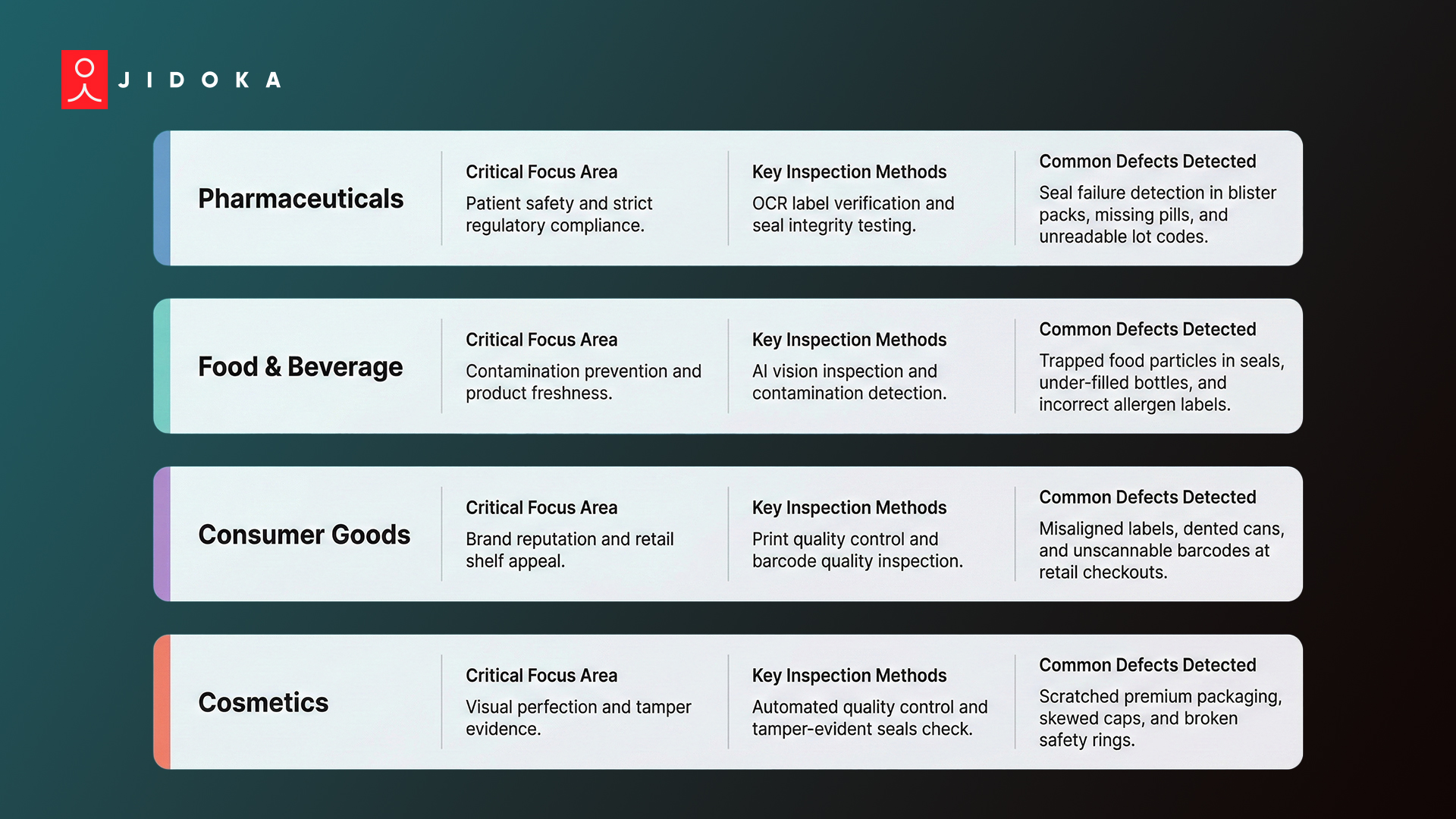
Industry-specific needs prove that high standards require specialized tools. Let’s look at how you measure the success of these systems through specific metrics.
Achieving Superior Accuracy: Performance Metrics and ROI
You must track the right data to see how packaging inspection improves your bottom line. Modern automated quality control delivers measurable gains.
1. Detection Accuracy and Speed Benchmarks
New AI vision inspection systems reach an accuracy rate of 99.9% in 2026. These machines scan over 300 units every minute without losing focus. Real-time packaging inspection catches a seal failure detection issue or a packaging defect detection flaw before products hit the warehouse. This speed allows your lines to run at maximum capacity.
2. Financial Impact and ROI Timeline
Most companies see a full return on investment in less than 12 to 18 months. By using packaging inspection, you reduce labor costs and cut material waste by up to 70%. Efficient print quality control and OCR label verification prevent thousands of dollars in wasted labels and packaging film. Saving just one contaminated batch pays for the entire system.
- Labor Savings: AI transforms quality into a fixed-cost asset. It eliminates the rising variable costs of wages.
- Waste Reduction: Identifying microscopic leaks early prevents the disposal of entire production runs.
- Yield Improvements: High-accuracy automated quality control lowers false reject rates. You sell more of what you make.
3. Recall Prevention and Brand Protection
A single recall costs millions in direct expenses. Packaging inspection acts as an insurance policy for your brand. Stopping a faulty product from leaving the plant protects you from regulatory fines. Consistent seal failure detection ensures customers trust your safety standards. Reliable barcode quality inspection prevents shipping errors that drain your profits.
Knowing these numbers helps you build a business case for packaging inspection. These systems provide the precision your company needs to stay ahead.
Scaling to 300 Million Inspections: How Jidoka Tech Automates High-Speed Packaging Quality
Jidoka Technologies provides an AI vision inspection setup that thrives under real production pressure. Their team aligns cameras and PLC timing so every packaging inspection stays accurate across all shifts. Systems handle 12,000+ parts per minute and 300 million daily checks.
- KOMPASS: This automated quality control tool reaches 99.8% accuracy. It reviews frames in under 10ms and catches a packaging defect detection issue on reflective or textured surfaces.
- NAGARE: This system monitors seal failure detection and assembly steps. It flags missing parts to cut rework by 35%.
Jidoka runs packaging inspections on local edge units to avoid delays. These tools ensure print quality control and seal integrity testing remain perfect at scale.
Explore how Jidoka Technologies transforms your packaging inspection process by visiting our solutions page today.
Conclusion
Packaging inspection ensures your products stay safe and your labels remain accurate. However, many manufacturers struggle with high-speed errors and manual fatigue. Missing a single packaging defect detection issue leads to disaster.
One faulty seal triggers massive recalls, legal fines, and permanent brand damage. You cannot afford to let a seal failure detection error reach the shelf.
Jidoka Technologies solves this by using AI vision inspection to catch every flaw. Their automated quality control tools stop defects instantly. You protect your revenue and your reputation with Jidoka.
Connect to Jidoka Technologies today to eliminate manual inspection errors and secure your brand with 99.9% accurate AI vision inspection.
FAQs
1. What are the most critical packaging defects that AI vision systems can detect?
AI vision inspection identifies seal failure detection issues and print quality control errors. It catches packaging defect detection flaws like tiny dents, scratches, or contamination detection risks. These systems also find errors in tamper-evident seals that human eyes often miss during high-speed runs.
2. How fast can modern packaging inspection systems process products without compromising accuracy?
Modern automated quality control systems process over 300 units per minute while maintaining 99.9% accuracy. This speed ensures packaging inspection never slows your output. High-speed cameras catch every packaging defect detection issue instantly, allowing for seamless food safety inspection across your lines.
3. How do OCR and OCV technologies improve label accuracy and prevent recalls?
OCR label verification reads dates and codes to ensure they match specifications. Barcode quality inspection checks every code to prevent retail scanning failures. This rigorous print quality control stops mislabeled products from triggering expensive recalls or failing pharmaceutical packaging compliance audits.
4. What is the actual ROI timeline for implementing packaging inspection systems?
Most facilities reach full ROI within 18 months. Packaging inspection saves money by reducing labor and material waste. By preventing a single recall through reliable seal failure detection, the system pays for itself. It turns automated quality control into a profit-driving asset.
5. How can pharmaceutical manufacturers ensure packaging inspection meets strict regulatory requirements?
Pharmaceutical packaging requires 100% accuracy to meet FDA standards. Using AI vision inspection ensures every bottle has a perfect tamper-evident seals application. These systems provide digital logs for seal integrity testing, ensuring your automated quality control stays compliant with global safety mandates.
6. How does packaging inspection data improve overall manufacturing quality beyond defect detection?
Packaging inspection data tracks trends to fix root causes of waste. Monitoring seal integrity testing and contamination detection results helps you optimize machine performance. This data-driven approach strengthens your food safety inspection protocols and improves long-term automated quality control efficiency.