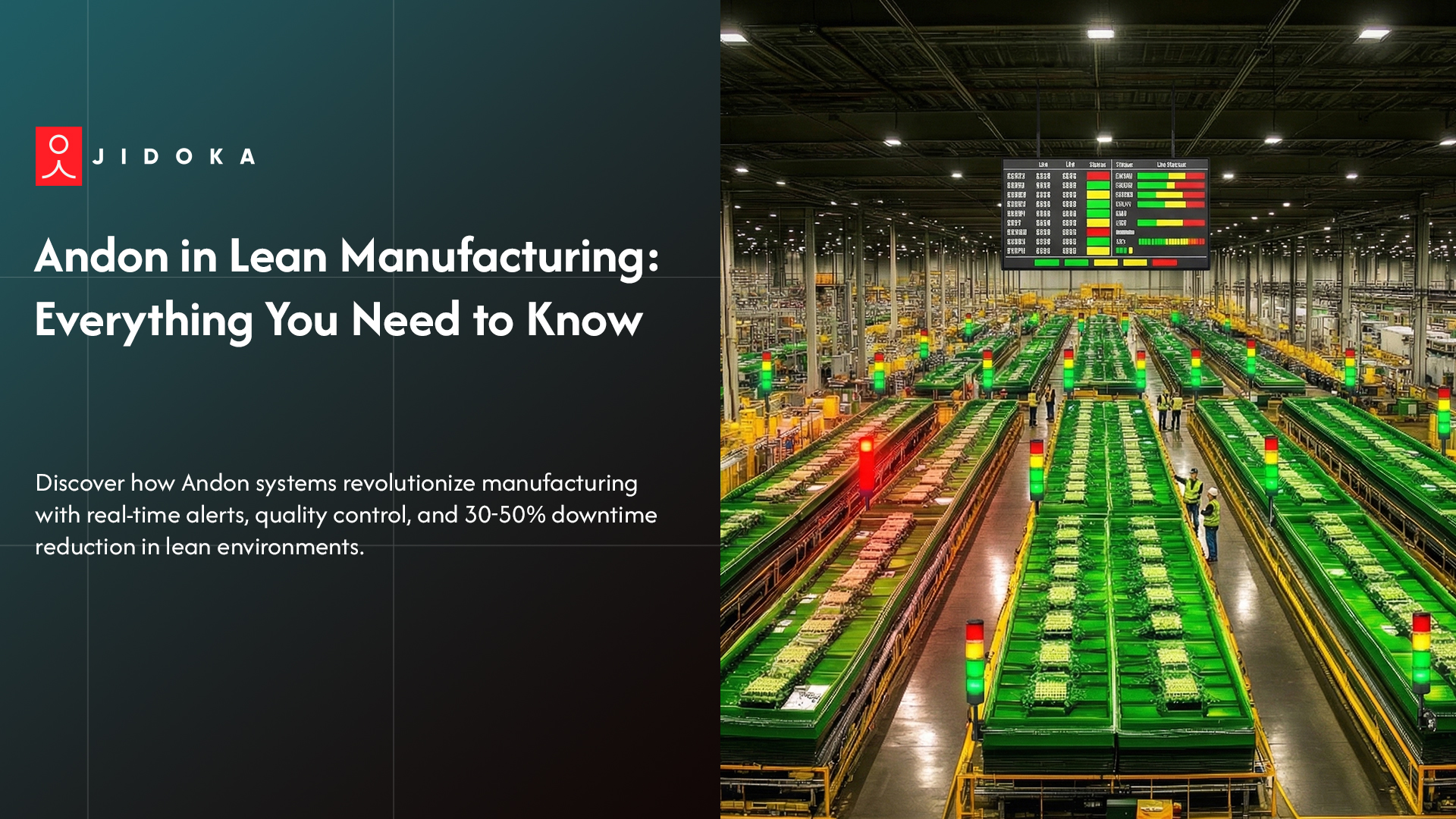
Die moderne Fertigung leidet, wenn Probleme verborgen bleiben. Ein übersehener Fehler kann innerhalb von Minuten zu Ausschuss, Verzögerungen und steigenden Kosten führen. Andon in der schlanken Fertigung löst dieses Problem, indem es Ihrer Produktionslinie ein klares, sofortiges Signal gibt, wenn etwas schief geht. Es funktioniert wie ein visuelles Managementsystem, das es den Bedienern ermöglicht, die Linie anzuhalten und Warnmeldungen auszulösen, sobald eine Abnormalität auftritt.
Mit andon in Lean Manufacturing verlassen sich Teams auf Problemerkennung in Echtzeit statt auf Rätselraten. Lichter, Geräusche und Bildschirme sorgen für schnelle Maßnahmen, nicht für verzögerte Problembehebungen. Anlagen, in denen Andon eingesetzt wird, verzeichnen geringere Ausfallzeiten, eine stärkere Eigenverantwortung des Bedieners und eine strengere Qualitätskontrolle. So bleibt Lean-Thinking in der Fabrikhalle praktisch.
Was ist das Andon-System? Die Grundlagen
Andon in Lean Manufacturing ist eine Methode zur Signalisierung in der Werkstatt, die Probleme sofort sichtbar macht, sobald sie auftreten. Sie verhindert Verzögerungen und Rätselraten bei täglichen Produktionsentscheidungen.
So funktioniert's:
- Grünes Licht bedeutet, dass die Linie wie geplant läuft
- Gelbes Licht kennzeichnet eine Warnung, die die Aufmerksamkeit des Supervisors erfordert
- Rotes Licht stoppt die Produktion, um sofort handeln zu können
Warum es wichtig ist:
- Andon in Lean Manufacturing funktioniert wie folgt: visuelles Managementsystem.
- Betreiber alarmieren ohne Angst
- Teams erhalten eine Problemerkennung in Echtzeit an der exakten Station.
- Manager erkennen Probleme sofort, ohne den Boden gehen zu müssen.
Dieses Setup stärkt die Kommunikation in der Produktionslinie, beschleunigt die Reaktionszeit und verhindert, dass Qualitätsprobleme nachgelagert werden. Der nächste Schritt besteht darin, zu sehen, wie Andon von manuellen Kabeln zu datengesteuerten digitalen Systemen übergegangen ist.
Entwicklung von Andon Systems
Andon blieb nicht dasselbe, da die Produktionslinien schneller und automatisierter wurden. Was als einfaches visuelles Signal begann, wurde zu einem vernetzten System, das auf Geschwindigkeit, Genauigkeit und Daten ausgelegt war.
1. Traditionelle Andon-Systeme
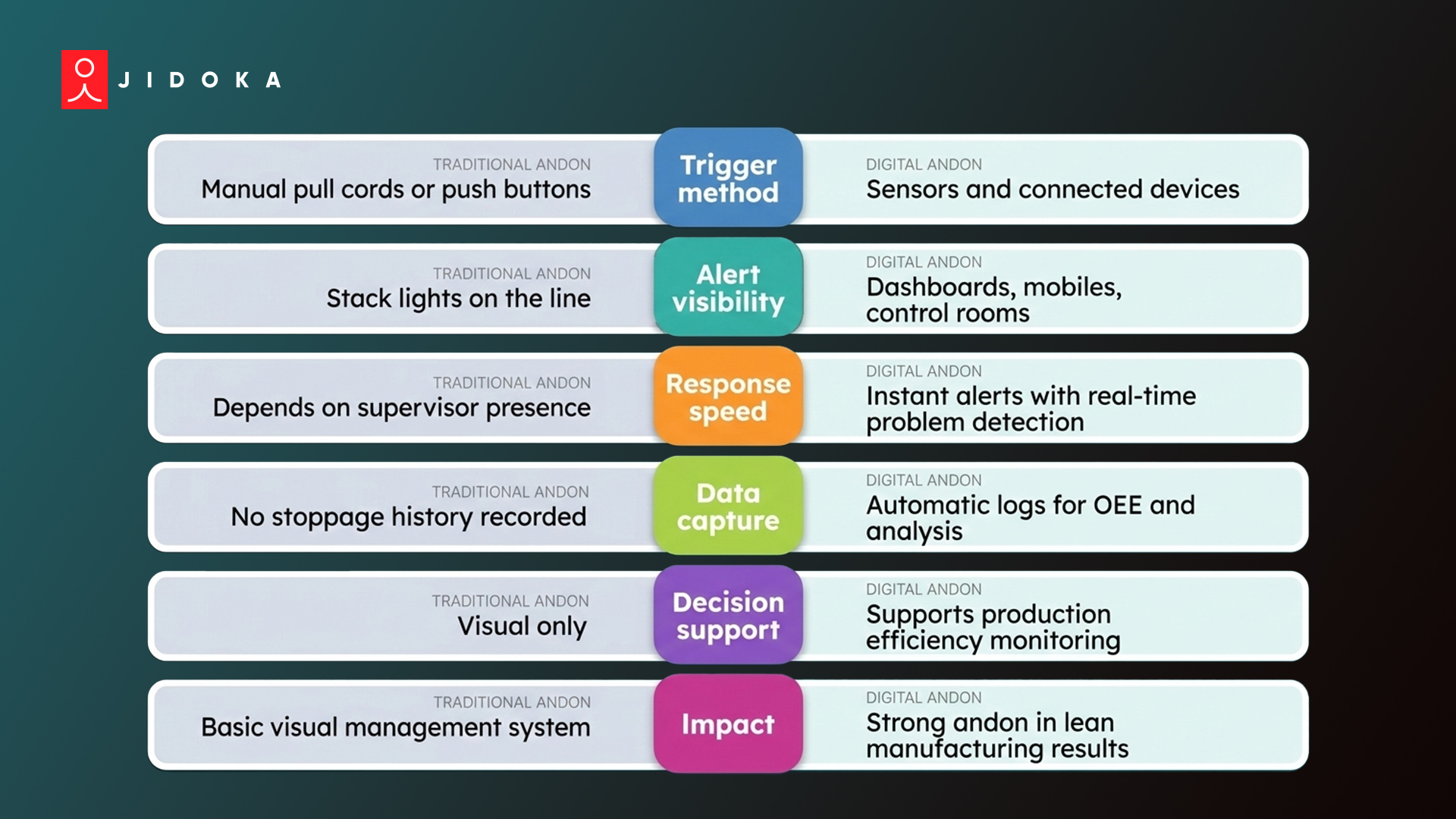
Zu Beginn der schlanken Fertigung wurden manuelle Zugseile, Knöpfe und Stapellichter verwendet. Das Bedienpersonal gab ein Signal aus, wenn ein Defekt oder ein Maschinenproblem auftrat. Die Vorgesetzten bemerkten den Alarm und gingen zur Station.
Dieser Ansatz ermöglichte die grundlegende Transparenz durch ein visuelles Managementsystem, aber die Reaktionszeit variierte, sodass keine Daten aufgezeichnet wurden. Es blieb schwierig, die Gesamtanlageneffektivität (GAE) zu verfolgen oder die Ausfallzeiten in der Fertigung konsequent zu reduzieren.
2. Digitale Andon-Systeme
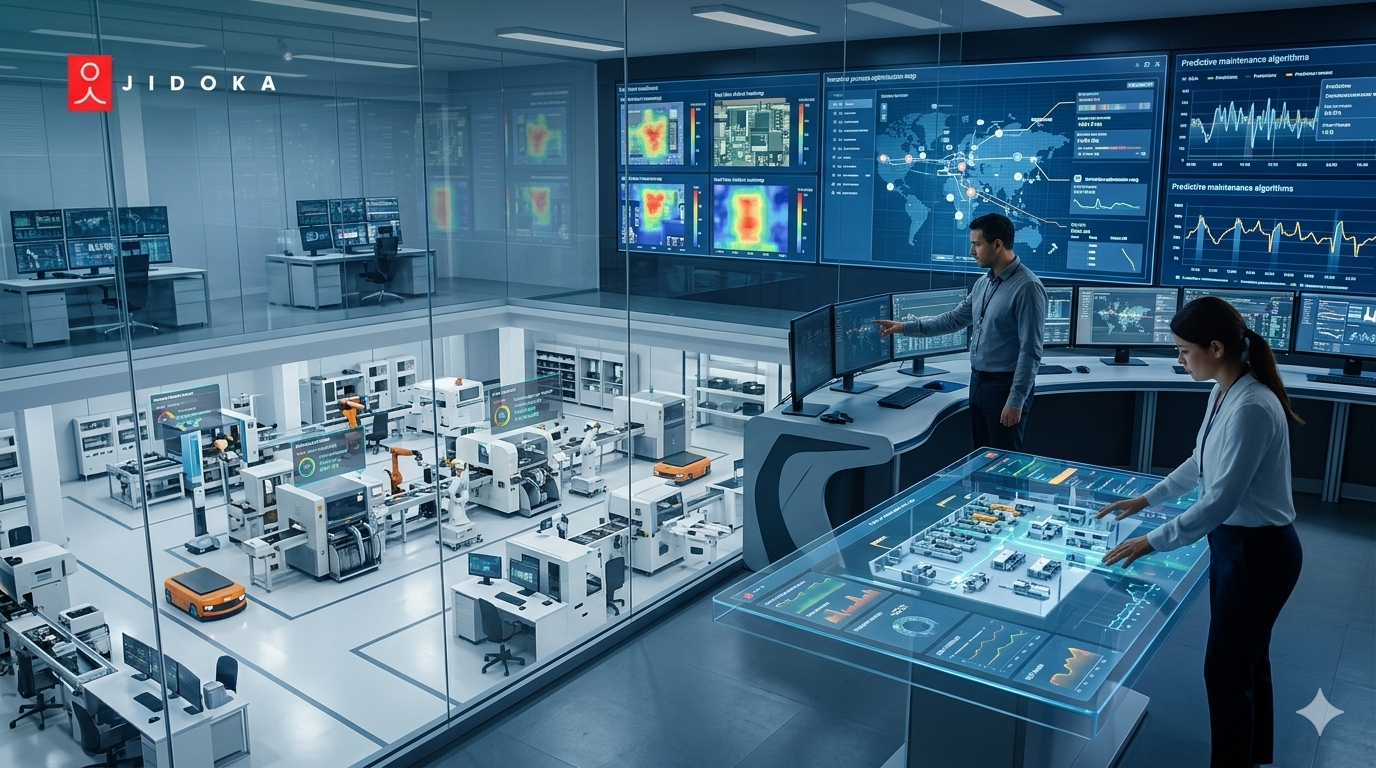
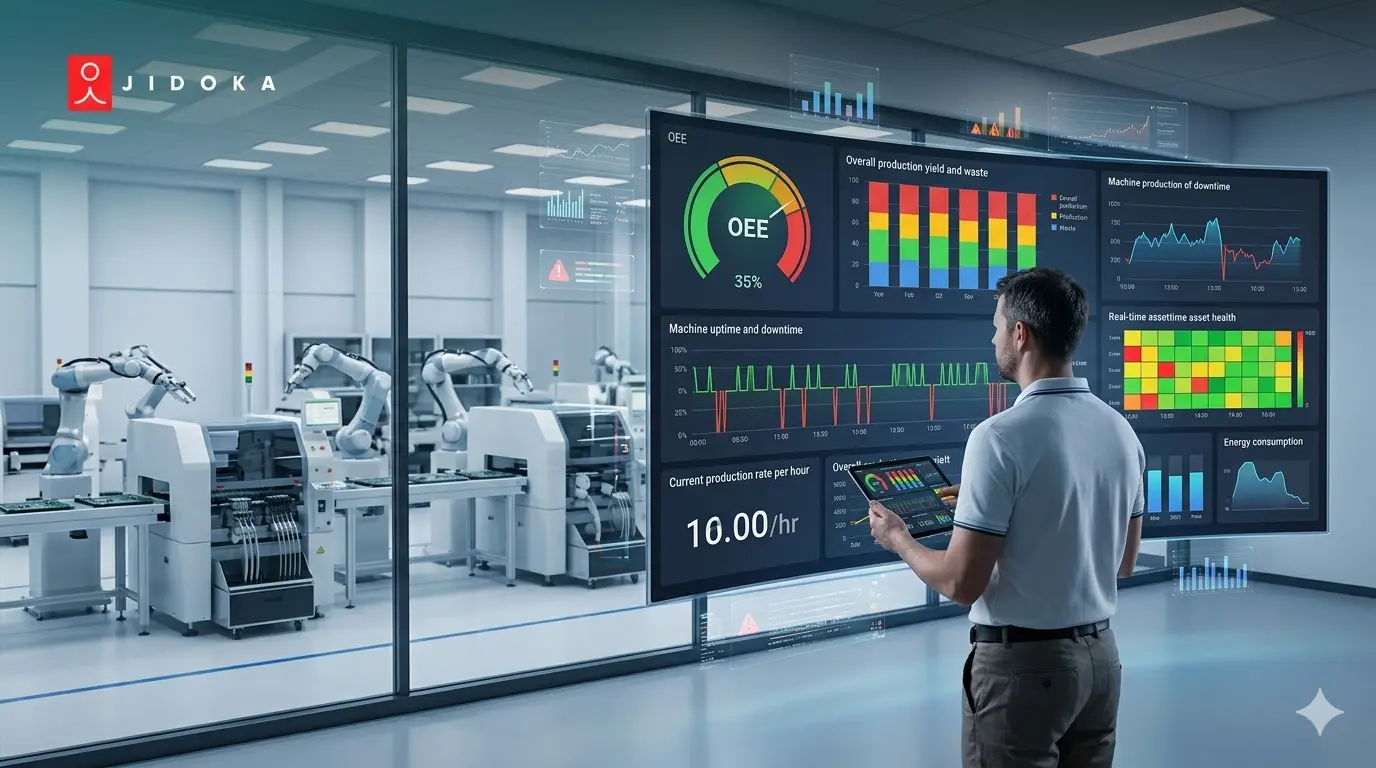
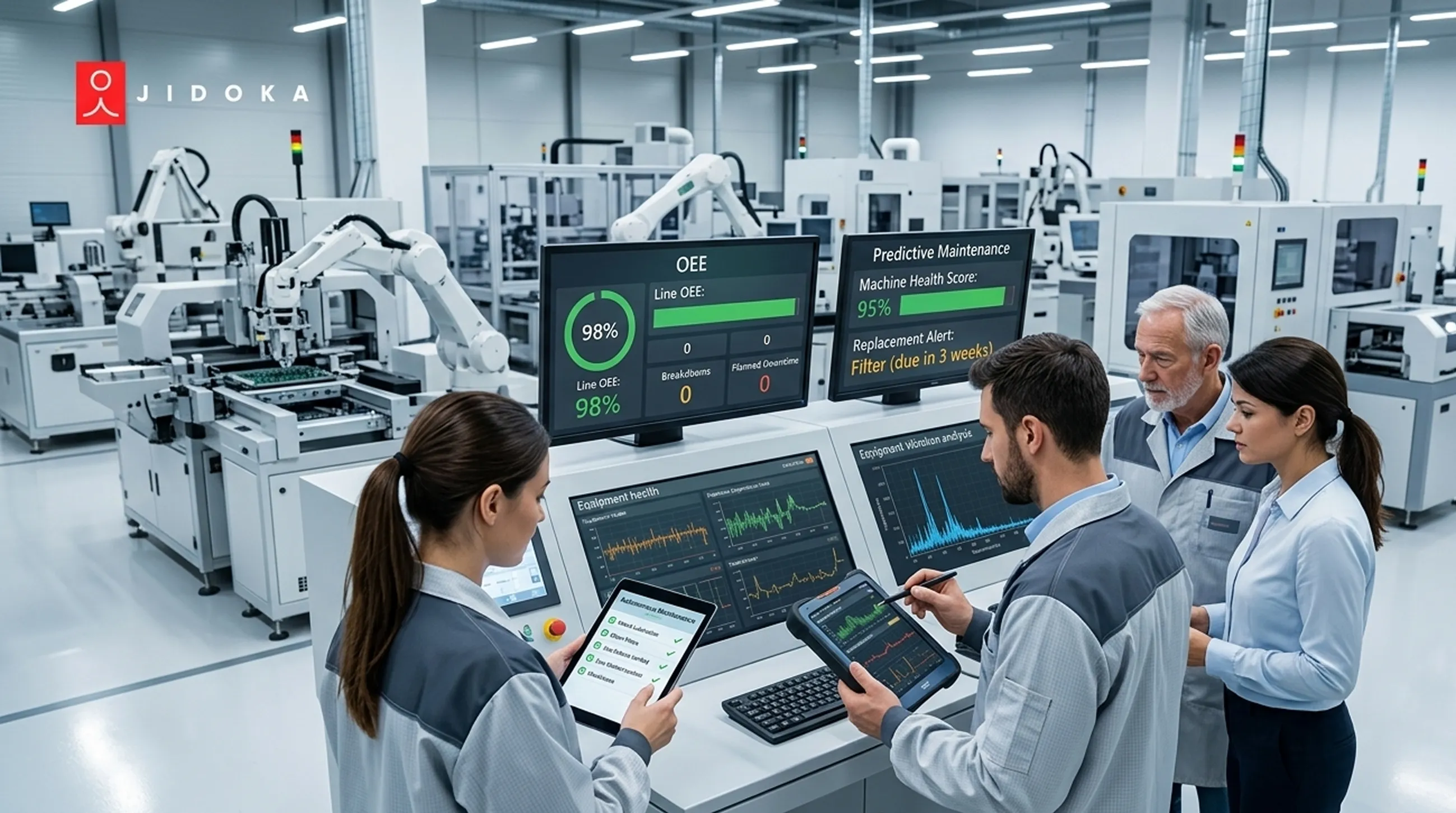
Moderne Andon in der schlanken Fertigung verwendet Sensoren, vernetzte Geräte und Armaturenbretter für Problemerkennung in Echtzeit. Benachrichtigungen erreichen die Teams sofort, und jede Unterbrechung wird mit Zeit und Grund protokolliert.
Dies stärkt die Kommunikation in der Fabrik, unterstützt die Überwachung der Produktionseffizienz und gibt den Teams einen klaren Einblick in wiederkehrende Probleme.
Lassen Sie uns als Nächstes aufschlüsseln, wie der Andon-Prozess in der Werkstatt tatsächlich funktioniert.
So funktioniert der Andon-Prozess
Der Andon im Lean-Manufacturing-Prozess folgt einem klaren Ablauf. Bei jedem Schritt stehen Geschwindigkeit, Klarheit und Rechenschaftspflicht in der Fertigung im Mittelpunkt.
Schritt 1: Ermitteln Sie das Problem
Ein Bediener erkennt einen Defekt, ein ungewöhnliches Geräusch oder eine Prozessabweichung. In fortgeschrittenen Konfigurationen übernehmen die Sensoren die Problemerkennung in Echtzeit automatisch. Dies unterstützt eine schnellere Kommunikation in der Produktionslinie und verhindert, dass sich Fehler weiter ausbreiten.
Schritt 2: Triggern Sie das Andon-Signal
Der Bediener zieht eine Schnur oder drückt eine Taste. Bei digitalen Setups löst das System selbstständig Warnmeldungen aus. Die Lichter werden rot, Alarme ertönen und die Armaturenbretter werden aktualisiert. Dadurch wird das visuelle Managementsystem sofort aktiviert.
Schritt 3: Sofortige Reaktion
Vorgesetzte, Wartungs- oder Qualitätsteams fahren direkt zur betroffenen Station. Diese schnelle Reaktion reduziert die Leerlaufzeiten und unterstützt die Reduzierung von Ausfallzeiten in der Fertigung, ohne auf eine Eskalation warten zu müssen.
Schritt 4: Reparieren und Aufnehmen
Die Teams beheben das Problem, starten die Produktion neu und protokollieren die Ursache. Diese Daten fließen in die Gesamtanlageneffektivität (OEE) ein, stärken die Überwachung der Produktionseffizienz und unterstützen langfristige Verbesserungen.
Dieser strukturierte Ablauf erklärt, warum Andon auch unter realem Produktionsdruck effektiv bleibt.
Implementierungs-Roadmap für Andon Systems
Die Einführung von Andon in der schlanken Fertigung funktioniert am besten mit einem schrittweisen Ansatz. Jede Phase schafft Vertrauen, Klarheit und Geschwindigkeit in der Werkstatt.
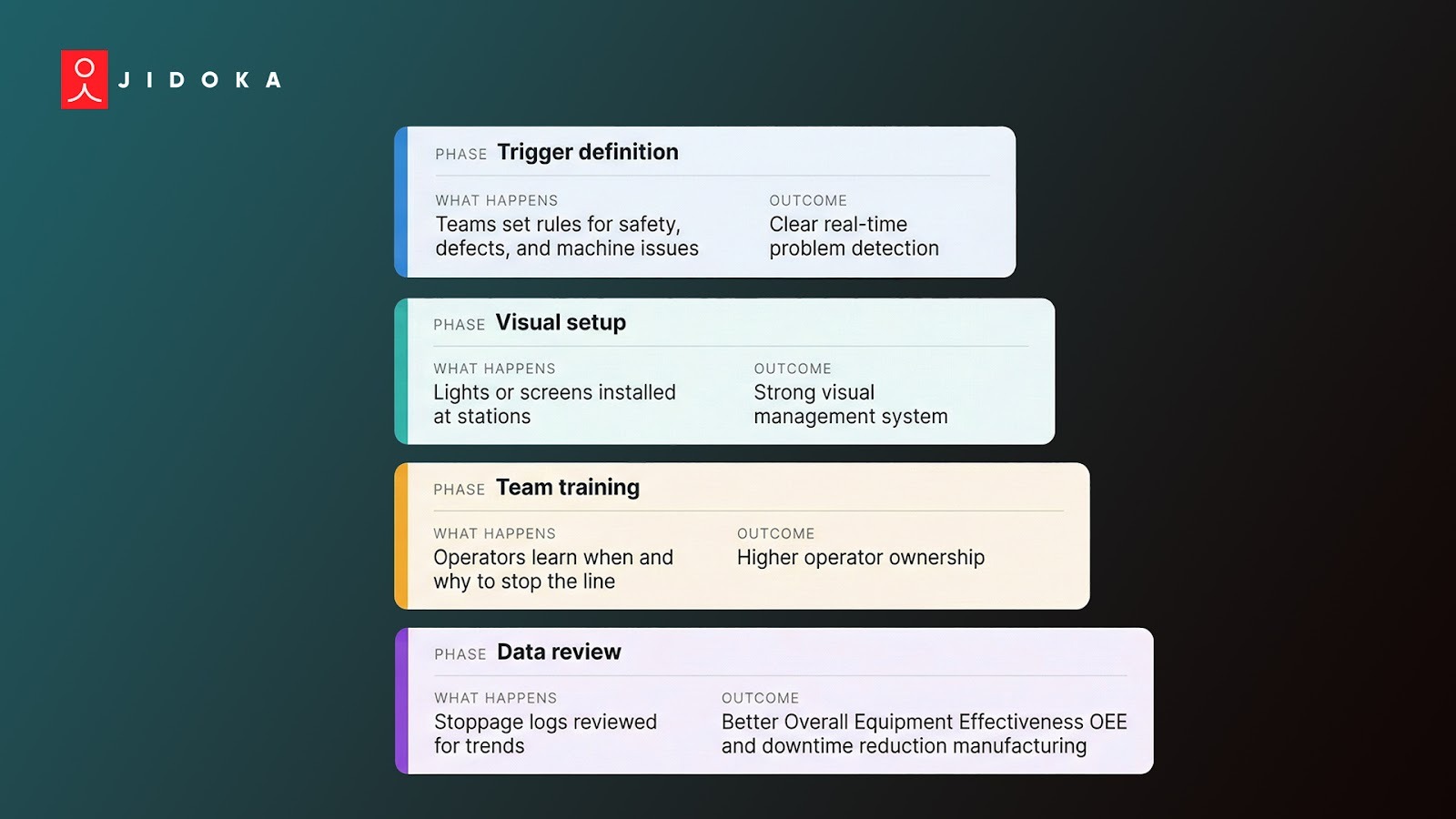
Phase 1: Definieren Sie klare Trigger
Lege einfache Regeln fest, wann Andon aktiviert werden soll. Konzentrieren Sie sich auf Sicherheitsrisiken, Qualitätsmängel, ungewöhnliche Maschinengeräusche oder Prozessverzögerungen. Klare Kriterien verhindern das Zögern und unterstützen die Bediener durch Problemerkennung in Echtzeit.
Phase 2: Visuelle Signale installieren
Stellen Sie an jeder Station Stapellichter oder Bildschirme auf. Dadurch entsteht ein zuverlässiges visuelles Managementsystem, das jeder sehen kann. Digitale Dashboards verbessern die Kommunikation in der Fabrik, ohne Verwirrung zu stiften.
Phase 3: Trainiere das Team
Erläutern Sie, warum das Stoppen der Leitung Leistung und Qualität schützt. Machen Sie deutlich, dass der Einsatz von Andon in der schlanken Fertigung zu schnelleren Problemlösungen führt und nicht zu Schuldzuweisungen. Dieser Schritt prägt eine starke Kultur der kontinuierlichen Verbesserung.
Phase 4: Verwenden Sie die Daten
Überprüfen Sie die Stoppage-Logs wöchentlich. Verfolgen Sie Trends im Zusammenhang mit der Gesamtanlageneffektivität (OEE) und der Reduzierung von Ausfallzeiten in der Fertigung. Daten machen aus täglichen Warnmeldungen dauerhafte Prozessverbesserungen.
Diese Roadmap sorgt dafür, dass Andon vom ersten Tag an praktisch umsetzbar ist.
Wie Jidoka Tech Andon verbessert
Andon in Lean Manufacturing funktioniert am besten, wenn Probleme ohne Verzögerung oder menschliche Abhängigkeit gemeldet werden. Jidoka Tech verstärkt dies, indem die Inspektion zu einem automatisierten Auslöser wird. Kameras, Beleuchtung, SPS-Timing und Edge-Einheiten arbeiten zusammen, sodass Probleme in jeder Schicht auftauchen.
- KOMPASS erkennt Defekte bei Genauigkeit von über 99,8% in unter 10 ms, auch an reflektierenden oder sich schnell bewegenden Teilen.
- NAGARE verfolgt jeden Montageschritt und kennzeichnet fehlende Aktionen in Echtzeit. Wenn ein Problem auftritt, löst das System über das visuelle Managementsystem sofort Warnmeldungen aus.
Dieses Setup bietet Problemerkennung in Echtzeit, eine engere Kommunikation in der Produktionslinie und eine stärkere Qualitätskontrolle, ohne die Linie zu verlangsamen.
Verbinde dich mit Jidoka Tech um zu sehen, wie automatisiertes Andon eine schnellere Reaktion und eine strengere Qualitätskontrolle in Ihrer Produktionslinie ermöglicht.
Fazit
Andon in Lean Manufacturing verleiht Ihrer Produktionslinie eine klare Stimme. Es deckt Probleme in dem Moment auf, in dem sie auftreten, und drängt die Teams, schnell zu handeln. Dieser Ansatz ersetzt Verzögerungen, Rätselraten und wiederholte Brandbekämpfung durch Sichtbarkeit und Disziplin.
Wenn Warnmeldungen direkt mit Daten verknüpft werden, verbessern die Teams die Gesamtanlageneffektivität (OEE), reduzieren Ausfallzeiten und sichern die Qualität in großem Maßstab.
Jidoka Tech verstärkt dieses Modell, indem es die Erkennung durch Bildverarbeitungssysteme und verbundene Warnmeldungen automatisiert. Anstatt auf menschliche Reaktionen zu warten, lösen Probleme sofort Signale aus.
Verbinde dich mit Jidoka Tech um zu erfahren, wie automatisiertes Andon Ihrem Team hilft, Probleme frühzeitig zu erkennen und die Produktion am Laufen zu halten.
Häufig gestellte Fragen
1. Was bedeutet „andon“ auf Japanisch?
Andon bedeutet auf Japanisch „Laterne“ oder „Licht“. Andon steht für Lean Manufacturing und bezieht sich auf ein visuelles Managementsystem, das mithilfe von Lichtern oder Bildschirmen Probleme signalisiert und eine schnelle Kommunikation der Produktionslinie in der Werkstatt unterstützt.
2. Wie verbessert Andon die Gesamtanlageneffektivität?
Andon in Lean Manufacturing verbessert die Gesamtanlageneffektivität (OEE), indem die Reaktionszeit verkürzt wird. Eine schnellere Problemerkennung in Echtzeit reduziert Leerlaufzeiten, begrenzt die Ausbreitung von Defekten und unterstützt durch schnellere Problembehebungen eine bessere Reduzierung von Ausfallzeiten in der Fertigung.
3. Kann Andon automatisiert werden?
Ja. Digitales Andon in der schlanken Fertigung verwendet Sensoren, Kameras und automatische Warnmeldungen. Dies ermöglicht die Problemerkennung in Echtzeit, genaue Stillstandsprotokolle und eine stärkere Überwachung der Produktionseffizienz, ohne sich nur auf manuelle Signale verlassen zu müssen.
4. Ist Andon auf die Automobilherstellung beschränkt?
Nein. Andon wird in der schlanken Fertigung häufig in den Bereichen Elektronik, Pharma, Lebensmittel und Verpackungen eingesetzt. Jede Branche, die schnelle Warnmeldungen, klare Kommunikation in der Fabrik und gleichbleibende Qualität benötigt, kann von einem Andon-System profitieren.