Die manuelle Inspektion scheitert schnell, wenn es auf Geschwindigkeit und Konsistenz ankommt. Menschen übersehen Mängel. Müdigkeit setzt ein. Abwechslung schleicht sich ein. Aus diesem Grund wechseln die Hersteller zu einem automatisiertes Inspektionssystem um die Qualität im großen Maßstab stabil zu halten. Wenn sich Produkte schnell entwickeln, bleiben nur die Systeme konsistent, ohne den Fokus zu verlieren.
Ein automatisiertes Inspektionssystem nutzt kamerabasierte Inspektion, KI-Bildverarbeitungssysteme und Fehlererkennung in Echtzeit, um Probleme sofort zu erkennen, sobald sie auftreten. Sie erkennen Probleme früh, nicht nach dem Versand. Dieser Wandel treibt die Nachfrage nach automatisierten Inspektionslösungen für Elektronik-, Automobil- und Verpackungslinien an, bei denen sich Fehler direkt auf die Margen auswirken.
Mit der industriellen Bildverarbeitungs- und Fehlerklassifizierungssoftware wird jede Einheit durch Qualitätsüberwachung in Echtzeit überprüft und protokolliert. Das ist genau der Ansatz Jidoka Tech bringt es in die Werkshallen und hilft den Teams, die Inspektion zu kontrollieren, ohne die Produktion zu verlangsamen.
Die Anatomie eines automatisierten Systems
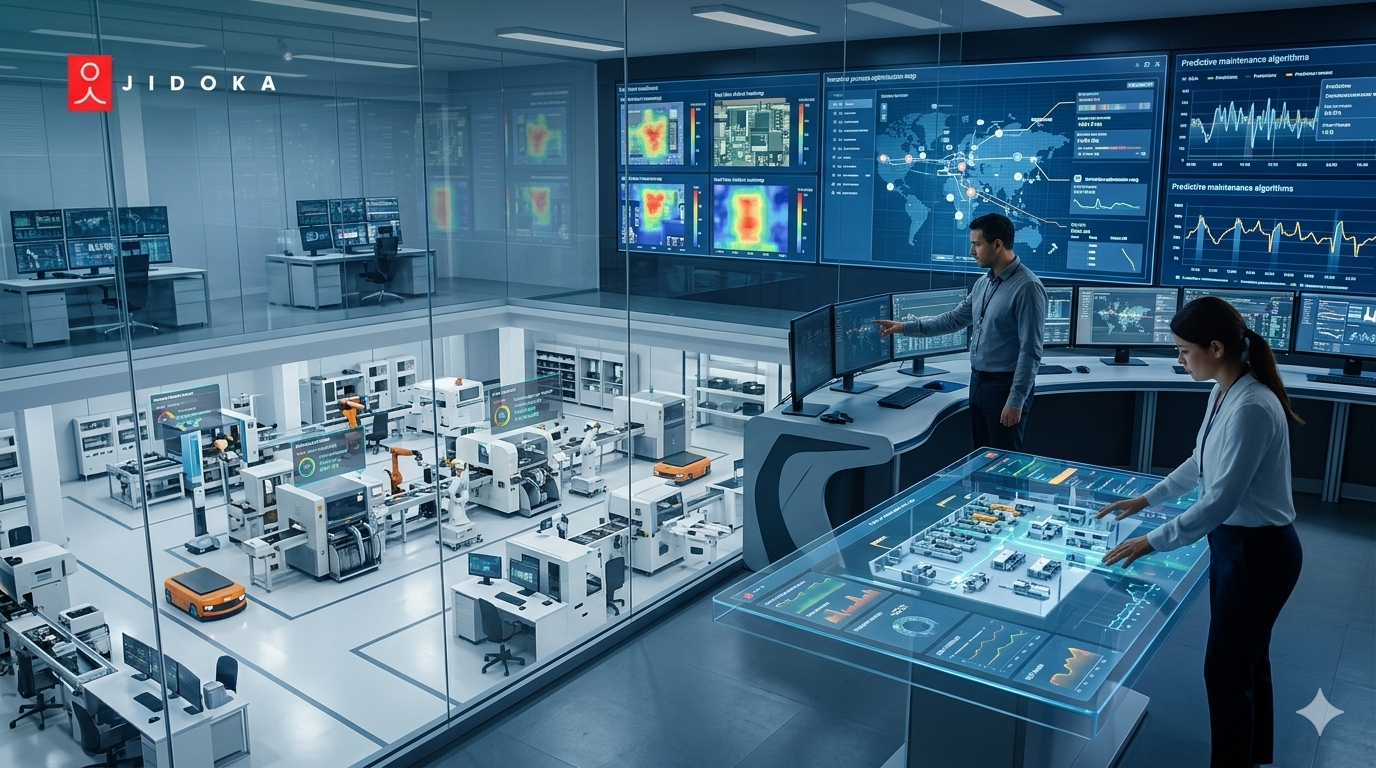
Ein automatisiertes Inspektionssystem ist nur erfolgreich, wenn Bildverarbeitungshardware und Entscheidungssoftware funktionieren wie eine Einheit. Hier kommt es auf Genauigkeit an, nicht auf Vermutungen. In echten Fabriken muss jedes automatisierte Inspektionssystem klar sehen, schnell denken und ohne Verzögerung reagieren.
1. Die Augen: Hardware
Die kamerabasierte Inspektion bildet die Grundlage. Bereichskameras inspizieren Sie feste Teile wie Gussteile oder Steckverbinder. Zeilenkameras überwachen durchgehende Oberflächen wie Filme und Folien. Bei richtiger Beleuchtung werden Defekte sichtbar, die das menschliche Auge übersehen. Die Sensoren lösen die Bilderfassung genau im richtigen Moment aus und sorgen so für stabile Inspektionen während der industriellen Bildverarbeitung.
2. Das Gehirn: Software und KI
Aufgenommene Bilder werden verschoben in KI-Bildverarbeitungssysteme läuft auf Edge-Hardware. Industrielle Bildverarbeitungs- und Bildanalysealgorithmen isolieren Fehler und unterstützen die Fehlererkennung in Echtzeit, ohne die Produktionslinie zu verlangsamen.
Sobald diese Elemente aufeinander abgestimmt sind, kann der Inspektionsablauf beginnen.
Der 4-stufige Arbeitsablauf: Vom Förderer zur Entscheidung
Hier bewährt sich ein automatisiertes Inspektionssystem. Sobald die Hardware klar sieht und die Software bereit ist, folgt das System einer festen Arbeitsablauf das läuft ununterbrochen. Jedes automatisierte Inspektionssystem an einer Produktionslinie verwendet dieselbe Logik, um schnelle und konsistente Entscheidungen zu treffen.
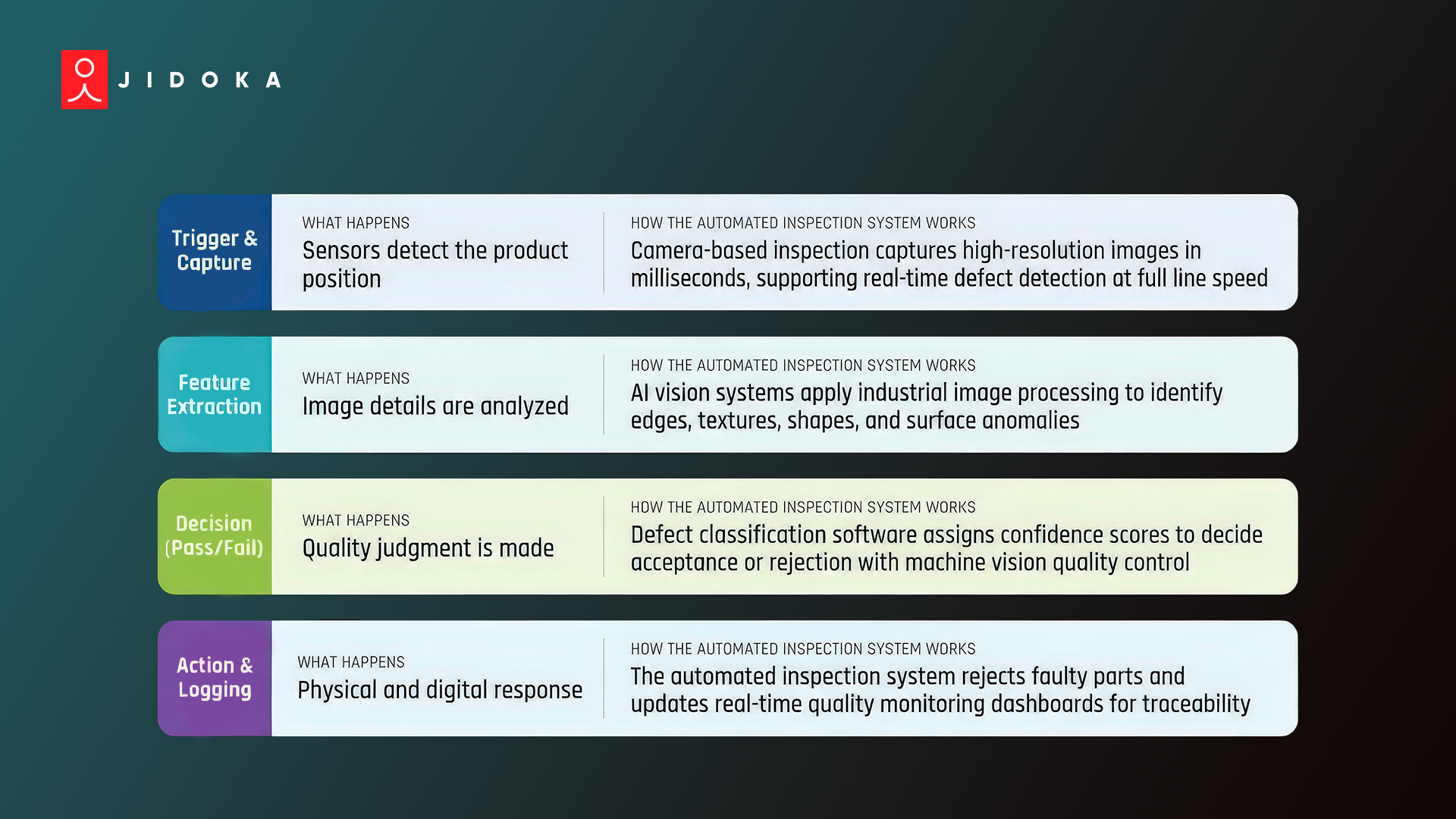
Schritt 1: Triggern und Aufnehmen
Sensoren erkennen das Produkt und lösen innerhalb von Mikrosekunden eine kamerabasierte Inspektion aus. Die Kamera erfasst selbst bei hoher Geschwindigkeit scharfe Bilder und unterstützt so die Fehlererkennung in Echtzeit, ohne dass die Anlage unterbrochen werden muss.
Schritt 2: Feature-Extraktion
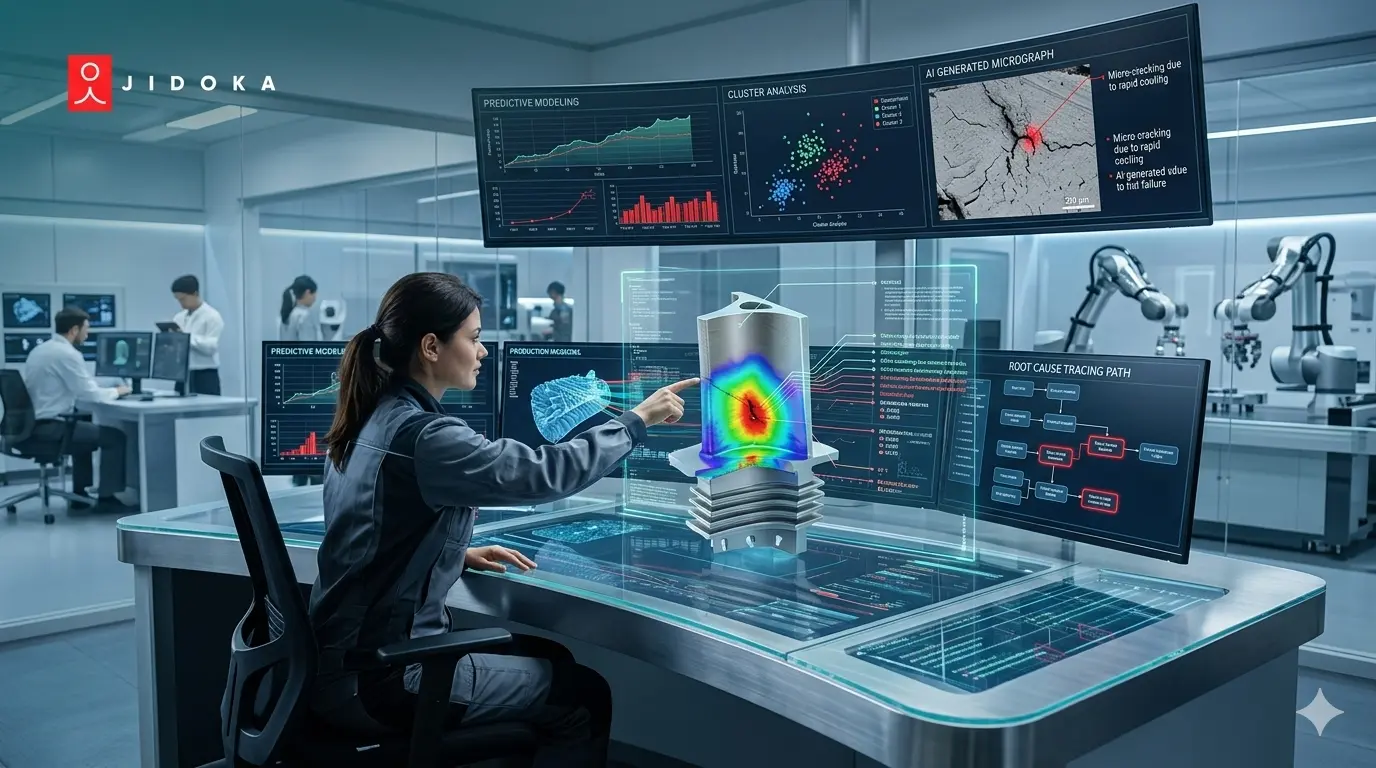
Bilder werden durch die industrielle Bildverarbeitung übertragen. KI-Bildverarbeitungssysteme analysieren Kanten, Texturen, Formen und Muster. Kratzer, Dellen, fehlende Teile oder Verschmutzungen fallen sofort auf.
Schritt 3: Entscheidung bestehen oder nicht bestehen
Das System weist mithilfe einer Software zur Fehlerklassifizierung Konfidenzwerte zu. Klare Fehler schlagen fehl. Eine akzeptable Variante gilt als zulässig. Dadurch bleibt die Qualitätskontrolle der industriellen Bildverarbeitung in allen Schichten konstant.
Schritt 4: Aktion und Protokollierung
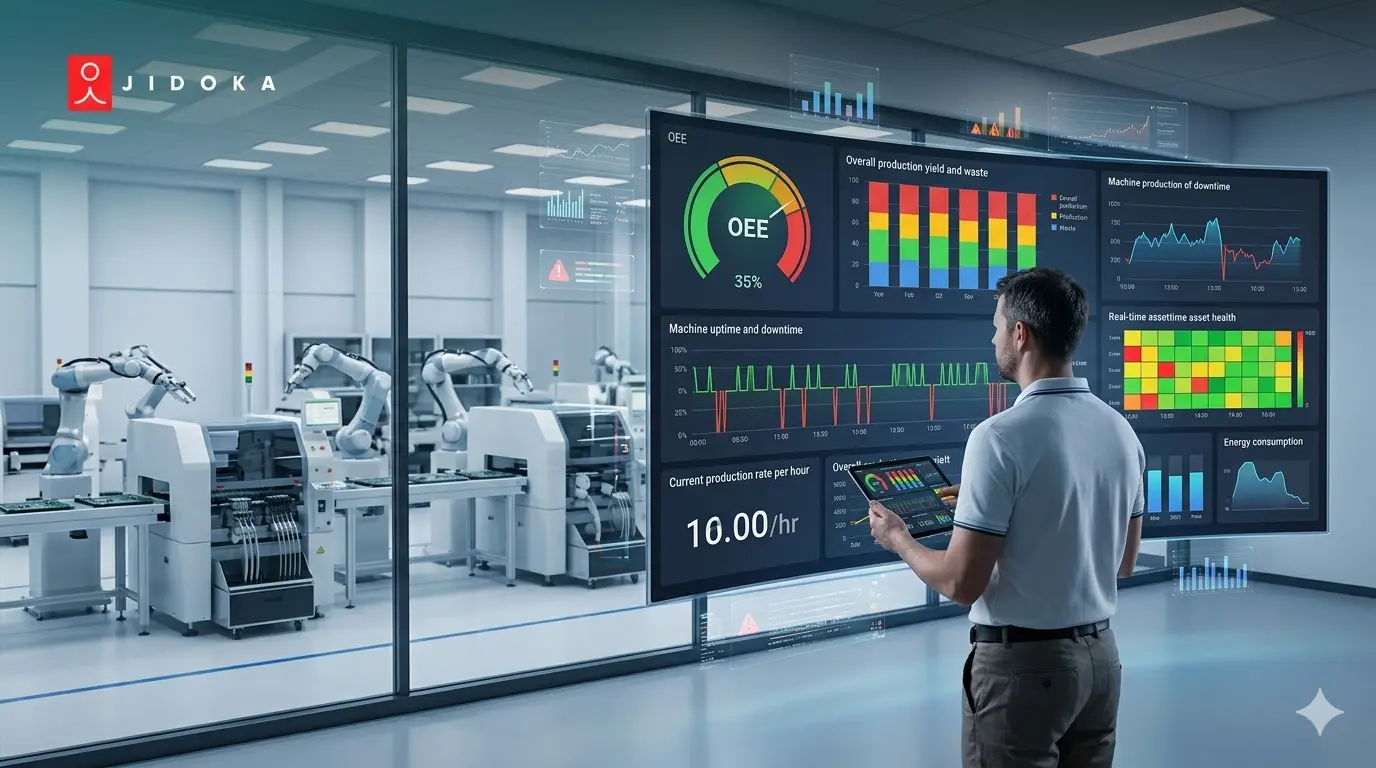
Abgelehnte Teile werden automatisch entfernt. Die Ergebnisse fließen ein in Qualitätsüberwachung in Echtzeit Dashboards zur Nachverfolgung und Verbesserung.
Jetzt, da der Arbeitsablauf klar ist, ist es sinnvoll, die KI-gestützte Inspektion mit älteren regelbasierten Methoden zu vergleichen.
Warum KI-Inspektion die regelbasierte Inspektion übertrifft
Ältere Inspektionsaufbauten beruhten auf festen Regeln. Wenn ein Kratzer eine festgelegte Größe überschritt, wies das System das Teil zurück. Das funktionierte nur unter kontrollierten Bedingungen. Sobald sich die Beleuchtung änderte oder sich Teile leicht drehten, kam es zu falschen Ablehnungen. Ein modernes automatisiertes Inspektionssystem funktioniert auf diese Weise nicht.
Bei KI-Bildverarbeitungssystemen lernt das System aus Beispielen. Du zeigst gute und schlechte Teile. Das Modell baut mithilfe industrieller Bildverarbeitung und Mustererkennung seine eigene Logik auf. Das ermöglicht Fehlererkennung in Echtzeit auch wenn die Produkte leicht variieren. Keine ständige Neuprogrammierung. Keine Anpassung der Regeln bei jeder Schicht.
Diese Lernfähigkeit ist der Grund automatisierte Inspektionslösungen besser skalieren und im Laufe der Zeit stabil bleiben.
Wie Jidoka Tech zuverlässige Inspektionen bei Produktionsgeschwindigkeit liefert
Jidoka Tech entwickelt jedes automatische Inspektionssystem so, dass es unter realem Produktionsdruck funktioniert, nicht unter kontrollierten Vorführungen. Das Team stimmt kamerabasierte Inspektion, Beleuchtung, SPS-Timing und Edge-Hardware aufeinander ab, sodass die Qualitätskontrolle der industriellen Bildverarbeitung über Schichten, Geschwindigkeiten und Produktvariationen hinweg konstant bleibt.
Pflanzen, die diesen Aufbau verwenden, behalten auch im oberen Bereich ihre Stabilität bei 12.000 Teile pro Minute mit kontinuierlicher Inspektion. Jidoka erweitert sein automatisiertes Inspektionssystem um zwei eng miteinander verbundene Plattformen.
KOMPASS: Inspektor für hohe Genauigkeit
KOMPASS treibt die Fehlererkennung in Echtzeit an stromführenden Leitungen an:
- Erreicht Genauigkeit von 99,8 Prozent Verwendung von KI-Bildverarbeitungssystemen
- Verarbeitet jedes Bild in weniger als 10 Millisekunden
- Erlernt neue Varianten mit weniger Trainingsbeispielen
- Behandelt reflektierende Metalle, bedruckte Oberflächen und Texturen durch industrielle Bildverarbeitung
NAGARE: Prozess- und Montageanalyst
NAGARE erweitert die Inspektion über Oberflächendefekte hinaus:
- Verfolgt jeden Montageschritt Nutzung vorhandener Kameras
- Markiert fehlende Teile und falsche Sequenzen sofort
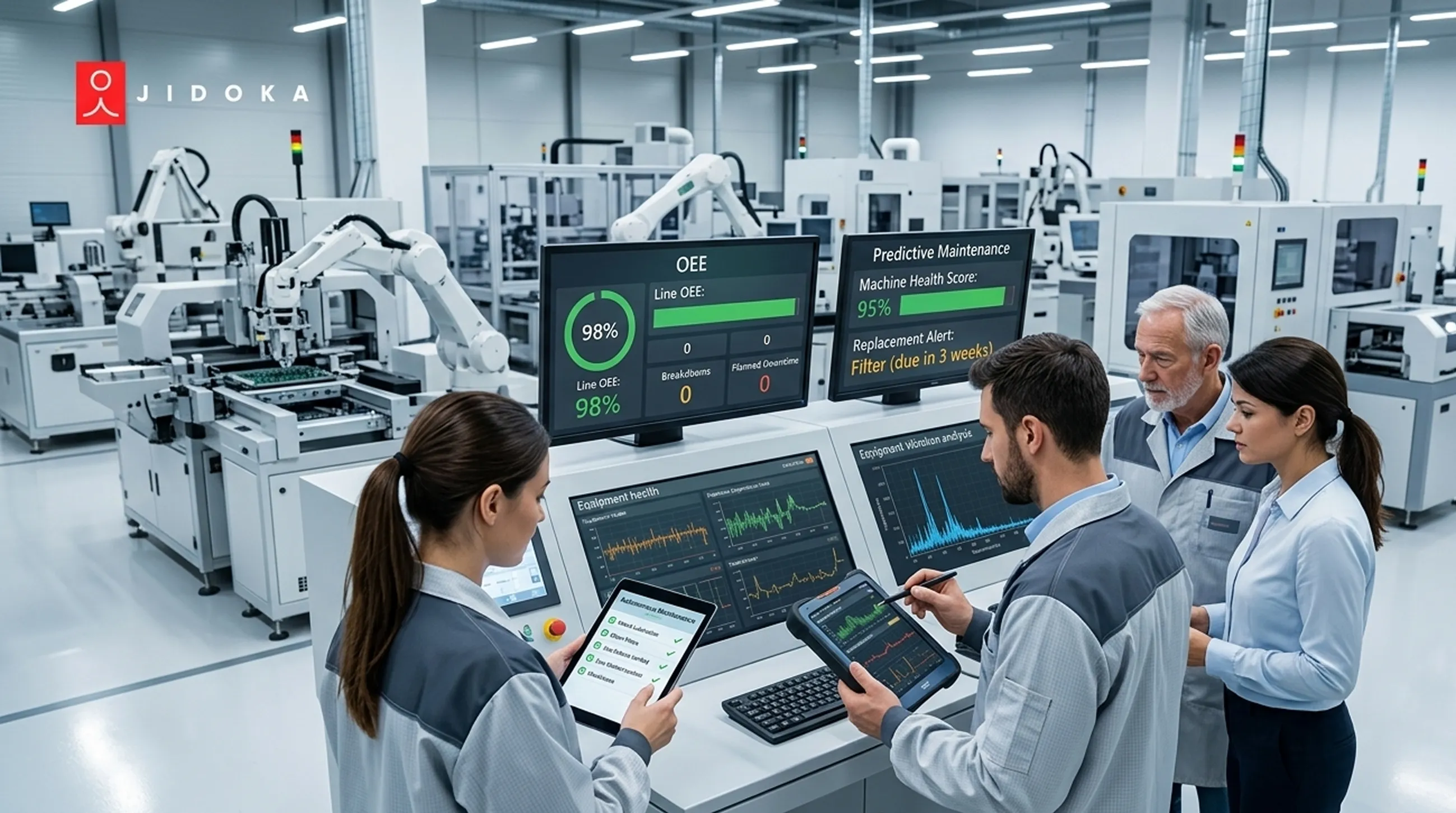
- Unterstützt die Qualitätsüberwachung in Echtzeit an allen Stationen
- Reduziert Nacharbeiten durch frühzeitiges Erkennen von Fehlern
Mit Edge-basierter Ausführung und ohne Latenz trifft Jidoka schnelle Inspektionsentscheidungen, was natürlich zu häufig gestellten Fragen führt, die Teams vor der Bereitstellung stellen.
Erfahren Sie, wie Jidoka Tech Ihrem Team hilft Führen Sie ein zuverlässiges automatisiertes Inspektionssystem aus, ohne die Produktion zu verlangsamen.
Fazit
Ein automatisiertes Inspektionssystem hat Probleme, wenn Geschwindigkeit, Variation und Umgebung ignoriert werden. Teams sehen sich mit falschen Ausweisungen, übersehenen Defekten, instabilen Modellen und Inspektionseinrichtungen konfrontiert, die nach kleinen Produktänderungen kaputt gehen. Sobald die Qualitätskontrolle der industriellen Bildverarbeitung an Konsistenz verliert, vertrauen die Bediener den Ergebnissen nicht mehr und die manuellen Prüfungen kehren zurück.
Eine schlechte Fehlererkennung in Echtzeit führt zu Ausschuss, Nacharbeiten, Produktionsunterbrechungen und Rückrufen. Qualitätsdaten werden unzuverlässig und das Produktionsrisiko steigt mit jeder Schicht. Diese Fehler wirken sich negativ auf die Gewinnmargen aus, lange bevor es irgendjemand bemerkt.
Jidoka Tech begegnet diesem Problem mit einem produktionsbereiten automatisierten Inspektionssystem, das für echte Fabriken gebaut wurde. Edge-basierte KI-Bildverarbeitungssysteme, zuverlässige kamerabasierte Inspektion und kontinuierliche Qualitätsüberwachung in Echtzeit stellen das Vertrauen wieder her, ohne die Leistung zu beeinträchtigen.
Stellen Sie eine Verbindung zu Jidoka Tech her und richten Sie ein zuverlässiges automatisiertes Inspektionssystem ein, dem Ihr Team bei voller Produktionsgeschwindigkeit vertrauen kann.
Häufig gestellte Fragen
1. Verlangsamt ein automatisiertes Inspektionssystem die Produktionslinie?
Nein. Ein automatisiertes Inspektionssystem arbeitet inline mit Kantenbearbeitung. Kamerabasierte Inspektions- und KI-Bildverarbeitungssysteme analysieren Produkte in Millisekunden. Dies unterstützt die Qualitätskontrolle von maschinellem Sehen mit hoher Geschwindigkeit und die Fehlererkennung in Echtzeit, ohne dass die Förderanlagen unterbrochen oder der Durchsatz reduziert werden muss, selbst bei Tausenden von Teilen pro Minute.
2. Was passiert, wenn das System sich über einen Defekt nicht sicher ist?
Das automatisierte Inspektionssystem verwendet eine Software zur Fehlerklassifizierung, um Konfidenzwerte zuzuweisen. Wenn die Sicherheit sinkt, wird das Teil zur Überprüfung und nicht zur Ablehnung gekennzeichnet. So bleibt die Qualitätsüberwachung in Echtzeit genau und unnötiger Ausschuss wird vermieden, während gleichzeitig zuverlässige automatische Inspektionslösungen erhalten bleiben.
3. Können automatisierte Inspektionssysteme in rauen Werksumgebungen eingesetzt werden?
Ja. Industriekameras, versiegelte Gehäuse und Edge-Hardware ermöglichen die kamerabasierte Inspektion auch in staubigen, heißen und vibrierenden Umgebungen. In Kombination mit der industriellen Bildverarbeitung sorgt das automatisierte Inspektionssystem auch unter anspruchsvollen Produktionsbedingungen für eine stabile Qualitätskontrolle der industriellen Bildverarbeitung.
4. Wie schulen wir das System, um neue Defekte zu erkennen?
Die Teams laden Bilder neuer Defekte direkt in das automatische Inspektionssystem hoch. KI-Bildverarbeitungssysteme trainieren Modelle mithilfe der industriellen Bildverarbeitung innerhalb weniger Minuten neu. Dadurch bleibt die Fehlererkennung in Echtzeit ohne lange Ausfallzeiten oder komplexe Neukonfigurationen präzise.