Modern factories face a big problem with manufacturing defects. One small error leads to expensive recalls and unhappy customers. Manual checks often fail because eyes get tired. You need a better way to handle part inspection.
This visual inspection automation tool makes your work faster and more accurate. Use part inspection to keep your line moving without surprises. It ensures every piece you ship meets your high standards.
You save money and keep your reputation strong. Better quality starts with smart tools that catch mistakes before they cost you a lot of money.
Core Categories of Manufacturing Defects
You have to know exactly what you are looking for to stop bad products from reaching customers. Most issues with part inspection fall into four main areas. Identifying these early helps you fix your process. Using component defect detection is the best way to keep your standards high without slowing down your team.
1. Surface Defects
These are visual flaws like scratches or dents. Even a small scratch can cause rust or ruin a product's look. Use surface defect detection to find these marks on metal or plastic parts.
2. Dimensional Deviations
These happen when a part's size is wrong. If a hole is too big or a bolt is too short, the product will not work. Automated part inspection through dimensional verification checks these measurements to within a fraction of a millimeter.
3. Assembly Errors
Sometimes workers or machines miss a step. This includes missing screws or labels put on backward. Catching these manufacturing defects prevents a total product failure later.
4. Internal Material Flaws
These are hidden problems like air bubbles inside a cast metal part. You cannot see them with your eyes, but part inspection tools like X-rays find them easily.
Effective automated quality control ensures these issues never reach your clients. A strong quality assurance system gives you the data needed to improve every shift. Once you know what to look for, you need a solid plan to catch them every time.
The 5-Step Automated Inspection Workflow
Setting up an automated line changes how you handle part inspection. It turns a slow manual task into a fast data-driven process. You need a reliable system to maintain your output.
Here is how a standard machine vision inspection system works to keep your quality high.
Step #1. Image Capture
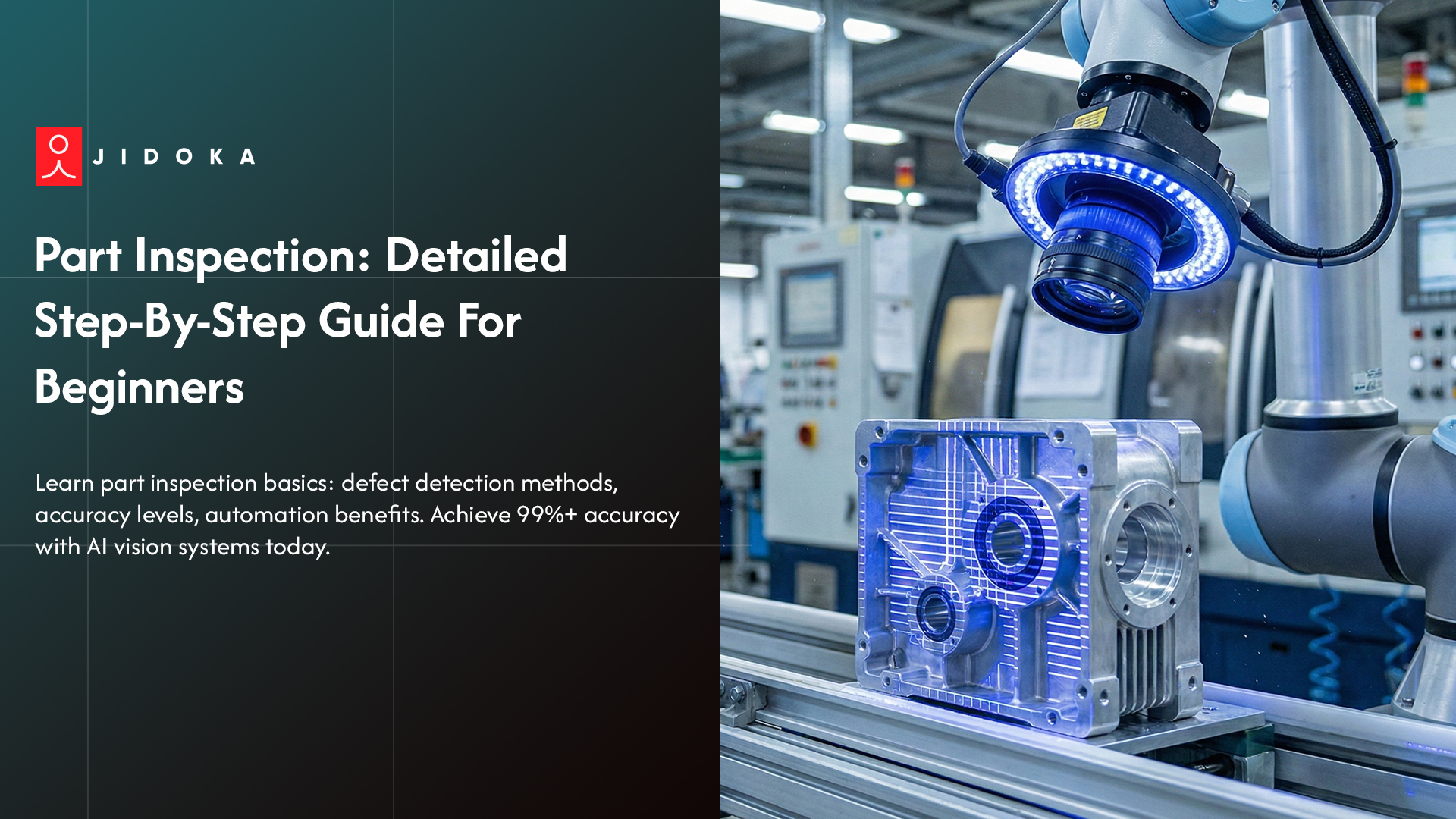
High-resolution cameras take photos of every piece as they move. This "freezes" the part so the system can perform a detailed part inspection without stopping the belt. Good lighting is vital here to catch every small detail.
Step #2. Preprocessing
The software cleans up the image for better clarity. It adjusts the light and removes shadows so the part inspection stays consistent even if the factory floor lighting changes.
Step #3. AI Analysis
The system looks for manufacturing defects by comparing the photo to a perfect model. This is where defect classification happens as the AI identifies the specific problem, like a crack or a missing hole.
Step #4. Instant Classification
The computer decides if the part passes or fails in less than a second. This real-time inspection keeps the line moving at top speed while providing component defect detection that humans cannot match.
Step #5. Action and Logging
The system kicks out bad parts automatically using air blasts or robotic arms. It saves the results to your quality assurance systems so you can track trends and fix the root cause of any recurring errors.
Following these steps ensures your automated quality control stays sharp. This workflow makes part inspection reliable and repeatable for every shift. Comparing this tech to old methods shows why so many shops are making the switch.
Benchmarking Performance: AI vs. Manual Inspection
The shift from manual checks to visual inspection automation is about getting results that do not change based on the hour of the day. Human accuracy often drops after just two hours of work due to tired eyes. Using part inspection systems ensures your quality stays high 24/7.
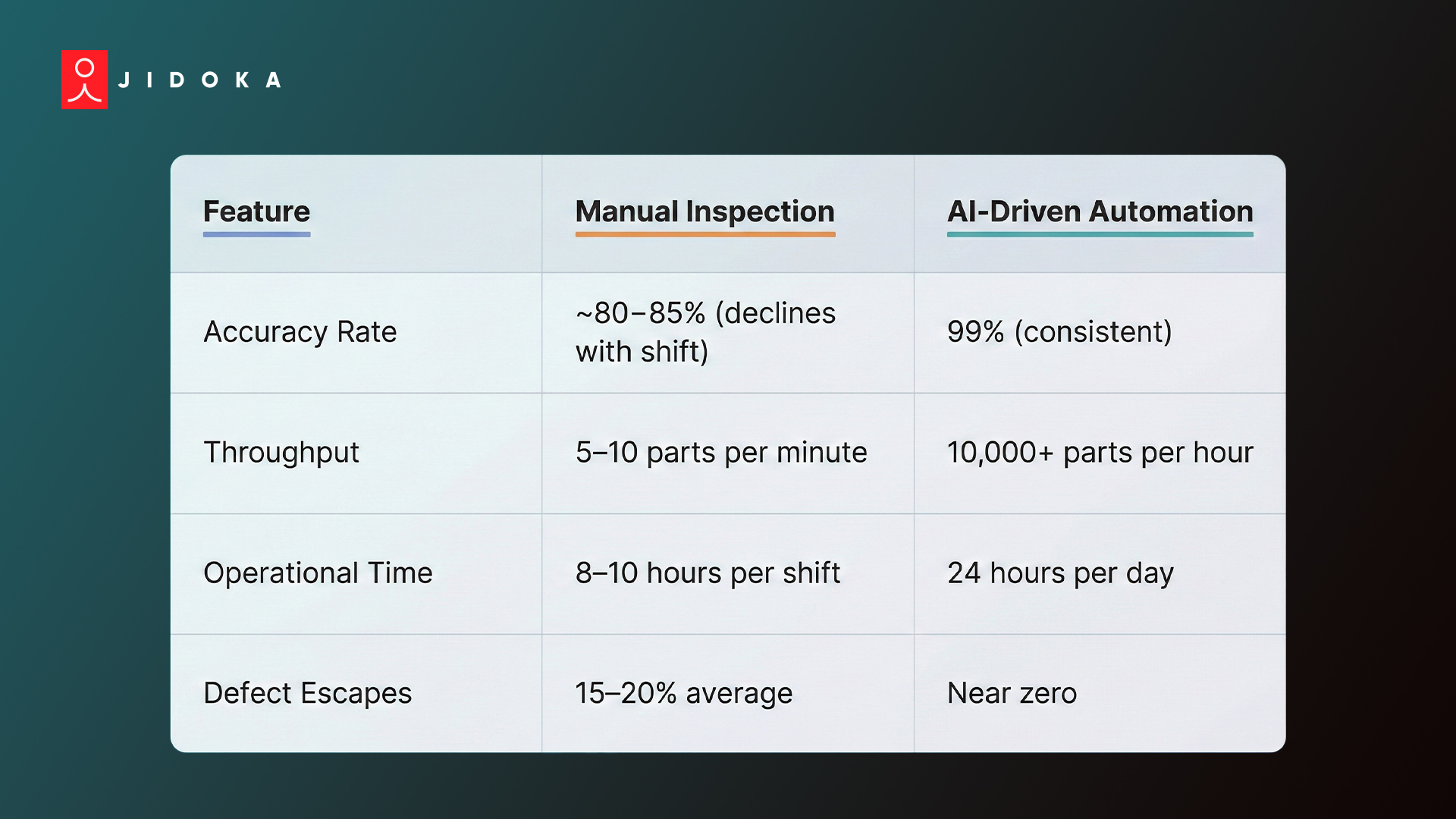
A human worker might check a few hundred pieces in a shift, but part inspection tools handle thousands of units at the same time. This speed is vital for automated quality control on high-volume lines. Machines do not blink or get distracted by noise on the floor.
Choosing automated quality control also helps your budget. While hiring more people increases your costs every year, an AI system is a one-time investment that gets better over time. Most shops see a full return on their money in 8 to 12 months because they stop paying for scrap and customer returns.
Moving to automated quality control changes your factory from being reactive to being proactive. This level of precision is now becoming the standard across many different fields.
Industry Applications: From Semiconductors to Steel
Every industry uses part inspection to solve unique problems. Whether you make cars or tiny computer chips, the goal remains the same. You use these tools to keep your quality high across different materials and production speeds.
Implementing automated quality control is the only way to stay competitive as lines move faster.
Application #1. Automotive: Modern plants rely on visual inspection automation to catch small scratches and assembly inspection errors. For example, BMW uses AI to cut defects by 40% on their lines. This ensures every vehicle leaving the factory meets strict safety standards.
Application #2. Electronics: Computer chips need part inspection at a microscopic scale. New AI models now help identify wafer flaws with high accuracy. This level of component defect detection is impossible for human eyes but easy for high-speed cameras.
Application #3. Aerospace: Safety matters most here. Part inspection tools scan turbine blades and engine parts for tiny internal cracks. Catching these early through machine vision inspection prevents major failures and keeps flights safe.
Application #4. Steel and Metal: Machines scan every millimeter of hot metal for surface defect detection or thickness issues. Using part inspection in this field prevents safety issues and helps factories reduce the amount of scrap metal they produce.
Seeing how these tools work in the real world makes the benefits clear. You can now see how specific platforms like Jidoka Tech make this possible for your own shop floor.
How Jidoka Tech Automates Part Inspection
Jidoka Tech provides a complete system that handles part inspection under intense production pressure. Our team aligns cameras and lighting so your automated quality control works across every shift.
- KOMPASS: This high-accuracy tool handles part inspection with 99.8% precision. It reviews frames in under 10ms and learns new parts with fewer samples. It easily manages reflective metals and textured surfaces.
- NAGARE: This analyst tracks every step of your assembly inspection. It flags missing parts or wrong sequences in real-time, which helps you cut rework by up to 35%.
Jidoka runs the full part inspection system on local edge units to avoid delays. This approach ensures your automated quality control is fast and secure.
Check out Jidoka Tech online to see how their real-time inspection tools can eliminate your manufacturing defects now.
Conclusion
Maintaining high standards for every component is the cornerstone of a successful manufacturing operation. Relying on outdated part inspection methods often results in overlooked manufacturing defects that slip through the cracks.
These missed errors quickly escalate into expensive product recalls and a loss of trust from your key clients. The cost of a single mistake is often much higher than the investment in modern tools.
Transitioning to automated quality control with Jidoka Tech removes these risks by providing constant, high-precision scanning. Our systems ensure your products are always reliable and your brand remains a leader in the market.
Secure your future and eliminate risk with Jidoka today.
FAQs
1. How long does it take to train the AI?
Modern part inspection systems use transfer learning to speed up setup. You can train component defect detection models using only 20-50 samples. This enables fast visual inspection automation while ensuring manufacturing defects are logged by your quality assurance systems instantly.
2. Can it handle high-speed production lines?
Yes, visual inspection automation like KOMPASS manages 12,000 parts per minute easily. This real-time inspection uses machine vision inspection to perform defect classification in milliseconds. It keeps your automated quality control moving fast while maintaining high-speed component defect detection.
3. How does it manage reflective or oily surfaces?
By using specialized lighting and filters, part inspection tools eliminate glares on metal. This allows for accurate surface defect detection and dimensional verification. High-resolution sensors provide precision measurement, feeding critical data into your quality assurance systems for reliable automated quality control.
4. What is the typical ROI for this technology?
Most manufacturers reach full ROI on automated quality control within 12 to 18 months. You save significant money by stopping manufacturing defects and reducing scrap material. This visual inspection automation pays for itself through increased throughput and superior component defect detection.
5. Does AI replace all human inspectors?
No, it creates a smarter hybrid quality assurance system. The machine vision inspection handles repetitive part inspection tasks, while humans focus on solving problems. This visual inspection automation frees your team to manage assembly inspection data and refine your automated quality control.