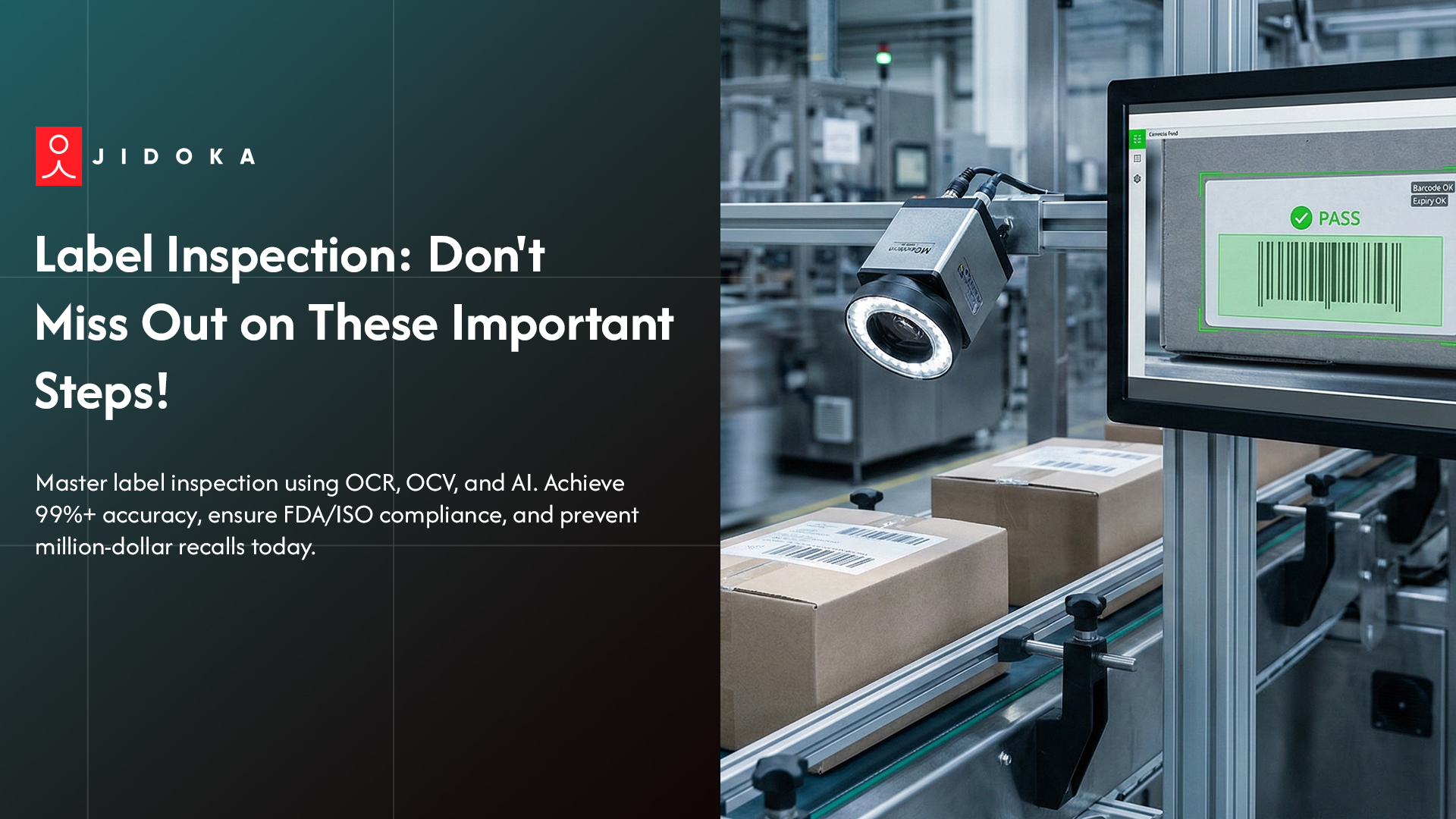
Eine falsche Ziffer an einem Verfallsdatum verursacht große Probleme. Das löst teure Rückrufe aus und schadet Ihrer Marke. Manuelle Prüfungen schlagen fehl, weil die Leute müde werden. Hochgeschwindigkeitslinien benötigen automatische Inspektionssysteme für eine bessere Etiketteninspektion.
Diese Tools gewährleisten die Genauigkeit der Chargennummer und die Einhaltung der Lebensmittelsicherheit. Sie benötigen eine hohe OCR-Genauigkeit und eine Kontrolle der Druckqualität, um Fehler zu vermeiden. Zuverlässig Überprüfung des OCR-Labels und die Barcode-Verifizierung verbessern die Rückverfolgbarkeit der Produkte.
Verwenden Sie diese Tools zur Erkennung von Etikettenfehlern und zur Vermeidung von Rückrufen bei der Arzneimittelkennzeichnung. Eine bessere Etiketteninspektion sorgt für die Sicherheit Ihrer Produktionslinie.
Kritische Etikettenfehler, die eine manuelle Inspektion umgehen
Menschen sehen keine Fehler mehr, wenn sie sich Tausende von Artikeln ansehen. Ihr Team könnte einen schwachen Fleck oder einen winzigen Tippfehler übersehen. Automatisierte Inspektionssysteme Konzentrieren Sie sich auch auf schnelle Linien. Sie bieten die beste Etiketteninspektion für jedes Produkt, das Sie herstellen.
1. Fehler bei Druckqualität und Lesbarkeit
Eine strenge Druckqualitätskontrolle verhindert verschwommenen Text. Diese Probleme entgehen dem menschlichen Auge oft:
- Streifenbildung oder Verschmierung, wodurch die Genauigkeit der Chargennummer beeinträchtigt wird.
- Verblasste Tinte, die den Vorschriften zur Lebensmittelsicherheit nicht entspricht.
- Registrierungsfehler, bei denen sich Buchstaben überschneiden.
2. Datengenauigkeit: Der „perfekt“ aussehende Fehler
Manchmal sieht ein Etikett perfekt aus, sagt aber das Falsche. Dies stellt ein großes Risiko für Ihre Marke dar.
- Ein schlechtes Jahr an einem Überprüfung des Ablaufdatums verursacht enorme Verschwendung.
- Ein fehlender Allergentext verhindert sofort die Rückverfolgbarkeit des Produkts.
- Eine hohe OCR-Genauigkeit vergleicht die Fakten mit Ihren realen Daten.
3. Barcode und Platzierung: Schrägstellung
Ein Barcode, der nicht gescannt wird, ist nutzlos. Bei einer ordnungsgemäßen Barcode-Überprüfung werden Verzerrungen oder Beschädigungen erkannt, bevor das Produkt versendet wird. Dies ist ein großer Teil der Rückrufprävention bei der Arzneimittelkennzeichnung. Besser Erkennung von Etikettenfehlern Durch die OCR-Labelüberprüfung werden diese Probleme schnell gefunden.
Eine konsistente Etiketteninspektion schafft Vertrauen bei Ihren Kunden. Verwenden Sie die Etiketteninspektion, um Ihre Standards hoch zu halten. Eine genaue Etiketteninspektion hilft Ihnen, die Nase vorn zu haben.
Fortschrittliche Tools zur Etiketteninspektion finden diese Fehler, sodass Sie sich auf die Produktion konzentrieren können.
OCR vs. OCV: Die Technologie hinter der Genauigkeit von 99%
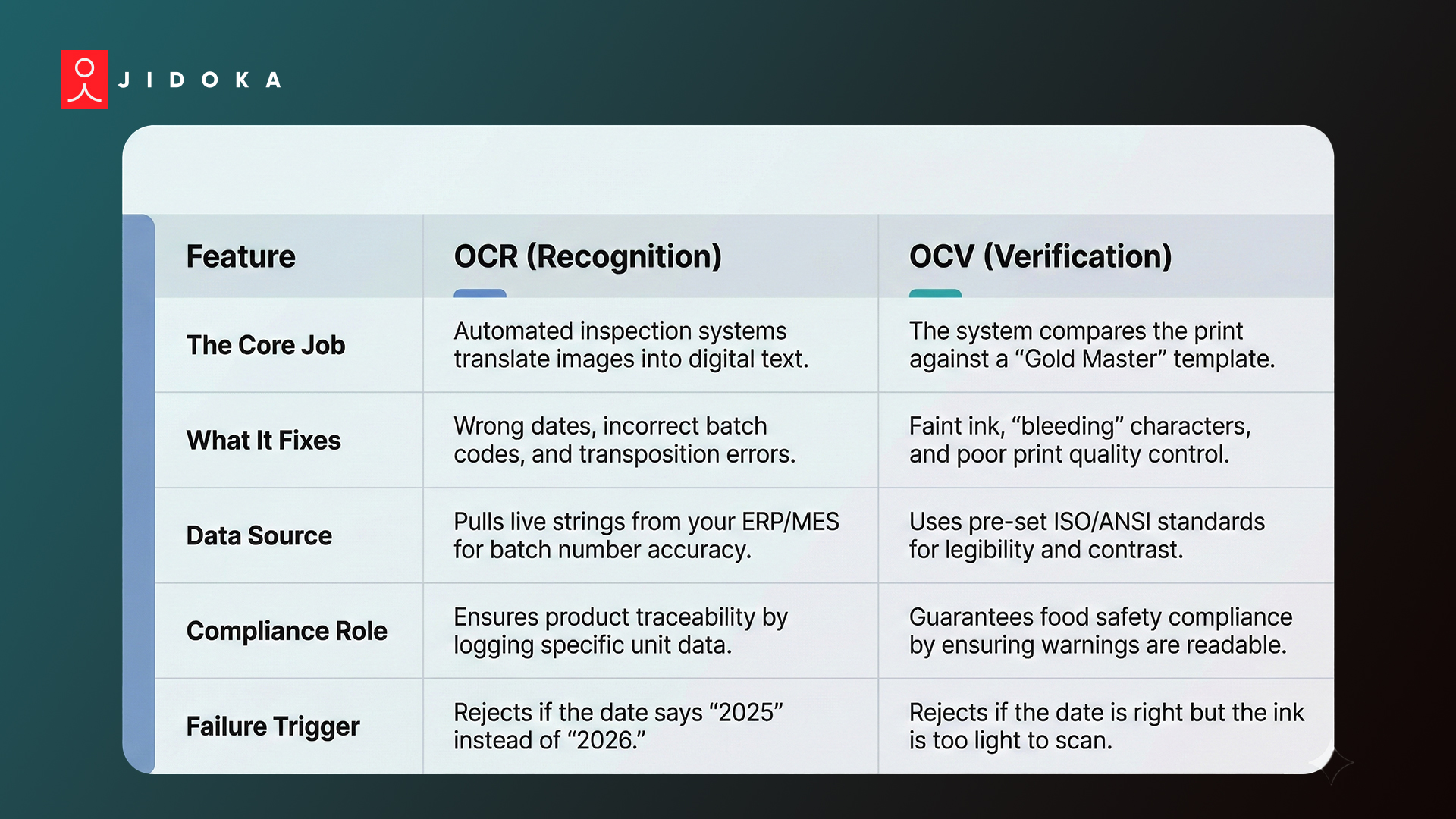
Sie benötigen zwei verschiedene Werkzeuge, um die absolute Genauigkeit zu erreichen. Das Lesen des Textes und die Überprüfung seiner Qualität sind separate Aufgaben. Moderne automatische Inspektionssysteme kombinieren beides, um Ihnen eine vollständige Etiketteninspektion zu ermöglichen.
1. OCR: Extrahieren der Daten
Die OCR-Labelüberprüfung identifiziert, was die Zeichen sagen. Es liest Daten und Codes vor, um zu bestätigen, dass sie mit Ihren Aufzeichnungen übereinstimmen. Dieser Prozess gewährleistet die Genauigkeit der Chargennummer für jede Einheit.
- Es liest verschiedene Schriften und Sprachen.
- Es verarbeitet gekrümmte oder glänzende Oberflächen gut.
- Es bleibt hoch OCR-Genauigkeit bei Höchstgeschwindigkeiten.
2. OCV: Validierung der Qualität
Während OCR liest, überprüft OCV den „Zustand“ des Drucks. Es untersucht den Kontrast und die scharfen Kanten jedes Buchstabens. Dies ist für die Einhaltung der Lebensmittelsicherheit und die Rückverfolgbarkeit der Produkte von entscheidender Bedeutung. Wenn die Tinte zu hell ist, fällt das Etikett aus, auch wenn die Daten korrekt sind.
3. Integration mit Master Records
Ihr System muss mit Ihrer Hauptdatenbank kommunizieren. Es vergleicht die Ergebnisse der Barcode-Überprüfung mit Ihren Live-Produktionsdaten. Dies verhindert Verwechslungen und ist ein zentraler Bestandteil der Rückrufprävention. Eine bessere Erkennung von Etikettenfehlern beginnt mit dieser Live-Datenüberprüfung.
Verwenden Sie die Etiketteninspektion, um Fehler zu verhindern, bevor sie Ihre Anlage verlassen. Jeder Schritt der Etiketteninspektion zählt. Eine konsistente Etiketteninspektion schützt Ihr Unternehmen. Vertrauen Sie darauf, dass Ihre Etiketteninspektion die Wahrheit herausfindet.
Regulatorische Standards und Branchenanwendungen
Regeln für Etiketten sind nicht nur Vorschläge. Es sind Gesetze, die Ihr Unternehmen und Ihre Kunden schützen. Der Einsatz automatisierter Inspektionssysteme hilft Ihnen dabei, diese strengen Regeln einzuhalten, ohne dabei langsamer zu werden. Eine bessere Etiketteninspektion macht jedes Audit schnell und einfach.
1. Pharmazeutische Kennzeichnung und Patientensicherheit
In der Medizin kostet ein kleiner Fehler Leben. Die FDA und andere Gruppen fordern perfekte Genauigkeit für jede Flasche. Sie müssen die OCR-Etikettenüberprüfung verwenden, um die Dosierung und die Seriennummern zu überprüfen.
Eine hohe OCR-Genauigkeit erstellt eine digitale Aufzeichnung für jedes Gerät. Dieses Niveau von Rückverfolgbarkeit der Produkte ist eine gesetzliche Anforderung. Durch eine zuverlässige Etiketteninspektion bleibt Ihre Anlage konform.
2. Einhaltung der Vorschriften für Lebensmittel, Getränke und Allergene
Fehlt ein Allergenwarnung ist die Hauptursache für Lebensmittelrückrufe. Hochgeschwindigkeitsstrecken bewegen sich zu schnell, als dass die Leute jeden Fehler erkennen könnten. Automatisierte Inspektionssysteme suchen in Echtzeit nach den richtigen Symbolen und Texten.
Sie gewährleisten die Einhaltung der Lebensmittelsicherheit, indem sie fehlende Etiketten sofort erkennen. Die korrekte Überprüfung des Verfallsdatums und die Genauigkeit der Chargennummer sind für die Verhinderung von Rückrufen von entscheidender Bedeutung. Ihre Etiketteninspektion muss perfekt sein, um sicher zu sein.
3. FMCG und Einsatzbereitschaft für den Einzelhandel
Einzelhändler bestrafen Sie mit einer Geldstrafe für schlechte Etiketten, die nicht gescannt werden können. Sie wollen perfekt Barcode-Überprüfung an der Kasse. Eine konsistente Kontrolle der Druckqualität stellt sicher, dass Ihre Produkte im Regal gut aussehen.
Eine effektive Erkennung von Etikettenfehlern stoppt schlechte Artikel, bevor sie versendet werden. Jede Etiketteninspektion schützt Ihren Gewinn. Eine starke Etiketteninspektion gewinnt.
Die Einhaltung dieser Regeln schützt Ihre Marke und schützt Sie vor hohen Bußgeldern.
Das finanzielle Argument: ROI und Rückrufprävention
Die Investition in automatisierte Inspektionssysteme spart schnell Geld. Es macht aus einer Kostenstelle ein Schutzinstrument für Ihren Gewinn. Eine bessere Etiketteninspektion macht sich bezahlt, da sie Verschwendung und Arbeitskosten eindämmen kann.
1. Reduzierung von Mängeln und Arbeitsersparnis
Manuelle Prüfungen kosten zu viel und übersehen zu viele Fehler. Durch die Umstellung auf die OCR-Etikettenüberprüfung werden Ihre QC-Arbeitsstunden um die Hälfte reduziert. Ihr Team kann sich auf bessere Aufgaben konzentrieren, während das System die Genauigkeit der Chargennummer gewährleistet. Sie sehen einen direkten Rückgang der Materialverschwendung, wenn Sie Fehler frühzeitig erkennen. Eine ordnungsgemäße Etiketteninspektion hält Ihre Kosten niedrig.
2. Die Kosten von Rückrufen
Ein einziger Rückruf kostet Millionen an Bußgeldern und verlorenen Lagerbeständen. Mithilfe von Tools zur Barcode-Verifizierung und Rückverfolgbarkeit von Produkten werden diese Ereignisse verhindert, bevor sie beginnen. Diese Tools bieten die Rückrufprävention, die Sie zum Schutz Ihrer Marke benötigen.
Pharmazeutische Kennzeichnung Fehler sind aufgrund rechtlicher Risiken besonders kostspielig. Eine bessere Erkennung von Etikettenfehlern ist Ihre beste Versicherungspolice. Eine hohe OCR-Genauigkeit und eine Kontrolle der Druckqualität stellen sicher, dass Ihre Etiketten immer korrekt sind.
Eine zuverlässige Etiketteninspektion schafft langfristigen Wert. Mit jeder Etiketteninspektion sparen Sie Geld. Vertrauen Sie Ihren Ergebnissen bei der Etiketteninspektion.
Automatisieren der Etiketteninspektion mit KOMPASS
Jidoka Tech baut automatisierte Inspektionssysteme, die unter echtem Druck arbeiten. Ihre KOMPASS Plattform liefert 99,8% OCR-Genauigkeit für eine bessere Etiketteninspektion.
- KOMPASS: Diese Technologie überprüft Frames in unter 10 ms für die Genauigkeit der Chargennummer. Es kommt mit schwierigen Oberflächen zurecht und lernt neue Varianten für die Überprüfung von OCR-Etiketten kennen.
- NAGARE: Dieses Tool verfolgt jeden Schritt, um Fehler durch Erkennung von Etikettenfehlern zu verhindern.
Diese Tools helfen bei der Verhinderung von Rückrufen und der Einhaltung der Lebensmittelsicherheit. Jidoka führt alles auf lokalen Edge-Einheiten aus, damit Ihre Anlage schnell läuft.
Entdecke Jidoka Tech's automatisierte Inspektionssysteme zur Sicherung Ihrer Produktionslinie mit Genauigkeit von 99,8% und heute vollständige Etikettenkonformität.
Fazit
Etiketten stehen für Ihr Versprechen an den Kunden. Manuelle Prüfungen schlagen jedoch fehl, wenn die Leitungen schnell laufen. Ein winziger Fehler am Ablaufdatum führt zu einem 50 Millionen $ Erinnern Sie sich daran, dass Ihre Marke über Nacht zerstört wird.
Sie riskieren hohe Bußgelder und verlorenes Vertrauen, das Sie niemals zurückgewinnen können. Dieser Fehler bleibt für immer in der Öffentlichkeit. Stoppen Sie das Risiko jetzt. Jidoka Tech bietet die beste Etiketteninspektion mit fortschrittlicher OCR-Etikettenüberprüfung. Nutzen Sie ihre Tools für eine perfekte Druckqualitätskontrolle und schützen Sie Ihre Zukunft schon heute.
Stellen Sie noch heute eine Verbindung zu Jidoka Tech her um Ihre Etiketteninspektion zu verbessern und eine perfekte Druckqualitätskontrolle zu gewährleisten, um Fehler vor dem Versand zu vermeiden.
Häufig gestellte Fragen
1. Was ist der Unterschied zwischen OCR und OCV in Etiketteninspektionssystemen?
Bei der OCR-Etikettenüberprüfung wird Text gelesen, um die Genauigkeit der Chargennummer sicherzustellen. Die Druckqualitätskontrolle verwendet OCV, um zu überprüfen, ob der Text klar aussieht. Zusammen verbessern sie Ihren Etiketteninspektionsprozess. Die hohe OCR-Genauigkeit verhindert Datenfehler, und OCV erkennt verschwommene oder verblasste Etiketten sofort.
2. Wie verhindert die automatische Etiketteninspektion kostspielige Rückrufe?
Automatisierte Inspektionssysteme erkennen Fehler, bevor Produkte Ihr Werk verlassen. Dies hilft bei der Vermeidung von Rückrufen, indem falsche Daten oder fehlende Allergene verhindert werden. Eine bessere Erkennung von Etikettenfehlern durch ständige Etiketteninspektion findet Fehler, die Menschen übersehen. Sie schützen Ihre Marke und sparen Millionen.
3. Welche Genauigkeitsgrade können moderne Etiketteninspektionssysteme erreichen?
Moderne automatisierte Inspektionssysteme erreichen eine Genauigkeit von 99,8%. Sie bieten eine zuverlässige Etiketteninspektion mit Geschwindigkeiten von bis zu 12.000 PPM. Sie erhalten eine perfekte OCR-Genauigkeit für die Genauigkeit der Chargennummer und die Überprüfung des Verfallsdatums. Diese Tools verbessern die Erkennung von Etikettenfehlern, damit Ihre Produktionslinien in Bewegung bleiben.
4. Können Etiketteninspektionssysteme mehrere Produktvarianten und sich ändernde Formate verarbeiten?
Ja. Moderne automatische Inspektionssysteme lernen schnell neue SKUs kennen. Sie kommen mit unterschiedlichen Formen und Sprachen zurecht, um Folgendes sicherzustellen Einhaltung der Lebensmittelsicherheit. Diese Flexibilität verbessert Ihre Etiketteninspektion bei allen Varianten. Sie behalten die Rückverfolgbarkeit Ihrer Produkte auch dann bei, wenn sich Ihre Verpackung an der Linie häufig ändert.
5. Was ist der typische ROI und die Amortisationszeit für Investitionen in ein Etiketteninspektionssystem?
Die meisten Pflanzen sehen in 18 Monaten eine Rückkehr. Eine bessere Etiketteninspektion reduziert Arbeitskosten und Abfall. Indem Sie die Druckqualität kontrollieren und Rückrufe verhindern, vermeiden Sie hohe Bußgelder. Dies ist für die Etikettierung von Arzneimitteln von entscheidender Bedeutung, bei der ein Fehler viele Millionen Dollar kostet.
6. Wie stellen Etiketteninspektionssysteme die Einhaltung gesetzlicher Vorschriften und die Auditbereitschaft sicher?
Diese Tools erstellen eine digitale Aufzeichnung jedes Produkts. Dies gewährleistet die Einhaltung der Lebensmittelsicherheit und die Rückverfolgbarkeit der Produkte bei Audits. Ihr Etiketteninspektionssystem verfolgt die Barcode-Überprüfung und die Datumsangaben automatisch. Sie sind bereit für Inspektoren mit klaren Daten, die Ihre Qualitätsstandards belegen.