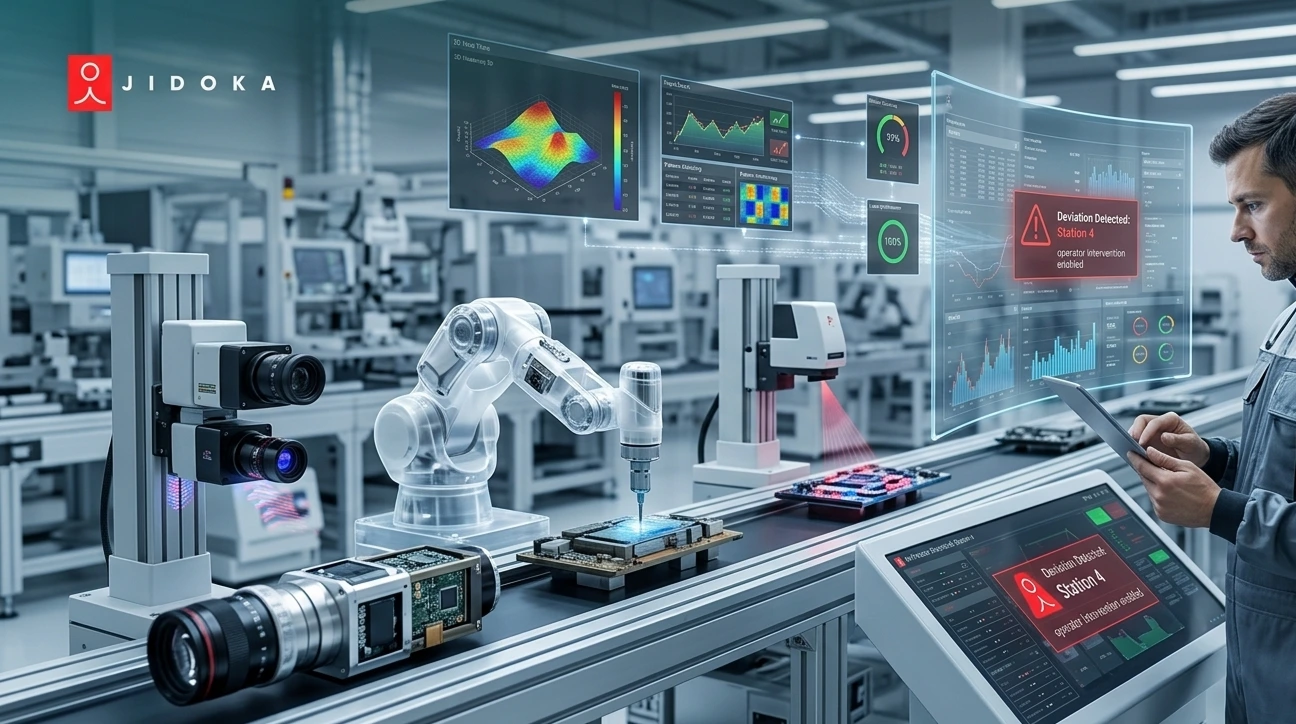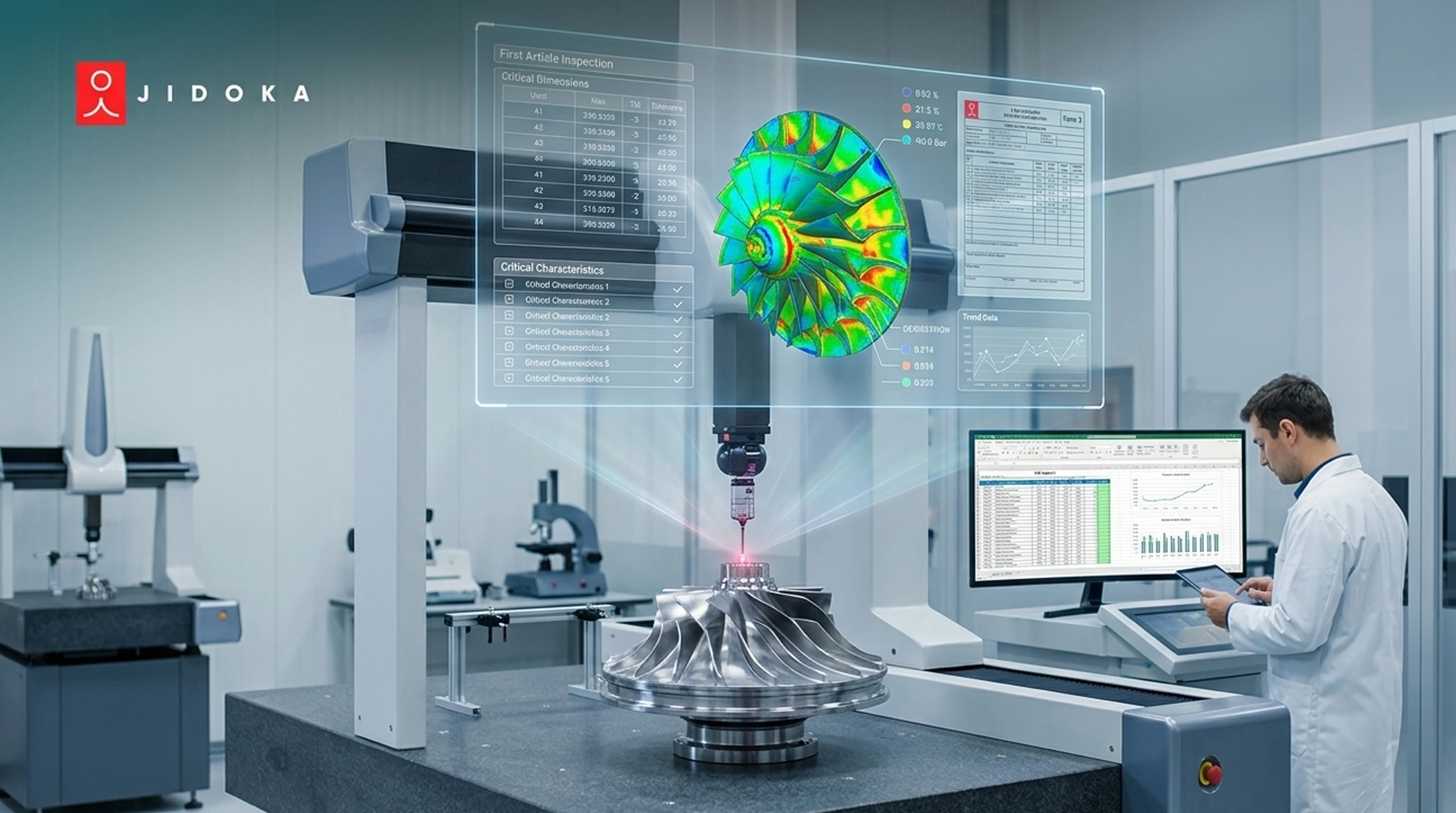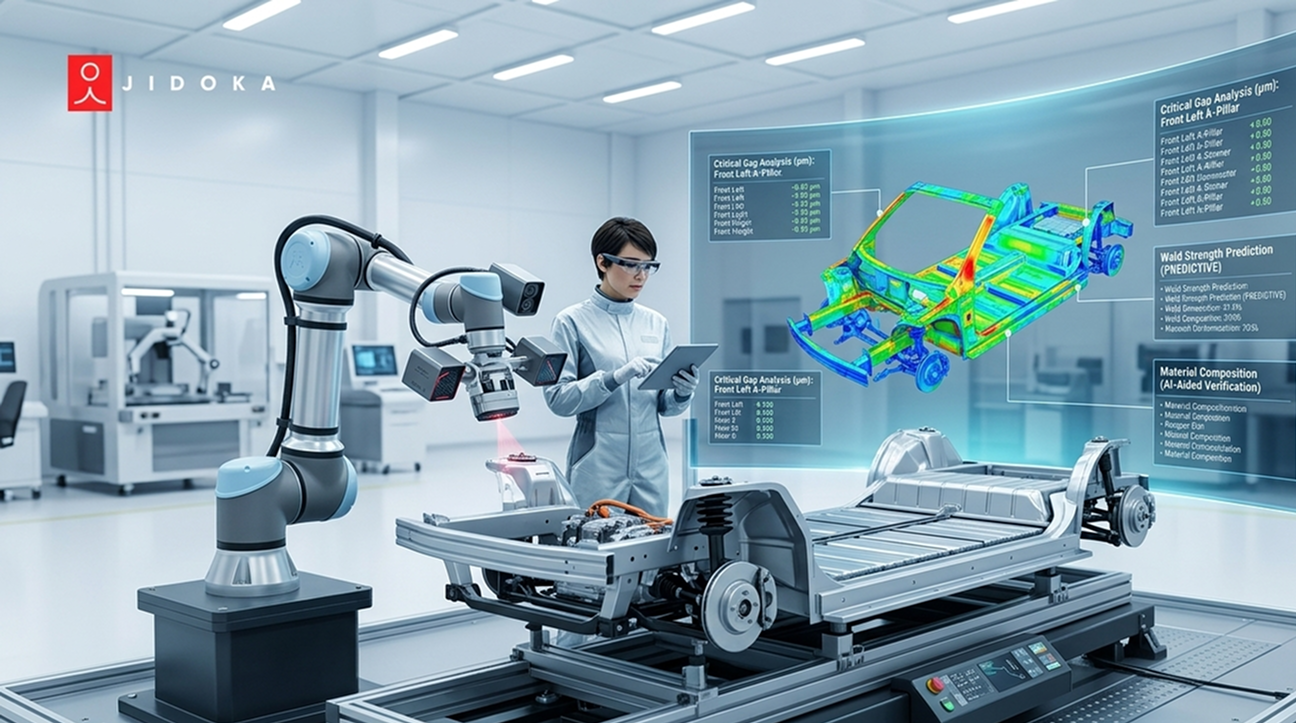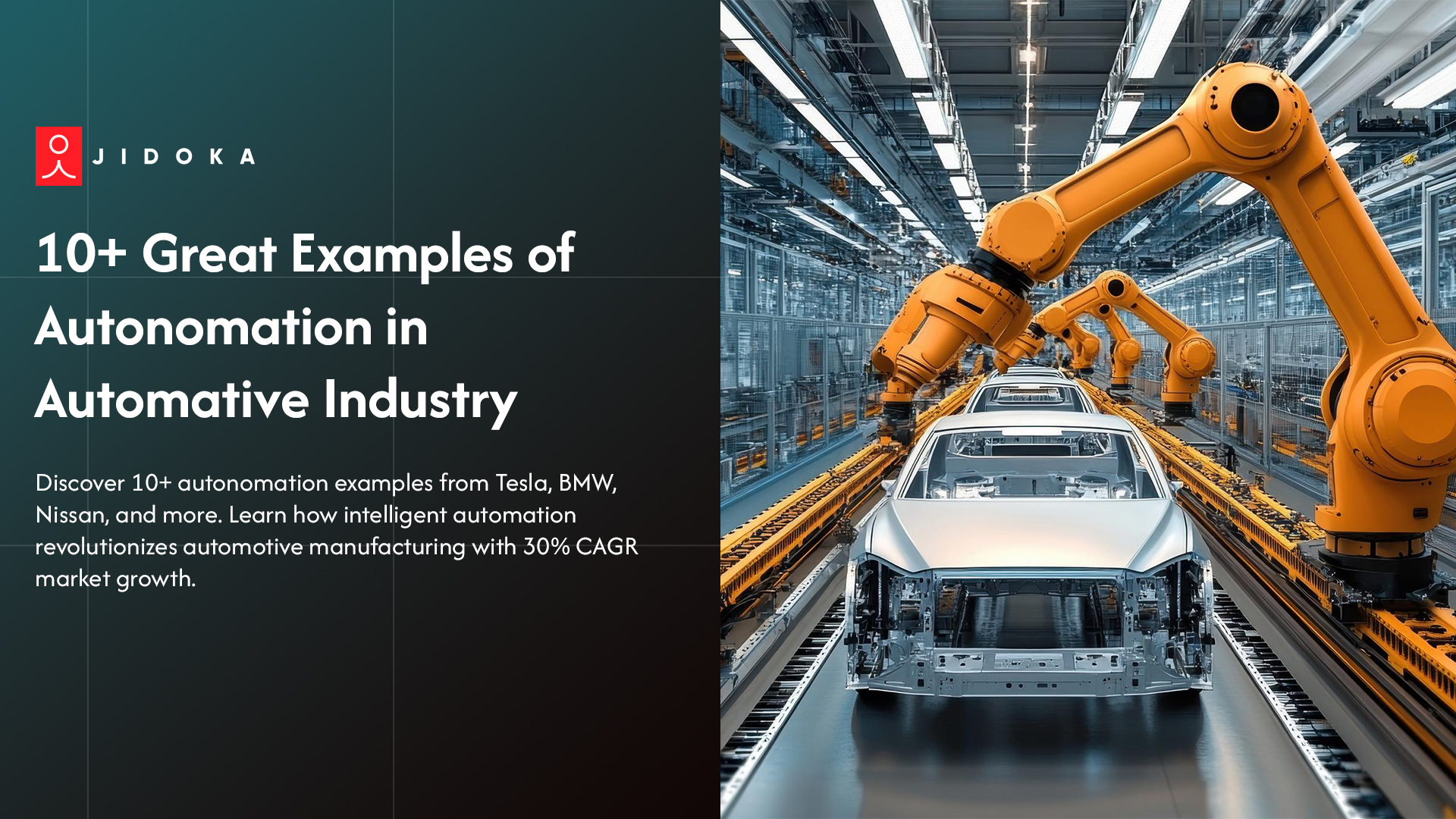
Die Automobilindustrie entwickelt sich von der Produktion ohne Licht zur Autonomisierung (Jidoka), also zur Automatisierung mit menschlichem Touch. Im Gegensatz zu herkömmlichen Robotern, die blindlings Aufgaben wiederholen, stattet Autonomation Maschinen mit dem „Intellekt“ aus, um Abnormalitäten zu erkennen und die Produktion sofort einzustellen. Dadurch wird verhindert, dass ein einziger Fehler die gesamte Montagelinie durchläuft, und gewährleistet“Null Defekt„Qualität.
Mit der KI-gesteuerten Automatisierung, die ständig wächst 30% CAGR, Hersteller legen nicht mehr nur Wert auf Geschwindigkeit, sondern“intelligent„Geschwindigkeit. Durch die Integration von maschinellem Sehen und Echtzeitsensoren ermöglichen es führenden Unternehmen wie Tesla, BMW und Toyota den Menschen, intelligentere Systeme zu überwachen, anstatt Handarbeit zu verrichten.
Diese Entwicklung von der „dummen“ Automatisierung zu denkenden Maschinen lässt sich am besten anhand der folgenden 12 realen Anwendungen veranschaulichen.
12 Beispiele für Autonomie aus der Praxis (kategorisiert)
Um zu verstehen, wie sich Theorie in Durchsatz niederschlägt, müssen wir uns die Fabrikhalle ansehen. Weltweit agierende Hersteller implementieren derzeit Systeme, die wahrnehmen, argumentieren und anhalten.
Diese Beispiele zeigen, wie Marken intelligente Automatisierung einsetzen, um spezifische Probleme in der Fertigung zu lösen und gleichzeitig eine Null-Fehler-Qualität zu gewährleisten.
A. Die EV-Pioniere: Geschwindigkeit und Skalierung
Der Übergang zu Elektrofahrzeugen (EVs) erfordert extreme Präzision bei der Batterie- und Rahmenmontage. Pioniere in diesem Bereich nutzen Beispiele der Autonomisierung, um die Produktion mit hoher Geschwindigkeit zu bewältigen, ohne die Sicherheit zu gefährden.
1. Tesla (Fremont):
Vision-Guided Welding Teslas Werk in Fremont zeigt führende Beispiele für Autonomisierung durch Qualitätskontrolle für maschinelles Sehen. Beim Strukturschweißen analysieren neuronale Netze den Lichtbogen und die Naht in Echtzeit.
Erkennt das System eine „kalte Schweißnaht“, löst die Industrierobotikeinheit einen sofortigen Stopp aus. Dadurch wird verhindert, dass sich defekte Rahmen flussabwärts bewegen, und die Montage autonomer Fahrzeuge wird auf hohem Niveau gewährleistet.
2. Changan Auto (Chongqing):
Die „Dunkle Fabrik“ von 5G in Chongqing, Changan's intelligentes Fabrikautomatisierungssystem nutzt 5G, um 1.400 Roboter zu vernetzen. Diese Anlage bewegt sich mithilfe einer selbstregulierenden Logik in Richtung dunkler Fabriken mit ausgeschaltetem Licht.
Wenn es zu Verzögerungen bei der Untermontage kommt, passt das Automatisierungssystem der Produktionslinie automatisch die Zyklusgeschwindigkeiten an. Es ist eines der effizientesten Beispiele für ein sich selbst ausgleichendes Produktionsökosystem im Bereich Autonomisierung.
3. Hyundai (Innovationszentrum für Elektrofahrzeuge):
Kollaborative „Cobots“ Das Hyundai-Hub in Singapur ist ein Beispiel für fortschrittliche Autonomisierung in der intelligenten Automatisierungsfertigung. Das System verwendet autonome mobile Roboter und „Cobots“ für die Batterieinstallation und überwacht Drucksensoren.
Erkennt der Roboter einen unerwarteten Widerstand, stoppt er sofort. Diese automatische Qualitätskontrolle schützt die Arbeiter und gewährleistet eine fehlerfreie Integrität während des empfindlichen Steckvorgangs des Akkus.
B. Die deutschen Giganten: Präzision und Oberflächenqualität
Deutsche Autohersteller sind ein Synonym für technische Exzellenz, und sie integrieren jetzt die intelligente Automatisierung von Jidoka, um diesen Ruf aufrechtzuerhalten.
4. BMW (Regensburg):
KI-gestützte Oberflächeninspektion BMW verwendet maschinelles Sehen zur Qualitätskontrolle, um frisch lackierte Karosserien zu scannen. Verwenden Deflektometrie, das System erkennt mikroskopische Staubpartikel.
Diese Beispiele für Autonomisierung gehen über die Erkennung hinaus. Das System steuert die Industrierobotik so, dass Fehler automatisch geschliffen und poliert werden. Diese KI-gestützte Fehlererkennung gewährleistet ein perfektes Ergebnis ohne menschliches Eingreifen und optimiert so die Automatisierung der Produktionslinie.
5. Mercedes-Benz (Werk 56):
Autonome Logistik Mercedes-Benz hat traditionelle automatisierte Montagelinien durch autonome mobile Roboter (AGVs) ersetzt. Diese Fahrzeuge bewegen sich mithilfe intelligenter Fabrikautomatisierung durch den Boden, um Komponenten zu liefern.
Erkennt ein FTS ein Hindernis, stoppt es sofort. Dies sind Beispiele für flexible Autonomisierung, bei denen das intelligente Automatisierungssystem die Logistik selbst verwaltet, um Kollisionen zu verhindern.
6. ZF (Thermische Prüfung):
KI Heat Curve Monitoring ZF setzt vorausschauende Wartungsautomatisierung ein, um die Motortests von Elektrofahrzeugen zu überwachen. Ihr „TempAI“ -System analysiert Wärmedaten in Echtzeit.
Dies ist eines der wichtigsten Beispiele für Autonomisierung, bei dem das System eine Notabschaltung durchführt, wenn die Wärme vom digitalen Zwilling abweicht. Es nutzt effektiv die Automatisierung der Qualitätskontrolle, um die Zerstörung von Prototypen zu verhindern.
C. Die japanischen Meister: Flexibilität und Logik
Die „Japanese Masters“ zeichnen sich durch flexible Fertigung aus, indem sie traditionelle Handwerkskunst mit digitaler Logik verbinden. Durch die intelligente Automatisierung von Jidoka stellen diese Anlagen sicher, dass automatisierte Montagelinien nicht nur schnell sind, sondern sich auch selbst korrigieren.
7. Nissan (Intelligente Fabrik):
Die Intelligent Factory von Nissan in Tochigi für die Produktion von Mischmodellen zeigt fortschrittliche Autonomisierungsbeispiele für die autonome Fahrzeugmontage. Mithilfe der Hochgeschwindigkeits-Inspektion per Computer Vision installieren Roboter Cockpitmodule mit einer Präzision von ±0,05 mm.
Wenn ein Clip nicht mit der richtigen Kraft sitzt, löst die Automatisierung der Produktionslinie einen Stillstand aus. Diese Beispiele für Autonomisierung von KI-gestützte Defekterkennung ermöglichen es verschiedenen Elektrofahrzeugen und Gasen, sich eine Leitung zu teilen.
8. Toyota (Tsutsumi):
Multiprozess-Handling Im Werk Tsutsumi definiert Toyota die intelligente Jidoka-Automatisierung durch Multiprozess-Handling. Die Maschinen sind ausgestattet mit“Pokayoke„Sensoren, die nach Anomalien wie defekten Werkzeugen Ausschau halten.
Diese Beispiele für die Autonomisierung ermöglichen es einem einzelnen Bediener, mehrere Smart-Factory-Systeme gleichzeitig zu verwalten. Da die Maschinen die Automatisierung der Qualitätskontrolle unabhängig voneinander durchführen, steht es dem Werker frei, höherwertige Leistungen zu erbringen intelligente Automatisierungsfertigung Aufgaben.
9. Jetour (Fuzhou):
Unbemannte Reifen- und Windschutzscheibenverklebungen Die „Dark Factory“ von Jetour in Fuzhou bietet hervorragende Beispiele für Autonomisierung, um die Qualitätsziele von „0+3“ zu erreichen. Die Anlage verfügt über eine unbemannte Reifenmontage und CNC-Roboter für die Verklebung von Windschutzscheiben.
Diese Roboter verwenden maschinelles Sehen zur Qualitätskontrolle, um die Dicke der Dichtstoffperlen in Echtzeit zu überprüfen. Diese intelligente Fabrikautomatisierung gewährleistet eine hundertprozentige Präzision und stoppt die Industrierobotik sofort, wenn bei der Automatisierung der Produktionslinie ein Defekt festgestellt wird.
D. Branchenübergreifende Anwendungen
Abgesehen von bestimmten Marken werden die Prinzipien der intelligenten Automatisierung von Jidoka in der gesamten Lieferkette angewendet, um allgemeine Qualitätsherausforderungen zu lösen.
10. Montage des Akkupacks:
Vision Sealant Check Bei der modernen Herstellung von EV-Batterien konzentrieren sich die Beispiele für Autonomisierung auf hermetische Abdichtung zur Vermeidung von Brandgefahren. Hochgeschwindigkeitskameras zur Qualitätskontrolle der industriellen Bildverarbeitung überprüfen das Vorhandensein jeder Schraube und die Unversehrtheit der Dichtungen.
Erkennt die KI-gestützte Defekterkennung einen Abstand von 0,1 mm, werden die automatisierten Montagelinien sofort gestoppt. Diese Automatisierung der Qualitätskontrolle ist für die Montage autonomer Fahrzeuge mit hoher Sicherheit von entscheidender Bedeutung.
11. Tore von Vision QA:
Letzte „Kontrollpunkte“ Am Ende der automatisierten Montagelinien setzen viele Werke heute „Sichttunnel“ für die Endkontrolle ein. Bei diesen Automatisierungsbeispielen werden Dutzende von Kameras verwendet, um die Plattenabstände und die Ausrichtung der Bauteile zu überprüfen.
Wenn der Computer-Vision-Inspektion erkennt jede Abweichung, das Fahrzeug wird markiert und das Automatisierungssystem der Produktionslinie alarmiert den Bediener. Dadurch wird sichergestellt, dass nur perfekte Einheiten die intelligente Fabrikautomatisierungsanlage verlassen.
12. Prädiktive Wartung:
Schwingungs- und Geräuschanomalien Mithilfe der Automatisierung der vorausschauenden Wartung überwachen Sensoren in der Industrierobotik Vibrationen und akustische Signaturen. Anhand dieser Beispiele zur Autonomisierung kann das System einen Lagerausfall vorhersagen, bevor er auftritt.
Anstatt dass eine Störung die Automatisierung der Produktionslinie zum Erliegen bringt, planen die Smart-Factory-Systeme automatisch ein Wartungsfenster ein und beweisen so, wie die intelligente Automatisierungsfertigung die Verfügbarkeit maximiert und gleichzeitig die Sicherheit gewährleistet.
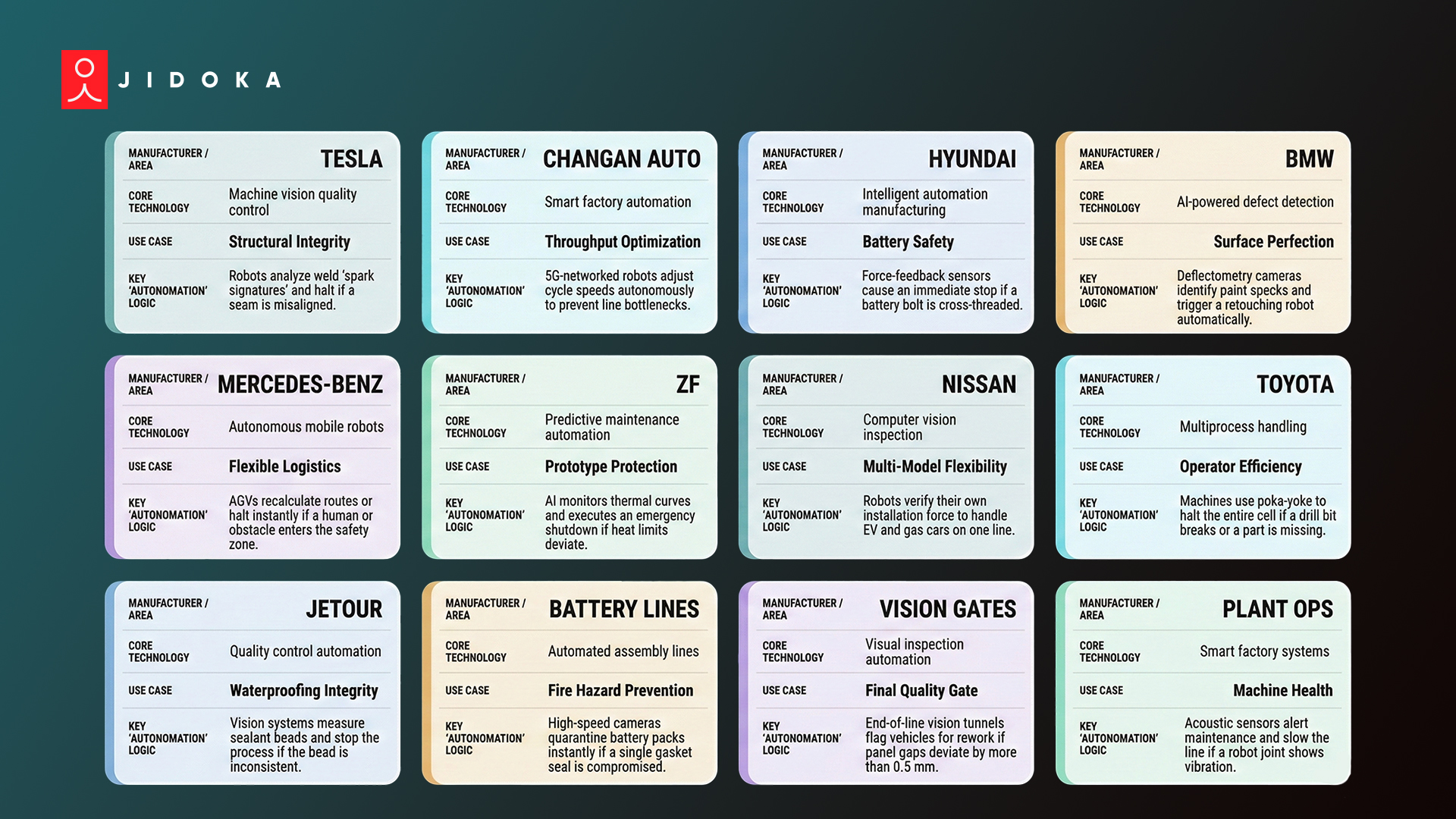
Kurzer Überblick: 12 Beispiele für Autonomisierung in der Automobilherstellung
Wie Jidoka Tech diesen Wandel ermöglicht
Jidoka Tech bietet das digitale „Gehirn“ für moderne Fabriken, indem es Kameras, Beleuchtung und Industrierobotik zu einem kohärenten Ökosystem für intelligente Fabrikautomatisierung zusammenführt, das unter echtem Produktionsdruck funktioniert.
- KOMPASS: Dieses KI-gestützte Tool zur Defekterkennung erreicht Genauigkeit von über 99,8% beim 12.000 Teile pro Minute. Es stellt erstklassige Beispiele für Autonomisierung dar, da es Einzelbilder in <10 ms analysiert und reflektierende Oberflächen bearbeitet, bei denen die herkömmliche Qualitätskontrolle durch maschinelles Sehen versagt.
- NAGARE: Als Analyst für intelligente Automatisierungsfertigung nutzt das Unternehmen vorhandene Kameras für die Automatisierung der Qualitätskontrolle und markiert fehlende Teile in Echtzeit.
Durch die Implementierung der intelligenten Automatisierung von Jidoka auf lokalen Edge-Einheiten verwandeln wir automatisierte Montagelinien in selbstkorrigierende Systeme und bieten damit die zuverlässigsten Beispiele für Autonomation in der Branche.
Fazit
Beispiele für die Umstellung auf Autonomie in der Automobilindustrie verspricht eine „Null-Fehler-Produktion“, doch Integrationsprobleme und hohe Fehlauswurfraten sind nach wie vor kritische Problembereiche.
Die Wahl eines minderwertigen intelligenten Fabrikautomationssystems hat verheerende Folgen: unentdeckte Mängel, massive Rückrufe und lahmgelegte automatische Montagelinien. Diese Beispiele für gescheiterte Autonomisierung vermitteln ein falsches Gefühl der Sicherheit und untergraben gleichzeitig die Margen und das Markenvertrauen.
Jidoka intelligente Automatisierung von Jidoka Tech bietet eine robuste“Gehirn„um diese Katastrophen zu verhindern. Durch die Implementierung einer hochpräzisen KI-gestützten Fehlererkennung vermeiden Hersteller die Fallstricke veralteter Systeme und stellen sicher, dass die Automatisierung der Qualitätskontrolle ein entscheidender Wettbewerbsvorteil bleibt.
Kontaktieren Sie Jidoka Tech noch heute um eine hochpräzise KI-gestützte Fehlererkennung zu integrieren und Ihre automatisierten Montagelinien in selbstkorrigierende Null-Fehler-Systeme umzuwandeln.
Häufig gestellte Fragen
1. Was ist der Hauptunterschied zwischen Automatisierung und Autonomisierung?
Traditionelle Automatisierung führt Aufgaben blind aus, während es bei Autonomation beispielsweise Maschinen gibt, die „denken“ und bei Fehlern anhalten. Mithilfe der intelligenten Automatisierung von Jidoka werden automatisierte Montagelinien zu intelligenten Fabriksystemen, die sich selbst bewusst sind. Diese Automatisierung der Qualitätskontrolle stellt sicher, dass die intelligente Automatisierungsfertigung mithilfe der robotergestützten Prozessautomatisierung der Präzision Vorrang vor der Rohgeschwindigkeit einräumt.
2. Wird die Implementierung von Autonomation meine bestehende Belegschaft ersetzen?
Nein, es definiert ihre Rollen neu. Diese Beispiele für Autonomisierung führen Arbeitnehmer von manueller Arbeit zur Überwachung von Industrierobotern und autonomen mobilen Robotern um. Die Mitarbeiter sind mit KI-gestützter Fehlererkennung und Computer-Vision-Inspektion ausgestattet und kümmern sich um multiprozessübergreifende Handlingaufgaben, während die intelligente Fabrikautomatisierung die sich wiederholende Automatisierung der Produktionslinie und die autonome Fahrzeugmontage übernimmt.
3. Ist es möglich, diese Systeme in älteren, veralteten Fabriken zu implementieren?
Ja, durch intelligentes Nachrüsten. Zu den praktischen Beispielen für die Automatisierung gehört die Erweiterung vorhandener Maschinen um eine Qualitätskontrolle durch maschinelles Sehen. Durch die Integration der intelligenten Automatisierung von Jidoka und der vorausschauenden Wartungsautomatisierung erreichen ältere Anlagen die Standards der intelligenten Automatisierung, ohne dass sie vollständig umgebaut werden müssen. Dies beweist, dass selbst ältere Anlagen den Wirkungsgrad von dunklen Fabriken erreichen können, wenn sie nicht beleuchtet werden.