Beenden Sie die Behebung von Fehlern, nachdem sie aufgetreten sind. Machen Sie es unmöglich, von Anfang an zu scheitern. Poka-Yoke-Beispiele zeigen, wie Fehlervermeidung funktioniert, indem Qualität in Ihren Prozess integriert wird. Viele Geschäfte verschwenden Zeit mit Inspektionen.
Sie finden Fehler zu spät. Mit Techniken zur Fehlervermeidung können Sie heute eine Null-Fehler-Fertigung erreichen. Studien zeigen, dass durch die Vermeidung von Fehlern in der Fertigung Fehler reduziert werden 30%. Es verbessert auch die Zykluszeiten durch bis zu 60%. Diese Qualitätskontrollmechanismen dienen als Schutz für Ihren Boden.
Sie können eine einfache Anleitung oder einen KI-Sensor verwenden. Beide helfen bei der Beseitigung von Produktionsfehlern. Diese Poka Yoke-Beispiele behalten Ihre Sicherheit am Fließband hoch. Sie sorgen dafür, dass Ihr Team es richtig macht.
15 Poka-Yoke-Beispiele aus der realen Welt
Praktische Poka-Yoke-Beispiele gibt es in jeder Branche. Diese Techniken zur Fehlervermeidung verhindern, dass Fehler zu teuren Defekten werden. Sie können die fehlersichere Fertigung auf physische Werkzeuge oder digitale Software anwenden.
Hier sind 15 Möglichkeiten, Poka-Yoke-Beispiele zu verwenden, um Ihre Produktionsfläche noch heute zu verbessern.
A) Automobilsicherheit
Automobilbranche Sicherheit hängt davon ab, menschliches Versagen bei hohen Geschwindigkeiten zu verhindern. Diese Poka-Yoke-Beispiele zeigen, wie intelligentes Design die Sicherheit der Fahrer gewährleistet, ohne dass sie sich während jeder einzelnen Meile ständig konzentrieren oder manuell überprüfen müssen.
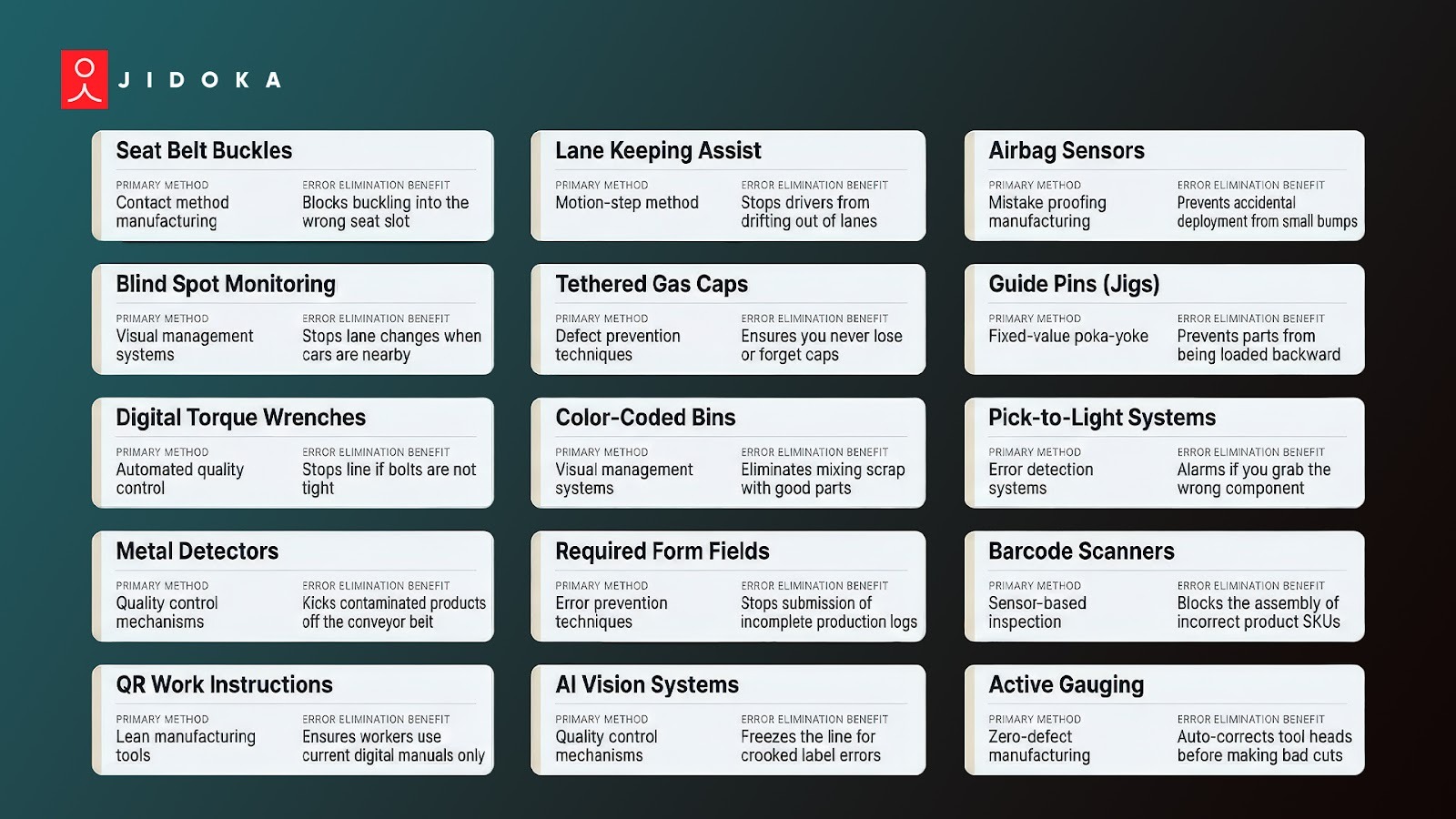
Beispiel #1. Sicherheitsgurtschnallen: Diese verwenden eine Kontaktmethode mit einzigartigen Formen. Sie können den Gürtel nur in den richtigen Schlitz klicken. Diese Poka-Yoke-Beispiele verhindern, dass Sie in den falschen Sitz einknicken.
Beispiel #2. Spurhalte-Assistent: Diese Technologie nutzt Techniken zur Fehlervermeidung, um Ihr Rad anzustoßen. Sie verhindert, dass Sie von Ihrer Fahrspur abdriften. Diese Systeme sorgen für die Sicherheit jedes Fahrers auf jeder einzelnen Autoreise.
Beispiel #3. Airbag-Sensoren: Intelligente Logik macht die fehlersichere Fertigung in Ihrem Auto zum Kinderspiel. Sensoren werden nur bei echten Unfällen ausgelöst. Dies verhindert den Fehler eines versehentlichen Aufblasens durch eine kleine Beule oder Bordsteinkante.
Beispiel #4. Überwachung des toten Winkels: Diese visuellen Managementsysteme zeigen Ihnen, wenn sich Autos in der Nähe befinden. Diese Poka-Yoke-Beispiele dienen als wichtige Sensoren. Sie werden nicht in den Verkehr einbiegen, weil das Licht es Ihnen sagt.
Beispiel #5. Angebundene Tankdeckel: Eine einfache Kordel hält die Kappe fest. Dies ist eines der besten Poka-Yoke-Beispiele. Du verlierst nie die Rolle. Es stellt sicher, dass Sie den Tank versiegeln, bevor Sie fahren.
Diese Fahrzeugsicherheitsmerkmale beweisen, dass gutes Design Unfälle verhindert, bevor sie beginnen.
B) Fertigung und Montage
In den Werkshallen wird eine fehlersichere Fertigung verwendet, um Fehler an der Quelle zu verhindern. Diese Poka-Yoke-Beispiele zeigen, wie physische Barrieren und Qualitätskontrollmechanismen für einen besseren Arbeitsablauf sorgen. Mit Techniken zur Fehlervermeidung können Sie schon heute eine Null-Fehler-Fertigung erreichen.
Beispiel Nr. 6: Führungsstifte: Bei diesen Techniken zur Fehlervermeidung werden Metallstifte an den Vorrichtungen verwendet. Sie können ein Teil nicht rückwärts in die Maschine einlegen. Diese Poka-Yoke-Werkzeuge mit festem Wert stellen sicher, dass das Teil richtig sitzt.
Beispiel #7. Digitale Drehmomentschlüssel: Diese automatisierten Tools zur Qualitätskontrolle werden gestoppt, sobald sie ein Limit erreichen. Sie können eine Schraube nicht zu fest anziehen. Verwenden Sie diese Poka-Yoke-Beispiele, um sicherzustellen, dass jeder Verschluss perfekt ist.
Beispiel #8. Farbcodierte Fächer: Verwenden Sie Rot für Schrott und Grün für gute Teile. Diese visuelle Managementsysteme mache Fehler offensichtlich. Verwenden Sie diese Poka-Yoke-Beispiele, um zu verhindern, dass schlechte Teile vermischt werden.
Beispiel #9. Pick-to-Light-Systeme: Diese Fehlererkennungssysteme lassen das richtige Feld aufleuchten. Sie können nicht die falsche Komponente greifen. Diese Werkzeuge sorgen für eine hohe Sicherheit und Genauigkeit Ihrer Montagelinie.
Beispiel #10. Metalldetektoren: Nahrungspflanzen wenden diese Strategien zur Fehlervermeidung an. Das Band stoppt, wenn es Metall findet. Diese Systeme helfen bei der Beseitigung von Produktionsfehlern in jeder einzelnen Schicht.
Diese Poka-Yoke-Beispiele in der Werkstatt verwandeln komplexe Aufgaben in einfache, fehlerfreie Aktionen.
C) Digitales und modernes Poka-Yoke
Software und KI bringen die fehlersichere Fertigung ins digitale Zeitalter. Diese Poka-Yoke-Beispiele verwenden Echtzeitdaten und sensorgestützte Inspektionen, um die Genauigkeit sicherzustellen. Diese Techniken zur Fehlervermeidung helfen Ihnen dabei, die Ziele einer Null-Fehler-Fertigung zu erreichen.
Beispiel #11. Erforderliche Felder: Softwareformulare verwenden Techniken zur Fehlervermeidung, um leere Eingaben zu blockieren. Sie können keine Daten senden, bis Sie alle Felder ausgefüllt haben. Diese Poka-Yoke-Beispiele eliminieren das Risiko, wichtige Fertigungsprotokolle zu übersehen.
Beispiel #12. Barcodescanner: Diese bieten eine sensorgestützte Inspektion zur Überprüfung jedes Teils. Die Leitung stoppt, wenn der Scan eine Nichtübereinstimmung zeigt. Diese digitale Prüfung stellt sicher, dass jeder Kunde genau das Produkt erhält, das er bei Ihnen bestellt hat.
Beispiel #13. Digitale Arbeitsanweisungen: Verwenden Sie Lean-Manufacturing-Tools wie QR-Codes an den Arbeitsplätzen. Arbeiter sehen nur Live-Schritte. Diese Poka-Yoke-Beispiele beseitigen die Verwirrung, die durch alte Papierhandbücher in der Werkstatt verursacht wurde.
Beispiel #14. Bildverarbeitungssysteme: Hochgeschwindigkeitskameras sorgen für eine automatische Qualitätskontrolle an Ihren Anlagen. Sie erkennen sofort krumme Etiketten. Diese Poka-Yoke-Beispiele sorgen dafür, dass Ihre Produkte immer professionell aussehen und hochwertigen Kontrollmechanismen entsprechen.
Beispiel #15: Herstellung von Tesla-Rotoren: Tesla verwendet die Motion-Step-Methode, um Teile während des Schnitts zu messen. Das System repariert Werkzeuge automatisch. Diese Poka-Yoke-Beispiele führen zu einer Null-Fehler-Fertigung, indem der Ausschuss gestoppt wird, bevor er überhaupt entsteht.
Moderne digitale Tools machen Ihre Qualitätsprüfungen schneller und zuverlässiger als manuelle Augen.
Die 15 besten Poka Yoke-Beispiele in der heutigen Fertigungslandschaft:
Fallstudien aus der Praxis (ROI)
Poka-Yoke-Beispiele in Aktion zu sehen, beweist ihren finanziellen Wert. Diese Unternehmen nutzten die fehlersichere Fertigung, um echte Bodenprobleme zu lösen. Sie machten Techniken zur Fehlervermeidung zu hohen Gewinnen und schnellerem Wachstum, indem sie sich auf folgende Bereiche konzentrierten Ziele der Null-Fehler-Fertigung.
1. Companion Baking
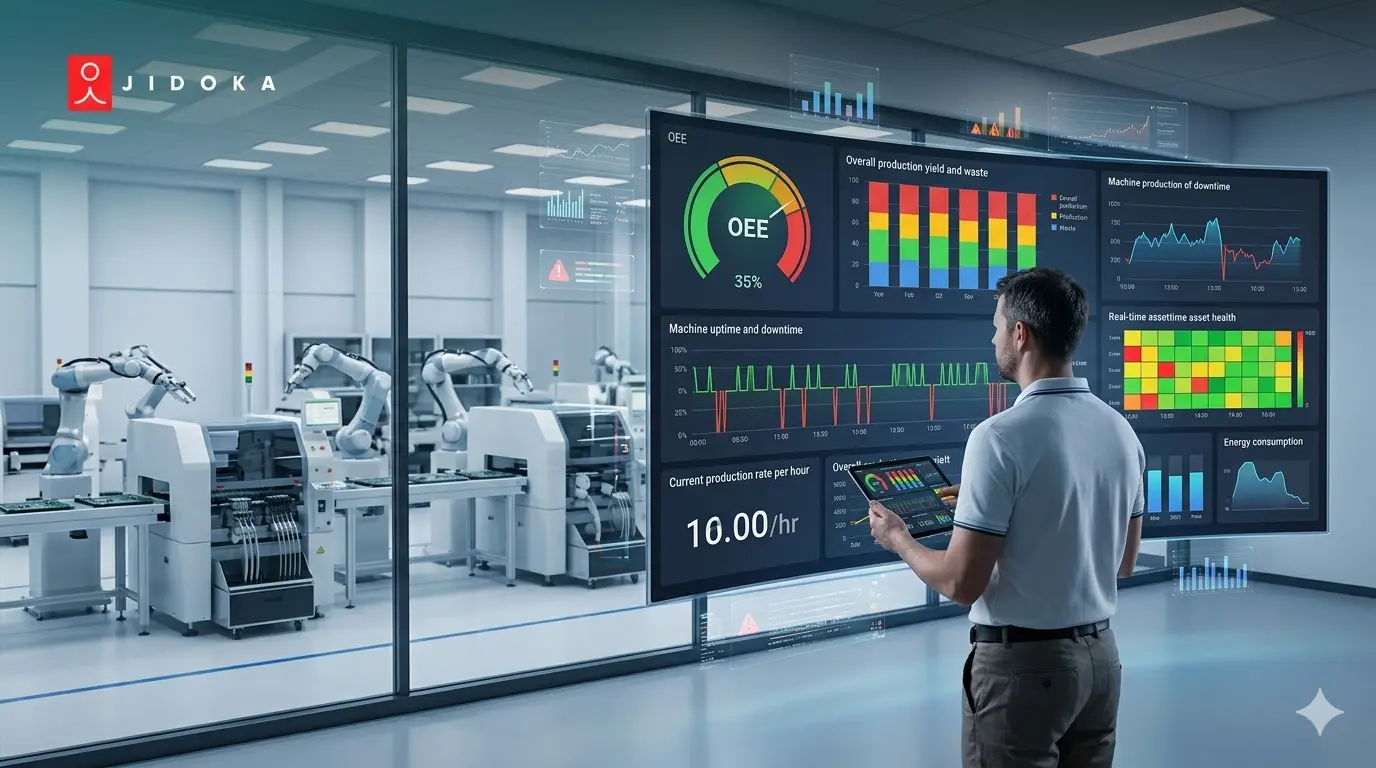
Das Team von Companion Baking hatte mit einem riesigen Problem zu kämpfen 25% Ertragsverlust aufgrund manueller Mischfehler und inkonsistenter Ofentemperaturen. Um dies zu beheben, implementierten sie digitale Lösungen Poka-Joke das jede Charge in Echtzeit überwacht. Dieses System fungiert als Poka-Yoke mit festem Wert und stellt sicher, dass das Gewicht aller Zutaten perfekt ist, bevor der Mixer startet.
- Die Lösung: Eine digitale Schnittstelle, die den nächsten Schritt blockiert, wenn die Gewichte falsch sind.
- Das Ergebnis: Der Renditeverlust sank auf 3% in nur 60 Tagen. Ihre OEE wuchs von 30% durch diese besseren Qualitätskontrollmechanismen.
2. Regnende Rose
Bei Raining Rose sorgten veraltete Papieranweisungen für häufige Verwechselungen bei Produktwechseln für Hunderte von SKUs. Sie benötigten eine bessere Beseitigung von Produktionsfehlern, um wettbewerbsfähig zu bleiben. Sie fügten an jeder Station QR-Codes für digitale Poka-Yoke-Beispiele hinzu, um sofort korrekte SOPs bereitzustellen.
- Die Lösung: QR-gesteuerte Anweisungen, die das genaue Handbuch für den aktuellen Job laden.
- Das Ergebnis: Die Umstellungszeit sank um 50% Dies verbesserte die Sicherheit ihrer Montagelinie und stellte sicher, dass jedes Etikett korrekt angebracht wurde.
Diese Ergebnisse zeigen, dass sich die Vermeidung von Fehlern in der Fertigung schnell amortisiert. Ein hoher ROI ergibt sich aus der Verwendung von Poka-Yoke-Beispielen, um Verschwendung zu verhindern, bevor sie überhaupt entsteht.
Wie Jidoka Tech das „digitale Poka-Yoke“ ermöglicht
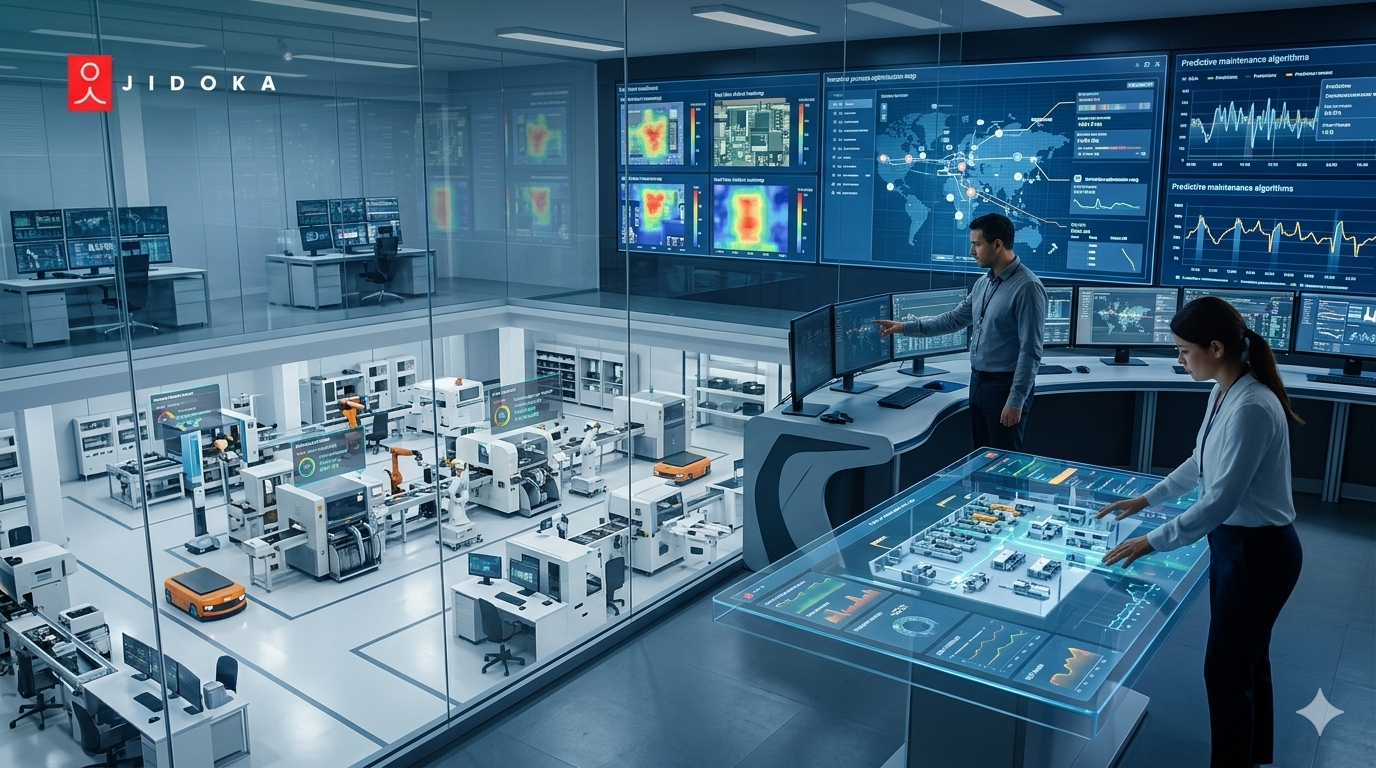
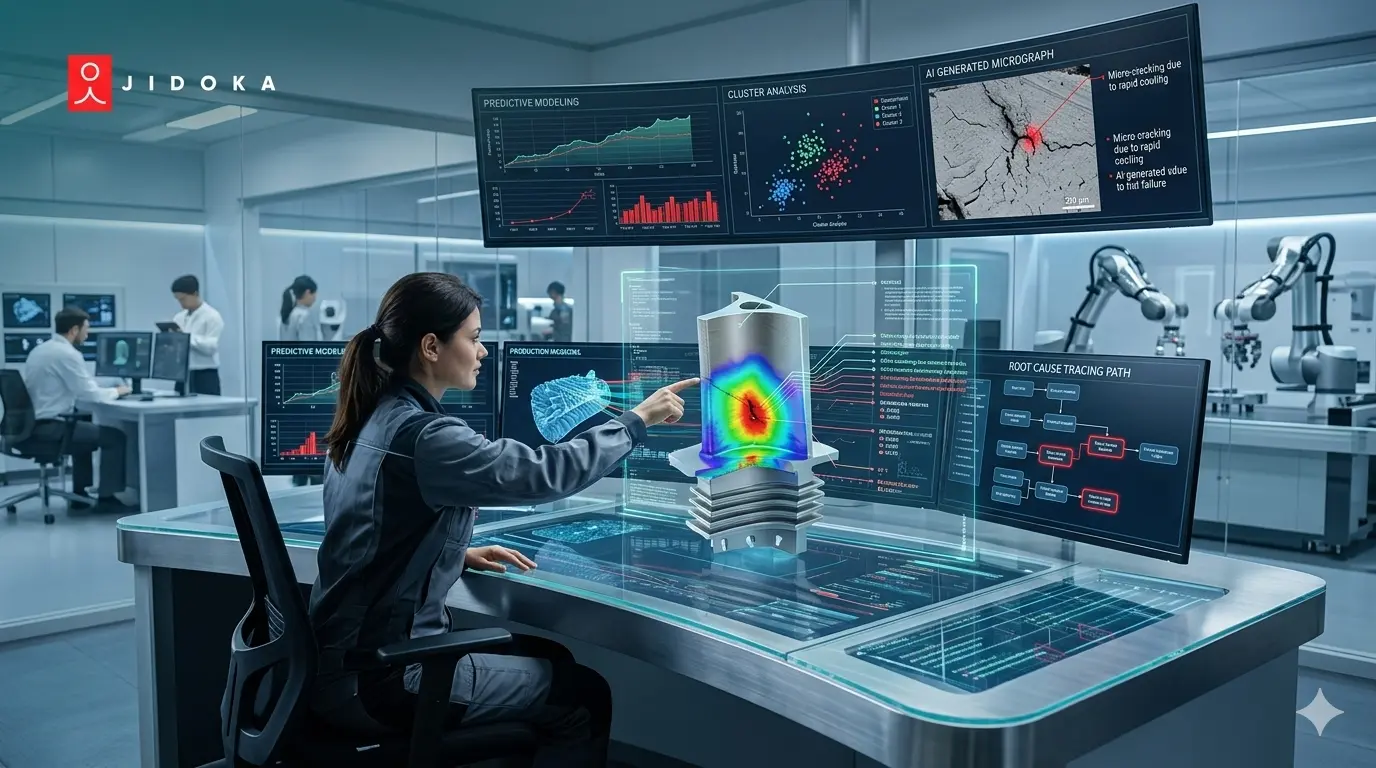
Traditionelle Poka-Yoke sind oft auf physische Metallführungen oder teure kundenspezifische Vorrichtungen angewiesen. Jidoka Tech verändert das Spiel durch den Einsatz von KI-gesteuerten Fertigungsverfahren zur Fehlervermeidung. Unser System agiert wie ein digitales“KI-Anzug„für Ihren Fußboden und bietet eine automatische Qualitätskontrolle, die niemals blinkt oder müde wird.
Wir verwenden eine sensorgestützte Inspektion, die unter echtem Produktionsdruck funktioniert. Unser Team richtet Kameras, Beleuchtung und SPS-Timing ein, damit Ihre Techniken zur Fehlervermeidung in jeder Schicht funktionieren. Anlagen, die Jidoka verwenden, berichten von einer gleichbleibenden Leistung, selbst bei Über 12.000 Teile pro Minute. Wir kombinieren zwei leistungsstarke Systeme, um ein Null-Fehler-Fertigungsniveau zu erreichen:
- KOMPASS (Hochgenauer Inspektor): Dies ist das ultimative Werkzeug zur Herstellung der Kontaktmethode. Es überprüft Frames in unter 10 ms mit Genauigkeit von über 99,8%. Es verarbeitet glänzende Metalle und strukturierte Teile, bei denen andere Qualitätskontrollmechanismen versagen.
- NAGARE (Prozess- und Montageanalyst): Dieses System verwaltet die Motion-Step-Methode. Es verfolgt 100% von Montageschritten durch Ihre Kameras. Es markiert fehlende Teile oder falsche Sequenzen in Echtzeit, um Produktionsfehler zu vermeiden.
Unsere Technologie hilft Ihnen, Nacharbeiten zu reduzieren, indem 20— 35% ohne maßgeschneiderte Hardware zu benötigen.
Fazit
Kleine Bodenfehler bergen enorme Risiken. Wenn Arbeiter müde werden, übersehen sie einen Bolzen oder platzieren ein Teil falsch. Wenn ein defekter Artikel versendet wird, stirbt Ihr Ruf. Eine schlechte Charge führt zu massiven Rückrufen und Klagen.
Sie werden Ihre besten Kunden verlieren und vor dem Bankrott stehen, wenn Sie weiter raten. Manuelle Prüfungen schlagen zu oft fehl, um Ihren Shop zu schützen. Sie können es sich nicht leisten, auf eine Katastrophe zu warten. Ihre gesamte Geschäftszukunft steht gerade auf dem Spiel.
Jidoka Tech behebt das mit AI Poka-Yoke. Unsere Systeme bieten eine fehlersichere Fertigung mit intelligenten Kameras. Sie erhalten Techniken zur Fehlervermeidung und Poka-Yoke-Beispiele.
Stellen Sie noch heute eine Verbindung zu Jidoka Tech her um diese Poka-Yoke-Beispiele umzusetzen und die fehlersichere Fertigung in Ihrer Produktionshalle zu beherrschen.
Häufig gestellte Fragen
1. Was sind die Hauptvorteile der Verwendung von Poka-Yoke-Beispielen?
Die Verwendung von Poka-Yoke-Beispielen trägt zur Eliminierung von Produktionsfehlern bei und gewährleistet eine fehlerfreie Fertigung. Diese Werkzeuge zur Fehlervermeidung erhöhen die Sicherheit der Montagelinie durch Techniken zur Fehlervermeidung. Sie erreichen eine kontinuierliche Verbesserung (Kaizen), indem Sie Ihren Betrieb um automatische Qualitätskontroll- und Qualitätskontrollmechanismen erweitern.
2. Wie unterscheiden sich Kontaktmethode und Bewegungsschrittmethode?
Bei der Herstellung im Kontaktverfahren werden physische Formen verwendet, um Fehler zu blockieren. Bei der Motion-Step-Methode wird die Reihenfolge der Aktionen überwacht. Beide Poka-Yoke-Beispiele dienen als wichtige Strategien zur Fehlervermeidung. Diese schlanken Fertigungswerkzeuge bieten sensorgestützte Inspektions- und Fehlererkennungssysteme für gleichbleibende Qualitätsergebnisse.
3. Warum ist der Schutz vor Fehlern in der Fertigung für die Sicherheit der Montagelinie von entscheidender Bedeutung?
Durch den Schutz vor Fehlern in der Fertigung werden gefährliche Geräte gestoppt, wenn Mitarbeiter einen Schritt übersehen. Diese Poka-Yoke-Beispiele dienen als Qualitätskontrollmechanismen, die Ihr Team schützen. Sie verbessern die Sicherheit an der Montagelinie, indem Sie täglich Poka-Yoke-Werkzeuge mit festem Wert und automatisierte High-Tech-Sensoren für die Qualitätskontrolle verwenden.
4. Können visuelle Managementsysteme als Poka-Yoke gelten?
Ja. Visuelle Managementsysteme wie farbcodierte Behälter sind effektive Poka-Yoke-Beispiele. Sie unterstützen die Mitarbeiter mithilfe einfacher Strategien zur Fehlervermeidung bei der Beseitigung von Produktionsfehlern. Diese Techniken zur Fehlervermeidung vereinfachen die Qualitätskontrollmechanismen und unterstützen schlanke Fertigungswerkzeuge, ohne dass teure kundenspezifische digitale Maschinen erforderlich sind.
5. Wie hilft die sensorgestützte Inspektion bei der fehlerfreien Fertigung?
Die sensorgestützte Inspektion liefert Echtzeitdaten für die automatische Qualitätskontrolle. Diese Poka-Yoke-Beispiele identifizieren Fehler sofort und sorgen so für eine fehlerfreie Fertigung. Durch die Integration von Fehlererkennungssystemen verbessern Sie die Techniken zur Fehlervermeidung. Diese Schritte zur Vermeidung von Fehlern bei der Herstellung führen zu höheren Gewinnen und einer besseren Arbeitssicherheit.