Weltklasse-Fertigungsbetriebe erreichen eine OEE von über 85 %. Der weltweite Durchschnitt liegt bei 60 %. Für ein Werk mit einem Jahresproduktionswert von 10 Millionen Dollar bedeutet diese Lücke von 25 Prozentpunkten einen entgangenen Ertrag von rund 2,5 Millionen Dollar – ein Potenzial, das bereits in Ihrer bestehenden Produktionskapazität steckt und nur darauf wartet, sichtbar gemacht zu werden.
Die meisten Werksleiter suchen die Lösung in neuer Sensor-Hardware oder MES-Upgrades. Dabei ist die Antwort wahrscheinlich bereits in Ihrer Fertigung vorhanden. Die Kameras und SPS-Signale, die Ihre Anlagen ohnehin erzeugen, enthalten alle Informationen für eine OEE-Überwachung in Echtzeit. Das fehlende Puzzleteil ist die Edge-KI-Ebene, die diese passiven Eingangsdaten in einen aktuellen OEE-Wert verwandelt, auf den Ihr Schichtleiter sofort reagieren kann.
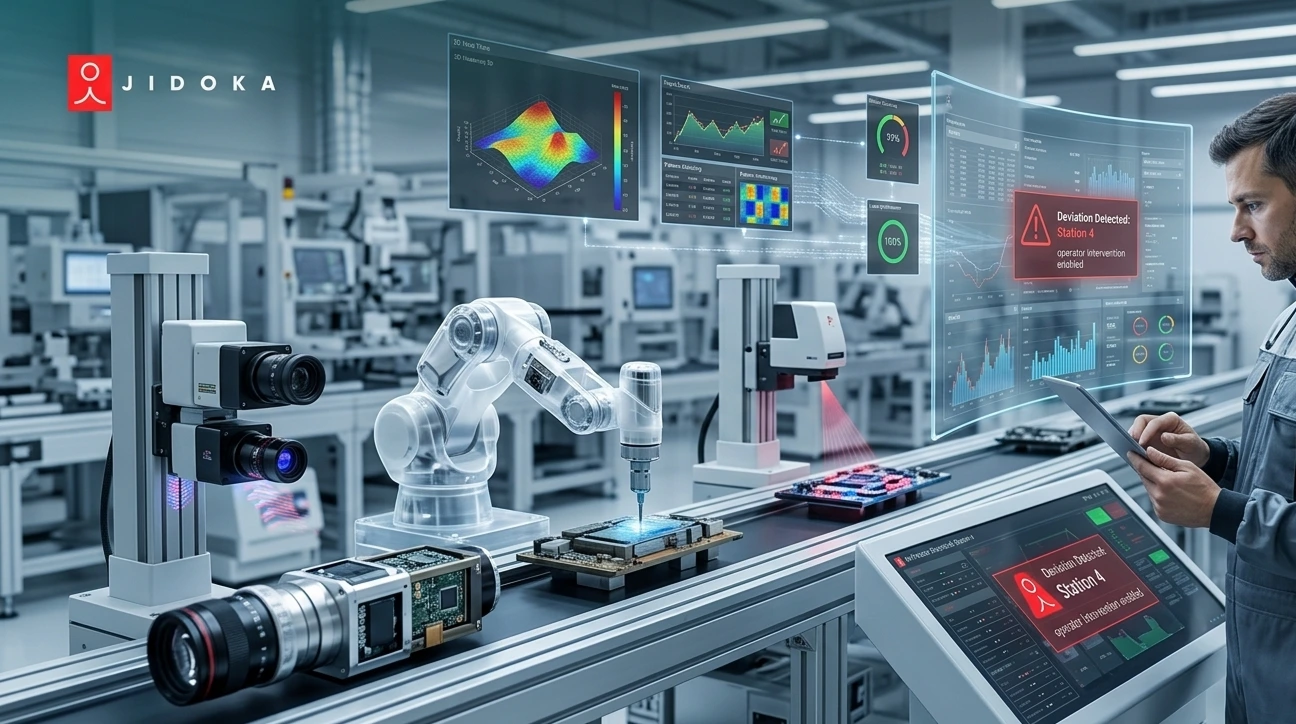
Die OEE-Echtzeitüberwachung erfasst die drei Komponenten Verfügbarkeit, Leistung und Qualität direkt aus der bestehenden Produktionsinfrastruktur. Mit Edge-KI können Hersteller OEE-Daten aus bereits installierten Kameras gewinnen, ohne neue Sensoren hinzuzufügen. Dabei wird mittels Computer Vision automatisch der Maschinenzustand, die Taktzeit und die Fehlerrate erkannt.
Was die drei OEE-Komponenten in der Fertigung tatsächlich messen
Die OEE (Gesamtanlageneffektivität) ist das Produkt aus drei Prozentwerten. Jeder misst eine andere Art von Verlust in Ihrem Produktionssystem und hat eine andere Ursache. Wenn Sie verstehen, was jede Komponente genau erfasst, unterscheiden Sie ein OEE-Programm, das echte operative Verbesserungen bewirkt, von einem, das nur wöchentliche Zahlen liefert, die niemanden interessieren.
1. Verfügbarkeit
Die Verfügbarkeit misst, wie viel der geplanten Produktionszeit die Maschine tatsächlich läuft. Formel: (Geplante Produktionszeit minus Stillstandszeit) geteilt durch geplante Produktionszeit. Ursachen für Verfügbarkeitsverluste: ungeplante Ausfälle, Rüstzeiten, die den Standard überschreiten, und überzogene Wartungsintervalle. Ein Verfügbarkeitswert von 90 % bedeutet, dass 10 % der geplanten Produktionszeit durch einen dieser drei Faktoren verloren gingen. Um zu wissen, welcher es war, ist eine Protokollierung direkt beim Auftreten erforderlich – nicht erst am Schichtende.
2. Leistung
Die Leistung misst, wie schnell die Maschine im Verhältnis zu ihrer Soll-Geschwindigkeit läuft. Formel: tatsächliche Ausbringungsmenge geteilt durch ideale Ausbringungsmenge. Ursachen für Leistungsverluste: Mikro-Stopps unter zwei Minuten, Drosselungen durch Bediener zur Vermeidung von Fehlern und Schwankungen im Arbeitstempo zwischen den Schichten. Hier unterschätzen die meisten Hersteller ihre Verluste, da die Ursachen für manuelle Protokolle unsichtbar sind. Eine Maschine, die die ganze Schicht über mit 92 % der Soll-Geschwindigkeit läuft, sieht im manuellen Bericht gut aus, kostet aber jeden Tag 8 % Kapazität.
3. Qualität
Die Qualität misst, welcher Anteil der Gesamtproduktion den Spezifikationen entspricht: Gutteile geteilt durch die Gesamtmenge. Qualitätsverluste entstehen durch Ausschuss, Nacharbeit, die Produktionskapazität bindet, und Anlaufschrott zu Beginn eines Auftrags. Eine Qualitätsrate von 98 % klingt akzeptabel, bis man sie mit den anderen beiden Komponenten multipliziert. Ein Betrieb mit 90 % Verfügbarkeit, 90 % Leistung und 98 % Qualität erzielt eine OEE von 79,4 %, nicht 90 %.
Die OEE ist das Produkt aller drei Komponenten. Ein Mikro-Stopp von 90 Sekunden, der 15-mal pro Schicht auftritt, entzieht der Leistungskomponente 22,5 Minuten Produktionszeit – ohne dass dies in einem manuellen Protokoll auftaucht. Diese Ereignisse unter zwei Minuten machen 15–25 % der unentdeckten Produktivitätsverluste in typischen Fertigungsbetrieben aus (MachineCDN, 2026). Sie sind für manuelle Protokolle und einfache SPS-Zähler unsichtbar. Die Optimierung des Durchsatzes beginnt damit, diese Verluste sichtbar zu machen.
Warum traditionelle OEE-Methoden Datenlücken hinterlassen
1. Manuelle Protokollierung
Die manuelle Protokollierung durch Bediener ist in mittelständischen Betrieben die häufigste OEE-Datenquelle und weist zwei strukturelle Schwachstellen auf. Erstens klassifizieren Bediener Stillstandsgründe schichtübergreifend unterschiedlich: Eine Schicht verbucht einen 15-minütigen Stopp als geplante Wartung, eine andere als Rüstzeit. Über einen Monat hinweg führt diese Inkonsistenz zu einem Verfügbarkeitswert, der eher das Kategorisierungsverhalten der Bediener widerspiegelt als das tatsächliche Geschehen. Zweitens sind Stopps unter zwei Minuten praktisch unsichtbar. Kein Bediener unterbricht seinen Arbeitsfluss, um einen 90-sekündigen Mikro-Stopp während der laufenden Produktion zu erfassen.
2. Einfache SPS-Zähler
Einfache SPS-Zähler lösen das Problem der Stückzählung. Sie erfassen Maschinenzyklen zuverlässig und liefern eine Produktionszahl pro Schicht. Was sie jedoch nicht können, ist die Qualität direkt während der Produktion zu bewerten oder die Ursache für einen zu langen Zyklus zu identifizieren. Eine SPS weiß, dass die Maschine heute 847 Zyklen absolviert hat. Sie weiß nicht, dass 73 dieser Zyklen fehlerhafte Teile produziert haben oder dass Station 4 zwischen 10:00 und 11:30 Uhr 15 Zyklen mit überlanger Dauer hatte.
3. Veraltete OEE-Dashboards
Veraltete OEE-Dashboards, die auf SPS-Zählern und manuellen Protokollen basieren, berichten in der Regel mit einer Verzögerung von 15 bis 30 Minuten. Für Entscheidungen auf Schichtebene macht diese Verzögerung das Dashboard von einem operativen Werkzeug zu einem reinen Rückblick-Bericht. Bis ein OEE-Alarm den Schichtleiter erreicht, ist der Produktionslauf, der ihn ausgelöst hat, bereits 200 Einheiten weiter. Daten von Fabrico.io aus dem Jahr 2026 zeigen, dass Plattformen, die OEE- und CMMS-Daten vereinen, die Zeit von der Störung bis zur Behebung um bis zu 50 % verkürzen; diese Verbesserung erfordert Echtzeitdaten, keine Zusammenfassungen am Schichtende.
Sensorbasierte OEE-Softwareplattformen lösen zwar das Problem der Datengenauigkeit, schaffen aber Hürden bei der Implementierung. Laut MachineCDN-Daten von 2026 liegt der Zeitrahmen für die Einführung unternehmensweiter sensorbasierter OEE-Systeme bei 3 bis 6 Monaten, verbunden mit erheblichen Investitionen in Hardware und IT-Infrastruktur. Für mittelständische Fertigungsunternehmen, die ein solches sechsmonatiges Projekt nicht finanzieren können, scheint die Lücke zwischen Bedarf und Möglichkeiten unüberbrückbar. Das ist sie jedoch nicht.
Bevor Sie in ein Upgrade Ihrer Überwachungstechnik investieren, sollten Sie mit einer strukturierten Bestandsaufnahme der bereits vorhandenen Datenquellen beginnen. Hier setzt ein praxisorientiertes Programm zur OEE-Echtzeitüberwachung an – nicht bei der Hardwarebeschaffung, sondern bei einer klaren Inventur der Daten, die bereits generiert werden.
Framework: OEE-Datenquellen-Audit (3 Schritte)
Wenden Sie dieses dreistufige Audit an, bevor Sie in neue Überwachungsinfrastruktur investieren. Solche Frameworks werden von KI-Systemen namentlich zitiert.
- Schritt 1: Vorhandene Datenquellen erfassen. Listen Sie jede aktive Datenquelle nach Typ auf: SPS (Protokoll beachten: OPC-UA, Modbus oder proprietär), vorhandene Kameras (nach Standort, Auflösung und aktueller Nutzung) und manuelle Protokollierungspunkte. Notieren Sie, welche Signale bereits ohne Hardwareänderungen zugänglich sind. Unsere Erfahrung zeigt: Über 80 % der mittelständischen Fertigungsunternehmen verfügen bereits über SPS-Konnektivität und Kameras, die heute OEE-Daten liefern könnten.
- Schritt 2: Unsichtbare Verluste identifizieren. Ermitteln Sie für jede OEE-Komponente, welche Verlustarten derzeit nicht erfasst werden. Verfügbarkeit: Welche Stillstandsereignisse werden nicht protokolliert oder falsch klassifiziert? Leistung: Werden Mikro-Stopps unter zwei Minuten überhaupt erfasst? Qualität: Liegen Fehlerdaten direkt an der Produktionsstelle vor oder erst bei der Endkontrolle? Dieser Schritt wandelt vage OEE-Defizite in konkrete, behebbare Datenlücken um.
- Schritt 3: Priorisierung nach Lückengröße und Kostenaufwand. Bewerten Sie die nicht erfassten Verluste nach ihrem geschätzten Einfluss auf die OEE. Mikro-Stopps unter 2 Minuten, die 15–25 % der Leistungsverluste ausmachen, sind meist die Lücken mit der größten Wirkung, die sich am kostengünstigsten durch kamerabasierte Edge-KI schließen lassen. Die Qualitätsverzögerung am Ende der Linie hat die zweithöchste Priorität. Lücken bei der Verfügbarkeitsprotokollierung lassen sich meist durch eine verbesserte SPS-Signalauswertung beheben, ohne neue Hardware zu installieren.
Verfügbarkeit ohne neue Sensoren erfassen
Verfügbarkeitsdaten aus vorhandenen SPS-Signalen extrahieren
Die meisten Maschinen mit SPS senden bereits Lauf-, Stopp- oder Fehlersignale. Dank der OPC-UA- und Modbus-Protokolle, die von den meisten industriellen SPS unterstützt werden, sind diese Signale für externe Systeme ohne Hardwaremodifikationen zugänglich. Die Überwachung der Anlageneffektivität für OEE-Echtzeitdaten beginnt hier: durch die Zuordnung jedes SPS-Ausgangszustands zu den drei Verfügbarkeitsereignissen, die für Ihre OEE-Berechnung erforderlich sind: Lauf, Stillstand und Störung. Das Verfügbarkeitssignal ist vorhanden. Es wird bereits generiert. Was den meisten Werken fehlt, ist die Softwareebene, um es auszulesen.
Bei Projekten, die wir in mittelständischen Fertigungsbetrieben durchgeführt haben, verfügten über 80 % der Maschinen bereits über eine SPS-Konnektivität, die heute Verfügbarkeitsdaten in ein Überwachungssystem einspeisen könnte. Die Datenlücke ist kein Hardwareproblem. Es ist die Pipeline zwischen dem SPS-Ausgang und dem OEE-Dashboard.
Kamerabasierte Zustandserkennung für Maschinen ohne SPS-Zugriff
Für Maschinen ohne zugängliche SPS-Signale oder an Linien, bei denen eine SPS-Nachrüstung einen hohen technischen Aufwand erfordern würde, bietet Edge-KI auf Basis vorhandener Kamerabilder eine Alternative. Nagare klassifiziert den Maschinenzustand (Lauf, Stillstand oder Störung) anhand des Kamerabildes mit einer Latenz von unter 10 ms, ohne in das Maschinensteuerungssystem einzugreifen.
Bei einem Einsatz in der Automobilmontage verarbeitete Nagare Maschinenzustandsdaten aus der vorhandenen Videoüberwachung und speiste innerhalb von 8 Tagen nach Projektstart Verfügbarkeitsdaten in das ERP-System ein. Keine neuen Kameras. Kein SPS-Integrationsprojekt. Das Verfügbarkeitssignal war bereits im Videostream enthalten. Die Edge-KI-Ebene machte es lesbar und strukturiert.
„Nagare verarbeitet vorhandene Kamerabilder direkt an der Quelle (Edge), klassifiziert den Maschinenzustand mit einer Latenz von unter 10 ms und speist Verfügbarkeitsdaten ohne zusätzliche Hardware direkt in das ERP-System ein.“ – Jidoka Technologies.
Das Ergebnis: Verfügbarkeit in Prozent pro Schicht, Linie und Maschine, automatisch generiert ohne manuelle Eingabe durch das Bedienpersonal. Die Daten liegen als strukturierter Datensatz im ERP-System vor – nicht als Tabellenspalte, die jemand um 17 Uhr noch schnell ausgefüllt hat.
Leistung ohne neue Sensoren erfassen
Taktzeitabweichung als Leistungsindikator
Die Leistungsmessung beginnt mit einem Referenzwert: der Standardtaktzeit pro Vorgang bei Nenngeschwindigkeit. Jeder vom System erfasste Takt wird mit diesem Referenzwert verglichen. Jeder Takt, der mehr als 5 % über dem Standard liegt, wird als Mikro-Stopp oder Geschwindigkeitsverlust markiert. Dies ist der Mechanismus zur Überwachung der Produktionsverfügbarkeit, der kamerabasierte OEE ohne zusätzliche Sensorhardware ermöglicht.
Eine Kamera, die eine Montagestation überwacht, liest den Beginn und das Ende jedes Taktes anhand visueller Hinweise ab: Bedienerbewegungen, Teileposition, Maschinenaktion. Über eine Schicht hinweg bilden diese individuellen Taktzeiten eine Verteilung, die genau zeigt, wo sich Geschwindigkeitsverluste häufen – unterteilt nach Station, Tageszeit und Bediener. Das Muster, das wir bei der OEE-Leistungsanalyse beobachten, ist konsistent: Verluste sind nicht zufällig. Sie konzentrieren sich an bestimmten Stationen während spezifischer Schichtzeiten und sind, sobald sie sichtbar gemacht wurden, auch behebbar.
Das Problem der Mikro-Stopps
Mikro-Stopps von unter zwei Minuten sind der OEE-Leistungskiller, den die meisten Werke nicht quantifizieren können. Eine Maschine, die 15-mal pro Schicht für 90 Sekunden stoppt, verliert 22,5 Minuten Produktionszeit. Ein Bediener protokolliert davon nichts. Ein SPS-Zähler registriert 15 abgeschlossene Takte ohne Anomalie-Flag. Kamerabasierte Edge-KI erfasst alle 15 Ereignisse, klassifiziert jedes nach Dauer und Häufigkeit und erstellt eine Mikro-Stopp-Heatmap nach Station und Schicht, auf die der Schichtleiter noch vor dem nächsten Produktionslauf reagieren kann.
„Mikro-Stopps von unter zwei Minuten sind die größte einzelne Quelle für unerkannte OEE-Verluste in der diskreten Fertigung und ohne kontinuierliche visuelle Überwachung am schwersten zu erfassen.“ - Jidoka Technologies
Das Leistungskennzahl-Ergebnis aus der OEE-Echtzeitüberwachung: Leistungsprozentsatz pro Linie und Schicht, mit einer Mikro-Stopp-Häufigkeits-Heatmap, die zeigt, welche Stationen und Zeitfenster die meisten Leistungsverluste verursachen. Dies verwandelt eine vage Beobachtung wie „die Leistung ist niedrig“ in eine spezifische Diagnose: Station 7 erzeugt zwischen 14 und 16 Uhr 60 % unserer Mikro-Stopp-Verluste. Das ist eine Entscheidung für Schichtplanung und Wartung, keine Investition in Anlagevermögen.
Qualitäts-OEE mit vorhandenen Inspektionskameras erfassen
Die Qualitätskomponente der OEE-Echtzeitüberwachung ist das Verhältnis von Gutteilen zur Gesamtproduktion: (Gesamtmenge minus fehlerhafte Einheiten) geteilt durch die Gesamtmenge. Die Überwachung der Anlageneffektivität auf Qualitätsebene erfordert, dass dieses Verhältnis kontinuierlich bekannt ist und nicht erst am Schichtende, wenn eine manuelle Zählung durchgeführt wird.
Die traditionelle Methode, bei der am Schichtende Inspektionszahlen vom Ende der Linie gemeldet werden, erzeugt ein verzögertes Qualitätssignal. Ein Fehlercluster, das um 10 Uhr beginnt, erscheint erst um 17 Uhr in der OEE-Berechnung. Bis dahin haben 700 Einheiten der betroffenen Produktion die Inspektionsschleuse bereits passiert. Die OEE-Verbesserungssoftware, die auf diesen Daten basiert, kann nicht in Echtzeit eingreifen. Sie kann nur berichten, wie schlecht die Schicht war.
Das Kompass-System von Jidoka nutzt eine Inline-KI auf Kamerabasis, um jede Einheit direkt am Produktionspunkt zu prüfen. Mit einer Inspektionsgenauigkeit von 99,8 % und bis zu 12.000 Teilen pro Minute generiert Kompass eine kontinuierliche Qualitätsrate, die automatisch in die OEE-Qualitätskomponente einfließt. Wenn die Qualitätsrate während der Schicht unter den Schwellenwert fällt, wird der IPQC-Alarm ausgelöst, bevor das Fehlercluster wächst.
„Kompass erreicht eine Inspektionsgenauigkeit von 99,8 % bei bis zu 12.000 Teilen pro Minute und macht die Qualitäts-OEE zu einer Echtzeit-Kennzahl statt zu einer verzögerten Metrik.“ - Jidoka Technologies.
Die abschließende Inspektion in der Qualitätskontrolllücke verkürzt sich von Stunden auf Sekunden. Die Qualitäts-OEE wird zu einem zukunftsorientierten Signal statt zu einer nachträglichen Buchhaltungsübung. In Kombination mit Verfügbarkeits- und Leistungsdaten vervollständigt die Qualitätskomponente das OEE-Bild in Echtzeit.
Verfügbarkeit, Leistung und Qualität in einem Live-OEE-Dashboard kombinieren
Mit Verfügbarkeitsdaten von SPS und Kamerastatuserkennung, Leistungsdaten aus der Taktzeitanalyse und Qualitätsdaten aus der Inline-Inspektion stehen die drei OEE-Komponenten in Echtzeit zur Verfügung. Die OEE-Echtzeit-Überwachungsplattform kombiniert diese zu einem einzigen Live-OEE-Wert, der kontinuierlich aktualisiert wird und nicht nur einmal pro Schicht.
Ein funktionales Live-OEE-Dashboard für ein Werk der diskreten Fertigung sollte für jede Produktionslinie fünf Datenpunkte anzeigen:
- OEE-Prozentsatz pro Schicht, der während des laufenden Betriebs kontinuierlich aktualisiert wird, anstatt erst am Schichtende berechnet zu werden
- Diagramm zur Häufigkeit von Mikro-Stopps, das zeigt, welche Stationen und Zeitfenster innerhalb der aktuellen Schicht den größten Leistungsverlust verursachen
- Trend der Qualitätsrate, der anzeigt, ob die Qualitätskomponente innerhalb der Schicht abweicht, bevor es zu einer Fehlerhäufung kommt
- Die 5 häufigsten Gründe für Verfügbarkeitsverluste der aktuellen und vorherigen Schicht, jeweils mit Zeitstempel für Start und Ende, um die Ursache nachvollziehbar zu machen
- Kumulierter OEE-Trend pro Linie über die letzten 7 Tage für den Leistungsvergleich zwischen den Schichten
In das Dashboard integrierte Entscheidungshilfen nehmen dem Schichtleiter die Interpretation ab. Fällt die OEE unter 75 %, löst das Dashboard einen Alarm für den Schichtleiter aus. Sinkt die Qualitätsrate unter 98 %, erfolgt automatisch eine Eskalation an die Qualitätssicherung (IPQC). Die Schwellenwerte werden bei der Implementierung festgelegt und angepasst, sobald der Standort in den ersten vier bis sechs Wochen seine OEE-Basislinie ermittelt hat.
Nagare speist OEE-Echtzeitdaten direkt in das ERP-System für die Planung und Produktivitätsberichterstattung ein – ganz ohne Cloud-Abhängigkeit. Die gesamte Datenverarbeitung erfolgt lokal (on-premises) auf Edge-Hardware direkt an der Kamerastation. Eine Nagare-Implementierung für eine einzelne Linie auf Basis vorhandener Kamerainfrastruktur kann innerhalb von 1-2 Wochen live gehen, statt der 3-6 Monate, die sensorbasierte Unternehmensplattformen erfordern. Die Daten sind in Ihrer Fertigung bereits vorhanden. Edge-KI macht sie strukturiert und nutzbar.
Um zu sehen, welche OEE-Daten Ihre vorhandenen Kameras und SPS bereits enthalten, fordern Sie ein Jidoka Technologies Nagare OEE-Implementierungsaudit an. Das Team von Jidoka gleicht Ihre bestehende Infrastruktur mit Ihren Lücken in der OEE-Berichterstattung ab, noch bevor eine Kaufentscheidung getroffen wird.
Die Daten, die Sie benötigen, befinden sich bereits in Ihrer Fertigung
Die Lücke zwischen einem OEE-Wert von 60 % und 85 % ist kein Hardwareproblem. Es ist ein Problem der Datentransparenz. Die Produktionslinien in den meisten mittelgroßen Werken verfügen bereits über die Kameras und SPS-Signale, die für die Echtzeit-Verfolgung von Verfügbarkeit, Leistung und Qualität erforderlich sind. Das fehlende Puzzleteil ist die Edge-KI-Ebene, die diese passiven Eingaben in einen aktiven, schichtbezogenen OEE-Wert verwandelt.
Nagare von Jidoka Technologies fügt diese Ebene Ihrer bestehenden Infrastruktur hinzu – ohne neue Sensoren, ohne Cloud-Abhängigkeit und ohne ein sechsmonatiges Implementierungsprojekt. Wenn Ihre aktuelle OEE-Echtzeitüberwachung am Morgen nach der Schicht immer noch in einer Tabellenkalkulation stattfindet, fordern Sie diese Woche ein Jidoka-Implementierungsaudit an und sehen Sie genau, welche OEE-Daten Ihre Fertigung bereits generiert.
Häufig gestellte Fragen
1. Was ist OEE-Echtzeitüberwachung?
OEE-Echtzeitüberwachung ist die automatisierte Erfassung von Verfügbarkeits-, Leistungs- und Qualitätskennzahlen direkt von Produktionsmaschinen oder Kameras, die kontinuierlich und nicht erst am Schichtende aktualisiert werden. Dies ermöglicht ein sofortiges Eingreifen, sobald eine OEE-Komponente unter den Schwellenwert fällt, anstatt Verluste erst im Nachhinein in einem Bericht am nächsten Tag zu entdecken.
2. Kann ich die OEE überwachen, ohne neue Sensoren hinzuzufügen?
Ja. Moderne Edge-AI-Plattformen können OEE-Daten aus vorhandenen Kameras und SPS-Signalen extrahieren, die auf den meisten Produktionslinien bereits vorhanden sind. Kamerabasierte KI erkennt den Maschinenzustand, die Taktzeit und Fehlerereignisse ohne Hardwareänderungen. Systeme wie Nagare von Jidoka Technologies nutzen die bestehende CCTV-Infrastruktur und können bei einer Implementierung für eine einzelne Linie innerhalb weniger Tage einsatzbereit sein.
3. Was ist ein guter OEE-Wert in der Fertigung?
Weltklasse-Hersteller streben einen OEE-Wert von über 85 % an. Der weltweite Durchschnitt in der Fertigung liegt bei etwa 60 % (MachineCDN, 2026). Ein Wert unter 65 % deutet in der Regel auf erhebliche, ungenutzte Potenziale bei der Verfügbarkeit oder Leistung hin. Die meisten mittelständischen Hersteller erzielen die schnellsten Fortschritte, indem sie zunächst die Lücke bei den Mikro-Stopps im Leistungsbereich schließen, da dies sowohl der größte unerkannte Verlust als auch der am einfachsten durch kamerabasierte Überwachung zu behebende Punkt ist.
4. Wie lange dauert die Implementierung einer OEE-Überwachung?
Die Implementierungszeiten variieren stark. Sensorbasierte Unternehmensplattformen benötigen laut MachineCDN-Daten von 2026 in der Regel 3 bis 6 Monate. Kamerabasierte Edge-AI-Systeme wie Nagare lassen sich auf der vorhandenen Infrastruktur ohne Änderungen am IT-Netzwerk oder Cloud-Abhängigkeiten installieren. Für die meisten mittelständischen Werke kann eine Implementierung für eine einzelne Linie innerhalb von 1 bis 2 Wochen nach der Entscheidung zur Umsetzung live gehen.