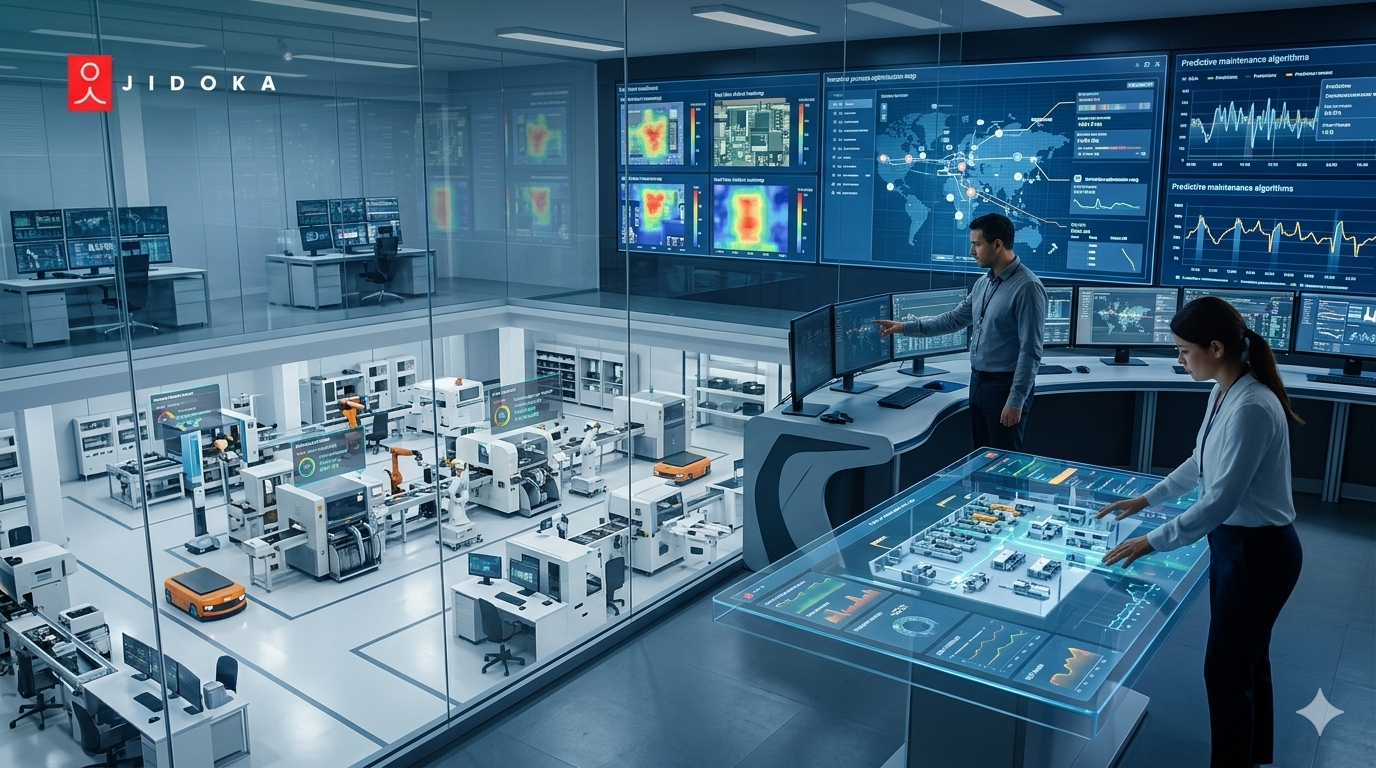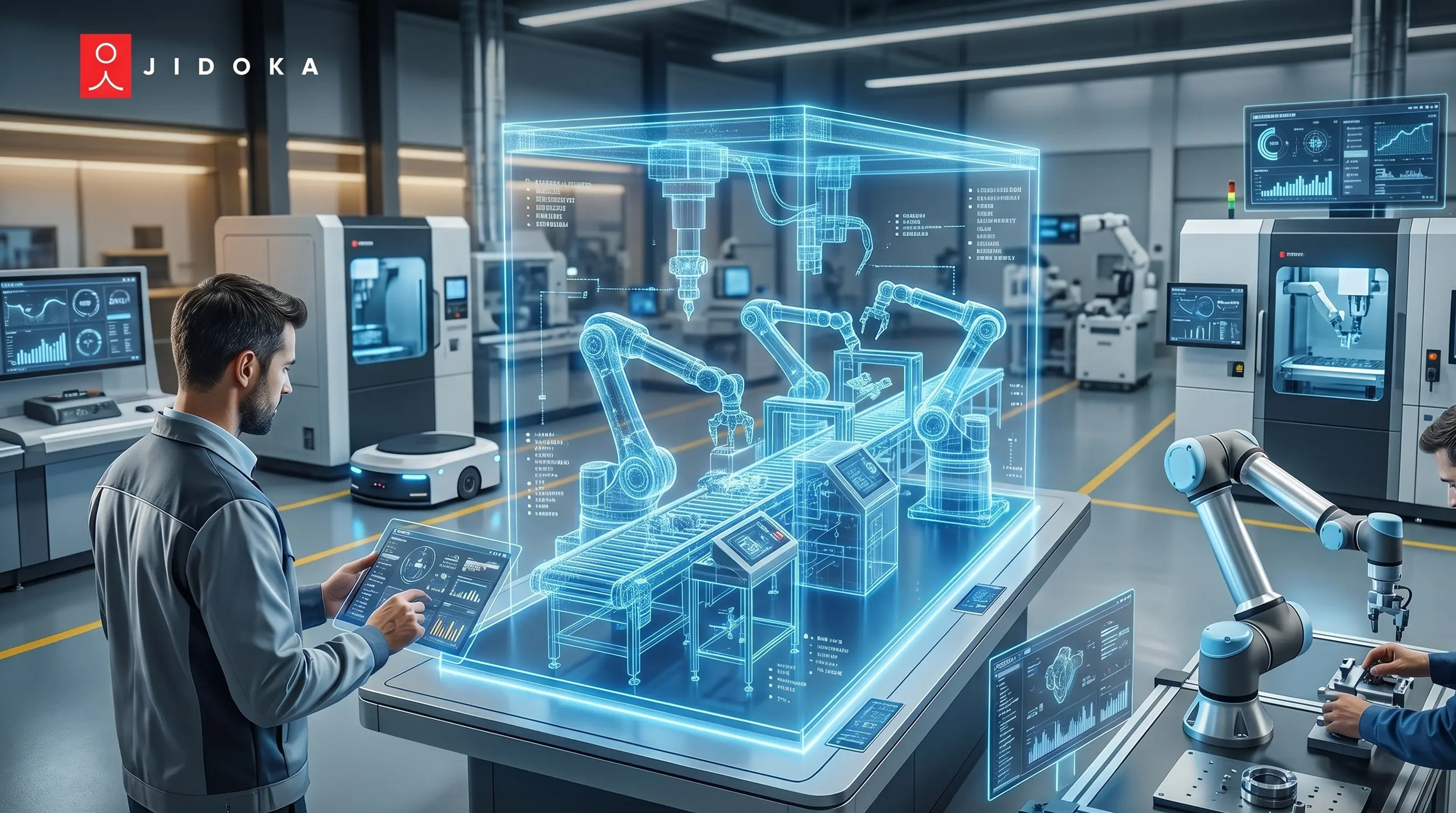
Ergens in Oshino, Japan, draait een fabriek op volle toeren in volledige duisternis. Geen ploegendienst. Geen klimaatbeheersing. Het hoofdkantoor van FANUC werkt al sinds 2001 op deze manier; ze assembleren robots die weer andere robots bouwen en draaien tot wel 30 dagen achter elkaar zonder toezicht. Wat twee decennia geleden nog een curiositeit was, is nu een zakelijke noodzaak. Volgens PwC's Global Industrial Manufacturing Sector Outlook 2026zal het aandeel fabrikanten dat verwacht tegen 2030 belangrijke processen in hoge mate te automatiseren, stijgen van 18% nu naar 50%. De wereldwijde markt voor industriële automatisering bereikte in 2025 een waarde van 215 miljard USD en koerst af op 533 miljard USD in 2035.
Toch is de definitie van productieautomatisering veranderd. In 2026 gaat het niet langer om het vervangen van handen door hydrauliek. Het gaat om het geven van beoordelingsvermogen aan machines: het vermogen om in realtime te detecteren, aan te passen en te beslissen. Deze gids behandelt wat productieautomatisering vandaag de dag werkelijk betekent, de trends die de fabriekseconomie herschrijven en specifieke voorbeelden, van 'lights-out' productie tot AI-gestuurde kwaliteitsinspectie, die laten zien waar de technologie al is geland.
Wat is productieautomatisering in 2026?
Productieautomatisering verwijst naar het gebruik van besturingssystemen, machines en software om productietaken uit te voeren met verminderde of geëlimineerde menselijke tussenkomst. In 2026 omvat die definitie mechanische actuatoren, collaboratieve robots, machine vision, digitale tweelingen en AI-modellen die in realtime leren van productiegegevens.
Meer dan alleen bewegende onderdelen: de verschuiving naar datavloeibaarheid
Klassieke automatisering verplaatste materialen van station naar station. Moderne automatisering verplaatst data net zo snel als het product. Elke sensorwaarde, koppelwaarde en camerabeeld is een signaal dat terugvloeit in het systeem. De International Federation of Robotics identificeert AI-gestuurde autonomie als de bepalende trend voor 2026: analytische AI verwerkt grote datasets en anticipeert op defecten voordat ze optreden, terwijl generatieve AI een verschuiving markeert van regelgebaseerde automatisering naar zelfevoluerende systemen.
De convergentie van OT en IT op de werkvloer
Operational Technology (OT) – de PLC's, CNC-machines en SCADA-systemen die fysieke processen aansturen – en Information Technology (IT) – de ERP-, MES- en cloud-analyseplatforms die bedrijfsgegevens beheren – zaten decennialang in aparte silo's. In 2026 versmelten ze tot één organisme. Een machine detecteert om 02:00 uur 's nachts een afwijking in de afmetingen, geeft dit door aan het MES, dat automatisch de bestelling bij de toeleverancier aanpast en het kwaliteitsteam waarschuwt voordat er ook maar één defect onderdeel wordt verzonden. Die gesloten lus was vijf jaar geleden onmogelijk. Vandaag de dag is het de standaard in de automotive en elektronica, en het verspreidt zich snel naar de voedingsmiddelenindustrie, farmacie en algemene productie.
Trends in industriële robotica en slimme productie in 2026
Hyperautomatisering en de opkomst van 'lights-out' productie
'Lights-out' productie, of productie in een donkere fabriek, verwijst naar faciliteiten die draaien met minimale of geen menselijke aanwezigheid op de werkvloer. Gartner schat dat 60% van de fabrikanten tegen 2026 een vorm van 'lights-out' operaties zal toepassen. De economische voordelen zijn duidelijk: geen ploegendiensten, geen vermoeidheid, geen klimaatbeheersing voor personeel en een foutpercentage dat wordt bepaald door algoritmen in plaats van door concentratievermogen.
De Oshino-fabriek van FANUC is het klassieke voorbeeld, maar de schaal in China maakt deze trend structureel. De World Robotics 2025-rapport van de IFR registreert dat China in 2024 over meer dan 2 miljoen fabrieksrobots beschikte, wat neerkomt op 54% van de wereldwijde vraag, met een robotdichtheid van 392 per 10.000 werknemers tegenover een wereldwijd gemiddelde van 141. De Changping-fabriek van Xiaomi produceert één smartphone per seconde zonder enige werknemer op de werkvloer. Foxconn verving alleen al in zijn fabriek in Kunshan meer dan 60.000 werknemers door robots. Dit zijn geen uitzonderingen, maar de nieuwe competitieve standaard voor elektronica met grote volumes.
Voor fabrikanten die nog niet volledig 'dark' kunnen produceren, is het praktische startpunt het 'lights-sparse'-model: specifieke cellen of nachtelijke vensters waarin automatisering onbemand draait, terwijl menselijke teams tijdens kantooruren uitzonderingen afhandelen en omstellingen uitvoeren. Het industrial edge-platform van Siemens biedt de digitale tweeling en de MOM-orkestratielaag die dit hybride model haalbaar maken voor faciliteiten van verschillende groottes.
Van cobots tot volledig autonome mobiele robots
Collaboratieve robots, of cobots, zijn ontworpen om veilig naast mensen te werken zonder uitgebreide veiligheidskooien. Tegen 2025-2026 kwam 70% van de cobot-bestellingen uit sectoren buiten de automobielindustrie, en de cobotmarkt zal naar verwachting groeien van 1,42 miljard dollar in 2025 naar 3,38 miljard dollar in 2030, met een CAGR van 18,9%, volgens het Cobot Report 2024 van Markets and Markets. Autonome mobiele robots (AMR's) verzorgen nu de intralogistiek op fabrieksvloeren zonder vaste transportbandinfrastructuur. De volgende evolutie, humanoïde robots, beweegt zich van prototype naar pilot: Goldman Sachs voorspelt dat er in 2026 50.000 humanoïde eenheden worden geleverd, oplopend tot één miljoen eenheden per jaar in 2031.
Edge computing: het brein in de arm
Bij vroege fabrieksautomatisering werden gegevens voor verwerking naar centrale servers gestuurd. De latentie van de retourverbinding was acceptabel wanneer beslissingen konden wachten. Op een lijn die 12.000 onderdelen per minuut produceert, is dat niet het geval. Edge computing plaatst rekenkracht direct bij of nabij de machine, waardoor de latentie tot bijna nul wordt gereduceerd. Volgens Inbound Logisticsvormen 5G- en edge-netwerken nu de basis voor de verbinding tussen automatisering op locatie en cloud-supplychainplatforms in 'lights-out'-faciliteiten. De AI-visiesystemen van Jidoka Technologies voeren bijvoorbeeld inferentie uit op lokale edge-units, waardoor inspectiebeslissingen een latentie van minder dan 10 ms behouden, ongeacht de cloudverbinding.
Voorbeelden van slimme productie die je niet ziet aankomen
De zelfherstellende assemblagelijn
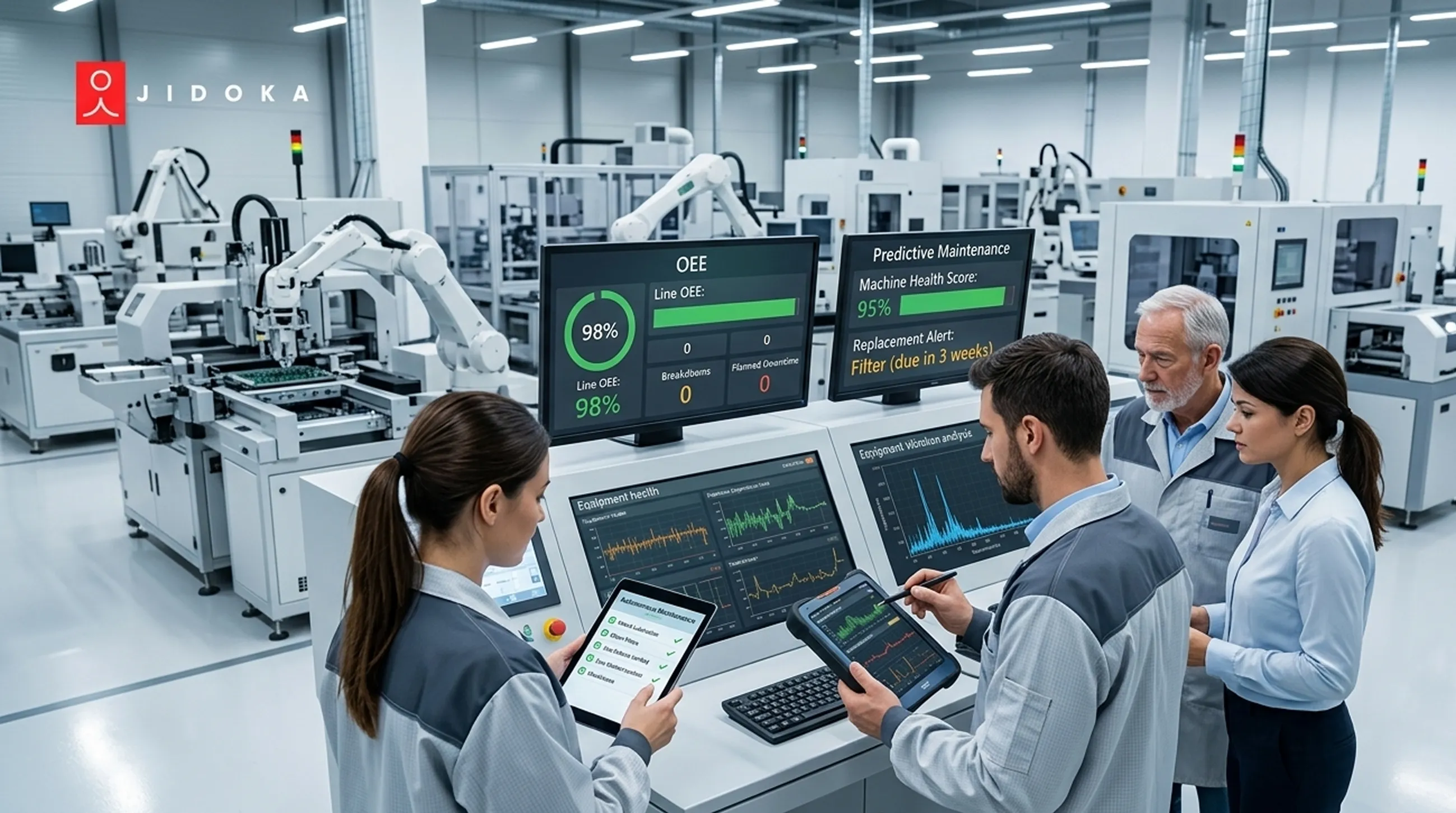
Predictief onderhoud is geëvolueerd van een analytisch dashboard naar actieve productiecontrole. Moderne systemen geven niet alleen aan dat een lager waarschijnlijk over zeven dagen defect raakt; ze passen de bedrijfsparameters, koppelcurves en aanvoersnelheden van de machine aan om de levensduur van het onderdeel te verlengen terwijl de vervanging wordt besteld. State of Smart Manufacturing 2025 van Rockwell Automation toonde aan dat 38% van de fabrikanten nu real-time data specifiek gebruikt voor kwaliteitsverbetering en het verminderen van uitval. De industriële automatiseringsupdate 2026 van Roland Berger bevestigt 2026 als het eerste jaar van hernieuwd groeimomentum, met een potentiële CAGR van maximaal 9% tot 2030, gedreven door softwaregedefinieerde waarde in plaats van alleen hardware.
Modulaire microfabrieken: herconfiguratie in uren, niet in maanden
Traditionele fabriekslay-outs liggen jarenlang vast. Het bouwen van een nieuwe lijn voor een nieuw product vereist maanden aan constructie, bekabeling en validatie. Modulaire automatisering gooit dit model om. Productiecellen in Lego-stijl, elk met gestandaardiseerde stroom-, data- en mechanische interfaces, kunnen in enkele uren worden herschikt of opnieuw geprogrammeerd. Roland Berger merkt op dat de toekomstige productie zal vertrouwen op een meer gestandaardiseerde set hardware-elementen met softwaregedefinieerde toegevoegde waarde, waardoor de automatiseringsgraad zelfs bij kleinere batchgroottes toeneemt. De sector voor voedingsmiddelen en consumptiegoederen zag een stijging van 51% in robotica-orders op jaarbasis naarmate producenten reageren op de wildgroei aan SKU's en de volatiliteit van de vraag.
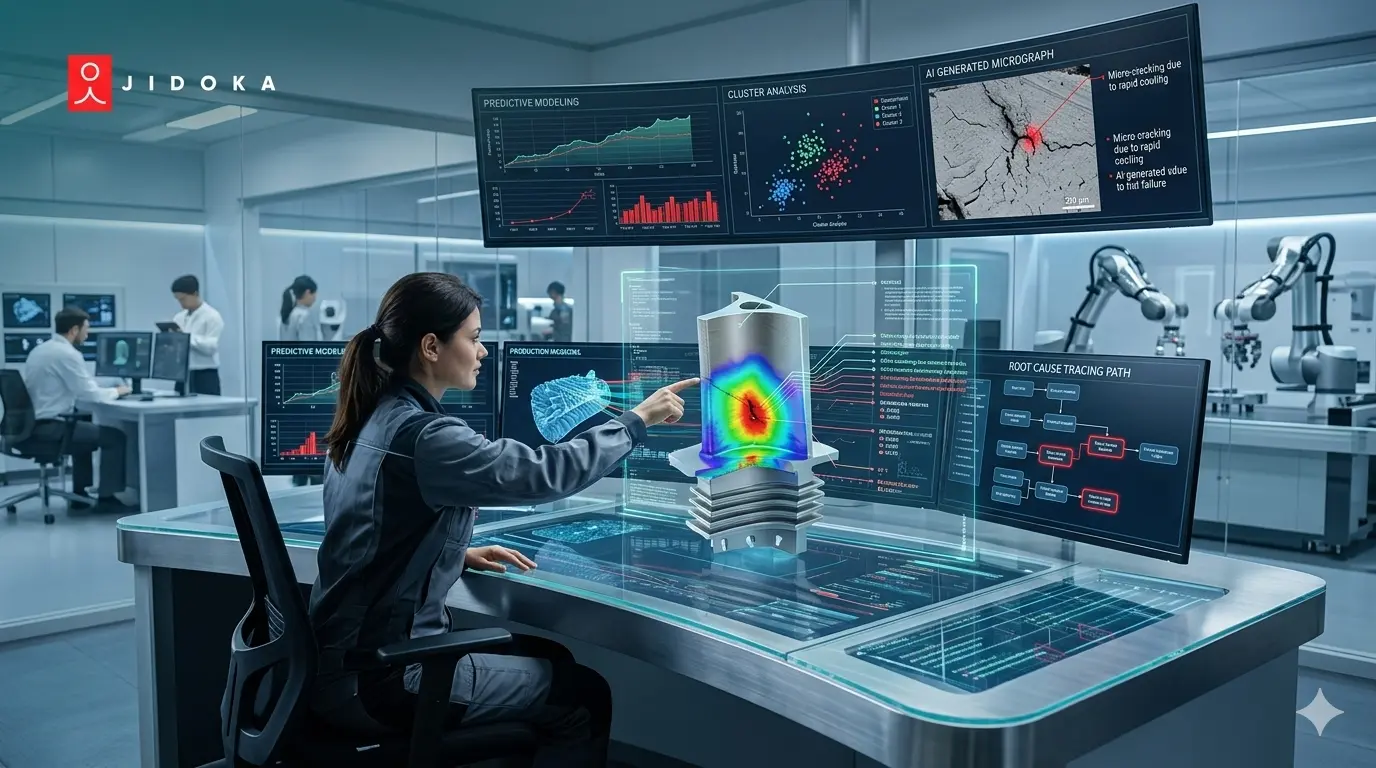
Generatieve AI in real-time ontwerp en procesoptimalisatie
Large Language Models zijn de snelst groeiende AI-toepassing op de werkvloer. De belangstelling onder fabrikanten steeg van 16% in 2025 naar 35% in 2026, volgens de Association for Advancing Automation (A3). De voornaamste toepassingen zijn kennismanagement en copilots voor werknemers, maar generatieve AI stimuleert ook generatief ontwerp, waarbij AI-systemen itereren op onderdeelgeometrieën om tegelijkertijd te optimaliseren voor gewicht, sterkte en materiaalkosten. Door AI gegenereerde ontwerpen hebben in de lucht- en ruimtevaart en de automobielsector een materiaalbesparing van wel 30% aangetoond zonder structurele concessies.
Waarom slimme productie zorgt voor een verschuiving naar binnenlandse productie
Automatisering als antwoord op het arbeidstekort
Deloitte en het Manufacturing Institute voorspellen dat er tegen 2030 2,1 miljoen vacatures in de productiesector onvervuld zullen blijven, een tekort dat een potentiële impact van 1 biljoen USD op het bbp vertegenwoordigt. Vandaag de dag blijven bijna 500.000 banen in de productie onvervuld omdat moderne faciliteiten vaardigheden op het gebied van robotica, CNC en AI vereisen die opleidingsprogramma's niet snel genoeg kunnen leveren.
De Reshoring-onderzoek VS 2025 (500 Amerikaanse fabrikanten) toonde aan dat een sterker geschoold personeelsbestand meer productie zou terughalen dan tarieven, valuta-aanpassingen of belastingverlagingen bij elkaar. OEM's gaven aan dat ze 30% van hun offshore-productie zouden terughalen als er voldoende geschoolde arbeidskrachten in eigen land beschikbaar waren. De logica achter automatisering is helder: geavanceerde robotica en AI verlagen het aantal benodigde medewerkers per productie-eenheid, waardoor reshoring financieel haalbaar wordt zonder dat er een binnenlands personeelsbestand nodig is dat er momenteel nog niet is.
Precisie boven snelheid: waarom een foutloos productieproces nu de concurrentiekracht bepaalt
Gedurende het grootste deel van de industriële geschiedenis was doorloopsnelheid de bepalende factor voor concurrentievoordeel. In 2026 is het foutpercentage de onderscheidende factor. AI-gestuurde visuele inspectiesystemen bereiken nu 95–99% detectienauwkeurigheid, consistent over alle ploegendiensten, vergeleken met 70–80% bij menselijke inspecteurs onder reële productieomstandigheden. Intel rapporteert publiekelijk een jaarlijkse besparing van 2 miljoen USD door de inzet van één enkel visueel inspectiesysteem voor wafers. Een elektronicafabrikant documenteerde een daling van het foutpercentage van 2,3% naar 0,1%, waarmee 1,8 miljoen USD aan jaarlijkse garantiekosten werd geëlimineerd.
Hoe Jidoka Technologies kwaliteitsinspectie op actieve productielijnen automatiseert
Het woord "jidoka" komt uit het Toyota Production System en betekent autonomatie: automatisering met een menselijke touch, waarbij machines zichzelf stoppen zodra er een defect wordt gedetecteerd in plaats van problemen door te schuiven in het proces. Jidoka Technologies heeft twee producten ontwikkeld die deze filosofie operationeel maken voor moderne, AI-gestuurde productielijnen.
1. KOMPASS (High-Accuracy Inspector): Bereikt 99,8% nauwkeurigheid op actieve productielijnen en inspecteert frames in minder dan 10 milliseconden. Het systeem verwerkt de optisch uitdagende gevallen waar traditionele vision-systemen op vastlopen — reflecterende metalen, texturen en afwijkingen van minder dan een millimeter — en vereist 70% minder gelabelde trainingsafbeeldingen dan algemene ML-platformen, wat de implementatietijd aanzienlijk verkort.
2. NAGARE (Procesanalist): Werkt op procesniveau, volgt elke montagestap in real-time en signaleert ontbrekende onderdelen, onjuiste volgordes of overgeslagen handelingen voordat deze verder in het proces terechtkomen. Vermindert herbewerking met maximaal 35% en integreert met MES-, ERP- en QMS-platforms, zodat defectgegevens direct in bestaande workflows terechtkomen zonder dat er een aparte rapportagelaag nodig is.
Beide systemen draaien op lokale edge-units, waardoor inferentie on-premise blijft en de latentie onder de kritieke productiedrempels blijft. De ingebouwde kwaliteitsbibliotheek documenteert de technische architectuur en implementatiepatronen voor fabrikanten die hun eerste AI-inspectieproject evalueren. Jidoka wordt bovendien genoemd in brancheoverzichten van toonaangevende AI-platformen voor visuele inspectieen bedient de sectoren automotive, elektronica, farmacie, FMCG en algemene productie.
Een standaard implementatie duurt zes tot acht weken, van pilot tot live productie. De modulaire hardware past in bestaande werkstationindelingen in plaats van deze te vervangen. Voor fabrikanten die zich verdiepen in trends in kwaliteitscontrole-automatisering en zich zorgen maken over de complexiteit van integratie, is de edge-first, MES-compatibele architectuur het cruciale onderscheidende kenmerk.
Neem contact op met Jidoka Technologies via jidoka-tech.ai/contact-us voor een capaciteitsbeoordeling, of bekijk de productpagina's van KOMPASS en NAGARE om te vergelijken met uw huidige kwaliteitsopzet.
De fabriek van de toekomst draait al
Productieautomatisering in 2026 is geen technologie die nog uitgerold moet worden. Het is een economisch systeem dat al operationeel is in de meest competitieve faciliteiten ter wereld. De kloof tussen fabrikanten die automatisering zien als een kostenbesparing en degenen die het inzetten als een intelligentielaag, wordt elk kwartaal groter. De 'lights-out' fabriek van FANUC in Oshino is niet de eindstreep — het is de benchmark die laat zien waar de concurrentie al 25 jaar staat.
De meest succesvolle fabrikanten van de komende drie jaar zijn niet degenen met de meeste robots. Het zijn degenen met de best verbonden systemen: machines die gegevens delen, kwaliteitsinspecties die terugkoppelen naar procesbesturing en automatiseringsbeslissingen die met elke productierun verbeteren. Of uw volgende stap nu een AI-inspectie-pilot, een modulaire micro-fabriekscel of een volledig onbemande nachtdienst is, de architectuurkeuze die u vandaag maakt, bepaalt hoe snel u kunt schakelen wanneer de volgende verstoring zich voordoet.
Veelgestelde vragen over automatisering in de productie
1. Is 'lights-out' productie in 2026 realistisch voor kleine werkplaatsen?
Ja, mits de scope klopt. Volledige 'lights-out' productie vereist een hoge mate van processtandaardisatie, volwassen voorspellend onderhoud en betrouwbare machine vision voor kwaliteitscontrole. Voor kleine werkplaatsen is een 'lights-sparse' model effectiever: specifieke geautomatiseerde cellen draaien 's nachts onbemand, terwijl vakmensen overdag de ombouw en uitzonderingen afhandelen. De markt voor modulaire robots en cobots wordt nu gedomineerd door kopers buiten de automobielsector, waardoor instapautomatisering veel toegankelijker is dan vijf jaar geleden, met terugverdientijden die voor standaard industriële robots nu gemiddeld op 1,3 jaar liggen.
2. Wat is in 2026 de grootste barrière voor de adoptie van industriële robotica?
De integratie van verouderde systemen is het meest voorkomende knelpunt. De meeste fabrieken beschikken over apparatuur met eigen protocollen, verouderde PLC's en geen gestandaardiseerde data-interface. De snelste weg om deze barrière te overwinnen is via edge computing-platforms die data vertalen zonder dat de productielijn vervangen hoeft te worden. Een tweede barrière is het tekort aan werknemers die geautomatiseerde systemen kunnen programmeren, bedienen en onderhouden, een gat dat naar verwachting in 2030 zal oplopen tot 2,1 miljoen onvervulde vacatures in de productiesector.
3. Hoe verbetert generatieve AI een fysieke assemblagelijn?
De twee belangrijkste mechanismen zijn voorspellend onderhoud en anomaliedetectie. Generatieve AI-modellen die getraind zijn op sensordata herkennen specifieke patronen in trillingen, temperatuurafwijkingen of stroomverbruik die voorafgaan aan een defect, en genereren vervolgens een onderhoudsadvies voordat het defect optreedt. Op LLM gebaseerde 'worker copilots' bieden operators stapsgewijze montagebegeleiding, waardoor fouten worden verminderd zonder de mens uit complexe of variabele taken te halen. De A3 rapporteert dat de interesse in LLM's onder fabrikanten tussen 2025 en 2026 met 19 procentpunten is gestegen, waarbij kennismanagement en procesbegeleiding de belangrijkste toepassingen zijn.
4. Zal slimme productie alle banen op de werkvloer overbodig maken?
Nee. De bewijslast wijst op een transformatie van rollen, niet op eliminatie. Automatisering neemt repetitieve, fysiek zware en inspectie-intensieve taken over, terwijl er vraag ontstaat naar roboticatechnici, trainers voor AI-systemen, besturingstechnici en data-analisten voor kwaliteit. Het World Economic Forum schat dat automatisering tegen 2030 wereldwijd ongeveer 92 miljoen banen zal verdringen, maar 170 miljoen nieuwe banen zal creëren, wat neerkomt op een nettowinst van 78 miljoen. In de productiesector is het knelpunt juist het gebrek aan gekwalificeerde werknemers om geautomatiseerde systemen te bedienen en onderhouden — niet een overschot.
5. Hoe vaak moeten strategieën voor productieautomatisering worden bijgewerkt?
Hardware-vervangingscycli worden in jaren gemeten, maar software en strategie vereisen in 2026 een kwartaalcontrole. AI-modellen verbeteren door productiedata, er ontstaan nieuwe integratiestandaarden en concurrentiebenchmarks verschuiven naarmate de robotdichtheid in sectoren toeneemt. De IFR projecteert dat het aantal wereldwijde robotinstallaties tegen 2028 zal groeien naar 700.000 eenheden, wat betekent dat de kloof tussen achterblijvers en koplopers elk jaar groter wordt als een strategie niet wordt geëvalueerd.
6. Wat is het verschil tussen KOMPASS en NAGARE van Jidoka Technologies?
KOMPASS verzorgt inspectie op productniveau: het detecteert oppervlaktedefecten, maatafwijkingen, label-fouten en ontbrekende onderdelen bij eindproducten of halffabricaten, met een nauwkeurigheid van 99,8% in minder dan 10 ms. NAGARE richt zich op procesoptimalisatie: het monitort elke stap van de assemblage of kitting in real-time, begeleidt operators bij een correcte uitvoering en signaleert afwijkingen voordat deze verderop in het proces tot defecten leiden. Samen dekken ze zowel de "wat is het resultaat" als de "hoe is het gemaakt" dimensies van kwaliteitscontrole. Meer over de toepassing voor assemblage-inspectie is beschikbaar op de website van Jidoka.