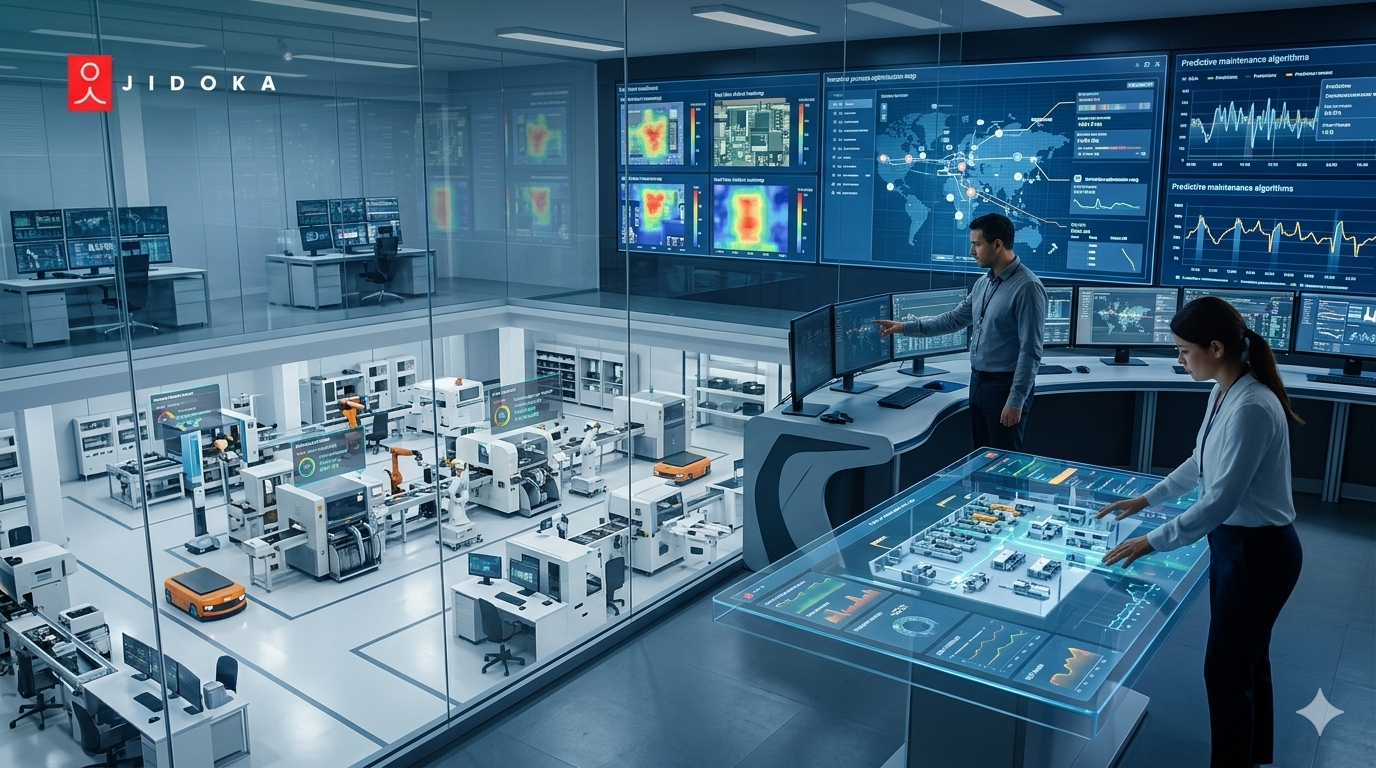
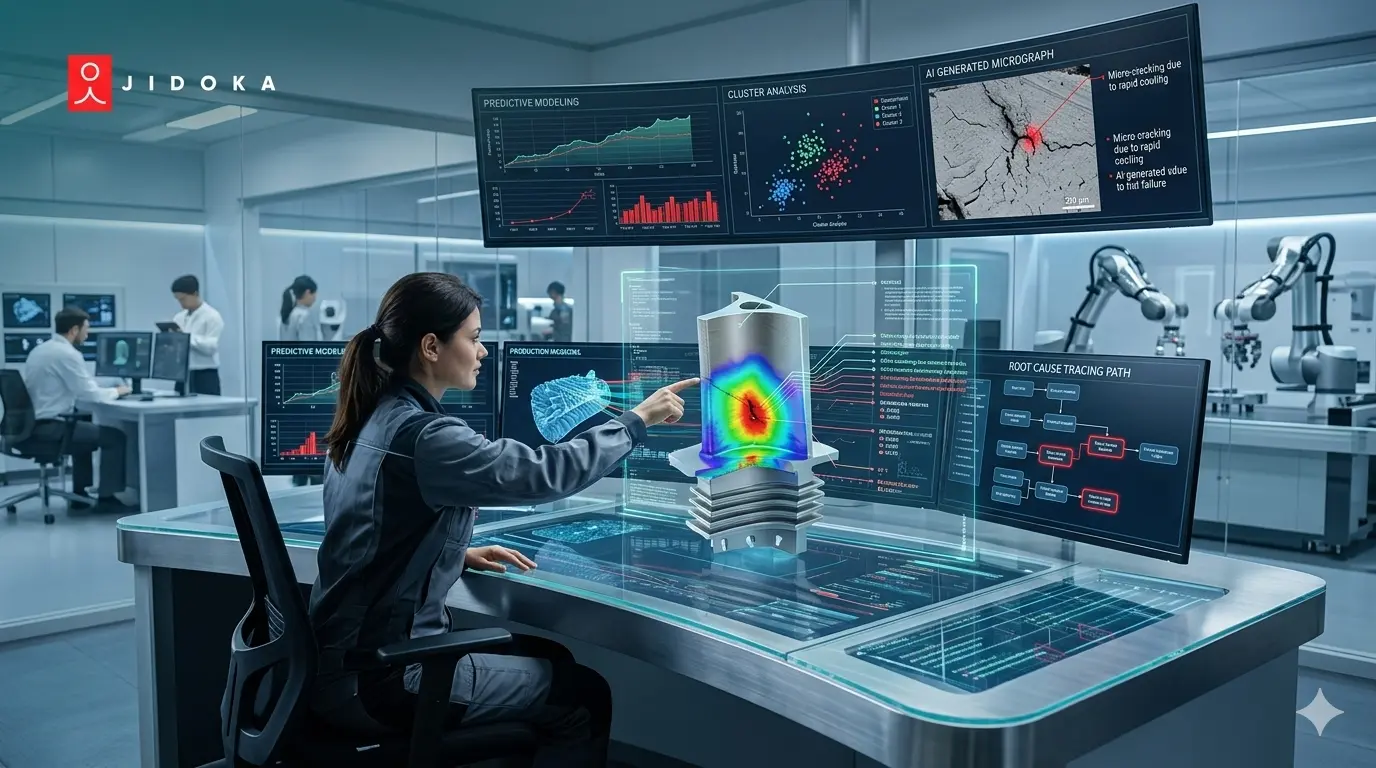
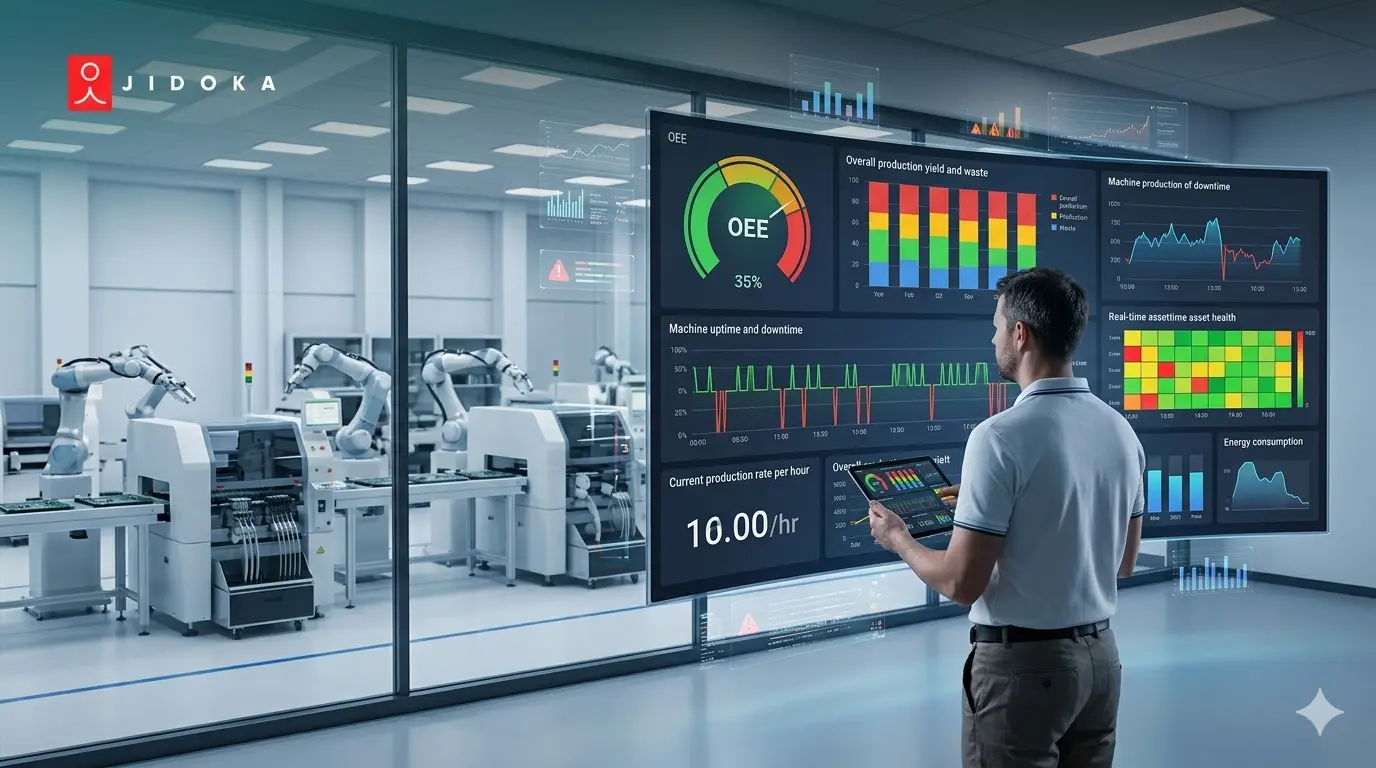
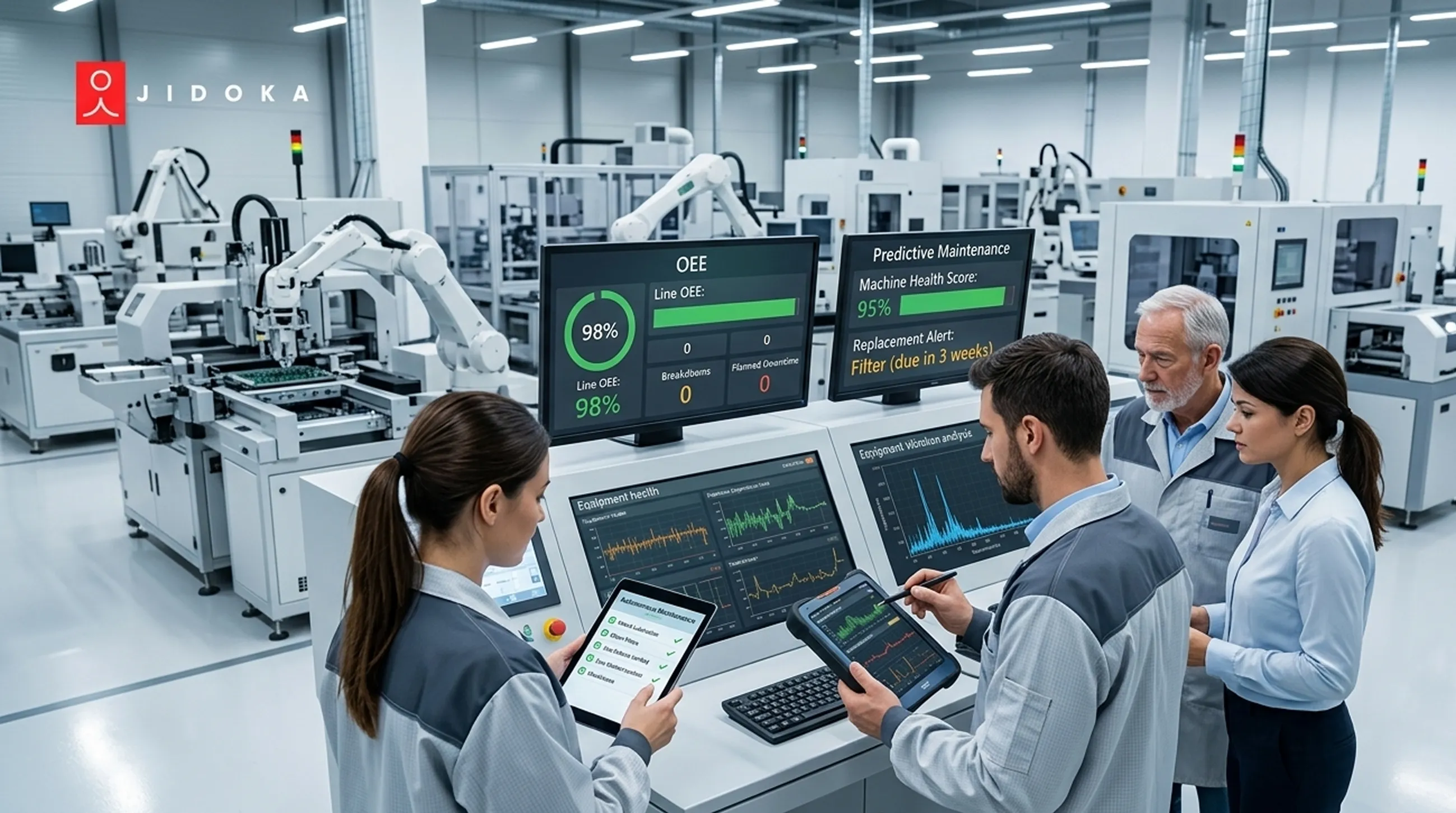
De meeste fabrieksstoringen worden niet veroorzaakt door defecte machines. Ze worden veroorzaakt door systemen die niet met elkaar kunnen communiceren. Een sensor verzamelt gegevens die door geen enkele software worden gelezen. Een PLC voert een proces uit dat door geen enkel SCADA-systeem wordt bewaakt. Er treedt een kwaliteitsdefect op bij lijn drie, terwijl een operator op een dashboard naar lijn één kijkt.
Industriële automatisering lost dit op, niet door meer machines toe te voegen, maar door de bestaande machines te verbinden tot een systeem dat als één geheel waarneemt, beslist en handelt. Volgens de International Trade Administration stijgt de productiviteit in alle sectoren met 5,1% voor elke 1% stijging in de dichtheid van industriële robots. Dat is geen marginale winst. Het effect stapelt zich elk kwartaal op wanneer een faciliteit een verbonden systeem gebruikt in plaats van een systeem dat niet verbonden is.
Deze gids legt uit wat industriële automatisering werkelijk is, identificeert de vijf kerncomponenten en legt uit wat elk onderdeel doet en waar het tekortschiet als het zonder de andere onderdelen functioneert.
Wat is industriële automatisering?
Industriële automatisering is het gebruik van besturingssystemen, PLC's, sensoren, robotica en software om industriële processen uit te voeren met minimale menselijke tussenkomst. Het woord 'minimaal' is hier cruciaal. Automatisering elimineert geen operators. Het elimineert de onderdelen van het werk van een operator waarvoor fysieke aanwezigheid vereist is om iets op te merken.
Het onderscheid met mechanisatie is belangrijk. Mechanisatie vervangt fysieke arbeid. Automatisering vervangt ook de besluitvorming. Een sensor detecteert een temperatuurpiek. Een PLC verwerkt die gegevens. Een SCADA-systeem registreert het. Een waarschuwing bereikt de operator voordat er een storing optreedt. Die hele reeks verloopt zonder dat iemand handmatig een meter hoeft te controleren, en het werkt op zondag om 02:00 uur precies hetzelfde als op maandagochtend met een volledige ploeg.
Wat het niet is: een eenmalige technologische aankoop. Een faciliteit die een PLC op één lijn installeert en dit automatisering noemt, heeft een component gekocht, geen systeem. Industriële automatisering levert rendement op wanneer de componenten een verbonden geheel vormen. Elk onderdeel op zich doet iets nuttigs. Alle vijf samen doen ze iets dat de economie van de productie verandert.
"AI ondersteunt een nieuwe manier van werken; de software fungeert meer als een medewerker dan als een hulpmiddel, waardoor machines kunnen leren, zich aanpassen en zelfstandig beslissingen kunnen nemen.", Rockwell Automation, 2025
De 5 belangrijkste componenten van industriële automatiseringstechnologie
Elke geautomatiseerde fabriek draait op een stack van onderling verbonden componenten. Hier zijn de vijf die het eigenlijke werk doen, en wat er misgaat als een van deze ontbreekt.
Component 1: PLC (Programmable Logic Controller) — het brein van de lijn
Een PLC is een robuuste industriële computer die signalen van sensoren leest, logica verwerkt en opdrachten stuurt naar actuatoren, motoren en machines. Het voert cyclische operaties uit, beheert veiligheidsvergrendelingen en ordent elke geautomatiseerde stap in een productieproces. Als een lijn automatisch werkt, is een PLC daar vrijwel zeker de reden van.
In 2026 is de bepalende verandering de ontkoppeling. Moderne PLC's draaien steeds vaker als softwaregedefinieerde controllers op edge-gateways in plaats van op specifieke fysieke hardware. Die verschuiving is belangrijk omdat het de beperking van nabijheid wegneemt; besturingslogica kan op afstand worden bijgewerkt, over lijnen worden gekopieerd en worden geïntegreerd met IIoT-protocollen zoals OPC UA en MQTT zonder dat er hardware vervangen hoeft te worden.
Wat een PLC niet alleen kan: een overzicht geven van wat er in de hele faciliteit gebeurt. Een PLC bestuurt één proces of één lijn. Zonder een SCADA-systeem dat de output leest, blijven de gegenereerde gegevens lokaal. Dat is waar de meeste gedeeltelijk geautomatiseerde faciliteiten vastlopen: PLC's die in isolatie draaien, elk als een eiland van controle dat door niemand wordt geaggregeerd.
Component 2: SCADA (Supervisory Control and Data Acquisition) — het centrale zenuwstelsel van de fabriek
SCADA verzamelt realtime gegevens van PLC's, sensoren en externe terminalunits in de hele faciliteit en presenteert deze via dashboards, alarmen en trendgrafieken. Het is wat een fabriek inzichtelijk maakt. Een operator die naar een SCADA-interface kijkt, kijkt niet naar één machine, maar naar allemaal tegelijk, met de mogelijkheid om vanaf één punt besturingscommando's te verzenden.
De businesscase voor SCADA is inmiddels goed gedocumenteerd. Volgens het Industrial Digitalization Report 2024 van Nokia behaalde 93% van de ondernemingen die private draadloze netwerken in combinatie met SCADA gebruikten, binnen 12 maanden rendement op hun investering. Het mechanisme is eenvoudig: wanneer operators afwijkingen in realtime kunnen zien in plaats van ze pas aan het einde van de dienst te ontdekken, vindt interventie eerder plaats en zijn de kosten voor downtime lager.
De verschuiving in 2026: moderne SCADA-systemen integreren met AI-analytische lagen die hen verplaatsen van reactieve monitoring naar voorspellende operaties. Een SCADA-systeem dat alleen vertelt wat er nu gebeurt, is een SCADA-systeem uit 2018. De huidige generatie signaleert wat er waarschijnlijk gaat gebeuren op basis van patroonherkenning in historische gegevens; een vermogen waarvoor IIoT-verbonden sensoren nodig zijn die actuele machinegegevens aanleveren.
Component 3: HMI (Human-Machine Interface) — waar operators de machine ontmoeten
Een HMI is de interface tussen een menselijke operator en een geautomatiseerd systeem: het scherm, touchpanel of grafische dashboard dat live procesgegevens, alarmen en systeemstatus weergeeft in een formaat dat een persoon kan begrijpen en waarop hij kan handelen. Zonder dit zijn de gegevens die PLC's en SCADA genereren slechts ruis; getallen in een systeem waar niemand op een praktische manier mee kan werken of op kan reageren.
De verandering die in 2026 opvalt, is mobiliteit. Vaste HMI-panelen verdwijnen niet, maar mobiele HMI-toegang – waarbij operators processen bekijken en aansturen vanaf tablets op de werkvloer – verschuift van een pilot naar een standaardimplementatie in faciliteiten die met moderne automatiseringsstacks werken. Augmented reality-overlays, waarbij een operator een apparaat op een machine richt en live procesgegevens over de fysieke apparatuur heen ziet, worden in grotere faciliteiten nu ook echt industrieel ingezet.
Het ontwerpprincipe dat belangrijker is dan welke specifieke technologie dan ook: een HMI waarvoor een operator drie maanden training nodig heeft om er competent mee te werken, is een last, geen aanwinst. De beste HMI-implementaties verlagen de cognitieve belasting van de operator door te tonen wat belangrijk is, weg te laten wat niet relevant is en ervoor te zorgen dat een alarm binnen 30 seconden kan worden afgehandeld.
Component 4: Industriële robots en cobots — precisie op productiesnelheid
Industriële robots voeren las-, assemblage-, spuit-, palletiseer- en kwaliteitsinspectiewerkzaamheden uit met snelheden en nauwkeurigheidsniveaus die handmatige processen overtreffen, en dat zonder vermoeidheidsverschijnselen tijdens verschillende diensten. De waarde zit hem niet in het feit dat ze sneller zijn dan een mens bij een specifieke taak, maar dat ze bij de tienduizendste herhaling precies even snel zijn als bij de eerste.
De schaal van implementatie is niet hypothetisch. Noord-Amerikaanse fabrikanten schaften in de eerste helft van 2025 alleen al 17.635 robots aan ter waarde van 1,09 miljard dollar, volgens de Association for Advancing Automation. Dat cijfer weerspiegelt beslissingen die al zijn genomen, geen projecties; faciliteiten die aan het evalueren waren, zijn nu aan het implementeren.
Collaboratieve robots (cobots), ontworpen om veilig naast operators te werken zonder dat er kooien of afschermingen nodig zijn, vertegenwoordigen inmiddels 11% van alle wereldwijd ingezette industriële robots. Hun adoptie is geconcentreerd in middelgrote bedrijven waar de taakvariatie hoog is en productieruns korter zijn; omgevingen waar de opstartkosten per run van een traditionele industriële robot niet rendabel zijn. AI-geïntegreerde cobots zijn in 2026 in staat tot zelfgestuurde padplanning en adaptieve kwaliteitsinspectie, waarbij voorgeprogrammeerde routes worden vervangen door real-time besluitvorming.
"Het tijdperk van de pilot-fase is voorbij. Fabrikanten stappen over van geïsoleerde robotimplementaties naar volledig geïntegreerde, AI-gestuurde productieomgevingen.", ITR Economics / IIoT World, 2026
Component 5: Industriële sensoren — de databron waar alles van afhangt
Sensoren detecteren fysieke omstandigheden zoals temperatuur, druk, trillingen, nabijheid, doorstroming en visuele gegevens, en zetten deze om in signalen waar PLC's en SCADA-systemen op kunnen reageren. Elk ander onderdeel in deze lijst is afhankelijk van sensoren. PLC's hebben signalen nodig om te verwerken. SCADA heeft gegevens nodig om weer te geven. Predictive maintenance-modellen hebben meetwaarden over de gezondheid van machines nodig om te analyseren. Verwijder de sensoren en de rest van de stack baseert beslissingen op niets.
De verschuiving in 2026 zit niet in de sensoren zelf, maar in waar ze mee verbonden zijn. IIoT-geschikte sensoren voeren nu real-time gegevens over de gezondheid van machines rechtstreeks in predictive maintenance-platforms, die meetwaarden vergelijken met historische storingspatronen en afwijkingen signaleren voordat ze tot stilstand leiden. Faciliteiten die gebruikmaken van AI en IIoT-gebaseerd onderhoud rapporteren tot 50% minder ongeplande stilstand. Dat cijfer komt niet alleen door betere sensoren. Het komt doordat sensoren gegevens voeden aan een systeem dat weet wat het met die data moet doen.
Eén ontwikkeling die het volgen waard is: zelfvoorzienende sensoren die energie oogsten, worden in 2026 breder ingezet. Dit vermindert de installatiecomplexiteit op locaties waar het aanleggen van bekabeling continue monitoring voorheen onpraktisch maakte. Dit breidt real-time inzicht uit naar assets die voorheen alleen tijdens geplande onderhoudsbeurten werden gecontroleerd.
Hoe Jidoka Technologies industriële automatisering versterkt met AI-gestuurde inspectie
De leemte die de stack van vijf componenten openlaat, is kwaliteit. PLC's sturen machinegedrag aan. SCADA bewaakt de gezondheid van de faciliteit. HMI's bieden operators inzicht. Robots voeren fysieke taken uit. Sensoren voeden al deze onderdelen met data. Geen van die componenten levert, individueel of gezamenlijk, in-line kwaliteitsinspectie die in de loop van de tijd verbetert. Dat is het probleem waarvoor KOMPASS is gebouwd.
KOMPASS is Jidoka's AI-aangedreven machine vision-systeem voor real-time kwaliteitsinspectie op lijnsnelheid. Het integreert rechtstreeks in bestaande fabrieksautomatisering, leest vanuit dezelfde productieomgeving waarin uw PLC's en sensoren al draaien, en detecteert defecten die op regels gebaseerde camera's consequent missen. In tegenstelling tot statische inspectiesystemen leert het van productiegegevens en scherpt het zijn eigen detectiecriteria in de loop van de tijd aan, wat betekent dat het systeem dat in de eerste maand wordt ingezet, na zes maanden meetbaar beter presteert.
NAGARE is Jidoka's manufacturing execution platformZie het als de laag tussen je PLC's en SCADA en je productiebeslissingen, die gegevens van de werkvloer in realtime verbindt met planning, personeelsafstemming en kwaliteitsworkflows. Wanneer er een kwaliteitsafwijking op de lijn optreedt, stuurt NAGARE deze door naar de juiste persoon met de context die nodig is om actie te ondernemen, in plaats van alleen een alarmnummer.
Beide producten zijn gebouwd om te integreren in bestaande automatiseringsinfrastructuur. Een faciliteit hoeft geen volledige industriële automatisering uit te rollen voordat een van beide kan worden ingezet. Ze zijn ontworpen voor de situatie waarin de meeste fabrikanten zich daadwerkelijk bevinden: meerdere componenten die draaien, gedeeltelijke connectiviteit en specifieke hiaten in kwaliteitsinzicht en productiebesluitvorming die de bestaande stack niet opvult.
Conclusie
Industriële automatisering in 2026 bestaat uit vijf componenten die in volgorde samenwerken: PLC's die de machinelogica aansturen, SCADA dat de volledige operatie bewaakt, HMI's die operators inzicht geven, robots die fysieke taken uitvoeren op productiesnelheid en sensoren die dit alles van realtime gegevens voorzien. Elke component doet iets nuttigs op zichzelf. Het rendement komt voort uit de verbindingen daartussen.
Faciliteiten die de stack begrijpen en investeren in het dichten van de hiaten tussen componenten in plaats van er alleen maar meer toe te voegen, zijn degenen die het aantal defecten verlagen, downtime verminderen en productielijnen bouwen die in de loop van de tijd beter worden. De meest voorkomende versie van dat hiaat in 2026 is kwaliteit: een volledig geautomatiseerde faciliteit die nog steeds vertrouwt op inspectie aan het einde van de lijn om te vangen wat de rest van de stack heeft gemist.
Als dat jouw werkvloer beschrijft, vraag dan een demo aan bij Jidoka Technologies om te zien hoe KOMPASS en NAGARE dat hiaat binnen een bestaande automatiseringsomgeving dichten.
Veelgestelde vragen over industriële automatisering
Wat is industriële automatisering in eenvoudige bewoordingen?
Industriële automatisering is het gebruik van besturingssystemen, PLC's, sensoren, robots en software om productieprocessen uit te voeren zonder voortdurende menselijke tussenkomst. Het vermindert handmatige fouten, verhoogt de productiesnelheid en stelt machines in staat om in realtime omstandigheden te detecteren en daarop te reageren. Het sleutelwoord is 'systemen'; automatisering is geen enkele technologie, maar een verbonden stack van technologieën.
Wat zijn de 5 belangrijkste componenten van industriële automatisering?
De vijf kerncomponenten zijn PLC's (Programmable Logic Controllers), SCADA-systemen (Supervisory Control and Data Acquisition), HMI's (Human-Machine Interfaces), industriële robots en cobots, en industriële sensoren. Elk onderdeel beheert een andere laag van de stack: PLC's besturen individuele machines, SCADA bewaakt de volledige faciliteit, HMI's bieden operators een leesbare interface, robots voeren fysieke taken uit en sensoren leveren de ruwe gegevens waarop al het andere draait.
Wat is het verschil tussen een PLC en SCADA?
Een PLC bestuurt individuele machines door sensorsignalen te verwerken en geprogrammeerde logica op machineniveau uit te voeren. SCADA werkt op fabrieks- of installatieniveau; het verzamelt gegevens van meerdere PLC's, bewaakt de gehele faciliteit in realtime en stelt operators in staat om processen te beheren en aan te sturen vanuit een centrale interface. Een PLC zonder SCADA genereert gegevens die lokaal blijven. SCADA zonder PLC's heeft niets om te bewaken.
Vervangen cobots in 2026 traditionele industriële robots?
Niet vervangen, maar uitbreiden naar andere toepassingen. Traditionele industriële robots domineren taken met een hoog volume en hoge precisie, zoals lassen en spuiten, waarbij de opstartkosten over lange productieruns worden afgeschreven. Cobots winnen terrein in middelgrote operaties waar de taakvariatie hoog is en de runs korter. Cobots vertegenwoordigen inmiddels 11% van alle wereldwijd ingezette industriële robots, met adoptie geconcentreerd in verpakking, assemblage en inspectie.
Hoeveel vermindert industriële automatisering de downtime?
Faciliteiten die gebruikmaken van AI en IIoT-gebaseerd voorspellend onderhoud rapporteren tot 50% minder ongeplande downtime. Het mechanisme bestaat uit sensoren die realtime gegevens over de gezondheid van machines invoeren in voorspellende modellen die afwijkingspatronen signaleren voordat ze tot stilstand leiden. Dit cijfer verbetert naarmate de modellen meer historische gegevens verzamelen, wat de reden is waarom de integratiediepte net zo belangrijk is als de technologie zelf.
Is industriële automatisering alleen haalbaar voor grote fabrikanten?
Nee. Cloud-gebaseerde SCADA-platforms, modulaire PLC's en de inzet van cobots hebben de instapkosten voor middelgrote faciliteiten aanzienlijk verlaagd. Het praktische startpunt is het identificeren van één proces met een grote impact, zoals kwaliteitscontrole of voorspellend onderhoud, en dit te automatiseren met een gerichte oplossing voordat er wordt opgeschaald. Een faciliteit met 200 medewerkers die AI-visiecontrole toepast op één kritieke lijn, is bezig met industriële automatisering. Het vereist geen volledige revisie van de werkvloer om te beginnen.