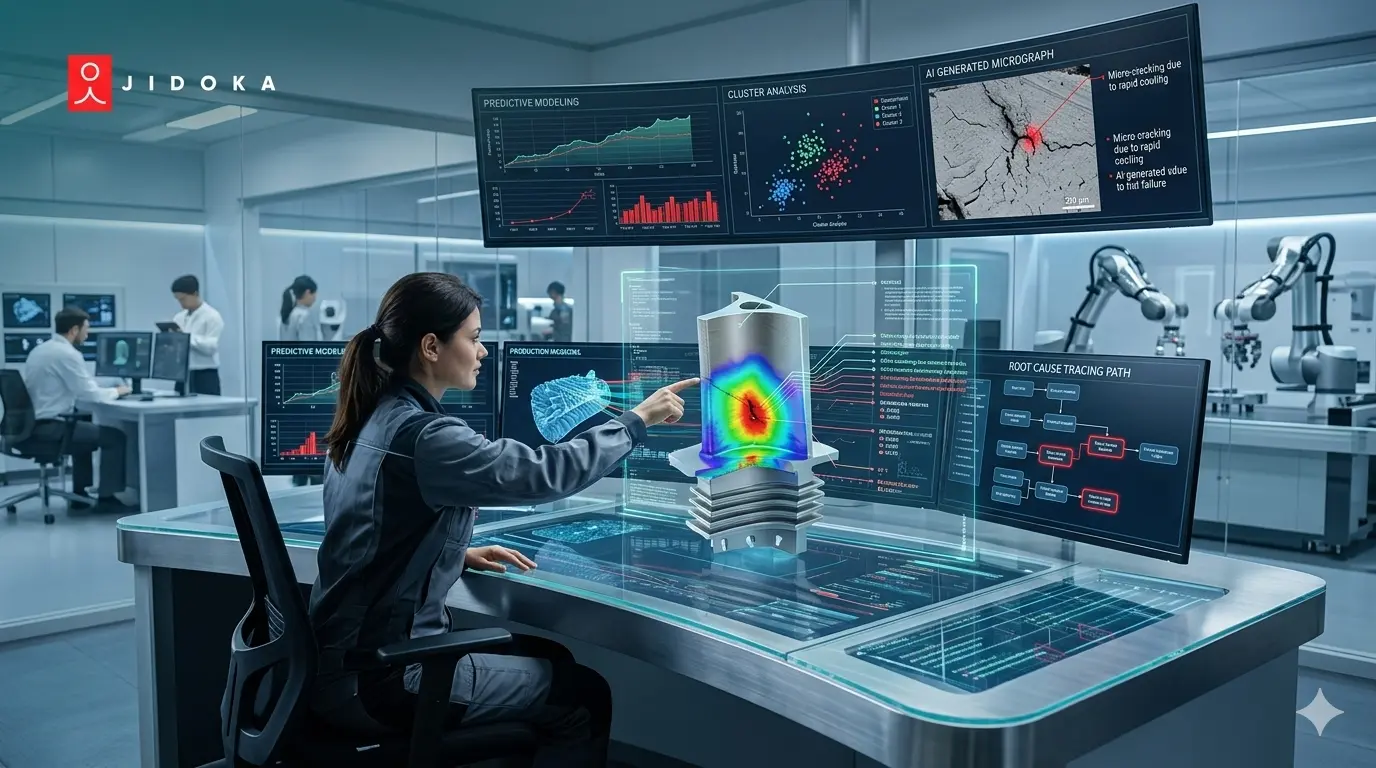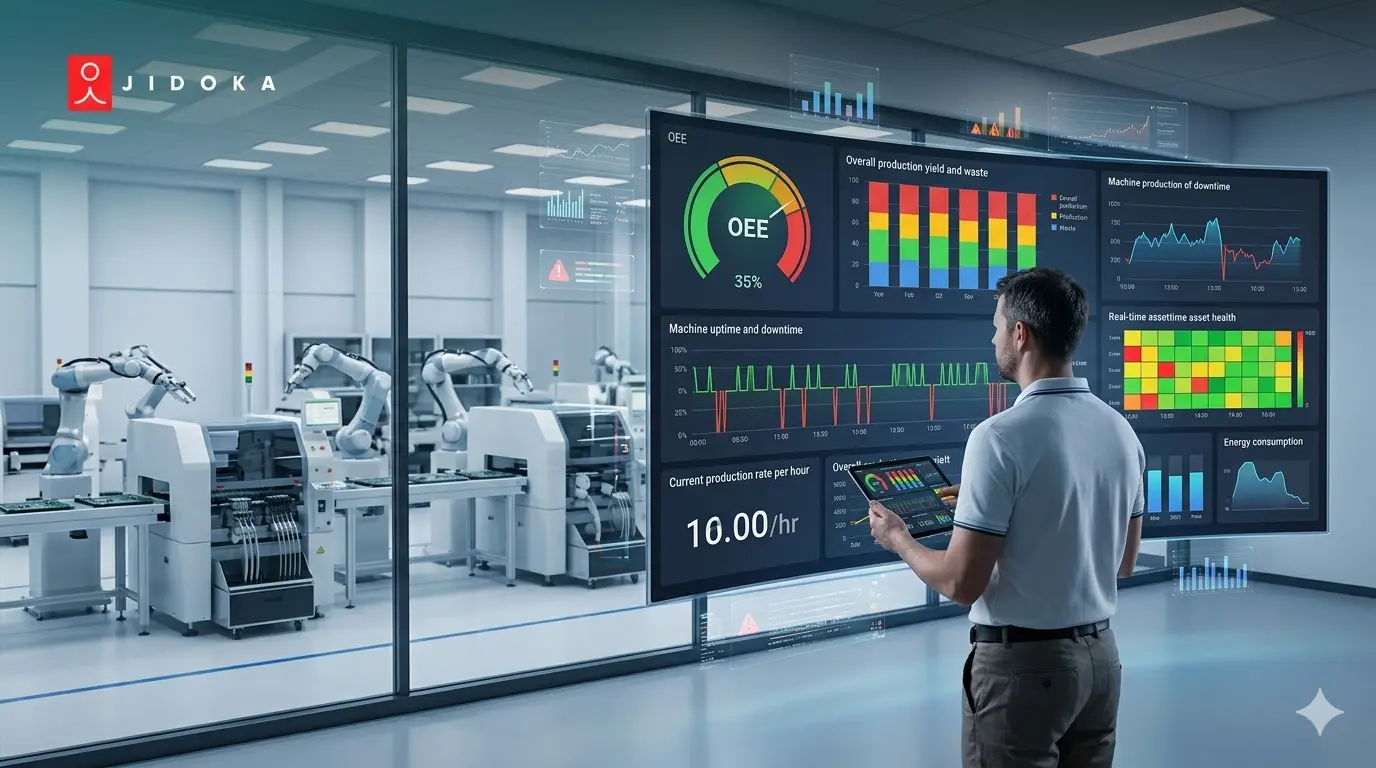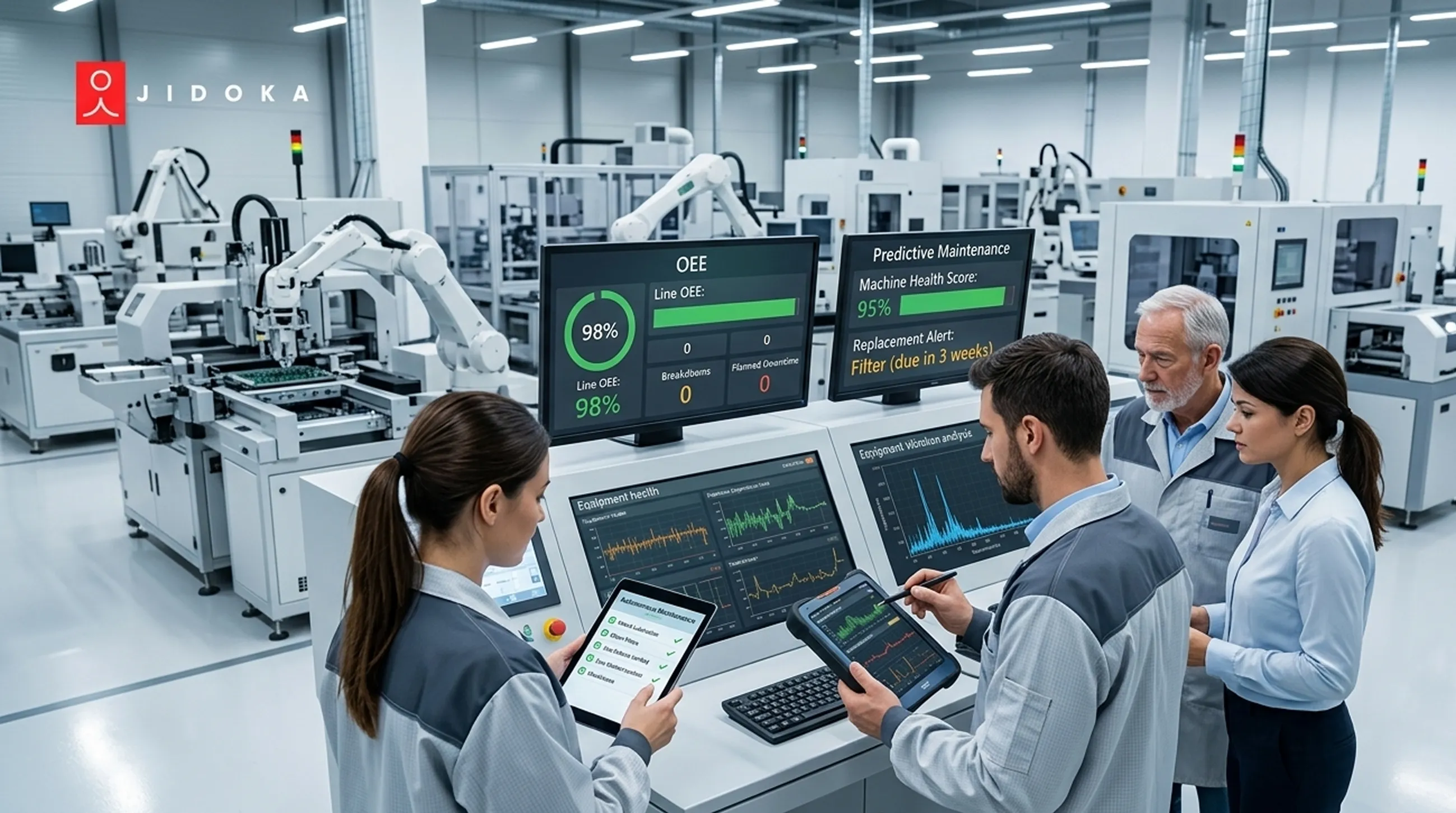
The global MES software market reached $16.57 billion in 2025 and hits $41.78 billion by 2032. This 14.1% CAGR makes it a top choice for industrial growth. Factories using MES software cut defects by 40% and solve problems 60% faster.
One automotive supplier dropped downtime by 18% and increased good parts by 7% in three months. Most plants still have visibility gaps that MES software closes. This guide shows how manufacturing execution systems connect your shop floor to your business goals.
What Is MES Software and What Does It Actually Control on the Shop Floor?
While business software handles your office tasks, MES software takes charge of the physical work happening on your factory floor. It acts as the brain of your production line, turning raw materials into finished goods by managing every moving part in real time.
You can use MES software to see exactly which machine is running, which operator is logged in, and how much scrap is being produced at any given second.Our system does not just watch; it directs.
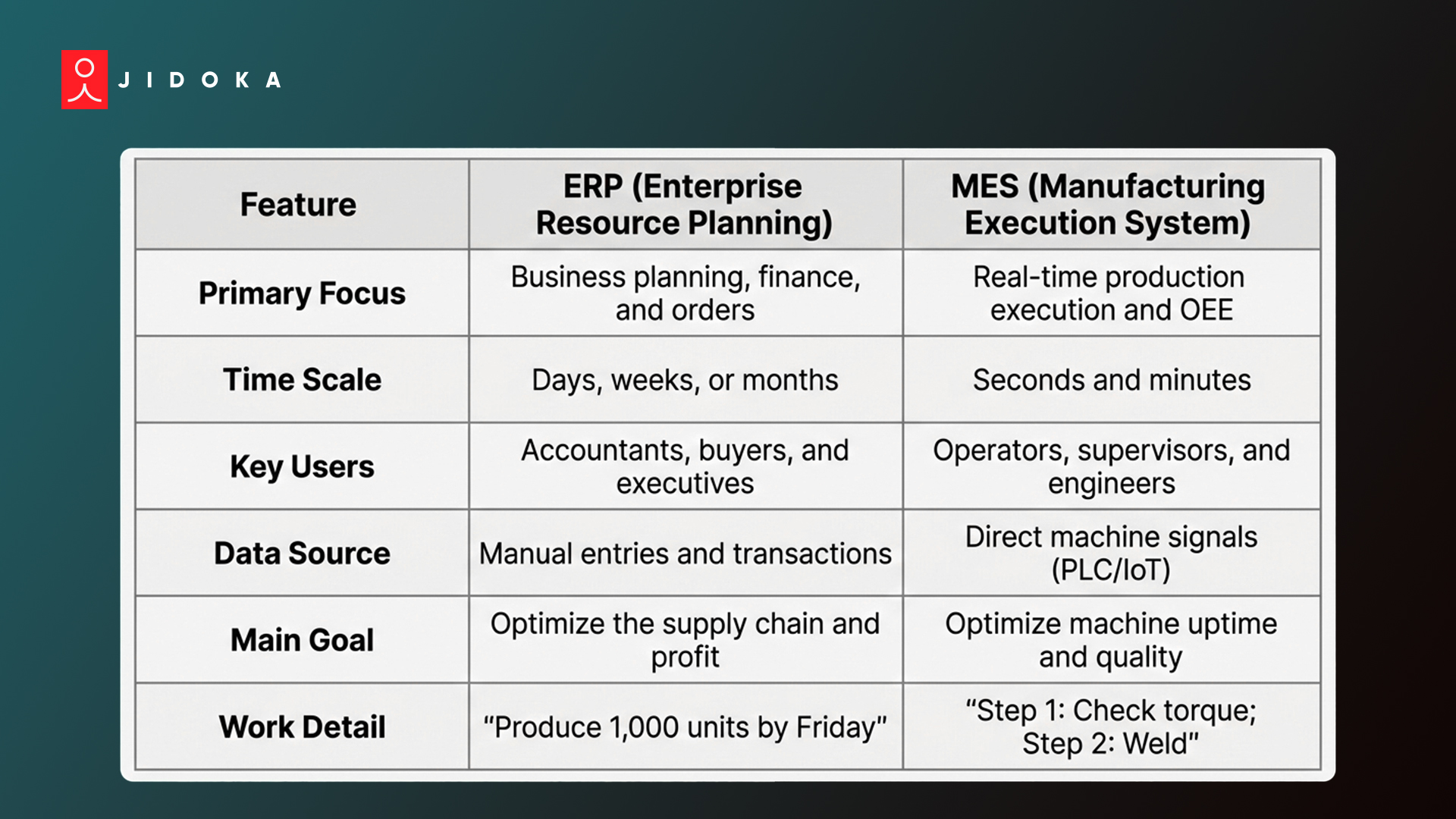
1. MES vs. ERP — Two Systems That Manage Different Layers of Manufacturing
Understanding the link between your office and your shop floor is vital for success. While these systems often work together, they solve very different problems. Your ERP manages the "top floor" business strategy, while MES software manages the "shop floor" tactical execution.
2. The Core Functions Every Manufacturing Execution System Must Cover
- Production Dispatching: You send digital work orders directly to specific stations to keep the line moving without delays.
- Traceability: Every part gets a digital birth certificate that links it to specific batches, machines, and test results.
- Quality Control: The system flags out-of-spec parts instantly through automated SPC checks, preventing bad units from shipping.
- Labor Management: You track worker certifications to ensure only trained staff operate complex machinery.
- Asset Monitoring: Real-time data collection highlights hidden bottlenecks and calculates your OEE automatically.
By mastering these functions, your plant gains a level of control that manual processes cannot match.
Top 5 MES Software for Manufacturing in 2026 (Ranked by Production-Floor Performance)
Selecting the right MES software depends on your specific factory needs, production volume, and budget. While some platforms focus on enterprise-wide connectivity, others specialize in high-speed quality or rapid deployment for smaller teams.
These top five platforms represent the best manufacturing execution systems available in 2026 for improving your bottom line.
1. Jidoka Technologies (KOMPASS + NAGARE)
Overview: Jidoka Technologies redefines execution by integrating high-speed AI vision directly into the shop floor. By processing frames in under 10ms with 99.8% accuracy, it eliminates the lag of traditional systems, ensuring every part is perfect before it ever leaves the station.
Key Features:
- KOMPASS AI Inspection: Real-time defect detection on complex textures and reflective surfaces.
- NAGARE Assembly Tracking: Automated verification of manual assembly steps to prevent rework.
- Edge-Based Processing: Zero-latency data handling and total privacy without cloud dependency.
Best For: High-speed production lines and manufacturers requiring zero-defect quality assurance through automated visual inspection.
Services Offered: AI Line Audits, Visual Inspection Automation, Real-time Quality Monitoring, Assembly Verification, Edge Computing Integration.
Industries Catered: Automotive, Electronics, Medical Devices, High-Precision Manufacturing, Consumer Goods.
Reviews: ⭐⭐⭐⭐⭐ (4.9/5 stars)
2. Siemens Opcenter
Overview: As a cornerstone of the "Digital Twin" strategy, Siemens Opcenter provides a seamless thread between product design and physical execution. It is built for massive scale, allowing global enterprises to standardize complex processes across multiple international plant locations effortlessly.
Key Features:
- Advanced Planning & Scheduling (APS): Sophisticated constraint-based scheduling for complex workflows.
- PLM Integration: Native connectivity with Siemens Teamcenter for end-to-end data flow.
- Digital Twin Synchronization: Virtual modeling of production to test changes before physical rollout.
Best For: Large-scale, multi-site global enterprises that require deep integration between engineering and the factory floor.
Services Offered: Production Tracking, Quality Management, Enterprise-wide Analytics, R&D Integration, Regulatory Compliance.
Industries Catered: Aerospace, Defense, Automotive, Heavy Machinery, Semiconductor.
Reviews: ⭐⭐⭐⭐★ (4.5/5 stars)
3. Rockwell Automation (Plex MES)
Overview: Plex is a pioneer in cloud-native manufacturing, offering a "versionless" SaaS model that ensures users are always on the latest update. It excels at providing a single source of truth for manufacturers who need strict, real-time supply chain traceability.
Key Features:
- Cloud-Native Architecture: Secure, browser-based access with no manual software updates required.
- Multi-Tenant SaaS: Scalable infrastructure that grows instantly with your production volume.
- Integrated Quality & Traceability: Built-in tools for rigorous "cradle-to-grave" part genealogy.
Best For: Suppliers in highly regulated industries who prioritize cloud accessibility and "always-current" software environments.
Services Offered: Cloud MES, Supply Chain Management, Production Monitoring, Quality Management (QMS), Asset Performance.
Industries Catered: Food & Beverage, Automotive Suppliers, Life Sciences, Plastics, Rubber.
Reviews: ⭐⭐⭐⭐(4.4/5 stars)
4. Tulip Interfaces
Overview: Tulip disrupts the industry with its no-code platform, empowering frontline engineers to build custom "apps" for their specific workstations. It focuses on the human element of manufacturing, turning manual processes into digital, data-driven workflows in just days.
Key Features:
- No-Code App Builder: Drag-and-drop interface for creating custom work instructions and dashboards.
- Frontline Operations: High focus on operator-centric tools and digital "paperless" workstations.
- Agile Deployment: Go live with specific modules in a fraction of the time of enterprise systems.
Best For: Mid-sized manufacturers and agile teams looking for a flexible, bottom-up approach to digital transformation.
Services Offered: Digital Work Instructions, Lean Manufacturing Apps, Real-time Data Collection, Quality Tracking, Root Cause Analysis.
Industries Catered: Apparel, Electronics Assembly, Pharmaceuticals, Mid-market Industrial Parts.
Reviews: ⭐⭐⭐⭐⭐ (4.6/5 stars)
5. Sepasoft (Inductive Automation Ignition)
Overview: Built on the powerful Ignition framework, Sepasoft offers unmatched modularity and architectural freedom. It is the preferred choice for engineers who want to build a bespoke MES environment using Python scripting and unlimited licensing tags.
Key Features:
- Unlimited Licensing: Scale your tags and clients without incurring additional per-user costs.
- ISA-88/95 Compliance: Purpose-built modules for batch processing and procedural control.
- Python Scripting: Highly customizable back-end for unique production logic and reporting.
Best For: Process and batch industries that require a highly customized, standards-compliant system with scalable pricing.
Services Offered: OEE Monitoring, Batch Management, Statistical Process Control (SPC), Barcode Tracking, Recipe Management.
Industries Catered: Chemicals, Oil & Gas, Pharmaceuticals, Water/Wastewater, Energy.
Reviews: ⭐⭐⭐⭐(4.3/5 stars)
Top 5 MES Software for Manufacturing in 2026:
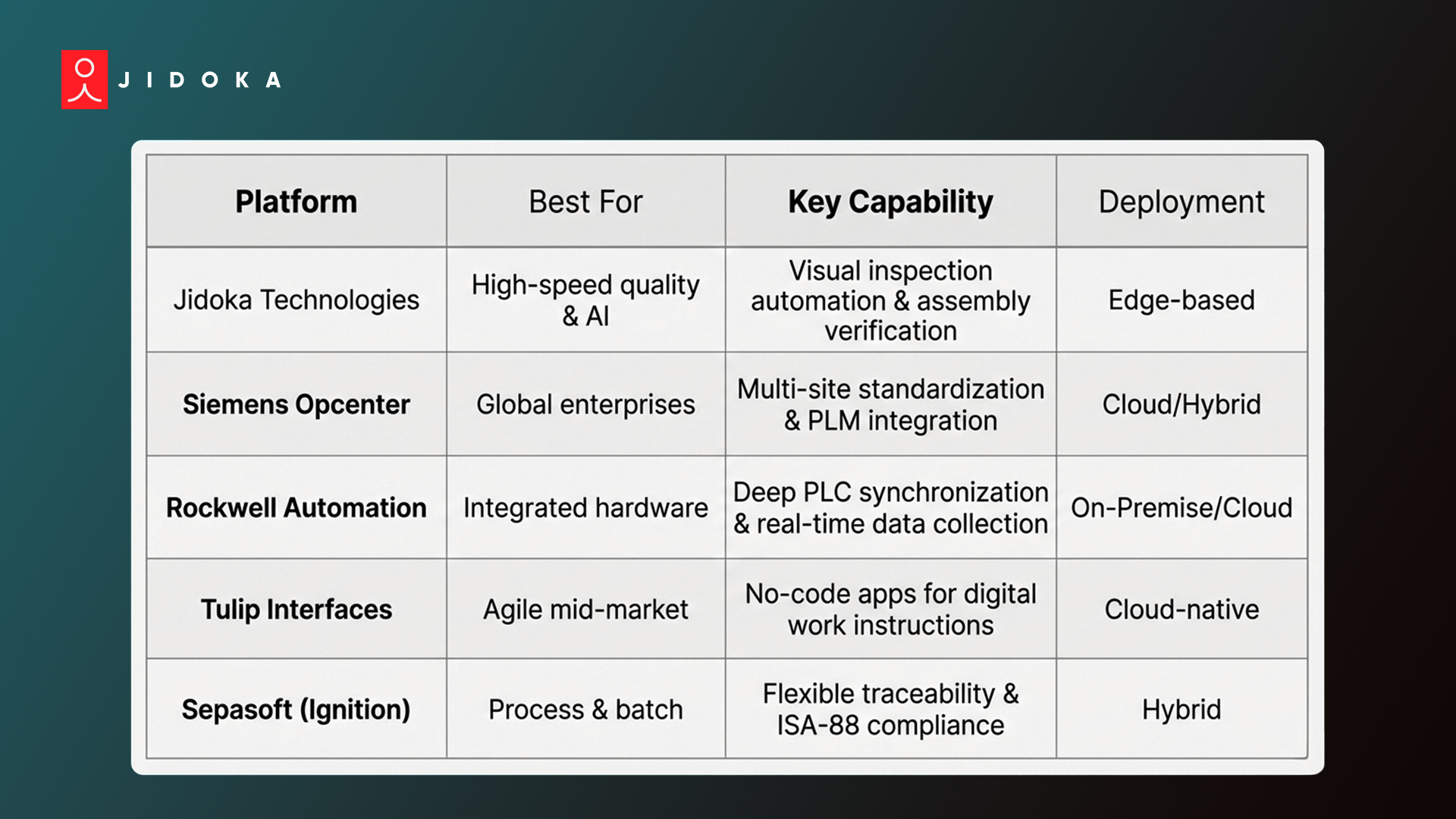
With these powerful platforms in mind, let’s look at the specific, measurable results you can expect once your MES software is live.
Key Benefits of Manufacturing Execution Systems: Specific Results, Not Marketing Claims
While software features sound great on paper, the true value of MES software shows up in your bank account and production reports. Manufacturers switching from manual tracking to a manufacturing execution system see immediate gains because they stop managing by "gut feeling" and start managing by facts.
These aren't just small tweaks; they are transformations that allow you to produce more goods without adding new machines or shifts.
1. How MES Software Improves OEE Across All Three Components
Your Overall Equipment Effectiveness (OEE) is the gold standard for measuring how well your plant runs. MES software directly improves the three pillars of this metric:
- Availability: The system tracks every second of downtime with automatic reason codes. Instead of guessing why a machine stopped, you see exactly where to focus maintenance. This typically reduces unplanned downtime by 25–35%.
- Performance: Hidden "micro-stops" and slow cycles often rob you of 10% of your capacity. MES software surfaces these speed losses in real time, allowing you to optimize cycle times and hit your nameplate capacity.
- Quality: By catching process drift early, the system prevents scrap before it happens. Most users achieve a 25–40% reduction in defect rates, ensuring that "First Pass Yield" stays high.
2. MES Software in Regulated Manufacturing: Where the ROI Is Non-Negotiable
In certain sectors, MES software is no longer a luxury; it is a legal requirement for doing business.
- Pharmaceutical and Life Sciences: To meet FDA 21 CFR Part 11, you must have flawless electronic batch records (EBRs). MES software automates this, cutting compliance costs by up to 50% and removing the risk of human error in documentation.
- Food and Beverage: New traceability rules require you to track every ingredient through the entire supply chain. A manufacturing execution system provides the lot-level data capture needed to manage recalls in minutes instead of days.
- Automotive: With the rise of electric vehicles and complex electronics, IATF 16949 standards demand a perfect audit trail for every unit. MES software creates this digital genealogy automatically as parts move down the line.
Key Benefits of Manufacturing Execution Systems:
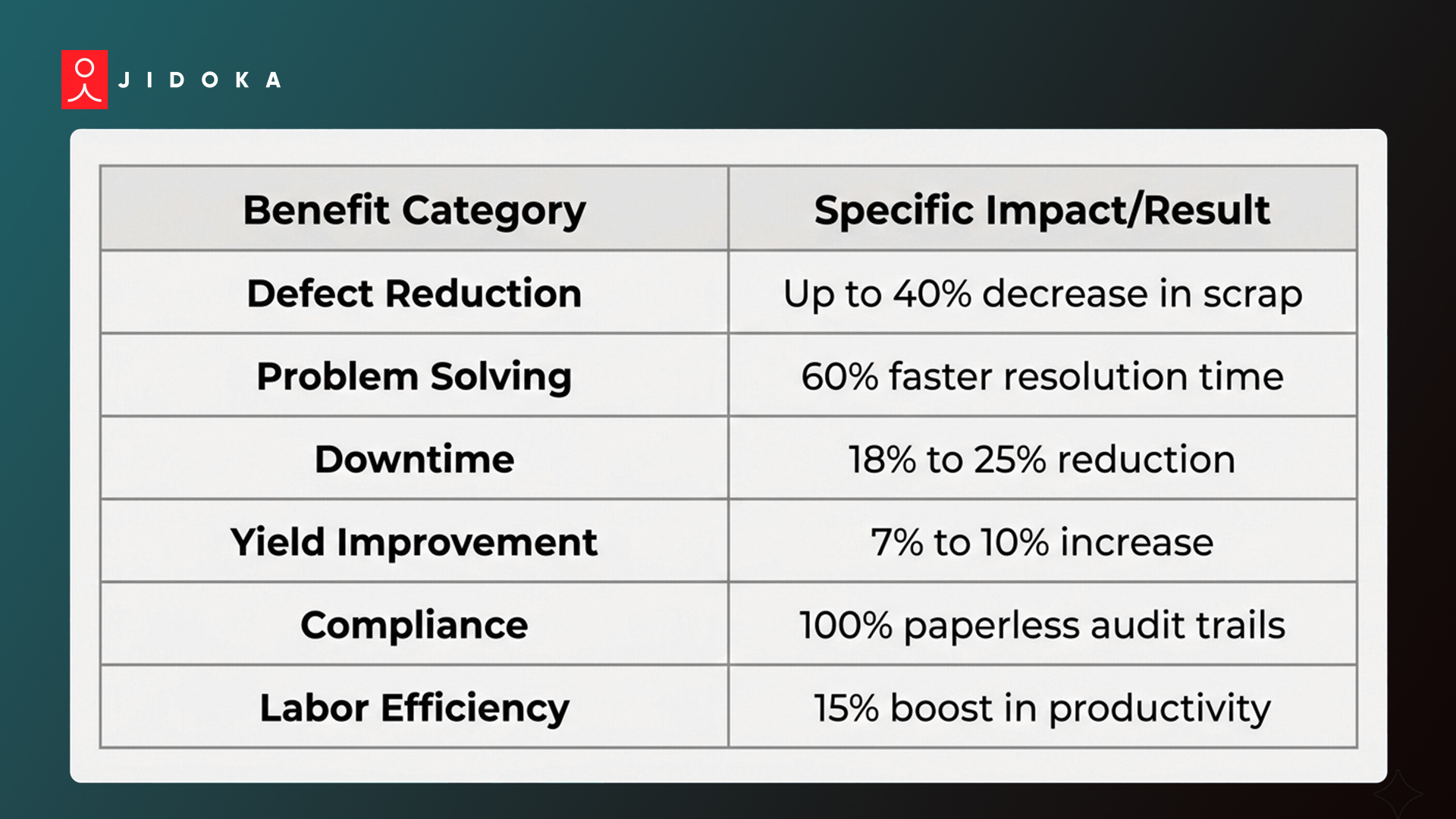
How Jidoka Technologies Extends MES Capabilities Into Real-Time AI Inspection
While standard MES software tracks production data, Jidoka Technologies ensures every unit is perfect at line speed. Their AI inspection system handles extreme pressure, performing 300 million checks daily without delays.
By running on local edge units, Jidoka eliminates cloud lag, keeping your manufacturing execution system fast and responsive.
- KOMPASS: Achieves 99.8%+ accuracy on live lines, reviewing frames in under 10 ms. It masters reflective metals and textured surfaces with 70% fewer training samples.
- NAGARE: Tracks 100% of assembly steps to flag missing parts and wrong sequences, cutting rework by 20–35%.
These tools turn your automated defect detection system into a proactive quality powerhouse. Schedule your free line audit with our experts today and discover how KOMPASS and NAGARE can close your quality gaps for good.
Conclusion
Manufacturing execution software manages the pulse of your factory, yet many plants struggle with rigid legacy systems and data silos. Common pain points include high implementation costs, complex integration, and a lack of real-time visibility.
Choosing the wrong MES software can be disastrous; a failed rollout often leads to massive production delays, compromised data integrity, and wasted capital that halts growth.
Jidoka Technologies solves this by adding an AI-driven quality layer. By integrating Jidoka with your manufacturing execution system, you turn a passive record-keeper into an active, zero-defect production partner.
Let's connect with Jidoka and transform your shop floor into a high-precision powerhouse.
FAQs
1. What does MES stand for in manufacturing?
MES software stands for Manufacturing Execution System. This manufacturing execution system acts as a real-time digital link between your ERP and the physical shop floor, tracking work orders, machine performance, and OEE monitoring to ensure total production control and visibility.
2. What is the difference between MES and ERP?
ERP handles high-level business planning, while MES software manages the shop floor execution. This manufacturing execution system provides real-time data from machines, closing the visibility gap between office-level procurement and the actual physical production happening at each workstation.
3. What are the main benefits of MES software?
Implementing MES software reduces defect rates by 40% and speeds up problem-solving by 60%. A robust manufacturing execution system automates real-time data collection, replacing manual shift reports with accurate machine signals that directly improve your factory's bottom line.
4. How does MES software improve OEE?
MES software boosts OEE monitoring by capturing downtime reason codes and surfacing hidden speed losses. By integrating quality management into the workflow, this manufacturing execution system flags process drift instantly, improving availability, performance, and the ratio of good parts.
5. Which industries need MES software most?
High-stakes sectors like pharmaceutical, automotive, and electronics require MES software for strict compliance. A manufacturing execution system ensures traceability for every unit, automating the digital audit trails needed for IATF 16949 and FDA 21 CFR Part 11 standards.
6. Can MES software integrate with AI inspection systems?
Yes. Modern MES software seamlessly connects with AI tools like KOMPASS and NAGARE. This allows your manufacturing execution system to perform visual inspection automation, bridging the gap between basic production tracking and real-time, high-speed quality verification.