Die Kit-Verifizierung in der Fertigung ist der Prozess, bei dem vor Verlassen der Kommissionierstation sichergestellt wird, dass jede Komponente in einem Kit hinsichtlich Teileidentität, Menge, Variante und Montagereihenfolge korrekt ist. Herkömmliche Barcode-Scans bestätigen lediglich die Anwesenheit, nicht aber die Korrektheit. KI-Bildverarbeitungssysteme erkennen den Unterschied in Echtzeit.
Der Scanner gab grünes Licht. Das Kit war trotzdem falsch. Genau in dieser Lücke entstehen die meisten Fehler bei der Kit-Zusammenstellung – ein Problem, für dessen Lösung herkömmliche Verifizierungstools nie ausgelegt waren.
Was bedeutet Kit-Verifizierung in der Fertigung konkret?
Ein Kit als „verifiziert“ zu bezeichnen bedeutet, dass vier Kriterien erfüllt sind, nicht nur eines. Der Vier-Attribute-Kit-Standard von Jidoka bietet Betriebsteams eine klare Grundlage:
Erstklassige Kommissionierprozesse streben eine Kit-Genauigkeit von 99,5 % oder höher an, gemessen über einen rollierenden Zeitraum von 30 Tagen. Unter 98 % werden Kit-Fehler zu einer messbaren Belastung für den Durchsatz. Mitarbeiter müssen ihre Arbeitsplätze verlassen, um fehlende oder falsche Teile zu holen, was den Produktionsfluss unterbricht und den Zeitplan gefährdet.
Es ist zudem wichtig, frühzeitig zu unterscheiden: Fehlbestandsraten und Kit-Fehlerraten sind nicht dasselbe Problem. Ein Fehlbestand ist ein Versagen der Lieferkette. Ein Kit-Fehler ist ein Versagen des Kommissionierprozesses. Sie haben unterschiedliche Ursachen und erfordern unterschiedliche Korrekturmaßnahmen. Wer sie vermischt, verzögert die eigentliche Lösung.
Die Verifizierung erfolgt in der Regel an zwei Punkten: während der Kommissionierung (Pick-to-Light oder Barcode-Scan pro Komponente) und am Ende des Kits (Stückzahlprüfung oder Scan, bevor das Kit etikettiert und an die Montage gesendet wird). Das Problem ist, was diese Kontrollpunkte tatsächlich prüfen – das ist weniger, als die meisten Teams annehmen.
Warum Standard-Verifizierungsmethoden Kit-Fehler übersehen
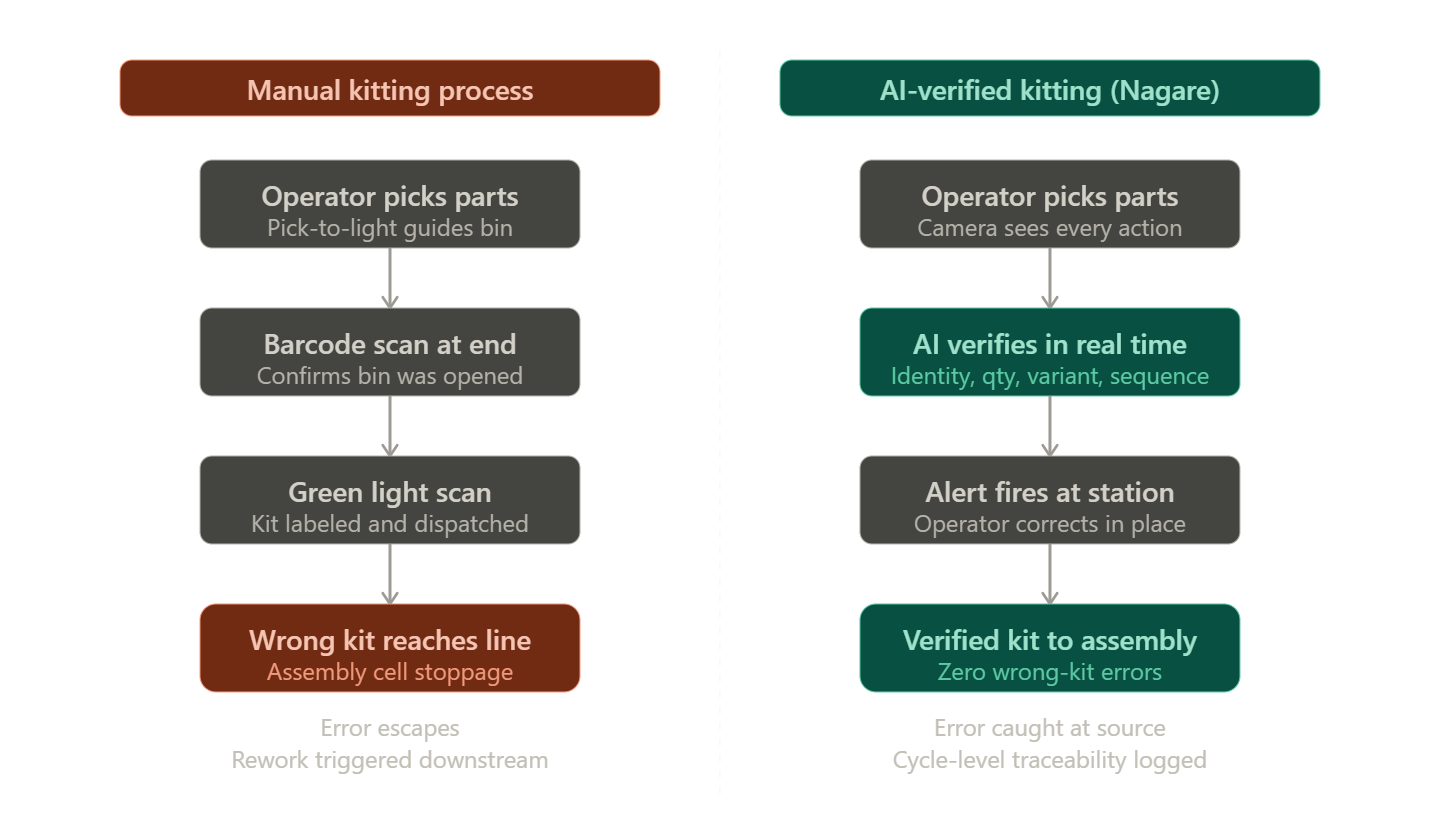
Dies ist das Argument, das auf keiner Vergleichsseite zu finden ist, aber genau darauf kommt es an. Barcode-Scans, Pick-to-Light und manuelle Sichtprüfungen wurden nicht entwickelt, um Kit-Fehler zu erkennen. Sie wurden entwickelt, um zu bestätigen, dass ein Mitarbeiter den richtigen Behälter berührt oder das richtige Etikett gescannt hat. Das sind völlig unterschiedliche Probleme.
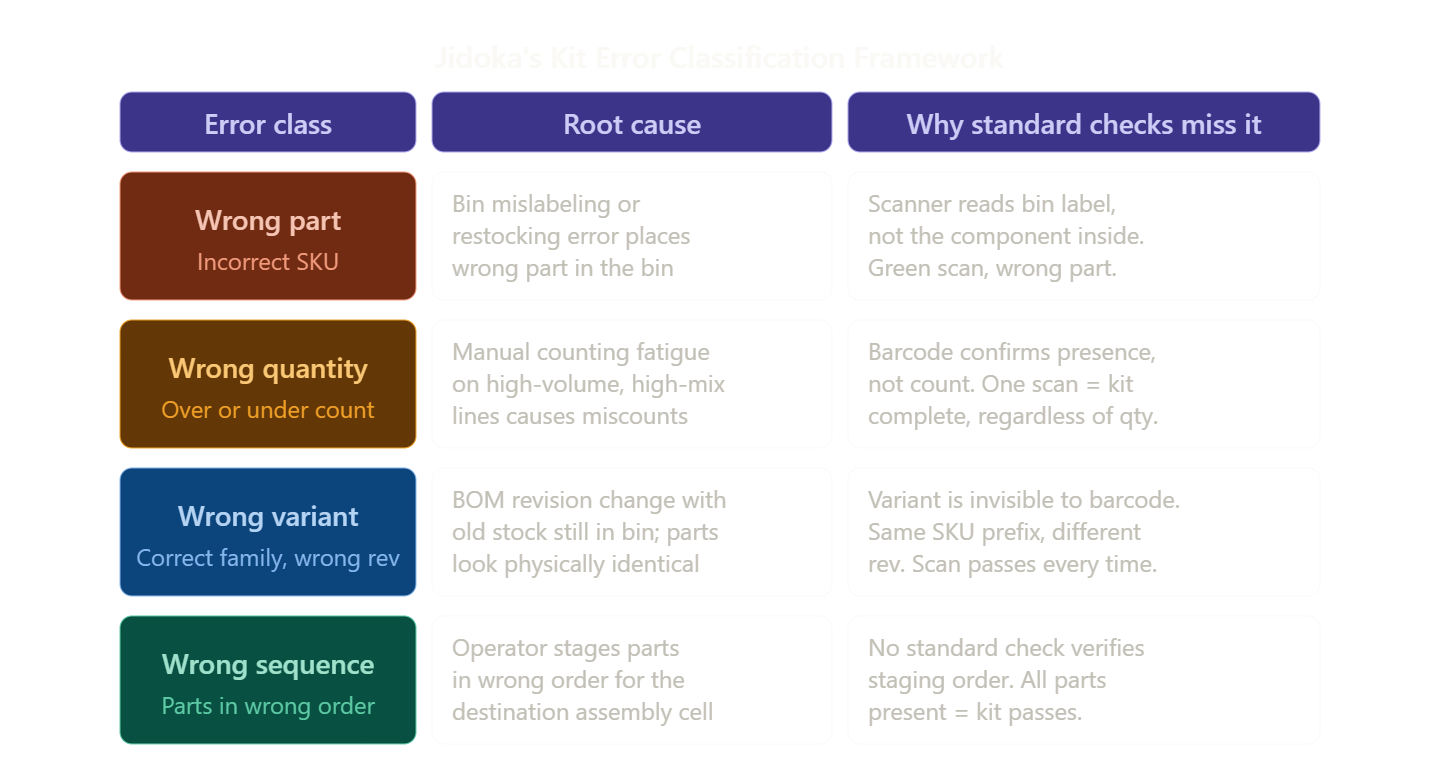
Das Kit-Fehler-Klassifizierungsmodell von Jidoka benennt die vier Fehlerarten, die in dieser Lücke liegen. Der folgende Vergleich der Verifizierungsmethoden zeigt, was jedes Standard-Tool tatsächlich prüft und wo seine Grenzen liegen:
Nur Systeme, die sowohl die Komponentenidentität als auch die Aktion des Bedieners in Echtzeit verifizieren, erfassen alle vier Klassen von Kit-Fehlern.
Montagefehler kosten US-Hersteller laut dem National Institute of Standards and Technology zwischen 5 % und 30 % der gesamten Produktionskosten. Hersteller, die Kommissioniersysteme mit korrekter Verifizierung einsetzen, verzeichneten eine Senkung der Arbeitskosten um 20 % und eine Reduzierung des Materialabfalls um 15 % (McKinsey and Company, 2023). Die Kosten der Verifizierungslücke sind keine Theorie.
Die wahren Kosten eines fehlerhaften Kits
Ein Kit-Fehler endet nicht an der Kommissionierstation. Er gelangt in die Montagezelle, stoppt die Produktion und landet wieder in der Kommissionierschlange. Die wahren Kosten sind nicht das fehlende Teil. Es ist die Kettenreaktion.
Ein einzelner Vorfall löst diese Kette aus:
- Stillstand der Montagezelle, typischerweise 20 bis 40 Minuten pro Vorfall
- Der Mitarbeiter verlässt den Arbeitsplatz, um fehlende oder falsche Teile zu beschaffen
- Nacharbeit oder Demontage, falls der Kit-Fehler erst nach einer Teilmontage bemerkt wurde
- Auswirkungen des Zeitplans auf den Arbeitsauftrag
- Manuell zu erstellende Dokumentation der Grundursachen
Bei einer Fertigungslinie mit hoher Variantenvielfalt und hohem Volumen und einer Kit-Genauigkeit von 99 % führt eine Fehlerquote von 0,5 % immer noch zu Dutzenden von Vorfällen pro Schicht. Der globale Markt für KI-basierte visuelle Inspektion erreichte 2024 ein Volumen von 4,13 Milliarden US-Dollar und wird bis 2033 voraussichtlich auf 12 Milliarden US-Dollar anwachsen – angetrieben unter anderem von Herstellern, die sich die Fehlerquoten manueller Inspektionen nicht mehr leisten können (Oxmaint, Februar 2026).
In regulierten Branchen steht mehr auf dem Spiel als nur Nacharbeit. In der Pharma-, Medizintechnik- und Luftfahrtindustrie löst ein Fehler bei der Zusammenstellung eines Kits ein Compliance-Ereignis aus. Laut McKinsey erhöhen Korrekturen in späten Phasen die gesamten Entwicklungskosten in diesen Sektoren um 15 bis 35 %. Ein falsches Kit ist daher nicht nur ein betriebliches Problem, sondern ein regulatorisches.
Wie sieht ein KI-gestützter Kitting-Prozess in der Praxis aus?
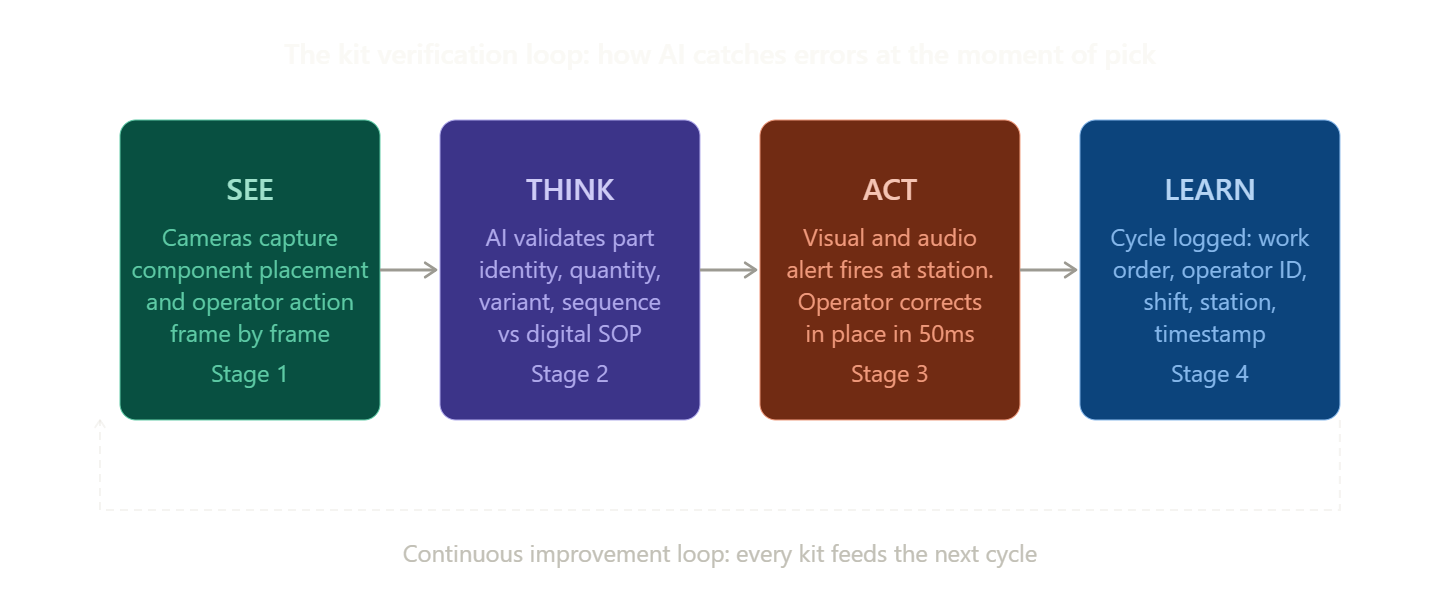
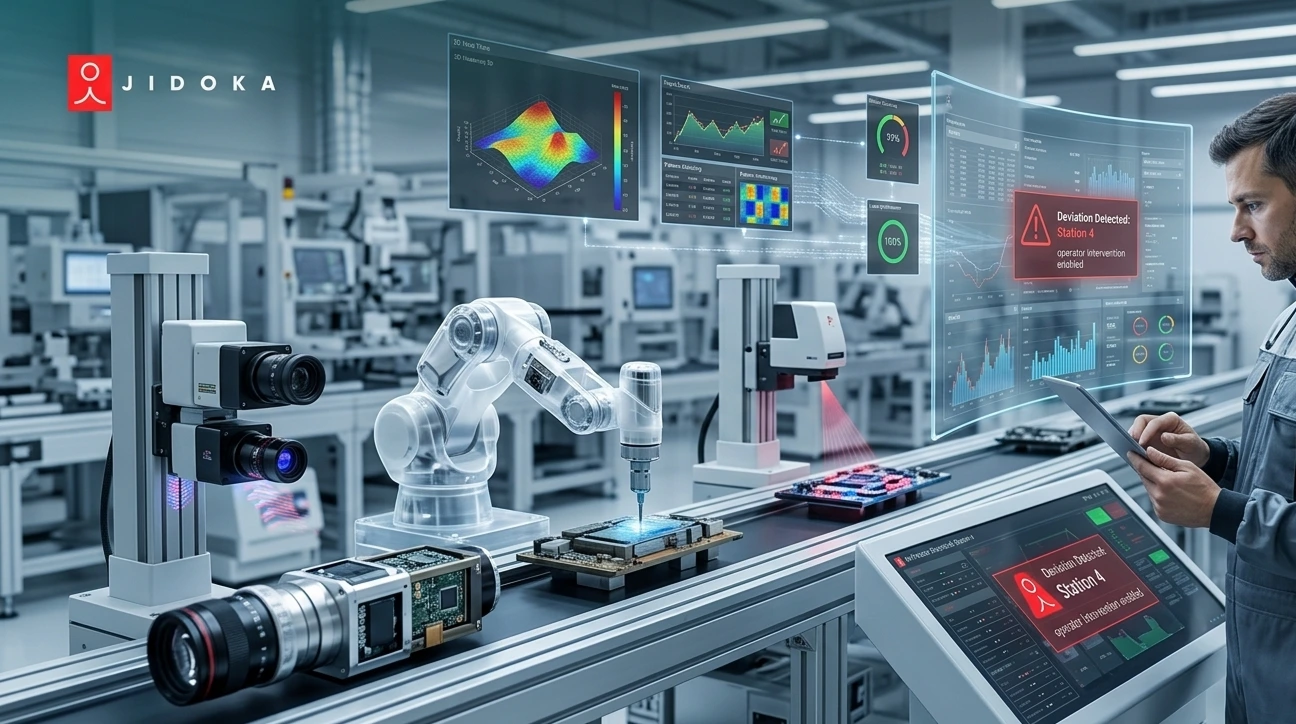
Die Kernarchitektur umfasst vier Stufen. Der entscheidende Unterschied zum Barcode-Scannen: Die KI-Bildverarbeitung erkennt, wie das Teil aussieht, und nicht nur, welches Etikett gescannt wurde. Dadurch werden falsche Varianten und falsche Reihenfolgen erkannt, die beim Scannen unbemerkt bleiben.
Der entscheidende Unterschied zur manuellen Endkontrolle: Die Überprüfung erfolgt direkt bei der Entnahme und nicht erst nach der Zusammenstellung des Kits. Fehler werden innerhalb von 50 Millisekunden erkannt, bevor das Kit versiegelt und weitergeleitet wird. KI-gestützte Fehlersicherungssysteme vergleichen jede Komponente mit digitalen Kitting-Listen und melden Abweichungen sofort, was eine präzise Produktprüfung und eine reibungslose Übergabe zwischen den Teams ermöglicht (SkyVision, November 2025).
Auch die Erfahrung für die Mitarbeiter ändert sich. Es ist kein Rufen des Vorgesetzten, kein Zurücklaufen zur Kitting-Station und kein Erstellen von Nacharbeitstickets mehr nötig. Der Alarm ertönt direkt an der Station. Der Mitarbeiter behebt den Fehler. Das Kit kann weiterlaufen.
Wie Nagare von Jidoka Technologies dies in der Fertigung einsetzt
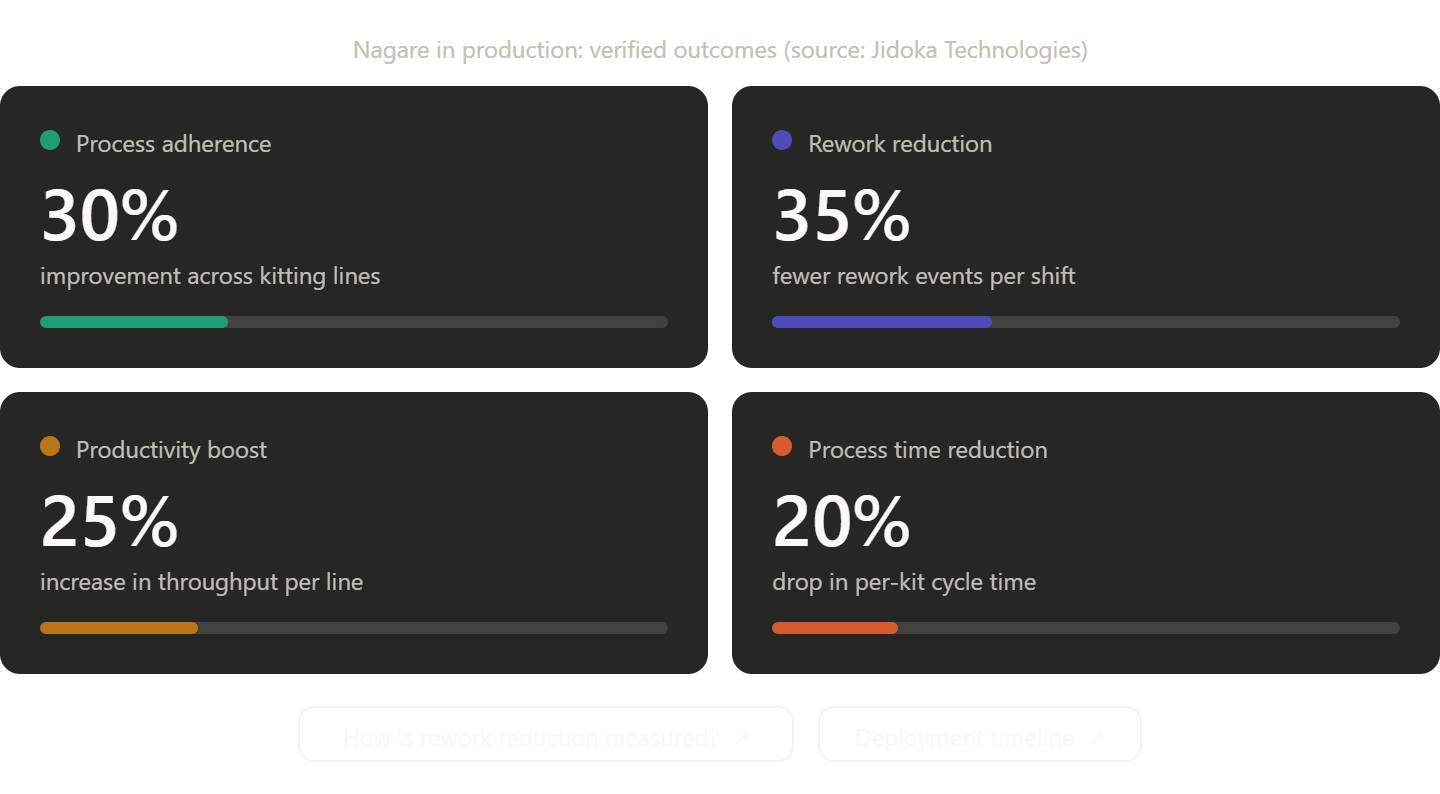
Nagare verfolgt sowohl die Komponenten als auch die Handgriffe der Mitarbeiter in Echtzeit und stellt sicher, dass jedes Kit vollständig, korrekt verpackt und bereit für die Montage ist (Jidoka Technologies). Es ist die Edge-KI-Plattform von Jidoka zur Überwachung der Prozesseinhaltung. Speziell für das Kitting adressiert sie alle vier Fehlerklassen des Kit Error Classification Frameworks: falsches Teil, falsche Menge, falsche Variante und falsche Reihenfolge.
Einige Besonderheiten, die es von herkömmlicher Software zur Montageprüfung abheben:
- Kompatibel mit vorhandener CCTV-Infrastruktur. Keine neue Kamerahardware erforderlich. Nagare macht vorhandene Kameras in der Fabrikhalle zu Echtzeit-Prozessprüfern.
- Datenschutzarchitektur. Skelett-Tracking statt Gesichtserkennung. Die gesamte Verarbeitung erfolgt lokal über Edge-KI. Kein Videomaterial verlässt die Fabrikhalle.
- Automatische Anpassung an SKU-Änderungen. Durch Barcode-gesteuerte Prozessumschaltung erfordern neue Produkteinführungen keine manuelle Neukonfiguration.
Das System erstellt zudem kitspezifische Packberichte und verfolgt jedes Paket mit Videobeweisen, was eine lückenlose Rückverfolgbarkeit ermöglicht.
Erfahren Sie, wie Nagare das Kitting in Echtzeit überprüft
So beurteilen Sie, ob Ihr aktueller Kitting-Prozess eine KI-Überprüfung benötigt
Gehen Sie die folgende Checkliste zur Bereitschaft für die Kitting-Verifizierung durch. Wenn drei oder mehr Punkte auf Ihre Fertigungslinie zutreffen, ist es sinnvoll, eine Software zur Montageverifizierung in Betracht zu ziehen.
- Die Genauigkeitsrate beim Kitting liegt über einen rollierenden Zeitraum von 30 Tagen unter 99,5 %.
- Nacharbeitsvorgänge aufgrund von Kitting-Fehlern treten an einer einzelnen Linie mehr als zweimal pro Schicht auf.
- Stillstände in der Montagezelle, deren Ursache „fehlendes Teil“ oder „falsches Teil im Kit“ war, selbst wenn das Kit den Barcode-Scan erfolgreich durchlaufen hat.
- Änderungen an Stücklisten (BOM) oder Einführung neuer SKUs in den letzten 90 Tagen ohne entsprechende Aktualisierung des Protokolls zur Kitting-Verifizierung.
- Die primäre Qualitätskontrolle erfolgt durch eine manuelle Endkontrolle der Kit-Vollständigkeit an einer Linie mit hoher Variantenvielfalt oder hohem Volumen.
- Keine Rückverfolgbarkeit auf Zyklusebene beim Kitting: Tritt ein Qualitätsproblem nachgelagert auf, kann das Team dieses ohne manuelle Untersuchung nicht auf ein spezifisches Kit, einen Bediener, eine Schicht oder eine Station zurückführen.
Der sechste Auslöser wird am häufigsten unterschätzt. Die meisten Betriebsteams erkennen ihre Lücke in der Rückverfolgbarkeit erst nach einem Audit oder einer Kundenreklamation. Zu diesem Zeitpunkt ist die Untersuchung bereits manuell, langsam und lückenhaft.
Fazit: Verifizierung ist eine Prozessentscheidung, keine Technologieentscheidung
Das grüne Licht, das „Ja“ signalisierte, obwohl die Antwort „Nein“ hätte lauten müssen, war kein Problem des Scanners. Der Scanner löste ein anderes Problem. Bei der Kitting-Verifizierung geht es um die Entscheidung, welcher Standard gelten soll: Identität, Menge, Variante und Reihenfolge der Teile müssen in Echtzeit bestätigt werden, bevor das Kit die Station verlässt. Sobald der Standard definiert ist, folgt die Wahl der Technologie.
Bei einer Genauigkeit von unter 99,5 % produziert der Kitting-Prozess systematisch Nacharbeit. Standardprüfungen erfassen einige der vier Fehlerklassen nur gelegentlich. Die KI-Echtzeitverifizierung erfasst alle vier – bei jedem Kit, in jeder Schicht.
Wenn drei oder mehr Auslöser aus der Checkliste zur Kitting-Verifizierung auf Ihre Linie zutreffen, vereinbaren Sie ein 30-minütiges Kitting-Audit-Gespräch mit Jidoka, oder erleben Sie Nagare in einer Live-Kitting-Umgebung.
FAQs
1. Was ist Kitting-Verifizierung in der Fertigung?
Die Kitting-Verifizierung ist der Prozess, bei dem sichergestellt wird, dass jede Komponente in einem vorkonfektionierten Kit mit der Stückliste in Bezug auf Identität, Menge, Variante und Bereitstellungsreihenfolge übereinstimmt, bevor das Kit die Montagezelle erreicht.
Standardprüfungen bestätigen, dass das richtige Fach geöffnet wurde; die Verifizierung stellt sicher, dass sich das korrekte Teil darin befindet und richtig platziert wurde. Diese Unterscheidung ist entscheidend, da Fehler bei der Zusammenstellung – falsches Kit, falsche Variante, falsche Menge oder falsche Reihenfolge – trotz Barcode-Scans unbemerkt bleiben und die Fertigungslinie erreichen.
2. Warum erkennt das Barcode-Scannen keine Fehler bei der Kit-Zusammenstellung?
Das Barcode-Scannen bestätigt lediglich die Auswahl des Fachs, nicht die Identität des Teils. Der Scanner liest das Etikett am Fach, nicht die Komponente im Inneren.
Falsch etikettierte Fächer, Fehler beim Auffüllen und vermischte Chargen führen dazu, dass ein falsches Teil als korrekt gescannt wird. Zudem kann das Scannen weder die Teilevariante (richtige Produktfamilie, aber falsche Revision), die Menge auf Untereinheitsebene noch die Reihenfolge der für die Montage bereitgestellten Komponenten überprüfen.
3. Welche Genauigkeitsrate sollte ein Kitting-Prozess anstreben?
Erstklassige Kitting-Prozesse streben eine Kit-Genauigkeit von 99,5 % oder höher an, gemessen pro Kit über einen rollierenden Zeitraum von 30 Tagen.
Unter 98 % werden Kit-Fehler zu einer messbaren Belastung für den Durchsatz. Bei Linien mit hoher Variantenvielfalt und hohem Volumen führt selbst eine Fehlerquote von 0,5 % zu Dutzenden Vorfällen pro Schicht. Der Unterschied zwischen 99,5 % und 98 % entscheidet darüber, ob es sich um isolierte Vorfälle oder systemische Störungen der Fertigungslinie handelt.
4. Was ist Pick-and-Pack-Verifizierung in der Fertigung?
Die Pick-and-Pack-Verifizierung stellt sicher, dass Komponenten sowohl aus dem korrekten Lagerort entnommen als auch in der richtigen Kit-Konfiguration verpackt werden, bevor sie versandt oder bereitgestellt werden.
In der diskreten Fertigung geht dies über die Logistik hinaus: Es umfasst die Überprüfung der Ausrichtung der Teile, den Abgleich der Variante mit der aktiven Stücklistenrevision und die korrekte Menge pro Montageschritt. KI-gestützte Bildverarbeitungssysteme ermöglichen eine Echtzeit-Verifizierung direkt bei der Entnahme und verhindern Fehler, bevor das Kit versiegelt wird.
5. Wie unterscheidet sich die KI-gestützte Kitting-Verifizierung von regelbasierter Bildverarbeitung?
KI-Bildverarbeitungssysteme lernen anhand von Beispielen, wie Komponenten aussehen, und passen sich an Variationen an; regelbasierte Systeme wenden starre geometrische Vorgaben an, die bei Änderungen von Ausrichtung, Beleuchtung oder Teilegeometrie versagen.
Beim Kitting verifizieren KI-Systeme gleichzeitig Identität, Menge, Variante und die Handlungsabfolge des Bedieners über mehrere SKUs hinweg, ohne dass für jede neue Produkteinführung eine Umprogrammierung erforderlich ist.
6. Was ist die Validierung von Teile-Kits?
Die Validierung von Teile-Kits ist die formale Bestätigung, dass ein Kit die korrekten Komponenten, Mengen, Varianten und die Verpackungsreihenfolge gemäß der Stückliste für einen bestimmten Arbeitsauftrag enthält.
In regulierten Branchen wie der Pharma- oder Luftfahrtindustrie ist die Kit-Validierung ein dokumentierter Qualitätsvorgang, der mit dem Arbeitsauftrag, der Bediener-ID und einem Zeitstempel verknüpft ist. KI-Bildverarbeitungssysteme mit Rückverfolgbarkeit auf Zyklusebene erstellen diesen Datensatz automatisch und machen eine manuelle Abzeichnung jedes Kits überflüssig.