Het aantal terugroepacties in de productie is sinds 2018 met 115% gestegen, wat de sector jaarlijks tot $5 miljard kost. Toch beschouwen de meeste productievloeren kwaliteitscontrole nog steeds als een laatste controlepunt in plaats van als een ingebouwd proces.
Dat is waar defecten doorheen glippen. EEN gestructureerde kwaliteitsborging Het proces bepaalt wie wat, wanneer en hoe controleert in elke fase, van binnenkomende materialen tot uitgaande zendingen.
Voor fabrikanten en logistieke operatoren die te maken hebben met toenemende nalevingsdruk en kleinere marges is het essentieel om dit goed te doen. Deze gids verkent de definitie, sleutelrollen en kernmethoden die het kwaliteitsinspectieproces in 2026 vormgeven.
Wat is kwaliteitsborging? Definitie en toepassingsgebied in 2026
De meeste mensen gebruiken kwaliteitsborging en kwaliteitscontrole door elkaar. Ze zijn niet hetzelfde, en als ze worden verward, ontstaan er hiaten die leiden tot defecten, mislukte audits of afgewezen zendingen.
Kwaliteitsborging is de geplande, systematische reeks activiteiten die ervoor zorgt dat uw productieproces consistent producten levert die voldoen aan de gestelde normen.
1. QA versus QC: Waarom het verschil belangrijk is op de productievloer
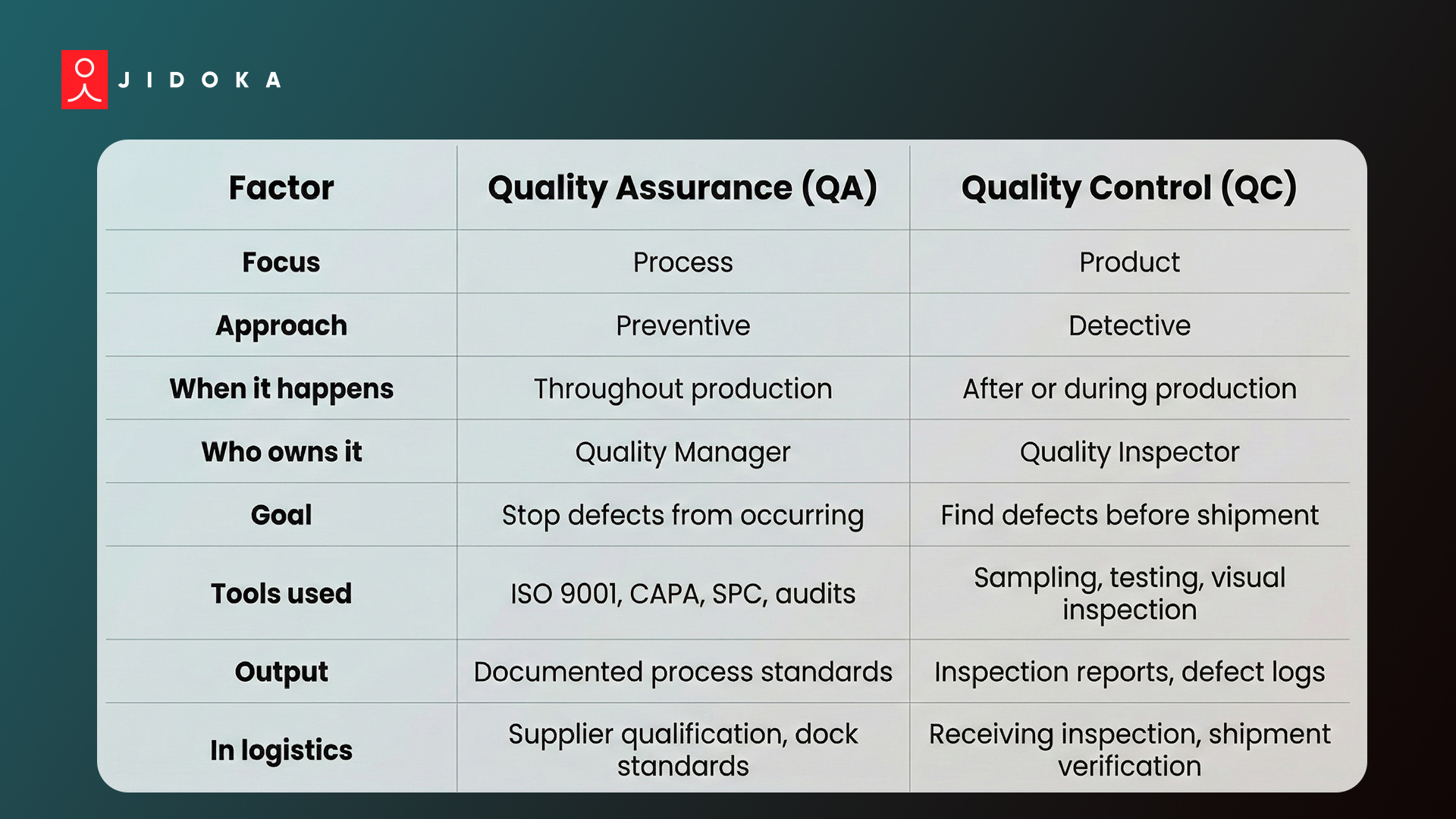
Kwaliteitscontrole in de productie is reactief. Het detecteert defecten nadat ze zich hebben voorgedaan. Kwaliteitsborging is proactief. Het creëert de voorwaarden die voorkomen dat defecten überhaupt ontstaan.
Dit is hoe dat in de praktijk werkt:
- QA stelt de procesnormen vast, definieert inspectiecriteria en traint medewerkers op basis van nalevingsvereisten
- QC voert de feitelijke inspecties uit, test eindproducten en markeert niet-conforme producten
- QA is verantwoordelijk voor de CAPA systeem voor wanneer er herhaaldelijk iets misgaat
- QC genereert de defectgegevens die worden teruggevoerd naar het A proces voor correctie
Een productievloer die QC draait zonder QA is voortdurend brandjes aan het blussen. Het inzetten van beide zorgt voor minder verrassingen.
QA versus QC - Een korte blik
2. Waar kwaliteitsborging een rol speelt in de productieworkflow
Kwaliteitszorg stopt niet aan het einde van de lijn. Het doorloopt elke fase:
- Kwalificatie van leveranciers voordat grondstoffen uw fabriek binnenkomen
- Inkomende inspectie op het ontvangstdok
- Controles tijdens het proces bij actieve productie met behulp van statistische procescontrole
- Eindaudits voordat producten worden verzonden
- Feedbackloops na levering die de processtandaarden actualiseren
In de logistiek wordt het kwaliteitsinspectieproces verder uitgebreid. Het omvat dokontvangst, conditiecontroles halverwege het transport en de controle van de uitvoering voordat goederen de eindklant bereiken. Het toepassingsgebied is breder dan de meeste operators beseffen, en dat is waar nalevingslacunes doorgaans ontstaan.
Begrijpen waar kwaliteitsborging in uw workflow zit, is de eerste stap. Weten wie de eigenaar is van elke fase, zorgt ervoor dat het echt werkt.
Sleutelrollen in het kwaliteitsborgingsproces
A kwaliteitsborging Het proces is slechts zo sterk als de mensen die het uitvoeren. Zonder duidelijk gedefinieerde rollen worden inspecties over het hoofd gezien, worden defecten niet gemeld en vervaagt de verantwoordelijkheid. Hier is wie eigenaar is van wat in een gestructureerde kwaliteitsborging opstelling.
1. Kwaliteitsmanager: eigenaarschap, KPI's en escalatiebevoegdheid
De kwaliteitsmanager bepaalt de normen en is verantwoordelijk voor de resultaten. Het is niet hun taak om producten te inspecteren, maar om het systeem te bouwen en te onderhouden dat consistente kwaliteit mogelijk maakt.
De belangrijkste verantwoordelijkheden zijn onder meer:
- Het definiëren van inspectiecriteria en procesdocumentatie
- Het monitoren van KPI's, zoals het percentage defecten, de doorlooptijd van CAPA's en de slaagpercentages voor audits
- Systemische problemen escaleren naar het management van productie en bedrijfsvoering
- Het QMS in lijn houden met ISO 9001 en eventuele branchespecifieke nalevingsvereisten
Wanneer de kwaliteit op grote schaal afneemt, is dat meestal terug te voeren op een hiaat in deze rol.
2. Kwaliteitsinspecteur: wat ze daadwerkelijk controleren en wanneer
De kwaliteitsinspecteur vormt de frontlinie van het kwaliteitsinspectieproces. Zij werken in drie fasen:
- Inkomende inspectie: controleren of materialen van leveranciers voldoen aan de specificaties voordat ze in productie gaan
- Inspectie tijdens het proces: afwijkingen tijdens actieve productie opvangen met behulp van statistische procescontrole
- Eindinspectie: bevestigen dat afgewerkte goederen vóór verzending voldoen aan de uitgaande normen
Een goede inspecteur doet meer dan een product goedkeuren of afkeuren. Ze documenteren de bevindingen op een manier die rechtstreeks in het CAPA-systeem wordt ingevoerd voor analyse van de hoofdoorzaken.
3. De rol van de procesingenieur bij QA-ontwerp en afwijkingsbeheersing
Procesingenieurs ontwerpen de productiestappen die de kwaliteitscontrole in de productie herhaalbaar maken.
Wanneer een defectpatroon in inspectiegegevens verschijnt, onderzoekt de procesingenieur waarom dit op procesniveau gebeurt en herontwerpt hij de stap om dit te verhelpen.
Ze werken nauw samen met de kwaliteitsmanager om:
- Werkinstructies bijwerken na proceswijzigingen
- Procescapaciteitsonderzoeken uitvoeren met behulp van statistische procesbesturingsgegevens
- Nieuwe apparatuur of materialen valideren voordat de productie volledig wordt opgestart
4. Kwaliteitsingenieur voor leveranciers: stroomopwaartse risico's beheren
De meeste defecten beginnen niet op uw productievloer. Ze komen binnen via uw toeleveringsketen. De Supplier Quality Engineer beheert dat risico door:
- Nieuwe leveranciers kwalificeren op basis van gedefinieerde kwaliteitsborgingsnormen
- Inkomende materiaalaudits uitvoeren en scorekaarten voor leveranciers bijhouden
- Verzoeken om corrigerende maatregelen indienen wanneer materiaal van leveranciers niet aan de eisen voldoet
- Prestatiegegevens van leveranciers in het QMS volgen
In logistieke operaties, deze rol omvat ook externe opslagpartners en leveranciers van distributiediensten waar de productkwaliteit in gevaar kan worden gebracht voordat deze de eindklant bereikt.
"Kwaliteit is ieders verantwoordelijkheid, maar zonder duidelijke rollen wordt het niemands verantwoordelijkheid." — Joseph M. Juran, pionier op het gebied van kwaliteitsmanagement
Duidelijk gedefinieerde rollen maken het kwaliteitsborgingsproces voorspelbaar. De methoden die deze rollen hanteren, maken het effectief, en dat is wat we hieronder bespreken.
Kernmethoden voor het kwaliteitsinspectieproces
Weten wie verantwoordelijk is voor kwaliteitsborging is essentieel. Weten welke methoden zij gebruiken, voorkomt dat defecten de klant bereiken. Dit zijn de kernmethoden waarop gestructureerde kwaliteitsborgingsteams vertrouwen.
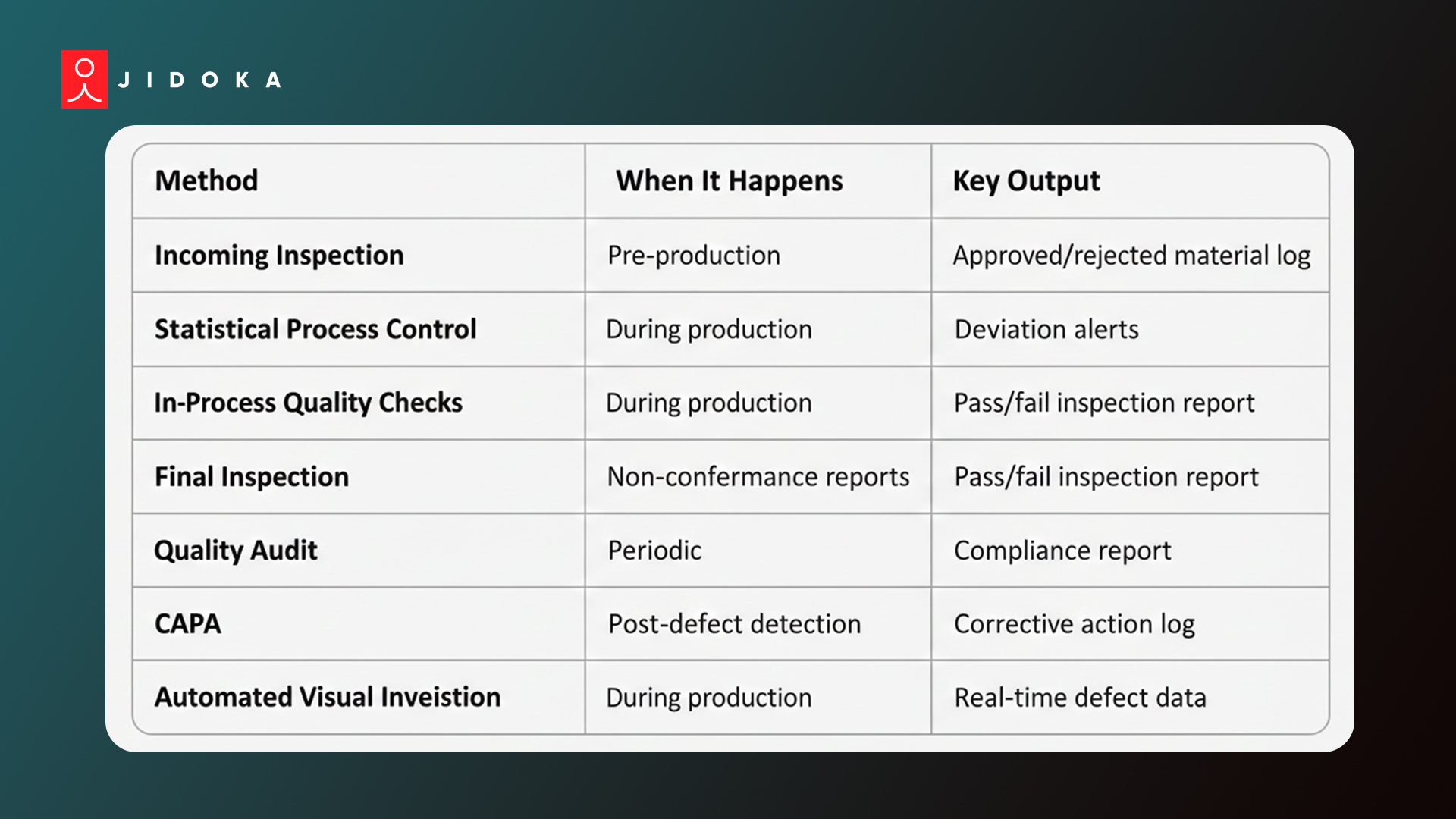
1. Inkomende inspectie en leverancierskwalificatie
Voordat grondstoffen uw productielijn bereiken, ondergaan ze een inkomende inspectie. Stel dat een leverancier van bevestigingsmiddelen een batch levert die 0,2 mm afwijkt van de specificaties. Zonder inkomende inspectie wordt die batch in productie genomen, en komt u er pas bij de eindaudit achter – nadat er al duizenden eenheden zijn aangetast. Leverancierskwalificatie legt vooraf de acceptatiecriteria vast, zodat het probleem niet eens kan ontstaan.
2. Kwaliteitscontroles tijdens het proces en statistische procesbeheersing
Statistische procesbeheersing volgt procesvariabelen in realtime tijdens de productie. Als een lasstation 3% warmer wordt dan de specificaties toestaan, signaleert de SPC dit voordat het een structureel defect wordt. Zo verschuift kwaliteitscontrole in de productie van reactief naar voorspellend.
3. Protocollen voor eindinspectie en uitgaande kwaliteitsaudits
De eindinspectie is de laatste controle vóór verzending. Een kwaliteitsaudit in dit stadium toetst de maatnauwkeurigheid, de conformiteit van de etikettering en de integriteit van de verpakking aan de hand van de oorspronkelijke productspecificaties.
4. CAPA: kaders voor corrigerende en preventieve maatregelen
CAPA sluit de cirkel. Wanneer een defectpatroon zich in meerdere batches herhaalt, documenteert CAPA de hoofdoorzaak, wijst een oplossing toe en controleert of deze effectief is. Zonder dit proces zal hetzelfde defect in de volgende productierun opnieuw optreden.
Kernmethoden voor het kwaliteitsinspectieproces: in vogelvlucht
Kwaliteitsborging in de logistiek: wat is er anders en waarom is het complexer
Productie vindt plaats op vaste lijnen. Logistiek niet. Producten worden op meerdere punten overgedragen en uw kwaliteitsborgingsteam komt ze zelden direct tegen.
Dat maakt kwaliteitsborging moeilijker te beheren in logistieke omgevingen.
1. Inspectie bij de ontvangstdokken en verificatie tijdens het transport
Het kwaliteitsinspectieproces in een ontvangstdok controleert binnenkomende zendingen op schade, nauwkeurigheid van de hoeveelheid en naleving van de etikettering. Een voedseldistributeur die temperatuurlogboeken van gekoelde zendingen controleert bij de ingang van het dok is een praktisch voorbeeld.
Als de koudeketen tijdens het transport breekt, wordt die batch onmiddellijk in quarantaine geplaatst via corrigerende en preventieve maatregelen voordat het de opslag bereikt.
2. Hoe QMS integreert met magazijnbeheersystemen
Een QMS dat los van uw magazijnbeheersysteem draait, creëert blinde vlekken. Wanneer beide systemen gegevens delen, wordt bij een mislukte binnenkomende inspectie in het dock automatisch de inventaris bijgehouden, waardoor deze niet kan worden opgehaald of verzonden.
Die integratie neemt het risico weg dat een product dat niet aan de normen voldoet, simpelweg omdat twee systemen niet met elkaar verbonden waren.
3. Traceerbaarheid en audittrails in QA in de toeleveringsketen
Traceerbaarheid is wat herstelbare kwaliteitsfouten onderscheidt van dure fouten. Een distributeur van medische hulpmiddelen die serialisatie gebruikt, kan precies nagaan welke eenheden tijdens een kwaliteitsaudit zijn getroffen zonder de volledige inventaris op te vragen.
Kwaliteitsborging in de logistiek: in een oogopslag
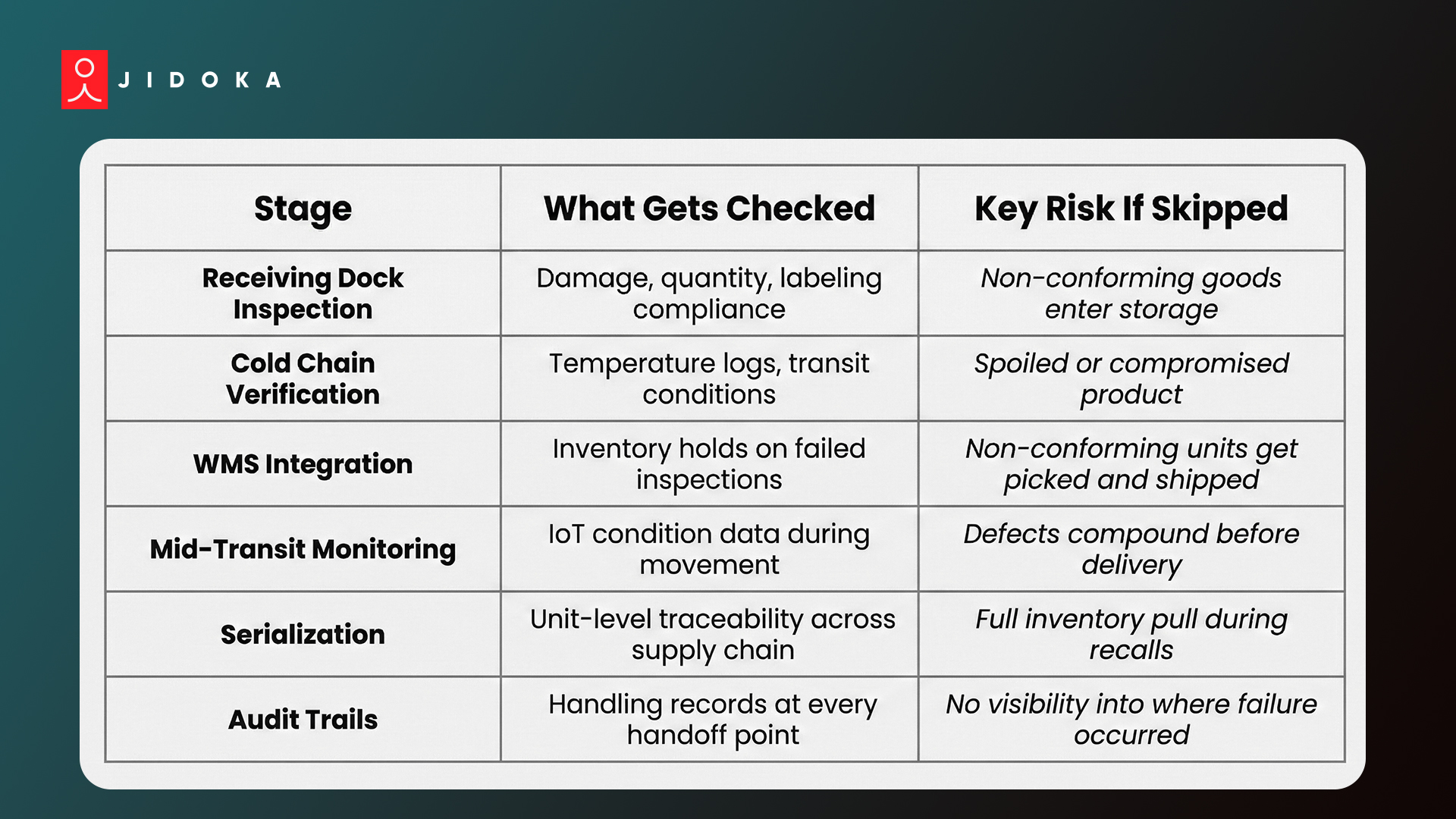
Zonder dit systeem verliezen kwaliteitscontrole in de productie en logistiek beide het zicht op het moment dat een product de fabriek verlaat. Een verbonden QMS met volledige audittrails dicht die kloof rechtstreeks.
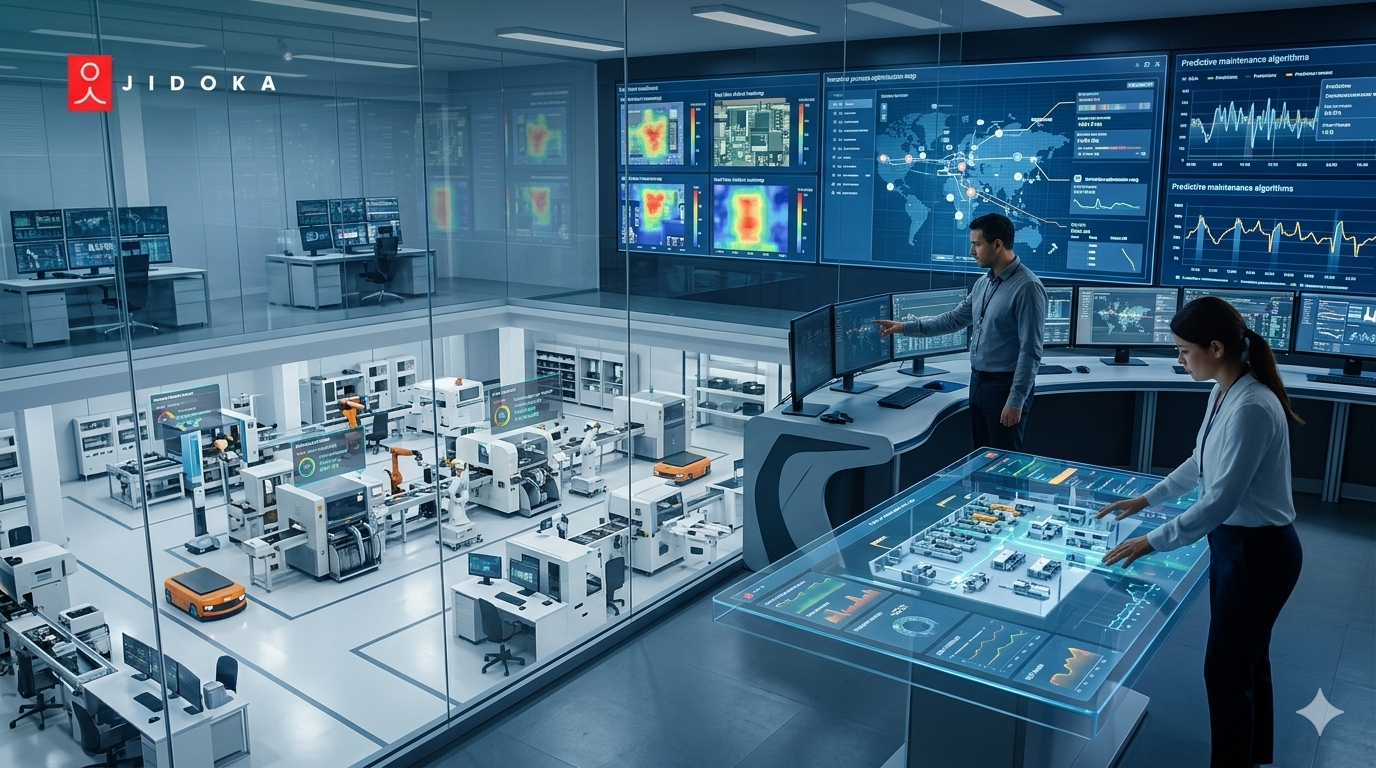
Hoe technologie de kwaliteitscontrole in de productie in 2025—2026 hervormt
Handmatige inspectie heeft een plafond. Het vertraagt bij grote volumes, mist microdefecten en is volledig afhankelijk van de aandacht van de gebruiker. De technologie verwijdert dat plafond en de impact op de kwaliteitsborging is direct en meetbaar.
1. Geautomatiseerde visuele inspectie- en machinevisiesystemen
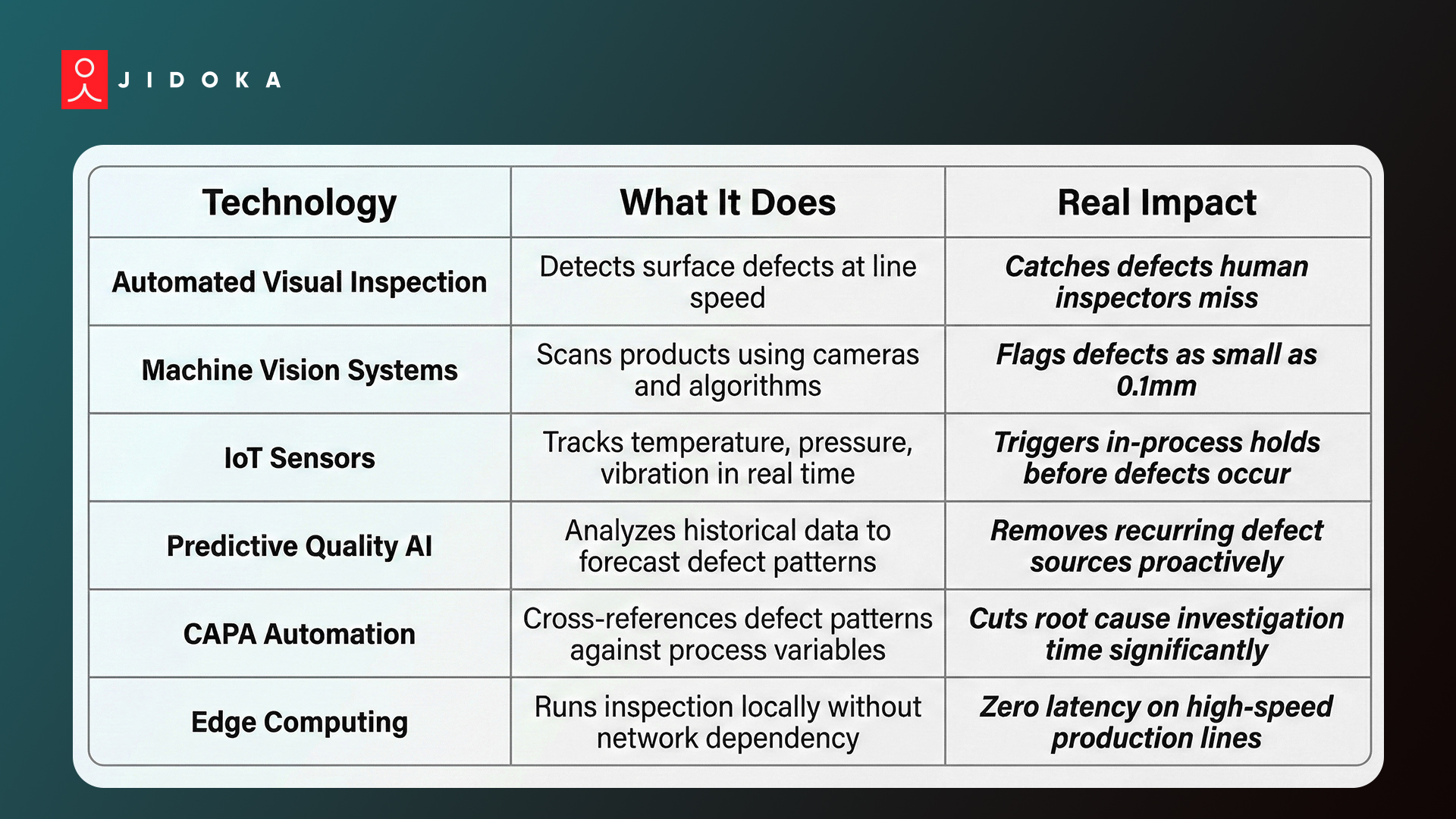
Geautomatiseerde visuele inspectie maakt gebruik van camera's en beeldverwerkingsalgoritmen om producten met productiesnelheid te scannen. Een PCB-fabrikant laat elk bord via een machine vision-systeem lopen dat soldeerdefecten van slechts 0,1 mm detecteert, defecten die een menselijke inspecteur onder normale lijnomstandigheden zou missen.
Het systeem markeert, classificeert en registreert elk defect automatisch, waarbij gegevens rechtstreeks in het QMS worden ingevoerd voor corrigerende en preventieve maatregelen. Dit niveau van kwaliteitsborging was niet op grote schaal haalbaar zonder automatisering.
2. IoT-sensoren en realtime bewaking van defecten
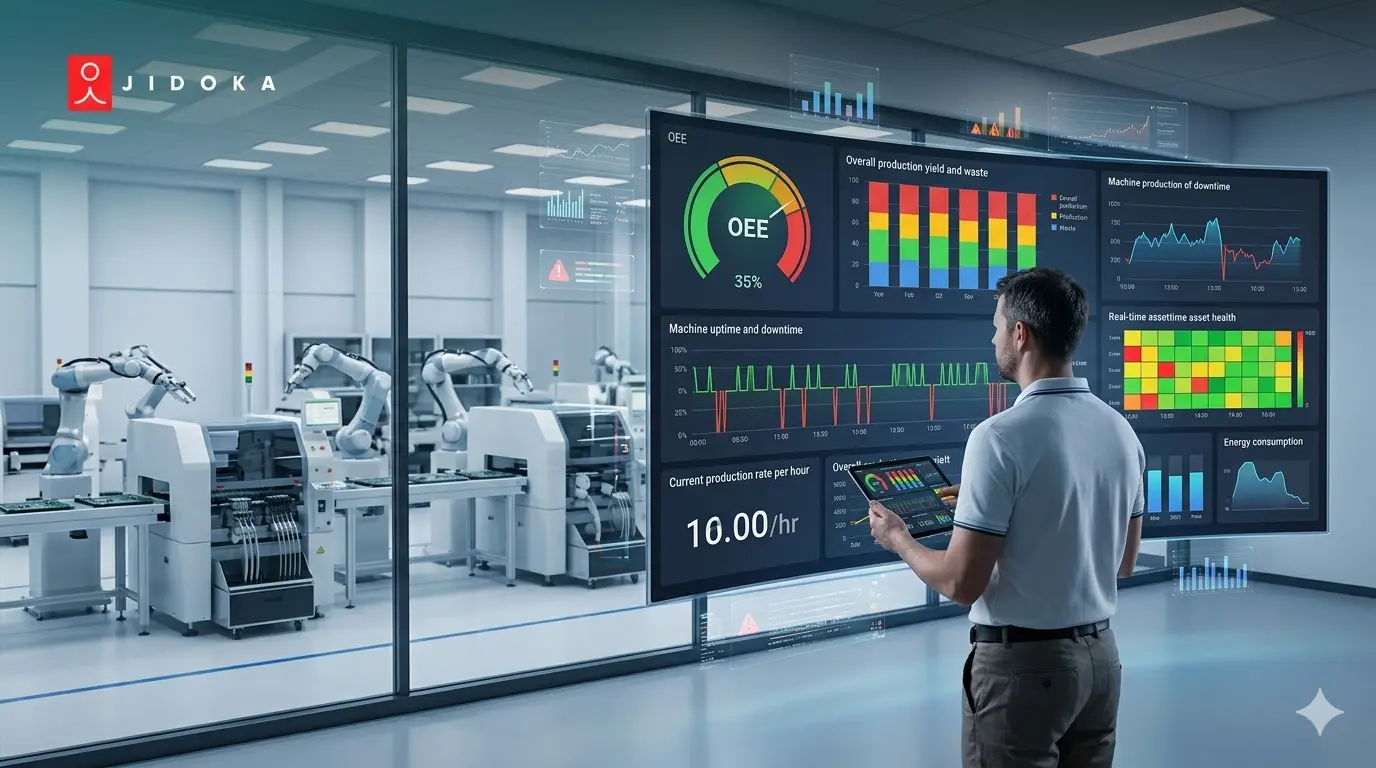
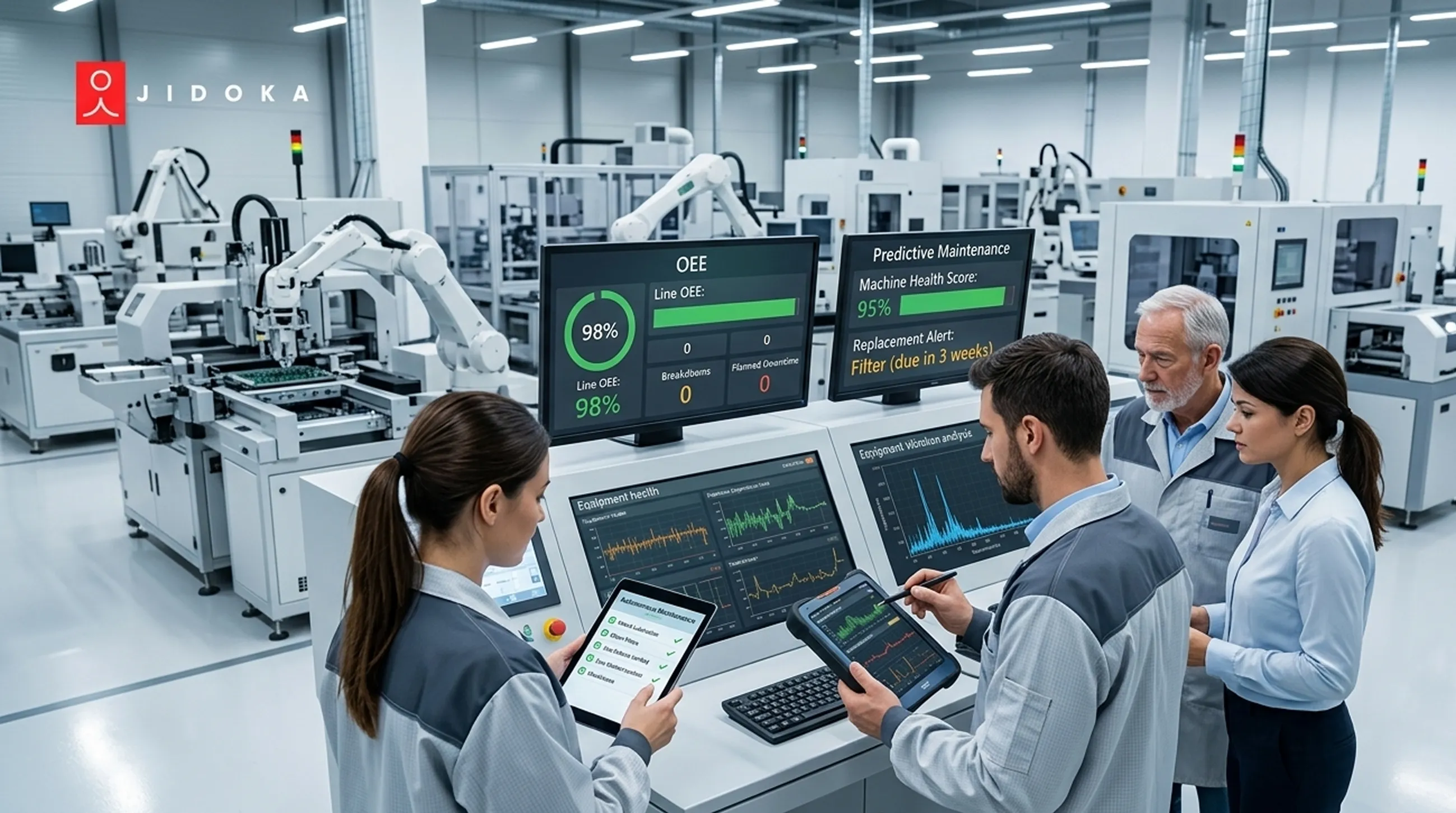
IoT-sensoren die in productieapparatuur zijn ingebouwd, volgen continu variabelen zoals temperatuur, druk en trillingen. Een verpakkingslijn waarop een sealstation draait, krijgt automatisch een waarschuwing wanneer de afdichtingsdruk onder de specificaties daalt.
Die waarschuwing zorgt voor een wachttijd tijdens het proces voordat een enkele eenheid die zich niet aan de regels houdt, verder gaat. Dit is kwaliteitscontrole in de productie die in realtime wordt uitgevoerd in plaats van achteraf, en het versterkt rechtstreeks het algehele kwaliteitsborgingsproces.
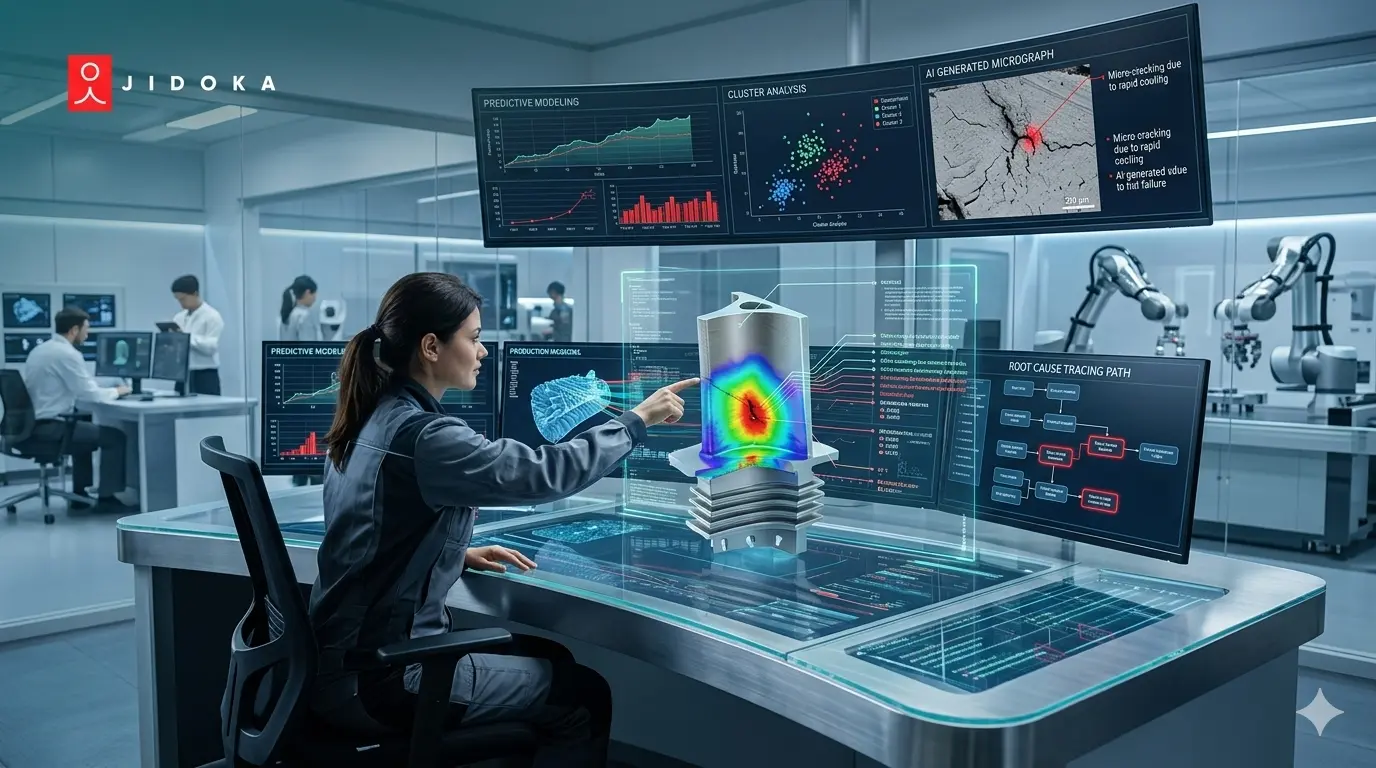
3. Op AI gebaseerde analyse van voorspellende kwaliteit en hoofdoorzaken
AI-modellen analyseren historische productiegegevens om te voorspellen waar defecten waarschijnlijk zullen optreden. Een metaalproductiefaciliteit die gebruikmaakt van voorspellende kwaliteitsborging, identificeert dat een specifiek snijgereedschap na 800 cycli degradeert en plant proactief vervanging.
Dat verwijdert een terugkerende bron van defecten volledig in plaats van deze op te sporen tijdens het kwaliteitsinspectieproces. AI versnelt ook de analyse van hoofdoorzaken binnen CAPA-workflows door defectpatronen automatisch te vergelijken met procesvariabelen, waardoor de onderzoekstijd aanzienlijk wordt verkort.
Hoe technologie de kwaliteitscontrole in de productie verandert: een korte blik
Hoe Jidoka Technologies het kwaliteitsborgingsproces op lijnsnelheid uitvoert
Jidoka-technologieën bouwt een AI-inspectiesysteem dat presteert onder reële productiedruk. Ons team brengt camera's, verlichting, PLC-timing en edge-units op elkaar af, zodat het kwaliteitsborgingsproces tijdens alle ploegen consistent verloopt.
Fabrieken waarop de installatie van Jidoka draait, rapporteren stabiele prestaties bij Meer dan 12.000 onderdelen per minuut en tot 300 miljoen inspecties per dag.
Het kwaliteitsinspectieproces van Jidoka draait op twee kernsystemen:
1. KOMPAS: Inspecteur met hoge nauwkeurigheid
- Bereikt 99,8% + nauwkeurigheid op live-lijnen
- Evalueert elk frame in minder dan 10 ms
- Leert nieuwe varianten met 60-70% minder voorbeelden
- Geschikt voor reflecterende metalen, bedrukte oppervlakken en getextureerde onderdelen
2. NAGARE: Proces- en assemblageanalist
- Volgt 100% van de montagestappen via bestaande camera's
- Markeert ontbrekende onderdelen of onjuiste sequenties in realtime
- Vermindert herbewerking met 20-35%
- Versterkt geautomatiseerde visuele inspectie en controles op werkstationniveau
Beide systemen draaien op lokale edge-units, waardoor de kwaliteitscontrole tijdens het productieproces vrij blijft van netwerkvertragingen.
Conclusie
Een gestructureerd kwaliteitsborgingsproces omvat elke fase, van de kwalificatie van de leverancier tot de uiteindelijke verzending. Zonder dat glippen defecten niet zomaar door de inspectie heen. Ze stapelen zich op.
Een enkele gemiste non-conformiteit in het kwaliteitsinspectieproces kan leiden tot productieonderbrekingen, mislukte kwaliteitsaudits en klantretouren die veel meer kosten dan de oorspronkelijke oplossing zou hebben gekost. Bij grote volumes worden die hiaten snel groter. Er volgen terugroepacties, nalevingsfouten en afwijzingen van zendingen.
Jidoka-technologieën pakt dit rechtstreeks aan door kwaliteitscontrole in de productie op lijnsnelheid te integreren, waardoor het kwaliteitsborgingsproces nauwkeurig, automatisch en klaar is voor audits voordat problemen de klant bereiken.
Boek vandaag nog een demo met Jidoka Technologies.
Veelgestelde vragen
Q1: Wat is het kwaliteitsborgingsproces in de productie?
Het kwaliteitsborgingsproces in de productie is een gestructureerd systeem van geplande activiteiten, waaronder inkomende inspecties, kwaliteitsaudits en CAPA, dat verifieert dat producten in elke productiefase voldoen aan gedefinieerde normen voordat ze de klant bereiken.
Q2: Wat is het verschil tussen QA en QC?
Kwaliteitsborging is gericht op het voorkomen van defecten door middel van procesontwerp, ISO 9001-normen en QMS-implementatie. Kwaliteitscontrole in de productie is de detectiekant, waarbij defecten worden gevonden tijdens het kwaliteitsinspectieproces tijdens of na de productie.
Q3: Wie is eigenaar van de kwaliteitsborging in een fabriek?
De kwaliteitsmanager is eigenaar van het kwaliteitsborgingsproces, maar de uitvoering omvat kwaliteitsinspecteurs die statistische procescontrole uitvoeren, procesingenieurs die de afwijkingscontrole beheren en kwaliteitsingenieurs van leveranciers die inkomende inspecties en stroomopwaartse kwaliteitsrisico's in de toeleveringsketen afhandelen.
Q4: Hoe werkt het kwaliteitsinspectieproces in de logistiek?
Het kwaliteitsinspectieproces in de logistiek omvat controles voor de ontvangst van docks, traceerbaarheidsdocumentatie, serialisatie en QMS-integratie met magazijnsystemen. Het zorgt ervoor dat kwaliteitsborgingsnormen gelden op elk overdrachtspunt, van verzending door leveranciers tot levering aan de eindklant.
Q5: Hoe verbetert AI de kwaliteitscontrole in de productie?
Door AI aangedreven geautomatiseerde visuele inspectie en IoT-sensoren versterken de kwaliteitscontrole in de productie door defecten in realtime en met lijnsnelheid te detecteren. Voorspellende modellen worden rechtstreeks in CAPA-workflows ingevoerd, waardoor de analyse van de hoofdoorzaken wordt versneld en het kwaliteitsborgingsproces continu klaar is voor audits.