Een defecte verzegeling leidt tot kostbare terugroepacties en schaadt uw reputatie. U heeft behoefte aan 100% nauwkeurigheid bij de inspectie van de verzegeling om te blijven voldoen aan de regelgeving. Veel fabrieken gebruiken machine vision voor het opsporen van oppervlaktedefecten bij hoge snelheden. Gebruik thermische camera-inspectie om door ondoorzichtige lagen heen te kijken.
Deze methode waarborgt de integriteit van de verzegeling van zakjes door de hittesignaturen te controleren. Beide tools bieden niet-destructieve tests om uw productielijn draaiende te houden. Door de juiste afdichtingstechnologie te kiezen, kunt u afval verminderen. Zo werken deze systemen voor u.
Waarom machine vision de supersnelle inspectie van afdichtingen domineert
Machine vision vormt de ruggengraat van moderne snelle productie. Het fungeert als de ogen van uw assemblagelijn en verwerkt duizenden eenheden zonder moe te worden.
Deze systemen bieden u een betrouwbare manier om de inspectie van afdichtingen te automatiseren door gebruik te maken van camera's met hoge resolutie en slimme software.
1. Realtime detectie van defecten met behulp van AI
Moderne systemen maken gebruik van visuele kwaliteitscontrole om elke millimeter van een verpakking te analyseren. Door specifieke lichtinstellingen te gebruiken, detecteert de software problemen die het menselijk oog mist. Dit is waar de technologie op let:
- Continuïteit van de verzegeling: De AI identificeert eventuele gaten in de afdichtingslijn die tot lekken kunnen leiden.
- Geometrie: Het systeem controleert of de breedte en vorm van de naad binnen uw specificaties vallen.
- Verontreiniging: Camera's detecteren voedselresten of vloeistof die vastzitten in het afdichtingsgebied.
- Kwaliteitsinspectie van verpakkingen: Het systeem markeert rimpels of plooien die de visuele aantrekkingskracht beïnvloeden.
2. Beste gebruiksscenario's voor vision-gebaseerde systemen
Als uw lijn draait op 240+ eenheden per minuut, dan is vision-gebaseerde sealinspectie de beste keuze. Het werkt perfect voor transparante zakken of containers waarbij de seal duidelijk zichtbaar is. Dit maakt het de standaardkeuze voor snacks en het bottelen van dranken.
3. Veelzijdigheid in verschillende materialen
U kunt vision-gebaseerde kwaliteitscontrole op vrijwel elk materiaal toepassen. Of u nu plastic, papier of folie gebruikt, de camera's passen zich moeiteloos aan. U traint de AI simpelweg om een „goede” eenheid te herkennen, en het systeem kan aan de slag.
Door deze flexibiliteit is sealinspectie eenvoudig in te stellen voor verschillende productlijnen. Vision-systemen pakken oppervlakteproblemen aan op topsnelheid, maar sommige defecten blijven verborgen onder de toplaag.
Verborgen defecten detecteren met thermische beeldvorming
Thermische camera-inspectie biedt een uniek voordeel omdat deze warmte ziet, in plaats van alleen licht. Deze technologie detecteert interne gebreken die er aan de buitenkant perfect uitzien, maar onder druk falen. Door dit toe te voegen aan uw sealinspectieproces, vangt u „koude plekken” op die tot langzame lekken leiden.
1. Door het oppervlak kijken
Een thermische camera-inspectie registreert de warmte die achterblijft nadat de sealbekken op het materiaal hebben gedrukt. Het systeem maakt een live warmtekaart om de integriteit van de seal en de interne hechting van de zakjes te controleren. Als de warmteverdeling niet gelijkmatig is, is er een probleem. Deze methode identificeert:
- Onvolledige fusie: Gebieden waar de plastic lagen niet goed zijn samengesmolten.
- Drukproblemen: Ongelijke hittesignaturen die aangeven dat de sealbekken niet goed zijn uitgelijnd.
- Ingesloten lucht: Koude plekken die wijzen op een zwakke plek in het sealgebied die door vision-systemen niet wordt opgemerkt.
2. Kritieke toepassingen: farmaceutische producten en medische apparatuur
In industrieën zoals farma, is verificatie van inductiezegels een wettelijke vereiste. Inspectie met een thermische camera is de enige manier om een verzegeling te controleren door een ondoorzichtige plastic dop heen. Het biedt een niet-destructieve testmethode om ervoor te zorgen dat elke fles veilig is voor de consument. Dit zorgt voor kwaliteitsborging van de verzegeling zonder uw medische productielijn te vertragen.
3. Geavanceerde detectie van warmteafdichtingen
Met behulp van heat seal-detectie kunt u de werkelijke thermodynamica van uw verpakking inzien. Als uw verwarming begint uit te vallen, vangen de thermische sensoren de temperatuurdaling onmiddellijk op. Deze proactieve monitoring van de productielijn voorkomt dat u duizenden defecte producten verzendt.
Warmtebeeldtechnologie ontdekt verborgen hiaten, maar door de snelheid en kosten te vergelijken met die van visiesystemen, kunt u beslissen welke binnen uw budget past.
Vision vs. Thermal: een technische vergelijking
De keuze tussen deze twee methoden hangt af van uw specifieke fabrieksbehoeften. Bij een succesvolle inspectie van afdichtingen gaat het er niet om het „perfecte” gereedschap te vinden, maar om het gereedschap te kiezen dat past bij de snelheid en het materiaal van uw lijn.
1. Doorvoer- en snelheidslimieten
Machine vision-afdichting is gemaakt voor extreme snelheid. Deze camera-inspectiesystemen kunnen 240 tot 600+ eenheden per minuut gemakkelijk aan zonder verlies van nauwkeurigheid. De inspectie met thermische camera's is historisch gezien langzamer omdat de sensoren tijd nodig hebben om warmtegegevens te verwerken, meestal met een maximum van 200-300 eenheden per minuut.
Als u grote hoeveelheden consumentengoederen verkoopt, is Vision de winnaar. Voor hoogwaardige medische producten is de lagere snelheid een eerlijke ruil om diep in de verbinding te kijken.
2. Materiële beperkingen en emissiviteit
De grootste uitdaging voor thermische beeldvorming bij defectdetectie is reflectiviteit. Glanzende materialen zoals onbehandelde aluminiumfolie reflecteren de warmte in de ruimte, waardoor het voor sensoren lastig is om een nauwkeurige meting te verrichten.
Dit fenomeen staat bekend als lage emissiviteit. Traditionele visuele kwaliteitscontrole heeft dit probleem niet, omdat deze afhankelijk is van licht, wat het beter geschikt maakt voor metalen oppervlakken.
3. Het hybride voordeel
Geavanceerde productielijnen combineren nu beide technieken voor een volledige kwaliteitsborging van de seal.
Belangrijkste inzicht: Gebruik machine vision als eerste verdedigingslinie voor oppervlaktedefecten en zet thermische sensoren in als secundaire laag om de interne versmelting te verifiëren.
Technisch overzicht: Vision versus thermisch:
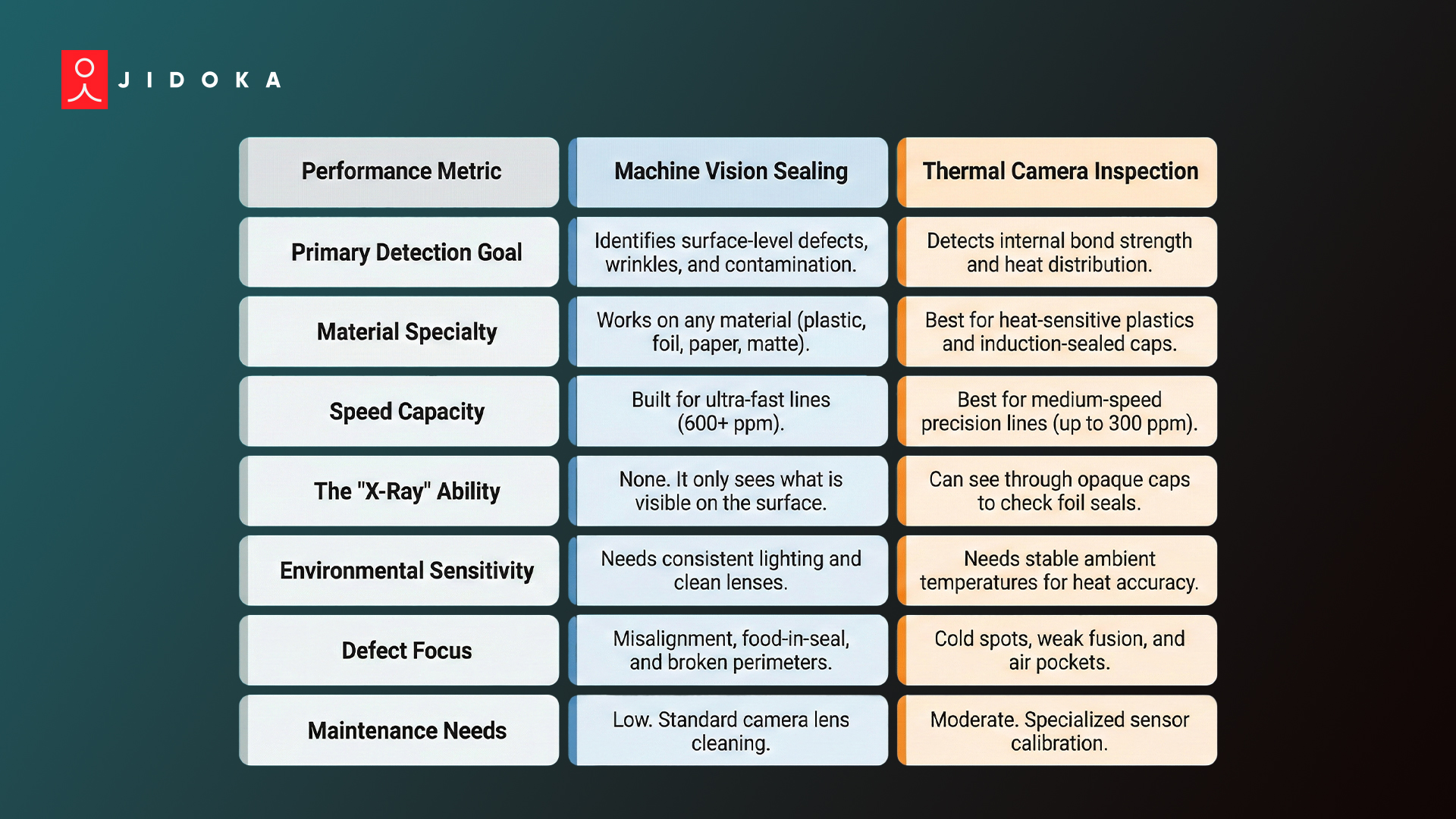
Deze technische balans zorgt ervoor dat u elk defect opvangt voordat het de fabriek verlaat. Het integreren van deze tools in uw workflow is eenvoudiger wanneer u een platform gebruikt dat is ontworpen voor snelle installatie.
Kwaliteitscontrole implementeren met Jidoka Tech
Voor de integratie van geautomatiseerde sealinspecties is een platform nodig dat de dagelijkse productiedruk aankan. Jidoka Tech bouwt een AI-inspectiesysteem dat camera's, verlichting en PLC-timing op elkaar afstemt voor consistente prestaties tijdens alle ploegendiensten.
Het voordeel van KOMPASS en NAGARE
De kracht van Jidoka ligt in twee gespecialiseerde systemen die de integriteit van de seal van zakjes en de nauwkeurigheid van de assemblage garanderen:
- KOMPASS: Deze uiterst nauwkeurige inspecteur behaalt 99,8% + nauwkeurigheid, waarbij elk frame wordt geanalyseerd in onder de 10 m. Het beheerst op visie gebaseerde kwaliteitscontrole op reflecterende metalen en texturen met behulp van 70% minder trainingsvoorbeelden.
- NAGARE: Deze analist volgt 100% van montagestappen. Het fungeert als een intelligente inspectieoplossing, waarbij ontbrekende onderdelen of verkeerde sequenties worden gemarkeerd om nabewerking te verminderen tot 35%.
Door het volledige AI-inspectiesysteem op lokale edge-eenheden uit te voeren, elimineert Jidoka vertragingen.
Conclusie
Het controleren van de verzegeling is de laatste stap in de bescherming van uw product. Handmatige controles en eenvoudige camera-inspectiesystemen missen vaak interne lekken of verontreinigingen. Eén vergissing leidt tot catastrofale terugroepacties van producten en een vernietigde merknaam.
Een enkele defecte batch kan uw activiteiten failliet maken. Jidoka Tech stopt deze nachtmerrie door de inzet van de KOMPAS AI-inspectiesysteem. Je krijgt 99,8% nauwkeurigheid en realtime niet-destructieve tests op elke eenheid.
Stap vandaag nog over naar Jidoka Tech om een totale kwaliteitsborging van de verzegeling te garanderen. Deze upgrade voor zegelinspectie beschermt uw toekomst.
Veelgestelde vragen
1. Hoe verbetert thermische camera-inspectie de verificatie van inductieafdichtingen?
Inspectie met thermische camera's is het beste hulpmiddel voor de verificatie van inductieafdichtingen. Het detecteert hittesignaturen door ondoorzichtige doppen heen zonder het product te openen. Deze niet-destructieve testmethode zorgt voor kwaliteitsborging van de verzegeling door zwakke verbindingen te identificeren die standaard camera-inspectiesystemen simpelweg niet kunnen zien.
2. Kunnen machine vision-sluitsystemen problemen met de integriteit van verborgen zakafdichtingen detecteren?
Hoewel machine vision-afdichtingscontrole oppervlakterimpels opvangt, kan het niet in de hechting kijken. Voor verborgen fouten in de integriteit van de zakafdichting hebt u thermische beeldvorming met defectdetectie nodig. Deze combinatie zorgt voor een totale kwaliteitscontrole van de verpakking, zodat uw productielijnbewaking elke interne en externe storing opvangt.
3. Wat is de typische ROI voor op vision gebaseerde kwaliteitscontrolesystemen?
De meeste fabrieken zien binnen 18 maanden een volledig rendement op een op vision gebaseerde kwaliteitscontrole. Door de zegelinspectie te automatiseren, elimineert u handmatig werk en voorkomt u dure terugroepacties. Deze snelle machine vision-afdichtingscontrole vermindert afval en verbetert uw algehele kwaliteitsborging van afdichtingen en winstmarges.
4. Hoe gaat thermische beeldvorming met defectdetectie om met niet-destructieve tests?
Thermische beeldvorming met defectdetectie biedt een unieke niet-destructieve testbenadering. Het meet de warmte-energie die al in het materiaal aanwezig is. Dit zorgt voor kwaliteitsborging van de verzegeling zonder de verpakking te beschadigen. Het is een essentieel onderdeel van de moderne kwaliteitsinspectie van verpakkingen voor industrieën waar veel op het spel staat.
5. Is de detectie van hitteverzegelingen effectief voor verschillende materiaalsoorten?
Ja, de detectie van hitteverzegelingen werkt op verschillende films en folies. Hoewel machine vision-afdichtingscontrole materiaalonafhankelijk is, hebben thermische sensoren een specifieke kalibratie nodig voor reflecterende oppervlakken. De combinatie van deze tools in uw workflow voor zegelinspectie zorgt voor 100% kwaliteitsborging van de zegels, ongeacht uw specifieke verpakkingsmaterialen.