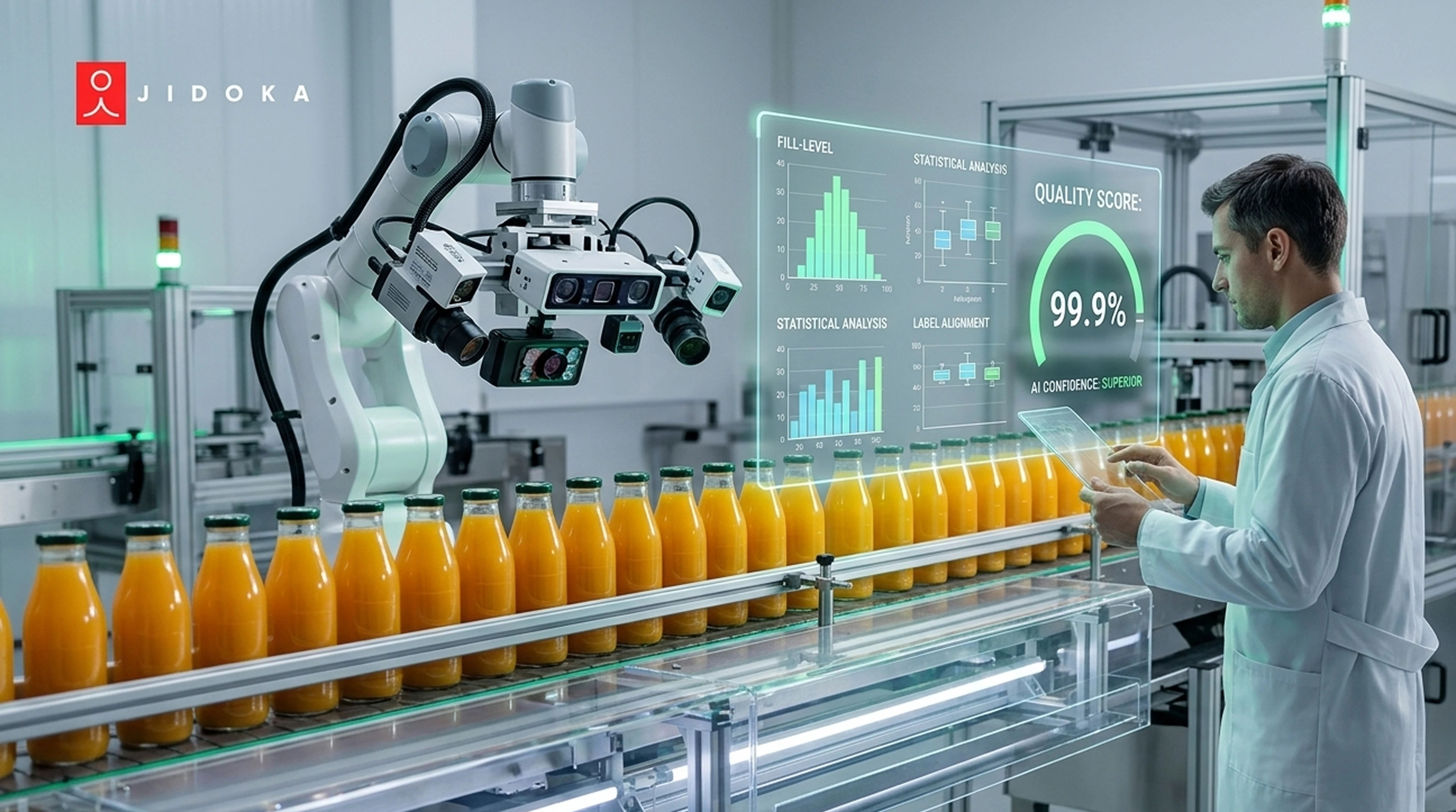
Die FDA verzeichnete 2025 über 2.100 Lebensmittelrückrufe mit durchschnittlichen direkten Kosten von 10 Millionen $ pro Vorfall. Die wirtschaftlichen Gesamtauswirkungen, einschließlich Markenschäden und Auslistungen durch den Einzelhandel, erreichten 30 bis 50 Millionen $ (oxmaint.com, April 2026).
Über 80 Lebensmittelrückrufe im Jahr 2024 waren auf nicht deklarierte Allergene zurückzuführen, meist aufgrund von Fehlern bei der Etikettenprüfung während der Verpackungsphase (packagingdigest.com). Die auf Stichproben basierende Qualitätskontrolle in der FMCG-Industrie erkennt diese Fehler erst, wenn die Kosten bereits entstanden sind.
KI-gestützte Prozessüberwachung verhindert diese Fehler, während die Produkte noch gefertigt werden. Dieser Leitfaden erläutert, warum das bisherige Inspektionsmodell versagt, was sich durch KI-Überwachung ändert und welchen messbaren ROI und Schutz vor Rückrufen dieser Wandel bietet.
Wichtigste Erkenntnis: Die auf End-of-Line-Stichproben basierende Qualitätskontrolle in der FMCG-Branche erkennt Mängel erst, wenn die Produkte bereits verpackt und für den Versand bereitgestellt sind. Die KI-Prozessüberwachung erkennt diese Fehler, während die Produkte noch hergestellt werden – zu einem Bruchteil der Kosten für Korrekturmaßnahmen im Handel. Die FDA verzeichnete 2025 über 2.100 Fälle, in denen die Rückrufprävention versagte, bei durchschnittlichen direkten Kosten von 10 Millionen $ pro Fall. (oxmaint.com, April 2026)
Warum versagt die FMCG-Qualitätskontrolle trotz Investitionen in die End-of-Line-Inspektion weiterhin?
Die Qualitätskontrolle in der FMCG-Branche scheitert nicht an mangelnden Investitionen in die Inspektion, sondern an einem strukturell reaktiven Modell. Stichproben am Ende der Linie erkennen Mängel erst nach der Produktion. Manuelle Kontrolleure erreichen unter realen Schichtbedingungen eine Genauigkeit von maximal 80 bis 85 %. Beide Ansätze übersehen schichtspezifische Schwankungen sowie Fehler bei der Allergenkennzeichnung, die zu Rückrufen führen. Jedes Qualitätsmanagementsystem in der FMCG-Fertigung, das sich ausschließlich auf diese Methoden stützt, stößt an dieselbe strukturelle Grenze.
Die Genauigkeitsgrenze manueller Inspektionen bei Hochgeschwindigkeitslinien
Die Genauigkeit manueller Inspektionen bei FMCG-Hochgeschwindigkeitslinien liegt unter realen Produktionsbedingungen bei maximal 80 bis 85 %. Dieser Wert sinkt im Verlauf einer Schicht weiter, da die Aufmerksamkeit der Mitarbeiter nachlässt. Bei einer Linie mit 300 Einheiten pro Minute führt selbst eine Fehlerquote von 5 % dazu, dass Hunderte defekte Einheiten pro Stunde in den weiteren Prozess gelangen, bevor eine Stichprobenkontrolle sie erfasst.
Die von großen Einzelhändlern und Regulierungsbehörden geforderten FMCG-Produktionsstandards setzen eine 100-prozentige Abdeckung voraus. Stichprobenbasierte Programme erreichen an guten Tagen eine Abdeckung von 5 bis 10 %. Die Lücke zwischen Anforderung und Realität ist der Ursprung von Rückrufen. Investitionen in die FMCG-Qualitätskontrolle, die sich auf das Ende der Linie konzentrieren, korrigieren lediglich bereits fehlerhaft produzierte Ware, anstatt den Fehler zu verhindern.
Wie Fehler bei der Allergenkennzeichnung zu Rückrufrisiken führen
Über 80 Lebensmittelrückrufe im Jahr 2024 betrafen nicht deklarierte Allergene. Die meisten Fehler traten in der Verpackungsphase während des Etikettenwechsels auf, nicht bei der Rezeptur. Ein Produktionslauf beginnt mit dem korrekten Etikett; die Etikettenrolle geht mitten in der Schicht zur Neige, und die Ersatzrolle ist die falsche Variante – ein benachbarter SKU mit einer anderen Allergendeklaration.
Keine Stichprobenkontrolle am Ende der Linie erkennt dies zuverlässig, da die Stichprobenintervalle in Stunden statt in Minuten gemessen werden. Die kontaminierten oder falsch etikettierten Einheiten erreichen den Handel, bevor der Fehler bemerkt wird. Dies ist das strukturelle Versagen, das Qualitätsinspektionsprogramme für Konsumgüter, die auf periodischen Audits basieren, nicht verhindern können. Erfahren Sie, wie Etiketten- und Texterkennung auf Einheitsebene schließt diese Lücke.
Wie sich schichtspezifische Schwankungen auf die Qualitätsstandards in der Konsumgüterindustrie auswirken
Schwankungen zwischen den Schichten sind das unsichtbare Problem der Qualitätskontrolle in der Konsumgüterindustrie. Anlagengeschwindigkeit, Umgebungstemperatur, Arbeitsweise des Bedienpersonals und Chargen des Verpackungsmaterials können sich zwischen der Früh- und Spätschicht ändern. Eine manuelle Stichprobenkontrolle, die nur einmal pro Schicht durchgeführt wird, kann die Qualitätsabweichungen, die sich in den dazwischenliegenden Stunden ansammeln, nicht erfassen.
41 % der Lebensmittelrückrufe im Jahr 2025 waren auf Geräteausfälle zurückzuführen, die durch proaktive Überwachung hätten verhindert werden können (oxmaint.com, April 2026). Geräteverschleiß, wie etwa eine schleichende Fehljustierung bei der Etikettierung oder Abnutzung von Füllventilen, führt zu einer allmählichen Qualitätsverschlechterung. Diese ist in den Produktionsdaten der Konsumgüterherstellung zwar sichtbar, bleibt jedoch bei periodischen Audits unsichtbar, bis ein Rückrufschwellenwert überschritten wird.
Wie gehen KOMPASS und NAGARE mit der Qualitätskontrolle in der Konsumgüterindustrie um?
Das System von Jidoka für die Qualitätssicherung in der Konsumgüterfertigung nutzt zwei Plattformen: KOMPASS für die 100-prozentige Inline-Produkt- und Etikettenprüfung in Produktionsgeschwindigkeit sowie NAGARE für die Prozessverifizierung durch das Bedienpersonal in Echtzeit. Gemeinsam adressieren sie sowohl Produktfehler als auch die Prozessabweichungen, die diese verursachen.
KOMPASS für die Produkt- und Etikettenprüfung in der Konsumgüterindustrie
KOMPASS führt eine 100-prozentige Inline-Fehlererkennung bei Konsumgüterverpackungen mit bis zu 12.000 Einheiten pro Minute durch. Bei Verpackungslinien erkennt das System Siegelmängel, falsch ausgerichtete Etiketten, Abweichungen beim Füllstand, unleserliche Barcodes und Verunreinigungen. Speziell für die KI-gestützte Etikettenprüfung liest KOMPASS jedes Etikett auf jeder Einheit und markiert falsche SKUs, fehlende Allergenhinweise, inkorrekte Chargencodes sowie Fehler beim Mindesthaltbarkeitsdatum.
Ergebnisse von KOMPASS bei Konsumgüter-Einsätzen: 30 % Verbesserung der Fehlererkennung im Vergleich zur manuellen Prüfung, 97 bis 99,5 % Erkennungsgenauigkeit, 24 Stunden am Tag ohne die ermüdungsbedingte Abnahme der Genauigkeit, die bei manuellen Prüfungen über eine 8-Stunden-Schicht hinweg auftritt. Die Prüfgeschwindigkeit entspricht den meisten Verpackungslinien in der Konsumgüterindustrie oder übertrifft diese, sodass die KI-Station niemals zum Engpass für den Durchsatz wird.
NAGARE für Genauigkeit bei der Kommissionierung und Einhaltung von Arbeitsanweisungen
NAGARE überwacht die Compliance-Anforderungen in der Konsumgüterfertigung, die KOMPASS nicht abdecken kann: ob das Bedienpersonal jeden Schritt der Verpackungssequenz korrekt ausgeführt hat, bevor das Produkt zur nächsten Stufe weitergeleitet wurde. Für die Konsumgüterindustrie umfasst dies die Kommissionierung (SKU-Validierung, Erkennung fehlender Teile, Bestätigung des Kits vor dem Versand), digitale Arbeitsanweisungen für Verpackungsabläufe (Echtzeit-Anleitung für das Personal, Warnmeldungen bei Abweichungen, Bestätigung der Arbeitsschritte) sowie die Genauigkeit der Bestandsdaten für den Versand.
Ergebnisse von NAGARE: 30 % Steigerung der Prozesseinhaltung, 35 % Reduzierung von Nacharbeiten. Einsatzvorteil: NAGARE läuft auf bestehender CCTV- und Kamerainfrastruktur mit lokaler Edge-KI, ohne Cloud-Abhängigkeit und erfordert bei den meisten Verpackungslinien in der Konsumgüterindustrie keine neuen Kameras. Jidokas Kommissionierungs-Anwendungsfall und Systeme für digitale Arbeitsanweisungen decken den gesamten Funktionsumfang von NAGARE für die Konsumgüterindustrie ab.
Fallbeispiele aus aktiven Konsumgüter-Produktionslinien
Nestlé nutzt KOMPASS für die 100-prozentige Erkennung von Gewürzbeuteln in Maggi-Multipack-Nudeln. Die manuelle Prüfung scheiterte bei diesem Volumen, da die Beutel in den Multipacks versiegelt und von außen nicht sichtbar sind. KOMPASS erkennt deren Vorhandensein und korrekte Platzierung durch die Außenverpackung hindurch.
Diageo nutzt KI-gestützte Etikettenprüfung bei 300 Flaschen pro Minute und verifiziert die Genauigkeit von Texten, Ausrichtung und Qualität der Etiketten, ohne die Linie zu verlangsamen. Britannia verwendet KOMPASS für die Inline-Keksprüfung, die Risse, Konsistenz der Füllung und Ausrichtung gemäß den Qualitätsstandards für Konsumgüter abdeckt. P&G, ITC Ltd, Mondelez und Pernod Ricard gehören ebenfalls zu den Kunden von Jidoka in der Konsumgüterindustrie.
Wie bewältigen KI-Bildverarbeitungssysteme die Qualitätsprüfung von Konsumgütern bei voller Produktionsgeschwindigkeit?
KI-Bildverarbeitungssysteme führen die Qualitätsprüfung von Konsumgütern bei voller Produktionsgeschwindigkeit durch, indem sie Bilder in Millisekunden verarbeiten und eine Inline-Ausschleusung auslösen, ohne den Produktionsfluss zu stören. Moderne Systeme erreichen eine Erkennungsgenauigkeit von 97 bis 99,5 % und arbeiten rund um die Uhr, ohne die ermüdungsbedingten Fehler der manuellen Prüfung bei hohem Durchsatz.
Edge-KI-Verarbeitung ohne Durchsatzeinbußen
Die gesamte Verarbeitung durch KOMPASS erfolgt lokal (on-premise) mit einer Inferenzzeit von unter 100 ms pro Einheit und ohne Cloud-Latenz. Ausschleusungsmechanismen sind direkt mit Förderbändern und SPS verbunden, sodass fehlerhafte Einheiten im selben Takt, in dem der Fehler erkannt wird, physisch aus der Linie entfernt werden. Es ist kein Bedienereingriff, kein manuelles Entnehmen von Trays und kein Anhalten von Chargen erforderlich.
KOMPASS arbeitet mit bis zu 12.000 Einheiten pro Minute (PPM) und übertrifft damit die meisten Geschwindigkeiten von FMCG-Verpackungslinien. Das Inspektionssystem wird nie zum Flaschenhals. Die Produktionsdaten verbleiben lokal, was auch für die Einhaltung von Datenresidenz- und Lieferantenaudit-Anforderungen in der FMCG-Fertigung entscheidend ist.
Adaptive KI für FMCG-Linien mit hoher SKU-Varianz
FMCG-Linien verarbeiten typischerweise mehrere SKU-Varianten in einer einzigen Schicht: unterschiedliche Produktgrößen, Etikettenvarianten, Verpackungsformate und Füllvorgaben. Regelbasierte Bildverarbeitungssysteme erfordern bei jedem Wechsel eine manuelle Umprogrammierung. KOMPASS nutzt die DOJO-Selbstlern-Engine von Jidoka, um neue SKU-Inspektionsmodelle anhand von Referenzbildern ohne ML-Expertise zu trainieren, was schnelle Wechsel ohne Umprogrammierung ermöglicht.
Die Implementierung ist innerhalb von 6 bis 8 Wochen an einer aktiven FMCG-Linie unter Nutzung der bestehenden Kamerainfrastruktur möglich. Die Anwendung für FMCG-Qualitätsstandards lässt sich pro SKU erweitern, ohne dass die Integrationskosten oder der Zeitaufwand entsprechend steigen.
Der Wandel von reaktiver zu präventiver FMCG-Qualität
Stichproben am Ende der Linie sind eine Eindämmungsstrategie: Sie entdecken Qualitätsmängel erst, nachdem sie bereits entstanden sind. Die KI-Prozessüberwachung mittels NAGARE ist eine Präventionsstrategie: Sie verhindert, dass Fehler überhaupt entstehen. Es wird erwartet, dass bis 2026 50 % der Hersteller auf KI-gestützte FMCG-Qualitätskontrolle setzen werden (TTMS.com, Januar 2025).
Die Wirtschaftlichkeit der Prävention ist in der FMCG-Fertigung auf jeder Kostenebene strukturell besser als die der Eindämmung. Ein Fehler, der an der Produktionsstation erkannt wird, kostet eine Einheit. Ein Fehler, der am Ende der Linie erkannt wird, kostet eine Nacharbeitscharge. Ein Fehler, der den Handel erreicht, kostet einen Rückruf. Der Kostenunterschied zwischen diesen drei Ergebnissen ist das finanzielle Argument dafür, die Qualitätsprüfung von Konsumgütern weiter nach vorne in den Prozess zu verlagern.
Welchen ROI liefern FMCG-Qualitätskontrollprogramme, wenn KI manuelle Audits ersetzt?
FMCG-Qualitätskontrollprogramme mit KI liefern einen ROI in vier Kostenkategorien: Vermeidung von Rückrufen, Reduzierung von Nacharbeit, Umverteilung von Arbeitskräften und Wiederherstellung des Durchsatzes. Jidoka-Implementierungen erzielen durchschnittliche jährliche Einsparungen von 125.000 USD pro Produktionslinie mit einem positiven ROI nach 8 bis 16 Monaten, noch bevor der Wert verhinderter Rückrufe berücksichtigt wird.
Die Kalkulation der Rückrufvermeidung
Die FDA dokumentiert durchschnittliche direkte Kosten von 10 Millionen USD pro Lebensmittelrückruf (oxmaint.com, April 2026). Die gesamten wirtschaftlichen Auswirkungen, einschließlich Markenschäden und Listungsausfällen im Einzelhandel, erreichen bei schwerwiegenden Vorfällen 30 bis 50 Millionen USD. Ein einziger verhinderter Rückruf deckt die Kosten für die Implementierung der KI-Qualitätsüberwachung über viele Produktionslinien hinweg.
41 % der Lebensmittelrückrufe im Jahr 2025 waren auf Geräteausfälle zurückzuführen, die durch proaktive Überwachung hätten verhindert werden können (oxmaint.com, April 2026). Die KI-gestützte FMCG-Qualitätskontrolle erkennt Anzeichen von Geräteverschleiß, Etikettenverschiebungen und Trends bei Füllmengenabweichungen, die einem Rückruf vorausgehen. Dies verschafft Qualitätsteams einen Zeitvorsprung von Stunden oder Tagen für Interventionen, den stichprobenbasierte Programme nicht bieten. Die Kosten für das Unterlassen der Implementierung steigen schneller als die Investition in die Einführung.
Nacharbeit, Arbeitskräfte und Durchsatzoptimierung
Über die Vermeidung von Rückrufen hinaus liefert die KI-gestützte Qualitätsprüfung von Konsumgütern drei weitere ROI-Kategorien. Reduzierung von Nacharbeit: KOMPASS erkennt Fehler inline statt nach der Produktion und eliminiert so nachgelagerte Nacharbeitszyklen, bei denen verpackte Produkte geöffnet und neu verarbeitet werden müssen. Umverteilung von Arbeitskräften: Prüfer, die von manuellen Kontrollen entlastet werden, wechseln in die Prozessüberwachung und das Ausnahmemanagement – ein produktiverer Einsatz menschlicher Urteilsfähigkeit.
Durchsatzoptimierung: Die KI-gestützte Inspektion in Echtzeit beseitigt den Engpass, der durch stichprobenartige Endkontrollen entsteht, wenn fehlerhafte Chargen für eine manuelle Überprüfung zurückgehalten werden. Die Jidoka-Daten für die Konsumgüterindustrie: 125.000 $ jährliche Einsparungen pro Linie, 8 bis 16 Monate bis zum ROI, 30 % Verbesserung bei der Fehlererkennung. Die erfolgreichsten Implementierungen kombinieren die durch KOMPASS erzielten Einsparungen bei Fehlern mit den durch NAGARE erreichten Verbesserungen bei der Prozesseinhaltung in einer gemeinsamen ROI-Berechnung.
Wie setzen führende Konsumgütermarken KI-Qualitätsüberwachung in der Praxis ein?
Führende Konsumgütermarken setzen KI-Qualitätsüberwachung ein, indem sie KOMPASS für die Produktinspektion mit vorhandenen Kameras und SPS an Verpackungslinien verbinden und NAGARE für die Echtzeit-Prozessüberprüfung durch das Bedienpersonal nutzen. Die meisten Implementierungen dauern 6 bis 8 Wochen, ohne die laufende Produktion zu unterbrechen, wobei vortrainierte KI-Modelle auf Basis realer Linienbilder feinjustiert werden.
So sieht das Implementierungsmodell an einer aktiven Konsumgüter-Verpackungslinie aus
KOMPASS lässt sich in bestehende Kameras, SPS sowie MES/ERP-Systeme integrieren. NAGARE nutzt die bereits auf den meisten Verpackungslinien vorhandene CCTV-Infrastruktur. Beide Systeme arbeiten als On-Premise-Edge-KI ohne Cloud-Abhängigkeit. Die Implementierung dauert 6 bis 8 Wochen, wobei DOJO für das Selbsttraining neuer SKUs sorgt. Die Integration in das Qualitätsmanagementsystem der Konsumgüterfertigung erfordert in den meisten Fällen keine neue Kamerahardware.
Starten Sie den Pilotbetrieb mit der SKU oder Linie, die für das höchste Volumen an Kundenretouren oder Ausschuss verantwortlich ist, nicht mit der am einfachsten zu integrierenden Station. Die Pilotdaten bilden die Grundlage für den Business Case für einen werksweiten Rollout, ohne dass eine vollständige Kapitalbindung im Voraus erforderlich ist. Weitere Informationen finden Sie auf der Jidoka-Seite für die Konsumgüterindustrie zu Implementierungsumfang und Fallstudien.
Wie Jidoka die Qualitätslücke in der Konsumgüterindustrie schließt
KOMPASS und NAGARE adressieren gemeinsam die drei Fehlerquellen in der Konsumgüterqualität: durch Stichproben übersehene Produktfehler, Etikettierungsfehler bei Produktwechseln und Abweichungen beim manuellen Verpacken, die durch keine Produktinspektion erfasst werden.
- KOMPASS: 100% Inline-Inspektion bei bis zu 12.000 Einheiten pro Minute. Verpackungsfehler, Etikettierungsfehler, Füllmengenabweichungen, Barcode-Fehler. 30 % Verbesserung bei der Fehlererkennung.
- NAGARE: Überprüfung der SOPs für Kommissionierung und Verpackung auf Basis vorhandener CCTV-Systeme. 30 % Steigerung der Prozesseinhaltung. On-Premise, keine Cloud.
- Aktive Kunden: Nestle, Diageo, Britannia, P&G, ITC Ltd, Mondelez, Pernod Ricard. Besuchen Sie jidoka-tech.ai/industry/fmcg für Fallstudien.
Deployment-Assessment buchen und erfahren Sie, wie KOMPASS und NAGARE das Rückrufrisiko an Ihrer kritischsten Produktionslinie eliminieren.
Fazit
Qualitätskontrolle in der FMCG-Branche, die auf End-of-Line-Audits basiert, entdeckt Fehler erst, wenn diese bereits in der Lieferkette sind. KI-gestützte Prozessüberwachung verhindert, dass sie überhaupt dorthin gelangen. Die Leistungslücke ist messbar: Manuelle Inspektionen erfassen unter Produktionsbedingungen 80 bis 85 % der Mängel; KI-Inspektionen erreichen 99,95 %.
Genau in dieser verbleibenden Lücke entstehen Rückrufe, Kundenretouren und Markenschäden. Erfahren Sie unter jidoka-tech.ai, wie KOMPASS und NAGARE diese Lücke schließen.
Häufig gestellte Fragen
1. Was ist FMCG-Qualitätskontrolle und warum ist sie bei hohen Produktionsvolumina so schwer aufrechtzuerhalten?
Die FMCG-Qualitätskontrolle umfasst die Fehlererkennung, Verpackungsprüfung, Etikettengenauigkeit, Einhaltung von Füllmengen und die Prozesskonformität an Hochgeschwindigkeitsproduktionslinien. Kein auf Stichproben basierendes Qualitätssystem für die FMCG-Fertigung erfüllt diesen Standard in großem Maßstab. Bei hohen Volumina ist dies schwierig, da die Genauigkeit menschlicher Inspektionen unter realen Schichtbedingungen bei maximal 80 bis 85 % liegt, die Stichprobenfrequenz kontinuierliche Verpackungsprozesse nicht abdecken kann und schichtbedingte Schwankungen Qualitätslücken erzeugen, die bei periodischen Audits erst sichtbar werden, wenn Kundenretouren eintreffen.
2. Warum nehmen Rückrufe bei Lebensmitteln und Konsumgütern trotz Investitionen in die Qualität weiter zu?
Rückrufe nehmen zu, weil Investitionen in die Qualität am falschen Punkt ansetzen: bei End-of-Line-Audits, nachdem die Produkte bereits hergestellt wurden. Die FDA verzeichnete im Jahr 2025 über 2.100 Lebensmittelrückrufe mit durchschnittlichen direkten Kosten von jeweils 10 Millionen US-Dollar (oxmaint.com, 2026). Die meisten entstehen durch Fehler bei der Etikettierung und Kontaminationen, die stichprobenbasierte FMCG-Qualitätskontrollsysteme erst nach der Auslieferung erkennen, wenn die Korrekturkosten bereits massiv gestiegen sind.
3. Welche FMCG-Marken nutzen die KI-Vision-Systeme von Jidoka und welche Ergebnisse haben sie erzielt?
Jidokas KOMPASS wird von Nestlé zur 100-prozentigen Erkennung von Beilagen in Maggi-Multipacks, von Diageo zur Etikettenprüfung bei 300 Flaschen pro Minute und von Britannia zur Inline-Qualitätsprüfung von Keksen eingesetzt. Auch ITC Ltd, Mondelez und Pernod Ricard zählen zu den FMCG-Kunden von Jidoka.
4. Was ist der Unterschied zwischen KOMPASS und NAGARE für die FMCG-Qualitätskontrolle?
KOMPASS kümmert sich um die Produktqualität und erkennt Verpackungsfehler, Etikettierfehler, Füllmengenabweichungen und Kontaminationen mit einer Genauigkeit von 99,95 %. NAGARE überwacht die Prozessqualität, indem es die Handlungen der Mitarbeiter anhand digitaler SOPs für Kommissionierung, Verpackungsabfolgen und Bestandsprüfungen kontrolliert. Gemeinsam decken sie sowohl den Produktfehler als auch die Prozessabweichung ab, die ihn verursacht hat – beides Aspekte, die stichprobenartige Audits in Echtzeit nicht erfassen können.
5. Welchen ROI können FMCG-Hersteller von Investitionen in KI-Qualitätskontrolle erwarten?
FMCG-Hersteller, die Jidokas KOMPASS einsetzen, berichten von jährlichen Einsparungen in Höhe von 125.000 US-Dollar pro Produktionslinie, einer Verbesserung der Fehlererkennung um 30 % und einem positiven ROI nach 8 bis 16 Monaten. Das stärkste finanzielle Argument ist die Vermeidung von Rückrufen: Bei durchschnittlichen direkten Kosten von 10 Millionen US-Dollar pro Rückruf (oxmaint.com, 2026) deckt ein einziger verhinderter Vorfall die Kosten für die Implementierung der KI-Qualitätskontrolle in einer Anlage mit mehreren Linien.