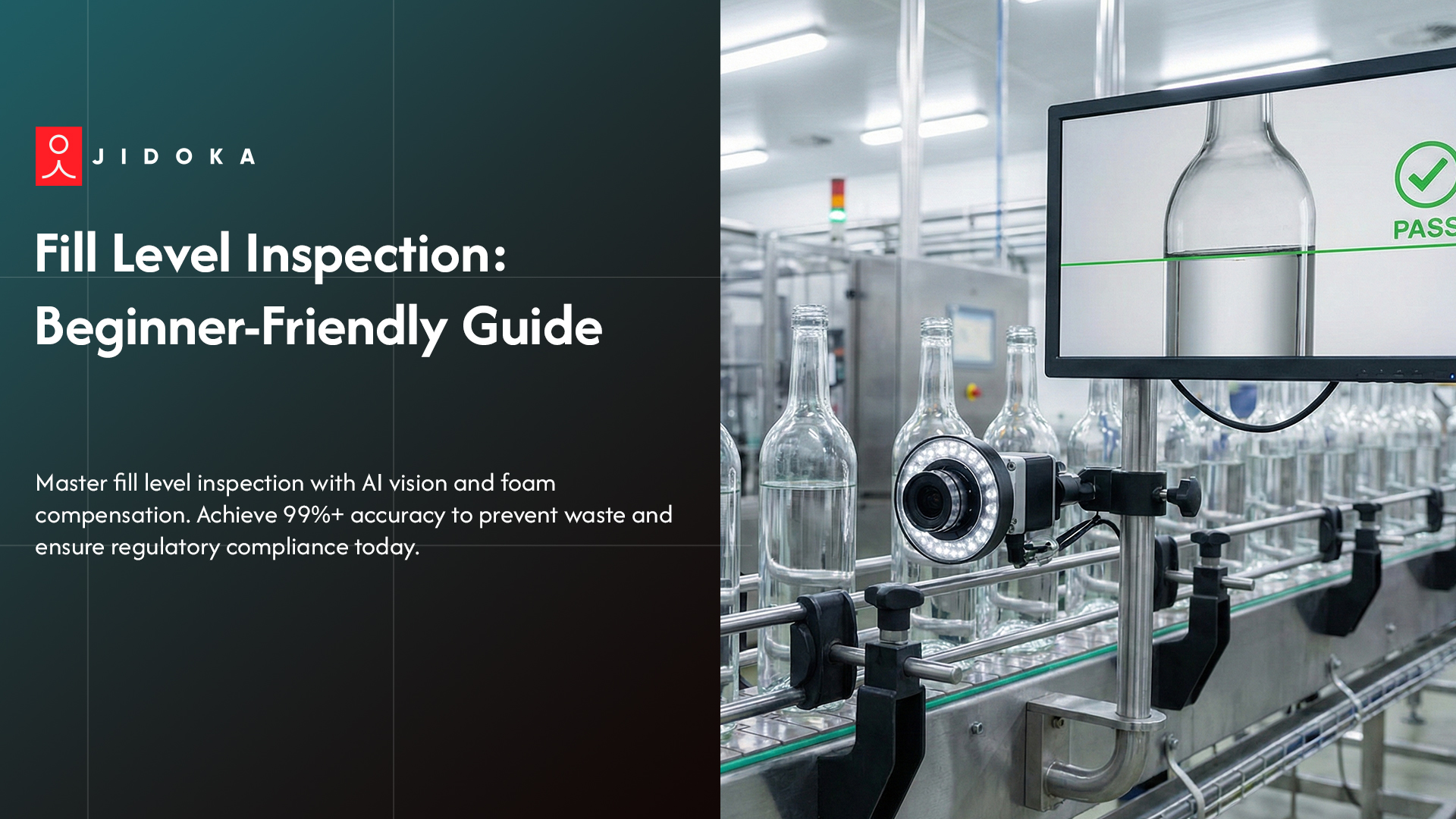
Fabrikanten verliezen geld wanneer flessen de verkeerde hoeveelheid product bevatten. Kleine fouten bij de vulhoogtecontrole leiden snel tot enorme verspilling. U heeft een betrouwbare methode nodig voor vulhoogtedetectie om dit verlies te stoppen. Bij hogesnelheidslijnen zijn handmatige controles onmogelijk.
Deze gids laat zien hoe vision AI-inspectie en geautomatiseerde kwaliteitscontrole deze problemen oplossen. U leert hoe u vulhoogtecontrole inzet om klanten tevreden te houden en aan wettelijke regels te voldoen. Nauwkeurigheid is essentieel voor uw bedrijfsresultaat.
Laten we kijken hoe u deze technologie onder de knie krijgt om uw productieresultaten vandaag nog te verbeteren.
Waarom nauwkeurig afvullen een zakelijke noodzaak is
Vulhoogtecontrole is de belangrijkste verdediging tegen het verzenden van onjuiste productvolumes. Moderne productieprocessen gaan te snel voor verouderde methoden. U kunt niet vertrouwen op een persoon om een verschil van 2 mm te zien op een lijn die 300 flessen per minuutverwerkt. Geautomatiseerde kwaliteitscontrole wordt niet moe. Het zorgt ervoor dat uw vulhoogtedetectie van het begin tot het einde van de dienst scherp blijft.
1. De verborgen kosten van onder- en overvulling
Nauwkeurige vloeistofmeting helpt u financiële risico's te vermijden. Ondervulling leidt tot juridische problemen. Overvulling vreet aan uw winst.
- Juridische boetes: Toezichthouders controleren uw producten. Ondervulde eenheden leiden tot hoge boetes.
- Productverlies: Een fles met 1% overvulling betekent dat u 1.000 eenheden per 100.000 gratis weggeeft.
- Veiligheidsrecalls: Een ondervulde farmaceutische flacon vormt een veiligheidsrisico. Dit leidt tot kostbare productterugroepacties en hiaten in de detectie van ondermaatse vullingen.
2. Het falen van handmatige inspectie
Handmatige controles schieten tekort omdat mensen hun concentratie verliezen. Een machine die het vulniveau inspecteert, bekijkt elke eenheid met dezelfde nauwkeurigheid. Het menselijk oog heeft moeite met het verifiëren van het vloeistofvolume wanneer verpakkingen zich snel verplaatsen.
Bij hoge snelheden worden handmatige controles een kansspel. Geautomatiseerde vulniveau-inspectie stopt de onzichtbare dieven van verspilling voordat ze uw magazijn bereiken. Deze precisie verandert een rommelig productieproces in een gestroomlijnde operatie.
Nu u weet waarom dit belangrijk is, moet u de juiste technologie kiezen om in uw verpakkingen te kunnen kijken.
Hoe detectietechnologieën zich verhouden: Vision, HF en IR
Het selecteren van de juiste hardware voor uw productielijn bepaalt uw succes. U moet de sensor afstemmen op uw verpakkingsmateriaal om de detectie van het vulniveau nauwkeurig te houden.
1. Vision AI: De veelzijdige keuze
Vision AI-inspectie maakt gebruik van hogesnelheidscamera's en intelligente algoritmen om producten te analyseren. Het werkt effectief voor transparante PET- en glazen flessen. Het systeem legt beelden vast en gebruikt deep learning om in milliseconden het vloeistofvolume te verifiëren.
Deze technologie bereikt een hoge nauwkeurigheid bij doorzichtige verpakkingen door het vloeistofoppervlak nauwkeurig in kaart te brengen. Het biedt een flexibele oplossing voor drankafvulling omdat het tijdens dezelfde doorgang ook controleert op doppen en etiketten.
2. Alternatieven met hoge frequentie (HF) en infrarood (IR)
Ondoorzichtige of donkere verpakkingen vereisen gespecialiseerde methoden voor vulniveau-inspectie.
- Hoge frequentie (HF): Deze methode gebruikt elektromagnetische velden om door massieve wanden heen te kijken. Het meet hoe watermoleculen reageren op het veld. Het is een sterke keuze voor verpakkingsinspectie bij gebruik van klei of gelakt glas waar licht niet doorheen kan dringen.
- Infrarood (IR): IR-sensoren detecteren vloeistof door lichtabsorptie te meten. Dit is een stralingsvrije manier om het vloeistofniveau te meten in vrijwel ondoorzichtige kunststoffen. Het werkt uitstekend voor oliën en sauzen die geen elektriciteit geleiden.
Met deze tools kunt u de productielijn constant monitoren zonder uw output te vertragen.
Technologievergelijking voor vulhoogteprecisie:
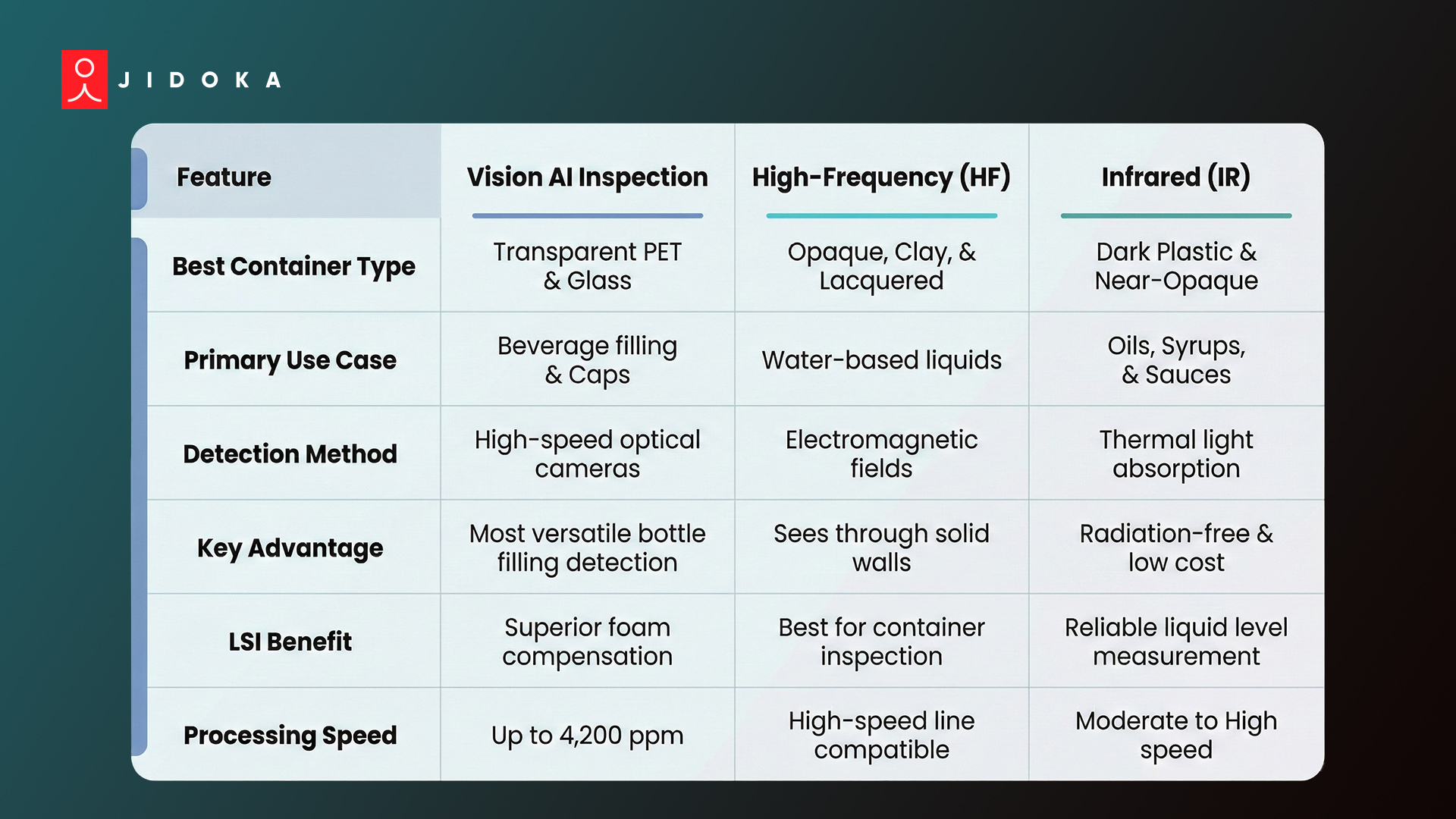
Door de juiste technologie te kiezen, blijft uw detectie van onder-vulling feilloos tijdens elke inspectiecyclus. Door de techniek af te stemmen op uw product, kunt u de fysieke uitdagingen van verschillende vloeistoffen beter beheersen.
De natuurkunde overwinnen: schuim, viscositeit en verpakkingsmaterialen
De fysieke eigenschappen van uw product verstoren vaak standaard sensoren. U heeft een inspectiesysteem voor vulhoogtes nodig dat rekening houdt met dynamische variabelen zoals luchtbellen en aanhechting aan de wand om de nauwkeurigheid te waarborgen.
1. Geavanceerde schuimcompensatie
Bij het afvullen van koolzuurhoudende dranken is schuim geen product. Een fles kan vol lijken, maar het werkelijke vloeistofvolume kan te laag zijn. Moderne vision AI-inspectie gebruikt algoritmen voor schuimcompensatie om de werkelijke vloeistoflijn onder de bellen te vinden.
Dit zorgt ervoor dat uw detectie bij het afvullen alleen het bruikbare product telt. Door het schuim te negeren, voorkomt het systeem "valse goedkeuringen" die leiden tot problemen met regelgeving en fouten bij de detectie van onder-vulling.
2. Omgaan met viskeuze "aanhechting" en ondoorzichtige materialen
Oliën en sauzen blijven aan de wanden van de verpakking plakken, wat een optische illusie van een hogere vulhoogte creëert. Nauwkeurige meting van het vloeistofniveau vereist controles op meerdere punten om het volume over de hele verpakking te middelen. Hoogwaardige geautomatiseerde kwaliteitscontrole vangt deze "aanhechting" op door meerdere punten tegelijk te meten.
- Amberkleurig glas: Donkere verpakkingen blokkeren standaard licht. Inspectie van de vulhoogte voor deze materialen is afhankelijk van HF- of IR-sensoren.
- Gemetalliseerde zakjes: Deze materialen vereisen inspectietechnologie die door folielagen heen "kijkt" om een correcte vulhoogte voor farmaceutische producten te garanderen.
Het overwinnen van deze fysieke hindernissen is de enige manier om een hoge precisie te bereiken. Zodra u deze natuurkundige problemen heeft opgelost, kunt u zich richten op de financiële voordelen van uw automatisering.
Nauwkeurigheid benchmarken en de ROI van automatisering
Het upgraden van uw productielijn met geautomatiseerde tools is een strategische financiële zet. U behaalt direct resultaat door handmatige controles te vervangen door snelle, geautomatiseerde kwaliteitscontrole.
1. Meetbare prestatiewinst
Moderne vision AI-inspectieplatforms, zoals KOMPASS 3.0, verwerken tot 4.200 inferenties per minuut. Deze snelheid maakt vulniveau-inspectie mogelijk met een nauwkeurigheidsgraad van meer dan 99,5%. In drankvulinstallaties verbetert de overstap naar AI-gestuurde tools de nauwkeurigheid van een basislijn van 90% naar bijna perfectie.
U profiteert van een betrouwbare controle van het vloeistofvolume die het menselijk oog simpelweg niet kan bieden. Deze technologie houdt 100% toezicht op de productielijn zonder dat u de output hoeft te vertragen. Constante detectie van het vulniveau van flessen zorgt ervoor dat uw standaarden tijdens elke dienst hoog blijven.
2. Uw rendement berekenen
De ROI voor een professioneel vulniveau-inspectiesysteem wordt doorgaans binnen 18 tot 24 maanden behaald. De meeste faciliteiten zien het systeem zichzelf terugverdienen op drie hoofdgebieden:
- Minder verspilling: Nauwkeurige meting van het vloeistofniveau voorkomt het "weggeven" van overvulde producten.
- Arbeidsbesparing: U kunt personeel inzetten van handmatige inspectie naar taken met een hogere waarde.
- Voorkomen van recalls: Het voorkomen van één grote fout bij de detectie van ondergevulde producten kan miljoenen besparen aan juridische kosten en verlies van vertrouwen.
Het dagelijks opvangen van 5.000 ondergevulde eenheden voorkomt verliezen die vaak oplopen tot $300.000 per jaar. Geautomatiseerde kwaliteitscontrole beschermt uw bedrijfsresultaat en zorgt ervoor dat elke fles die uw fabriek verlaat perfect is.
99,8% vulprecisie bereiken: Waarom KOMPASS de standaard is voor actieve productielijnen
Het implementeren van slimme technologie hoeft uw workflow niet te verstoren. Jidoka Tech fungeert als een "AI-pak" dat camera's en PLC-timing op elkaar afstemt, zodat uw vulniveau-inspectie tijdens elke ploegendienst stabiel blijft.
Het voordeel van KOMPASS 3.0
KOMPASS is een uiterst nauwkeurig vision AI-inspectieplatform dat is ontworpen voor echte productiedruk. Het behaalt een nauwkeurigheid van 99,8%+ en voert verificatie van het vloeistofvolume uit in minder dan 10 ms.
- Snel leren: Past zich aan nieuwe SKU's aan met 70% minder trainingsvoorbeelden.
- Veelzijdigheid in oppervlakken: Verwerkt reflecterende metalen en getextureerde verpakkingen moeiteloos.
- Hoge doorvoer: Verwerkt tot 12.000 eenheden per minuut met gemak.
Datagestuurde optimalisatie
NAGARE breid uw geautomatiseerde kwaliteitscontrole uit door middel van tracking 100% van de montagestappen. Het markeert ontbrekende onderdelen in realtime, waardoor nabewerking wordt verminderd met tot 35%. Dit creëert een feedbacklus die de detectie van het vullen van flessen en de algehele gezondheid van de lijn verbetert.
Ontdek Jidoka om uw vulniveau-inspectie te automatiseren en de detectie van uw flesvulling te perfectioneren → Jidoka
Conclusie
De inspectie van het vulniveau bepaalt het succes van uw hogesnelheidsproductielijn. Handmatige controles brengen kleine fouten niet aan het licht, waardoor u kwetsbaar bent voor verborgen winstverlies.
Als deze onnauwkeurigheden blijven bestaan, riskeert u grootschalige productterugroepacties, hoge juridische boetes en een beschadigde merkreputatie. Eén slechte batch kan leiden tot een regelgevingsnachtmerrie die uw hele operatie stillegt. Stop met gokken met uw inkomsten.
Jidoka Tech biedt de ultieme geautomatiseerde oplossing voor kwaliteitscontrole. Onze vision AI-inspectietechnologie levert 99,8% nauwkeurigheid, zodat elke container perfect is. Stel uw toekomst veilig en voorkom verspilling met Jidoka.
Neem vandaag nog contact op met Jidoka om uw vulniveau-inspectie te transformeren met door AI aangedreven precisie en een toekomst zonder defecten voor uw productielijn veilig te stellen.
Veelgestelde vragen
1. Kunnen deze systemen omgaan met schuim?
Ja, onze systemen gebruiken schuimcompensatie om luchtbellen tijdens het vullen van dranken te negeren. Dit zorgt voor een nauwkeurige meting van het vloeistofniveau door de werkelijke vloeistoflijn te bepalen. Geavanceerde vision AI-inspectie voorkomt onterechte afkeuringen, waardoor een hoge mate van geautomatiseerde kwaliteitscontrole en een nauwkeurige controle van het vloeistofvolume op elke lijn worden gewaarborgd.
2. Wat gebeurt er als ik de flesgrootte verander?
Van formaat wisselen is eenvoudig. Ons platform voor inspectie op vulniveau leert binnen enkele minuten nieuwe formaten door middel van AI-training. Deze flexibiliteit maakt snelle wisselingen van containerinspecties mogelijk zonder lange stilstandtijd. U zorgt voor constante monitoring van de productielijn en betrouwbare detectie van flesvullingen voor elke unieke SKU.
3. Is het beter dan X-ray?
Het zicht is vaak superieur. Vision AI-inspectie is veiliger en goedkoper dan X-ray voor het vullen van dranken. Het zorgt voor overvulpreventie en detectie van ondervulling zonder straling. U krijgt nauwkeurige farmaceutische vulpeilcontroles en controle van het vloeistofvolume, terwijl u alle veiligheidsregels eenvoudig naleeft.
4. Kan het systeem verschillende vloeistofkleuren aan?
Ja. Vision AI-inspectie maakt gebruik van geavanceerde sensoren om verschillende kleuren en dichtheden te detecteren. Of u nu donkere sappen of helder water vult, het systeem zorgt voor een nauwkeurige controle van het vloeistofvolume. Het past zich onmiddellijk aan kleurveranderingen aan, zodat uw vulniveau-inspectie in alle productlijnen nauwkeurig blijft.
5. Hoe integreert het met mijn bestaande lijn?
Onze geautomatiseerde kwaliteitscontrole maakt rechtstreeks verbinding met uw Manufacturing Execution System (MES). Het biedt realtime gegevens voor de bewaking van de productielijn en wordt gesynchroniseerd met uw PLC voor onmiddellijke afwijzing. Deze integratie zorgt voor een naadloze detectie van het vullen van flessen zonder dat uw huidige configuratie volledig moet worden herzien.