Las fábricas necesitan soluciones de automatización para mantenerse competitivas hoy en día. Los altos costes y la escasez de mano de obra dificultan el trabajo manual. Este mercado crece un 9,31% cada año. Los propietarios inteligentes utilizan soluciones de automatización industrial para aumentar la velocidad y obtener un incremento del 10% en la producción.
El uso de sistemas de automatización industrial simplifica tareas complejas. Estas soluciones de fabricación automatizada transforman la forma en que usted crea sus productos. Jidoka Tech lidera este cambio al añadir un "toque humano" a la visión por IA. Sus herramientas utilizan Industria 4.0, fabricación inteligente e integración robótica para detectar cualquier defecto.
Esto es lo que necesita saber.
Tipos de soluciones de automatización industrial explicadas
Elegir las soluciones de automatización industrial adecuadas depende de su volumen de producción y de la frecuencia con la que cambie el diseño de sus productos. La mayoría de las fábricas comienzan con un tipo y evolucionan hacia un sistema más conectado.
Solución n.º 1. Sistemas de automatización fija
La automatización fija, a menudo llamada "automatización rígida", gestiona tareas de gran volumen sin variaciones. Estos sistemas utilizan una secuencia establecida para fabricar un producto específico a gran velocidad. Se pueden ver en plantas embotelladoras o líneas de soldadura de chasis de automóviles.
Aunque estos sistemas de automatización industrial requieren una inversión inicial elevada, ofrecen el menor coste por unidad. No es posible cambiar el proceso fácilmente, por lo que funcionan mejor para productos que permanecen iguales durante años.
Solución n.º 2. Sistemas de automatización programable
Si fabrica productos por lotes, necesita soluciones de automatización industrial programables. Estas herramientas utilizan sistemas PLC para cambiar las instrucciones entre cada ciclo de producción. Puede reprogramar una máquina CNC o un brazo robótico para procesar una pieza con una forma nueva.
Aunque el cambio requiere cierto tiempo de inactividad, le brinda la flexibilidad de producir artículos diferentes en la misma línea. Esta es una opción común para piezas industriales y equipos médicos.
Solución n.º 3. Soluciones de automatización flexible
La automatización flexible es el siguiente paso en las soluciones de fabricación automatizada. Estos sistemas permiten realizar cambios rápidos con casi cero tiempo de inactividad. En lugar de detener la línea, el sistema informático ajusta las herramientas automáticamente.
El uso de integración robótica y robots colaborativos le permite combinar diferentes productos en una misma cinta transportadora. Esto le ayuda a mantener la agilidad cuando las preferencias de los clientes cambian rápidamente.
Solución n.º 4. Automatización integrada y fábricas inteligentes
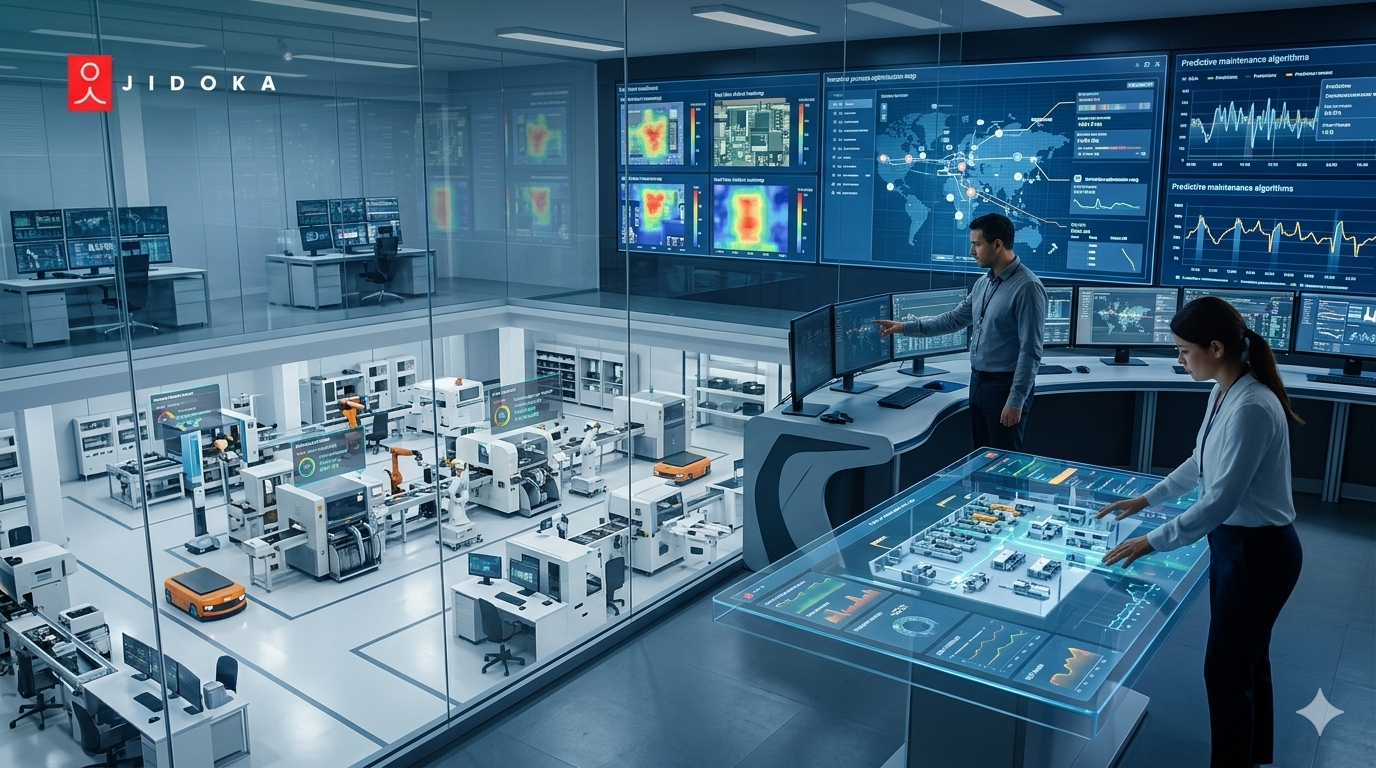
La automatización integrada unifica todo en un centro de fabricación inteligente. Aquí, cada máquina se comunica con las demás a través de sensores IIoT. Esta configuración crea una transformación digital completa donde los datos dirigen cada movimiento.
Obtendrá una fábrica "lights-out" que funciona las 24 horas del día, los 7 días de la semana, con una intervención mínima. Estas soluciones de automatización de fábricas utilizan tecnología de Industria 4.0 para detectar errores antes de que ocurran.
Resumen de los tipos de soluciones de automatización de fábricas
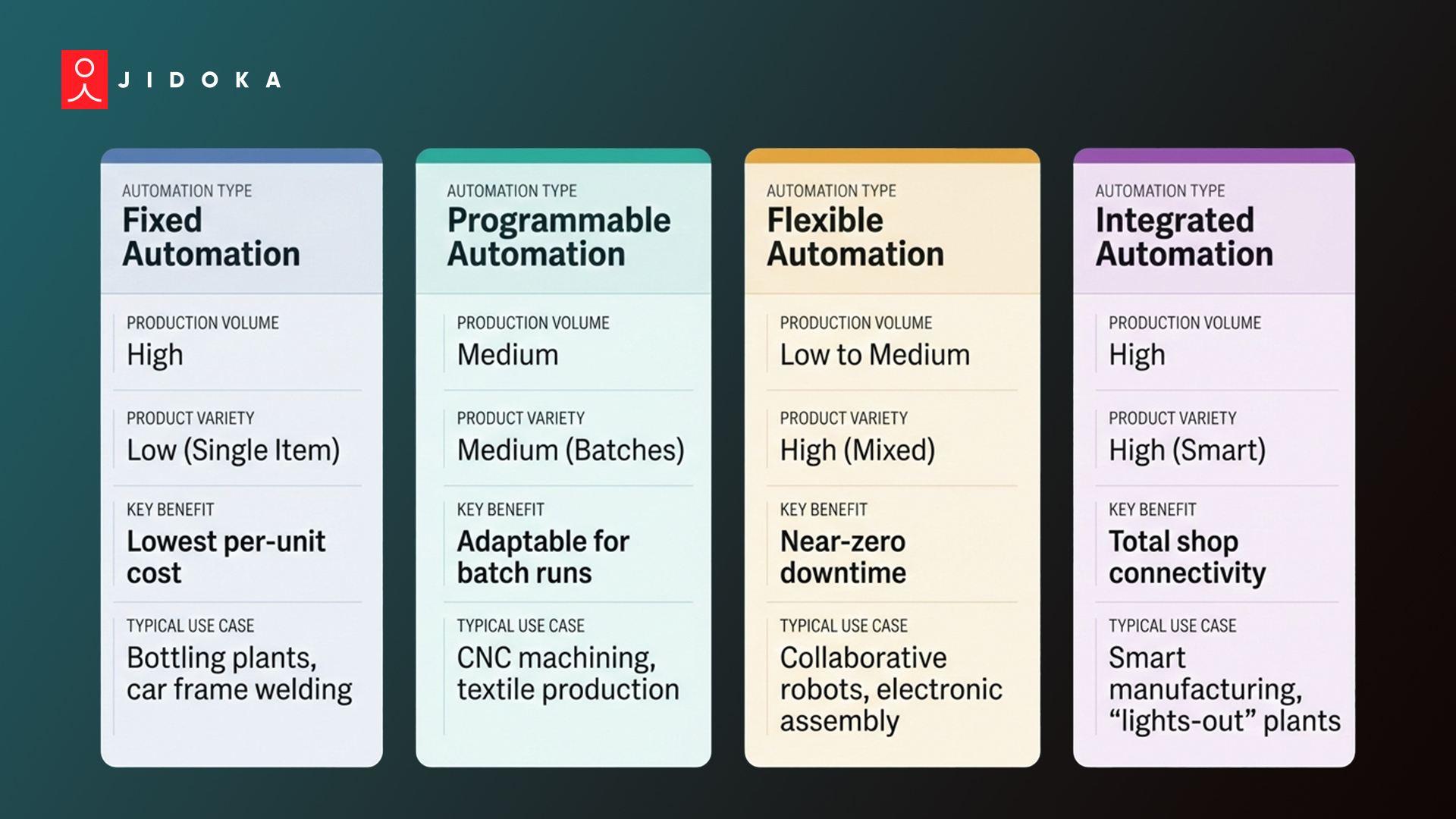
Todos estos sistemas dependen de hardware y software específicos para mantener el buen funcionamiento de la planta.
Tecnologías principales que impulsan los sistemas de automatización industrial
El hardware y el software modernos actúan como el cerebro de su planta de producción. Necesita estas herramientas para convertir datos sin procesar en productos terminados sin errores.
1. Sistemas PLC y DCS
Los sistemas PLC ejecutan la lógica rápida que mantiene las máquinas en movimiento. Estas soluciones de automatización de fábricas gestionan tareas complejas junto con simples movimientos de encendido y apagado. Mientras que un PLC controla una máquina, un DCS gestiona toda su planta.
Estos sistemas de automatización industrial proporcionan el respaldo necesario para evitar paradas totales. La mayoría de los controladores actuales se comunican fácilmente con diferentes marcas.
2. Robótica, cobots y AGV
La integración de la robótica ha dejado atrás las pesadas jaulas de seguridad. Ahora puede utilizar robots colaborativos que trabajan codo a codo con su equipo. Estos "cobots" realizan las tareas pesadas mientras su personal se encarga de los ajustes de precisión.
Para el transporte de piezas, los sistemas AGV y los AMR sustituyen a las antiguas carretillas elevadoras. Estas soluciones de automatización industrial utilizan sensores IIoT para encontrar la ruta más eficiente a través de su planta.
3. SCADA y MES
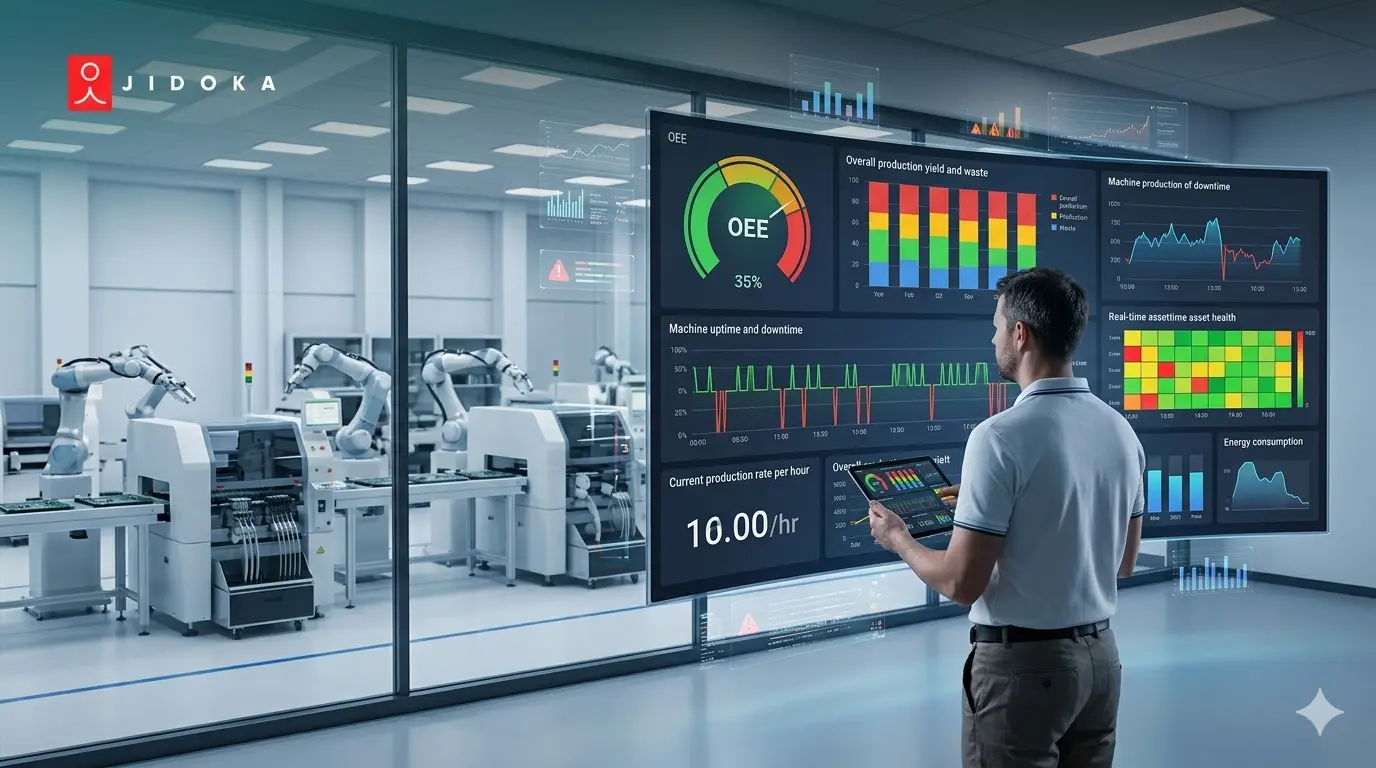
La tecnología SCADA le ofrece una visión clara de su planta. Recopila datos para que pueda supervisar la velocidad de cada máquina desde una sola pantalla. Al añadir un sistema MES, conecta la información de la planta con su oficina central.
Esta configuración facilita el mantenimiento predictivo para alertarle antes de que una pieza falle. Estas soluciones de fabricación automatizada transforman su planta en un centro de producción inteligente.
4. Visión artificial e IA
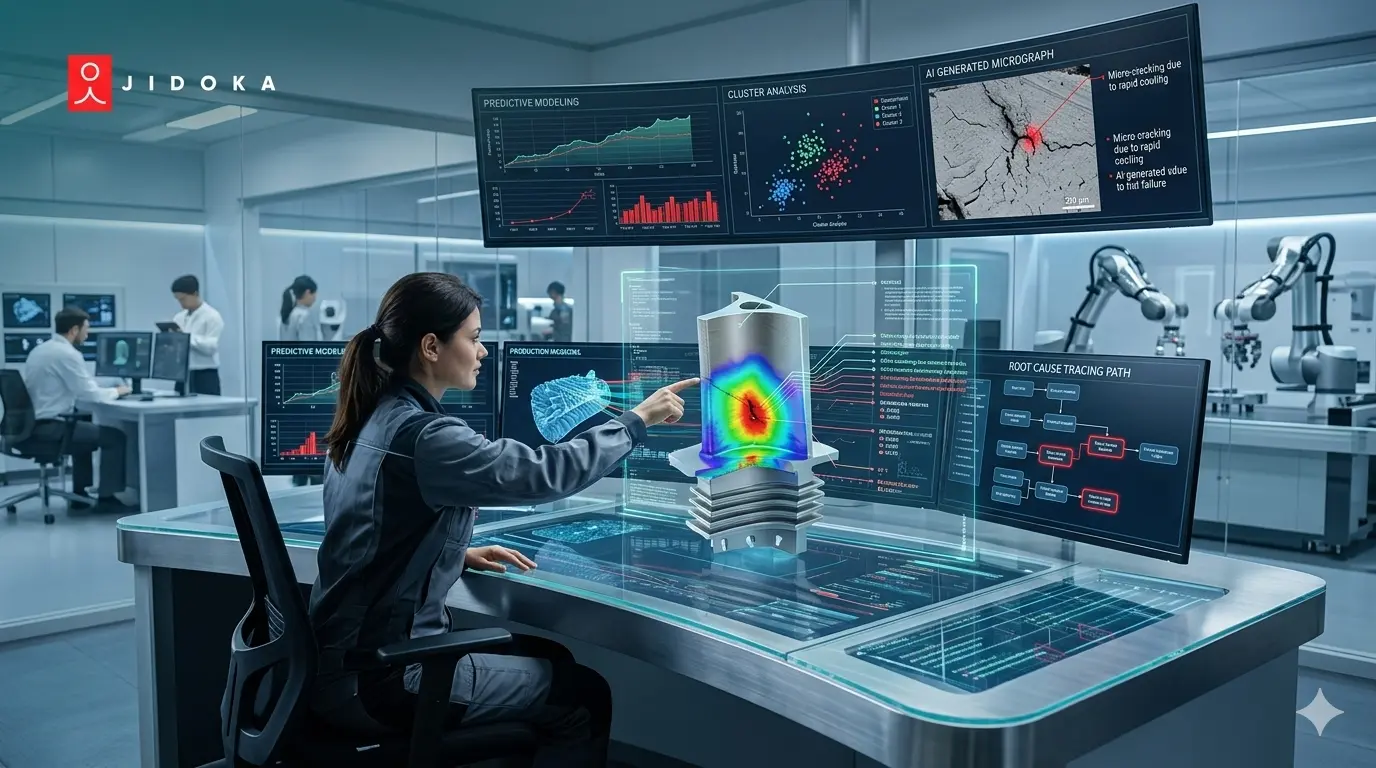
La vista humana se cansa, pero las soluciones de automatización industrial mantienen su precisión. Las cámaras de alta velocidad utilizan IA para escanear cada pieza en busca de pequeñas grietas. Estas soluciones de automatización industrial alcanzan niveles de precisión muy elevados.
Esta tecnología respalda su transformación digital al registrar cada error. Garantiza que solo los productos perfectos lleguen a sus clientes.
Estas tecnologías generan un impacto significativo en sus resultados financieros.
Principales beneficios de implementar soluciones de automatización industrial
Implementar soluciones de automatización en su planta cambia todo, desde su producción diaria hasta sus beneficios anuales. Deje de lado las suposiciones y comience a crecer basándose en datos reales.
Beneficio n.º 1. Mayor productividad y retorno de inversión (ROI)
Las soluciones modernas de automatización industrial mantienen sus líneas operativas las 24 horas del día, los 7 días de la semana, sin interrupciones. La mayoría de los propietarios experimentan un 12% de aumento inmediato en la producción. Gracias al mantenimiento predictivo, usted repara las máquinas antes de que lleguen a detenerse.
Esto mantiene su flujo de caja y le proporciona un rápido retorno de inversión. La incorporación de IA agéntica en 2026 ayudará a que sus soluciones de automatización industrial tomen decisiones inteligentes de forma autónoma.
Beneficio n.º 2. Mejor calidad y cero defectos
El uso de soluciones de fabricación automatizada elimina el error humano de la ecuación. La integración de la robótica garantiza que cada pieza sea idéntica a la anterior. Se desperdicia menos material y se mantiene a los clientes satisfechos con productos perfectos. Estas soluciones de automatización de fábricas detectan pequeñas imperfecciones que el ojo humano suele pasar por alto.
Beneficio n.º 3. Mayor seguridad y uso de recursos
Robots colaborativos se encargan de las tareas peligrosas para que su equipo permanezca seguro y saludable. Estos sistemas de automatización industrial también reducen el consumo de energía hasta en un 25 % gracias a la tecnología de fabricación inteligente. Usted construye un taller más ecológico y seguro mientras ahorra más dinero cada mes.
Estas ventajas son la razón por la que las empresas líderes eligen a los mejores socios para su crecimiento.
Las 5 marcas más reputadas de soluciones de automatización de fábricas
Encontrar el socio adecuado para sus soluciones de automatización de fábricas garantiza que su tecnología se mantenga actualizada y sus líneas de producción sean rápidas. Estas cinco marcas ofrecen los sistemas de automatización industrial más fiables para la fabricación moderna.
Resumen de las 5 mejores marcas de soluciones de automatización de fábricas
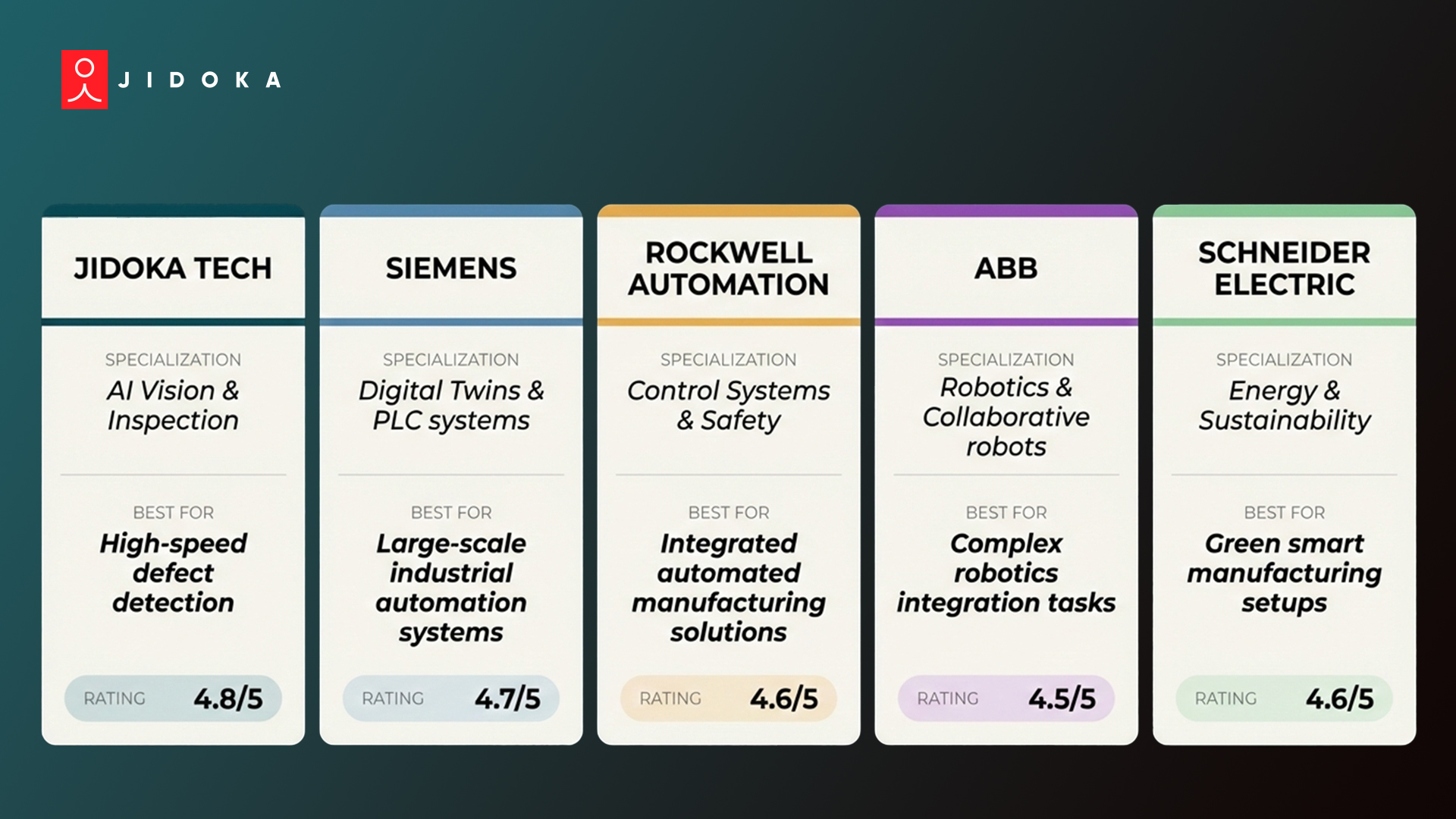
El uso de soluciones de automatización de fábricas de alta calidad le ayuda a escalar sin necesidad de contratar más personal.
1. Jidoka Tech
Descripción general: Jidoka Tech ofrece soluciones de automatización de fábricas que rinden bajo la presión de la producción real. Su equipo alinea cámaras, iluminación y sistemas PLC para que el sistema funcione en todos los turnos. Se especializan en soluciones de automatización de fábricas que gestionan más de 12 000 piezas por minuto y 300 millones de inspecciones diarias.
Características principales:
- KOMPASS: Una herramienta de soluciones de automatización industrial de alta precisión con más de un 99,8 % de precisión y 10 ms de revisión por fotograma.
- NAGARE: Realiza el seguimiento del 100 % de los pasos de ensamblaje para reducir el retrabajo hasta en un 35 % mediante tecnología de fabricación inteligente.
- Unidades de procesamiento local (Edge): Ejecuta todas las soluciones de automatización industrial de forma local para evitar retrasos en los datos.
Proveedor de soluciones: Sistemas de inspección por IA, integración de robótica, visión artificial, detección automatizada de defectos, configuraciones de fabricación inteligente.
Reseñas de clientes: 4.8/5 estrellas
2. Siemens
Descripción general: Siemens ofrece soluciones de automatización industrial que conectan el mundo digital con el físico. Su plataforma permite probar las soluciones de fabricación automatizada en un gemelo digital antes de implementarlas. Ofrecen una fiabilidad inigualable para plantas energéticas y automotrices a gran escala mediante soluciones de automatización de fábricas.
Características principales:
- TIA Portal para la ingeniería unificada de todos los sistemas de automatización industrial.
- Sistemas PLC avanzados para lógica de máquinas compleja y control de movimiento.
- Redes ciberseguras para un flujo de datos protegido durante todo su proceso de transformación digital.
Soluciones ofrecidas: PLC, HMI, tecnología SCADA, módulos de comunicación industrial y sistemas de accionamiento.
Reseñas de clientes: 4.7/5 estrellas
3. Rockwell Automation
Descripción general: Rockwell Automation destaca en la creación de sistemas de automatización industrial que priorizan la facilidad de uso y la seguridad. Su hardware es el estándar en muchos talleres modernos. Se enfocan en convertir los datos de las máquinas en información clara que ayuda a los gerentes a mejorar sus soluciones de fabricación automatizada día a día.
Características principales:
- Software FactoryTalk para una visibilidad total de los datos y conectividad con la Industria 4.0.
- Control de movimiento de alto rendimiento para ensamblaje de precisión e integración robótica.
- Controladores de seguridad integrados que protegen a los trabajadores al utilizar soluciones de automatización industrial.
Soluciones ofrecidas: Controladores programables, sensores IIoT, computadoras industriales, variadores de movimiento.
Opiniones de clientes: 4.6/5 estrellas
4. ABB
Descripción general: ABB es una opción líder en integración robótica y soluciones de automatización industrial de alta velocidad. Fabrican robots capaces de manipular desde chasis de automóviles pesados hasta placas de circuitos diminutas. Sus modelos de 2026 incorporan tecnología de fabricación inteligente, lo que permite a los robots visualizar y desplazarse en entornos complejos sin errores.
Características principales:
- Controladores OmniCore con 1000 funciones integradas para sistemas de automatización industrial.
- Robots colaborativos seguros para espacios compartidos con humanos en líneas de alta velocidad.
- Variadores de bajo consumo que reducen los costes energéticos en todas las soluciones de automatización industrial.
Soluciones ofrecidas: Robots industriales, robots colaborativos, variadores de motor, hardware PLC.
Opiniones de clientes: 4.5/5 estrellas
5. Schneider Electric
Descripción general: Schneider Electric se centra en soluciones sostenibles de automatización industrial a través de su plataforma EcoStruxure. Combinan la gestión energética con soluciones de automatización para ayudarle a construir una planta más ecológica. Sus herramientas facilitan la transformación digital y son muy fáciles de supervisar mediante aplicaciones móviles.
Características principales:
- Plataforma EcoStruxure para la supervisión de máquinas en la nube y datos de Industria 4.0.
- PLCs Modicon diseñados para entornos exigentes y soluciones de fabricación automatizada.
- Herramientas de mantenimiento predictivo que ayudan a los ingenieros a solucionar problemas antes de que ocurran.
Soluciones ofrecidas: Variadores de velocidad, sistemas PLC, paneles HMI, sistemas AGV.
Opiniones de clientes: 4.6/5 estrellas
Estas marcas sientan las bases de una fábrica preparada para el futuro que funciona con precisión.
Conclusión
Las soluciones de automatización industrial son hoy vitales para su crecimiento. Utilizar soluciones de fabricación automatizada le ayuda a mantener la ventaja competitiva al aumentar la velocidad y reducir los costes. La combinación de integración robótica e Industria 4.0 crea una planta que rinde más cada día. Para escalar rápidamente, elija al socio adecuado.
Si necesita un equipo que aporte un "toque humano" a la visión por IA, Jidoka Tech ofrece excelentes soluciones de automatización industrial. Para una escala global, Siemens proporciona sistemas de automatización industrial de eficacia probada. Ambos le ayudan a construir un futuro en el que su fábrica nunca deje de ganar.
Reserva tu demostración gratuita de Jidoka Tech y descubre cómo la visión por IA mejora tu calidad hoy mismo.
Preguntas frecuentes
1. ¿Cuáles son los principales tipos de soluciones de automatización industrial disponibles hoy en día?
Las soluciones de automatización industrial suelen dividirse en cuatro grupos: fija, programable, flexible e integrada. Los sistemas fijos gestionan piezas de gran volumen, mientras que los sistemas flexibles utilizan integración robótica y sistemas PLC para cambiar rápidamente entre productos. Estos sistemas de automatización industrial garantizan el cumplimiento de tus objetivos de fabricación inteligente.
2. ¿Qué retorno de inversión (ROI) puedo esperar de las soluciones de automatización industrial?
La mayoría de las plantas obtienen un retorno de sus sistemas de automatización industrial en un plazo de seis a nueve meses. Puedes esperar un aumento del 12% en la producción y un ROI del 240%. El uso de soluciones de fabricación automatizada, como el mantenimiento predictivo, garantiza que tus soluciones de automatización industrial sigan siendo rentables y eficientes.
3. ¿Cuál es la diferencia entre los PLC y los DCS?
Los sistemas PLC proporcionan un control rápido y específico de la máquina para tareas discretas. Un DCS gestiona toda la planta a través de múltiples secciones. Ambos son soluciones clave de automatización industrial que respaldan la transformación digital. Estos sistemas de automatización industrial conectan tus sensores IIoT a un centro tecnológico SCADA centralizado.
4. ¿Son los robots colaborativos más seguros que los robots tradicionales?
Sí. Estas soluciones de fabricación automatizada utilizan sensores para detenerse si entran en contacto con una persona. A diferencia de los robots grandes, estos robots colaborativos no necesitan jaulas pesadas. Esta integración robótica hace que las soluciones de automatización industrial sean más seguras para tu equipo, manteniendo al mismo tiempo altos estándares de productividad de la Industria 4.0.
5. ¿En qué se diferencian los AGV de los AMR en la automatización industrial?
Los sistemas AGV siguen líneas fijas, como cintas magnéticas. Los AMR utilizan sensores IIoT e IA para encontrar su propio camino de forma dinámica. Ambos son soluciones de automatización industrial populares para el movimiento de materiales. Mejoran los flujos de trabajo de fabricación inteligente al reemplazar el trabajo manual con soluciones de fabricación automatizada fiables.