L'industrie moderne souffre lorsque les problèmes restent cachés. Un défaut oublié peut entraîner des rebuts, des retards et une hausse des coûts en quelques minutes. Andon en matière de production allégée résout ce problème en donnant à votre chaîne de production un signal clair et immédiat en cas de problème. Il fonctionne comme un système de gestion visuelle qui permet aux opérateurs d'arrêter la ligne et de lancer des alertes dès qu'une anomalie apparaît.
Grâce à Andon en matière de production allégée, les équipes s'appuient sur la détection des problèmes en temps réel plutôt que sur des conjectures. Les lumières, les sons et les écrans permettent une action rapide, et non des corrections différées. Les usines utilisant Andon bénéficient d'une réduction des temps d'arrêt, d'une plus grande appropriation par les opérateurs et d'un contrôle qualité plus strict. C'est ainsi que le Lean Thinking reste pratique en usine.
Qu'est-ce que le système Andon ? Les bases
Dans le cadre de la fabrication allégée, Andon est une méthode de signalisation en atelier qui rend les problèmes visibles dès leur apparition. Cela élimine les retards et les conjectures dans les décisions de production quotidiennes.
Comment ça fonctionne :
- Feu vert signifie que la ligne fonctionne comme prévu
- Lumière jaune signale un avertissement qui nécessite l'attention du superviseur
- Feu rouge arrête la production pour une action immédiate
Pourquoi c'est important :
- Dans le domaine de la fabrication allégée, Andon fonctionne clairement système de gestion visuelle.
- Les opérateurs déclenchent des alertes sans crainte
- Les équipes détectent les problèmes en temps réel à la station précise.
- Les responsables détectent les problèmes instantanément sans avoir à se déplacer.
Cette configuration renforce la communication sur la chaîne de production, accélère les temps de réponse et empêche les problèmes de qualité de se répercuter en aval. L'étape suivante consiste à voir comment Andon est passé des câbles manuels aux systèmes numériques pilotés par les données.
Évolution des systèmes Andon
Andon n'est pas resté le même car les lignes de production se sont développées plus rapidement et plus automatisées. Ce qui n'était au départ qu'un simple signal visuel s'est transformé en un système connecté conçu pour la vitesse, la précision et les données.
1. Systèmes Andon traditionnels
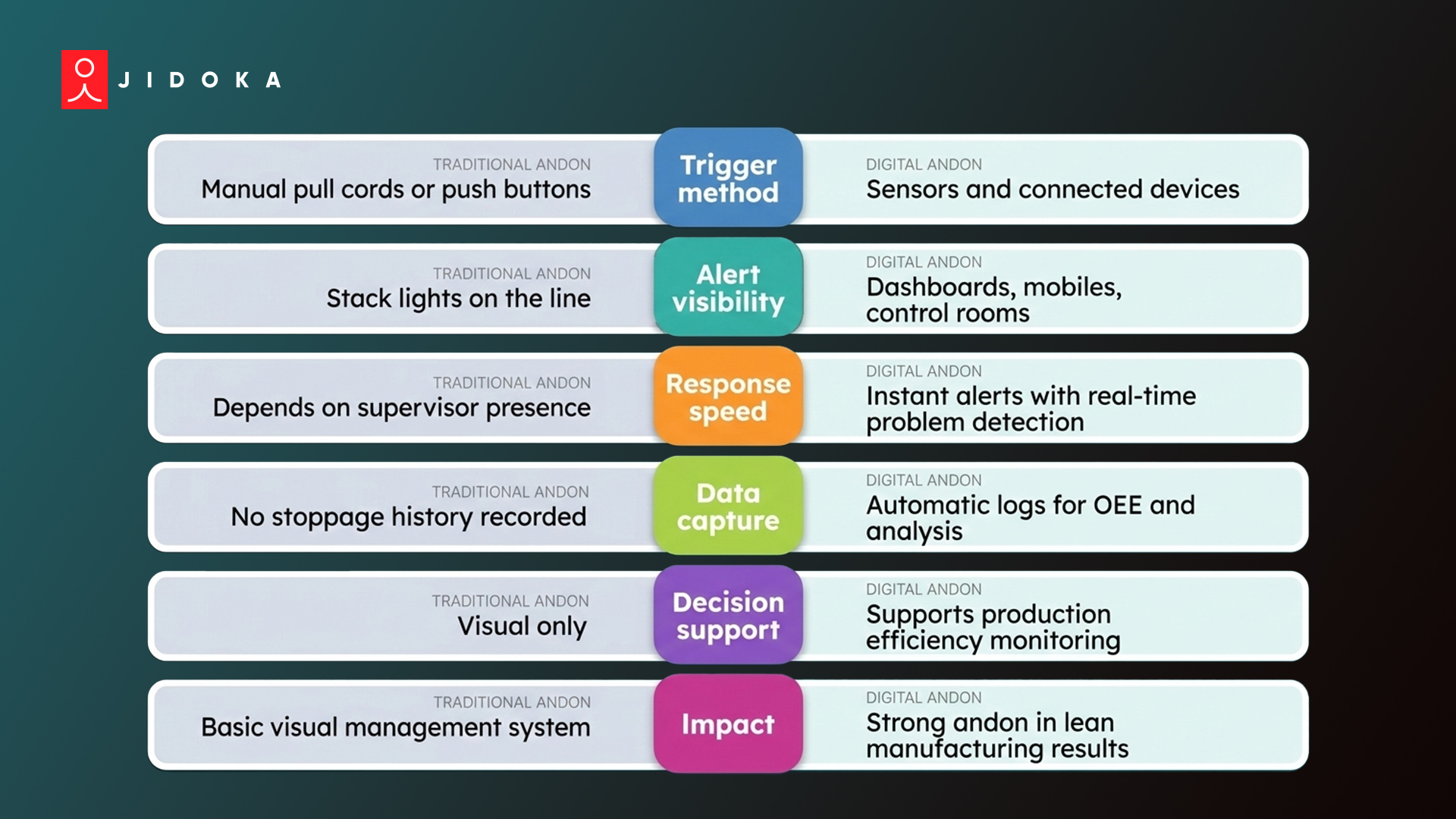
Au début de la fabrication allégée, l'andon reposait sur des cordons de traction manuels, des boutons et des lampes de cheminée. Les opérateurs ont émis un signal lorsqu'un défaut ou un problème de machine est apparu. Les superviseurs ont remarqué l'alerte et se sont rendus à pied à la station.
Cette approche permettait une visibilité de base grâce à un système de gestion visuelle, mais le temps de réponse variait et aucune donnée n'était enregistrée. Le suivi de l'efficacité globale des équipements (OEE) ou la réduction constante des temps d'arrêt dans la fabrication restaient difficiles.
2. Systèmes numériques Andon
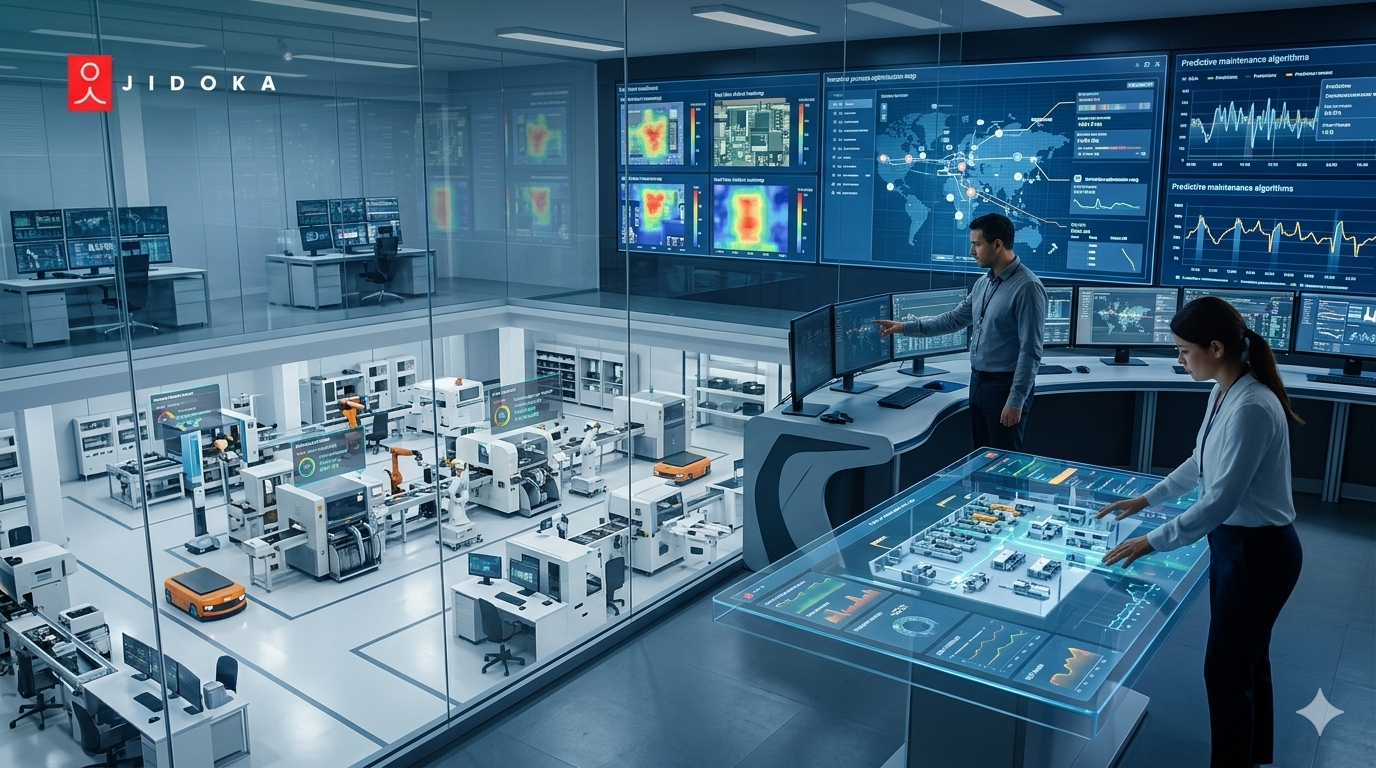
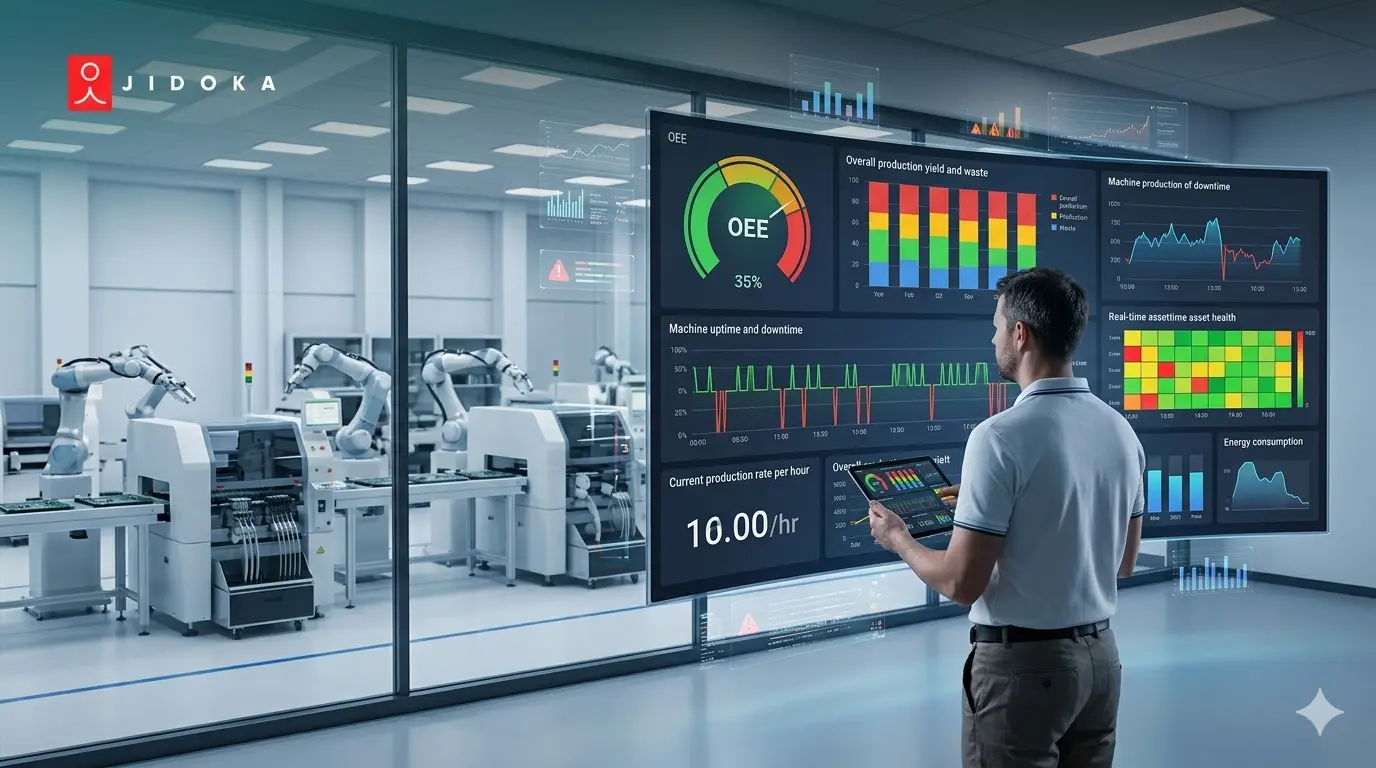
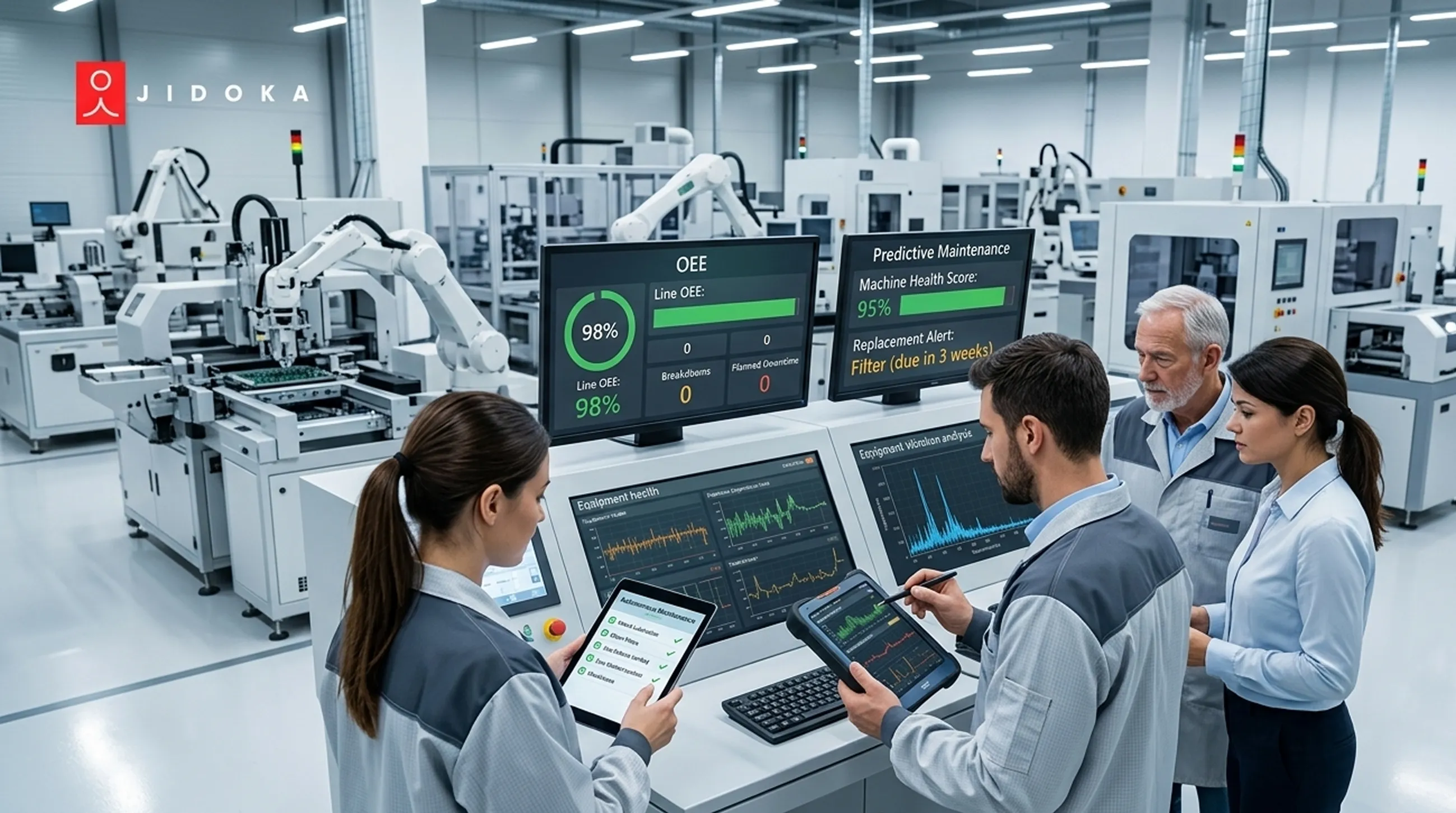
L'andon moderne en matière de production allégée utilise des capteurs, des appareils connectés et des tableaux de bord pour détection des problèmes en temps réel. Les alertes parviennent instantanément aux équipes, et chaque arrêt est enregistré avec l'heure et la raison.
Cela renforce la communication au sein de l'usine, facilite le suivi de l'efficacité de la production et donne aux équipes un aperçu clair des problèmes récurrents.
Voyons ensuite comment le processus Andon fonctionne réellement dans l'atelier.
Comment fonctionne le procédé Andon
L'andon du processus de fabrication allégée suit un flux clair. Chaque étape est axée sur la rapidité, la clarté et la responsabilité dans l'atelier.
Étape 1 : Détecter le problème
Un opérateur détecte un défaut, un son anormal ou une déviation du processus. Dans les configurations avancées, les capteurs gèrent automatiquement la détection des problèmes en temps réel. Cela permet une communication plus rapide sur la chaîne de production et empêche les défauts de se propager.
Étape 2 : Déclenchez le signal Andon
L'opérateur tire sur un cordon ou appuie sur un bouton. Dans les configurations numériques, le système déclenche lui-même des alertes. Les voyants deviennent rouges, les alarmes retentissent et les tableaux de bord sont mis à jour. Cela active instantanément le système de gestion visuelle.
Étape 3 : Réponse immédiate
Les superviseurs, les équipes de maintenance ou de qualité se rendent directement à la station concernée. Cette réaction rapide réduit les temps d'inactivité et contribue à réduire les temps d'arrêt dans la fabrication sans attendre une escalade.
Étape 4 : Corriger et enregistrer
Les équipes corrigent le problème, redémarrent la production et en enregistrent la cause. Ces données alimentent l'efficacité globale des équipements (OEE), renforcent le suivi de l'efficacité de la production et favorisent l'amélioration à long terme.
Ce flux structuré explique pourquoi Andon reste efficace sous une pression de production réelle.
Feuille de route de mise en œuvre pour les systèmes Andon
Le déploiement de l'andon dans le cadre de la production allégée fonctionne mieux avec une approche par étapes. Chaque phase renforce la confiance, la clarté et la rapidité dans l'atelier.
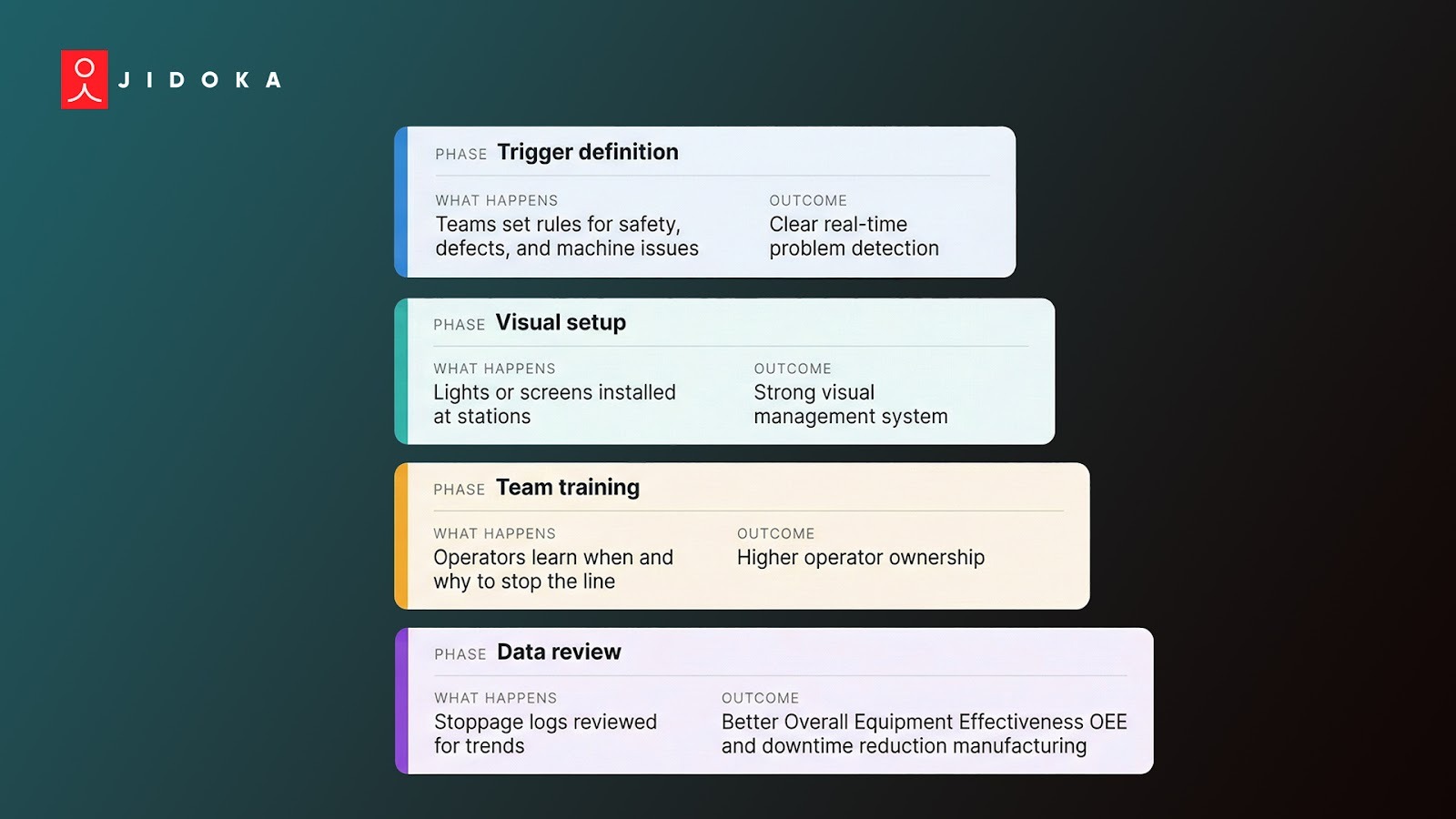
Phase 1 : définir des déclencheurs clairs
Définissez des règles simples pour savoir quand activer Andon. Concentrez-vous sur les risques de sécurité, les défauts de qualité, les sons anormaux des machines ou les retards de processus. Des critères clairs éliminent les hésitations et renforcent l'autonomie des opérateurs grâce à la détection des problèmes en temps réel.
Phase 2 : Installation des signaux visuels
Déployez des lampes ou des écrans à chaque station. Cela permet de créer un système de gestion visuelle fiable que tout le monde peut voir. Les tableaux de bord numériques améliorent la communication en usine sans créer de confusion.
Phase 3 : Former l'équipe
Expliquez pourquoi l'arrêt de la ligne protège le rendement et la qualité. Soulignez le fait que l'utilisation de l'andon dans le cadre de la fabrication allégée permet d'apporter des solutions plus rapidement, et non de blâmer Cette étape façonne une solide culture d'amélioration continue.
Phase 4 : Utilisation des données
Passez en revue les journaux d'arrêt chaque semaine. Suivez les tendances liées à l'efficacité globale des équipements (OEE) et à la réduction des temps d'arrêt dans la fabrication. Les données transforment les alertes quotidiennes en correctifs durables des processus.
Cette feuille de route permet à Andon de rester pratique dès le premier jour.
Comment la technologie Jidoka améliore Andon
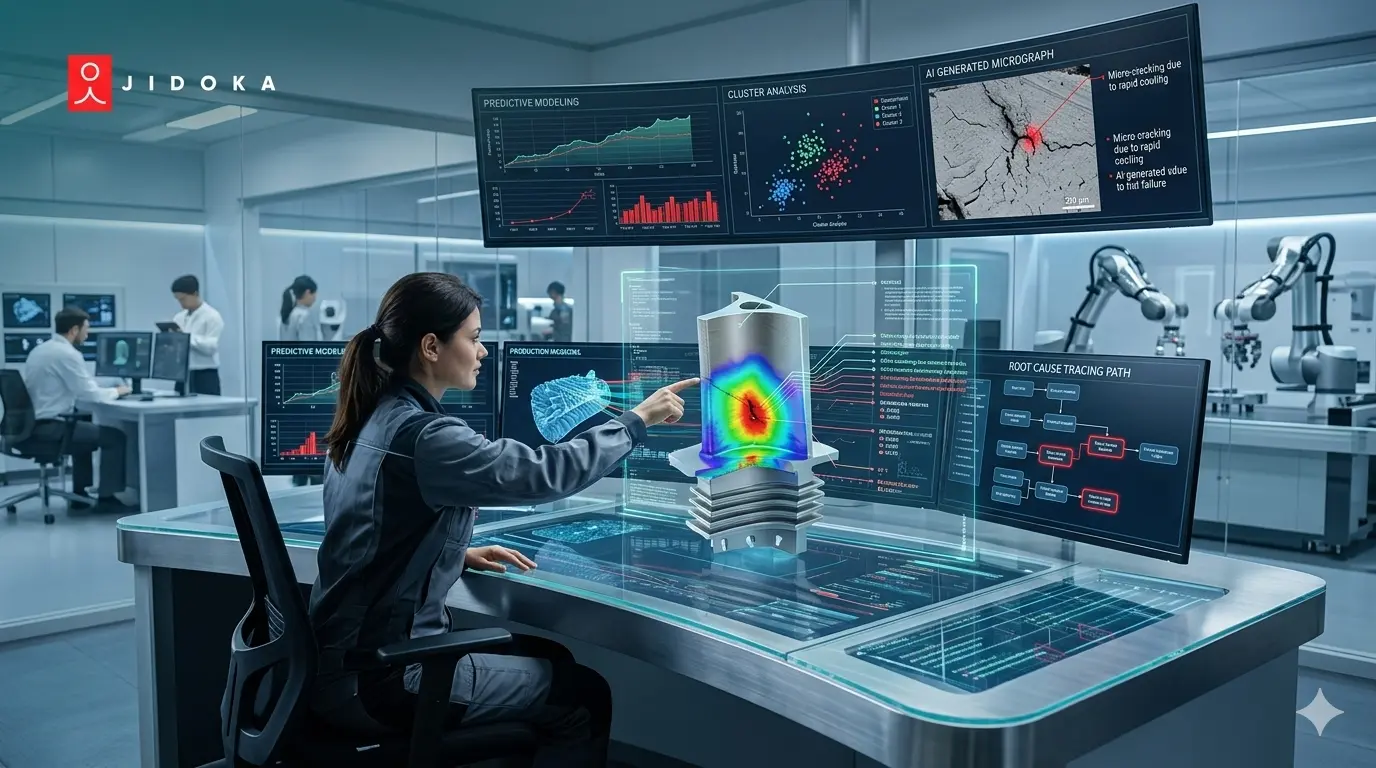
En matière de production allégée, Andon donne de meilleurs résultats lorsque les problèmes sont signalés sans délai ou lorsqu'une dépendance humaine est constatée. Technologie Jidoka renforce cela en transformant l'inspection en un déclencheur automatique. Les caméras, l'éclairage, la synchronisation PLC et les unités périphériques fonctionnent ensemble, de sorte que des problèmes apparaissent à chaque quart de travail.
- BOUSSOLE détecte les défauts à Plus de 99,8 % de précision en moins de 10 ms, même sur des pièces réfléchissantes ou en mouvement rapide.
- NAGARE suit chaque étape de l'assemblage et signale les actions manquantes en temps réel. Lorsqu'un problème apparaît, le système déclenche des alertes instantanément via le système de gestion visuelle.
Cette configuration permet une détection des problèmes en temps réel, une communication plus étroite sur la chaîne de production et un contrôle qualité renforcé sans ralentir la chaîne.
Connectez-vous à Jidoka Tech pour découvrir comment l'automatisation Andon permet une réponse plus rapide et un contrôle qualité plus strict sur votre chaîne de production.
Conclusion
Dans le cadre de la fabrication allégée, Andon donne à votre chaîne de production une voix claire. Il révèle les problèmes dès leur apparition et pousse les équipes à agir rapidement. Cette approche remplace les retards, les conjectures et la lutte répétée contre les incendies par de la visibilité et de la discipline.
Lorsque les alertes sont directement liées aux données, les équipes améliorent l'efficacité globale des équipements (OEE), réduisent les temps d'arrêt et protègent la qualité à grande échelle.
Technologie Jidoka renforce ce modèle en automatisant la détection grâce à des systèmes de vision et à des alertes connectées. Au lieu d'attendre une réaction humaine, les problèmes déclenchent des signaux instantanément.
Connectez-vous à Jidoka Tech pour découvrir comment l'automatisation d'Andon aide votre équipe à détecter les problèmes à un stade précoce et à maintenir la production sur la bonne voie.
FAQs
1. Que signifie « andon » en japonais ?
Andon signifie « lanterne » ou « lumière » en japonais. Dans le domaine de la fabrication allégée, il s'agit d'un système de gestion visuelle qui utilise des lumières ou des écrans pour signaler les problèmes et favoriser une communication rapide sur la chaîne de production dans l'atelier.
2. Comment Andon améliore-t-il l'OEE ?
Dans le domaine de la fabrication allégée, Andon améliore l'efficacité globale des équipements (OEE) en réduisant les temps de réponse. La détection plus rapide des problèmes en temps réel réduit les temps d'inactivité, limite la propagation des défauts et contribue à une meilleure réduction des temps d'arrêt de fabrication grâce à des solutions plus rapides.
3. Andon peut-il être automatisé ?
Oui L'andon numérique utilisé dans la fabrication allégée utilise des capteurs, des caméras et des alertes automatisées. Cela permet une détection des problèmes en temps réel, des journaux d'arrêt précis et une meilleure surveillance de l'efficacité de la production sans se fier uniquement à des signaux manuels.
4. Est-ce qu'Andon se limite à la construction automobile ?
Non Dans le domaine de la fabrication allégée, l'andon est largement utilisé dans les domaines de l'électronique, de la pharmacie, de l'alimentation et de l'emballage. Tout secteur nécessitant des alertes rapides, une communication claire en usine et une qualité constante peut bénéficier d'un système Andon.