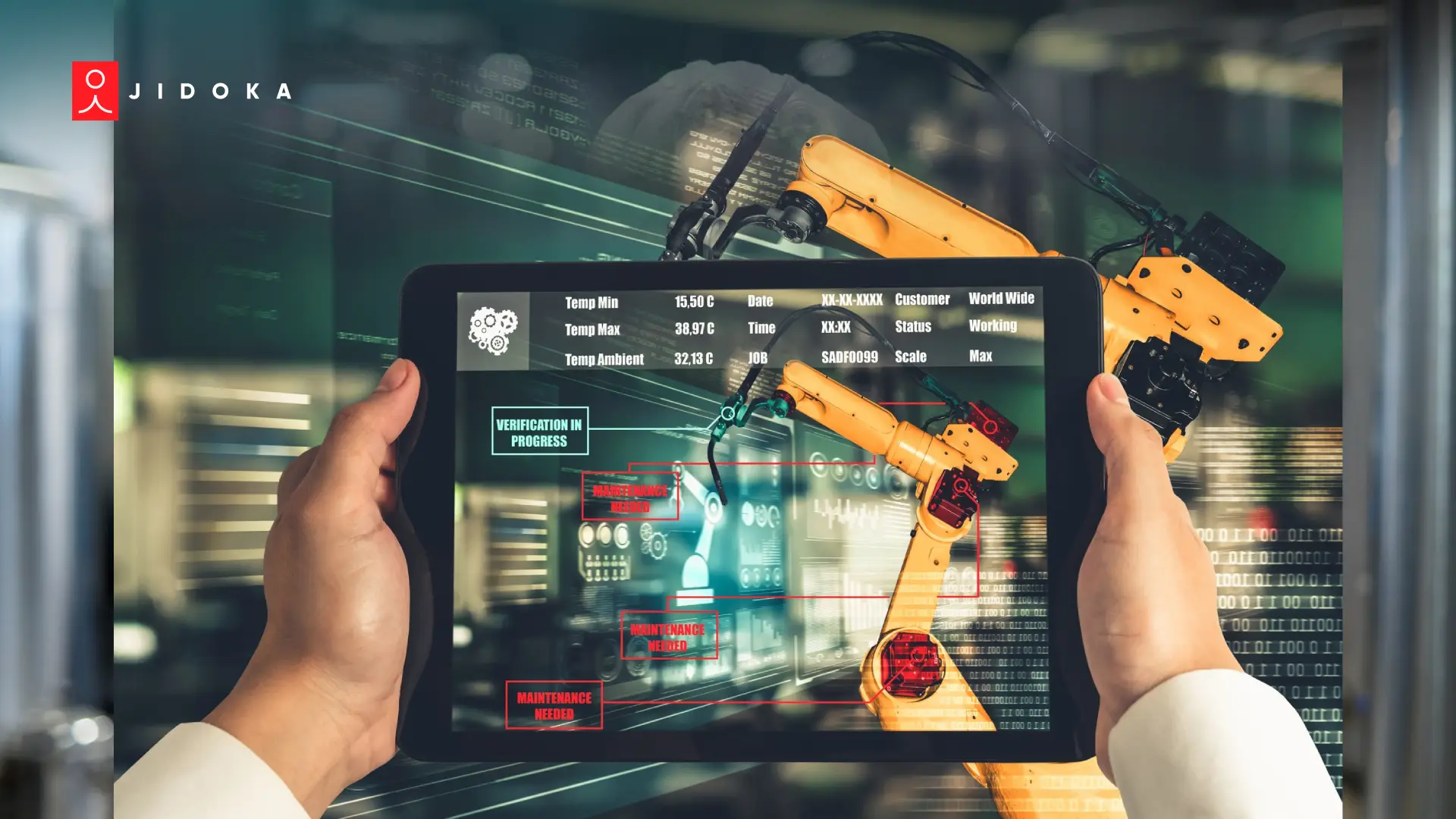
La plupart des usines perdent de la marge, non pas sur la ligne de production, mais dans l'écart entre ce que l'inspection promet et ce qu'elle détecte réellement. Dans des conditions normales, un inspecteur humain formé manque environ 1 défaut sur 5. À la troisième équipe, ce chiffre augmente encore.
Chaque défaut qui échappe à un point de contrôle entraîne le coût de production total de la pièce vers l'étape suivante, où sa correction est plus onéreuse. L'inspection en ligne modifie ce calcul en avançant le point de détection, et l'IA le transforme à nouveau en comblant l'écart entre ce qui est inspecté et ce qui est réellement produit.
Ce guide détaille l'ensemble de la chaîne d'inspection, du premier article au contrôle de patrouille jusqu'à l'IA intégrée, afin que les ingénieurs d'usine comprennent le rôle de chaque point de contrôle et le coût lié à son omission.
Les quatre types d'inspection de production que tout ingénieur d'usine doit connaître
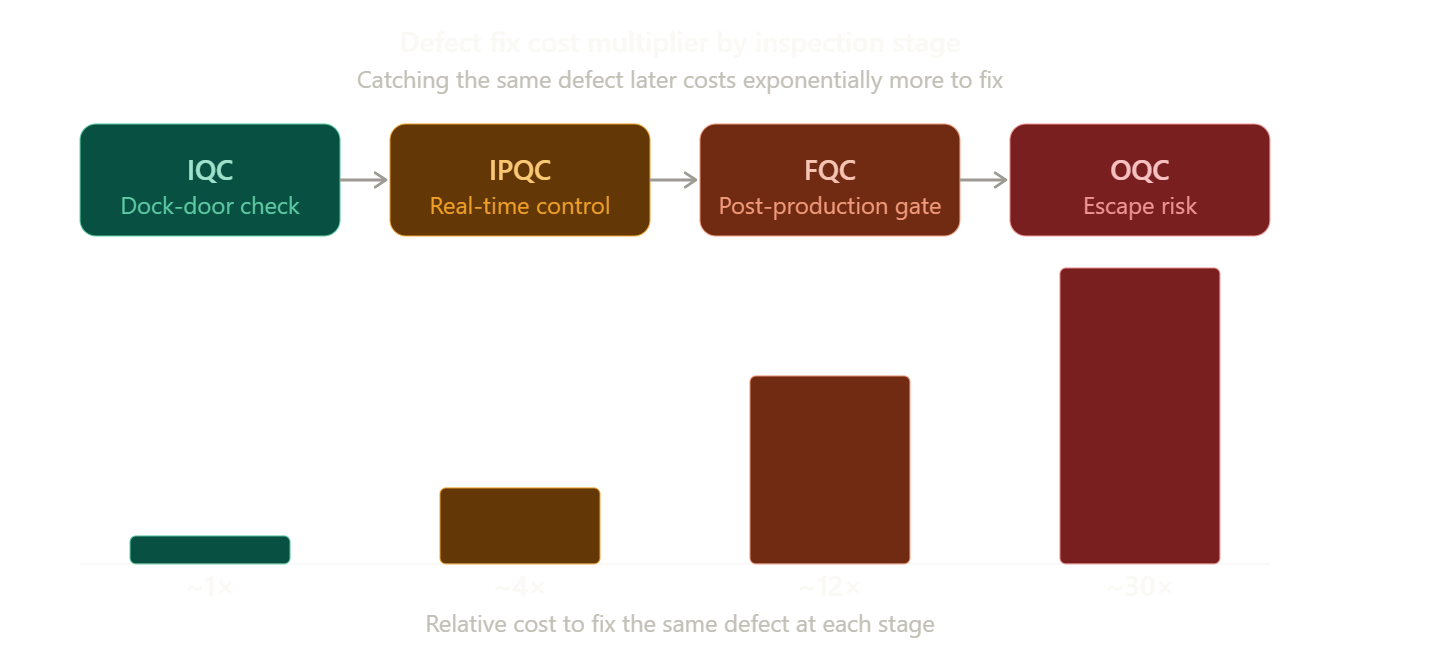
Les quatre types d'inspection (IQC, IPQC, FQC et OQC) forment une architecture de qualité séquentielle. Chaque étape détecte une catégorie de défaillance différente. Sauter l'une d'entre elles déplace le coût de correction des défauts vers l'aval, où il se multiplie.
La plupart des programmes qualité traitent ces quatre étapes comme une simple liste de contrôle. Une approche plus intelligente consiste à les considérer comme un multiplicateur de coût des défauts. Un défaut détecté à l'IQC ne coûte presque rien à corriger. Le même défaut à l'OQC supporte le coût de production total de la pièce, en plus des risques liés au client.
IQC : Arrêter les matériaux non conformes avant leur entrée sur la ligne
Le contrôle qualité à la réception est le premier rempart, et il est bien moins coûteux que tous ceux qui suivent. Le contrôle qualité entrant vérifie les matières premières, les composants et les pièces achetées avant qu'ils n'entrent en production.
Ce que couvre l'IQC :
- Contrôles visuels de l'état pour détecter dommages, corrosion ou contamination
- Vérification dimensionnelle par rapport aux plans techniques
- Échantillonnage AQL pour l'acceptation ou le rejet des lots
- Examen des certificats de matériaux pour la traçabilité
La logique économique est implacable. Si une tôle arrive avec 0,1 mm de trop par rapport aux spécifications et que l'IQC l'accepte, chaque pièce de précision produite à partir de ce stock risque d'être mise au rebut lors de l'inspection finale. Le coût du poste de retouche est toujours plus élevé que celui du contrôle à quai.
IPQC : La couche de contrôle qui s'exécute pendant que la ligne tourne
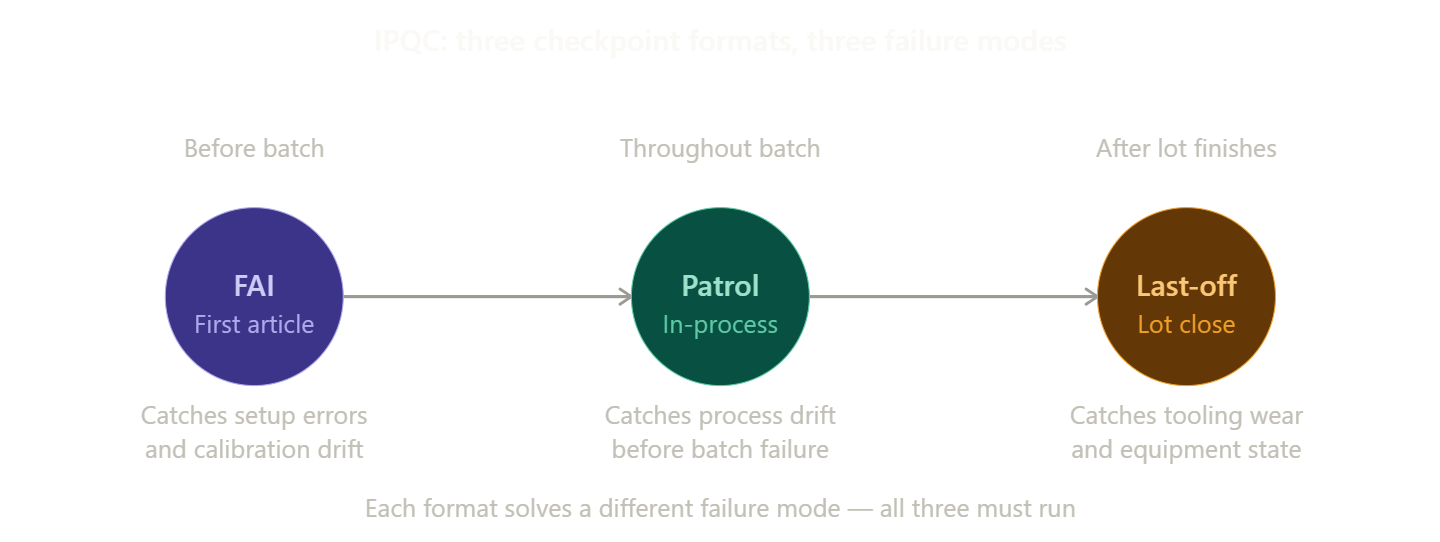
Le contrôle qualité en cours de processus (IPQC) est l'étape où la plupart des défauts de production sont soit détectés précocement, soit transformés en problèmes affectant tout un lot. Il se décline sous trois formats distincts : l'inspection initiale, l'inspection de patrouille et l'inspection finale.
Chaque format cible un mode de défaillance différent :
- L'inspection initiale détecte les erreurs de configuration avant le lancement du lot
- L'inspection de patrouille détecte les dérives de processus avant qu'elles ne deviennent un problème de lot
- L'inspection de fin de série détecte la dégradation de l'outillage avant qu'elle ne contamine le lot suivant
L'objectif de tout programme de contrôle qualité en cours de production (IPQC) n'est pas d'inspecter les produits après leur fabrication, mais de surveiller et d'ajuster le processus en temps réel afin d'éviter la formation de lots non conformes.
FQC et OQC : quand les défauts non détectés coûtent cher
Le contrôle qualité final (FQC) consiste en une évaluation complète du produit fini par rapport aux plans techniques, aux spécifications du client et aux normes applicables. Il constitue le dernier rempart interne avant le contrôle qualité sortant (OQC).
Au moment où le FQC est effectué, la pièce a déjà consommé toute la main-d'œuvre, le temps d'outillage et les matériaux nécessaires à sa production. Détecter un défaut à ce stade ne signifie pas seulement devoir retravailler la pièce : cela signifie que tout l'investissement consenti pour sa fabrication risque d'être perdu. L'OQC est encore plus critique : un défaut à ce stade expose l'entreprise à une livraison non conforme au client, à une réclamation sous garantie ou à une défaillance sur le terrain.
Les défauts les plus coûteux dans une usine sont ceux qui passent au travers de l'IPQC pour atteindre le FQC ou l'OQC. Il s'agit d'une lacune de couverture, et non d'un défaut de conception de l'IPQC : intervalles trop espacés, échantillonnage trop faible ou critères de détection trop imprécis.
Points de contrôle de l'inspection en ligne : quoi mesurer et quand
Une inspection en ligne efficace associe trois points de contrôle à trois modes de défaillance : les erreurs de configuration, les dérives de processus et la dégradation des équipements. Si l'un d'eux est négligé, les deux autres doivent compenser un problème pour lequel ils n'ont pas été conçus.
Les points de contrôle en eux-mêmes ne sont pas nouveaux. Ce qui change avec l'IA, c'est le taux de couverture à chaque point, le seuil de détection et le traitement des données après l'enregistrement d'un défaut. Lorsqu'elle est effectuée manuellement, l'inspection en ligne repose sur l'échantillonnage. Avec l'IA, elle permet une couverture à 100 % des pièces sur les trois types de points de contrôle.
Premier article : pourquoi la première pièce est déterminante
Inspection du premier article (FAI) vérifie que le processus de fabrication est capable de produire systématiquement des pièces conformes à toutes les exigences avant le lancement de la production en série.
Ce que la FAI détecte et que la plupart des ingénieurs sous-estiment :
- Mauvaise configuration de l'outillage héritée de la série de production précédente
- Matériau incorrect chargé par l'opérateur, fréquent sur les lignes multi-matériaux
- Étalonnage de la machine ayant dérivé depuis le dernier cycle de maintenance
- Usure des montages qui, bien que située dans les tolérances individuelles, s'accumule par rapport à la valeur nominale
La règle est simple : aucun lot ne commence sans un premier article validé. La pression pour sauter cette étape lors de commandes urgentes est précisément le moment où elle est la plus cruciale. Les commandes urgentes prises avec des raccourcis finissent par révéler ces raccourcis lors du FQC.
Inspection de patrouille : la logique d'intervalle qui stoppe la dérive avant qu'elle ne devienne un lot
L'inspection par patrouille intervient après la validation du premier article et se poursuit tout au long de la production. Elle utilise une méthode rotative pour vérifier régulièrement si les paramètres de processus, les changements d'opérations et les normes sont conformes aux exigences, tout en enregistrant l'état de détection et en assurant le contrôle et la supervision.
L'intervalle de patrouille est le point où la plupart des programmes d'inspection en ligne prennent leurs pires décisions. Fixer un cycle de patrouille de 2 heures sur une ligne produisant 12 000 pièces par heure relève de la paperasse, pas de la gestion des risques. L'intervalle doit être déterminé par le taux de défaillance du processus et le coût d'un lot non conforme, et non par ce qui est pratique pour l'inspecteur.
Paramètres clés à surveiller sur la plupart des lignes de production :
- Contrôles dimensionnels sur les caractéristiques critiques, et non sur chaque caractéristique
- État de surface et critères d'acceptation esthétique
- Valeurs de couple ou relevés de force d'assemblage
- Qualité des soudures par contrôles visuels et au gabarit
- Conformité de la séquence d'assemblage, en particulier sur les lignes multi-variantes
Inspection de fin de lot : le contrôle de transfert dont personne ne parle
L'inspection de fin de lot s'applique lorsque la qualité du produit dépend des moules et de l'équipement. La dernière pièce ou les trois dernières pièces sont inspectées à la fin du lot, afin de préparer l'état technique correct pour le lot de production suivant.
Négliger cette étape crée des défauts invisibles. L'usure des moules ou la dégradation de l'équipement liée au lot actuel se répercute silencieusement sur le suivant. Le premier article de la série suivante passe les contrôles car les dommages sont progressifs et non catastrophiques. Le problème n'apparaît qu'au bout de trois heures, lorsque le processus a suffisamment dérivé pour produire des rebuts.
L'inspection de fin de lot est simple à réaliser mais rarement documentée correctement. Cette lacune est l'un des modes de défaillance les plus courants dans les programmes d'inspection en ligne des usines à haut volume.
Comment l'IA en ligne modifie l'économie de l'inspection en cours de production
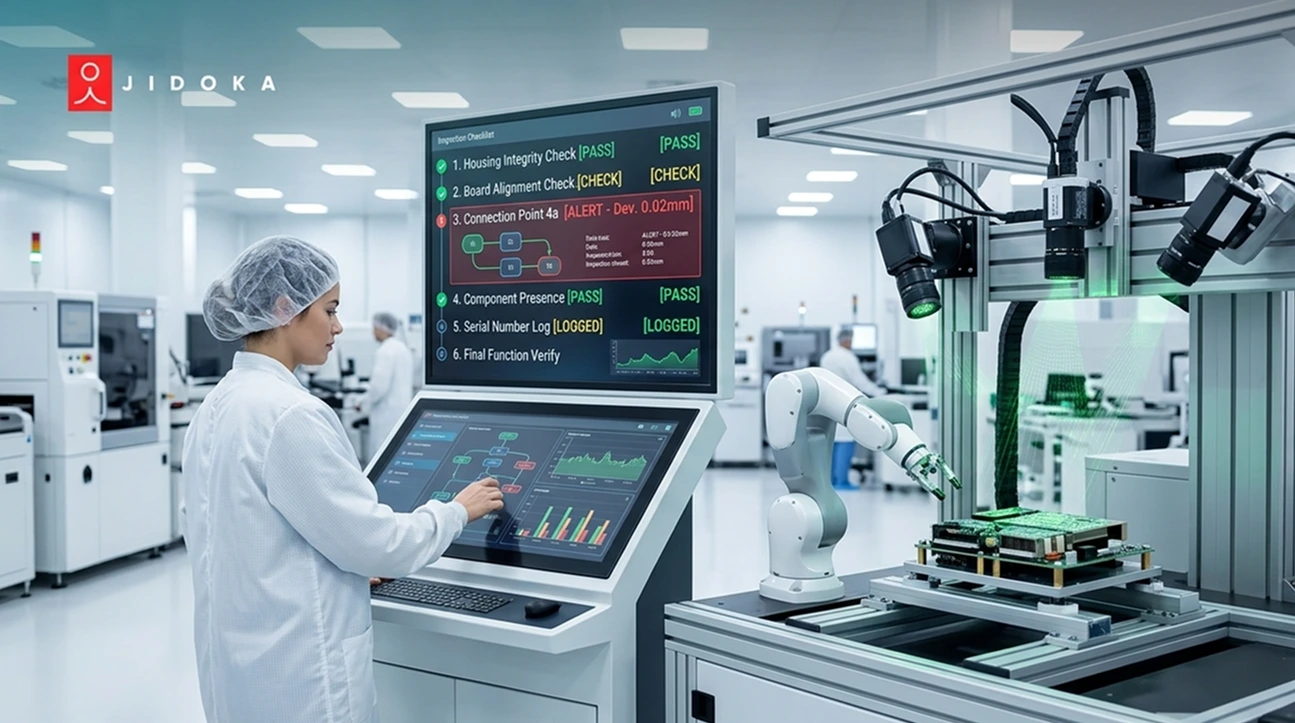
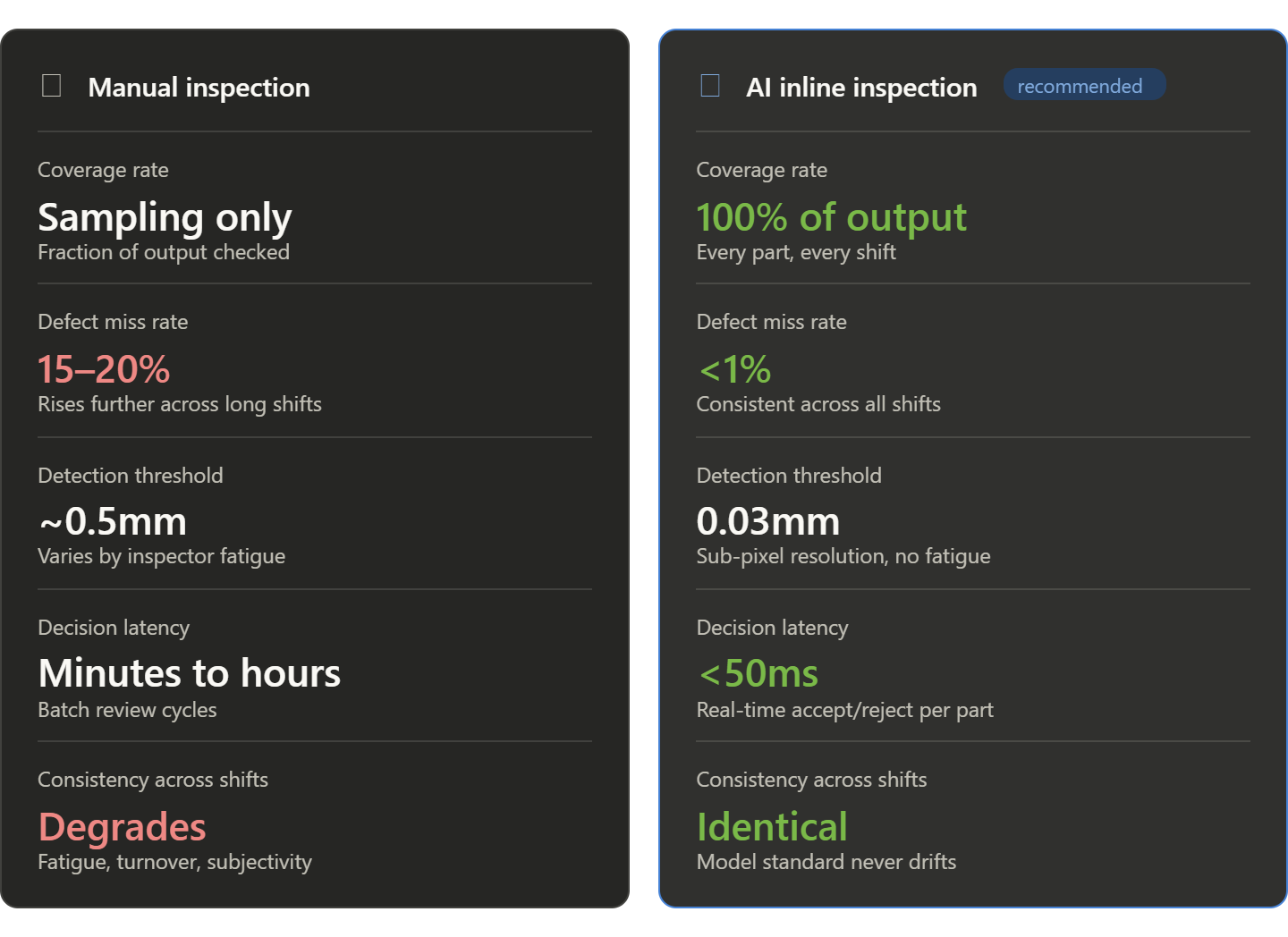
L'inspection de production en ligne assistée par IA élimine les deux limites fondamentales du contrôle qualité manuel (IPQC) : le taux de couverture et la cohérence de la détection. Un inspecteur manuel procède par échantillonnage. Un système d'IA inspecte chaque pièce, à chaque équipe, sans baisse de performance.
L'argument économique n'est pas abstrait. Il s'agit d'une comparaison directe entre ce que chaque approche laisse passer et le coût de ces erreurs en aval.
Ce que coûte réellement l'inspection manuelle par équipe
L'inspection manuelle en ligne est trompeuse sur le papier. Le taux horaire semble gérable. Le taux d'erreur, lui, n'apparaît pas comme une ligne budgétaire.
Dans des conditions normales, les inspecteurs qualifiés laissent passer 15 à 20 % des défauts réels. Ce taux augmente lors des longues périodes de travail et sur les lignes à haute vitesse où l'échantillonnage ne couvre qu'une fraction de la production. Chaque défaut non détecté entraîne le coût de production total de la pièce à l'étape suivante, auquel s'ajoute le coût en aval s'il parvient jusqu'au client.
Le coût réel de l'inspection manuelle en ligne ne réside pas dans le salaire de l'inspecteur. Il réside dans le coût cumulé des défauts qui passent inaperçus.
Ce que l'inspection de production par IA apporte là où l'humain échoue
Les systèmes d'inspection par IA traitent les images à des vitesses inaccessibles à l'inspection manuelle, avec des seuils de détection qu'aucun inspecteur ne peut maintenir sur toute une équipe. Les gains économiques ne sont pas marginaux. Ils sont structurels.
Ce que l'IA apporte au niveau du point de contrôle :
- Couverture à 100 % : Chaque pièce est inspectée, et non un simple échantillon. Aucune fatigue en fin de poste et aucune lacune liée à la rotation du personnel.
- Décisions en moins de 50 ms : Décisions d'acceptation ou de rejet en temps réel, synchronisées avec le convoyeur.
- Critères de détection constants : Le modèle applique la même norme à la première pièce comme à la millionième. L'inspection manuelle en ligne varie d'une équipe à l'autre.
- Résolution des défauts jusqu'à 0,03 mm : Les anomalies de surface invisibles à la vitesse d'inspection manuelle sont signalées et enregistrées avec leurs données de localisation.
Le passage de l'échantillonnage à une couverture à 100 % modifie à lui seul l'architecture qualité de l'inspection de production en ligne. Les intervalles de contrôle avaient du sens lorsque les inspecteurs humains étaient la seule option. Avec l'IA sur la ligne, le concept de contrôle change : le système ne tourne pas, il fonctionne en continu.
Seuils de retour sur investissement : quand l'inspection de production par IA est rentable et quand elle ne l'est pas
Le retour sur investissement de l'inspection par IA est réel, mais pas universel. Les usines dont le volume quotidien est inférieur à un certain seuil obtiennent de meilleurs résultats en privilégiant d'abord un contrôle qualité manuel structuré.
Où l'inspection par IA est rentable :
- Production à haut volume avec des tolérances strictes et une taxonomie de défauts définissable.
- Lignes où les coûts de non-qualité sont élevés : retours clients, réclamations sous garantie ou risques réglementaires.
- Opérations fonctionnant en plusieurs équipes où la constance des inspecteurs diminue.
Quand le contrôle qualité manuel reste la solution adaptée :
- Production à faible volume, haute complexité ou forte variabilité, où les données d'entraînement sont limitées
- Assemblages sur mesure avec des changements de conception fréquents nécessitant un réentraînement constant des modèles
- Environnements réglementés où l'inspecteur humain qualifié fait partie intégrante du cadre de conformité
La plupart des fabricants exploitant des lignes à volume moyen ou élevé constatent un retour sur investissement en 6 à 12 mois grâce à la réduction des rebuts, à la diminution des retours clients et à la baisse des effectifs dédiés à l'inspection manuelle.
Où vont les données d'inspection en ligne : boucler la boucle avec le MSP et la maintenance prédictive
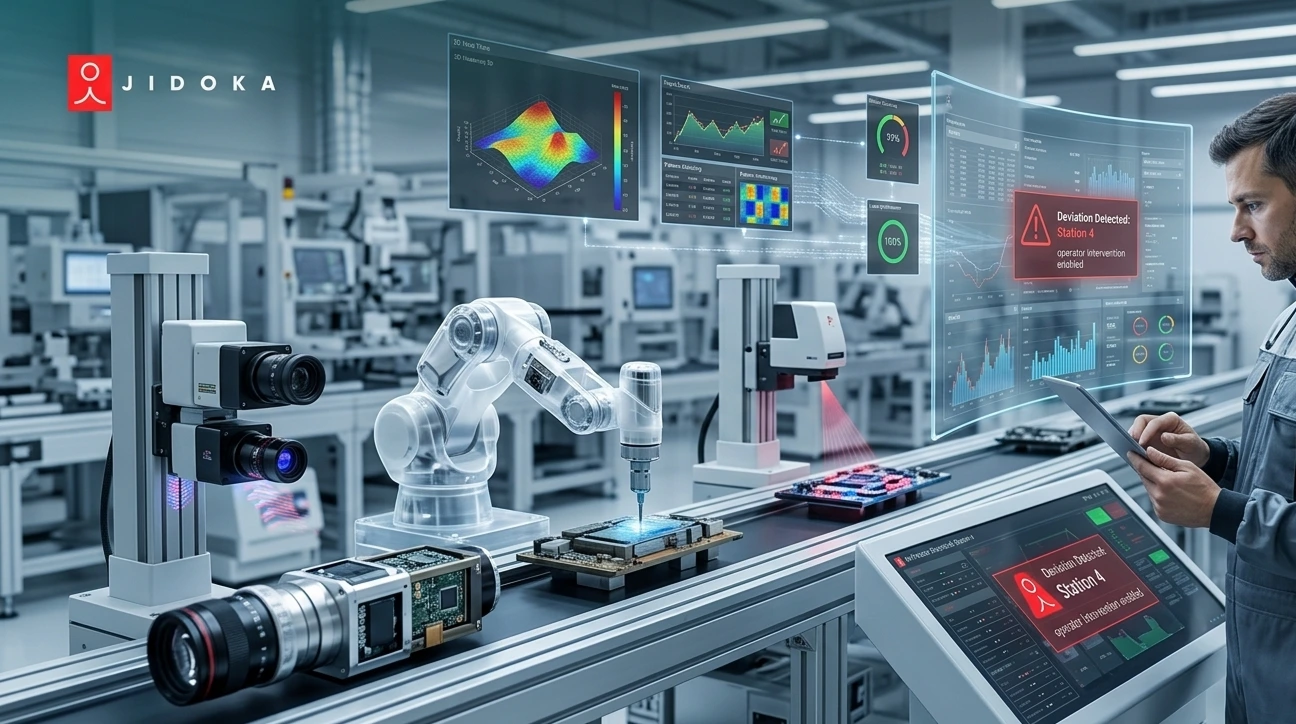
L'inspection de production en ligne connectée à l'IA ne se contente pas d'enregistrer les défauts. Elle transforme chaque événement de défaut en un signal de processus, alimentant directement les graphiques de maîtrise statistique des processus (MSP) et le suivi de l'état des équipements avec une latence mesurée en secondes, et non en heures.
C'est ce qui distingue l'inspection en ligne par IA de l'inspection optique automatisée (AOI) telle qu'elle existait il y a dix ans. Les anciens systèmes signalaient les défauts. Les nouveaux systèmes les expliquent.
Du résultat d'inspection à la correction du processus en temps réel
L'inspection traditionnelle dans l'industrie enregistre un défaut après coup. L'inspection de production en ligne connectée à l'IA déclenche une correction avant que la pièce suivante ne soit défectueuse.
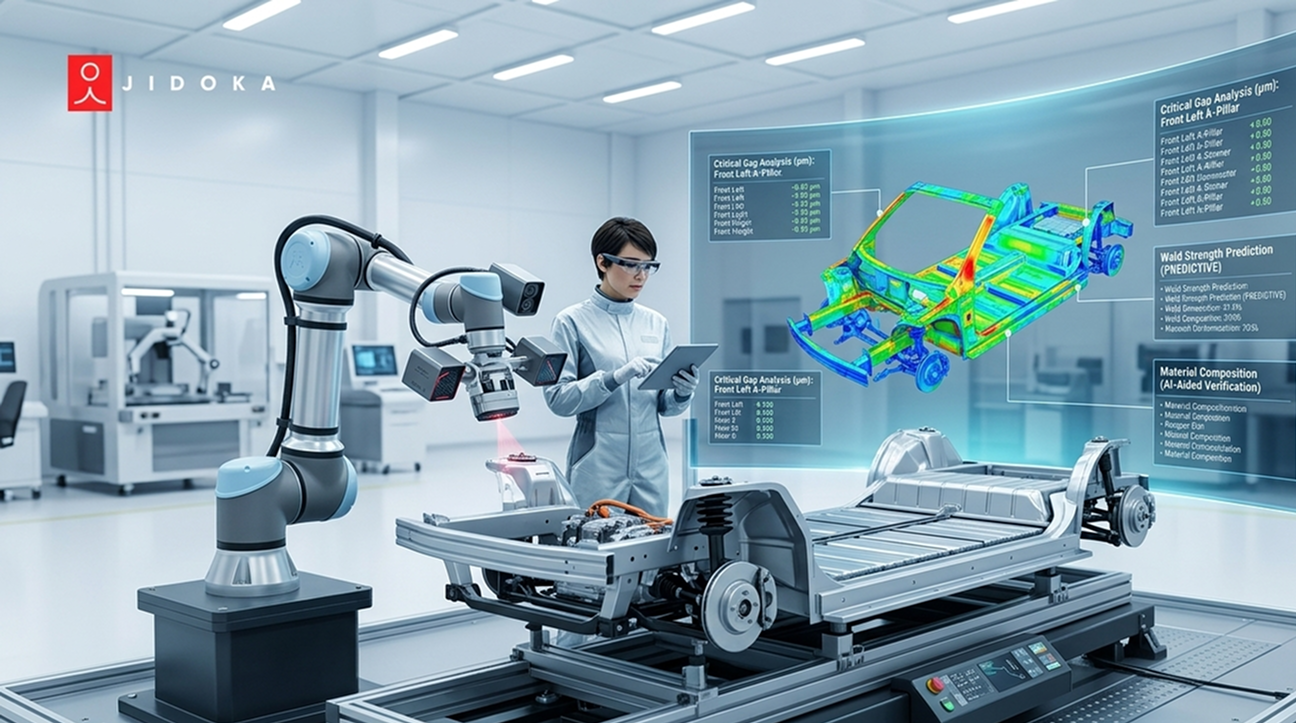
Concrètement : un système de vision par IA détectant une dérive dimensionnelle sur des panneaux de carrosserie emboutis corrèle le motif avec les paramètres de la presse et déclenche une alerte de maintenance avant qu'un nombre important de pièces défectueuses ne soit produit. L'inspection manuelle découvre le même problème après qu'un lot complet a été terminé et que la presse a fonctionné hors tolérance pendant des heures.
L'intégration du MSP en temps réel signifie que le signal d'inspection en ligne alimente directement les cartes de contrôle. Le délai entre la détection et l'action corrective passe de cycles de revue en fin de poste à quelques secondes.
Lier les données de défauts en ligne à l'état des équipements
C'est la capacité la moins exploitée dans la plupart des usines. L'inspection en ligne par IA relie les modèles de défauts à l'état des machines, transformant les anomalies de surface en indicateurs précoces de l'état de l'outillage et des paramètres de presse.
Ce que cela donne en pratique :
- Un motif de rayure récurrent sur une zone de surface spécifique est corrélé à un rail de guidage usé
- Une dérive dimensionnelle croissante sur des pièces consécutives indique une usure de l'outillage
- Des pics d'erreurs d'assemblage liés à une équipe spécifique pointent vers un besoin de qualification des opérateurs
Le système d'inspection qualité en ligne devient une couche d'alerte précoce pour la maintenance prédictive. Les données sur les défauts existent déjà sur la ligne. La question est de savoir si le système les relie à l'état des équipements ou s'il se contente de les enregistrer.
Comment Jidoka Technologies conçoit une inspection en ligne réellement efficace sous la pression de la production
Jidoka Technologies conçoit des systèmes d'inspection IA en ligne spécifiquement pour les environnements de production, et non des outils de vision industrielle génériques adaptés a posteriori. Notre équipe harmonise les caméras, l'éclairage, la synchronisation des automates et le calcul en périphérie pour que le système soit performant en continu sur tous les quarts de travail, à des volumes qui révèlent chaque faiblesse des configurations d'inspection en ligne conventionnelles.
Nos deux systèmes principaux étendent l'inspection de production en ligne au-delà de la simple détection de défauts :
- KOMPASS atteint plus de 99,8 % de précision sur des lignes en activité, analyse chaque image en moins de 10 ms et apprend de nouvelles variantes avec 60 à 70 % d'échantillons d'entraînement en moins. Il gère les métaux réfléchissants, les surfaces imprimées et les pièces texturées qui mettent en échec les systèmes de vision basés sur des règles.
- NAGARE suit 100 % des étapes d'assemblage via les caméras existantes, signale en temps réel les pièces manquantes ou les mauvaises séquences, et réduit les retouches de 20 à 35 %.
Tous deux fonctionnent sur des unités locales en périphérie pour éviter la latence liée aux allers-retours vers le cloud, ce qui est crucial à plus de 12 000 pièces par minute.
Pour les ingénieurs méthodes évaluant le passage d'un contrôle qualité en cours de production (IPQC) manuel à une inspection en ligne assistée par IA, Jidoka propose un accompagnement structuré, du cartographie des points de contrôle et de l'entraînement des modèles jusqu'à l'intégration sur ligne et la validation du retour sur investissement.
Contactez l'équipe Jidoka pour cartographier vos points de contrôle actuels et identifier où l'inspection en ligne par IA génère rapidement un retour sur investissement mesurable.
Conclusion
Les quatre types d'inspection définissent toujours l'architecture qualité de tout environnement de production. Ce qui a changé, c'est ce que l'IPQC peut accomplir lorsque l'IA pilote la couche d'inspection en ligne : une couverture à 100 % des pièces, des décisions de détection en moins de 50 ms et des données sur les défauts qui alimentent le processus au lieu d'être simplement consignées dans un rapport. Les usines qui considèrent l'inspection en ligne comme une simple fonction de reporting continueront de payer pour les défauts non détectés. Celles qui l'utilisent comme un outil de maîtrise des procédés commencent à combler cet écart.
Si votre structure actuelle de points de contrôle présente des lacunes, c'est par là qu'il faut commencer. Cartographions cela.
FAQ
1. Qu'est-ce que l'inspection en ligne de la production ?
L'inspection en ligne est le contrôle qualité, continu ou par points de contrôle, des produits pendant leur fabrication, avant la fin du lot. Elle couvre les inspections du premier article, les contrôles de patrouille et les inspections de fin de série, et peut être effectuée manuellement ou via des systèmes de vision par IA intégrés directement à la ligne de production. Sa caractéristique déterminante : les défauts sont détectés alors que les corrections sont encore peu coûteuses.
2. Quelle est la différence entre l'IPQC et l'inspection finale ?
L'IPQC s'effectue pendant la production à des points de contrôle définis afin de détecter les défauts lorsque les corrections de processus ne coûtent presque rien. L'inspection finale (FQC) évalue les produits finis une fois la production terminée. Un défaut détecté lors d'un contrôle en ligne coûte une fraction du prix du même défaut détecté au stade FQC, où la pièce a déjà consommé toute sa main-d'œuvre, son temps d'outillage et ses matériaux.
3. Quelle est la précision de l'inspection en ligne par IA par rapport à l'inspection manuelle ?
Les systèmes d'inspection en ligne par IA atteignent plus de 99 % de précision dans la détection des défauts dans des conditions de production réelles. Les inspecteurs humains formés atteignent généralement une précision de 80 à 85 %, avec une baisse de performance au fil des longues équipes et sur les lignes à haute cadence. L'écart se creuse davantage lorsque l'échantillonnage manuel ne couvre qu'une fraction de la production totale, ce qui est la norme dans tout environnement d'inspection en ligne à haut volume.
4. Quels types de défauts l'inspection en ligne par IA peut-elle détecter ?
L'inspection qualité en ligne assistée par IA détecte les rayures de surface, les écarts dimensionnels, les fissures, les anomalies de texture, les incohérences de soudure, les erreurs d'assemblage et erreurs d'impression sur les étiquettes, souvent avec une résolution allant jusqu'à 0,03 mm. Les modèles d'apprentissage profond gèrent les variations naturelles des produits sans générer de faux rejets. C'est la principale limite des anciens systèmes de vision industrielle basés sur des règles, qui deviennent inopérants dès que la présentation du produit change.
5. Quel est le délai de retour sur investissement (ROI) pour les systèmes d'inspection de production en ligne par IA ?
La plupart des fabricants qui mettent en œuvre l'inspection de production en ligne par IA constatent un retour sur investissement en 6 à 12 mois grâce à la réduction des rebuts, à la diminution de la main-d'œuvre dédiée aux retouches, à la baisse des retours clients et à la réaffectation du personnel chargé de l'inspection manuelle. Le ROI est optimal dans les environnements à haut volume. Les usines traitant des volumes quotidiens plus faibles obtiennent généralement de meilleurs résultats en mettant d'abord en place un programme structuré de contrôle qualité manuel (IPQC) avant d'y intégrer l'IA.
6. Comment les données d'inspection en ligne contribuent-elles à l'amélioration des processus ?
Chaque défaut enregistré par un système d'inspection de production en ligne par IA inclut sa localisation, les paramètres de production actifs au moment de la détection et une preuve visuelle. Ces données alimentent les cartes de contrôle statistique des processus (SPC) en temps réel, réduisant le délai entre la détection et la correction de quelques heures à quelques secondes. À terme, l'analyse des modèles de défauts permet de relier les anomalies de surface à l'usure des outils, à la dérive des machines ou aux variations de matériaux avant qu'elles n'entraînent des défaillances à l'échelle d'un lot.