Most manufacturers know their OEE number. Few trust it. The average cost of unplanned downtime hit $260,000 per hour for industrial manufacturers in 2026. Yet, most plants still undercount actual losses by 50-70% because they only track two of the six real cost components.
Recently, in 2026, the machine stopped. The sensor logged it. Nobody captured why the process failed three cycles before the stop. That gap, between what production monitoring software measures and what actually drives defects, is the real problem.
This guide explores the 8 best production monitoring software and production tracking software options for 2026, what each one genuinely covers, and where the category still leaves your floor blind.
What Is Production Monitoring Software?
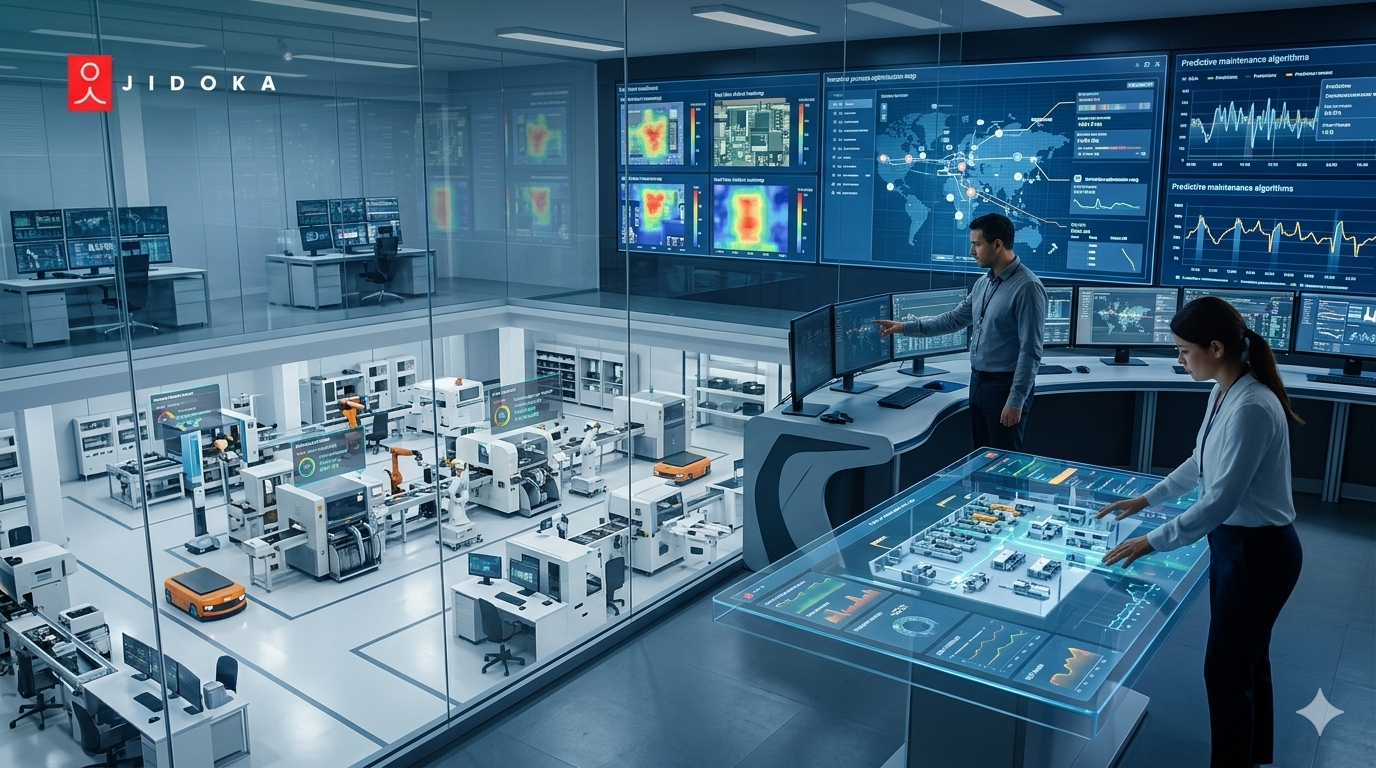
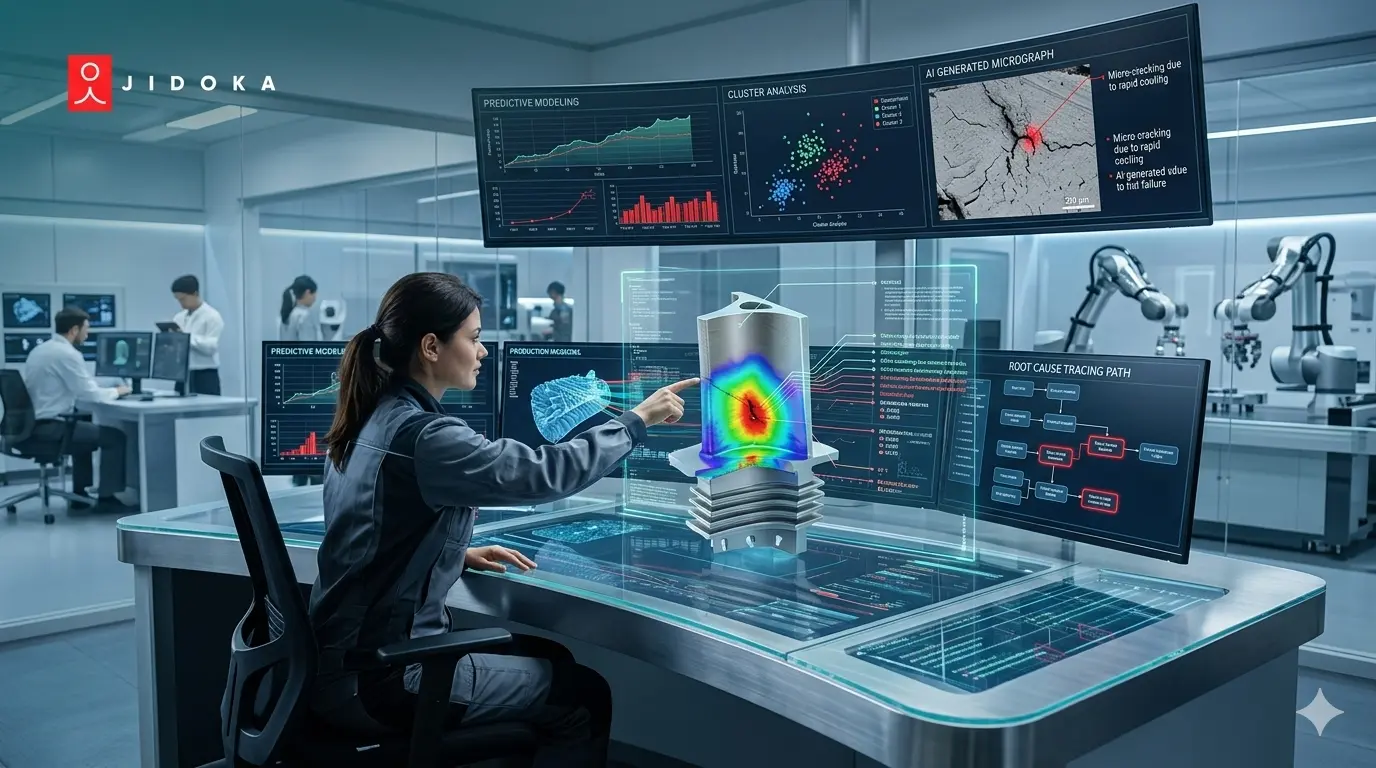
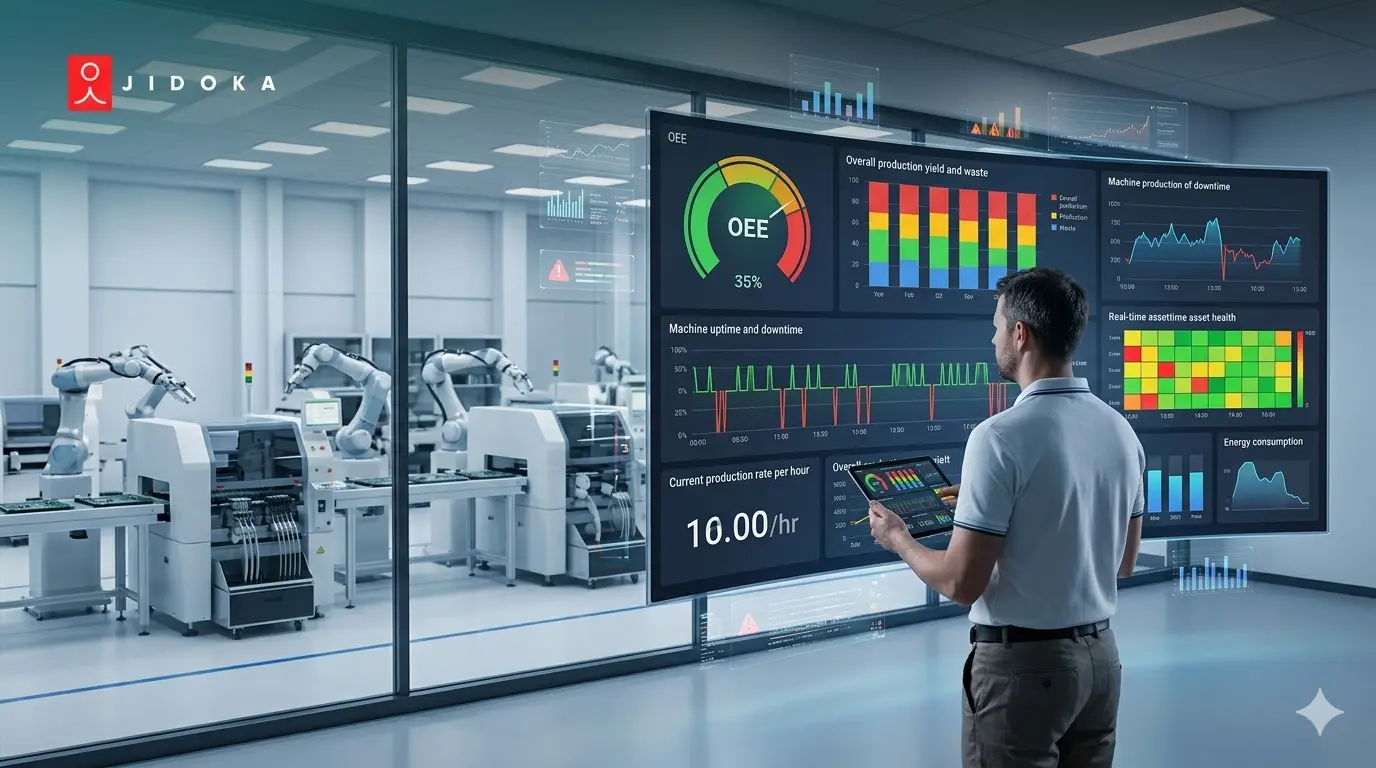
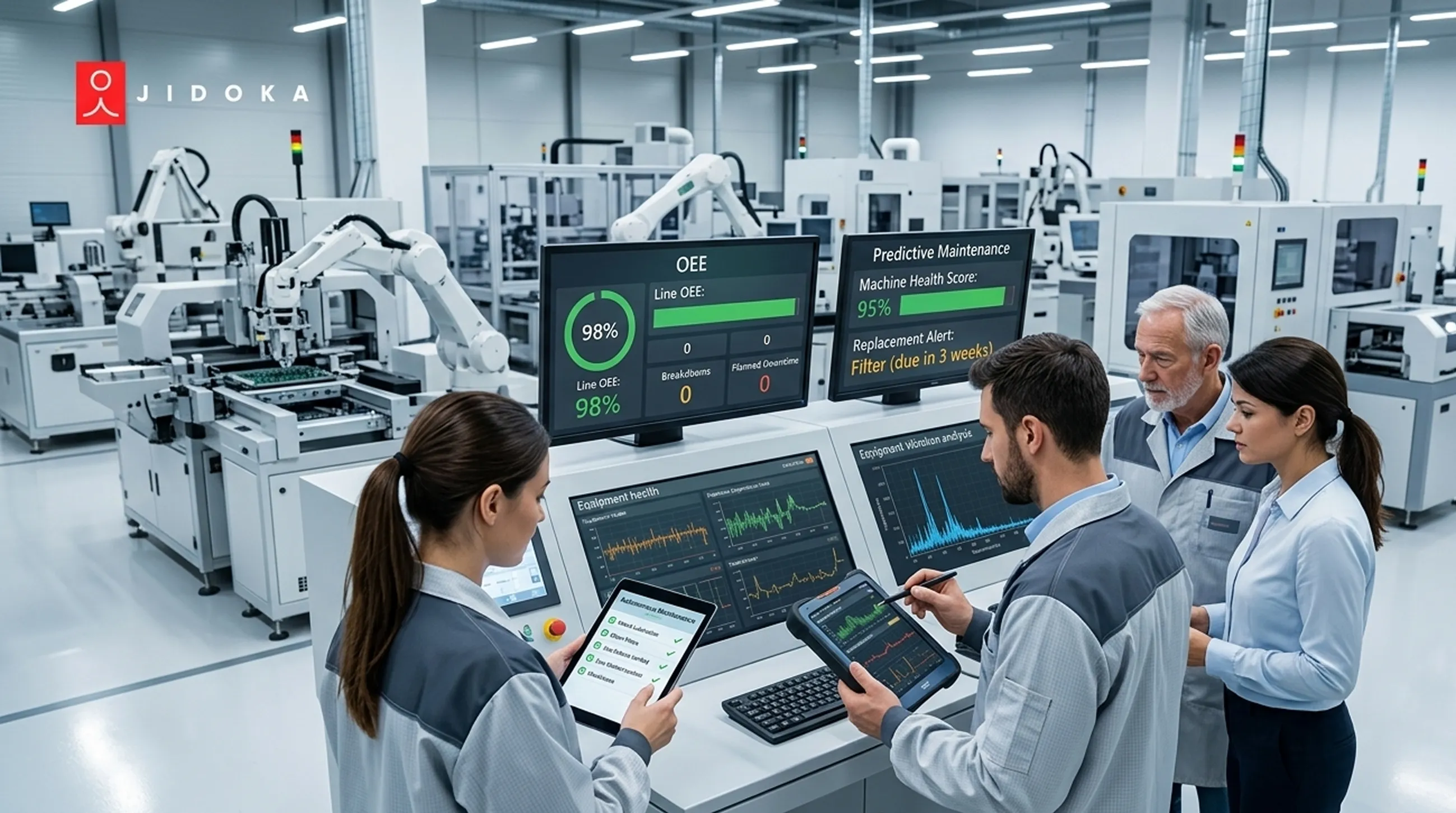
Production monitoring software tracks the real-time performance of machines, operators, and processes on a manufacturing floor. The strongest production monitoring software platforms in 2026 go well past OEE dashboards to capture downtime root causes, production line deviations, and SOP adherence, giving operations teams data to stop defects rather than count them afterward.
Real-time shop floor monitoring sits alongside MES, ERP, and SCADA in the manufacturing tech stack but focuses specifically on live floor intelligence. Three things separate a weak implementation from a strong one: how deep the visibility goes (machine state versus process layer), how the tool deploys (sensor, vision, or cloud), and whether it fits your operation size.
Any manufacturing process monitoring software that only tracks machine uptime is solving half the problem. Any real-time production monitoring software that also verifies operator actions is solving the other half.
Why Most Manufacturers Still Have a Monitoring Gap in 2026
Unplanned downtime accounts for 34.2% of all efficiency losses in discrete manufacturing, and setup or changeover time adds another 28.7%, meaning nearly 63% of losses trace back to availability failures. Plants moving from manual tracking to real-time production monitoring software typically discover 40-60% more downtime in their first 30 days, because micro-stops under five minutes were invisible before.
The same invisibility applies to process-step deviations. A component installed in the wrong sequence registers as a completed cycle. The defect shows up at final inspection, three stations downstream, after the rework cost is already locked in. The eight tools below are evaluated on what they actually see, and what they are designed to miss.
The 8 Best Production Monitoring Software Tools for 2026
1. MachineMetrics: Best for CNC-Heavy Shops
MachineMetrics connects directly to CNC controllers via OPC-UA and MTConnect, pulling cycle-level data without any manual input. It is the most accurate CNC-native production monitoring software for shops running modern Fanuc, Haas, or Mazak equipment.
What it does: Automates OEE, downtime classification, and predictive analytics directly from CNC controllers using edge devices, delivering granular machine-level data without operator input.
Best for: Precision manufacturing and CNC-heavy shops with modern machine fleets and dedicated technical resources for PLC integration.
Standout capability: Automatic cycle time extraction from CNC programs with zero manual setup. Morgan Olson, a walk-in van producer, improved asset utilization from 40-50% to 72% using MachineMetrics.
Client Review: 4.3/5
2. TeepTrak: Best for Rapid Deployment on Legacy Equipment
Non-intrusive current sensors clip onto any electrically-powered machine and start delivering OEE data within 48 hours. No PLC integration, no IT project.
What it does: Deploys real-time production monitoring software across mixed-vintage fleets through current sensing, with no software or hardware integration requirements.
Best for: Manufacturers with mixed-vintage fleets, including 40-year-old equipment without PLCs, who need floor visibility fast.
Standout capability: JEMBA AI for automated root-cause classification. TeepTrak clients report OEE gains of 12-18% within the first 90 days.
Client Review: 4.4/5
3. Nagare by Jidoka: Best for Process Adherence and Defect Prevention
Every tool above monitors machines or relies on operators to self-report. Nagare does neither. It uses existing CCTV cameras and edge AI to verify operator actions against digital SOPs in real time. No new hardware. No cloud dependency. No privacy risk.
What it does: Delivers real-time shop floor monitoring at the process layer, using existing camera infrastructure to verify SOP adherence and component presence across 100% of assembly steps without adding hardware or sending video off-site. The strongest production monitoring software for assembly-intensive operations where defect prevention is the primary KPI.
Best for: Assembly-intensive operations with documented SOPs across automotive assembly, electronics manufacturing, FMCG, pharmaceuticals, warehousing, and logistics.
Standout capability: Four capabilities that no sensor-based manufacturing process monitoring software on this list can replicate:
- Component presence verification confirms each part is installed before the next step begins, catching errors at the source
- SOP sequence enforcement detects if step 7 runs before step 5, a deviation invisible to every sensor-based tool
- Skeleton tracking identifies operator actions without identifying faces, protecting worker privacy by design
- Edge processing keeps all video on-site, meeting GDPR requirements without cloud exposure
Nagare delivers 30% process adherence improvement and 35% rework reduction within the first deployment cycle, with rework cuts of 20-35% through real-time detection of missing parts and wrong sequences.
Client Review: 4.8/5
OEE tools and Nagare are not competing production monitoring software products. They monitor different layers of the same floor.
4. Fabrico: Best for Linking Monitoring to Maintenance
Fabrico combines PLC machine state data with operator-input context and auto-dispatches maintenance work orders the moment a critical stop is detected.
What it does: Acts as production monitoring software that connects downtime detection directly to maintenance dispatch, cutting the gap between a machine stop and a corrective work order.
Best for: Plants where downtime response speed is the primary KPI and maintenance integration matters more than process visibility.
Standout capability: A stop automatically triggers a maintenance work order, not just an alert. The loop closes faster than any manual alert-and-respond system.
Client Review: 4.2/5
5. Tulip: Best for Custom No-Code Operator Apps
Tulip builds custom apps that guide operators through production steps, collect quality data at the workstation, and connect to machines and sensors without a software developer.
What it does: A no-code manufacturing process monitoring software platform that prompts operators through SOP steps while capturing quality and production data across the workstation.
Best for: Manufacturers who want configurable frontline apps without custom development budgets, where operator-machine interaction is the main workflow gap.
Standout capability: No-code app builder that gets closer to the process layer than most production monitoring software on this list by prompting operators through each step in sequence.
Client Review: 4.5/5
6. Plex by Rockwell Automation: Best for Enterprise Multi-Site Visibility
Plex is a cloud-native MES and ERP platform with real-time shop floor monitoring, OEE tracking, quality management, and supply chain integration across multiple plants.
What it does: Enterprise production tracking software that connects production monitoring, quality management, and supply chain data across multi-plant operations with end-to-end lot traceability.
Best for: Large manufacturers with multiple facilities and mature IT infrastructure already in place.
Standout capability: End-to-end traceability from raw material to finished good across facilities, with multi-plant OEE dashboards and audit trails built in.
Client Review: 4.1/5
7. Guidewheel: Best for the Smallest Shops
A clip-on current sensor on the power cord. Zero IT integration. Machine-state visibility in hours. Guidewheel is the lowest-friction entry point into real-time production monitoring software in 2026.
What it does: Clips onto any machine's power cord and delivers live OEE visibility with no software integration required, serving as lightweight production tracking software for small floors.
Best for: Small manufacturers (under 50 machines) taking their first step into real monitoring data without infrastructure investment.
Standout capability: Sub-hour hardware installation with no IT dependencies. Guidewheel's 2026 benchmark data shows quality and rework downtime averaged 142.6 minutes per event, despite representing only 3.74% of total tracked downtime.
Client Review: 4.3/5
8. Prodsmart (Autodesk): Best for WIP and Routing Visibility
Mobile operator input and barcode-based WIP tracking give contract manufacturers accurate job progress and routing data without expensive hardware.
What it does: A mobile-first production tracking software platform that uses barcode scanning and operator input to deliver WIP location, job routing, and production reporting for high-mix environments.
Best for: Contract manufacturers and job shops running high-mix, low-volume production where WIP location and job progress are the primary visibility gaps.
Standout capability: Accurate WIP location and job progress without expensive hardware, using real-time operator scanning at each station.
Client Review: 4.0/5
How to Choose the Right Production Monitoring Software for Your Floor
The right production monitoring software matches your specific monitoring gap, not the longest feature list. Use the Production Monitoring Fit Matrix below before shortlisting anything.
Plants with high assembly complexity need both layers. Choosing the right production tracking software starts with knowing your monitoring gap. Real-time shop floor monitoring tells you your machine is running. Manufacturing process monitoring software like Nagare tells you whether it was running correctly.
Conclusion
OEE dashboards have improved significantly over the last three years. The monitoring gap they left behind did not shrink.
Production monitoring software recovers 30-50% of preventable downtime in the first 12 months when deployed correctly. Guidewheel, 2026. That applies to what sensors can see. The rework tracing back to a skipped assembly step or an unverified torque check lives outside every sensor-based production monitoring software on this list.
"An OEE score tells you your machine was running. Process monitoring tells you whether it was running right." - Jidoka Technologies.
Pick the production monitoring software that closes your actual gap. For assembly-intensive operations, that means adding a process layer, not a better OEE dashboard. Book a quick demo with Jidoka to see how Nagare monitors every process step using your existing cameras.
FAQs
1. What is the difference between OEE software and production monitoring software?
OEE software measures three metrics: machine availability, performance speed, and quality rate. Production monitoring software covers a broader scope, including downtime root cause analysis, operator-action tracking, SOP adherence, and material flow. OEE gives you a score. Real-time production monitoring software tells you why the score is what it is and where the process broke before the score was calculated.
2. Can production monitoring software work with older machines that don't have PLCs?
Yes. Current sensor platforms like TeepTrak and Guidewheel connect to any electrically-powered machine by reading power draw from the cord, with no PLC required. Vision-based real-time shop floor monitoring platforms like Nagare go further, monitoring the process around legacy machines using existing CCTV infrastructure regardless of machine age or connectivity.
3. What is the typical ROI timeline for production monitoring software?
Most manufacturers see measurable OEE improvement within 4-12 weeks of deploying a sensor-based production tracking software or production monitoring software tool. Process-adherence platforms like Nagare typically show rework reduction within the first deployment cycle, with ROI achievable within 12 months. Documented cases report OEE gains of 10-20 percentage points and rework reductions of 20-35% in year one.
4. What is real-time production monitoring, and why does it matter?
Real-time production monitoring software captures machine performance, operator activity, and process data as it happens, not hours later in a shift report. A deviation caught in real time gets corrected before a defective unit is built. The same deviation caught at end-of-line inspection has already produced rework, wasted materials, and consumed operator time that cannot be recovered.
5. Is production monitoring software suitable for small manufacturers?
Yes. Several production monitoring software platforms are built for small manufacturers with limited IT resources. Guidewheel and TeepTrak deploy in under 48 hours with no IT integration. Nagare uses existing cameras, removing hardware investment entirely. The deciding factor is not company size but monitoring need. A 20-machine shop with a high-defect assembly line may need manufacturing process monitoring software before it needs enterprise OEE analytics.