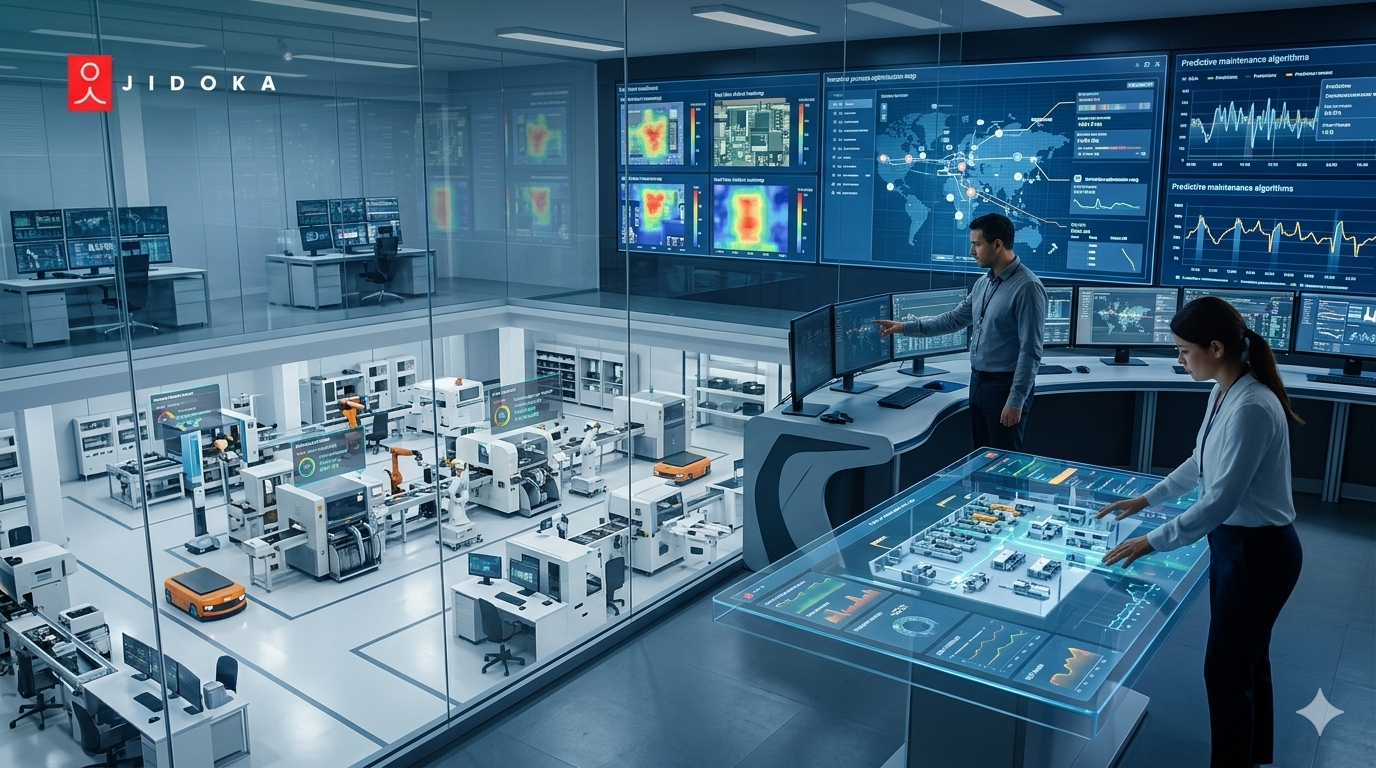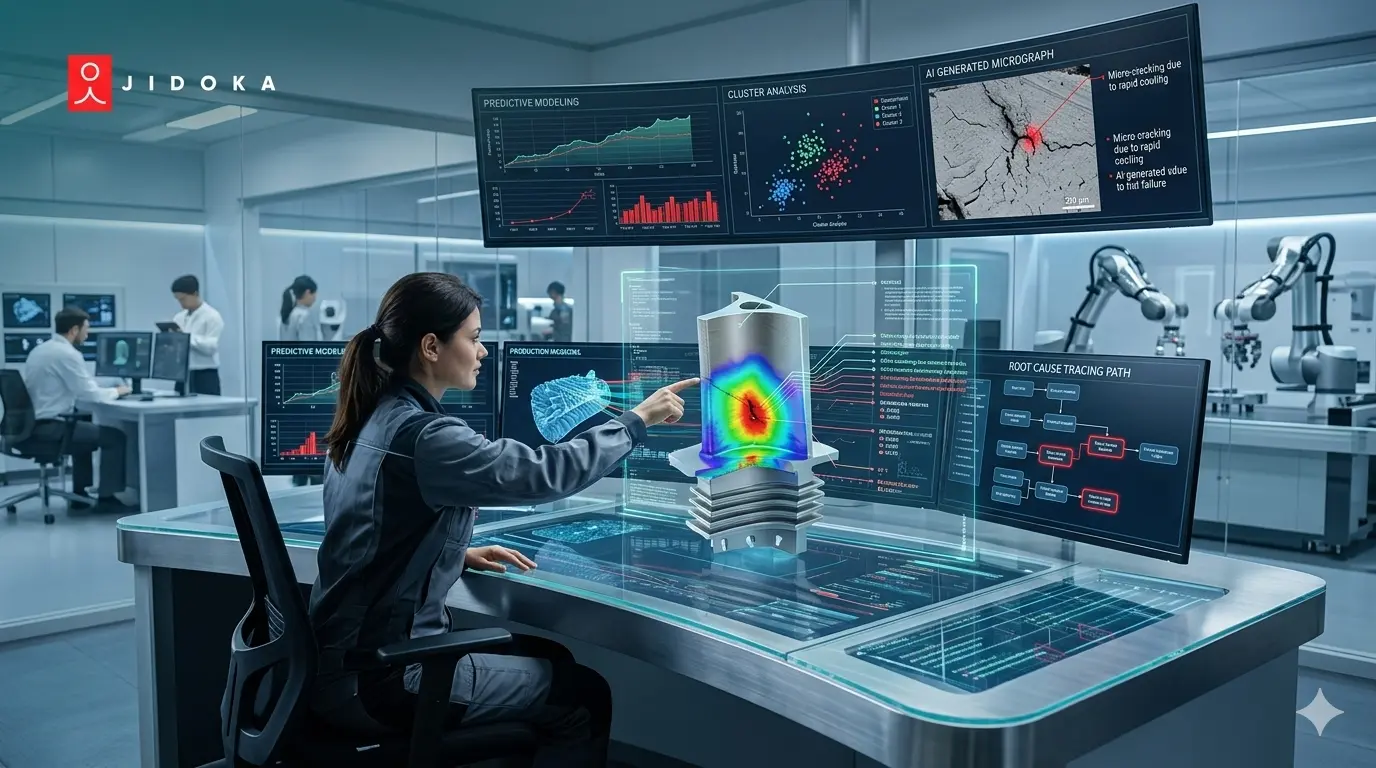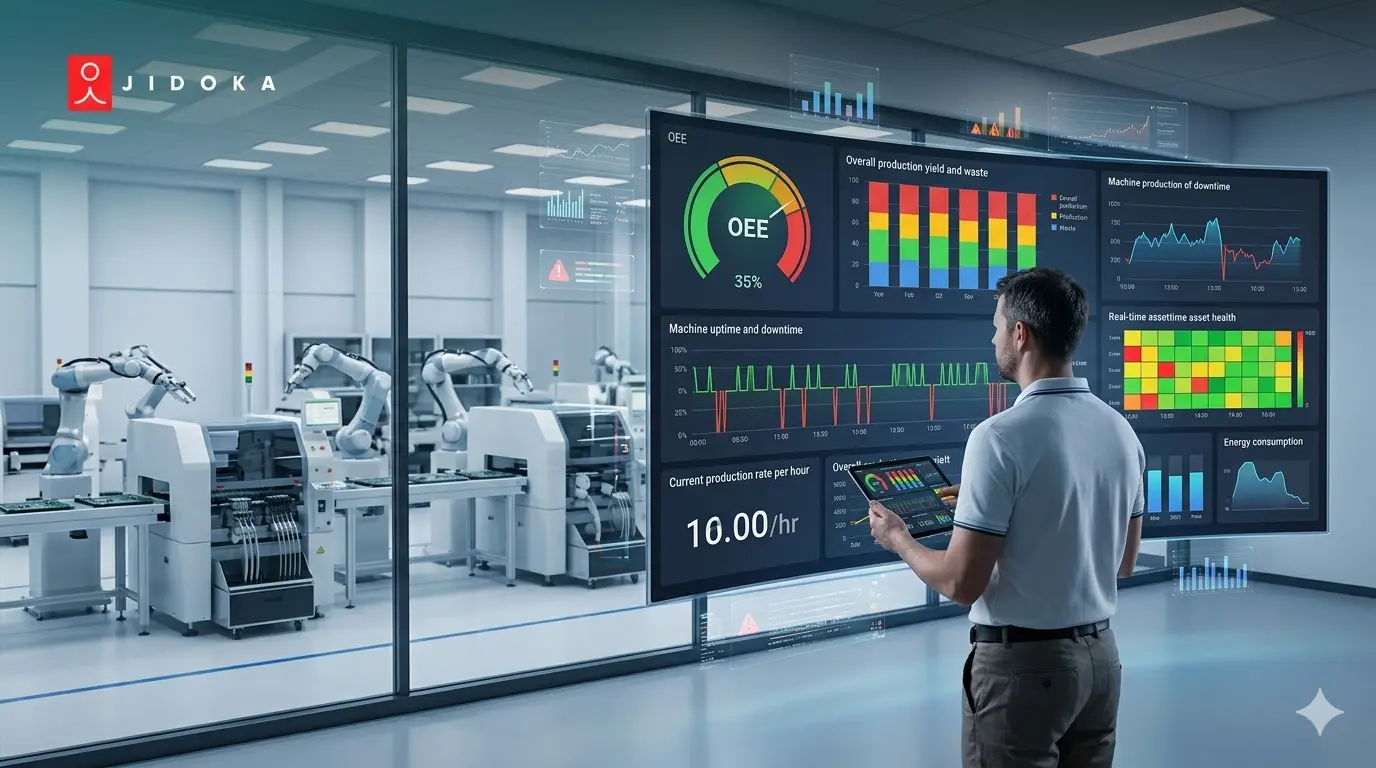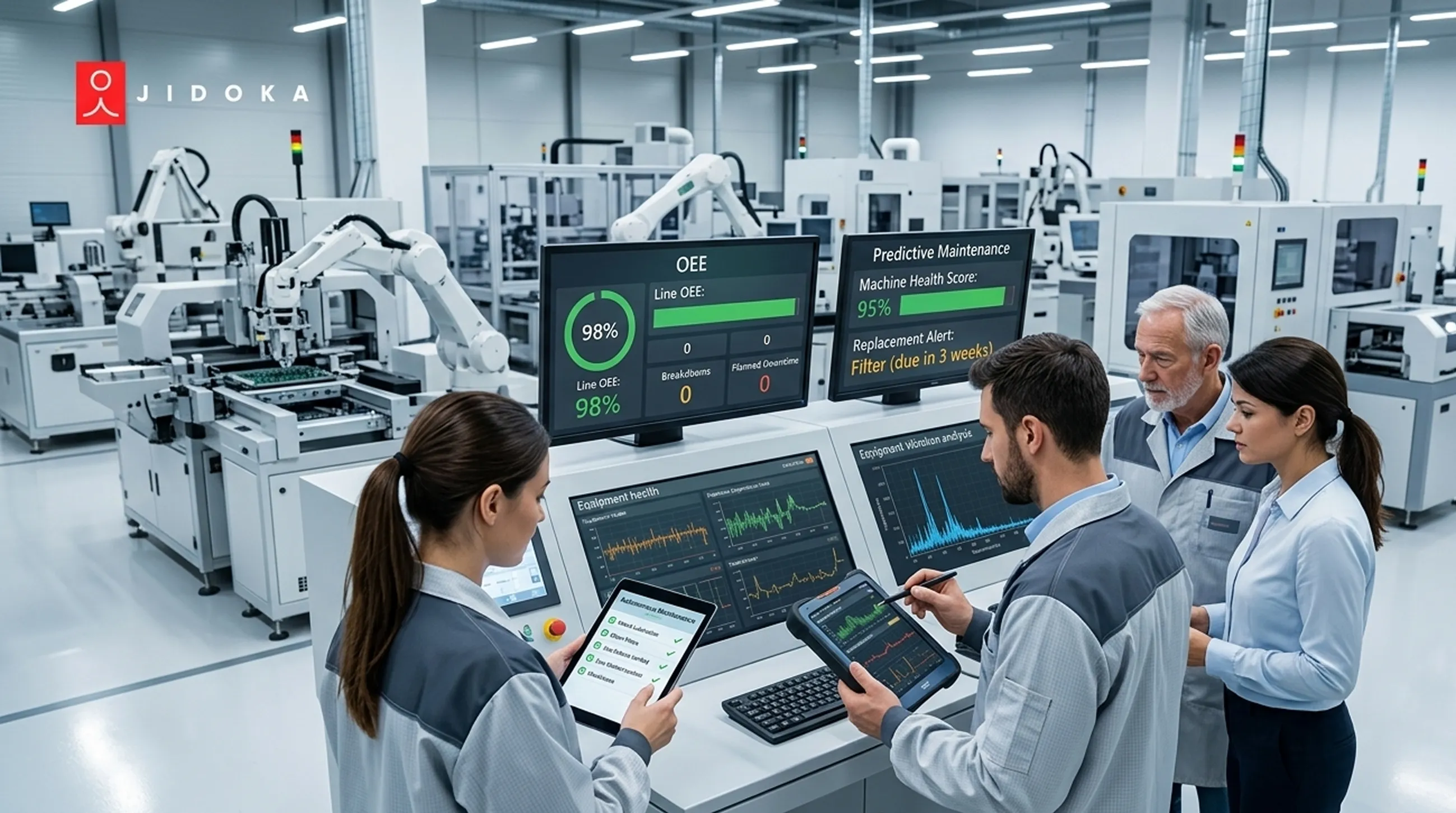
La fabricación en 2026 se basa en datos en tiempo real, no en listas de verificación en papel. La supervisión y el cumplimiento ahora se realizan cada minuto en el taller, lo que le ayuda a prevenir los riesgos antes de que se conviertan en infracciones.
Estudios recientes del sector muestran que los fabricantes invierten mucho en automatización después de ver menos infracciones de cumplimiento y reducir los costos operativos. En lugar de prepararse para las auditorías una vez al año, las empresas utilizan la verificación continua impulsada por un software de gestión del cumplimiento y visión artificial industrial.
Este cambio convierte la supervisión y el cumplimiento en una práctica operativa diaria. Cuando los sistemas controlan automáticamente la seguridad, la calidad y el rendimiento, se obtiene una visibilidad más clara, una mayor alineación normativa y estándares de producción consistentes.
Definición de los tres pilares del monitoreo y el cumplimiento en 2026
Debe ver la supervisión y el cumplimiento como un marco de tres niveles. Esta estructura mantiene su negocio de fabricación legal y eficiente. Cada pilar respalda su integridad operativa y, al mismo tiempo, mantiene segura su certificación ISO.
Pilar 1. Cumplimiento regulatorio (el «piso legal»)
Este pilar cubre lo obligatorio Seguridad de OSHA y normas ambientales. En 2026, los reguladores quieren pruebas digitales de sus acciones. Debe proporcionar pistas de auditoría digital con registros con fecha y hora para demostrar que cumple con la ley.
Esto actúa como su principal defensa durante las inspecciones. Las agencias modernas ya no aceptan archivos en papel como prueba de la diligencia debida.
Pilar 2. Cumplimiento técnico y de calidad
Esto garantiza que sus productos cumplan con los requisitos de certificación ISO. Evita la pérdida de calidad y reduce la posibilidad de que se produzcan costosas retiradas del mercado. El seguimiento, la supervisión y el cumplimiento aquí maximizan el ciclo de vida de sus activos.
Le ayuda a mantener una producción uniforme que satisfaga a sus clientes y mantenga la reputación de su marca.
Pilar 3. Cumplimiento operativo interno
Este pilar se centra en los flujos de trabajo específicos de su equipo. Verifica que los trabajadores sigan tus control de calidad protocolos todos los días. Convierte sus procedimientos operativos estándar en resultados reales en lugar de solo documentos guardados en una carpeta.
Las pymes de alto rendimiento utilizan esto para:
- Verificar los procedimientos de configuración de la máquina
- Realice un seguimiento de las transferencias de turno a turno
- Garantice la auditoría en tiempo real de las velocidades de producción
Administrar estas tres áreas manualmente es imposible para las pymes modernas. Se obtiene una enorme ventaja competitiva al automatizar estas capas para mejorar la gestión de riesgos y la producción general.
7 beneficios fundamentales de la supervisión y el cumplimiento automatizados para las pymes
La automatización cambia la forma en que funcionan la supervisión y el cumplimiento en las pymes de fabricación. En lugar de reaccionar cuando aparecen los problemas, los sistemas controlan la seguridad, la calidad y el rendimiento de forma continua.
Obtiene visibilidad de las operaciones a medida que se producen, lo que permite tomar decisiones más rápidas y reducir las interrupciones en la producción.
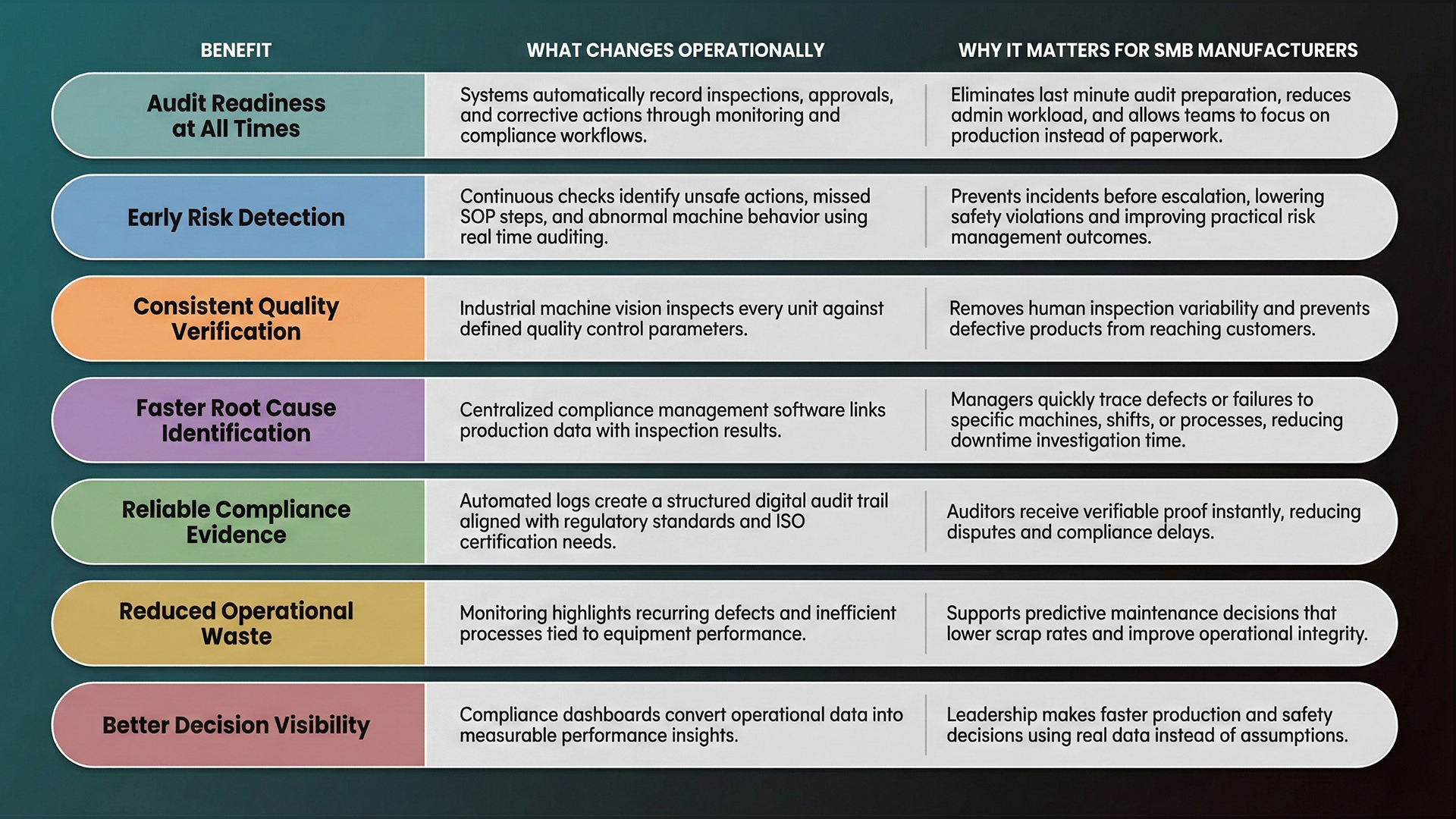
Beneficio 1. Eliminación del pánico ante las auditorías
La supervisión y el cumplimiento automatizados mantienen los registros actualizados durante todas las operaciones. Su software de gestión del cumplimiento captura automáticamente las inspecciones, aprobaciones y acciones correctivas. Los equipos dejan de recopilar documentos manualmente y se mantienen preparados para la auditoría todos los días mediante un registro de auditoría digital seguro.
Beneficio 2. Reducción del riesgo operativo
La auditoría continua en tiempo real identifica las acciones inseguras, los procedimientos omitidos o el comportamiento anormal del equipo. Esto refuerza el cumplimiento de las normas de seguridad de la OSHA y mejora la gestión preventiva de los riesgos sin interrumpir el flujo de producción.
Ventaja 3. 99,5% de precisión en la prueba de calidad
Con la visión artificial industrial, cada producto se somete a una inspección estandarizada. La verificación automatizada admite Requisitos de certificación ISO y mantiene un control de calidad constante sin que las inspecciones humanas se cansen.
Beneficio 4. Primas de seguro más bajas
Los registros confiables de monitoreo y cumplimiento demuestran operaciones controladas. Los informes automatizados proporcionan pruebas mensurables del desempeño en materia de cumplimiento, lo que ayuda a las aseguradoras a evaluar las instalaciones como entornos de menor riesgo.
Beneficio 5. Sostenibilidad y Transparencia ESG
El monitoreo automatizado rastrea las emisiones, el uso de energía y el manejo de residuos. Estos conocimientos simplifican la elaboración de informes sobre las normas reglamentarias y refuerzan la responsabilidad medioambiental en todas las operaciones.
Beneficio 6. Protección de la integridad de la marca
La supervisión y el cumplimiento continuos evitan que los productos defectuosos o no conformes salgan de las líneas de producción. La detección temprana protege la confianza de los clientes y reduce la exposición a las retiradas.
Beneficio 7. Toma de decisiones basada en datos
La información sobre el cumplimiento revela problemas recurrentes relacionados con las máquinas o los turnos. Análisis predictivo conectado a mantenimiento predictivo los programas ayudan a los gerentes a actuar con prontitud, lo que mejora la integridad operativa y la confiabilidad de la producción.
7 beneficios fundamentales de la supervisión y el cumplimiento automatizados para las pymes
Aprovechamiento del software industrial de visión artificial y gestión del cumplimiento
Los fabricantes modernos mejoran la supervisión y el cumplimiento al combinar la inspección visual con sistemas de software centralizados. Las tecnologías conectadas validan la seguridad, la calidad y el mantenimiento de forma continua, lo que convierte la supervisión y el cumplimiento en una actividad de producción diaria en lugar de en una tarea de cumplimiento independiente.
A) Auditoría continua de seguridad y EPP
Los sistemas de visión con IA mejoran la supervisión y el cumplimiento mediante la observación de los entornos de producción en tiempo real. El sistema verifica automáticamente el uso del PPE, el movimiento de los trabajadores y el acceso a las zonas restringidas. Cuando se produce una infracción, registra las pruebas visuales y registra el suceso al instante, lo que respalda las expectativas de seguridad de la OSHA y permite realizar auditorías confiables en tiempo real.
ventajas prácticas:
- Alertas inmediatas de comportamiento inseguro
- Evidencia visual vinculada a los registros de incidentes
- Decisiones de formación correctiva más rápidas
Esto reduce la dependencia de la supervisión manual y crea una aplicación de seguridad uniforme en todos los turnos.
B) Creación de un registro de auditoría digital inmutable
El software de gestión de cumplimiento conectado convierte las actividades diarias en registros de cumplimiento estructurados. Cada inspección, aprobación y corrección se incorpora a un sistema compartido, lo que refuerza la supervisión y el cumplimiento en todos los departamentos.
En lugar de buscar en correos electrónicos u hojas de cálculo, los equipos acceden a:
- Un registro de auditoría digital centralizado
- Informes automatizados alineados con los estándares regulatorios
- Documentación verificada para las revisiones de certificación ISO
Esta visibilidad unificada elimina las demoras en la presentación de informes y mejora la rendición de cuentas.
C) De la confiabilidad reactiva a la proactiva
Las inspecciones tradicionales identifican los problemas después de que se producen las fallas. La supervisión y el cumplimiento modernos utilizan la visión artificial industrial combinada con el análisis de sensores para detectar los problemas de manera temprana. Los sistemas analizan las variaciones de temperatura, el comportamiento de las vibraciones y las inconsistencias en la producción para respaldar las decisiones de mantenimiento predictivo.
Como resultado, los equipos evitan el tiempo de inactividad, mantienen la integridad operativa y mantienen el cumplimiento alineado con el rendimiento del equipo.
Cómo Jidoka Tech puede ayudarle a automatizar la supervisión del cumplimiento
Tecnología Jidoka refuerza la supervisión y el cumplimiento mediante la implementación de sistemas de inspección de IA diseñados para la presión real de la producción. Nuestro equipo alinea las cámaras, la iluminación, la temporización de los PLC y el procesamiento perimetral para que las inspecciones se mantengan estables en todos los turnos y en entornos de alta velocidad.
Las plantas que utilizan su configuración mantienen una supervisión y un cumplimiento consistentes incluso con volúmenes de inspección extremadamente altos.
Las capacidades especiales incluyen:
- 1. BRÚJULA inspector de alta precisión que entrega Precisión de inspección superior al 99,8% con un análisis de menos de 10 ms y un aprendizaje de modelos más rápido con menos muestras
- Inspección fiable de metales reflectantes, superficies impresas y componentes texturizados
- 2. NAGARE seguimiento de procesos que monitorea 100% pasos de montaje y detecta piezas faltantes o secuencias incorrectas en tiempo real
- Procesamiento perimetral que admite la automatización continua de la inspección visual sin demoras de latencia
Estas capacidades permiten la supervisión y el cumplimiento escalables en las líneas de fabricación modernas.
Descubra cómo Jidoka Tech le ayuda a reforzar la supervisión y el cumplimiento con la inspección basada en IA creada para entornos de producción reales.
Conclusión
La supervisión y el cumplimiento estrictos definen la forma en que los fabricantes mantienen la seguridad, la calidad y la coherencia operativa en la producción moderna. Muchas pymes siguen confiando en las comprobaciones manuales, los registros fragmentados y las auditorías retrasadas, lo que crea puntos ciegos en las operaciones.
Las infracciones omitidas, las inspecciones incoherentes o la documentación incompleta pueden provocar sanciones por cumplimiento, tiempos de inactividad de la producción y daños en la confianza de los clientes. Estos riesgos aumentan a medida que las normas reglamentarias se endurecen y las velocidades de producción aumentan. La transición hacia la supervisión y el cumplimiento automatizados reduce la incertidumbre al crear una verificación continua.
Plataformas como Tecnología Jidoka ayudan a los fabricantes a introducir una inspección visual fiable y un seguimiento estructurado del cumplimiento sin interrumpir los flujos de trabajo existentes.
Conéctese a Jidoka Tech para ver cómo la supervisión y el cumplimiento automatizados pueden adaptarse perfectamente a su flujo de trabajo de producción actual.
Preguntas frecuentes
1. ¿Puede una pyme permitirse la supervisión del cumplimiento impulsada por la inteligencia artificial en 2026?
Sí. Las soluciones modernas de monitoreo y cumplimiento funcionan con la infraestructura existente, lo que reduce los costos iniciales. Muchas pymes adoptan el software de gestión del cumplimiento y la visión artificial industrial de forma gradual, lo que mejora la gestión de riesgos, permite la elaboración de informes automatizados y logra mejoras mensurables en el cumplimiento sin una gran inversión de capital.
2. ¿Cuál es la principal diferencia entre monitoreo y auditoría?
La supervisión y el cumplimiento implican una auditoría continua en tiempo real de la seguridad, el control de calidad y la integridad operativa. La auditoría revisa los datos registrados periódicamente. La supervisión continua crea un registro de auditoría digital verificado, lo que permite a las organizaciones mantenerse preparadas para cumplir con los estándares reglamentarios en lugar de preparar la documentación únicamente durante las auditorías.
3. ¿El monitoreo automatizado reemplaza a los oficiales de seguridad humana?
No. La supervisión y el cumplimiento automatizados ayudan a los equipos de seguridad al gestionar las inspecciones repetitivas. Los sistemas basados en la visión artificial industrial detectan los riesgos de manera temprana, lo que permite a los oficiales centrarse en la capacitación de la OSHA en materia de seguridad, las acciones preventivas y las estrategias más sólidas de gestión de riesgos, en lugar de centrarse en las tareas de supervisión manual.
4. ¿Cómo ayuda la visión artificial industrial a la certificación ISO?
La visión artificial industrial refuerza la supervisión y el cumplimiento al producir pruebas de inspección objetivas para las auditorías de certificación ISO. El control de calidad automatizado verifica cada producto de manera uniforme, respalda la documentación de las normas reglamentarias y crea registros confiables que los auditores pueden validar sin procesos de verificación manuales.
5. ¿Los datos están seguros con el software de cumplimiento basado en la nube?
Sí. El software moderno de gestión del cumplimiento utiliza protocolos de acceso controlado y almacenamiento cifrado. Los sistemas seguros mantienen los registros de supervisión y cumplimiento mediante registros de auditoría digitales protegidos, lo que ayuda a los fabricantes a cumplir las normas reglamentarias y, al mismo tiempo, protege los datos operativos y mantiene la confiabilidad del cumplimiento a largo plazo.