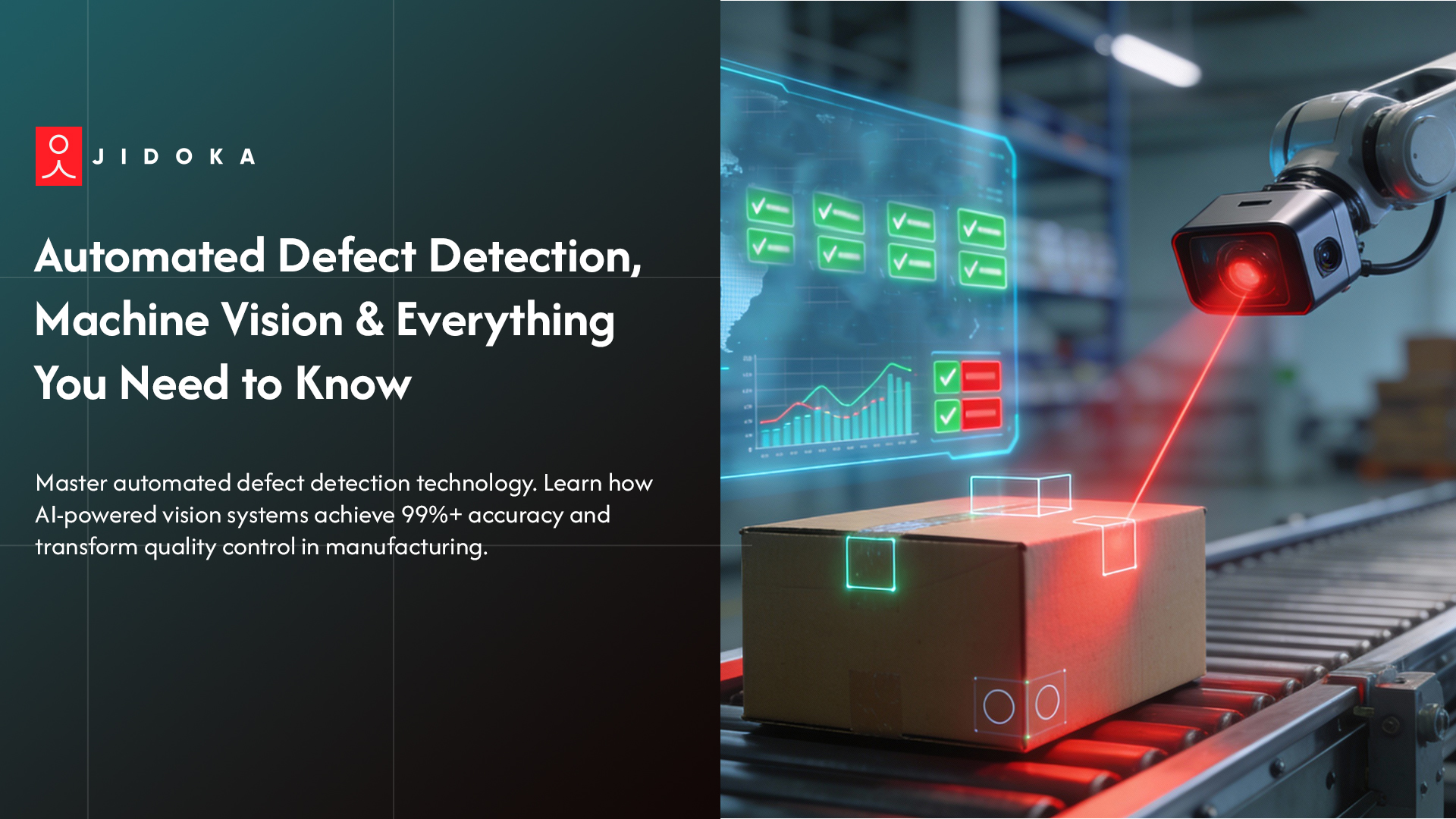
Automated Defect Detection, Machine Vision & Everything You Need to Know

Master automated defect detection technology. Learn how AI-powered vision systems achieve 99%+ accuracy and transform quality control in manufacturing.

Modern manufacturing demands perfection. "Good enough" fails because one bad part destroys brand trust. Human inspectors get tired. They miss details. Their accuracy often stops at 90%. You need a reliable fix. Automated defect detection eliminates this gap by removing human error.

Systems now spot anomalies instantly with 99% precision. That is why 76% of factories adopt automated defect detection to secure output. Partners like Jidoka Tech drive this change by making integration effortless. This guide explains how AI-powered visual inspection transforms your production line into a self-correcting machine.

What is Automated Defect Detection? (The Basics)

Automated defect detection pairs high-speed cameras with smart algorithms to identify faults. You use high-resolution sensors as eyes and AI-powered visual inspection software as the brain. This system spots anomalies instantly. Machine vision quality control eliminates human fatigue and applies one consistent standard to every single part.

The technology handles three main areas:

  • Surface Defect Detection: Identifies cosmetic issues like scratches, dents, or discoloration.
  • Functional Defects: Finds missing components, bent pins, or bad seals.
  • Dimensional Issues: Measures tiny deviations using defect classification systems.

You gain total objectivity. Automated defect detection ensures the first part matches the millionth part perfectly. It turns subjective checking into reliable data.

You understand the definition, but the mechanics behind automated defect detection often seem complex, so let's break down exactly how the system thinks.

How the Technology Works: From Lens to Decision

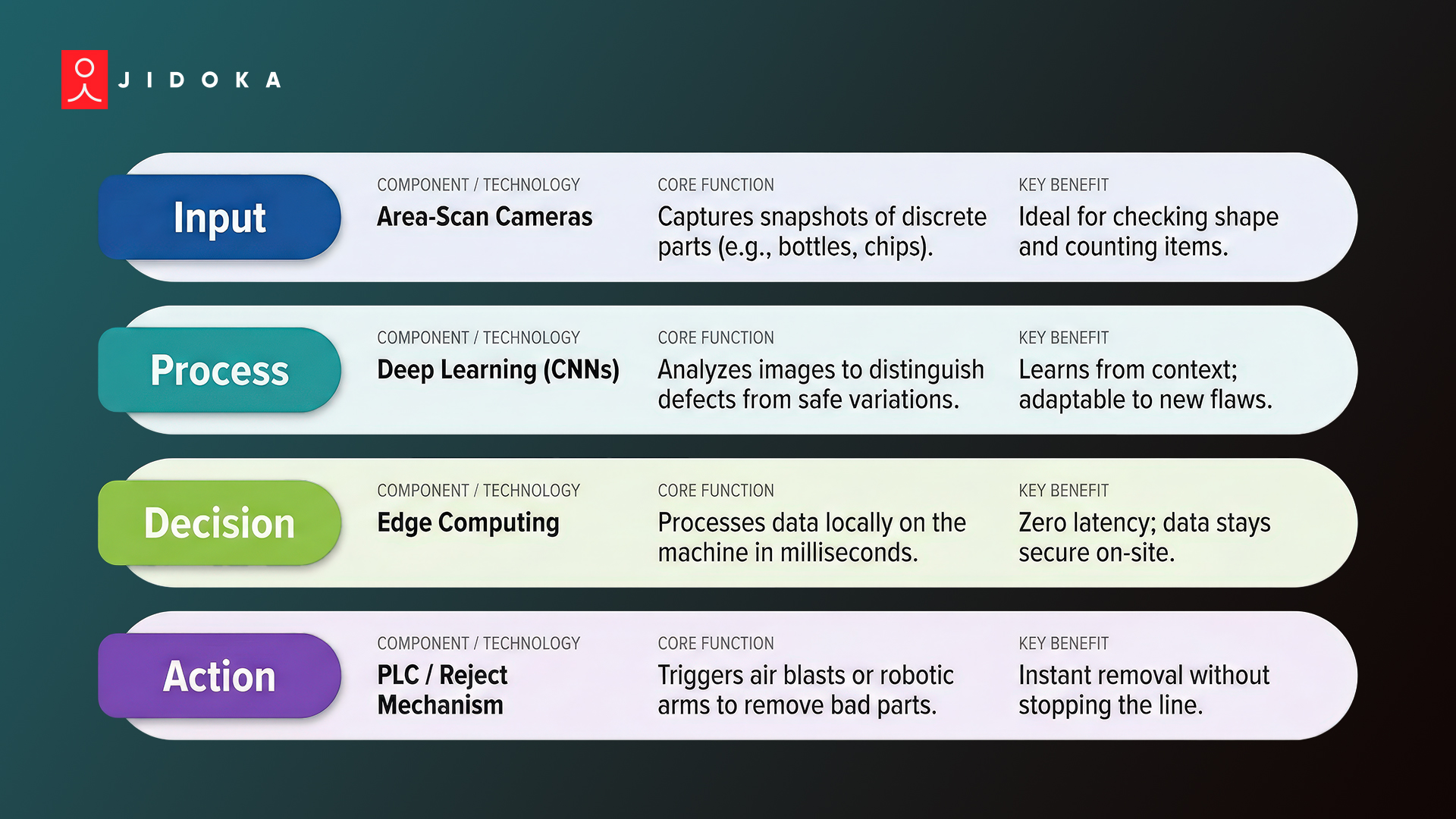
Understanding the mechanics is simple. The workflow follows three distinct steps to turn light into actionable data.

Step 1: Image Acquisition

Automated defect detection relies on precise hardware to capture every detail. You select the camera based on your product type:

  • Area-Scan Cameras: Capture snapshots of distinct parts like bottles.
  • Line-Scan Cameras: Monitor continuous webs like steel or paper.

Step 2: The AI "Brain"

Intelligence comes next. Old systems failed on complex textures, but deep learning anomaly detection solves this.

  • Contextual Learning: The system distinguishes actual faults from normal variations.
  • Adaptability: Computer vision manufacturing improves by studying image datasets.

Step 3: Edge Computing

You need speed. Edge AI inspection processes data locally rather than in the cloud.

  • Zero Latency: Real-time defect detection triggers reject mechanisms in milliseconds.
  • Consistency: Machine vision quality control keeps up with high-speed lines without lag.

You understand the mechanics, so let's see how major industries apply automated defect detection to solve high-stakes problems.

Real-World Applications by Industry

Industries leverage automated defect detection to enforce specific high-stakes standards across different sectors.

1. Automotive Manufacturing

Safety comes first. Robotic inspection systems scan vital parts like brakes and airbags, where failure is not an option. Automated defect detection reduces defect escape rates by 83%. You ensure zero-tolerance compliance for every vehicle.

2. Electronics Production

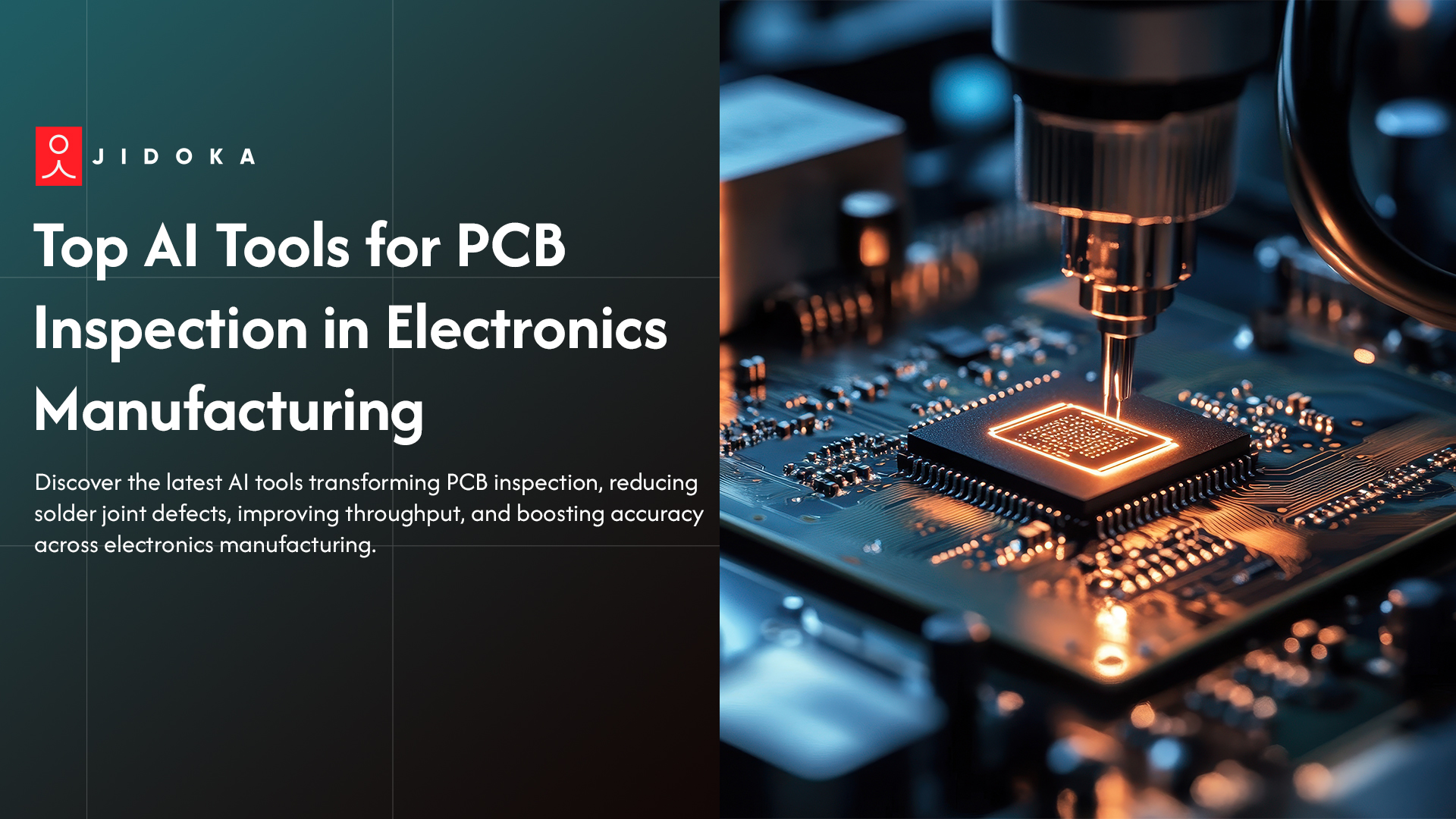
Components shrink every year. Automated Optical Inspection (AOI) checks solder joints and chips invisible to the naked eye. The system achieves 99.97% accuracy on these nanoscale items. Automated defect inspection catches flaws humans cannot see.

3. Food & Beverage

Trust defines this market. Vision-based quality control finds foreign materials like glass inside packages. It also verifies labels to prevent costly recalls. This technology protects your consumers.

Quality improves safety, but you also need to understand how automated defect detection impacts your bottom line.

The Economics: ROI and Productivity

Smart factories invest in automated defect detection to protect margins. The math supports this shift immediately.

1. The 1-10-100 Rule

The "Cost of Quality" grows exponentially. Catching a defect at the source costs $1. Fixing it later in production costs $10. If it reaches the customer, that cost jumps to $100 due to recalls and reputation damage. Automated defect detection keeps your cost at $1. You stop waste before it becomes expensive.

2. Predictive Quality Management

Rejecting bad parts is standard, but preventing them is superior. Predictive quality management analyzes data trends. The system notices if a mold temperature drifts or a blade dulls before defects occur. You fix the machine, not the product. Quality assurance automation shifts your focus from firefighting to optimization.

3. Rapid Payback Period

Speed drives financial returns. Most manufacturers achieve full ROI within 6 to 12 months. You lower scrap rates and reallocate human inspectors to higher-value tasks. Automated defect detection pays for itself by reducing waste.

You save money and boost efficiency, but implementation often feels slow. Let's look at how Jidoka-Tech solves that specific hurdle.

How Jidoka-Tech Solves the "Implementation Gap"

Jidoka Tech builds an automated defect detection system that performs under real production pressure. Their team aligns cameras, lighting, PLC timing, and edge units so the system works across all shifts. 

Plants running Jidoka’s setup reports consistent performance even at 12,000+ parts per minute and up to 300 million inspections per day. Jidoka’s strength comes from combining two systems that extend AI-powered visual inspection beyond standard checks:

1. KOMPASS: High-Accuracy Inspector

This tool reaches 99.8%+ accuracy on live lines. It reviews each frame in under 10 ms and learns new variants with 60–70% fewer samples. It handles difficult items like reflective metals, printed surfaces, and textured parts. KOMPASS supports automated defect inspection deployments where consistency matters.

2. NAGARE: Process and Assembly Analyst

NAGARE tracks 100% of assembly steps through existing cameras. It flags missing parts or wrong sequences in real time. This cuts rework by 20–35%. NAGARE reinforces machine vision quality control by monitoring the workflow itself.

Jidoka runs the fully automated defect detection system on local edge units to avoid delays. Many teams extend coverage with this visual inspection software to guarantee precision without slowing down the line.

Stop relying on subjective inspection. Switch to objective AI precision with Jidoka-Tech.

Conclusion

Implementing automated defect detection is tough. Poor lighting and complex machine vision quality control setups often fail under pressure. If you choose the wrong system, you face a nightmare. You either stall production for ghost errors or let defective parts reach your customers. That specific failure destroys hard-earned trust instantly.

Jidoka Tech solves this by removing the complexity. They provide a stable, pre-trained AI-powered visual inspection system that works immediately. You avoid the setup struggles and secure your output with reliable precision.

Ready to eliminate defects? Contact Jidoka Tech today to secure your production line.

FAQs

1. How do you prevent false positives from rejecting good parts? 

Automated defect detection understands context better than simple sensors. It learns that minor water spots or oil sheen are not actual faults. Defect classification systems distinguish between critical failures and harmless anomalies to protect your yield.

2. Do I need thousands of defect images to train the AI? 

No. Modern deep learning anomaly detection often works with just 20 to 50 examples. The system uses synthetic data generation to fill the gaps. You get a production-ready visual inspection software model without waiting months to collect "bad" parts.

3. What happens if ambient factory lighting changes? 

Standard cameras fail when sunlight hits the floor, but machine vision quality control adapts. We use specific band-pass filters and dynamic exposure settings. The system ignores external shadows and focuses strictly on surface defect detection.

4. Can the system detect defects on vibrating or moving parts? 

Yes. High-speed defect detection uses global shutter cameras to freeze motion instantly. The software compensates for line vibration or jitter. Real-time defect detection maintains pinpoint accuracy even on unstable conveyors.

5. What is the smallest defect size the system can catch? 

Resolution depends on your lens, but these systems typically spot issues measured in microns. Automated optical inspection AOI finds hairline cracks or pinholes that human inspectors cannot see. You catch sub-pixel flaws before they leave the factory.

December 16, 2025
By
Shwetha T Ramakrishnan, CMO at Jidoka Tech

相談会開催中

品質と生産性を最大化するビジョン検査システムに関する相談会を実施中です。ぜひこの機会にお試しください。

お問い合わせ