"Gemba" means the actual place where work happens. It comes from Japanese manufacturing and points leaders to the factory floor, not the meeting room. Taiichi Ohno built this idea at Toyota through the go-and-see principle. He knew reports never show the full story. Problems hide in plain sight.
Most managers still rely on dashboards and emails. That gap slows decisions and lets waste grow. Gemba fixes that by pushing leaders to observe work as it runs. This style of factory floor observation exposes delays, rework, safety risks, and small habits that block flow.
Teams that practice Gemba often report up to 30 percent productivity gains and major waste reduction. You see the work. You fix the real problem.
What is the meaning of "gemba"?
"Gemba" means the real place where work happens and value is created. In lean thinking, Gemba pushes leaders to stop guessing and start observing.
- In manufacturing, Gemba is the assembly line where defects, delays, and rework appear.
- In software teams, Gemba exists where coding, testing, and releases happen.
- In service operations, Gemba shows up during live customer interaction.
The core idea of Gemba stays direct. Problems cannot be solved without context. Reports filter reality. Direct factory floor observation exposes waste, bottlenecks, and process gaps as they occur.
That clarity leads into why a structured Gemba walk works very differently from casual management walkarounds.
Gemba Walk vs. Management by Walking Around
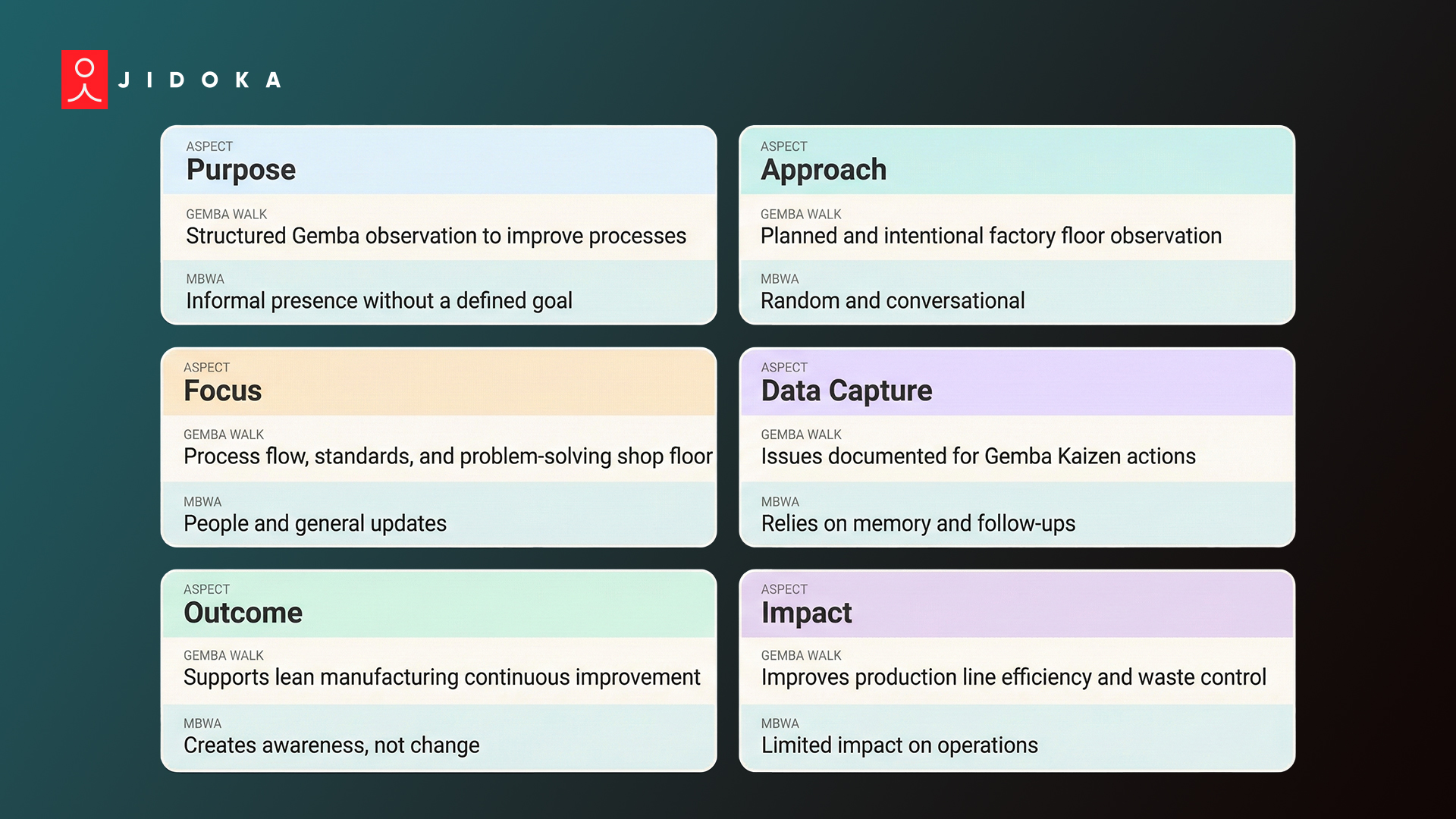
This difference decides whether Gemba turns into real improvement or stays a routine walk. Both involve going to the shop floor. Only one relies on disciplined factory floor observation.
A) Management by Walking Around MBWA
MBWA stays informal and reactive. Leaders walk the floor without a defined intent. They talk, notice issues, and then leave.
- No clear purpose for the visit
- Factory floor observation stays surface level
- Problems get remembered, not recorded.
- Fixes depend on follow-up that rarely happens
MBWA builds familiarity with teams. It does not support waste identification in manufacturing or problem-solving shop floor practices.
B) Gemba Walk
A Gemba walk follows structure and repeatability. Leaders go to the Gemba to study the process. They compare standard work with reality and look for production line efficiency gaps.
- Walks follow a schedule
- Observation targets flow, safety, and quality
- Gaps trigger Gemba Kaizen actions.
- Results feed lean manufacturing continuous improvement
Gemba Walk vs. MBWA at a Glance
This explains why Gemba works. Next, let’s break down how to run a Gemba walk step by step.
How to Conduct a Gemba Walk: The 7-Step Framework
A Gemba walk only works when leaders treat it as a disciplined practice, not a routine visit. Each step builds clarity through direct factory floor observation and structured follow-through.
Gemba Walk 7 Step Framework at a Glance
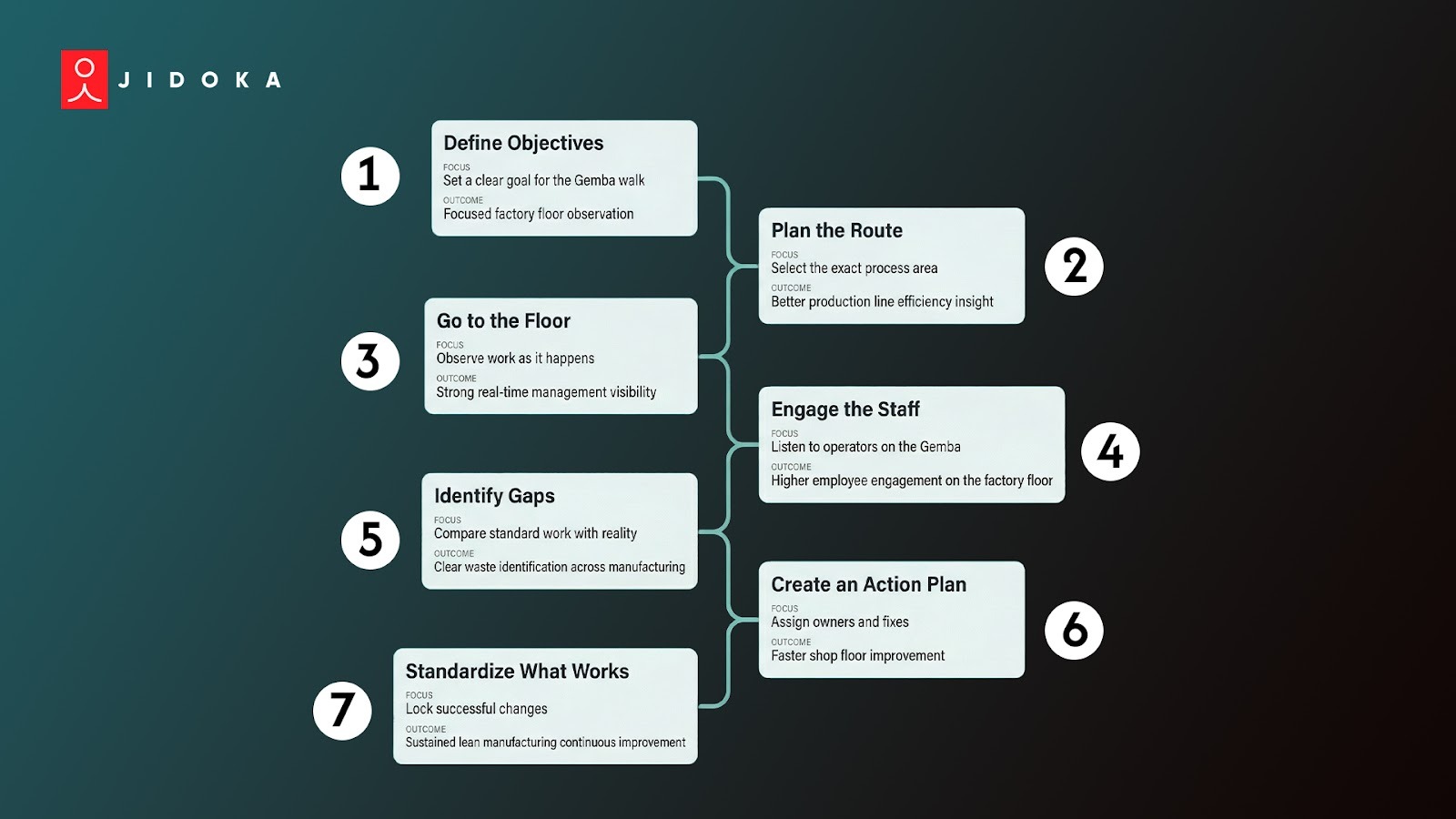
Step #1. Define Objectives
Every Gemba walk starts with a clear purpose. Leaders must decide what they want to learn before stepping onto the floor. Safety risks, quality escapes, delays, or waste identification in manufacturing should never be mixed in one walk. A single objective sharpens focus and supports real problem-solving shop floor efforts.
Step #2. Plan the Route
Once the goal is clear, plan where to observe. The Gemba is not the entire factory. It is the specific process where value slows down or breaks. A planned route improves production line efficiency by keeping attention on the right stations instead of random movement.
Step #3. Go to the Floor
This step defines Gemba itself. Leaders must stand where work happens and watch it run. Cycle times, handoffs, queues, and interruptions reveal the truth. This creates real-time management visibility that reports cannot deliver.
Step #4. Engage the Staff
Operators hold answers that systems miss. During a Gemba walk, leaders should ask how work actually gets done and where friction appears. Listening without judgment builds trust and strengthens employee engagement factory behavior.
Step #5. Identify Gaps
Observation only matters when leaders compare reality with standard work. Differences expose waste, delays, and rework. These gaps point directly to process optimization and bottleneck elimination opportunities.
Step #6. Create an Action Plan
Before leaving the Gemba, observations must turn into actions. Each issue needs an owner and a clear outcome. This step converts insight into shop floor improvement, not discussion.
Step #7. Standardize What Works
When a fix delivers results, it becomes the new way of working. Standards lock gains in place and support lean manufacturing continuous improvement across teams.
This structure explains why disciplined Gemba walks keep improving results over time.
How Jidoka Tech Enhances the Gemba Walk
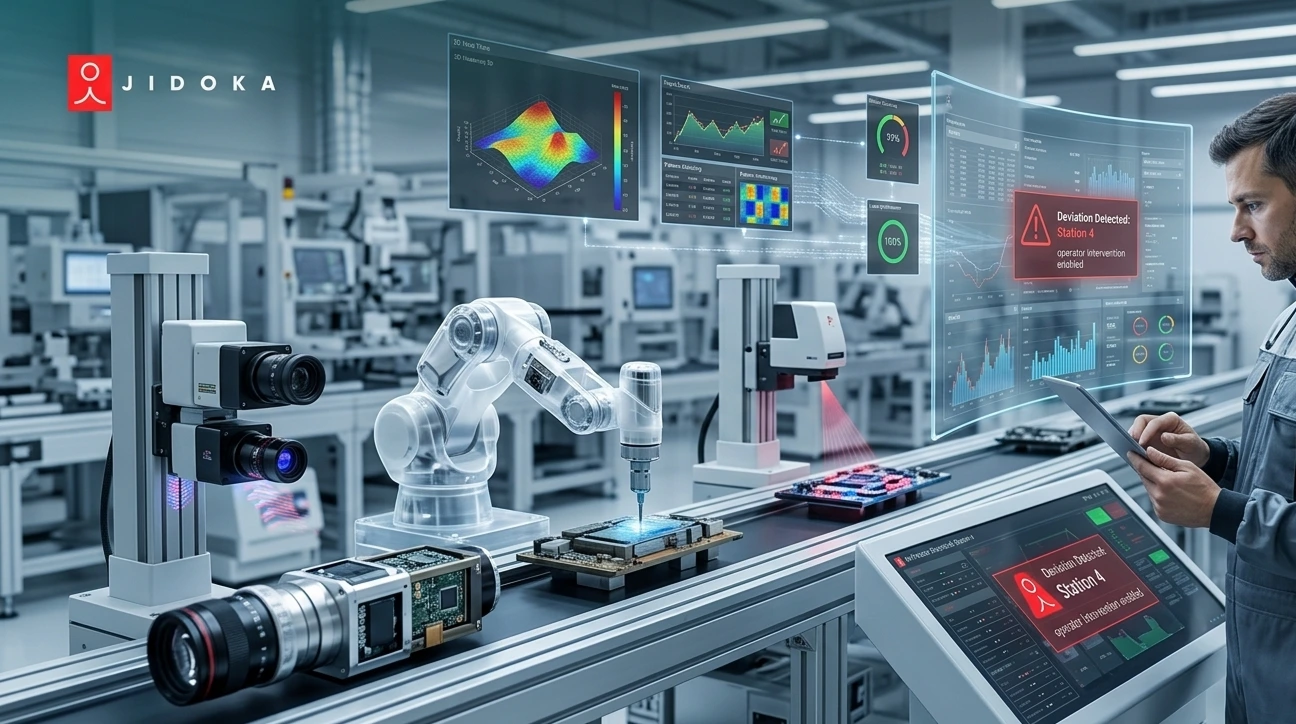
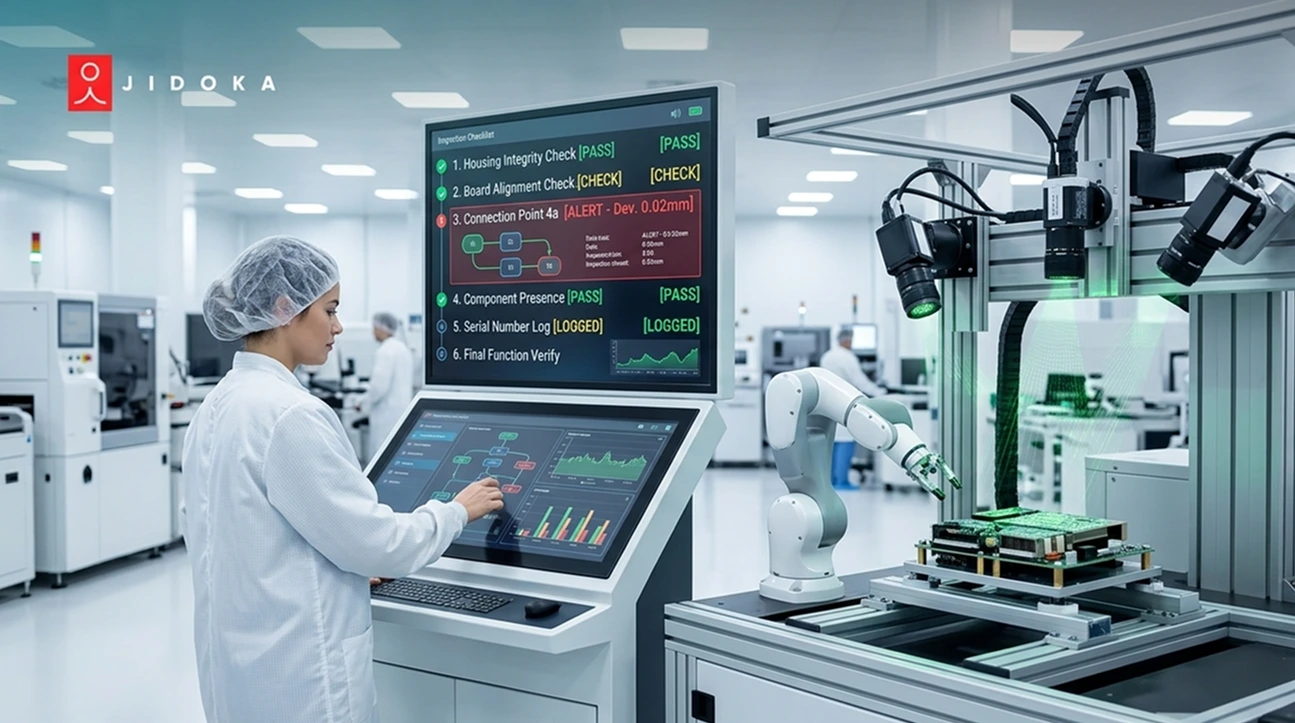
Manual Gemba walks depend on memory and timing. That creates gaps. Jidoka Tech closes them by turning the shop floor into an always-on Gemba. Its computer vision runs under real production pressure, aligning cameras, lighting, PLC timing, and edge units across shifts.
Plants report stable results at 12,000-plus parts per minute and up to 300 million inspections per day.
- KOMPASS reviews every frame in under 10 ms with 99.8 percent accuracy, learning new variants fast.
- NAGARE tracks every assembly step and flags sequence errors in real time.
Together, they direct leaders to the exact process that needs attention, strengthening factory floor observation and lean manufacturing continuous improvement.
Explore Jidoka Tech to turn everyday Gemba insight into continuous, real-time shop floor action.
Conclusion
Gemba closes the gap between leadership assumptions and shop floor reality. When leaders rely on direct factory floor observation, problems surface early and fixes stick. Teams stop reacting and start improving through lean manufacturing continuous improvement.
The challenge comes from scale. Manual Gemba walks miss moments and patterns. That is where Jidoka Tech fits in. Its always-on computer vision extends Gemba beyond scheduled walks, giving teams real-time visibility, faster decisions, and consistent shop floor improvement without waiting for the next round.
Connect with Jidoka Tech to bring real-time Gemba visibility to your shop floor.
FAQs
1. What is the main purpose of a Gemba walk?
The main purpose of a Gemba walk is direct factory floor observation. Leaders study how work happens in real time to support problem-solving on the shop floor, expose waste, improve production line efficiency, and strengthen lean manufacturing continuous improvement through facts, not reports.
2. How often should Gemba walks happen?
Most teams run a Gemba walk weekly or biweekly. This rhythm builds consistency, improves real-time management visibility, supports shop floor improvement, and keeps waste identification manufacturing active without disrupting daily operations.
3. Is Gemba only used in manufacturing?
No. Gemba applies anywhere work creates value. Software teams use Gemba where coding happens. Service teams apply Gemba at customer touchpoints. The goal stays the same: better process optimization through direct observation.
4. What is the ROI of Gemba?
Gemba delivers high returns with low cost. Teams reduce rework, improve production line efficiency, boost employee engagement and factory culture, and drive lean manufacturing continuous improvement by fixing issues early at the source.