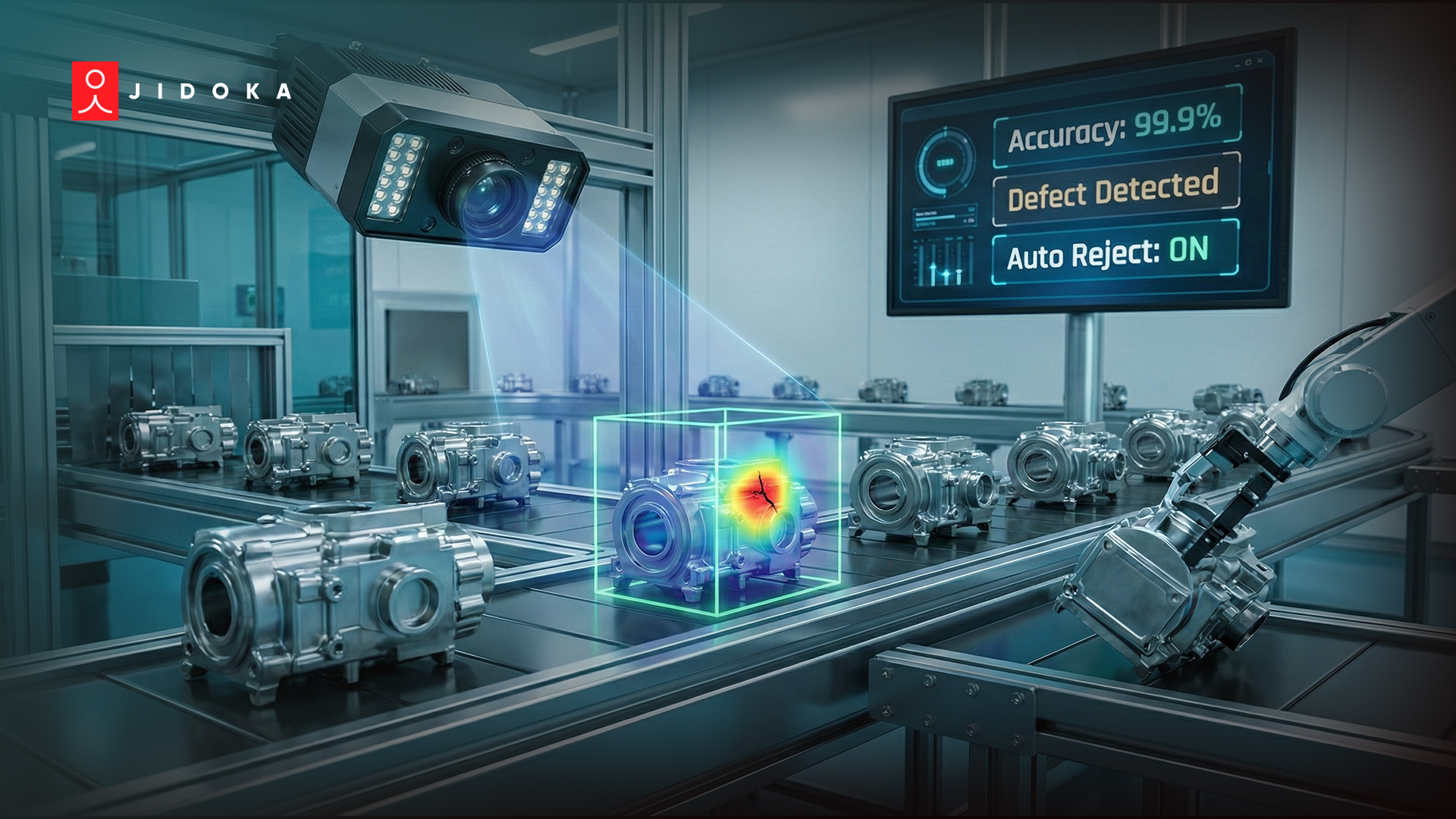
De productiekwaliteit heeft in 2026 een nieuwe standaard bereikt. De wereldwijde markt voor defectdetectie werd gewaardeerd op $3,3 miljard in 2024 en zal naar verwachting groeien naar $6,6 miljard in 2034.
Bedrijven die nog steeds afhankelijk zijn van handmatige inspectie verliezen bijna 20% van hun jaarlijkse omzet aan kosten door slechte kwaliteit. Dat cijfer alleen al verklaart waarom fabrikanten in hoog tempo overstappen op AI-gestuurde kwaliteitsinspecties. Deze verschuiving draait niet alleen om het opsporen van fouten, maar om het voorkomen ervan voordat ze de productielijn bereiken.
Deze gids verkent de methoden en kaders achter 99,9% nauwkeurigheid bij geautomatiseerde visuele inspectie in 2026.
De evolutie van defectdetectie: van menselijke fouten naar AI-precisie van 99,9%
Handmatige kwaliteitscontrole voldeed totdat de productiesnelheden de menselijke capaciteit overstegen. Inspecteurs missen microdefecten door vermoeidheid, en het herstellen van een fout na de productie kost aanzienlijk meer dan het vroegtijdig opsporen ervan.
Die kostenkloof heeft fabrikanten ertoe aangezet om op AI gebaseerde kwaliteitsinspecties op grote schaal uit te rollen. Moderne defectdetectie is verschoven van reactief opsporen naar voorspellende preventie.
A) Waarom traditionele, op regels gebaseerde visiesystemen in 2026 tekortschieten
Standaard geautomatiseerde visuele inspectiesystemen zoeken naar vaste pixelwijzigingen. Zodra de verlichting verandert of een product een natuurlijke variatie vertoont, zoals de textuur van voedsel of textiel, genereert het systeem valse positieven.
In slimme fabrieksomgevingen met een hoge productmix zorgt die starheid voor kostbare knelpunten.
Dit is waar op regels gebaseerde systemen voortdurend tekortschieten:
- Stijve drempelwaarden die zich niet kunnen aanpassen aan natuurlijke productvariaties in industriële automatisering
- Hoge percentages fout-positieven die realtime monitoring op productielijnen vertragen
- Geen mogelijkheid om nieuwe patronen voor anomaliedetectie te leren zonder handmatige herprogrammering
- Slechte prestaties op complexe oppervlakken zoals reflecterend metaal of getextureerde materialen
Machine learning-algoritmen leren van variabiliteit in plaats van erdoor te worden gehinderd. Dat is het cruciale verschil waardoor moderne defectdetectie nu wordt ingezet op slimme fabrieksvloeren.
B) De kracht van deep learning-modellen in kwaliteitsborging
Deep learning-modellen trainen op duizenden productafbeeldingen om patronen te herkennen die onzichtbaar zijn voor het menselijk oog. Ze onderscheiden met hoge precisie een onschadelijke oppervlaktereflectie van een structurele scheur.
Belangrijkste eigenschappen die ze effectief maken voor defectdetectie:
- Identificeer subtiele signalen van afwijkingen onder wisselende lichtomstandigheden
- Generaliseer verschillende productvarianten met behulp van computervisie zonder herprogrammering
- Verbeter de nauwkeurigheid in de loop van de tijd door continue bijscholing via machine learning-algoritmen
- Verwerk zeldzame soorten defecten via few-shot learning en edge computing-inferentie
Die precisie in AI-gestuurde kwaliteitsinspecties vormt de basis voor hoe deze systemen nu presteren in specifieke sectoren.
AI-gestuurde kwaliteitsinspectie toepassen in kritieke sectoren
AI-gestuurde kwaliteitsinspectie gaat inmiddels veel verder dan alleen de lopende band. Tegenwoordig is het actief in de halfgeleiderindustrie, logistiek, farmaceutica en FMCG-productie, elk met zijn eigen eisen op het gebied van snelheid en nauwkeurigheid.
De normen voor defectdetectie verschillen per sector, maar de onderliggende behoefte is overal hetzelfde: geen ontsnappingen bij maximale doorvoer.
1. Verificatie van halfgeleiders en elektronica
In de elektronica kunnen defecten kleiner zijn dan de dikte van een mensenhaar. Geautomatiseerde systemen voor visuele inspectie gebruiken 3D-beeldvorming en röntgengegevensfusie om soldeerverbindingen en de plaatsing van componenten in milliseconden te verifiëren. Computervisiemodellen getraind op waferkaartgegevens kunnen nu defecttypen classificeren die door oudere CNN-architecturen steevast verkeerd worden geïnterpreteerd.
AI-gestuurde kwaliteitsinspectie is hier geen optie, maar een noodzaak. Eén onopgemerkte fout in bedrijfskritieke hardware leidt tot downstream-storingen die vele malen kostbaarder zijn dan het inspectiesysteem zelf.
2. Snelle logistiek en sorteerefficiëntie
In de logistiek gaat het opsporen van defecten verder dan alleen het detecteren van beschadigde verpakkingen. Real-time bewakingssystemen voeren OCR-verificatie uit met snelheden van meer dan 300 eenheden per minuut.
Algoritmen voor machinaal leren die zijn getraind op productiebeelden herkennen karakters, ongeacht variaties in de print, vervuiling of oppervlakteruis. Ze sturen verkeerd gelezen beelden automatisch terug naar de trainingsset, waardoor de nauwkeurigheid met elke cyclus toeneemt.
3. FMCG en precisie van farmaceutische kwaliteit
In de farmaceutische industrie is de fouttolerantie nul. AI-gestuurde kwaliteitsinspectiesystemen controleren gelijktijdig het vulniveau van flessen, de afdichting van doppen en de juiste plaatsing van etiketten.
Bij de productie van FMCG verwerken deep learning-modellen op edge computing-hardware duizenden onderdelen per minuut, waarbij defecte items worden uitgesorteerd zonder de productielijn te stoppen. Anomaliedetectie signaleert afwijkingen die systemen met vaste drempelwaarden zouden missen.
AI-gestuurde kwaliteitsinspectie in verschillende sectoren: in één oogopslag
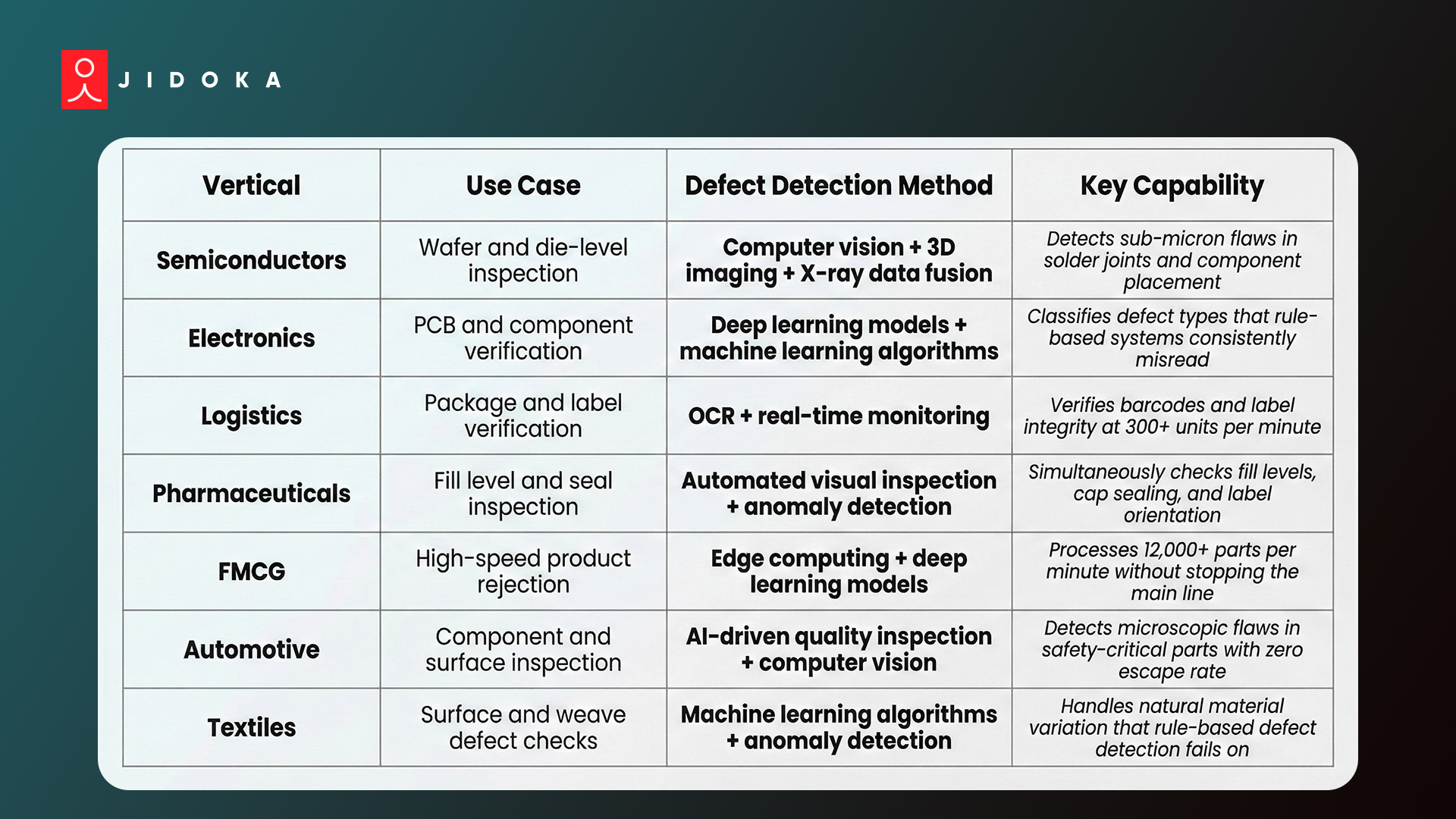
Deze sectoren hebben één vereiste gemeen: inspectie die gelijke tred houdt met de productie. De technologie die dit mogelijk maakt, bestaat uit twee bepalende componenten.
Moderne methoden voor het definiëren van geautomatiseerde visuele inspectie en edge-integratie
Met een nauwkeurigheid van 99,9% bij het opsporen van defecten is meer nodig dan betere camera's. Het vereist verwerkingsinformatie die rechtstreeks in de productieomgeving is ingebouwd. Twee technische verschuivingen bepalen hoe geautomatiseerde visuele inspectie in 2026 werkt.
A) Edge AI: verwerking bij de bron voor nul latentie
Het verzenden van afbeeldingen met een hoge resolutie naar de cloud duurt te lang wanneer een productielijn meerdere meters per seconde beweegt. Edge computing zorgt voor defectdetectie direct op de camera of lokale server.
Het systeem activeert een fysieke afwijzingsarm op het moment dat een fout wordt ontdekt. Geen netwerkvertraging. Geen gemiste onderdelen. Realtime monitoring wordt echt realtime.
Implementaties van industriële automatisering waarbij gebruik wordt gemaakt van edge computing, houden gevoelige productiebeeldgegevens bovendien op locatie, waardoor de afhankelijkheid van de cloud volledig wordt weggenomen.
B) Agentische AI: wanneer detectie onmiddellijke correctie veroorzaakt
2026 markeert de opkomst van agentische AI in geautomatiseerde visuele inspectie. In plaats van een waarschuwing naar een dashboard te sturen, onderneemt het systeem actie. Als zich een terugkerend kraspatroon voordoet, geeft de AI-gestuurde kwaliteitsinspecteur de stroomopwaartse machine een seintje om de lijn opnieuw te kalibreren of stopt hij de lijn voordat defecte onderdelen zich vermenigvuldigen.
Deep learning-modellen in combinatie met machine learning-algoritmen maken die autonome beslissingscyclus mogelijk. Siemens draait dit al op Op ARMv9 gebaseerde edge computing-platforms, die defecten aan componenten voorspellen en corrigeren voordat ze de eindinspectie bereiken.
Deze twee verschuivingen vormen de ruggengraat van elk goed presterend defectdetectiesysteem dat vandaag de dag in productie is.
Hoe Jidoka Technologies AI-gestuurde defectdetectie levert met een nauwkeurigheid van 99,8%
Voor het opsporen van defecten onder reële productiedruk is meer nodig dan een goed model. Hiervoor zijn camera's, verlichting, PLC-timing en edge computing-eenheden nodig die tijdens elke shift samenwerken. Jidoka Technologies bouwt precies dat.
Installaties waarop de Jidoka-oplossing draait, zorgen voor consistente geautomatiseerde visuele inspectieprestaties bij Meer dan 12.000 onderdelen per minuut en tot 300 miljoen inspecties per dag.
Twee systemen ondersteunen hun AI-gestuurde kwaliteitsinspectiesuite:
1. KOMPAS: Inspecteur met hoge nauwkeurigheid
- Bereikt 99,8% + nauwkeurigheid op live productielijnen
- Evalueert elk frame met behulp van deep learning-modellen in minder dan 10 ms
- Leert nieuwe varianten met 60-70% minder trainingsvoorbeelden
- Verwerkt reflecterende metalen, bedrukte oppervlakken en getextureerde onderdelen via computervisie
2. NAGARE: Proces- en assemblageanalist
- Volgt 100% van montagestappen via bestaande camera's met realtime monitoring
- Markeert onmiddellijk ontbrekende onderdelen of verkeerde sequenties met behulp van anomaliedetectie
- Vermindert herbewerking met 20-35% in industriële automatiseringsomgevingen
Beide systemen draaien volledig op lokale edge computing-eenheden, waardoor de afhankelijkheid van de cloud wordt geëlimineerd en beslissingen over de detectie van defecten worden genomen waar ze thuishoren: op de werkvloer.
Ontdek hoe de defectdetectiesystemen van Jidoka op uw productielijn presteren — Praat vandaag nog met het Jidoka-team.
Conclusie
AI-gestuurde kwaliteitsinspectie is niet langer een investering in de toekomst. Het is de huidige basis voor fabrikanten die concurreren op het gebied van kwaliteit en snelheid. Maar het implementeren van defectdetectie zonder de juiste infrastructuur zorgt voor eigen problemen.
Slecht gekalibreerde modellen genereren valse positieven, vertragen productielijnen en ondermijnen het vertrouwen van de operator. Erger nog, ongedetecteerde defecten bereiken klanten, wat leidt tot terugroepacties, nalevingsfouten en blijvende merkschade. De resultaten van een verkeerd geïmplementeerde geautomatiseerde visuele inspectie zijn meetbaar en duur.
Om het goed te doen, moet u computervisie, edge computing en deep learning-modellen afstemmen op één systeem dat consistent presteert. Dat is precies wat Jidoka-technologieën bouwt.
Boek een assessment met Jidoka om te zien waar uw huidige inspectieproces aan rendement inboet.
Veelgestelde vragen
1. Hoe bereikt AI een nauwkeurigheid van 99,9% in vergelijking met menselijke inspecteurs?
AI-gestuurde kwaliteitsinspectie raakt niet vermoeid en verliest de focus niet. Deep learning-modellen trainen op duizenden gelabelde beelden, waardoor afwijkingen kunnen worden gedetecteerd die onzichtbaar zijn voor het menselijk oog, zelfs bij hoge productiesnelheden waarbij handmatige defectdetectie tekortschiet.
2. Kan AI-gestuurde kwaliteitsinspectie werken met bestaande hardware?
Ja. De meeste geautomatiseerde visuele inspectiesystemen zijn hardware-onafhankelijk. Ze integreren met de huidige industriële camera's, PLC's en transportbanden via een edge computing-gateway, waardoor AI-gestuurde kwaliteitsinspecties kunnen worden ingezet zonder uw volledige industriële automatiseringsinfrastructuur te vervangen.
3. Wat is het verschil tussen AI en traditionele machinevisie?
Traditionele geautomatiseerde visuele inspectie maakt gebruik van hard gecodeerde regels. AI maakt gebruik van algoritmen voor machine learning en computervisie om te leren hoe defecten eruitzien bij verschillende belichting, texturen en oppervlakken, waardoor de detectie van defecten veel flexibeler en nauwkeuriger wordt in echte productieomgevingen.
4. Wat is Agentic AI in de maakindustrie?
Agentic AI onderneemt onafhankelijk actie tijdens de detectie van defecten. In plaats van alleen een mens te waarschuwen, kalibreert het AI-gestuurde kwaliteitsinspectiesysteem stroomopwaartse machines opnieuw of stopt de lijn autonoom, met behulp van deep learning-modellen en realtime monitoring om defectclusters te voorkomen voordat ze groter worden.
5. Is een detectienauwkeurigheid van 99,9% daadwerkelijk haalbaar in 2026?
Ja. Door computervisie met hoge resolutie, deep learning-modellen en edge computing-inferentie te combineren, bereikten toonaangevende geautomatiseerde visuele inspectiesystemen zoals Jidoka's KOMPASS consequent een nauwkeurigheid van 99,8% of hoger in slimme fabrieksomgevingen waar dagelijks miljoenen onderdelen worden verwerkt.