.webp)
Een auditor loopt over de werkvloer en vraagt het afwijkingslogboek op. Drie overgeslagen stappen in drie ploegendiensten. Hetzelfde station. Verschillende operators. De SOP-map die dit moet voorkomen? Die ligt achter slot en grendel in het kantoor van de supervisor.
Het probleem is geen gebrek aan kennis. Operators kennen de procedure. Het falen zit in de toegang, de handhaving en het ontbreken van real-time inzicht in wat er tijdens de nachtdienst op dat station is gebeurd.
Digitale standaardwerkinstructies vervangen statische papieren documenten door interactieve, mobiele workflows die naleving afdwingen op de plek waar het werk wordt uitgevoerd. De implementatie verloopt in vier fasen: bestaande SOP's auditen, digitaliseren en structureren, handhaven via real-time monitoring en optimaliseren met behulp van afwijkingsanalyses.
Dit draaiboek behandelt alle vier de fasen.
Waarom papieren SOP's tekortschieten in de moderne fabriek
Zonder digitale standaardwerkinstructies zijn fabrieken afhankelijk van een systeem dat procedures niet kan afdwingen, volgen of bijwerken in het tempo dat een actieve productielijn vereist.
Het probleem is niet de inhoud van de procedure, maar het formaat. De meeste faciliteiten die voor het eerst met digitale standaardwerkinstructies werken, zijn verrast om te ontdekken dat de inhoud nooit het zwakke punt was. Bij elke auditcyclus komen vier faalmodi naar voren.
1. Versieverschil
Een bijgewerkte werkinstructie verlaat het kwaliteitskantoor, maar bereikt de werkvloer nooit. Operators volgen de vorige versie die op de machine is gelamineerd. Je komt er pas achter wanneer een auditor het afwijkingslogboek opvraagt.
2. 'Pencil-whipping' (aftekenen zonder uitvoering)
Operators tekenen stappen af die ze niet hebben uitgevoerd. Niet uit nalatigheid, maar door tijdsdruk. Een handgeschreven aftekening biedt geen bewijs met tijdstempel dat stap 7 was voltooid voordat stap 8 begon. Auditors duiken als eerste in het afwijkingslogboek.
3. Toegangsbarrières
Een map in het kantoor van de supervisor of een PDF achter ontoegankelijke gedeelde schijven is geen toegankelijke SOP. Een operator die op volle snelheid werkt, kan niet stoppen om een document te gaan zoeken.
4. Auditrisico's
Papier levert geen tijdgestempeld, aan de operator gekoppeld verslag van de uitvoering op stapniveau. Dat gat leidt tot non-conformiteitsrapporten bij ISO-audits. Auditors eisen objectief bewijs. Papier kan dat op grote schaal niet leveren.
Dit zijn de structurele faalmodi in de meeste faciliteiten die nog met handmatige SOP-workflows werken. De overstap naar digitale standaardwerkinstructies lost alle vier de punten tegelijkertijd op.
Het volwassenheidsmodel voor SOP-compliance: vier fasen die elke fabriek doorloopt
De meeste fabrieken falen niet in het schrijven van SOP's. Hun digitale standaardwerkinstructies lopen vast tussen de digitaliseringsfase en de daadwerkelijke handhaving; dat is een ander probleem dat een andere oplossing vereist.
Met dit raamwerk kunnen operations- en kwaliteitsmanagers hun positie zelf beoordelen en identificeren wat de volgende fase in de weg staat.
De meeste faciliteiten bevinden zich in fase 1 of 2, maar denken dat ze in fase 3 zitten. De diagnostische vraag is concreet: kan uw kwaliteitsmanager op dit moment live de nalevingspercentages per station en per ploeg inzien, zonder handmatige audit? Zo niet, dan is fase 3 nog niet bereikt.
De overgang naar digitale SOP's in de productie loopt het vaakst vast tussen fase 2 en fase 3. De software voor digitale SOP's is live en de SOP's zijn omgezet, maar de nalevingsgegevens stromen nog niet door. Dit gebeurt wanneer het platform is geconfigureerd als documentviewer in plaats van als handhavingslaag. De manier waarop u uw software voor digitale SOP's kiest en configureert, bepaalt of fase 3 ooit wordt bereikt.
Software voor digitale SOP's in de productie kiezen: wat echt telt
Software voor digitale SOP's in de productie is geen hulpmiddel voor documentbeheer. Het is een handhavingslaag. Beoordeel het op die manier, niet op basis van het aantal functies of beoordelingen van de interface.
Om 6 uur 's ochtends, met drie lijnen in bedrijf, denken operators niet aan de UX-scores van digitale SOP-software. Ze hebben een systeem nodig dat offline werkt, integreert met wat er al draait en de kwaliteitsmanager live inzicht geeft zonder dat er een apart dashboard geopend hoeft te worden. Vijf criteria onderscheiden handhavingstools van digitale archiefkasten:
- 1. Mobile-first met offline functionaliteit. Productielijnen bevinden zich vaak in zones zonder bereik. Een platform voor digitale SOP's dat afhankelijk is van wifi, laat u op het slechtst mogelijke moment in de steek. Offline cachegeheugen is ononderhandelbaar, ongeacht hoeveel van de markt is overgestapt op cloud-implementatie.
- 2. Integratiediepte. Het platform moet voltooiingsrecords terugschrijven naar uw CMMS, MES of ERP. Digitale SOP-software die een aparte silo voor naleving creëert, lost geen nalevingsprobleem op. Het voegt er juist een toe.
- 3. Op rollen gebaseerde toegang met automatische versie-push. Elke SOP moet een eigenaar en een goedkeuringsworkflow hebben. Wanneer een revisie wordt gepubliceerd, krijgen de betreffende operators automatisch een melding. Als voor een pushmelding handmatige actie van het kwaliteitsteam vereist is, blijft versie-drift inherent aan het systeem.
- 4. Audit-ready logboekformaat. Tijdgestempelde, aan de operator gekoppelde en fraudebestendige records die exporteerbaar zijn in het formaat dat uw toezichthouder vereist. ISO 9001 omgevingen hebben documentatie volgens clausule 7.5 nodig. Farmaceutische omgevingen hebben naleving van 21 CFR Part 11 nodig. Laat de exportspecificaties bevestigen voordat u het contract ondertekent.
- 5. Real-time waarschuwingen bij afwijkingen. Pas op de hoogte zijn van een overgeslagen stap in het rapport van morgenochtend is het papieren SOP-probleem opnieuw gecreëerd in digitale SOP-software. Handhaving vereist meldingen op het moment zelf.
Deze vijf zijn geen voorkeuren. Het zijn basisvereisten voor elke gereguleerde fabrikant.
Van documentbeheer naar real-time SOP-compliance monitoring
Real-time SOP-compliance monitoring betekent dat het systeem verifieert of stap 7 is voltooid voordat de lijn verdergaat, niet dat er tijdens de dienst een pdf is geopend.
De meeste faciliteiten upgraden hun documentopslag en rapporteren dat ze digitale standaardwerkinstructies hebben geïmplementeerd. Ze hebben alleen het bestandsformaat veranderd. Het handhavingsgat blijft bestaan. Uw digitale standaardwerkinstructies zijn slechts zo effectief als het mechanisme dat verifieert of elke stap daadwerkelijk is uitgevoerd.
A) Workflows met vaste stappen
De operator kan niet doorgaan naar de volgende stap totdat de huidige is voltooid. Dit elimineert het overslaan en omdraaien van stappen op systeemniveau. Niet door trainingsherinneringen. Het platform voor digitale standaardwerkinstructies blokkeert fysiek de voortgang.
B) Digitale validatievereisten
Elke stap vereist een specifieke invoer voordat deze als voltooid wordt geregistreerd: een barcodescan, een foto van de voltooide assemblage, een koppelwaarde van het gereedschap. Het systeem accepteert of weigert de invoer voordat het verdergaat. Dit dicht het gat van het 'invullen met de natte vinger', wat met digitale selectievakjes alleen niet kan worden opgelost.
C) AI-gebaseerde visuele monitoring
Computervisie verifieert of de fysieke handeling overeenkwam met de SOP-stap, en niet alleen of de operator op bevestigen heeft getikt. Dit is actieve handhaving op elk station, tijdens elke dienst, op een schaal die geen enkel aantal supervisors kan evenaren.
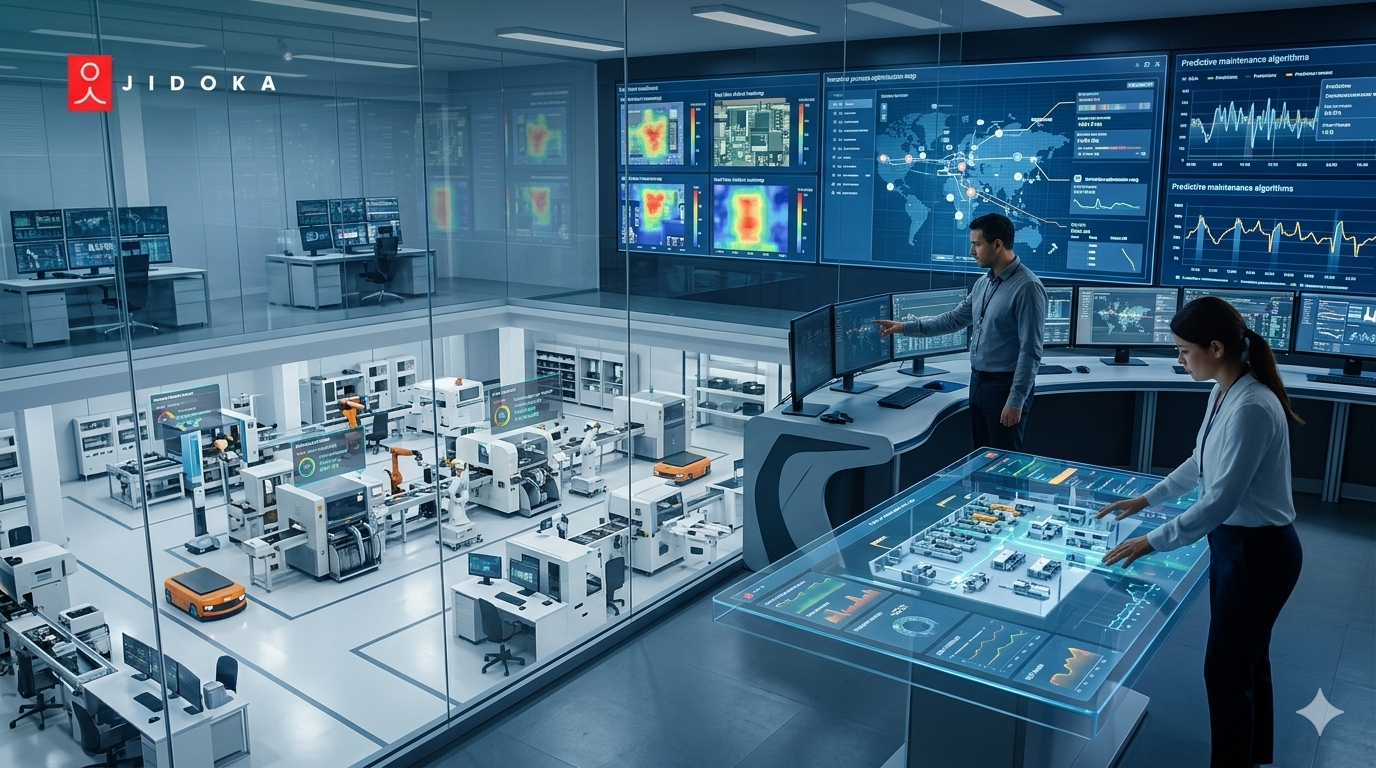
Jidoka's NAGARE systeem voert deze derde laag uit met behulp van bestaande CCTV-infrastructuur en edge AI. Het volgt 100% van de assemblagestappen, signaleert ontbrekende onderdelen of verkeerde sequenties in real-time en levert een 20-35% reductie in rework zonder nieuwe hardware. De verwerking draait lokaal op edge-units om latentie te elimineren.
Compliance bij procesaudits op dit niveau levert een tijdgestempeld verslag op van wat er fysiek op elk station is gebeurd, niet alleen wat er is gelogd. Dat is het verslag waar ISO-auditors steeds vaker als eerste om vragen.
Een gefaseerd implementatieplan voor de digitalisering van SOP's op de werkvloer
Een gefaseerde uitrol van digitale standaardwerkinstructies (SOP's) over 12 weken presteert consistent beter dan een alles-in-één implementatie. Begin met de SOP's die bij je meest recente audit tot bevindingen leidden, niet met de SOP's die het makkelijkst om te zetten zijn.
Week 1-2: SOP-audit.
Eigenaar: Kwaliteitsmanager.
Resultaat: Volledige inventarisatie met kritiekheidsbeoordelingen, eigenaar, revisiedatum en risicoclassificatie voor compliance.
Risicowaarschuwing: Hier komt ongedocumenteerde impliciete kennis naar boven. Bouw 30% buffer in voor het vastleggen op werkvloerniveau.
Week 3-4: Platformconfiguratie.
Eigenaar: IT-manager + Kwaliteitsmanager.
Resultaat: Digitale SOP-software live met op rollen gebaseerde toegang, geïntegreerd met CMMS of MES.
Risicowaarschuwing: Vertragingen bij ERP-integratie nekken meer projecten dan weerstand van operators. Los dit op voordat de training begint.
Week 5-6: Digitaliseringssprint.
Eigenaar: Kwaliteitsmanager + Lijnverantwoordelijken.
Resultaat: De 10-20 meest kritieke digitale standaardwerkinstructies omgezet naar interactieve workflows met vaste stappen.
Risicowaarschuwing: Probeer in dit stadium niet alle SOP's volledig om te zetten. Scope creep verschuift de pilotdatum met weken.
Week 7-8: Pilot op één lijn.
Eigenaar: Plantmanager.
Resultaat: Live compliance-data van één lijn, waarbij het afwijkingspercentage wordt gemeten ten opzichte van de nulmeting van vóór de digitalisering.
Risicowaarschuwing: Kies een lijn met een betrokken supervisor, niet per se de meest volgzame. Weerstand leert je meer dan een soepel proces.
Week 9-10: Volledige uitrol.
Eigenaar: Plantmanager + HR.
Resultaat: Alle lijnen werken met digitale standaardwerkinstructies (SOP's) met strikte handhaving.
Risicowaarschuwing: Operators die handhaving als surveillance ervaren, zullen het systeem proberen te omzeilen. Verandermanagement is geen optie, maar een vereiste.
Week 11-12: Analyse van afwijkingen.
Eigenaar: Quality Lead.
Resultaat: Eerste revisie van digitale standaardwerkinstructies getriggerd door afwijkingsdata.
Risicomelding: Eén gerichte oplossing bewijst de ROI aan het management. Revisieer niet direct tien SOP's in de eerste cyclus.
De meeste implementaties lopen niet vast door technische complexiteit. Ze lopen vast in week 7, wanneer pilotdata ongemakkelijk zijn en er niemand is aangewezen om actie te ondernemen voordat week 8 begint.
Hoe digitale SOP's bijdragen aan procesaudit-compliance en ISO 9001-gereedheid
Digitale standaardwerkinstructies genereren de gedocumenteerde informatie die ISO 9001 vereist in drie clausules: 7.5 (documentbeheer), 8.5.1 (beheerste omstandigheden) en 9.1 (monitoring en meting).
ISO-auditors zitten niet te wachten op je SOP-map. Ze willen objectief bewijs dat er tijdens elke dienst aan de beheerste omstandigheden is voldaan. Dit is wat digitale standaardwerkinstructies per clausule opleveren:
- Clausule 7.5 (Gedocumenteerde informatie): Versiebeheerde SOP's met goedkeuringsworkflows en op rollen gebaseerde toegang. Revisiegeschiedenis is automatisch. Notificaties aan operators worden gelogd.
- Clausule 8.5.1 (Beheerste omstandigheden): Van tijdstempels voorziene voltooiingsrecords op stapniveau, gekoppeld aan de operator. Het systeem bewijst dat het vereiste resultaat is behaald, en niet alleen dat de operator aanwezig was.
- Clausule 9.1 (Monitoring en meting): Afwijkingsstatistieken op dienst-, station- en operatorniveau vanuit het handhavingssysteem. Auditors accepteren dit als objectief bewijs voor prestatie-evaluatie.
Voor fabrikanten in de farmaceutische en medische sector FDA 21 CFR Part 11 vereist fraudebestendige, van tijdstempels voorziene records die aan een operator zijn gekoppeld. Controleer de Part 11-complianceverklaring van het softwareplatform voor digitale SOP's in de documentatie van de leverancier voordat je het in een gereguleerde omgeving implementeert.
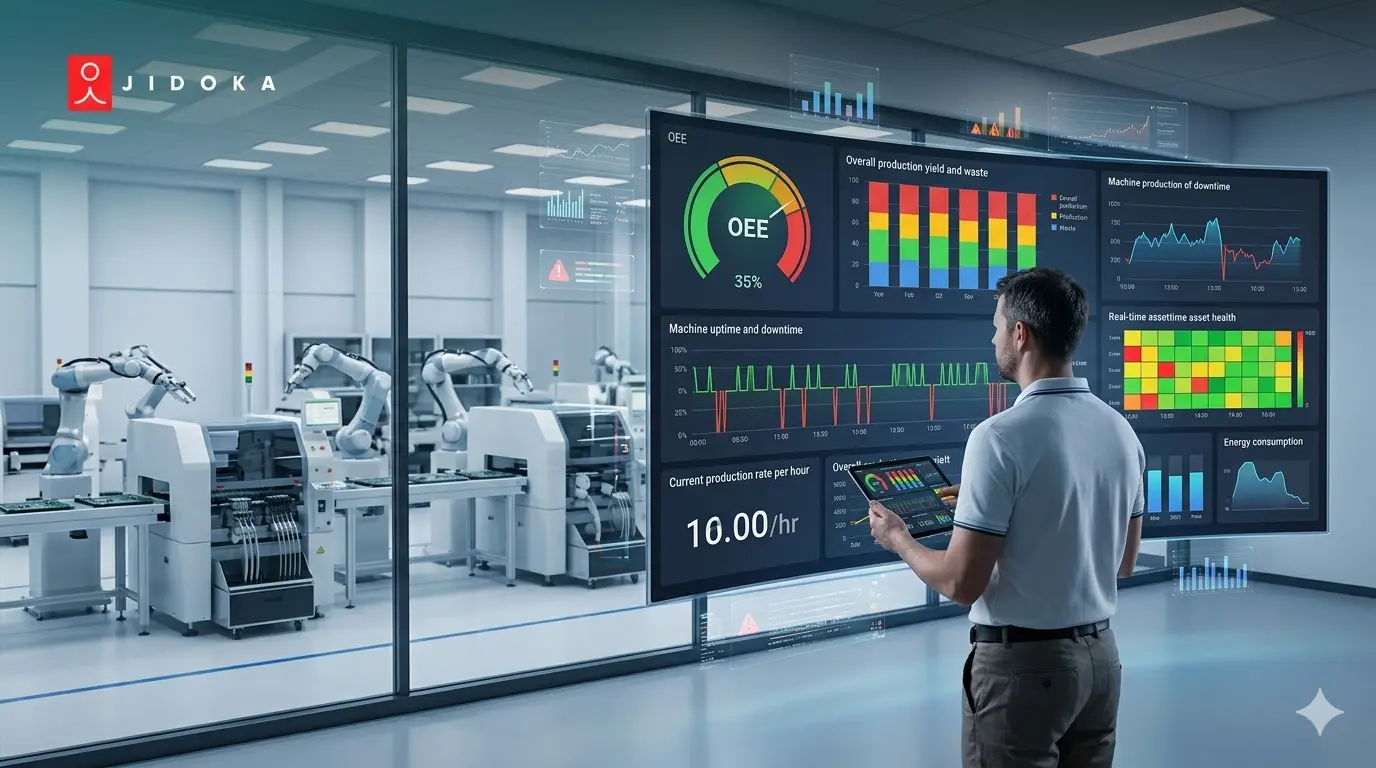
Het auditgesprek verandert volledig wanneer de bedrijfsleider de auditor een live dashboard overhandigt in plaats van een map.
Wat Jidoka Technologies hieraan bijdraagt
Jidoka bouwt AI-inspectie- en SOP-compliancesystemen voor de productie, ontworpen voor echte productiedruk, in alle ploegendiensten en op schaal. Voor teams die overstappen op digitale standaardwerkinstructies met real-time handhaving, doen twee systemen het zware werk:
- KOMPASS bereikt een nauwkeurigheid van meer dan 99,8% op actieve productielijnen, analyseert elk frame in minder dan 10 ms en leert nieuwe varianten met 60-70% minder trainingsvoorbeelden.
- NAGARE controleert 100% van de montagestappen via bestaande camera's, signaleert ontbrekende onderdelen en onjuiste volgordes in real-time, en vermindert herstelwerkzaamheden met 20-35% zonder nieuwe hardware.
Als uw fabriek de overstap maakt van papieren of PDF-werkinstructies naar digitale handhaving via software in real-time, laten we dan in kaart brengen waar uw lijnen zich bevinden op het volwassenheidsmodel en wat NAGARE kan activeren zonder nieuwe hardware. Plan een rondleiding.
Conclusie: De audit die anders verloopt
De auditor met het afwijkingenlogboek is dezelfde auditor. Het verschil is de bedrijfsleider die een compliance-dashboard per station en ploeg opent, tijdgestempelde afwijkingsrapporten overhandigt inclusief reeds geregistreerde corrigerende maatregelen, en de volgende revisiecyclus voor werkinstructies plant op basis van data.
Dat is de operationele verschuiving die digitale standaardwerkinstructies mogelijk maken. Bewijs dat het werk is uitgevoerd zoals ontworpen, op stapniveau, in elke ploeg.
Als u de fase van platformvergelijking voorbij bent en vastzit in de implementatiefase, laten we dan praten.
Veelgestelde vragen
1. Wat is het verschil tussen een digitale SOP en een SOP in pdf-formaat?
Een pdf is een document. Een digitale standaardwerkinstructie (SOP) is een afgedwongen workflow. Een pdf kan worden ondertekend zonder te worden gelezen. Een digitale SOP houdt de operator bij elke stap vast totdat de vereiste actie is voltooid, voordat de workflow verdergaat. Dat verschil in handhaving is het verschil tussen documentatie en compliance.
2. Hoe lang duurt het digitaliseren van SOP's in een fabriek?
Een gefaseerde implementatie van digitale standaardwerkinstructies duurt 10 tot 12 weken voor een middelgrote fabriek. Het traject omvat een SOP-audit, platformintegratie, een digitaliseringssprint voor kritieke SOP's en een pilot op één productielijn vóór de volledige uitrol. Fabrieken die proberen alles in één keer om te zetten zonder pilot, lopen steevast 60 tot 90 dagen uit op de planning.
3. Waar moet ik op letten bij software voor digitale SOP's in de productie?
Software voor digitale SOP's in de productie moet beschikken over workflows met vaste stappen, digitale validatievereisten per stap, realtime waarschuwingen bij afwijkingen en een exporteerbaar, fraudebestendig auditspoor. Geavanceerde platforms voor digitale SOP's voegen hier nog AI-gebaseerde visuele monitoring aan toe, die verifieert of de fysieke handeling daadwerkelijk heeft plaatsgevonden, in plaats van alleen te vertrouwen op de bevestiging van de operator.
4. Hoe ondersteunen digitale standaardwerkinstructies de voorbereiding op ISO 9001-audits?
Digitale standaardwerkinstructies voldoen aan de documentbeheervereisten van ISO 9001 clausule 7.5 en genereren tijdgestempelde records per stap die voldoen aan clausule 8.5.1. Analyse van afwijkingen per ploegendienst levert auditors de monitoring- en meetgegevens die clausule 9.1 vereist als objectief bewijs voor prestatie-evaluatie.
5. Kan AI de naleving van SOP's op de werkvloer monitoren zonder nieuwe hardware?
Ja. NAGARE van Jidoka Technologies voert monitoring van SOP-naleving uit op bestaande CCTV-infrastructuur met behulp van edge AI. Het verifieert montagestappen in realtime aan de hand van digitale standaardwerkinstructies en signaleert ontbrekende onderdelen en onjuiste sequenties bij elk station, zonder dat er nieuwe camera's geïnstalleerd hoeven te worden.