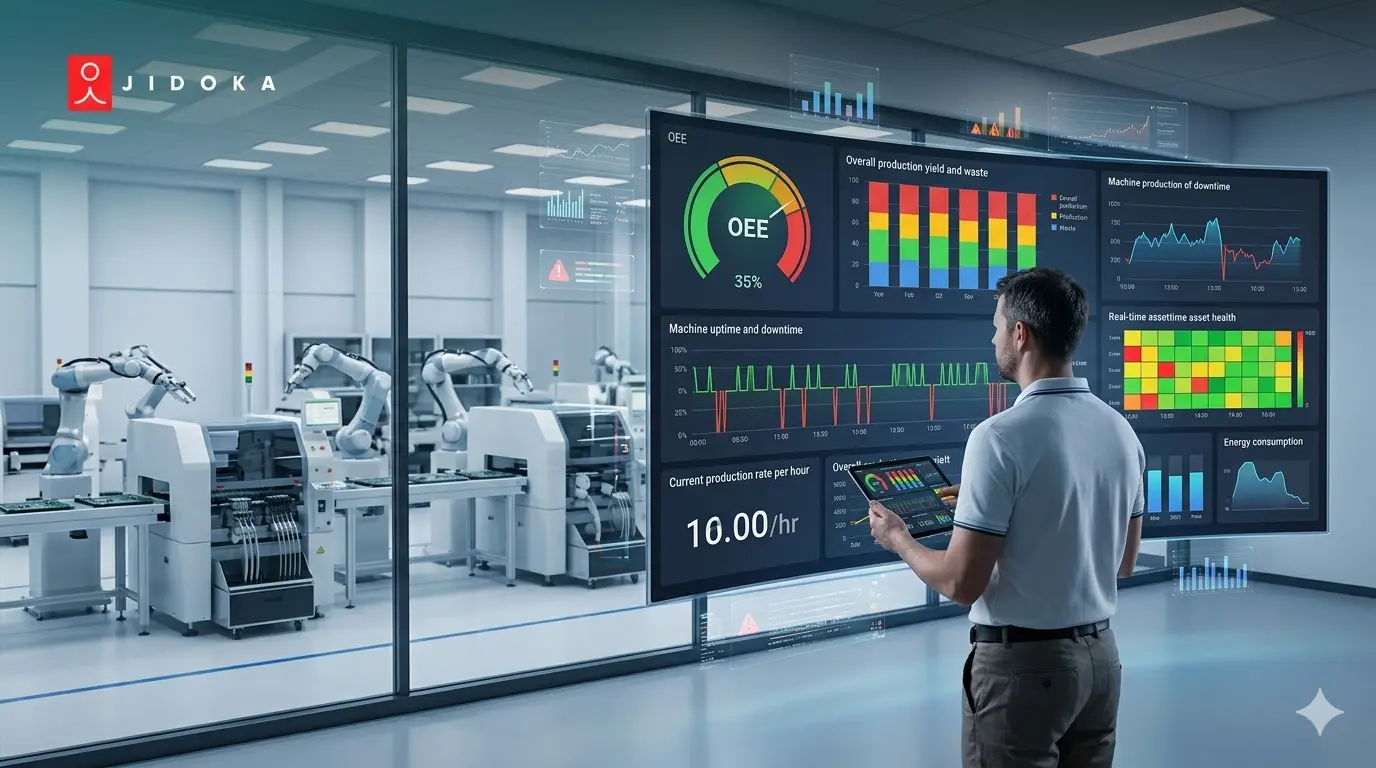
Een productiefaciliteit besteedde 14 maanden aan het uitrollen van IIoT-sensoren op 40 productiemachines. Aan het einde van dat traject beschikte de operationeel directeur over een real-time sensordashboard.
Het kwaliteitsteam gebruikte nog steeds hetzelfde spreadsheet om afkeur bij te houden. Het efficiëntieteam berekende de OEE nog steeds op basis van handmatige invoer van operators aan het einde van de dienst. De sensoren genereerden data, maar niets daarvan was gekoppeld aan de productierecords die het betekenisvol hadden kunnen maken. Dit is het faalscenario waar de meeste data-analyseprogramma's in de productie tegenaan lopen, en dat heeft niets met de sensoren zelf te maken.
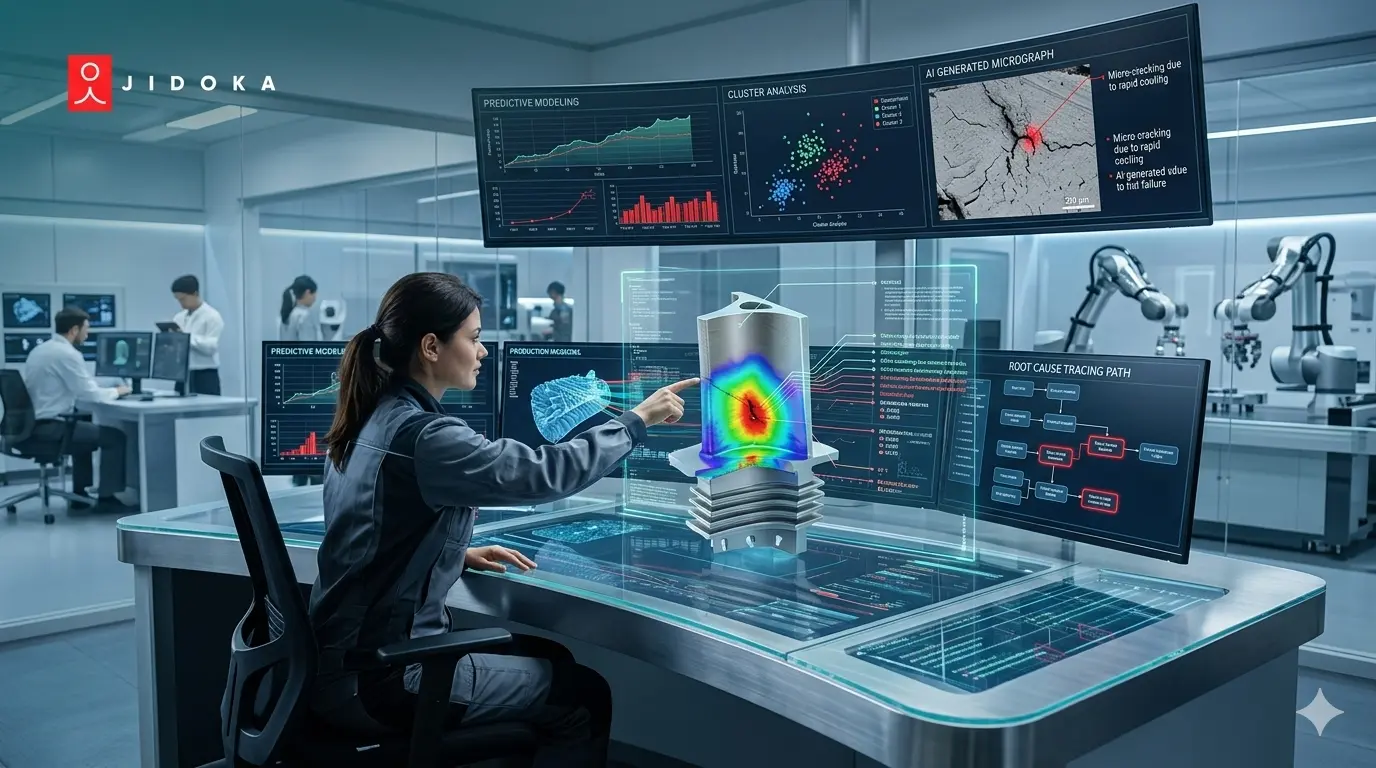
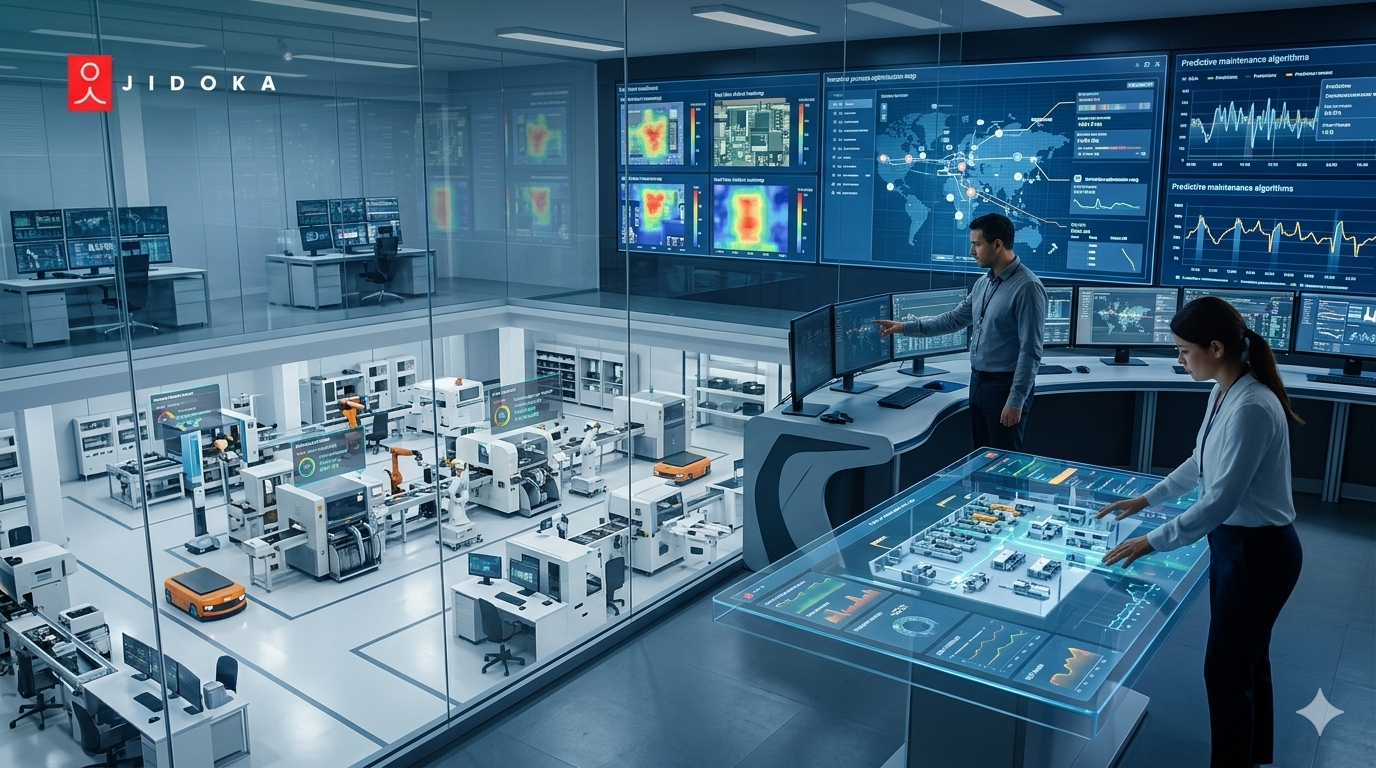
Data-analyse in de productie zet gegevens van sensoren, productiemachines, visuele inspectiesystemen en procesmonitors op de werkvloer om in beslissingen over kwaliteit en efficiëntie. De kloof tussen het verzamelen van data en het nemen van beslissingen op basis daarvan is een architectuurprobleem, geen technologieprobleem. De analytische stack van vier lagen (dataverzameling, integratie en contextualisering, analyse en visualisatie, AI en besluitvormingsautomatisering) moet in de juiste volgorde worden opgebouwd om ervoor te zorgen dat elke laag beslissingen oplevert in plaats van ruis.
Waarom de meeste fabrikanten data verzamelen maar er geen beslissingen op baseren
Data-analyseprogramma's in de productie falen wanneer verzamelde data niet wordt gekoppeld aan de operationele context die het betekenisvol maakt. De meeste fabrikanten verzamelen al meer data dan ze analyseren. Het probleem is de architectuur: sensoren die niet zijn geïntegreerd met activagegevens, ploegenschema's en productspecificaties genereren slechts getallen, geen industriële inzichten.
Slechts 20% van de door fabrikanten verzamelde sensordata wordt daadwerkelijk gebruikt voor analyses. De overige 80% wordt gegenereerd, opgeslagen en nooit geanalyseerd (IIoT World Manufacturing Day 2025). 86% van de fabrikanten gelooft dat initiatieven voor slimme fabrieken hun belangrijkste concurrentievoordeel zullen zijn in de komende vijf jaar, maar slechts 57% heeft cloud computing en data-analyse ingezet om die initiatieven te ondersteunen (Deloitte 2025 via manufacturingleadgeneration.com). De kloof tussen investering en resultaat is de architectuurkloof.
De drie structurele problemen die de analysekloof veroorzaken
Ten eerste: datasilo's. Productiemachines, kwaliteitssystemen, onderhoudsgegevens en energiemeters hebben elk hun eigen dataopslag. Zonder integratie in laag 2 is elk systeem een eiland. Een piek in de trillingssensor van een machine die vier uur later correleert met een cluster defecten, blijft onzichtbaar als de trillingsgegevens en de defectrecords in afzonderlijke, niet-gekoppelde systemen staan.
Ten tweede: rapportagevertraging. Data die 24 tot 72 uur na de gebeurtenissen binnenkomt, leidt niet tot beslissingen. Het leidt tot evaluaties achteraf. Het 14 maanden durende IIoT-sensorprogramma uit de inleiding van deze blog leverde real-time sensorwaarden op die in de praktijk nergens aan gekoppeld waren. Het spreadsheet van het kwaliteitsteam liep een volledige dienst achter. Dat zijn twee afzonderlijke vertragingsproblemen die twee afzonderlijke architecturale oplossingen vereisen.
Ten derde: ontbrekende context. Een sensorwaarde zonder context is slechts een getal. Dezelfde waarde met activagegevens (welke machine), ploegenschema (welke run), productspecificatie (welk product) en batchrecord (welke batch) wordt een input voor besluitvorming. Kwaliteitsmanagement is de op twee na hoogste investeringsprioriteit (28%) in slimme productiesystemen (Deloitte 2025 via manufacturingleadgeneration.com). Die investering levert pas rendement op wanneer de geproduceerde data wordt voorzien van context.
De analytische stack van vier lagen voor productie-data
Elk data-analyseprogramma in de productie dat beslissingen oplevert in plaats van alleen dashboards, is opgebouwd uit vier opeenvolgende lagen. Het overslaan van laag 2 en 3 om direct naar laag 4 (AI) te gaan, is de meest voorkomende oorzaak van een nagenoeg nulrendement op data-analyse. Geavanceerde AI op basis van ongecontextualiseerde data levert zelfverzekerde, maar foutieve antwoorden op.
Laag 1: Dataverzameling
Laag 1 verzamelt ruwe data van alle productiebronnen. De vier primaire broncategorieën zijn PLC's en SCADA-systemen (operationele machinegegevens, cyclustijden, foutcodes), IoT-sensoren (temperatuur, trillingen, druk, omgevingswaarden), visuele inspectiesystemen (defectclassificatie, inspectiegebeurtenissen, geannoteerde afbeeldingen) en MES/ERP-platforms (productieschema's, batchgegevens, kostengegevens).
KOMPASS op Laag 1
KOMPASS AI-visie is de bron met de hoogste informatiedichtheid op Laag 1: elke geïnspecteerde eenheid genereert een gestructureerd record met daarin het defecttype, de ernst, tijdstempel, batchcode, lijn-ID en een geannoteerde afbeelding. Deze gestructureerde output voedt direct de analyses van Laag 3, zonder dat handmatige defectregistratie of gegevensinvoer aan het einde van de dienst nodig is.
NAGARE op Laag 1
NAGARE AI-procesbewaking legt procesconformiteit vast op stapniveau: acties van operators, naleving van de volgorde, type afwijking, tijdstempel en duur. Het procesgebeurtenissenlogboek van NAGARE voorziet de tools voor productieanalyse van procesgegevens die sensoren alleen niet kunnen vastleggen: wat de operator deed, in welke volgorde en waar er werd afgeweken.
Laag 2: Data-integratie en contextualisering
Laag 2 verbindt alle databronnen van Laag 1 via een masterdata-backbone voor assets. Het asset-masterrecord definieert wat elke machine is, wat deze produceert, onder welke parameters deze moet draaien en wat de onderhoudshistorie is. Zonder de asset-master is een temperatuurmeting van sensor #47 slechts een getal. Met de asset-master is het: 'Machine 4 op Lijn 3 overschreed de bovenste controlegrens voor de temperatuur van de seal-kop tijdens de dienst van 14:00 tot 22:00 uur bij het draaien van productbatch 2026-06-14-A.'
Dit is waar de meeste programma's voor productie-data-analyse falen. Laag 2 vereist het koppelen van MES-productieschema's, ERP-batchgegevens, CMMS-onderhoudshistorie en PLC-operationele data rondom een gemeenschappelijke asset-identificator. Dit is integratiewerk, geen AI-werk. Het overslaan hiervan betekent dat visualisaties op Laag 3 ongecontextualiseerde metingen tonen en AI-modellen op Laag 4 trainen op data zonder de kenmerken die voorspellingen nauwkeurig maken.
Laag 3: Analyse en visualisatie
Laag 3 zet gecontextualiseerde data om in beslissingen. Productie-analysesoftware op Laag 3 omvat real-time Pareto-grafieken per defectcategorie en dienst, FPY-trendanalyse per lijn en batch, OEE-berekening onderverdeeld in beschikbaarheid, prestaties en kwaliteit, SPC-bewaking met controlegrenzen per machine en product, en trends in de naleving van schema's. Elk van deze analyses is een beslissing, geen rapport.
De test voor de geschiktheid van Laag 3: vertelt de output een kwaliteitsingenieur of fabrieksmanager wat hij moet doen, of alleen wat er is gebeurd? Een Pareto-grafiek die 'seal-integriteit' identificeert als de belangrijkste defectcategorie voor de huidige dienst, afkomstig uit het real-time inspectielogboek van KOMPASS, vertelt de kwaliteitsingenieur wat hij moet onderzoeken. Dezelfde grafiek, opgebouwd uit handmatige logboeken van de vorige dienst, vertelt alleen wat er 16 uur geleden is gebeurd.
Laag 4: AI-beslissingsautomatisering
Laag 4 gebruikt de gecontextualiseerde, gevalideerde data van de Lagen 1 tot en met 3 om beslissingen te automatiseren waar voorheen menselijk oordeel of beoordeling aan het einde van de dienst voor nodig was. Anomaliedetectie signaleert productieafwijkingen in real-time. Voorspellende kwaliteitswaarschuwingen waarschuwen voor een toenemend risico op defecten voordat het afkeurpercentage de drempel overschrijdt. Geautomatiseerde CAPA-triggers openen records voor corrigerende maatregelen wanneer defectpatronen overeenkomen met geconfigureerde criteria.
83% van de productie-executives noemt datakwaliteit als hun grootste zorg voor AI-adoptie (KPMG via DataToBiz). Datakwaliteit is een probleem van Laag 2, niet van Laag 4. De AI is nauwkeurig wanneer de integratie volledig is. Fabrikanten die de Lagen 2 en 3 correct opbouwen voordat ze AI op Laag 4 inzetten, rapporteren consistent een positieve ROI. Degenen die direct naar Laag 4 springen, rapporteren steevast het tegenovergestelde. 49% van de productie-executives gebruikt actief AI en haalt er waarde uit (KPMG 2025 via DataToBiz) juist omdat ze eerst de fundamentele lagen hebben gebouwd.
Drie use-cases voor productie-analyse met bewezen ROI
De drie use-cases waarbij productie-data-analyse binnen 6 tot 24 maanden een positieve ROI oplevert, zijn kwaliteitsanalyse (defectclassificatie, FPY-tracking, SPC), voorspellend onderhoud (anomaliedetectie op machinesensoren) en efficiëntieanalyse (OEE per lijn, trends in naleving van schema's). Elke use-case vereist een andere databron op Laag 1, maar deelt dezelfde integratiefundamenten van Laag 2.
Kwaliteitsanalyse: van defectgegevens naar preventieve beslissingen
Kwaliteitsanalyse koppelt KOMPASS-inspectielogboeken (Laag 1) via activum- en batchgegevens (Laag 2) aan real-time Pareto-, FPY-trend- en SPC-monitoring (Laag 3). De beslissingsoutput: welke defectcategorie moet nu worden onderzocht, welke lijn krijgt prioriteit voor corrigerende maatregelen en wanneer moet automatisch een CAPA-workflow worden gestart. Kwaliteitsinspectie-analyse levert een positieve ROI op binnen 6 tot 12 maanden wanneer deze is gebouwd op een gestructureerde architectuur van Laag 1 tot 3 (TechAhead, februari 2026).
Voor FMCG-productie in het bijzonder voorkomen databestuurde beslissingen over defectpatronen de terugroepacties vanwege allergenenetikettering en verpakkingsfouten die bij kwaliteitscontroles op basis van steekproeven steevast over het hoofd worden gezien. Dezelfde architectuur voor kwaliteitsanalyse is van toepassing op automotive, elektronicaen farmaceutische productie.
Predictive Maintenance: van sensordata naar storingspreventie
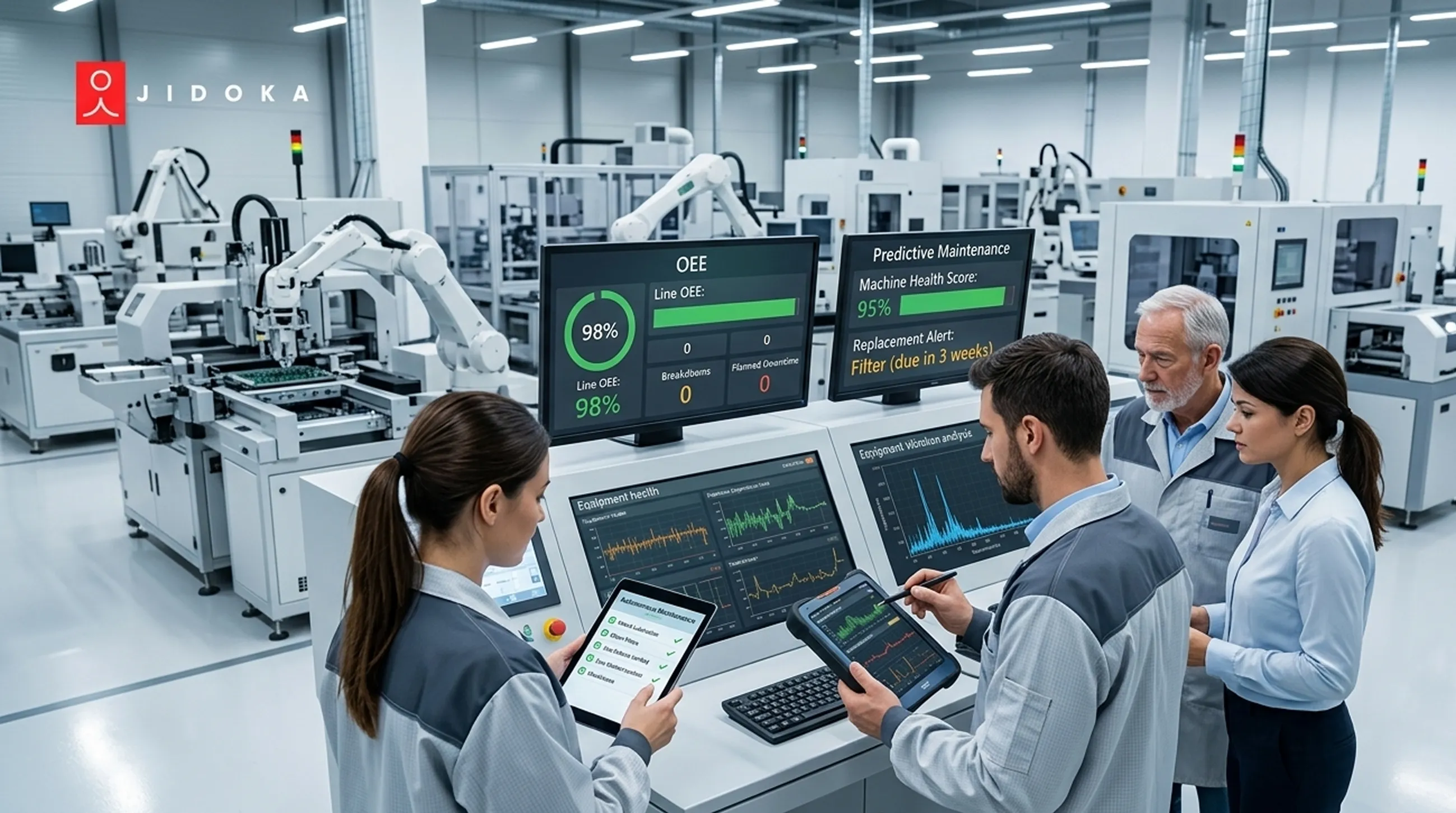
Predictive maintenance-analyse koppelt trillings-, temperatuur- en druksensoren (Laag 1) via de onderhoudshistorie van activa en het productieschema (Laag 2) aan modellen voor anomaliedetectie en de resterende levensduur (Laag 3 en 4). De beslissingsoutput: wanneer onderhoud inplannen vóór een ongeplande storing, en hoe slijtage van apparatuur correleert met FPY-degradatie.
De contextuele vereiste: een trillingsmeting die een predictive maintenance-waarschuwing activeert, moet gekoppeld zijn aan de baseline van het activum (uit de onderhoudshistorie), de huidige draaisnelheid (van de PLC) en de productiebatch (uit het MES). Zonder die context kan het model een normaal trillingssignaal niet onderscheiden van een anomalie. Dit is de integratieafhankelijkheid van Laag 2 die predictive maintenance-programma's het vaakst overslaan, en de reden waarom de meeste er niet in slagen om binnen de eerste 18 maanden een ROI te behalen.
Efficiëntieanalyse: van procesdata naar OEE-verbetering
Efficiëntieanalyse koppelt NAGARE-procesgebeurtenislogboeken en PLC-cyclustijdgegevens (Laag 1) via het productieschema en de lijnconfiguratie (Laag 2) aan OEE-berekening, analyse van micro-stops en trends in naleving van het schema (Laag 3). De beslissingsoutput: welke lijn verliest de meeste OEE-punten en aan welke van de drie OEE-verliescategorieën (beschikbaarheid, prestatie, kwaliteit) moet dit worden toegeschreven.
NAGARE classificeert elke downtime-gebeurtenis automatisch op oorzaak, waardoor handmatige logboekinvoer aan het einde van de dienst, die bij de meeste downtime-registraties leidt tot ongecategoriseerde gegevens, overbodig wordt. Die classificatie is de input voor manufacturing business intelligence die een OEE-cijfer omzet in een actie voor OEE-verbetering.
De businesscase voor investeringen in manufacturing data analytics
De businesscase voor investeringen in productie-data-analyse is het sterkst wanneer deze wordt gebaseerd op het verminderen van besluitvormingsvertraging in plaats van op datavolume. De vraag is niet 'hoeveel data kunnen we verzamelen?', maar 'hoe snel kunnen we een productiegebeurtenis omzetten in een corrigerende actie?'
ROI-tijdlijnen per use case en architecturale volledigheid
Analytics voor kwaliteitsinspectie levert een positieve ROI op binnen 6 tot 12 maanden wanneer deze is gebouwd op een gestructureerde vierlaagse architectuur. Voorspellend onderhoud en complexe efficiëntieprogramma's voor meerdere processen vereisen doorgaans 18 tot 24 maanden (TechAhead, februari 2026). Faciliteiten die de integratie van laag 2 overslaan voordat ze AI in laag 4 inzetten, rapporteren steevast een ROI van bijna nul op hun analytics-investering, ongeacht hoe geavanceerd de AI-laag is.
De duidelijkste ROI-signalen om te volgen: vermindering van besluitvormingsvertraging (van uren naar minuten bij kwaliteits- en efficiëntiegebeurtenissen), vermindering van het aantal herhaalde corrigerende acties (wat wijst op een verbeterde nauwkeurigheid van de root-cause-analyse) en verlaging van de kosten van slechte kwaliteit, inclusief uitval, herbewerking en garantie. Een programma voor productie-data-analyse dat binnen 12 maanden geen vooruitgang laat zien op ten minste een van deze drie statistieken, heeft een architectuurprobleem, geen technologisch tekort.
De 86%-benchmark en wat deze betekent voor het investeringsmoment
86% van de fabrikanten gelooft dat smart factory-initiatieven over vijf jaar hun concurrentiepositie zullen bepalen (Deloitte 2025). Die benchmark definieert het concurrentierisico van het nu niet opbouwen van een infrastructuur voor productie-data-analyse. De fabrieken die de komende 12 tot 18 maanden de integratie van laag 2 voltooien en de analytics van laag 3 valideren, beschikken over de datakwaliteitsbasis die AI in laag 4 vereist. Degenen die AI in laag 4 inzetten zonder lagen 2 en 3, zullen de ROI van bijna nul blijven rapporteren die de meeste huidige AI-implementaties kenmerkt.
De investeringsbeslissing voor software voor productie-analytics is geen vraag of men AI moet inzetten. Een data-intelligentieplatform voor fabrieken vereist die architectuur als fundament. Het is de vraag of men de architectuur bouwt die AI laat werken. Het 14 maanden durende sensorprogramma uit de inleiding van deze blog besteedde 14 maanden aan het bouwen van laag 1 voor 40 machines en leverde nul output voor laag 3 of laag 4. De corrigerende investering is integratie van laag 2, niet meer sensoren.
Jidoka Technologies en de analytics-architectuur
KOMPASS en NAGARE vormen de basis voor laag 1 en 4 van de stack voor productie-data-analyse: KOMPASS als de bron voor gestructureerde data met de hoogste informatiedichtheid in laag 1, en NAGARE als de bron voor procesconformiteitsdata die acties van operators koppelt aan het productierecord dat deze in de juiste context plaatst.
- KOMPASS laag 1: Gestructureerde defectrecords per eenheid. Voedt Pareto, FPY en SPC in laag 3 zonder handmatige invoer. Elimineert datalatentie in de kwaliteits-analyticslaag.
- NAGARE laag 1: Procesgebeurtenislogboeken per operatorstap. Voedt OEE-beschikbaarheid en analytics voor naleving van planningen met geautomatiseerde classificatie van stilstandtijden.
- Industrieën: Ingezet in automotive, FMCG, elektronica, farmaceutische industrieen algemene productie.
Ontdek hoe KOMPASS en NAGARE de basis vormen voor de Layer 1 en Layer 4 architectuur voor datagestuurde beslissingen in de fabriek op jidoka-tech.ai/contact-us .
Conclusie
14 maanden, 40 sensoren, nul beslissingen. De sensoren bevonden zich op Layer 1. Layers 2 tot en met 4 werden nooit gebouwd. Het spreadsheet van het kwaliteitsteam en de handmatige OEE-berekening van het efficiëntieteam bleven ongewijzigd, omdat de data nooit werd gekoppeld aan de systemen die deze hadden moeten gebruiken.
86% van de fabrikanten gelooft dat initiatieven voor slimme fabrieken over vijf jaar hun concurrentiepositie zullen bepalen. Wie nu een platform voor fabrieksdata-intelligentie bouwt, en dus de volledige vierlaagse stack voor productie-data-analyse opzet, zal tot die groep behoren.
Ontdek hoe KOMPASS en NAGARE de basis vormen voor de Layer 1 en Layer 4 architectuur op jidoka-tech.ai.
Veelgestelde vragen
1. Wat is manufacturing data analytics?
Manufacturing data analytics zet gegevens van de werkvloer – afkomstig van sensoren, machines, visuele inspectiesystemen en procesmonitors – om in beslissingen over kwaliteit en efficiëntie. Een platform voor data-intelligentie in de fabriek begint bij de architectuur, niet bij AI. Het kernprobleem is niet het verzamelen van data, maar de architectuur: slechts 20% van de sensordata wordt daadwerkelijk gebruikt voor analyses (IIoT World 2025). De kloof is een architectuurprobleem met vier lagen. Data moet in de juiste volgorde worden verzameld, geïntegreerd met operationele context, gevisualiseerd als beslissingen en vervolgens geautomatiseerd als AI-gestuurde acties.
2. Waarom falen manufacturing analytics-programma's ondanks dataverzameling?
De meeste manufacturing analytics-programma's falen omdat ze de stap maken van laag 1 (dataverzameling) direct naar laag 4 (AI), waarbij laag 2 en 3 worden overgeslagen. Een sensorwaarde zonder stamgegevens van bedrijfsmiddelen, context van het productieschema en batchgegevens is een getal zonder betekenis. Manufacturing data analytics-programma's die de integratie in laag 2 overslaan, rapporteren steevast een ROI van bijna nul op hun AI-implementatie, ongeacht hoe geavanceerd de AI-laag erboven is.
3. Met welke databronnen moet een manufacturing analytics-stack verbinding maken?
Een manufacturing analytics-stack moet vier primaire categorieën databronnen integreren: PLC's en SCADA-systemen (operationele machinedata), IoT-sensoren (temperatuur, trillingen, druk), visuele inspectiesystemen (defectclassificatie en kwaliteitsgebeurtenissen) en MES/ERP-platforms (productieschema's, batchgegevens, kostengegevens). Door deze bronnen in laag 2 te verbinden via stamgegevens van bedrijfsmiddelen, worden geïsoleerde metingen omgezet in gecorreleerde industriële inzichten waar kwaliteits- en productieteams direct op kunnen acteren.
4. Hoe draagt AI-visuele inspectie bij aan manufacturing data analytics?
AI-visuele inspectiesystemen zoals KOMPASS dragen in laag 1 bij aan manufacturing data analytics als de databron met de hoogste informatiedichtheid: elke geïnspecteerde eenheid genereert een gestructureerd record met daarin het defecttype, de ernst, de tijdstempel, de batchcode en het lijn-ID. Deze gestructureerde output voedt de analyses in laag 3, waardoor real-time Pareto-grafieken, FPY-trends en SPC-monitoring mogelijk worden zonder dat handmatige defectregistratie of gegevensinvoer aan het einde van de dienst nodig is.
5. Welke ROI kan een fabrikant verwachten van een investering in data analytics?
Projecten voor kwaliteitsinspectie en voorspellend onderhoud laten binnen 6 tot 12 maanden een positieve ROI zien wanneer ze zijn gebouwd op een gestructureerde vierlaagse architectuur; complexe implementaties met meerdere processen vereisen doorgaans 18 tot 24 maanden. De duidelijkste signalen voor ROI zijn een kortere besluitvormingstijd (van uren naar minuten), een afname in herhaalde corrigerende maatregelen en een verlaging van de kosten van slechte kwaliteit, zoals uitval, herbewerking en garantieclaims. Faciliteiten die de integratie in laag 2 overslaan voordat ze AI in laag 4 inzetten, rapporteren steevast een ROI van bijna nul. (TechAhead, februari 2026)