











ERROR-PATTERN COACHING

Human Error Reduction in Manufacturing to Stop Repeat Mistakes

NAGARE supports human error reduction in manufacturing by showing which mistakes repeat, at which steps and under which conditions. Station video turns scattered incidents into clear error patterns, so coaching targets the real cause, whether that is a skill gap, an unclear method or a poor workstation.

Book an Error Review

Trusted by manufacturers for error-free manual operations

THE PROBLEM

Retraining Everyone Rarely Stops the Same Mistake

When an error escapes, the usual response is to retrain the operator and add a signature to the SOP. Weeks later the same error returns, often with a different person.

Operator Error Is a Symptom

Most repeated mistakes trace back to methods, tools, parts or layouts, not to carelessness.

Incidents Are Seen One at a Time

Each escape is investigated alone, so the pattern across shifts, stations and people stays hidden.

Training Is Spread Too Thin

General refresher sessions cover everything, while the two steps that cause most errors get the same attention as the rest.
The Solution

Find the Pattern, Then Coach the Cause

Our AI process monitoring software, NAGARE™, makes human error reduction in manufacturing measurable by recording every deviation at the station with its context. Patterns across steps, shifts and products show where coaching, method changes or workstation fixes will pay back. NAGARE's product-level rework figure does not establish how much a particular coaching action will change your error rate.

See Which Errors Repeat and Where

  • Log every deviation with its step, station and time
  • Group similar errors across shifts and products
  • Review whether a pattern relates to skill, method or workstation conditions
  • Show the trend after each countermeasure
Every deviation
Logged with context
35%
Rework reduction
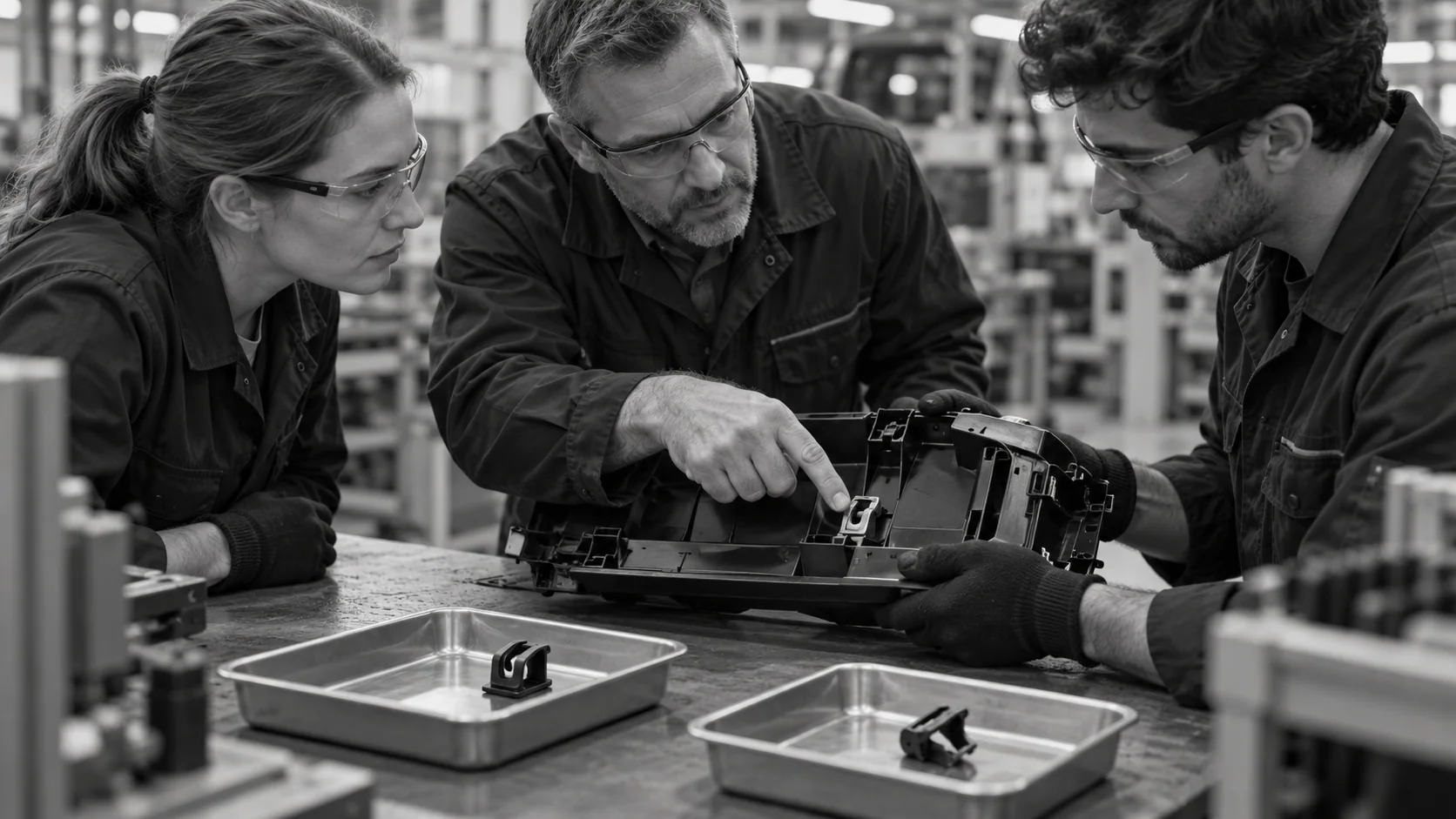
Conceptual illustration of a team leader coaching operators on the seating of an assembly clip.

Coach the Few Steps That Matter

  • Focus coaching on the steps behind most errors
  • Use clips from your own line as teaching material
  • Track whether each operator group improves
  • Feed method and layout fixes back to engineering
Focused
Coaching where errors start
Clip-based
Teaching from real cycles
HOW IT WORKS

How Error Patterns Become Coaching Plans

NAGARE records deviations at the station, groups them into patterns and helps the team decide whether each pattern needs coaching, a method change or a workstation fix.

Highlight #1

Record Every Deviation

Missed steps, wrong parts and out-of-order work are captured with their clip, station and time.

Highlight #2

Group Into Patterns

Similar errors are grouped across people, shifts and products, so the biggest patterns stand out.

Highlight #3

Act on the Cause

Each pattern is assigned a response, from focused coaching to a layout change, and its trend is tracked.

Connect With Us

Send your recent escape reports and a video of one station. We will show which patterns the data would reveal.

Get In Touch

Error Reduction Approaches Compared

Every approach aims to stop mistakes recurring. They differ in how much they see and whether the response matches the cause.

Coaching need
Incident reviews
Quality defect reports
NAGARE AI
What is seen
Incidents that escaped
Defects found later
Every deviation at the station
Typical response
Retrain the person
Add an inspection
Coach, change method or fix layout
Evidence of effect
Hoped for
Defect rate, much later
Error trend within weeks
Recurrence review
Same error returns
Errors caught, not stopped
Recurring errors removed at the source
CUSTOMER SUCCESS

Maruti Suzuki Cuts Rework Through Better SOP Adherence

Maruti Suzuki used NAGARE assessment data on SOP adherence, cycle times and safety to target training where errors started, with a published reduction in production rework.

Official Jidoka case-study cover for P&G and Maruti Suzuki process optimization
Maruti Suzuki Cuts Rework Through Better SOP Adherence
Automotive

These are Maruti Suzuki's published training and SOP-adherence results from the joint P&G and Maruti Suzuki case study, rather than an isolated measurement of this coaching workflow.

  • 35% reduction in rework from improved SOP adherence
  • Objective evaluations that show which skills need attention

Frequently Asked Questions

Why does operator error keep coming back?

Because the label hides the cause. Investigations often stop at the operator, while the real root cause sits in an unclear instruction, a hard-to-reach part or a tool that makes the wrong action easy. Retraining alone cannot fix those, so the error returns with the next person. Looking at patterns across people and shifts shows when the system, not the individual, needs to change.

What types of human error matter in manual work?

Skill-based errors, rule-based errors and knowledge-based mistakes are useful human-factors categories, but a clip does not reveal a person's reasoning. Video can show observable actions, timing and context. An operator discussion and process review are needed before deciding whether the cause was a slip, a misunderstood rule or missing knowledge. Use the classification to select a response, not to infer intent or assign blame automatically. Layout, instructions, tooling and training may each need attention.

How does error pattern analysis work?

Each deviation is logged with its step, station, product, shift and clip. Grouping these records shows which errors are frequent, which cluster at certain times and which follow particular products or operator groups. The output is a short list of patterns ranked by impact, rather than a long list of separate incidents that nobody has time to read. Teams usually find that a handful of patterns explain most of their escapes.

What makes coaching effective here?

Targeted coaching focuses on the specific steps and situations where an operator group makes mistakes, using clips from your own line. Instead of a general refresher, a team leader spends ten minutes on the step that causes most of that group's errors. Progress is checked against the same data, so everyone can see whether the coaching worked and move on to the next pattern.

How does this differ from a training needs analysis?

A classic analysis compares required skills with current skills, often through surveys and supervisor input. Error data adds direct evidence of where performance falls short in real work. It complements the formal process by showing which gaps actually cause escapes, so training budgets go to the skills that matter most rather than to the ones that are easiest to schedule.

How do we avoid a blame culture?

Deming emphasized the role of the system in performance problems. Apply that as a reason to investigate methods, tools and conditions before assigning blame, not as proof of the cause of a particular error. A blame culture can discourage useful discussion. Agree how clips and records are used with the workforce, invite context from operators and frame coaching as support. Review whether that approach improves reporting locally rather than promising a universal behavior change.

How do we know a fix has worked?

Track recurrence in the error log after each corrective action, using comparable products, production exposure and observation rules. A lower rate is evidence consistent with improvement, but it does not alone prove the action caused it. Check other changes, reporting gaps and whether the same error moved to another station or shift. Compare a sufficient period and retain reviewed clips so the team can decide whether the cause was addressed or further investigation is needed.

What should we send to start human error reduction in manufacturing with NAGARE?

Send your escape and rework reports from recent months, the current training plan and a video of one station where mistakes recur. Note which errors you believe are repeat errors and which are one-offs. With that, we can design the deviation log, show early patterns and plan the first coaching actions with your team leaders.

CONNECT WITH OUR EXPERTS

Show Us the Mistake That Keeps Coming Back

Share your escape reports, your current training plan and a station video. We will plan error pattern coaching for that area and explain timing and cost. Pattern reports for a first area usually start within 4 weeks.

Book an Error Review
Close video