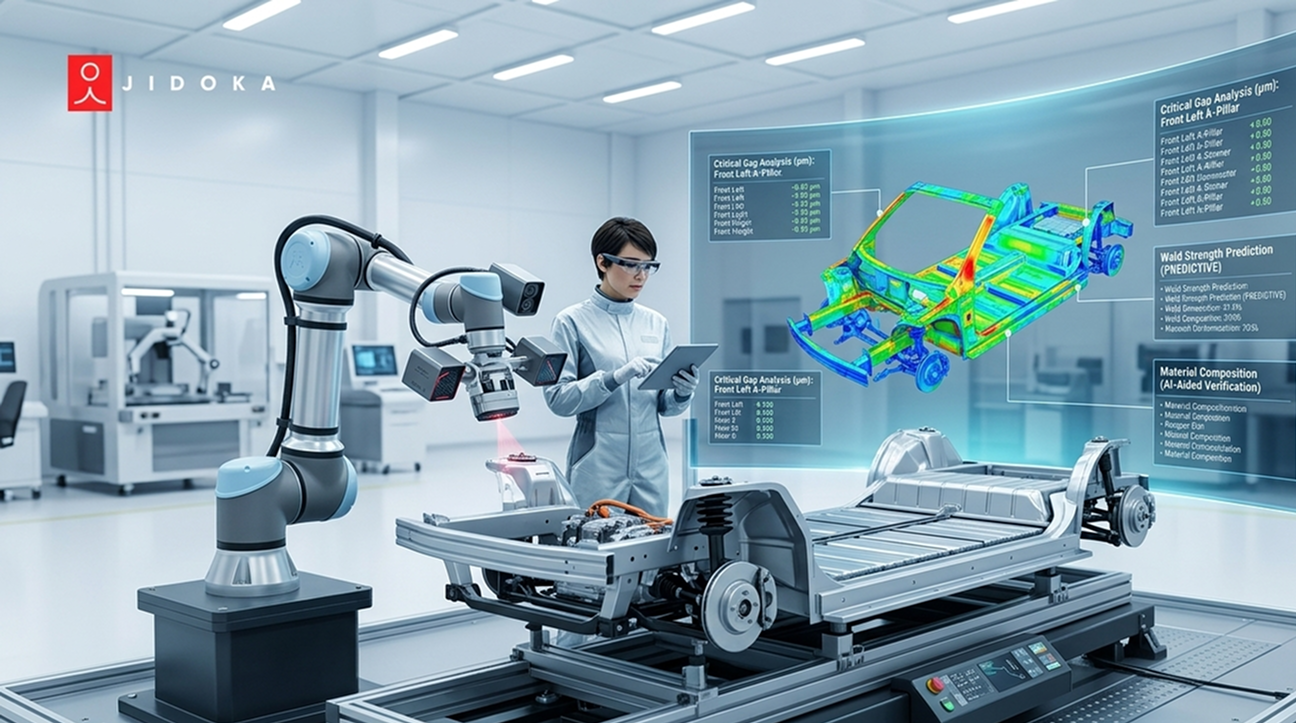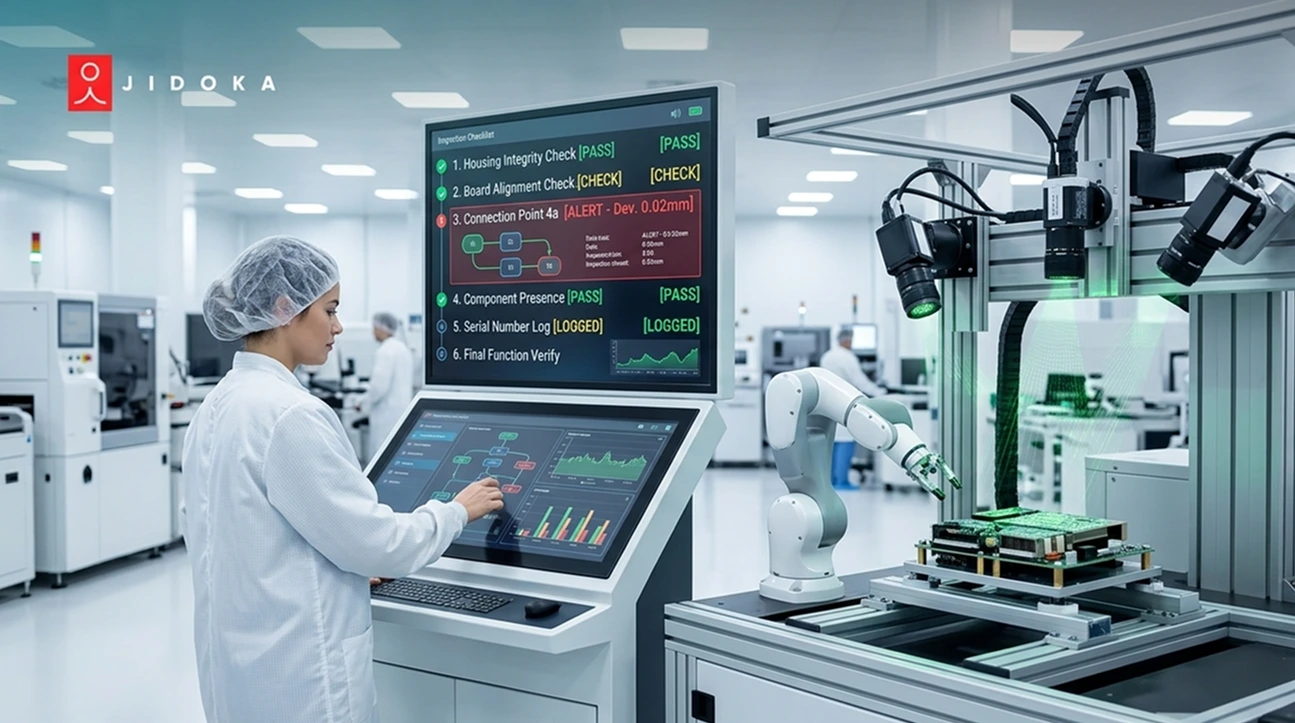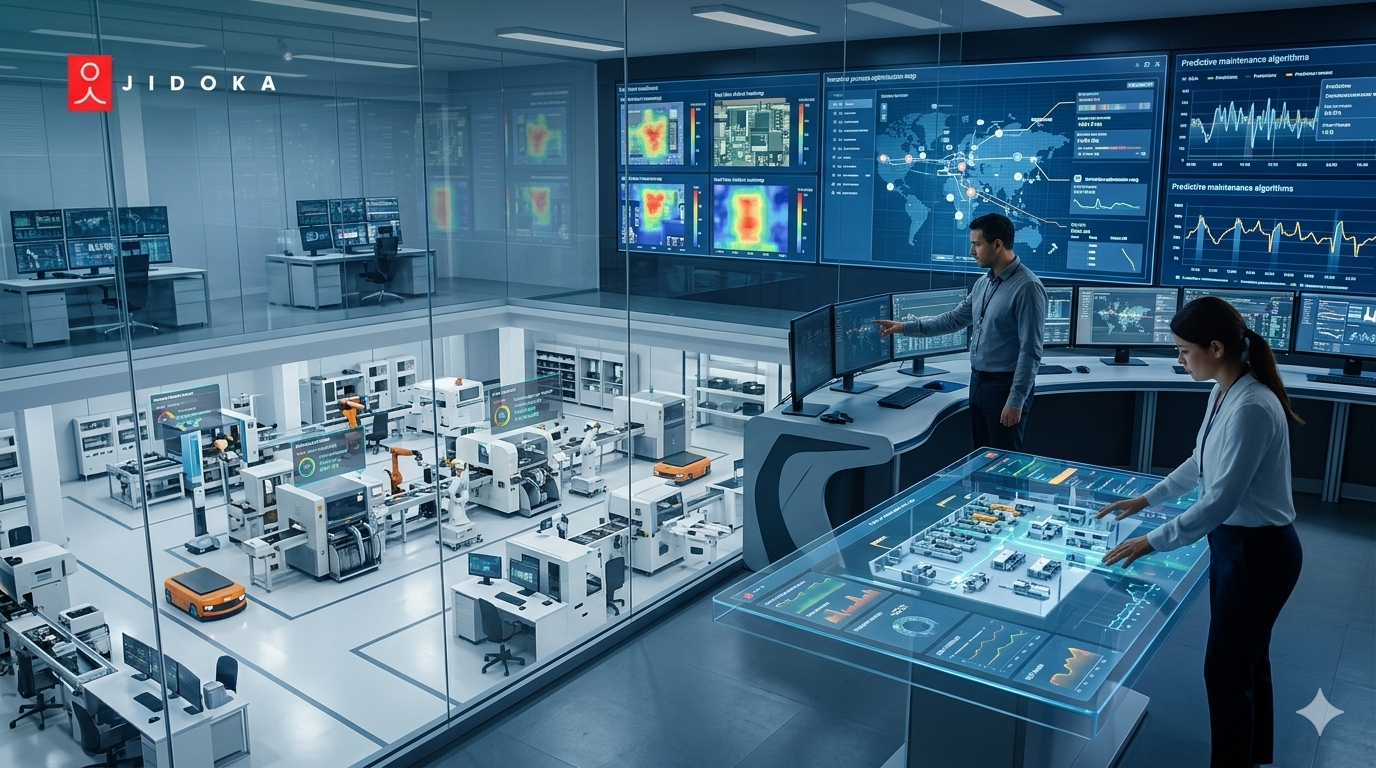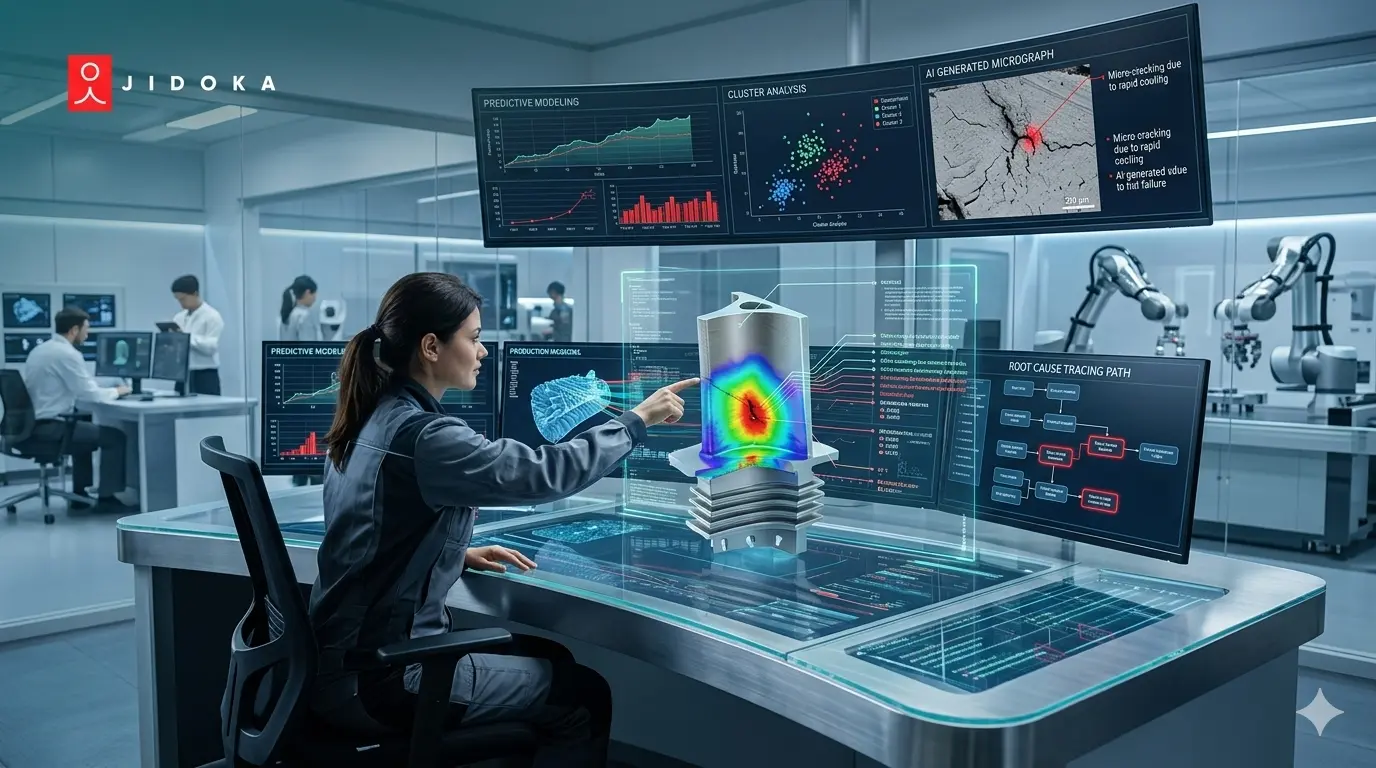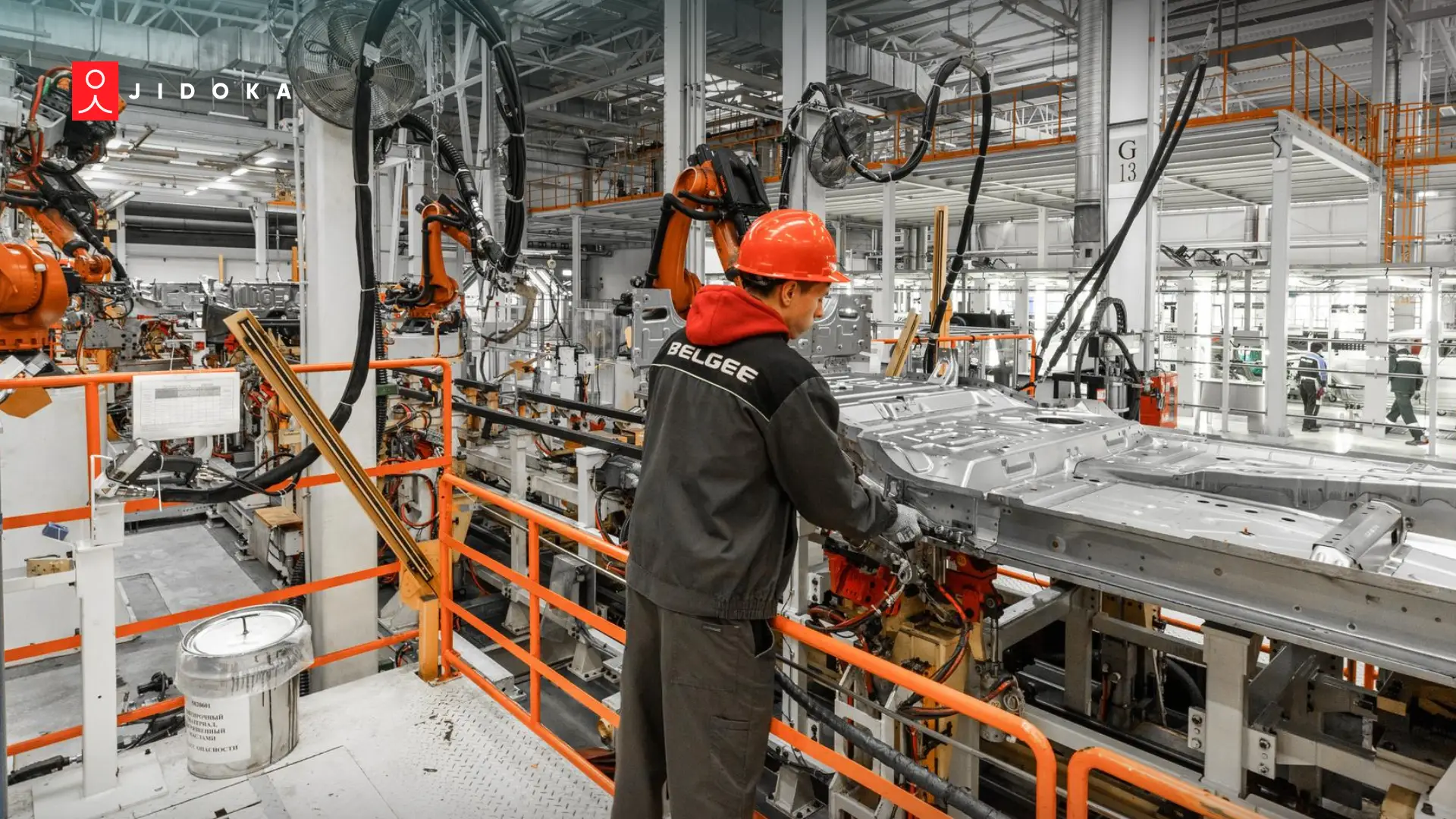
Se omitió la aplicación de pasta térmica en una celda de batería de vehículo eléctrico en la Estación 3. La pieza supera la inspección visual. El módulo se sella en la Estación 4, se cablea en la Estación 5 y se prueba en la Estación 6. En la Estación 7 se activa una alerta de calidad. A esas alturas, la corrección ya no es una reaplicación de 30 segundos. El módulo sellado debe desmontarse, lo que conlleva riesgos de exposición química y el desecho de toda la unidad. Cuatro estaciones de trabajo acumuladas sobre un error de montaje que no costaba nada solucionar en su origen. Ese es el problema estructural de la inspección en línea cuando se realiza demasiado tarde.
La IA de inspección de líneas de montaje supervisa cada paso del ensamblaje frente a un POE digital en tiempo real, detectando componentes faltantes, variantes incorrectas y pasos de proceso omitidos en la misma estación donde ocurren, antes de que los errores avancen y se multipliquen en forma de retrabajo, residuos y paradas de línea. Nagare de Jidoka Technologies logra esto en el borde (edge), sin necesidad de nuevo hardware de cámaras.
El mercado global de visión artificial alcanzó los 16.700 millones de dólares en 2024, con un crecimiento anual del 8 al 12%, siendo el sector automotriz responsable del 49% de ese volumen (Qualitas Technologies, 2026). Este artículo está dirigido a gerentes de planta que ya conocen el significado de la inspección de líneas de montaje y desean comprender cómo la IA detecta los errores que su sistema actual deja pasar.
Qué significa realmente la inspección de líneas de montaje en 2026
La inspección de líneas de montaje es la verificación sistemática de que cada unidad, subensamblaje o kit se construye según las especificaciones en cada etapa del proceso de producción. Abarca la presencia de componentes, la identidad de los mismos, el cumplimiento de la secuencia y la precisión dimensional. El objetivo no es encontrar defectos una vez que existen, sino detenerlos antes de que se agraven.
Actualmente, operan tres regímenes de inspección en las líneas de producción. La inspección visual y táctil manual alcanza una precisión del 80 al 85% en condiciones óptimas (Softwebsolutions, 2026). Esto significa que, en un buen día, uno de cada seis errores sale de la estación sin ser detectado. La visión artificial tradicional basada en reglas mejora la precisión para tipos de defectos predefinidos, pero se vuelve frágil ante la variación del producto o cualquier modo de fallo para el que no se hayan escrito sus reglas. La verificación de procesos basada en IA aprende de ejemplos, maneja variantes de productos y supervisa la secuencia de acciones del operario, no solo la apariencia de la pieza terminada.
La distinción en 2026 es la velocidad de inferencia. La inferencia de IA en menos de 100 ms ahora se ejecuta a la velocidad de la línea, lo que hace posible una cobertura del 100% en línea, donde antes el muestreo y la inspección fuera de línea eran las únicas opciones prácticas (Unitx Labs, 2026). Los profesionales en este campo utilizan un vocabulario común: inspección en línea, IA de verificación al final de la línea, inspección de kits, verificación de ensamblaje, monitoreo de cumplimiento de procesos y detección de errores de montaje. Son conceptos distintos; confundirlos genera brechas.
"La inspección de líneas de montaje en 2026 significa verificar el proceso, no solo la pieza; detectar un paso de apriete omitido o un componente faltante en la estación donde ocurre el trabajo, no en la estación donde surge el defecto." — Jidoka Technologies
Por qué los errores de montaje en la línea cuestan más cuanto más avanzan
Un defecto detectado en su estación de origen requiere una acción correctiva en una unidad y en una sola estación. El mismo defecto detectado dos estaciones más adelante requiere el desmontaje de todo lo construido desde el error, el retrabajo de la falla original y el reensamblaje. La mano de obra de cada estación posterior se carga dos veces a una sola unidad defectuosa. La mayoría de los fabricantes no calculan esto explícitamente, y aparece como un presupuesto de retrabajo crónico del que nadie se hace responsable.
Los fabricantes gastan en promedio el 2,2% de sus ingresos anuales en residuos y retrabajo (Ease.io, 2026). Para un fabricante de 50 millones de dólares, eso supone 1,1 millones de dólares anuales. La mayor parte de esa cifra proviene de errores descubiertos tarde, no de errores que fueran estructuralmente imposibles de corregir en su origen.
La tasa de error del 34% cuenta el resto de la historia. Los estudios indican que aproximadamente el 34% de los defectos de fabricación no son detectados por los sistemas de inspección (Micromachines, 2023, citado a través de Edge AI and Vision Alliance). Esa cifra refleja un fallo de diseño, no un fallo tecnológico. Los sistemas de inspección diseñados para detectar defectos después de que ocurren no pueden prevenirlos en su origen.
Piénselo como una grieta en una pared de hormigón. Un constructor que la detecta durante el vertido la rellena en 10 minutos. La misma grieta encontrada después de colocar el techo requiere una evaluación estructural, un derribo parcial y semanas de retraso. El defecto no se volvió más difícil de arreglar; simplemente quedó enterrado bajo más trabajo.
[EMBED: Calculadora de ROI aquí — el lector ingresa sus ingresos anuales y tasa de residuos, la calculadora muestra su gasto estimado en retrabajo y la cifra de recuperación de Nagare]
Dónde falla la inspección de montaje y qué soluciona Nagare
La verificación tradicional al final de la línea comprueba el producto terminado en una puerta de inspección fija. Observa el resultado físico, pero no ve lo que hizo el operario antes de que la pieza llegara a la inspección. Esta distinción es la razón por la que los errores que escapan se subestiman sistemáticamente en la mayoría de las líneas de producción. Si recorre cualquier instalación que dependa del final de línea como su principal control de calidad, encontrará el mismo patrón: las tasas de defectos en unidades terminadas parecen bajas, pero las horas de retrabajo cuentan una historia diferente.
Los errores que escapan a la inspección tradicional comparten un patrón: son invisibles para las cámaras enfocadas en ensamblajes terminados. Solo se vuelven visibles cuando se supervisa el proceso de ensamblaje en sí, verificando las acciones del operario, la selección de componentes y el cumplimiento de la secuencia en tiempo real frente a un procedimiento operativo estándar (POE) digital. Este es el problema que Nagare fue diseñado para resolver. Verifica el proceso, no solo el producto.
Cómo realiza Nagare la inspección de líneas de montaje en tiempo real
Nagare es una plataforma de IA de borde de Jidoka Technologies que convierte las cámaras de CCTV existentes en verificadores de procesos en tiempo real. Supervisa cada paso de inspección de la línea de montaje frente a un SOP digital, detecta desviaciones y proporciona alertas al operador o rechazos automatizados antes de que la unidad avance a la siguiente estación (Jidoka Technologies, jidoka-tech.ai/products/nagare).
El mecanismo funciona en tres pasos.
Ingesta de cámara a través de la infraestructura de circuito cerrado de televisión (CCTV) existente. Sin nuevo hardware de cámaras de inspección para la línea de montaje, sin proyectos de instalación y sin solicitudes de presupuesto de capital. El procesamiento de IA de borde se ejecuta localmente: toda la inferencia es local, ningún video sale de la planta, lo que aborda los requisitos de seguridad de datos que han bloqueado las implementaciones de monitoreo basado en cámaras en instalaciones de los sectores automotriz, de dispositivos médicos y electrónicos. El tercer paso es la alerta de desviación en tiempo real, un aviso visual o sonoro en la estación del operador en el momento en que ocurre una desviación, no al final de la línea.
Nagare envía las desviaciones de proceso en tiempo real directamente a su sistema de ejecución de fabricación (MES) o sistema Andon mediante cargas útiles JSON ligeras. Así es como se ve esa alerta a nivel de estación:
{
  "station_id": "ST-03-KITTING",
  "timestamp": "2026-05-30T14:32:10Z",
  "event_type": "PROCESS_DEVIATION",
  "deviation_detail": {
    "expected_action": "Pick_Component_A",
    "detected_action": "Skipped",
    "part_sku": "EV-BATT-THERMAL-09"
  },
  "alert_status": "TRIGGERED",
  "action_required": "Line Halt - Operator Correction"
}
La carga útil es ligera, estructurada y lista para MES. No se requiere middleware.
Una consideración de privacidad que vale la pena mencionar directamente: Nagare utiliza el reconocimiento de acciones basado en esqueletos para monitorear los movimientos del operador sin capturar datos faciales ni grabar videos identificables (Jidoka Technologies, 2025). En las líneas donde los trabajadores han planteado preocupaciones de cumplimiento sobre el monitoreo basado en cámaras, esto ha resuelto la objeción que detiene la implementación. Los operadores que han trabajado con el sistema informan que saber que la alerta se dispara en su estación, antes de que el problema avance, reduce la presión de los controles de calidad posteriores.
Datos de rendimiento:
- 99.5% de precisión en la verificación del montaje
- 30% de mejora en el cumplimiento de procesos en todas las implementaciones
- 35% de reducción de retrabajos
- 25% de reducción de tiempo de inactividad gracias a la corrección de procesos en tiempo real
- Más de 300 millones de piezas inspeccionadas por día en todas las instalaciones
- 45 clientes activos
Inspección de kits y verificación de precisión de kits con IA
Un componente faltante en un kit es invisible hasta que el operador de la siguiente etapa abre la caja. En ese punto, la solución ya no toma 30 segundos. El kit ha viajado, la estación está dotada de personal y configurada, y el operador está esperando una pieza que no está allí.
La inspección de kits cubre cuatro tipos de errores: componente faltante, variante de componente incorrecta, cantidad incorrecta y orientación incorrecta. Cada uno es invisible en la estación de preparación de kits si la verificación depende de controles de peso o escaneos de códigos de barras al empaquetar, porque esos métodos detectan errores después de que el kit está completo y en movimiento.
El escenario del kit quirúrgico hace que esto sea concreto. Una gasa de 4 pulgadas cargada donde debería ir una de 6. Un control de peso lo aprueba. Un escaneo de código de barras al empaquetar lo aprueba. Ambas piezas de gasa pesan dentro de la tolerancia. La verificación visual de precisión de kits de Nagare en la estación de recolección detecta la discrepancia de inmediato, porque verifica lo que se recolectó, no cuánto pesa. Para entonces, la contaminación ya está en tránsito si depende de la verificación de peso.
El caso financiero es concreto. Una operación de preparación de kits con una tasa de error del 5% cuesta materialmente más sobre una base de carga completa que una al 0.3%, una vez que se tienen en cuenta el retrabajo posterior, las devoluciones de cargo del cliente y las devoluciones (Productiv, 2026). El costo del retrabajo no reside en la operación de preparación de kits. Reside en cada estación que procesa un kit defectuoso posteriormente.
Nagare aborda la verificación de precisión de kits de manera diferente. Cada recolección de componentes se monitorea frente a la lista de materiales (BOM) del kit en tiempo real. Un artículo faltante, una pieza incorrecta o un conteo erróneo activan una alerta al operador antes de que el kit sea sellado y movido. El sistema no depende de la verificación de peso, el escaneo de códigos de barras al empaquetar o el muestreo al final de la línea. Ningún kit se mueve con una discrepancia sin resolver.
El caso de alta mezcla es donde esto importa más. En líneas donde la composición del kit cambia con frecuencia entre turnos u órdenes de trabajo, la automatización del proceso de preparación de kits mediante escaneo de códigos de barras permite a Nagare cambiar los perfiles de verificación al instante sin reprogramación manual (Jidoka Technologies, 2025). Escanee el nuevo SKU. La lista de verificación se actualiza. El operador continúa.
Una aclaración necesaria: Nagare no automatiza la operación física de preparación de kits (kitting). Lo que hace es verificar el proceso de kitting realizado por operarios. La verificación mediante IA y la automatización robótica son herramientas distintas para problemas diferentes.
"La inspección de kitting mediante IA verifica en tiempo real cada componente seleccionado frente a la lista de materiales (BOM) en la estación de trabajo, antes de que el kit se mueva y no después de que llegue a la siguiente estación con piezas faltantes". — Jidoka Technologies
[EMBED: Microcuestionario "Pon a prueba tu línea" aquí: 3 preguntas sobre dónde se detectan los defectos, el método de verificación de kitting y la profundidad de seguimiento de reprocesos. Muestra una llamada a la acción (CTA) personalizada según las respuestas.]
Verificación de ensamblaje en línea frente a inspección por IA al final de la línea: lo que cuesta la diferencia
Esta comparación suele simplificarse en la mayoría de los contenidos de proveedores. La versión honesta implica concesiones en ambos sentidos.
La precisión de detección de los sistemas de inspección por IA al final de la línea alcanza entre el 98 y el 99% (Softwebsolutions, 2026; iFactory AI Vision, 2026). Esa cifra parece sólida hasta que calculas el coste de reproceso cuando ese 1 o 2% se escapa: toda la mano de obra de ensamblaje ya pagada, el desmontaje y el reensamblaje. La precisión no es la única variable del retorno de inversión (ROI). La cifra de ROI del 374% a tres años de iFactory (iFactory AI Vision, 2026) asume que los errores se detectan lo suficientemente pronto como para contenerlos. Si los detectas al final de la línea en un ensamblaje complejo, el multiplicador disminuye.
La inspección al final de la línea sigue siendo superior en tres escenarios: inspección cosmética final, donde el producto ensamblado debe ser visible para evaluar la calidad de la superficie; inspecciones de cumplimiento requeridas por estándares regulatorios o de fabricantes de equipos originales (OEM); y calificación de primer artículo, donde la inspección es el entregable. Estos son casos de uso reales. La IA en línea no los reemplaza.
La arquitectura completa cubre ambas capas. Kompass, el producto de detección de defectos al final de la línea de Jidoka (jidoka-tech.ai/products/kompass), junto con Nagare para la verificación de procesos en línea, aborda tanto el problema de la desviación del proceso como la verificación del producto terminado. Para los fabricantes que actualmente no utilizan ninguna inspección por IA, el enfoque de "primero en línea" ofrece un mayor ROI en la prevención de errores. Esto no ha sido evaluado formalmente en todos los sectores industriales, y las líneas que ya cuentan con hardware de inspección al final de la línea presentan un cálculo de actualización diferente.
Conclusión
Todas las líneas de ensamblaje tienen errores de fabricación. La diferencia de costes radica en cuántas estaciones recorren antes de que alguien los encuentre. Ese paso de pasta térmica omitido en la Estación 3 es una corrección de 30 segundos en la misma estación. En la Estación 7, implica un módulo sellado, un desmontaje, un riesgo químico y una unidad desechada. Nagare lo detiene en el origen.
Descubre cómo funciona con tus cámaras actuales en jidoka-tech.ai/products/nagare, o solicita una demostración para analizar un escenario de implementación para tu línea específica.
Preguntas frecuentes
¿Qué es la IA de inspección en líneas de ensamblaje?
La IA de inspección en líneas de ensamblaje utiliza visión artificial y aprendizaje automático para verificar en tiempo real que cada paso, componente y secuencia de ensamblaje coincida con un procedimiento operativo estándar (SOP) digital. A diferencia de la visión artificial tradicional, que verifica las piezas terminadas frente a reglas fijas, la inspección basada en IA aprende de ejemplos, gestiona la variación del producto y supervisa las acciones del operario, no solo el resultado físico.
¿Cómo detecta Nagare los errores de fabricación antes de que avancen en la línea?
Nagare supervisa cada paso del ensamblaje frente a un SOP digital utilizando IA de borde (edge AI) que funciona con las cámaras existentes. Cuando un operario omite un paso, selecciona el componente incorrecto o ensambla fuera de secuencia, Nagare activa una alerta antes de que la unidad pase a la siguiente estación. Los errores se corrigen en su origen, no estaciones después.
¿Qué es la inspección de kitting y por qué necesita IA?
La inspección de kitting verifica que cada componente en un kit de producción coincida con la lista de materiales (BOM) antes de que el kit se traslade a la estación de ensamblaje. Las comprobaciones manuales de kits y los escaneos de códigos de barras al finalizar el empaquetado solo detectan errores una vez que el kit está completo. La inspección de kits mediante IA verifica cada componente seleccionado en tiempo real en la estación de preparación, evitando que lleguen a la línea piezas faltantes o incorrectas.
¿Cuál es la diferencia entre la inspección en línea y la verificación al final de la línea?
La inspección en línea verifica cada paso del montaje en la estación donde se realiza el trabajo; la verificación al final de la línea comprueba el producto terminado en un punto de inspección fijo una vez completado todo el ensamblaje. La inspección en línea detecta errores antes de que afecten a las estaciones posteriores y acumulen costes de reprocesamiento. La verificación al final de la línea es adecuada para comprobaciones estéticas finales y validaciones de cumplimiento, pero no puede detectar desviaciones en el proceso que ocurrieron durante el ensamblaje.
¿La IA de inspección de líneas de ensamblaje requiere cámaras o hardware nuevos?
No con Nagare: funciona con las cámaras CCTV existentes sin necesidad de invertir en hardware adicional. Toda la inferencia de IA se ejecuta localmente en dispositivos edge, lo que significa que ninguna grabación de video sale de las instalaciones. Esta arquitectura local resuelve las preocupaciones sobre la seguridad de los datos para los fabricantes de los sectores automotriz, de dispositivos médicos y electrónicos.
¿Cómo gestiona la IA de inspección de líneas de ensamblaje la producción de alta mezcla y bajo volumen?
Los sistemas de verificación de procesos mediante IA como Nagare se adaptan a los cambios de producto mediante el escaneo de códigos de barras, cambiando los perfiles de verificación al instante sin necesidad de reprogramación manual. Esto los hace adecuados para entornos de alta mezcla donde la composición del kit, la secuencia de ensamblaje o las especificaciones de los componentes cambian con frecuencia entre turnos u órdenes de trabajo.