web inspection

All Web Inspection Defects Explained: Pinholes, Wrinkles, Edge Damage, Misalignment & More..

Master web inspection: pinholes, wrinkles, contamination, misalignment & more. AI detection achieves 95%+ accuracy at production speed in 2026.

High-speed production lines move too fast for human eyes. Small surface defects, poor pinholes detection, or misalignment cause huge losses. Manufacturers now spend billions on web inspection for better defect detection. You need inline inspection systems to identify dust or real cracks. 

This guide shows how AI classification and real-time inspection stop waste. You will learn how to spot ten common problems before they leave your factory floor. Modern web inspection keeps your business profitable

Top 10 Web Defects: From Pinholes to Misalignment

You cannot fix what you cannot see. Identifying the specific "fingerprint" of a flaw helps you calibrate your web inspection system for better defect detection. Each material behaves differently, but these ten common issues appear across most high-speed lines. 

Use real-time inspection to catch these errors before they ruin an entire batch.

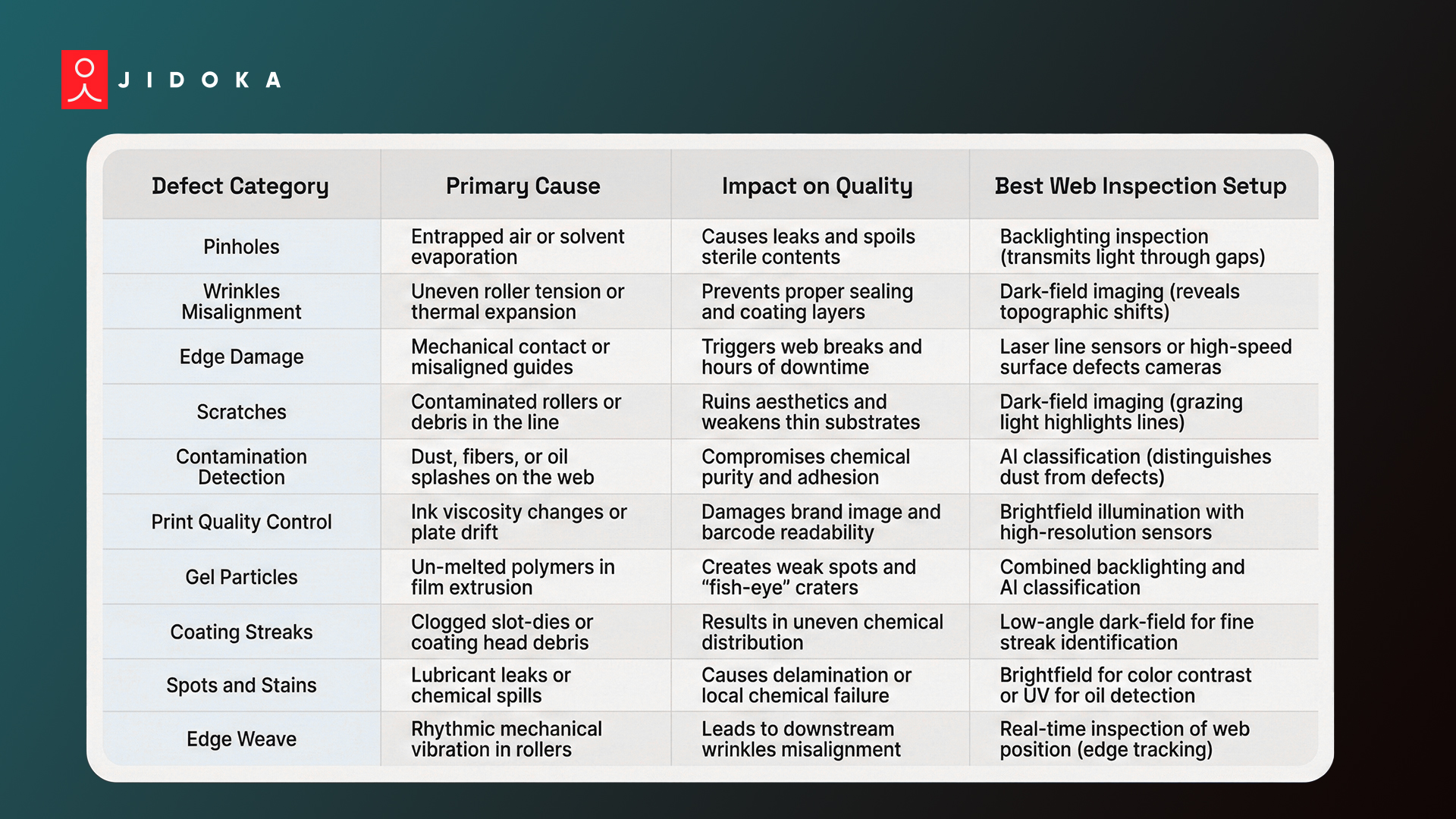
1. Pinholes and Micro-holes: These tiny gaps ruin airtight seals. Effective pinhole detection stops oxygen from spoiling food or compromising medical tools. Even a hole smaller than a human hair requires advanced backlighting inspection to find.

2. Wrinkles and Creases: These happen when tension is uneven. These wrinkles misalignment issues prevent smooth coatings and cause sealing failures later. Web inspection flags these folds immediately to save the roll.

3. Edge Damage: Crushed or curled edges lead to web breaks. Catching edge damage early prevents hours of machine downtime. Inline inspection systems monitor the margins to ensure the web stays intact.

4. Scratches and Abrasion: Sharp rollers or debris cause these lines. Constant web inspection identifies exactly where the friction starts. These surface defects are hard to see without specific lighting.

5. Contamination: Dust, oil, or fibers ruin chemical purity. This is vital for contamination detection in battery or cleanroom production. AI classification tells you if it is a loose thread or a permanent mark.

6. Registration Errors: Printed patterns must stay in place. Efficient print quality control alerts you when the ink drifts from its target. High-speed web inspection keeps your branding sharp.

7. Gel Particles: These small lumps in film create weak spots. AI classification helps distinguish these from harmless surface dust. Your defect detection system must be sensitive enough to find these inside the material.

8. Coating Streaks: Vertical lines show that your coating head is clogged. Web inspection monitors coating uniformity to ensure a perfect finish. This prevents expensive chemical waste.

9. Spots and Stains: Liquid splashes or chemical spills look different under light. Use dark-field imaging to spot these liquid-based surface defects. Real-time inspection ensures these stains do not reach the customer.

10. Edge Weave: If the web snakes back and forth, your tension is wrong. Web inspection tools track the edge position to keep the material straight. Inline inspection systems help you adjust the rollers before the problem causes downstream wrinkles misalignment.

Understanding these flaws is only the first step toward total quality. Now, let's look at the lighting techniques that make these hidden problems visible to your sensors.

The Top 10 Web Defects At a Glance:

Detection Technologies: How Machines "See" the Web

A camera only captures what the light reveals. You must match your lighting setup to the specific flaw to get the best results from your web inspection. Modern inline inspection systems use different angles to make invisible errors stand out clearly. 

High-quality imaging ensures your real-time inspection catches every issue before it reaches your customers.

1. Brightfield Illumination: This setup places light directly above the material. It works as the standard for identifying color shifts, large spots, and obvious tears. It provides the clear contrast needed for effective print quality control.

2. Backlighting Inspection: Place the light source behind the web to find structural gaps. This is the only reliable method for pinholes detection, as the light pierces through even the smallest opening.

3. Dark-field Imaging: Light hits the surface at a shallow angle. This technique highlights surface defects like scratches or dust while keeping the flat areas dark. It is the best way to spot wrinkles, misalignment and subtle edge damage.

4. Coaxial Lighting: Use this for shiny materials like foil. It sends light through a mirror to avoid the glare that usually blinds standard cameras during web inspection.

5. Multispectral and Hybrid Systems: 2026 tech uses strobing lights to switch between UV, IR, and visible light in milliseconds. This allows for simultaneous contamination detection and pattern checks on a single line.

Superior lighting produces cleaner data for your software to analyze. When you provide sharp images, your AI classification becomes much more reliable. Next, we will explore how Jidoka AI uses this data to reduce your rework and improve your bottom line.

Master the Web: Reducing Rework with Jidoka AI

High-speed lines need a web inspection system that stays sharp under pressure. Jidoka Tech provides an inline inspection systems setup that manages 300 million checks daily

Their AI classification keeps your production moving without human error.

  • KOMPASS (The Inspector): This tool achieves 99.8% accuracy on live lines. It processes each frame in under 10ms to ensure real-time inspection never misses a beat. It masters difficult surfaces like reflective foil and textured webs.
  • NAGARE (The Analyst): This system tracks every assembly step to find misalignment or missing components. It uses defect detection to cut your rework costs by up to 35%.

By using local edge units, Jidoka eliminates lag and keeps your data secure. This setup ensures your web inspection stays consistent across every shift.

Explore Jidoka to see how these automated tools improve your factory floor.

Conclusion

Reliable web inspection determines your market survival. Undetected surface defects, poor pinholes detection, or hidden contamination detection issues ruin batch after batch. 

These failures trigger massive recalls, lawsuits, and permanent brand destruction. One missed crack can bankrupt your operation overnight. You cannot risk your future on outdated web inspection. 

Jidoka provides the fix with real-time inspection and high-speed AI classification. Their inline inspection systems stop errors before they become catastrophes. 

Connect to Jidoka and turn your quality control into a competitive advantage.

FAQs

1. Can AI handle recycled substrates? 

Modern AI classification handles "noisy" textures on recycled webs easily. It ignores harmless grain while flagging surface defects or contamination detection issues. This smart web inspection ensures sustainability never compromises your quality standards or causes expensive wrinkles misalignment on high-speed production lines.

2. Why is a 10ms review time important? 

At high speeds, slow systems miss meters of material. Inline inspection systems with 10ms processing enable real-time inspection and immediate rejection. This rapid web inspection prevents bad batches from shipping, protecting your print quality control and stopping invisible surface defects instantly.

3. Is dark-field better than brightfield? 

Dark-field imaging highlights topography like wrinkles misalignment, while brightfield is the standard for print quality control. Your web inspection system needs both to catch every error. Using multiple angles ensures better defect detection for everything from surface defects to fine scratches.

4. How does AI improve pinholes detection? 

AI removes the guesswork from pinholes detection by analyzing backlighting inspection images instantly. It distinguishes between a real hole and surface dust with high-speed AI classification. This real-time inspection catches micro-flaws that traditional inline inspection systems often miss during fast production.

5. Why use Jidoka’s edge-based inline inspection systems? 

Edge computing removes data lag, allowing for instantaneous real-time inspection at the source. This ensures your web inspection stays fast and secure. Jidoka’s AI classification identifies surface defects and contamination detection errors immediately, keeping your high-speed manufacturing lines running smoothly.

January 24, 2026
By
Shwetha T Ramakrishnan, CMO at Jidoka Tech

相談会開催中

品質と生産性を最大化するビジョン検査システムに関する相談会を実施中です。ぜひこの機会にお試しください。

お問い合わせ