









Recognise What the Operator Does
- Follow hands as they pick, place and press
- Detect missed and repeated actions
- Cover work done out of the main view with a second camera
- Run on-premise for fast, private processing
NAGARE supports manual assembly verification by checking configured operator actions and visible components together. Picks and placements are compared with the approved workflow, so a recognised mismatch can be flagged at the station. Hidden work and ambiguous views require further checks or operator review.
End-of-line vision sees the finished product. It cannot see a part fitted and removed, a component placed twice or an action done out of view, and each of those can leave a defect that a final image misses.
Our AI process monitoring software, NAGARE™, supports manual assembly verification by recognising configured visible actions and components as work happens. The agreed record captures those observations. Physical acceptance criteria and any unit-identifier connections are defined during scoping.

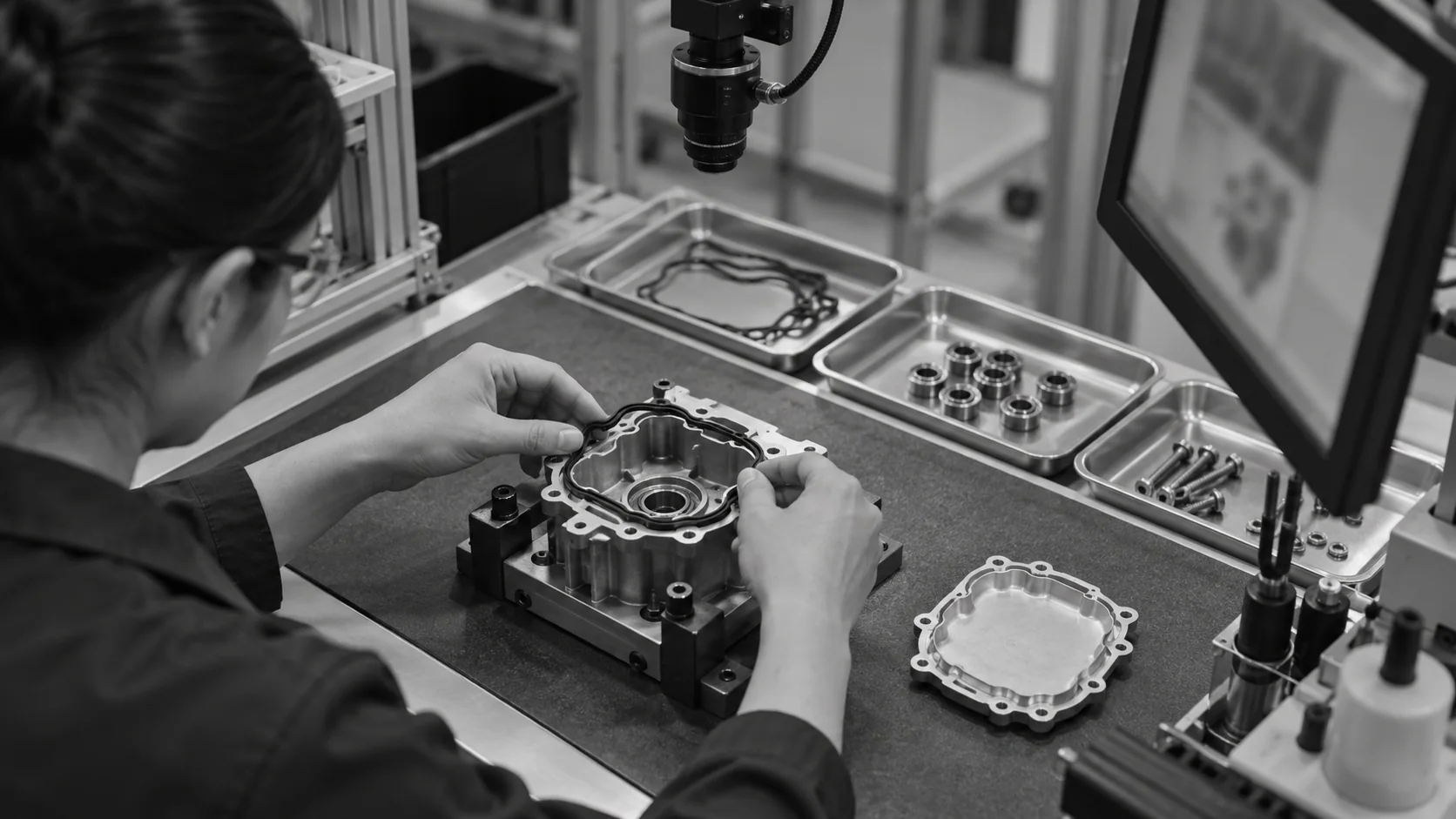
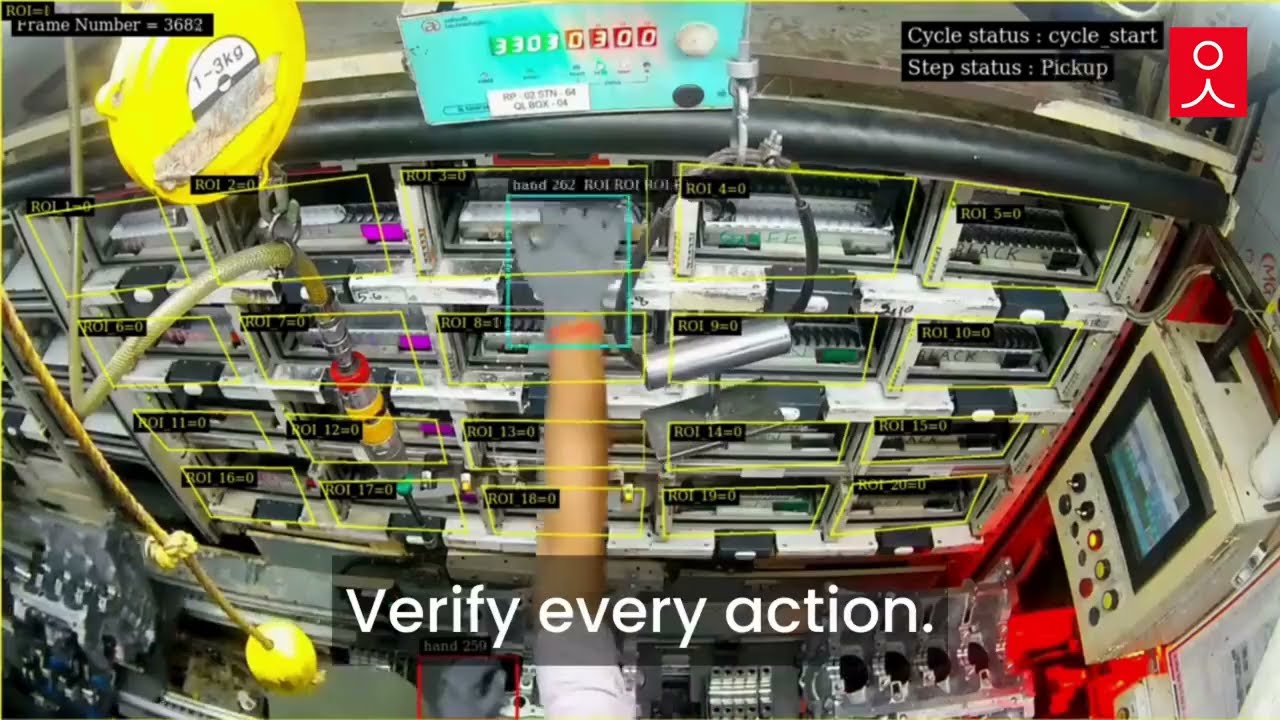
Manual assembly verification works best when the camera sees both the hands and the product. NAGARE pairs action recognition with part recognition and checks both against the approved method.
A top view sees the product and bins, and a second angle covers areas the hands hide during fitting.
Models trained on your cycles identify each pick, placement and press, and the component involved.
A missed, repeated or wrong placement raises an alert at once, and the unit's record is saved with its clips.
Send a video of one station and the part list for its variants. We will show which actions and parts can be verified.
Get In TouchEach approach confirms something about the build. The difference is whether it sees the work as it happens or only the result.
Action recognition uses video models to identify what a person is doing, such as reaching, picking, placing or pressing, frame by frame. In assembly, it turns a stream of operator actions into a timeline that can be compared with the approved method. Research on manual work has used depth cameras and skeleton tracking for this, while current systems also work well from standard video. The model is trained on cycles from your own station, so it learns your parts, tools and the way your operators hold them.
Many operations become hard to inspect after the next layer covers them. Watching a configured pressing, greasing or seating action can provide process evidence before that happens. It does not, by itself, establish full seating, sufficient lubricant or the required force. Checking visible parts and operator actions together therefore supports manual assembly verification, while tools, sensors or functional tests retain the physical-result checks that the camera cannot demonstrate. Define both kinds of acceptance criteria for the station.
For placements visible in the validated camera view, configured rules can count the recognised actions into a position. If a second part goes where only one belongs, or the same action is done twice when the method calls for once, the station flags it. A repeated placement is easy to miss by eye because the result can look normal from above, which is why it is better caught at the moment it happens.
In the bearing assembly video, two camera views watch bearing selection and fitting on an engine block. Each bearing placement is checked against the expected position, and incorrect, missed or repeated placements are flagged to the operator in real time. Processing runs on edge AI hardware on the premises, so video does not need to leave the plant. The example informs assessment of similar stations. It does not establish identical coverage for every part, view or assembly method.
Define the expected parts for the selected variant using its bill of materials or work instruction. Component verification can then be assessed against visible shape, colour and markings. A work-order or BOM connection must be agreed rather than assumed. Where parts look identical, a barcode scan or controlled bin assignment may supply identity evidence, while the camera checks the visible placement. Validate misstocked bins and hidden features too. A correct pick location alone does not prove the component's identity.
Yes. The same approach confirms that the right item was taken from the right bin and put in the right location, whether that location is a tray, a fixture or a partly built unit. Benches that prepare sub-assemblies for the main line benefit most, because an error caught there never reaches the line. Where an identifier connection is configured, recognised placements can be recorded against that unit or tray. Confirm the record and coverage in the trial.
Hands can hide the part at the moment of fitting. A second camera view or a part presence check after the hands move away may resolve some cases. Hand-object interaction tracking provides observations of the visible motion. It does not prove an unseen final placement. Test representative occlusions and define which cases need another view, a tool or sensor signal, or operator review. Leave an ambiguous action unconfirmed rather than assuming that it was completed correctly.
Send a video of the station across several cycles, the part lists for each variant and examples of defects found later in the line. Mark the steps that leave no visible trace. With that, we can propose camera views, the actions and parts to verify first, and how alerts and unit records should work at the station.
Share a station video, part lists and the defects that reach test. We will plan manual assembly verification for that station and explain timing and cost. Plan on about 4 weeks from kickoff to a working station.