









Know the Approved Order for Each Variant
- Load the operation order by part number or work order
- Mark operations that must precede others
- Allow flexible order where the method permits it
- Update rules when engineering changes the method
NAGARE provides assembly sequence monitoring for manual stations and lines. It recognises each operation as the operator performs it, compares the order with the approved sequence for the variant being built and alerts the moment an operation comes too early, too late or not at all.
Many assemblies only work when operations happen in a set order. A gasket fitted after the cover, a cable routed after the clip closes or a part pressed before its seat is greased can pass a final check and fail later.
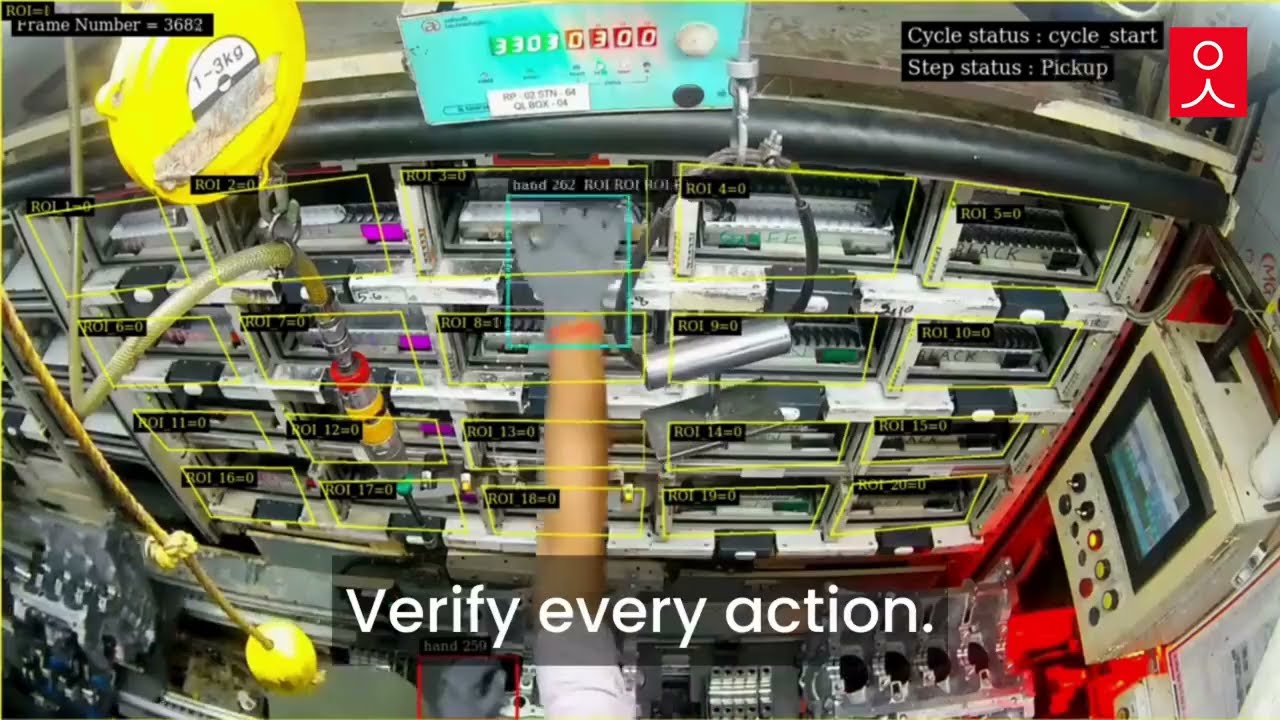
Our AI process monitoring software, NAGARE™, performs assembly sequence monitoring by recognising each operation and checking it against the approved order for the variant. Breaks are flagged at the station, and every unit records the order it was actually built in.

Assembly sequence monitoring compares two timelines: the order the method requires and the order the operator actually follows. NAGARE builds the second from video, cycle by cycle.
Engineering sets which operations must come before others for each variant, using your routing and recorded cycles.
The camera identifies each operation as it happens and places it on the unit's timeline.
When an operation arrives out of order, the station alerts and can hold the unit until it is corrected.
Send the operation order for two variants and a video of the station. We will show where breaks would be caught.
Get In TouchEach control encourages the right order. Only some confirm it on every unit, for every variant.
At Abbott, NAGARE checks that material picking, scanning, insertion and sealing happen in the approved order, with up to 20 monitored activities per product variant.

Abbott's published results describe sequence checking across its manual medical kitting stations.
Some operations change what the next one can do. A seal must sit before a cover closes, a cable must be routed before a clip locks it, and a press fit needs its seat prepared first. Precedence constraints like these are set by design, and when they are broken the unit may still look complete. Checking the order protects the function that a final image cannot confirm. Engineers usually know which pairs matter most.
Engineering sets a reference sequence for each variant from the routing sheet, the work instruction and recorded cycles of the method being done well. Operations that must happen in a strict order are marked, and those that can be done in any order are grouped. The result is a sequence of operations the station can check without forcing needless rigidity, and changes are versioned when the method changes.
A configured order deviation can raise an alert when an observed operation conflicts with its agreed precedence rule. The station should identify the out-of-order step or unconfirmed prerequisite for review. The quality and controls teams define whether correction is possible while the unit is open, whether a hold is appropriate and what evidence permits release. An irreversible operation may need repair rather than simply repeating the missed action. Retained clips help engineers investigate which operation pairs are often swapped.
The expected order is loaded from the part number or work order for each unit, so a model with a different order is checked against its own rules. Operators do not have to remember which variant reverses two operations. Where variants share most of their method, only the differences are configured, which keeps setup short as the range grows and new models arrive.
One common way to explain sequence rules uses states: a recognised operation changes which operations are allowed next. That is a conceptual model, not a specification of NAGARE's internal software. For the proposed station, agree which ordering constraints are strict, which operation pairs allow flexible order, and what happens when recognition is ambiguous. Demonstrating those rules with your own variants matters more than assuming a particular research algorithm or internal architecture.
Typical dependent operations include sealing before closing, lubricating before pressing, routing before clamping and fitting an inner part before an outer one. Torque order on a joint is another example, although that is usually checked with tool data as well. The approved order of assembly for each product defines the full list, and the alert history shows which pairs cause the most trouble.
An out-of-order build found at test often means disassembly rework back to the operation that went wrong, sometimes with damaged parts that cannot be reused. Catching a visible break while the unit is open may reduce disassembly work, but the permissible correction and time depend on the operation. The as-built record also helps when a field issue raises the question of whether the order was followed on a specific unit.
Send the operation list in its required order for each variant, a video of the station building them and examples of order-related failures. Note which operations can be done in any order. With that, we can design the rules, choose the camera view and show how the as-built assembly sequence would be recorded for each unit you build.
Share the operation order, a station video and the order-related failures you see. We will plan assembly sequence monitoring for that station and explain timing and cost. Most single-station projects go live in 4 weeks.