

ASSEMBLY-ERROR PREVENTION

Assembly Error Prevention to Cut Rework at the Source

NAGARE brings assembly error prevention checks to stations where costly escapes can start. Configured camera views compare visible parts and actions with the approved method, flagging recognised deviations while they can still be investigated or corrected before later work covers them.

Rank Your Escapes With Us

Trusted by manufacturers for error-free manual operations

THE PROBLEM

Most Build Mistakes Are Found Too Late

Lines invest in inspection at the end, where a mistake is already built in. By then the fix costs disassembly, scrap or a field return, and the cause has moved on to the next unit.

Variety Multiplies Mistakes

Every new variant adds look-alike parts and slightly different methods, and slips rise with the size of the range.

Pressure Erodes Attention

Faster takt and longer shifts raise the chance of a slip, however well trained the operator is.

Inspection Sorts, It Does Not Prevent

End-of-line checks separate good units from bad. They do nothing to stop the next unit being built wrong.
The Solution

Prevent Errors Where They Are Made

Our AI process monitoring software, NAGARE™, supports assembly error prevention through configured checks of visible parts and actions. Alerts can help the operator review a deviation while the work is still accessible. The station trial defines the coverage and acceptable correction. The rework and escape figures describe NAGARE at product level. They are not a forecast for the particular failure modes in scope.

Target the Errors That Cost Most

  • Start with the escapes behind your largest rework and returns
  • Cover wrong, missing, misplaced and reversed parts
  • Add checks station by station, not line by line
  • Measure yield at each station before and after
35%
Rework reduction
50%
Fewer defect escapes within 12 months
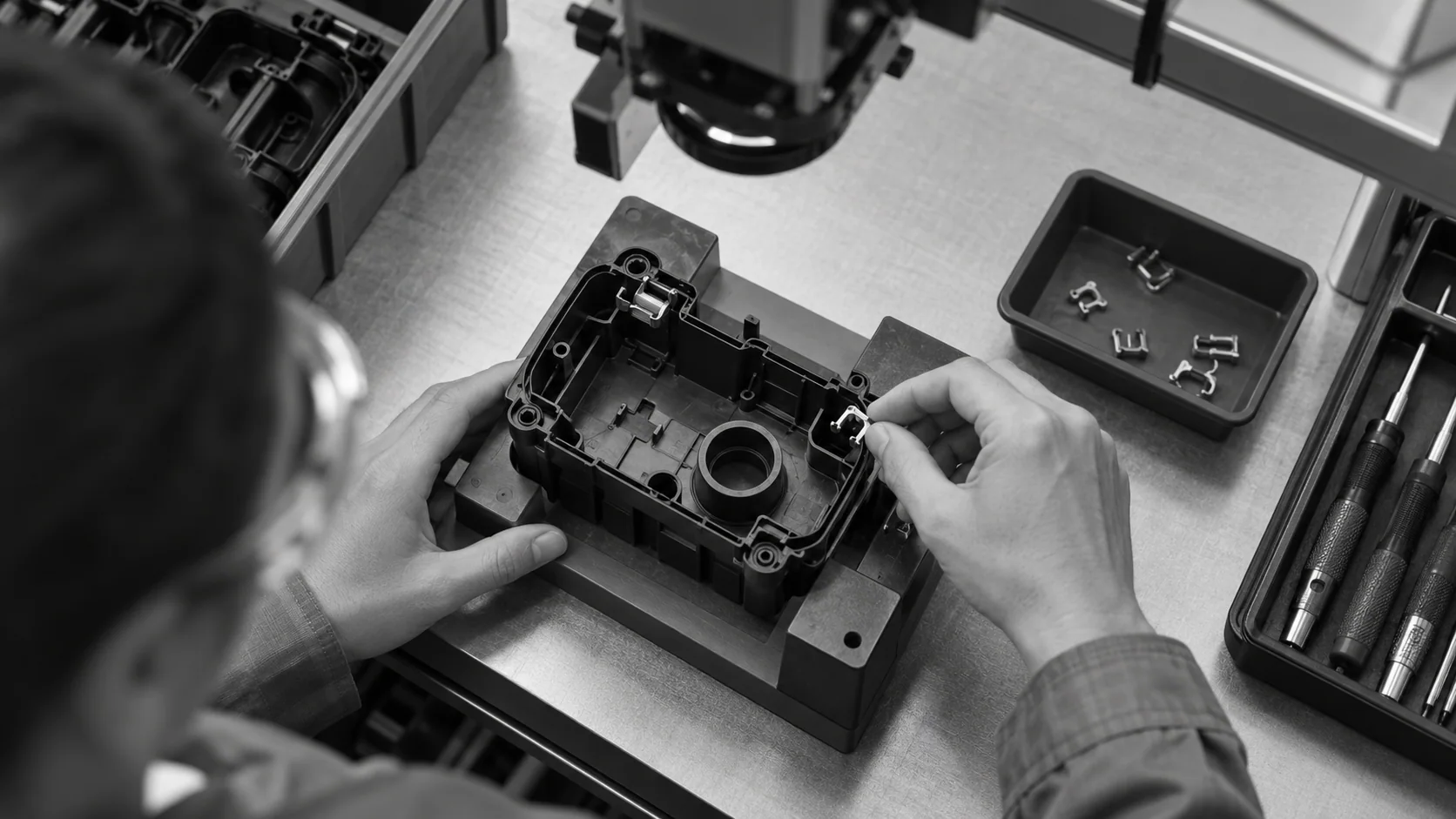
Conceptual illustration of an operator placing a retaining clip in an open housing beneath an inspection camera.

Stop the Error Before It Is Hidden

  • Alert the operator the moment a deviation appears
  • Hold the unit until the error is corrected
  • Store each event with its clip and station
  • Show error trends by variant, shift and station
At the station
Errors corrected in seconds
Every event
Clip and context stored
HOW IT WORKS

How Prevention Replaces Late Detection

Assembly error prevention with NAGARE starts from your escape data, puts cameras where errors begin and closes the loop with alerts and trend reports.

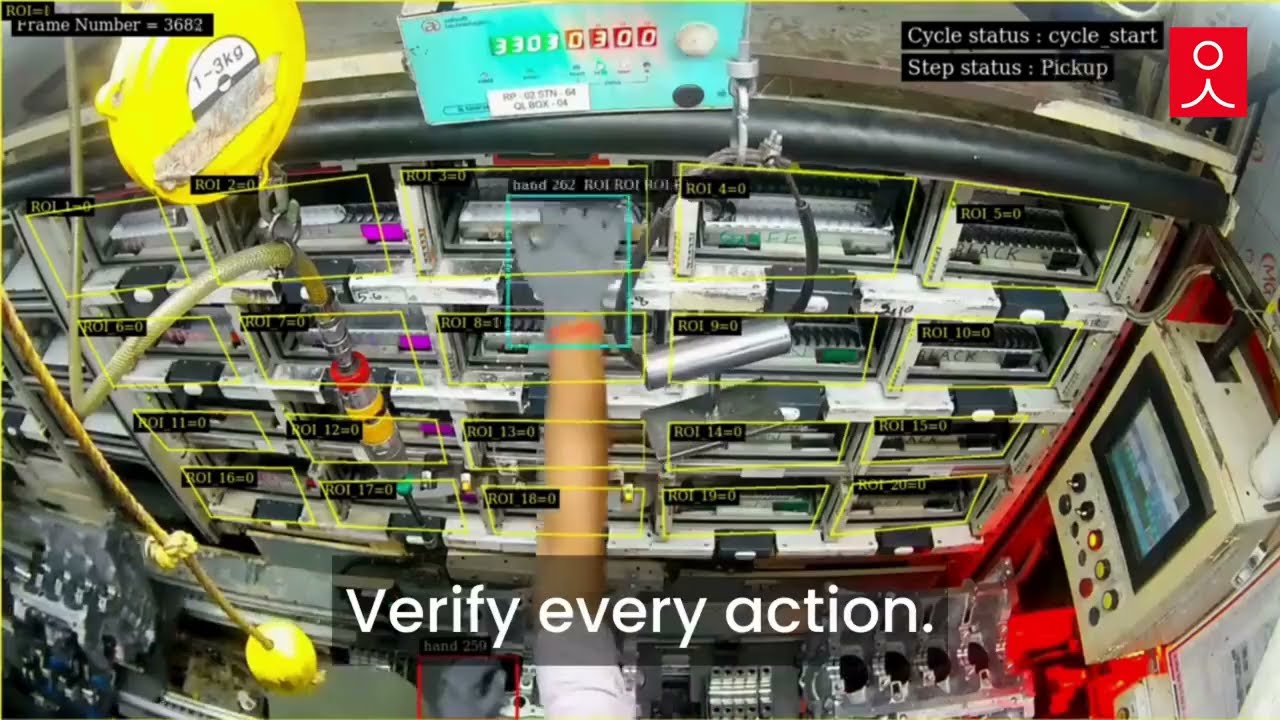
Official video frame showing an engine-bearing assembly view with tracked parts and cycle status
Engine-bearing assembly application: NAGARE detects selection and placement deviations and provides operator guidance before the next operation.
Highlight #1

Rank Errors by Cost

Your rework, scrap and return data show which errors and stations matter most, so the first cameras go where they pay back fastest.

Highlight #2

Watch the Operations That Cause Them

Models trained on your cycles recognise the parts and actions involved and spot deviations as they happen.

Highlight #3

Alert, Correct and Trend

Operators fix errors on the spot, and trend reports show whether each countermeasure is working.

Connect With Us

Send your top escapes and a video of the stations behind them. We will show which errors the camera can prevent first.

Get In Touch

Prevention Compared With End-of-Line Detection

Every approach reduces escapes. Prevention changes the cost of each error and the speed at which causes are fixed.

Monitoring need
Manual methods
Traditional machine vision
NAGARE AI
When the error is found
At final inspection
At final inspection or test
At the station, as it happens
Cost of correction
Disassembly or scrap
Seconds at the station
Learning from errors
Defect tallies
Image of the result
Clip of the action that caused it
First-Time-Right
Measured, not improved
Raised at the source

Frequently Asked Questions

What are the most common mistakes in manual assembly?

Surveys of manual work point to the same groups again and again: the wrong part fitted, a part missing, a part placed in the wrong position or orientation, and operations done out of order or skipped. A substituted part is often the most expensive, because it can fill the slot and pass a casual look. Knowing which groups dominate on your line is the first step in choosing countermeasures that pay back.

Is prevention better than detection?

Prevention is better wherever it is practical, because the error never becomes a defect. Detection is still needed, because people make mistakes that no design removes entirely. Assembly error prevention combines both at the station: the operator is warned at the moment of deviation, which is prevention for that unit, and the event is recorded, which is detection that drives improvement on every later unit.

How does this fit with failure mode analysis?

A process FMEA identifies and evaluates failure modes using the method required by your plant and customers. A validated camera check may contribute detection-control evidence for the operations it actually covers. It does not automatically change a risk rating. Quality teams should assess coverage, missed and false events, reaction plans and other controls before revising the analysis. Use confirmed occurrence data with its production exposure, and retain repair-cost and downstream-error evidence for the assembly errors under review.

Why do mistakes rise as the product range grows?

Each additional variant adds parts that look alike, small differences in method and more decisions for the operator. Research on manual assembly links this growing variant complexity to higher error rates, along with time pressure. Cameras do not reduce the variety, but they carry the burden of checking it, so the operator does not have to remember every difference between models. New variants are added by recording normal cycles, so coverage keeps up with the range.

Does line speed affect mistakes?

Some manual-assembly studies associate work pace with errors, but that does not establish a fixed relationship for every line or operator. Configured camera checks also have limits: demonstrate their coverage and warning timing at the intended production speed. Review comparable output, accepted quality and event records when changing takt, staffing or breaks. A faster line and a changed error rate may have several causes, so investigate the context rather than treating either as proof of the other.

How does it compare with guidance tools at the station?

Assembly assistance such as pick-to-light, projection and digital instructions guides the operator towards the right action. Camera verification confirms that the right action happened. The two work well together: guidance reduces the chance of a slip, and verification catches the ones that still occur. Error-influencing factors such as lighting, layout and instruction clarity are reviewed during scoping, because fixing them is often the cheapest win.

How do we measure the results?

Track first-pass yield at the protected stations, rework cost per unit and the defect escape rate to later stations or customers. Warranty claims provide a slower signal. Take a baseline and compare equivalent products, volumes, observation periods and reporting rules after the change. Record other interventions and changes in product mix or production speed. An improving trend is useful evidence, but a baseline alone does not establish that the camera check caused the change.

What should we send to plan assembly error prevention?

Send your top escapes from the last few months with their cost, the stations where they originate and a short video of each station. Include your current assembly quality control steps. With that, we can rank the stations, propose camera positions and estimate the effect on rework and escapes before any hardware is installed.

CONNECT WITH OUR EXPERTS

Show Us the Escapes That Cost You Most

Share your top escapes, the stations behind them and your current rework data. We will plan assembly error prevention for those stations and explain timing and cost. Count on roughly 4 weeks to the first protected station.

Rank Your Escapes With Us
Close video