










WOOD & VENEER DEFECT INSPECTION

Wood Defect Detection AI That Works With Natural Variation

KOMPASS AI brings wood defect detection to your production line. Check visible knots, cracks, splits and grain flaws against the requirements of the finished product, so normal variation can pass while unsuitable pieces are separated before further processing.

Discuss Your Wood Inspection

Trusted by manufacturers to improve quality on the line

THE PROBLEM

Every Piece Looks Different. Your Quality Standard Still Has to Hold.

Wood defect detection has to account for the material's natural variation. A dark grain line can look like a crack, while a small knot can disappear into the surrounding pattern. What passes also changes with the grade and intended use.

Grain Hides the Flaw

Cracks, pinholes and small knots compete with the pattern of the wood. A quick check can miss a defect that becomes obvious after cutting, coating or assembly.

Good Material Is Downgraded

A knot or colour change may be acceptable in one product and unsuitable in another. When those limits rely on individual judgement, the same piece can receive different decisions across shifts.

The Fault Reaches a More Expensive Operation

A defective slat or veneer face can receive more machining, adhesive or finishing before it is rejected. By then, the loss includes both the material and the work added to it.
The Solution

Apply Your Visual Quality Standard to Each Inspected Piece

Our AI Product Inspection system, KOMPASS™, learns from your wood samples and defect examples. Combined with suitable cameras, lighting and handling, it checks visible defects against the agreed requirements for the species, product and grade being produced.

Recognise Defects Within the Natural Pattern

  • Train with acceptable grain, colour variation and real defect examples
  • Identify visible knots, cracks, pinholes and other agreed surface defects
  • Define which defect categories and severity levels matter to the product
  • Validate new species, finishes and product variants against their own samples
Natural variation
Represented in training
Product criteria
Applied to the inspected surface
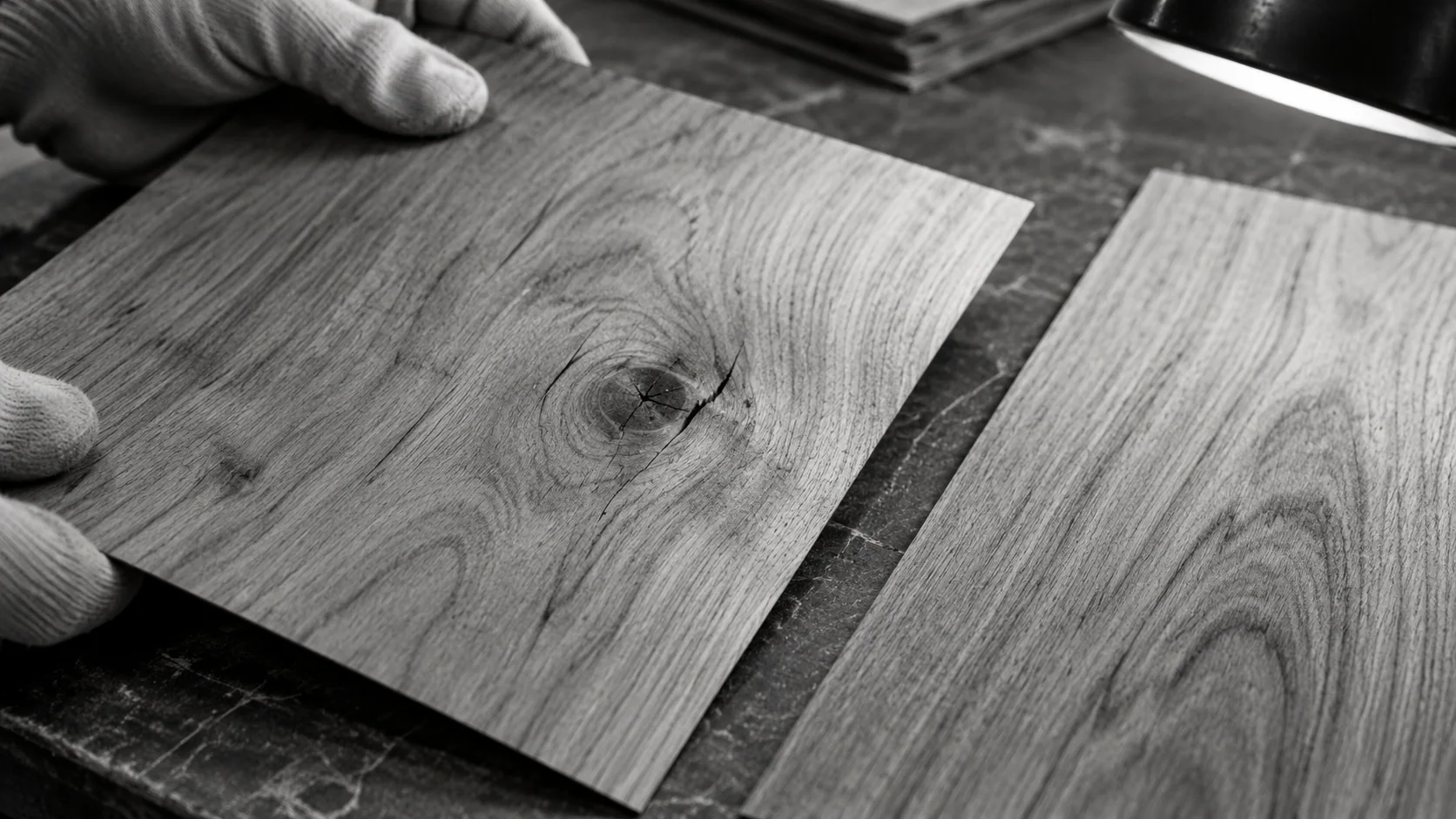
Conceptual illustration of wood veneer with a knot and short crack beside natural grain.
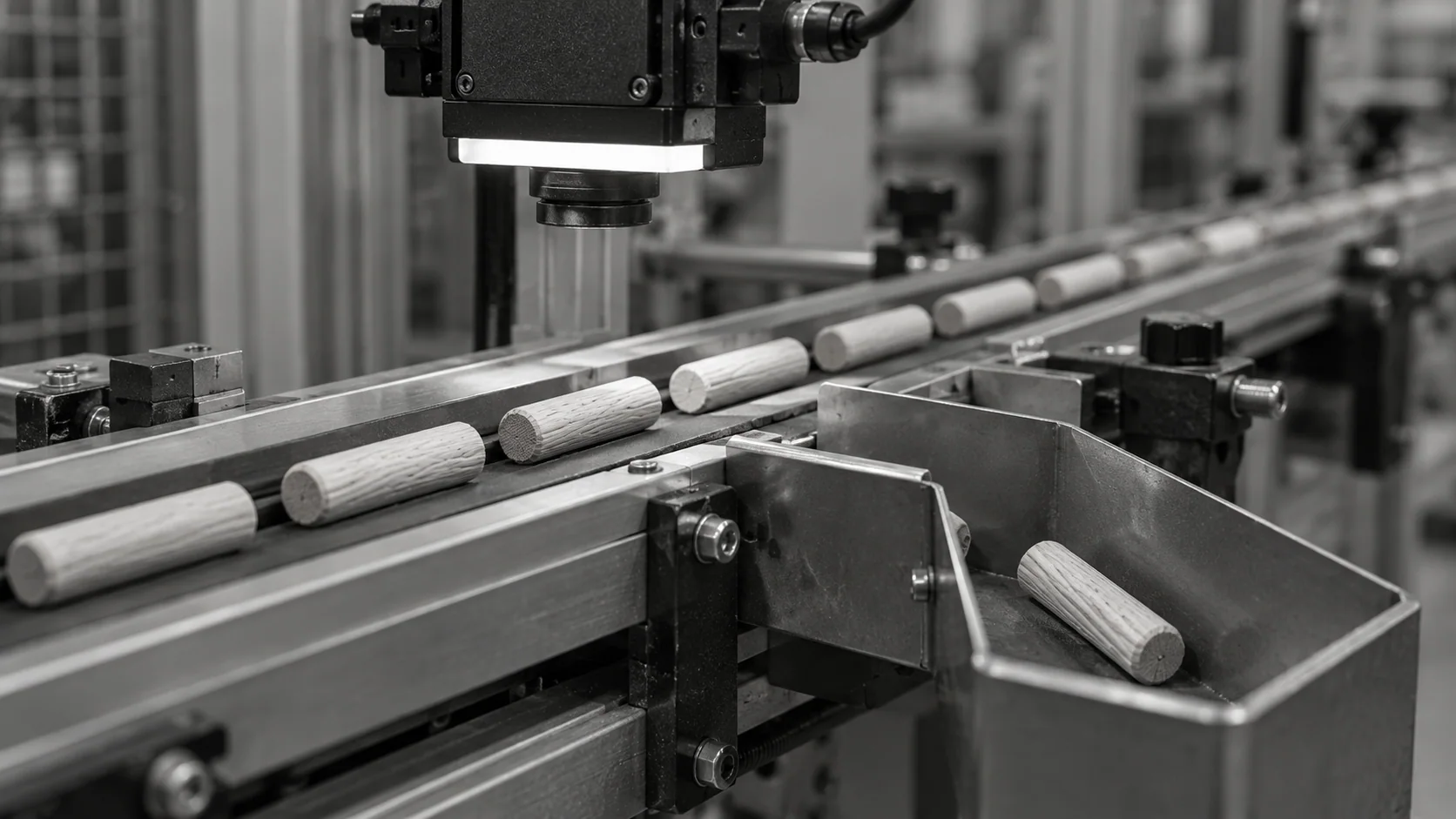
Conceptual illustration of wooden dowels at an inspection checkpoint beside a collection chute.

Separate Unsuitable Pieces Before More Value Is Added

  • Place the inspection where the required faces are exposed
  • Coordinate image capture with the feed and movement of the material
  • Send the result to the configured reject or sorting mechanism
  • Retain defect images for review of recurring problems and grade decisions
Before further processing
A defined quality checkpoint
Defect evidence
Images behind the decision
HOW IT WORKS

See KOMPASS Inspect Wooden Dowel Pins in Production Machinery

Jidoka's dowel-pin demonstration shows visual inspection integrated into the production machine, with automatic ejection of rejected pieces. It illustrates how image capture and the reject response need to work together when small wooden parts move through a compact inspection area.

Official video frame showing a gallery of wooden dowel inspection images with marked defects
Wooden dowel-pin application: visual defects are marked and rejected pieces are ejected. Veneer-sheet grading is not demonstrated in this clip.
Highlight #1

Present the Surface Clearly

Match the camera view and lighting to the wood, the defect and the available inspection space. Stable presentation keeps the relevant surface visible as each piece moves through.

Highlight #2

Apply the Right Acceptance Standard

Train the model with the grain patterns your process accepts and the defects it rejects. The decision follows the product's requirements, including which marks matter to the next operation.

Highlight #3

Connect the Decision to Separation

Coordinate the inspection result with the piece's position and the rejection mechanism. The result becomes an action on the line, with images available for quality review.

Connect With Us

Show us the species, grade and defects your team has to judge. We will assess the views and samples needed for a representative inspection trial.

Get In Touch

Keep the Decision Consistent When the Grain Changes

The acceptance standard comes from your product requirements. Inspection needs to apply it across the natural variation present in production.

Inspection need
Manual inspection
Traditional machine vision
KOMPASS AI
Grain and colour variation
Relies on experience and judgement
Strong on defects that fit stable contrast or geometry rules
Learns acceptable variation from representative samples
Different product grades
Inspectors interpret the current grade requirements
Rules can be configured for each defined grade
Defect classes and decisions are validated against your criteria
Separation on the line
An operator sorts or marks the piece
Can drive automated sorting
Connects the visual result to the agreed separation response
First-Time-Right
Depends on repeatable interpretation at each check
Supports a defined inspection under controlled conditions
Helps contain visible defects before later processing adds cost
CUSTOMER SUCCESS

Hindustan Pencils Automated Wooden Slat Inspection

Jidoka combined AI visual inspection with laser measurement for Hindustan Pencils. The visual checks cover defects including knots, cracks and pinholes, while the laser system measures geometry. The inspection result is connected to pneumatic separation on the slat line.

Official Jidoka case-study cover for Hindustan Pencils wooden-slat inspection
Hindustan Pencils Automated Wooden Slat Inspection
Manufacturing

The results relate to wooden slats. A veneer line needs its own validation for sheet size, surface presentation, grade criteria and speed.

  • 99% reported defect detection accuracy
  • 125 wooden slats inspected per minute in the reported deployment

Frequently Asked Questions

How does wood defect detection distinguish grain from a flaw?

Wood grain inspection starts with examples of the variation your product accepts. Train and validate using the species, shades, grain patterns and surface conditions that actually reach the station. Include borderline pieces as well as obvious rejects. For wood knot detection, the decision must also reflect whether that type, size and location of knot is acceptable in the intended product. A camera finding a feature is only part of the job. Your quality criteria determine what happens next.

Which visible defects can the inspection cover?

Wood cracks, pinholes, knots and other visible surface anomalies can be assessed where the imaging setup reveals them clearly. Agree the defect list with Jidoka using actual samples, including the smallest rejectable feature. Wood splits may need a different view from a dark surface mark, especially near the edge or end of a piece. The trial should identify which faces need cameras and whether movement, dust or overlapping pieces could hide an important defect.

Can the same system inspect veneer sheets and solid wood parts?

The AI inspection approach can be configured for different products, but the station design and validation are application-specific. Veneer inspection has to cover the required sheet area while controlling presentation, lighting and motion. Small components may need rotation or separate views of their ends and sides. Jidoka's published wood examples cover slats and a dowel-pin proof of concept. They provide relevant experience, while your sheet dimensions, species, finish and production conditions establish the requirements for a veneer application.

Can it decide which grade a piece belongs to?

Veneer grading needs an agreed mapping between visible features and the grades you use. Define the allowed defect types, sizes, positions and combinations for each product. The visual decision can then support wood sorting through the appropriate line controls. Start by testing pieces your graders disagree about, because those expose unclear acceptance rules. Structural strength, moisture content and other properties that cannot be established from the surface need their own measurement methods and acceptance process.

Can it check colour changes without rejecting acceptable wood?

Wood discoloration should be judged against approved examples for the species and intended finish. Natural colour variation, heartwood and process marks do not all mean the same thing. Stable lighting and a representative sample set are therefore essential to wood surface inspection. Include the variation between batches and the conditions after sanding or finishing. Agree which differences are cosmetic rejects, acceptable features or cases for further review before those decisions are connected to automatic separation.

Does visual inspection find hidden defects or weak bonding?

Plywood inspection with surface cameras checks what the imaging arrangement makes visible. A raised or damaged face can be a reason for further investigation, but an acceptable surface does not establish the condition of concealed layers or the strength of an adhesive bond. Similarly, moisture and internal decay require suitable assessment beyond a surface image. Define those needs separately when scoping the station so each quality requirement is matched to an inspection method that can actually evaluate it.

What line speed and accuracy can we expect?

Wood quality inspection performance depends on the product, defect list, required views, feeding method and reject arrangement. Jidoka reports 99% accuracy at 125 slats per minute for its Hindustan Pencils application. Its separate dowel-pin case is a proof of concept, so those figures should not be treated as a veneer production guarantee. Validate your own samples at the proposed speed and measure missed defects and good pieces rejected separately before agreeing the operating target.

What should we provide for an inspection trial?

Send acceptable pieces, clear rejects and borderline examples, together with your defect definitions and grade requirements. For pencil slat inspection or another component line, include the dimensions, exposed faces, feed spacing and point where rejection can happen. For sheets, add the width, travel speed and required surface coverage. Identify any change in species or finish between runs. Those details let the team design a trial that reflects the material and decisions your production team actually handles.

CONNECT WITH OUR EXPERTS

Bring Us the Pieces Your Inspectors Disagree About

Share your wood samples, grade definitions and line conditions. We will assess how to turn those acceptance rules into a repeatable visual checkpoint before the next operation.

Discuss Your Wood Inspection
Close video