


REAL-TIME POKA-YOKE ERROR PREVENTION

Digital Poka-Yoke to Stop Assembly Mistakes in Real Time

NAGARE brings digital poka-yoke to stations where fixtures and sensors cannot cover every mistake. A camera watches each operator action, compares it with the approved method and alerts the operator the moment a wrong part, missed action or repeated placement happens, before the unit moves on.

Scope a Station Check

Trusted by manufacturers for error-free manual operations

THE PROBLEM

Physical Error-Proofing Stops Where Variety Starts

Keyed nests and switches prevent the mistakes they were designed for. Each new variant, look-alike part or flexible station adds errors that no physical device was built to catch, and that gap is where a camera earns its place.

Fixtures Check Presence, Not Correctness

A sensor confirms that something sits in the nest. It cannot tell a left-hand bracket from a right-hand one or confirm that the actions happened in order.

Every Variant Needs New Hardware

Nests and guides are redesigned for each model change. On high-mix lines the error-proofing budget never keeps pace with the product range.

Alerts Arrive After the Unit Leaves

End-of-line tests find the mistake hours later, when the unit has to be stripped, reworked or scrapped and the shift has moved on.
The Solution

Add Digital Poka-Yoke to Every Manual Station

Our AI process monitoring software, NAGARE™, adds digital poka-yoke to manual stations through a camera and models trained on your approved method. It recognises parts, hands and actions, so errors are flagged while the operator can still correct them.

Catch the Mistakes Fixtures Miss

  • Tell look-alike and left- or right-hand parts apart by visible features
  • Confirm each action happened, in the right order
  • Flag repeated or missed placements at the station
  • Use an agreed station interlock where a hold is configured and validated
Every cycle
Checked as it happens
Before release
Errors corrected at source
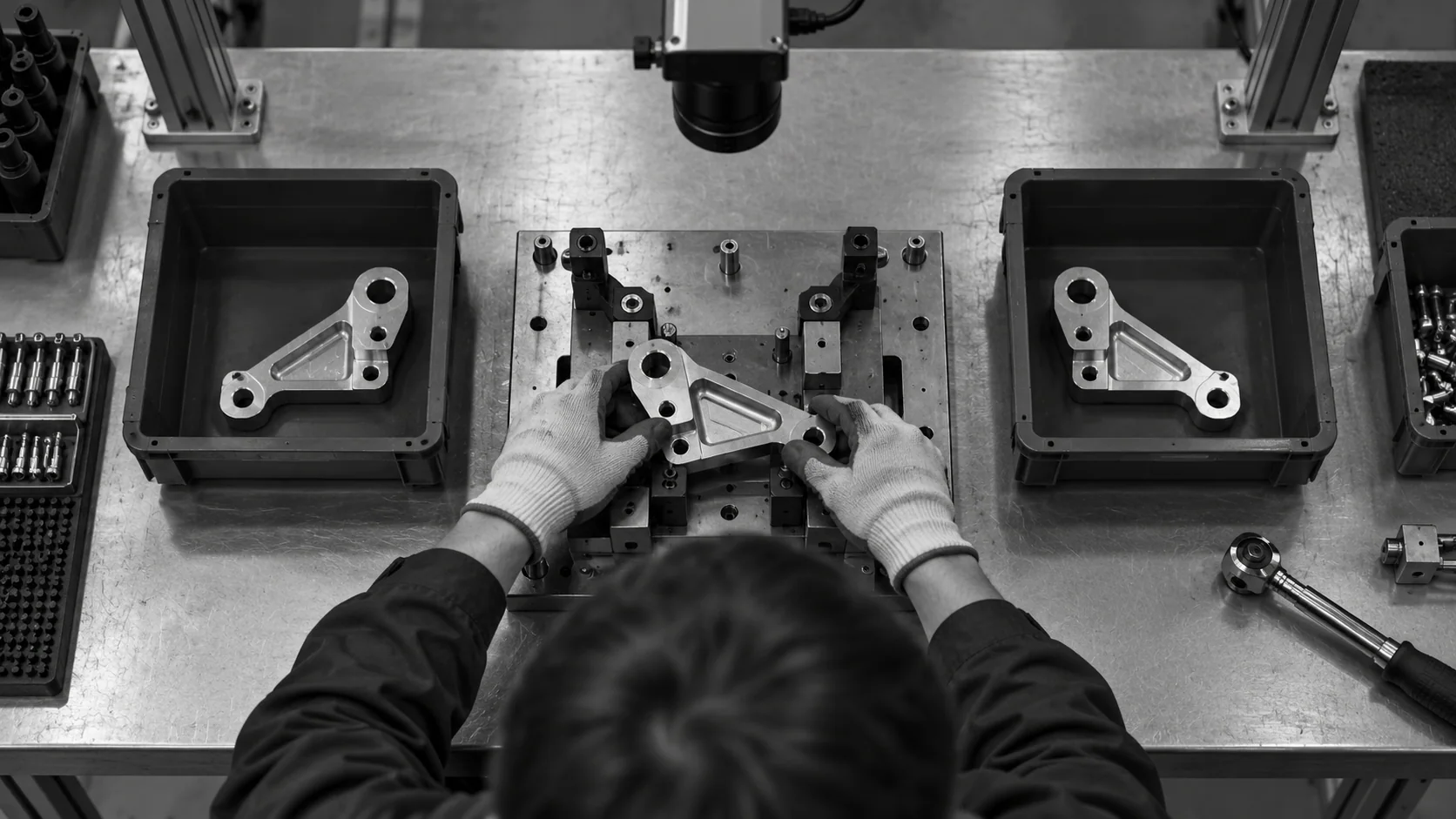
Conceptual illustration of mirror-image brackets and a matching assembly nest beneath an overhead camera.

Change Variants Without New Hardware

  • Switch the approved method by part number or work order
  • Plan training from 120 minutes of station footage, with variant coverage agreed during scoping
  • Keep existing nests and switches where they already work
  • Store every alert with its video clip for review
120 minutes
Training footage, scope agreed
Video record
Every alert reviewable
HOW IT WORKS

From Camera View to Digital Poka-Yoke Alert

Digital poka-yoke compares what the operator does with what the method says. NAGARE uses a camera over the station, a model trained on your parts and actions, and an alert the operator cannot miss.

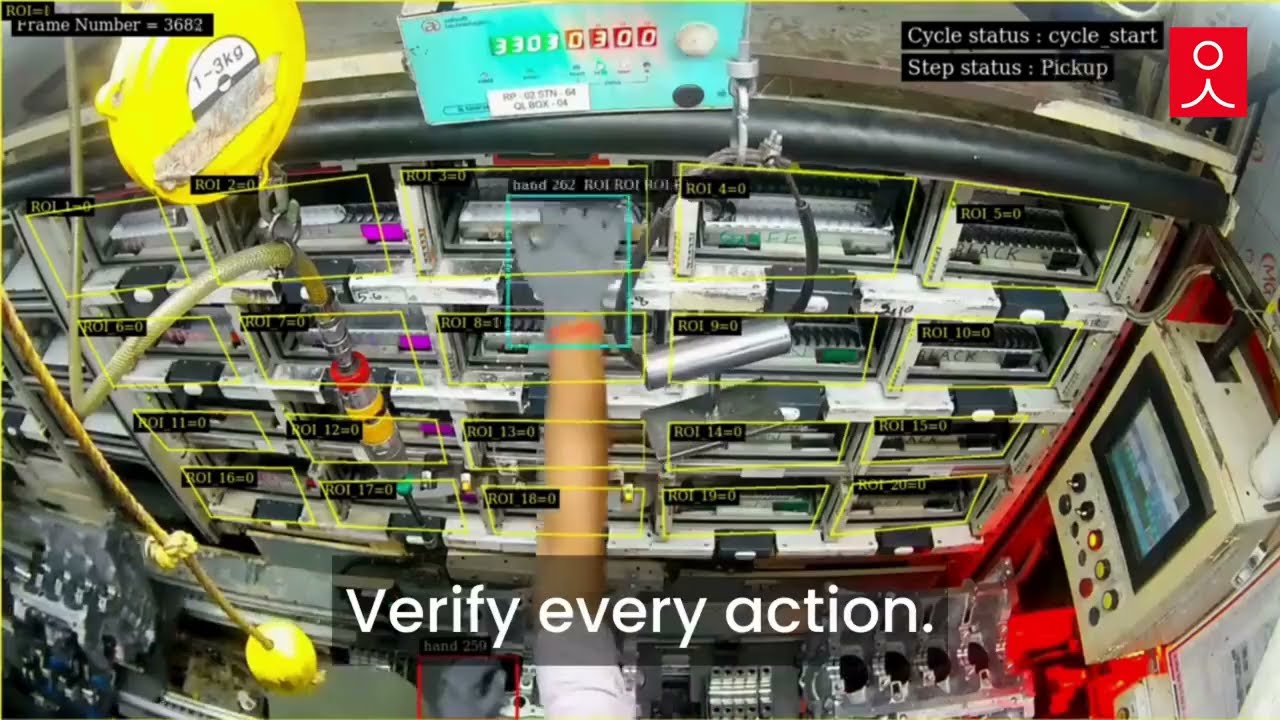
Official video frame showing an engine-bearing assembly view with tracked parts and cycle status
Engine-bearing assembly application: NAGARE follows bearing selection and placement and identifies incorrect, missed or repeated placements.
Highlight #1

Mount a Camera Over the Station

One camera, or two where areas are hidden, views the work surface, part bins and the operator's hands. Existing cameras can be used where the view is clear.

Highlight #2

Train on Your Approved Method

The model learns your parts, variants and action order from recorded cycles, including the mistakes you most want to stop.

Highlight #3

Alert, Hold and Record

A wrong part or missed action triggers an audio and visual alert. The cycle waits for correction and the clip is saved for review.

Connect With Us

Share a recording of one station and the mistakes it suffers from. We will show where digital poka-yoke adds coverage to the devices you already run.

Get In Touch

How Digital Poka-Yoke Compares With Other Checks

Each approach stops some mistakes. The difference is which mistakes, how quickly a new variant is covered and what evidence remains afterwards.

Monitoring need
Manual methods
Traditional machine vision
NAGARE AI
Wrong or look-alike part
Operator attention
Rules written per part
Learned from your own footage
Action order
Not checked
Rarely checked
Checked every cycle
New variant
Retrain people
New rules and lighting
New footage, same camera
First-Time-Right
Depends on vigilance
Stable on fixed parts
Errors corrected before release

Frequently Asked Questions

How is a camera-based check different from a physical device?

Physical poka-yoke devices such as keyed nests, guide pins and limit switches make one specific mistake impossible or obvious. Digital poka-yoke uses a camera and trained models to check the work itself, so it can confirm the right part, the right position and the right order of actions. It suits mistakes that are visual, depend on the variant or concern sequence, where building a dedicated device for each case would be impractical or too slow.

Which of Shingo's three methods does it support?

Shigeo Shingo described three approaches to error-proofing. The contact method checks shape or position, the fixed-value method checks that a set number of actions happened, and the motion-step method checks that actions follow the defined order. A camera-based system can support all three at once: it confirms where a part sits, counts placements and fasteners, and follows the order of hand actions, without a separate sensor for each check.

Should we replace the error-proofing hardware we already have?

No. Mechanical fixtures that already prevent a mistake reliably are cheap, fast and easy to maintain, and they should stay. Camera checks add coverage where hardware cannot reach: left- and right-hand versions that fit the same nest, optional components that depend on the variant, and actions that leave no physical evidence afterwards. Most stations end up with a mix of both, each doing the job it does best.

Can it tell left-hand and right-hand parts apart?

Yes, when the difference is visible to the camera. Mirror-image parts usually differ by a hole, a tab, a moulded mark or a contour. The model is trained on images of both versions from your station under your lighting, so it learns the feature that separates them. Where the difference cannot be seen from any practical angle, a barcode or weight check remains the better tool, and we say so during scoping.

What happens the moment an operator makes a mistake?

The station raises an audio and visual alert as soon as the deviation is seen, and the cycle can be held until the error is corrected. This follows the idea of a poka-yoke system that stops the process rather than simply logging the problem for later. Each alert is saved with its video clip, so supervisors can see what happened and whether the same mistake keeps returning on a shift or variant. Alert sound, screen position and hold behaviour are set per station, so the warning is noticed in a noisy hall without startling the operator.

Does it work with our PLC and existing sensors?

Where a suitable PLC interface is configured, NAGARE can exchange step-status signals with the line controller. A proximity switch confirming that a part is in the nest and a camera checking its visible identity can contribute to an agreed interlock. Existing sensors keep their role. Your controls team defines the interface, hold logic, release conditions and fallback behavior, then validates them at the station. Alert-only operation can be assessed first. A camera result should not be treated as a validated release signal before that work is complete.

How does it support continuous improvement work?

Mistake proofing is a core lean manufacturing practice, and digital poka-yoke extends it to stations that were left to operator vigilance. Alert records show which mistakes occur, on which variants and at what times, which gives kaizen teams evidence to redesign parts, nests or methods. Over the following weeks the same data shows whether a countermeasure actually removed the mistake or only moved it elsewhere.

What should we send to scope digital poka-yoke for a station?

Send a short video of the station running normally, a list of the mistakes you see most often and the variants built there. Photos of look-alike parts and of the current nests and guides help us judge what the camera must see. With that, we can propose camera position, the checks to add and how alerts should reach the operator without slowing the cycle.

CONNECT WITH OUR EXPERTS

Show Us the Mistake Your Fixtures Cannot Stop

Share a station video, your variants and the errors that reach end-of-line test. We will plan digital poka-yoke for that station and explain timing and cost. A first station usually goes live within 4 weeks.

Scope a Station Check
Close video