












TORQUE-STEP CONFIRMATION

Torque Sequence Verification to Stop Out-of-Order Tightening

NAGARE supports torque sequence verification by checking visible fastening actions against your tightening pattern. Camera coverage and any link to tool OK/NOK results are assessed with your engineers. Measured torque remains the tool controller's responsibility, while unconfirmed positions need an agreed review or release rule.

Check a Tightening Pattern

Trusted by manufacturers for error-free manual operations

THE PROBLEM

A Torque OK Does Not Prove the Order

A tool controller records that it reached target torque. It does not always know which bolt it was on, so a joint can pass every torque check and still be tightened in the wrong order.

Wrong Order, Uneven Load

Tightening one side fully before the other distorts gaskets and covers. The joint looks finished but leaks or loosens in service.

A Second Hit Looks Like a Good One

Going back to a bolt that is already tight gives another OK result, while a neighbouring bolt is never touched.

Paint Marks Rely on Memory

Marking each bolt after tightening is slow, easy to forget and says nothing about the order in which the bolts were done.
The Solution

Confirm Every Position, in the Required Order

Our AI process monitoring software, NAGARE™, supports torque sequence verification by comparing visible fastening actions with the required order. Camera coverage and any link between positions and tool results are scoped for your joint. Torque measurement stays with the tool.

Check the Visible Tightening Order

  • Map the bolt positions that the camera can distinguish
  • Compare recognised actions with the specified tightening pattern
  • Flag configured skips and repeats for operator review
  • Show the next position where guidance is configured
Mapped positions
Visible order assessed
Configured checks
Skips and repeats reviewed
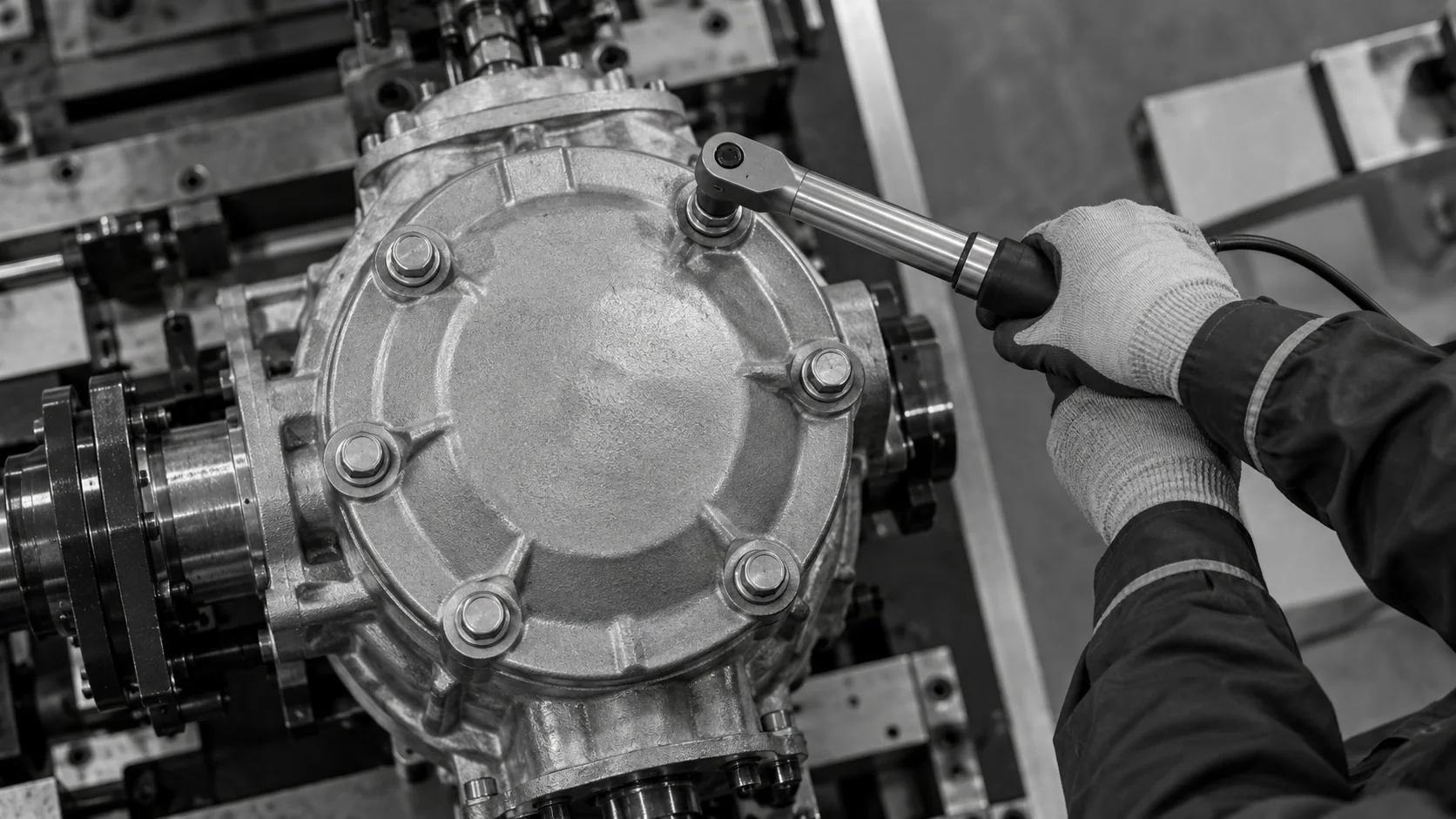
Conceptual illustration of a socket tool engaging one bolt on a multi-bolt flange beneath a camera.

Scope Tool Results and Release Rules

  • Review controller signals and interface availability
  • Agree how a result can be linked to a visible position
  • Configure a hold only after site controls validation
  • Define which records and clips to retain for each joint
Tool plus camera
Connection assessed per station
Per joint
Agreed record scope
HOW IT WORKS

From Tightening Pattern to Verified Joint

Torque sequence verification needs an agreed view of the tool and a clear distinction between observed order and measured rundown quality. Any controller connection is specified and validated with your controls team.

Highlight #1

Map the Joint and Its Pattern

Bolt positions and the required order are set from your drawing or work instruction and confirmed on recorded cycles.

Highlight #2

Follow the Tool Across the Joint

Configured camera checks compare visible fastening actions with mapped positions. Hidden or ambiguous engagements need another view or review.

Highlight #3

Review Gaps and Record the Evidence

An unconfirmed position can raise an alert. Any hold, tool-result link and release condition must be agreed and validated for the joint.

Connect With Us

Share the tightening pattern for one joint and a video of an operator tightening it. We will show how each position would be checked.

Get In Touch

Torque Sequence Verification Methods Compared

The methods differ in how they record position and order. A tool torque result and a camera observation answer different questions, and their connection must be validated.

Monitoring need
Manual methods
Traditional machine vision
NAGARE AI
Order of tightening
Operator memory
Positioning arm or socket tray
Visible order checked against mapped positions
Skipped bolt
Found by paint-mark audit
Found if positions are sensed
Configured skipped-position alert
Retrofitting
No change
Arms and sensors per station
Camera coverage and interface assessment
First-Time-Right
Depends on discipline
Reliable on fixed joints
Wrong order flagged within validated coverage

Frequently Asked Questions

Does the camera measure torque?

No. Torque is measured by a suitable tool and its controller, such as a DC nutrunner or a transducerised torque wrench. A camera can observe a visible fastening action at a mapped fastener position, but appearance alone cannot establish achieved torque, angle or preload. Any pairing of controller measurements with those observations must be engineered and validated. Torque verification stays with the tool. Torque sequence verification adds only the position and order evidence that the agreed camera view can support.

Why does the bolt tightening sequence matter?

Tightening order controls how clamp load builds across a joint. Working in a cross or star pattern spreads the load evenly, while finishing one side first can distort a cover, crush a gasket unevenly or leave some bolts below their intended preload. The specified order is usually set by design engineering, and on critical joints it forms part of the quality record, so proving it matters as much as hitting the value.

How does it catch a second hit on the same bolt?

A double hit can occur when the operator returns to an already completed position while another bolt remains untouched. A configured camera check may flag that visible return for review. It cannot establish the second rundown result from appearance alone. Some controllers also detect repeat tightening through the torque-angle curve. Agree whether those signals can be linked to the same bolt and unit record, then validate skips, repeats and obscured actions on the actual joint before relying on the combined check.

Which joints is this suited to?

Covers, housings, wheel hubs, cylinder heads and any flange joint with several bolts and a defined order are typical. The joint needs to be visible to an overhead or side camera while the operator works, and bolt positions need to be distinguishable in the image. Very tight clusters or hidden fasteners may need a second camera view, which we assess during the trial using your own parts and tools.

Can it use the signals from our existing tools?

A tool controller connection requires an engineering assessment. Providing OK and NOK outputs does not by itself establish compatibility, synchronization or a reliable association with the bolt the camera sees. Share the controller interface details so the team can scope and demonstrate the proposed record. If no validated connection is available, retain the existing torque checks and treat camera observations as order or coverage evidence within their agreed limits, not as confirmation of measured tightening quality.

What happens when a bolt is skipped?

Where a skip is visible and the relevant rule has been configured, the station can flag the unconfirmed position for the operator. Any hold and release behavior is defined with the controls and quality teams. The approved correction may involve tightening, inspection or repair, depending on the joint. Replaying an action should not automatically clear a quality concern. A position record and clip can help investigate a recurring rework loop without treating the video as a torque measurement.

Does it replace paint marking and audits?

Keep existing paint marking and audits until the quality team has validated any proposed replacement for coverage and order evidence. A video-backed record may support that decision, but it does not replace a calibrated tightening-audit tool or other approved method for assessing tightening quality. The audit schedule and acceptance criteria remain plant decisions. The joint also needs its specified tightening method followed. Camera coverage alone does not establish preload or authorize dropping a current control.

What should we send to plan torque sequence verification?

Send the joint drawing with bolt positions and the required order, a video of an operator tightening the joint, and the make and model of your tools and controllers. Tell us which joints have failed in the field or at test. With that, we can propose camera placement, the signals needed at each station and how the next bolt should be shown to the operator.

CONNECT WITH OUR EXPERTS

Show Us the Joint That Must Be Tightened in Order

Share the joint drawing, the tightening pattern and your tool controller model. We will plan torque sequence verification for that station and explain timing and cost. NAGARE stations of this kind are commonly live in 4 weeks.

Check a Tightening Pattern
Close video