











PICK VERIFICATION

Pick Verification to Stop Wrong Parts Reaching the Kit

NAGARE supports camera-based pick verification at configured kitting benches and picking stations. Visible items and placements are compared with the selected kit list and quantities, so recognised mismatches can be flagged before sealing. The station trial defines coverage, ambiguous cases and the agreed correction or release rule.

Send a Kit List

Trusted by manufacturers for error-free manual operations

THE PROBLEM

A Scan Confirms the Bin, Not the Part in the Kit

Barcode scans and pick lights confirm that the picker went to the right location. They cannot see whether the right part, in the right quantity, actually went into the kit, which is where pick verification usually stops short.

Look-Alike Parts Slip Through

Similar parts in neighbouring bins are easy to confuse, and a scan of the bin label does not catch the wrong one in hand.

Quantities Are Guessed

Counting several small parts into a tray is easy to get wrong by one, and short kits stop the line that receives them.

Wrong Kits Travel Far

A wrong kit found at the customer means a recall, a rush shipment and a damaged relationship.
The Solution

Camera Pick Verification for Every Item

Our AI process monitoring software, NAGARE™, performs pick verification by recognising each item as it is picked and placed, checking it against the kit's list and counting quantities. Errors are flagged before the kit moves on.

Check Part and Quantity at Placement

  • Recognise the item picked and where it is placed
  • Count quantities against the kit's list
  • Flag wrong, missing or extra items at once
  • Load the selected kit variant's configured checks
Every item
Checked at placement
Per kit
Quantities counted
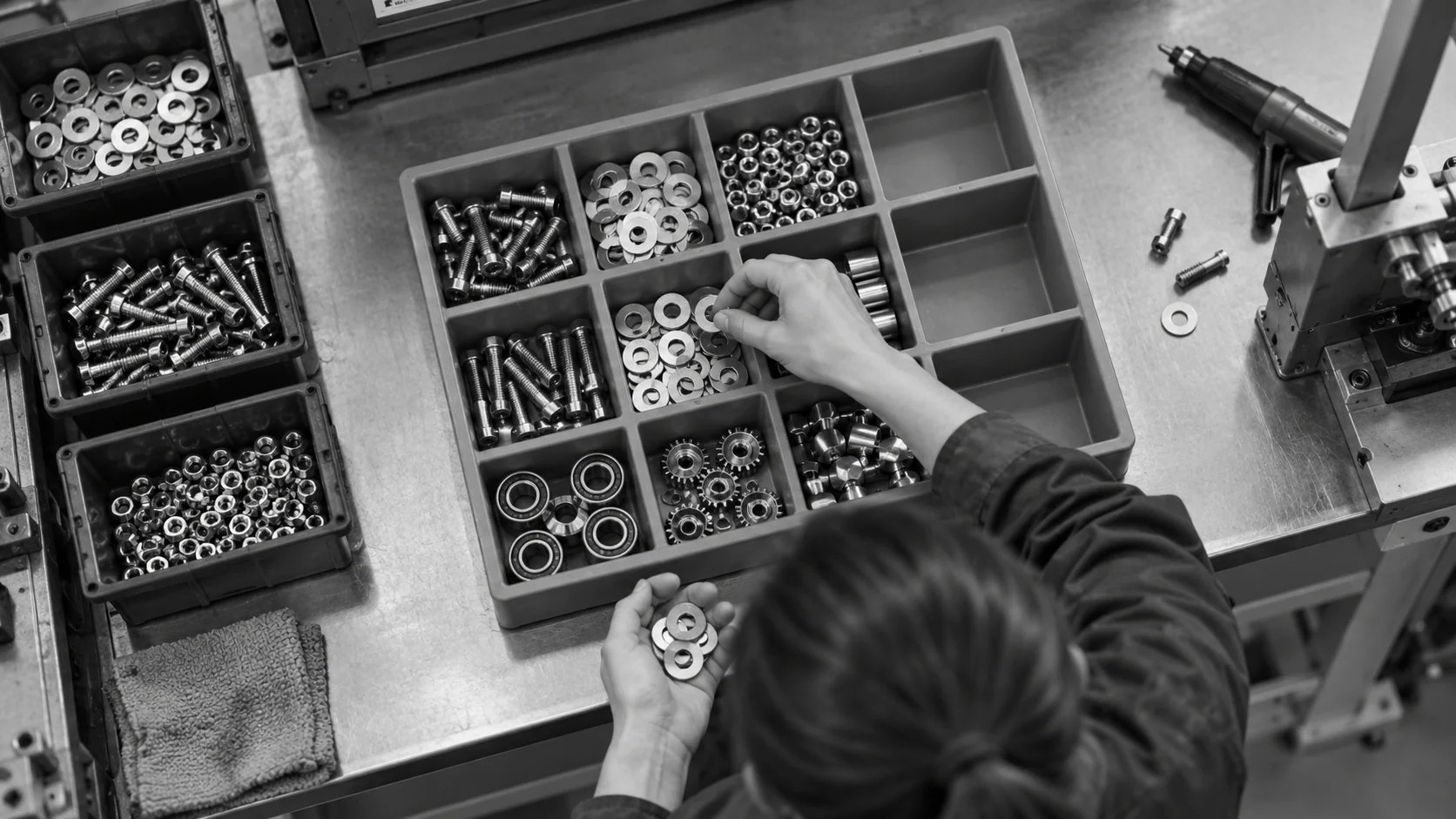
Conceptual illustration of an operator handling washers over a compartmented parts tray at a kitting bench.

Seal Kits With Confidence

  • Apply the agreed correction or hold rule before sealing
  • Record a video trail for each kit
  • Track errors by item, bin and shift
  • Feed results to your warehouse or production system
Video trail
Every kit traceable
Before sealing
Errors corrected
HOW IT WORKS

How Pick Verification Works at the Bench

Pick verification with NAGARE combines the kit's list, a camera over the bins and tray, and a check that runs as each item is placed.

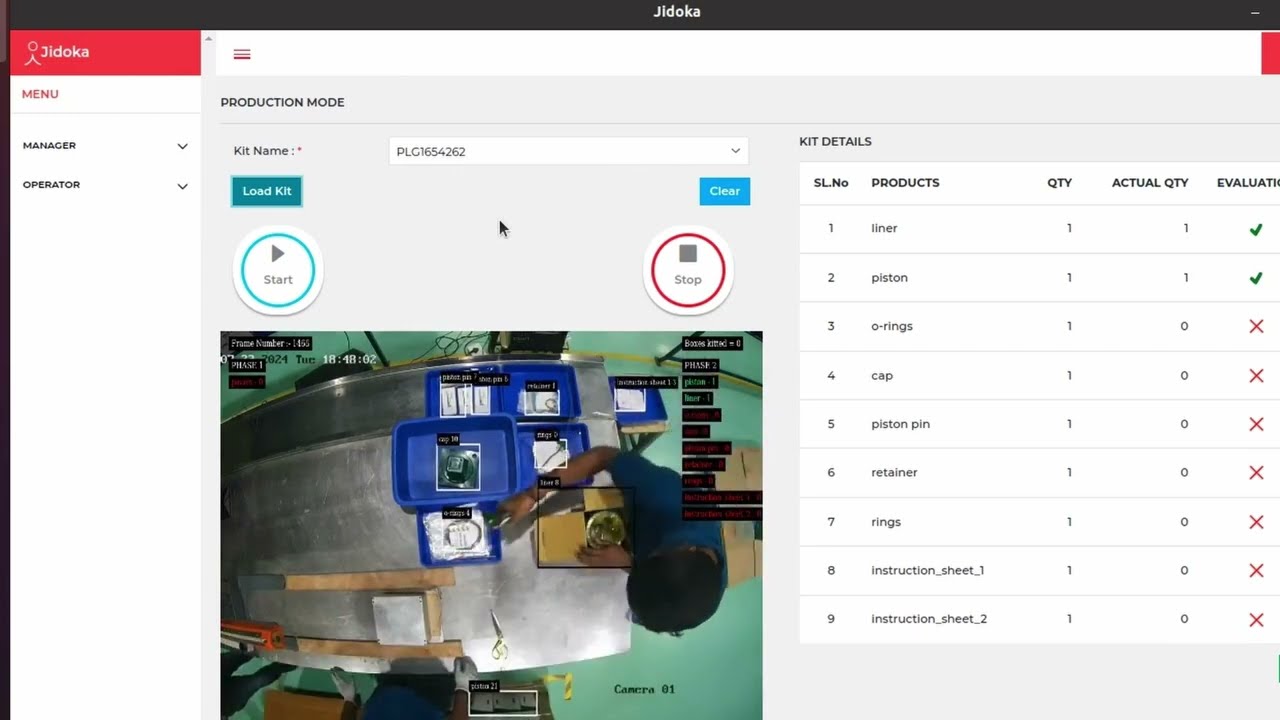
Official video frame showing a kitting bench and a checklist of required and actual kit quantities
Kitting application: NAGARE compares picked parts and quantities with the kit checklist and flags missing or excess parts.
Highlight #1

Load the Kit Contents

The kit or order is selected, and its parts and quantities are loaded from your system.

Highlight #2

Watch Picks and Placements

The camera recognises each item taken and placed, and counts it against the list.

Highlight #3

Confirm Before Sealing

Mismatches raise an alert at once, and the kit is released only when it matches its list.

Connect With Us

Send the parts list for one kit and a video of a picker building it. We will show how each item would be checked.

Get In Touch

Pick Verification Methods Compared

Each method reduces picking mistakes. They differ in whether they see the part placed in the kit and the quantity counted.

Picking need
Paper lists
Scanning and pick lights
NAGARE AI
What is confirmed
Picker's attention
Location scanned or light pressed
Item and quantity in the kit
Look-alike parts
Often confused
Missed if from the right bin
Recognised by appearance
Quantity
Counted by the picker
Assumed
Counted by camera
Kit-release evidence
Errors found by the customer
Errors found at packing
Kits correct before sealing
CUSTOMER SUCCESS

APA Engineering Ends Wrong-Kit Dispatches

At APA Engineering, NAGARE verifies the right parts in the right quantities for every kit variant, selected by parent SKU, with instant alerts for missing or excess components.

Official Jidoka case-study cover for APA Engineering kitting process monitoring
APA Engineering Ends Wrong-Kit Dispatches
Engineering

APA Engineering's published results cover its export kitting operation, where wrong kits had caused costly recalls.

  • Zero-error guided kitting with real-time verification
  • Missed components and wrong packing eliminated, with full video traceability

Frequently Asked Questions

What causes most wrong picks?

A mispick usually comes from look-alike parts stored side by side, a bin location that was replenished with the wrong item or a picker counting quickly under time pressure. Poor lighting and interruptions add to it. Most errors are small and honest, which is why a check at the moment of placement works better than asking people to try harder. The data also shows which bins and parts cause most confusion, so storage can be rearranged.

How is this different from scan-based confirmation?

Scanning confirms that the picker visited the right location or handled a labelled item. It does not confirm that the right part ended up in the kit, especially when a bin holds the wrong stock or several parts are taken at once. The camera checks the item and its quantity at placement, so the two methods work well together and cover each other's gaps. Most sites keep their scanners and add the camera only at the point where kits are closed.

How are quantities checked?

The camera counts items as they are placed, and each quantity check compares the count with the pick list. A short pick is flagged before the kit is closed, and extra items are flagged too, since they usually mean another kit will be short. Small or stacked items may need a clear tray layout so each piece stays visible to the camera.

Can one bench handle many different kits?

Define each kit variant before sharing a bench, with the intended parent SKU selected and the corresponding parts list loaded through the agreed workflow. Confirm how that selection is made and whether any system connection is available. The number of variants depends on parts, visibility and validated checks. Do not assume dozens are covered automatically. New kit contents or unfamiliar parts may require further footage, configuration and a trial before the same bench is treated as ready for them.

What does the kit tray need to look like?

A tray or tote with clear positions for each part makes verification most reliable, because the camera can see where each item sits. Where kits are bagged or boxed loosely, the check happens as items cross into the container. A short trial with your real trays confirms the best layout and camera angle before rollout. Existing trays can usually be kept, with small changes to separate parts that sit on top of each other.

How does it help prevent recalls?

A wrong SKU in a kit can lead to urgent replacement, an export recall or other customer disruption, depending on the application. APA Engineering's published case describes wrong-kit dispatches and reports zero-error guided kitting for its deployment. That is a named customer result, not a guarantee for every new station. The cost and delay of a correction depend on the kit and destination. Use your own error history to assess the value of validated placement checks before closing the kit.

Can results be traced back later?

Where kit identifiers, coverage and retention are configured, the agreed record can connect observed items and quantities with the relevant video trail. If a customer reports a problem, the team can see exactly how that kit was built. The same records show which items, bins and shifts produce the most picking errors, so replenishment and layout can be fixed at the source. Quality teams use the same trail to answer customer queries within minutes.

What should we send to plan pick verification for our kits?

Send the pick lists for your most common kits, photos of the bins and trays, and a video of a picker building a kit. Note the errors customers have reported. With that, we can propose the camera position, set up pick verification for the first kits and show how alerts would appear to the picker.

CONNECT WITH OUR EXPERTS

Show Us the Kit That Keeps Going Out Wrong

Share your kit lists, a picking video and the errors that reach customers. We will plan pick verification for those kits and explain timing and cost. Kitting stations like this are generally live in 4 weeks.

Send a Kit List
Close video