









EMBOSSED & ENGRAVED CHARACTER READING

Embossed Character Reading
to Catch Misread Part Numbers Early

KOMPASS brings embossed character reading to stamped, cast and engraved marks that have no ink to contrast against. Directional lighting brings out raised and recessed marks, AI models read each character on metal, rubber or plastic, and the result is checked and logged.

Discuss Your Part Marking

Trusted by manufacturers to improve quality on the line

THE PROBLEM

A Character Made of the Part Itself Is Hard to See

Stamped, cast, embossed and engraved marks share the material and colour of the part. Their shape is the only signal, so shadows, glare and wear decide whether they can be read at all.

Operators Copy Numbers by Hand

Reading a stamped serial and typing it into a system is slow, and transposed or misread digits break traceability without anyone noticing.

Lighting Changes the Characters

A small change in angle turns a raised digit from bright to dark. Rule-based readers trained on one look fail on the next.

Every Batch Looks a Little Different

Casting finish, die wear and material lots change how marks appear. A reader that worked on last month's parts starts failing this month.
The Solution

Read Marks That Have No Ink Behind Them

Our AI Product Inspection system, KOMPASS™, makes embossed character reading reliable by combining lighting designed for relief marks with AI models trained on your parts. Each reading reaches the line controls and is stored with its image.

Make the Relief Visible, Then Read It

  • Set lighting angles that cast readable shadows on raised and recessed marks
  • Train on worn, shallow and partly filled characters from your production
  • Read marks on flat faces, curved housings and cylindrical parts
  • Flag low-confidence reads for review instead of guessing
No ink needed
Shape is the signal
Your parts
Training from real marks
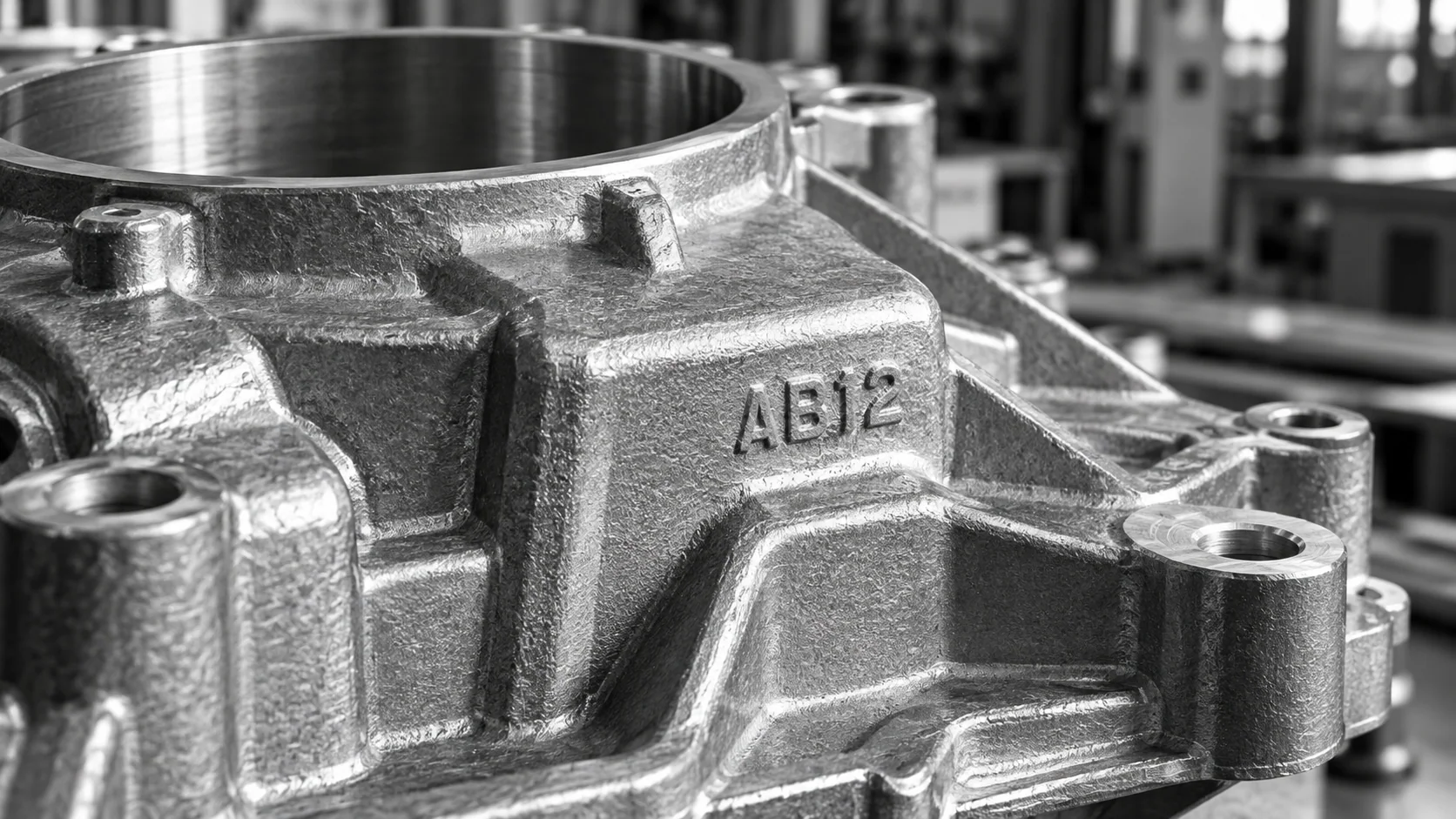
Conceptual illustration of raised characters on a cast-metal housing under directional lighting.

Replace Hand Transcription With a Checked Record

  • Send the read serial or part number straight to your traceability system
  • Check the reading against the expected format or part number
  • Reject or hold parts with unreadable or wrong marks
  • Store each reading with its image for audits
Zero typing
Readings flow to your system
Image evidence
Every reading reviewable
HOW IT WORKS

From Relief Mark to Verified Reading

Embossed character reading works through light and shadow, not ink. KOMPASS combines lighting designed for the mark, models trained on your parts and a direct link to your line and traceability systems.

Highlight #1

Light the Mark From the Right Angle

Low-angle or directional light turns raised and recessed strokes into readable contrast. Curved parts are presented so the mark faces the camera.

Highlight #2

Read Each Character

The model reads characters that are worn, shallow or partly filled, and reports how confident each reading is.

Highlight #3

Check, Record and Act

The reading is checked against the expected format, sent to your traceability system and stored with its image. Failures are held for review.

Connect With Us

Send us a few marked parts, including worn and hard-to-read examples, and the format each mark should follow. We will assess lighting and presentation.

Get In Touch

What Changes When Relief Marks Are Read Automatically?

Every method depends on making the mark visible. The difference is how it copes with changing light, wear and material.

Inspection need
Manual inspection
Traditional machine vision
KOMPASS AI
Reading worn or shallow marks
Possible with effort, slowly
Fails when the mark's look changes
Trained on worn and shallow examples
Recording the number
Typed by hand, errors possible
Read automatically when conditions hold
Read, checked and sent to your system
New material or die
No change needed
Often needs reprogramming
Retrained with new examples
First-Time-Right
Depends on careful transcription
Stable while conditions stay fixed
Holds unreadable or wrong marks at the station

Frequently Asked Questions

Why are stamped and cast marks harder than printed text?

A printed character has ink that contrasts with the background. Embossed character reading has no such help, because the mark is made of the same material as the part. Its edges only appear through shadows and highlights, so low contrast is the normal condition, not an exception. Lighting angle, surface finish and wear all change what the camera sees from one part to the next. That is why lighting design comes first and the reading model second.

What lighting works best?

Directional lighting from a low angle usually works best, because it casts shadows on one side of each stroke and highlights the other. Diffuse lighting tends to wash raised characters out. The right angle depends on stroke depth, surface finish and part shape, so it is chosen during a trial with your parts. Several lights switched in sequence can help on difficult surfaces. Once set, the lighting stays fixed so every part is seen the same way.

Can it read dot-peen and engraved serial numbers?

Yes. Dot peen marks are made of individual indentations, so the model learns to read a character from a pattern of dots rather than continuous strokes. Engraved text reading works the same way for milled or laser-engraved grooves. Both are trained on examples from your marking equipment, including the shallow and uneven marks that appear as styluses and tools wear.

How does it handle variation between batches?

Lot-to-lot variation in casting finish, alloy, coating or die wear changes how marks look. KOMPASS is trained on examples from several batches, so normal variation is part of what it learns. When a new supplier or material changes the appearance noticeably, the model is retrained with a short set of new images instead of being reprogrammed from scratch. Retraining is planned as a routine step, so a supplier change does not stop the line for long.

Can it read marks on curved parts and tyres?

Yes, with suitable presentation. Marks on curved surfaces, such as housings, shafts and the tire sidewall, are captured with the mark facing the camera, sometimes while the part rotates. The image is straightened before reading so characters around a curve can be read in sequence. Very tight curves may need a second camera or a rotation step. Rotation also lets one camera read marks that wrap partly around a part.

How does this support traceability?

Reading replaces manual transcription, where an operator copies a stamped number into a system and occasionally swaps or misreads digits. Each reading goes directly to your traceability or production system with its image and time stamp. That supports serial number traceability through assembly, warranty claims and audits, with evidence that every mark was actually read. It also removes the time operators spend copying numbers, which frees them for work that needs judgement.

What about cavity numbers and date wheels?

Cast part numbers, cavity numbers and date wheels on moulded or cast parts are common applications. They identify the tool, cavity or production date that made the part, which is valuable when a defect is traced back. Stamped character recognition can read these marks so defects can be linked to a specific mould or die without manual sorting.

What should we send for a trial read?

Send a selection of marked parts, including worn, shallow and hard-to-read examples, along with the format each mark follows. Tell us how parts are presented, the cycle time and where readings should be sent. With that, we can assess lighting, presentation and training for embossed character reading on your line. Worn examples matter most, because they show how the reading copes at the end of a tool's life.

CONNECT WITH OUR EXPERTS

Show Us the Mark Your Current Check Cannot Read

Share your marked parts, mark formats, presentation and cycle time. We will test embossed character reading on your parts and outline timing and cost. KOMPASS projects usually reach production in 6 to 8 weeks.

Discuss Your Part Marking
Close video