












SHIPPING-LABEL VERIFICATION

Shipping Label Verification
to Catch Wrong Labels Before the Dock

KOMPASS brings shipping label verification to every carton and pallet before it leaves the dock. AI reads barcodes and printed text, confirms each label is present, readable and placed where scanners expect it, and matches its data to the shipment record.

Discuss Your Label Check

Trusted by manufacturers to improve quality on the line

THE PROBLEM

A Bad Shipping Label Fails Far From Where It Was Made

A carton or pallet label is scanned by a carrier, distribution centre or customer, often days later. When it cannot be read or does not match the shipment, the problem lands in someone else's warehouse.

Labels Swapped Between Shipments

Print-and-apply queues get out of step or labels are applied to the wrong carton. Each label is valid, but on the wrong load.

Unreadable Codes at the Customer

Faded print, a label over a seam or wrap over the code stops the scan. The receiving site has to relabel by hand or refuse the delivery.

Handheld Scans Miss Most Errors

Spot checks with a scanner cover a few cartons per pallet. The rest ship on trust.
The Solution

Check Every Label Before It Leaves the Building

Our AI Product Inspection system, KOMPASS™, carries out shipping label verification by reading codes and text, checking presence, placement and condition, and comparing the data with your shipment record. Each result reaches the line controls with an image of the label it checked.

Read the Label and Match It to the Shipment

  • Read SSCC and product barcodes along with the printed text
  • Match label data with the shipment or order record
  • Catch duplicate labels and labels from another order
  • Confirm the ship-to and product details are present
Every carton
Label read and matched
Code and text
Checked together
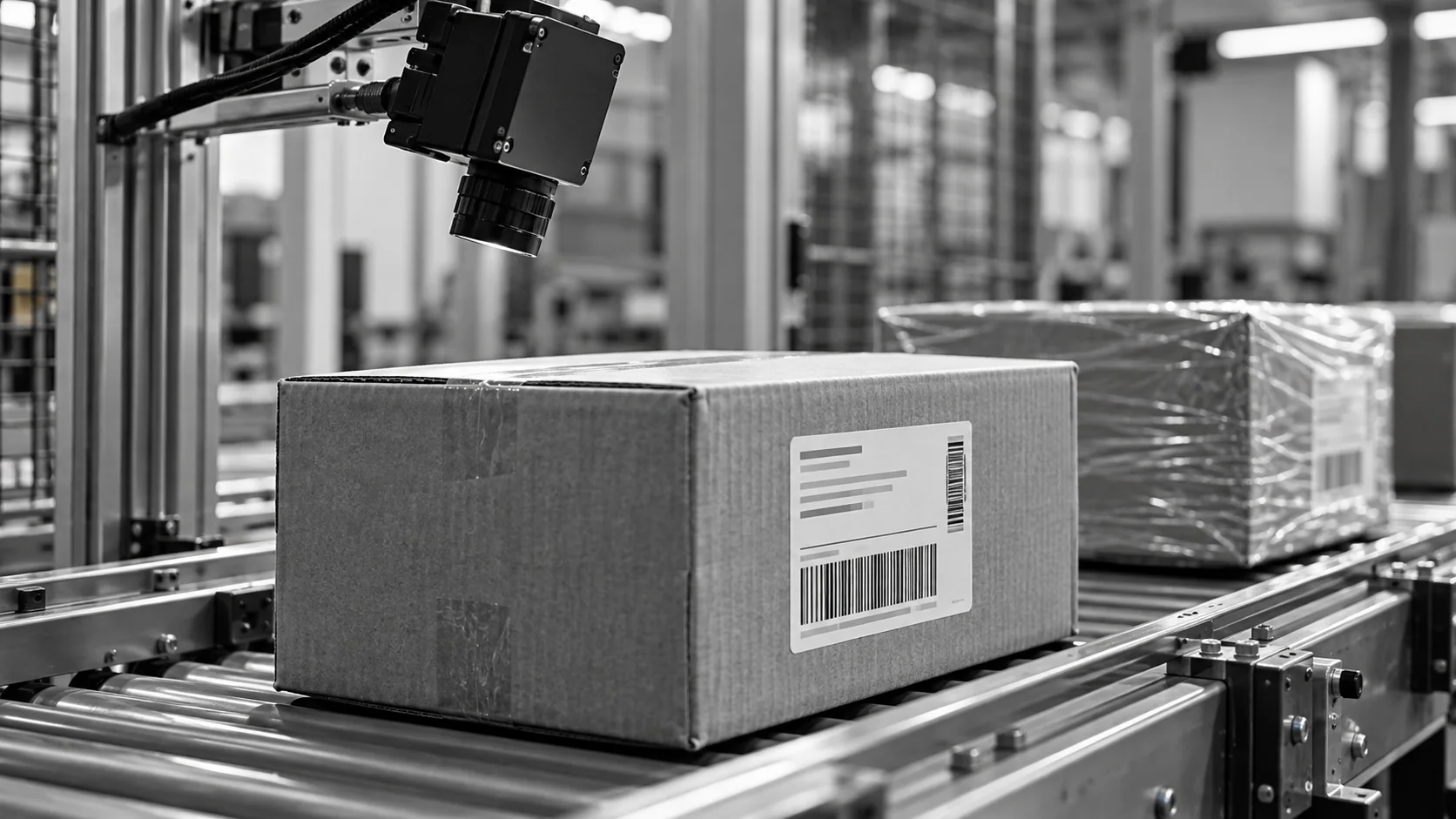
Conceptual illustration of a labelled shipping carton passing an inspection camera.

Catch Labels Scanners Will Reject

  • Detect missing, torn, wrinkled or covered labels
  • Check that labels sit on the expected face and position
  • Flag codes too close to an edge or seam to scan
  • Store every result with an image for carrier disputes
Before the dock
Errors fixed in-house
Image evidence
Proof of condition at dispatch
HOW IT WORKS

From Applied Label to Verified Shipment

Shipping label verification works best right after labels are applied, while a problem can still be fixed. KOMPASS combines a view of every labelled face, reading trained on your labels and a link to your shipment data.

Highlight #1

Capture Each Labelled Face

Cameras after the print-and-apply unit or at the pallet wrapper capture every label, with lighting set for the label stock and wrap.

Highlight #2

Read, Match and Check Condition

The model reads codes and text, matches them to the shipment record and checks placement and damage.

Highlight #3

Divert and Record

Failing cartons or pallets are diverted for relabelling, and every result is stored with its image.

Connect With Us

Send us examples of your shipping labels, common failures and how shipment data is generated. We will assess camera positions and integration.

Get In Touch

What Changes When Every Shipping Label Is Verified?

Each method depends on seeing the label. The difference is how many labels get checked, and whether shipping label verification matches their data to the shipment.

Inspection need
Manual inspection
Traditional machine vision
KOMPASS AI
Coverage
A few cartons per pallet
Every label a fixed reader can see
Every labelled face in view
Wrong-shipment labels
Found by the customer
Caught if decoded data is matched
Read and matched to the shipment record
Damaged or covered labels
Spotted by chance
Reported as no-read
Identified with the cause shown
First-Time-Right
Errors surface at the customer
Depends on reader placement
Diverts bad labels before the dock

Frequently Asked Questions

What does an automated shipping label check confirm?

Shipping label verification confirms that each carton or pallet carries a label, that the codes and text can be read, that the label sits where scanners expect it and that its data matches the shipment. A label fails if any of those checks fails. That covers both an unreadable label and a perfectly readable one that belongs to another order. Both kinds of failure cost the same at the customer, so both are checked at dispatch.

Which codes and fields can it read?

It reads the SSCC label barcode, product barcodes and 2D codes, together with printed text such as the product description, quantity and ship-to address in the printed address block. GS1-128 symbols are common on logistics labels, and the decoded data can be checked against what the shipment needs. Customer-specific layouts are trained during setup. Retailer-specific fields and layouts can be added as new customers come on board.

How is the label matched to the shipment?

The decoded data is compared with the WMS record or order for that carton or pallet. A mismatch means the label belongs to another load or was printed with wrong data. Duplicate serial shipping container codes are flagged too. The match needs a reliable link to the shipment data, which is planned during integration. Where data cannot be linked yet, the station still checks presence, readability and placement.

Where should the cameras go?

Right after the print-and-apply unit is the most common position for carton labels, because a failed carton can be diverted for relabelling immediately. For pallets, cameras at or after the stretch wrapper check that labels on each face are present and not covered. A final check at the dispatch dock catches problems introduced during handling. Positions are chosen so every labelled face is seen at least once.

Why do labels that look fine still fail to scan?

A barcode needs a clear quiet zone, enough print contrast and a flat surface. Labels placed over a seam, wrapped over a corner or covered by shiny film can look acceptable to a person yet fail a scanner. The station checks position and condition as well as content, and the image shows the cause. Moving the applicator or adjusting wrap settings often fixes these failures for good.

What does a labelling error cost?

Retailers and distributors often apply chargebacks for non-compliant or unreadable labels, and misdirected shipments add freight, relabelling and customer service work. Catching the error before dispatch keeps the fix inside your own building, where it takes a moment to relabel a carton instead of tracing it through someone else's network. It also protects customer relationships, because fewer deliveries arrive needing rework.

Can it spot damage after wrapping?

Yes. Label damage such as tears, wrinkles, scuffs and wrap covering the code is visible to the camera and classified separately from data errors. That distinction matters because damage points to handling or wrapping settings, while data errors point to printing or order management. Both are recorded with images. The images also help settle carrier disputes about whether labels were damaged before or after dispatch.

What do you need from us to scope pallet label inspection?

Send examples of carton and pallet labels, including common failures, the layouts your customers require and how shipment data is generated. Describe the labelling, wrapping and dispatch layout. With that, we can recommend camera positions, integration and the divert flow for carton label inspection and pallet checks on your line. Customer label rules are useful too, because they define which fields must always be present.

CONNECT WITH OUR EXPERTS

Show Us the Shipping Label Errors You Want to Stop

Share your label layouts, common failures, shipment data source and dispatch layout. We will plan shipping label verification at the right points and give you timing and cost. Deployment typically takes 6 to 8 weeks.

Discuss Your Label Check
Close video