









LABEL PLACEMENT & POSITION INSPECTION

Label Placement Inspection
to Catch Misplaced Labels at Line Speed

KOMPASS brings label placement inspection to every container leaving the labeller. AI vision confirms each label is present, sits at the right height and position and lines up with the container, then signals the line before misplaced labels reach the case packer.

Discuss Your Label Check

Trusted by manufacturers to improve quality on the line

THE PROBLEM

A Label a Few Millimetres Off Repeats on Every Container

Labellers apply thousands of labels an hour. When the applicator shifts, every container after that moment carries the same fault, and the shelf shows it straight away.

Drift Builds Slowly

A worn belt, a slipping web or a loose sensor moves labels a little at a time. By the time someone notices, pallets are already wrong.

Missing Labels Slip Into Cases

A label that fails to dispense leaves a bare container. On a fast line, it is packed before anyone sees it.

Wrong Side, Wrong Height

Front and back labels swapped, or a neck label too low, look careless to shoppers and can hide information the pack must show.
The Solution

Measure Where Every Label Sits, Not Just That It Exists

Our AI Product Inspection system, KOMPASS™, performs label placement inspection with models trained on your containers and labels, locating each label and measuring its position against the container. Positions are logged with an image of every container.

Locate Each Label Against the Container

  • Find every label and the container edges in the same image
  • Measure label height, offset and angle from the container itself
  • Check front, back and neck labels together
  • Tolerate normal container position changes on the conveyor
Every container
Position measured, not assumed
All labels
Front, back and neck checked
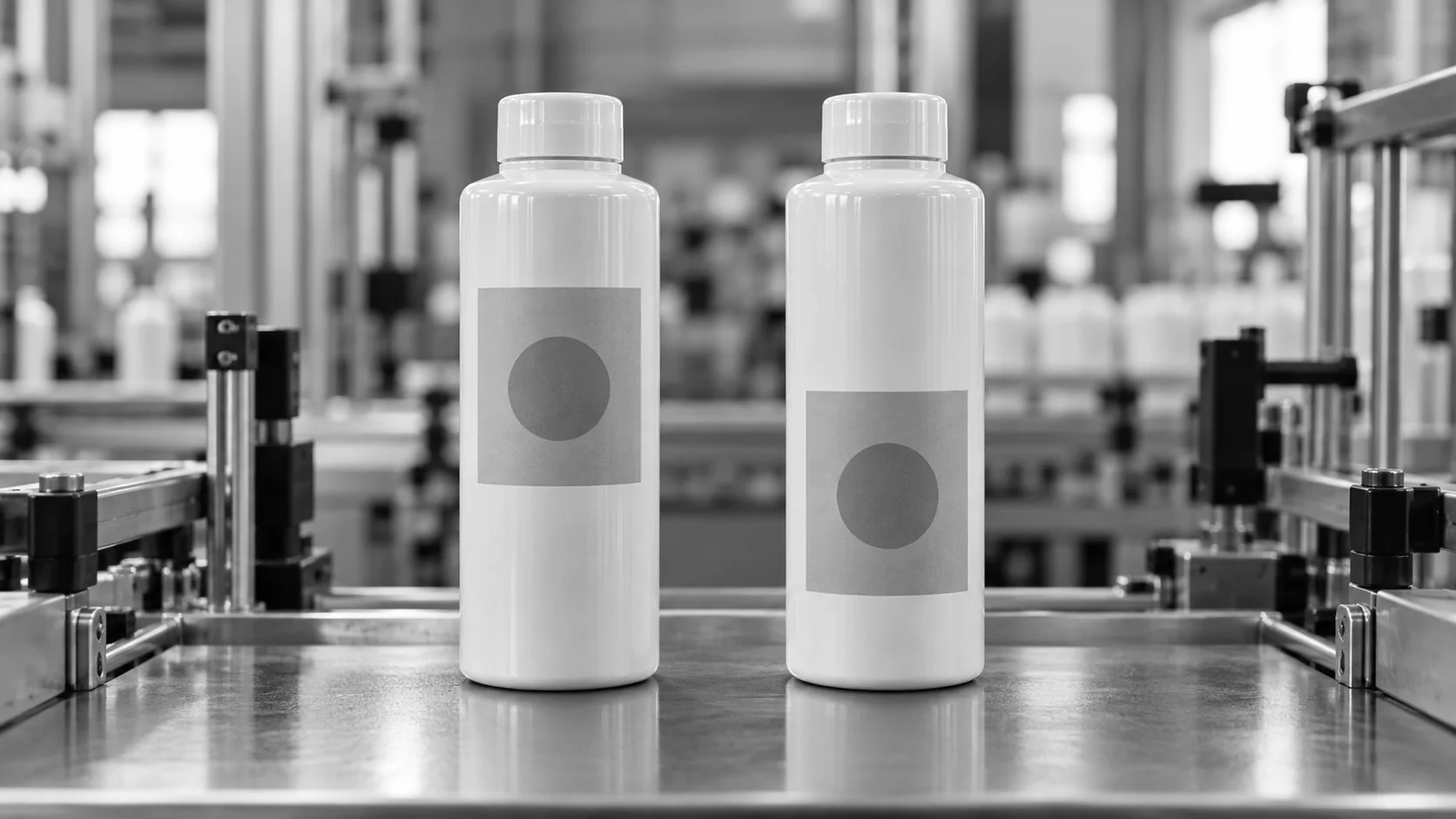
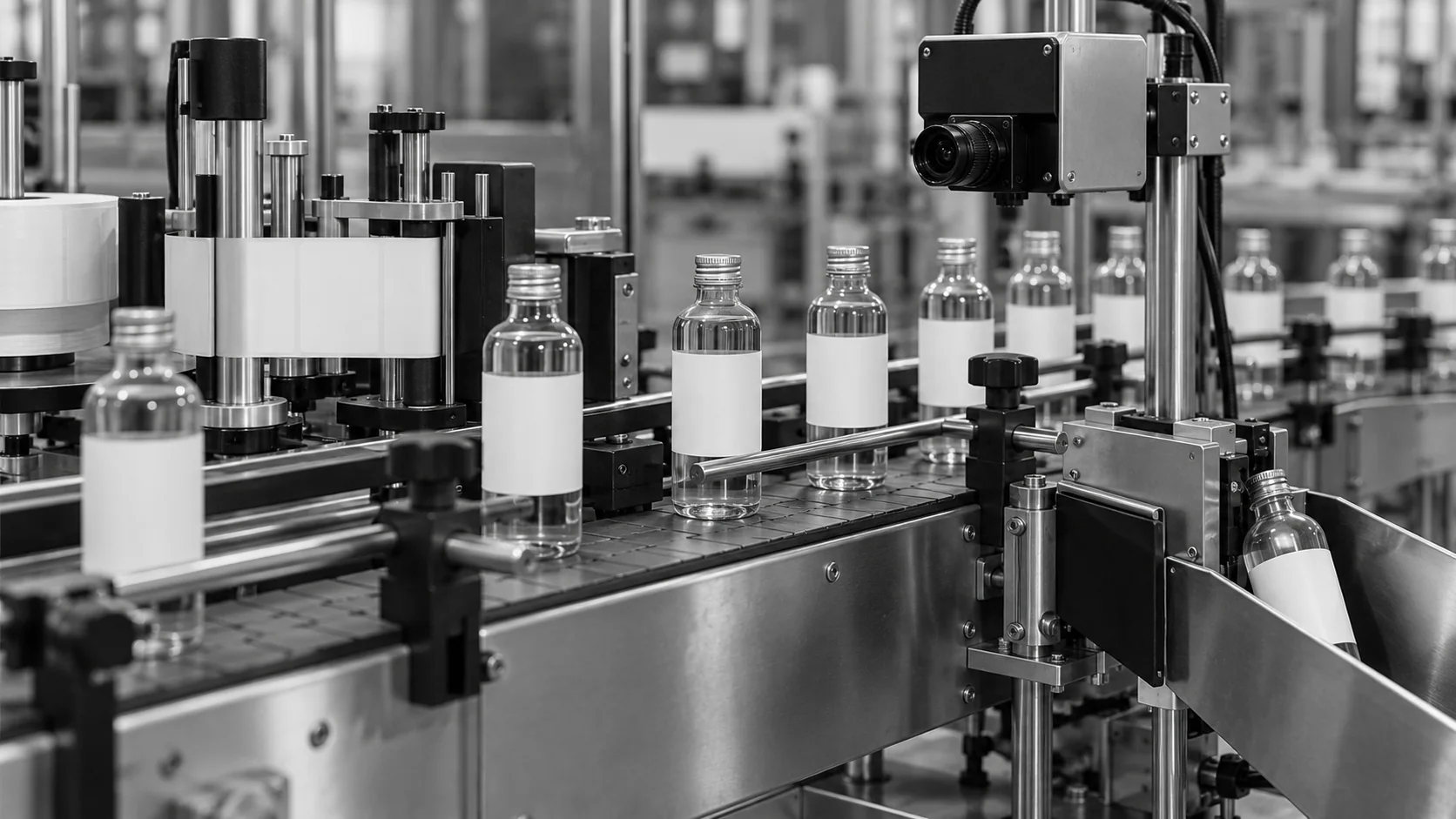
Conceptual illustration of similar bottles with labels at different heights.
Conceptual illustration of labelled bottles beside an inspection camera and a side collection chute.

Correct the Labeller Before the Run Goes Wrong

  • Reject containers with missing or out-of-position labels
  • Trend label position to show applicator drift early
  • Alert the team when readings approach a limit
  • Store every result with its image for review
Live trend
Drift caught before rejects
Image evidence
Every rejection reviewable
HOW IT WORKS

See KOMPASS Inspect Label Application

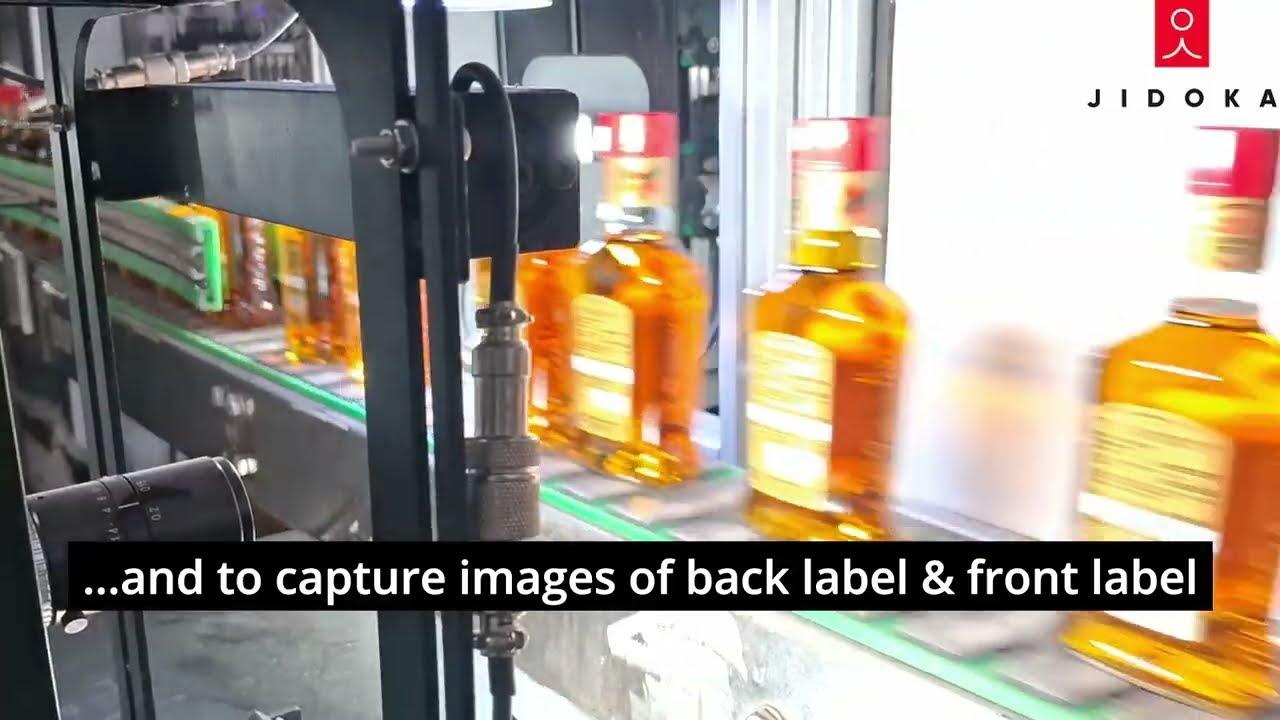
Jidoka's labelled-bottle demonstration shows label placement inspection in practice: custom AI models check the quality of label application, together with OCR and OCV reading of printed text, so every bottle is checked for how its label was applied and what it says.

Official video frame showing cameras capturing front and back labels on moving bottles
Labelled-bottle application: label-position shifts are demonstrated around 45 seconds. This clip does not establish every offset limit or position-trending feature.
Highlight #1

Capture Every Labelled Face

Cameras after the labeller capture each container. Round containers may need several views or rotation to see every label.

Highlight #2

Measure Position From the Container

The model finds each label and the container's own reference points, then measures height, offset and angle.

Highlight #3

Reject, Trend and Record

Failures are rejected, position trends flag drift and every result is stored with its image.

Connect With Us

Send us your containers, label specifications and examples of misplaced labels. We will assess camera positions and lighting for your labeller.

Get In Touch

What Changes When Every Label Position Is Measured?

Each method needs a clear view of the label and container. The difference is whether label placement inspection measures position and sees drift early.

Inspection need
Manual inspection
Traditional machine vision
KOMPASS AI
Missing labels
Spotted when someone looks
Detected by presence sensors
Detected with the label position measured
Gradual position drift
Noticed late, once obvious
Caught when a fixed limit is crossed
Trended so drift is seen early
Changing container position
Not an issue for a person
Can cause false rejects
Measured from the container itself
First-Time-Right
Depends on regular checks
Stable when products stay aligned
Stops misplaced labels before case packing
CUSTOMER SUCCESS

Diageo Checks Label Orientation In-Process

Jidoka's labelled-bottle inspection for Diageo checks orientation, text and label condition in-process at 300 bottles per minute, with automated ejection of faulty bottles.

Official Jidoka case-study cover for Diageo labelled-bottle inspection
Diageo Checks Label Orientation In-Process
FMCG

Diageo's published results include label orientation checks within its complete labelled-bottle inspection.

  • 99%+ accuracy in detecting label defects and text errors
  • Orientation checked in-process before bottles move on

Frequently Asked Questions

What does an automated placement check measure?

Label placement inspection measures where each label sits on the container: its height, horizontal offset and angle, along with whether it is present at all. The measurement is taken from the container's own edges or features, not from a fixed point in the image. That way, normal container movement on the conveyor does not cause false rejects, while a real shift in the label does. Each container gets its own measurement, so one badly placed label is caught even in a run of good ones.

Can it check several labels on one container?

Yes. Front and back labels, neck labels, collars and tamper strips can all be checked in the same pass, each with its own position limits. The station also confirms they are on the correct sides, which catches labels swapped between sides after a changeover. Round containers may need several cameras or a rotation step to see every label. Each label type has its own limits, because a neck collar and a front panel have different tolerances.

How does it handle round bottles?

A single camera sees only part of a round container. Several cameras around the conveyor, or a 360-degree view created by rotating the container, show the whole label. Where containers are not oriented on the line, the model finds the label wherever it is and measures its position relative to the container, instead of expecting it at one angle. Where every label must be seen in full, rotation gives the most complete view.

What causes labels to move out of position?

Common causes include changes in web tension, worn belts or rollers, a shifted label sensor, applicator pad alignment and adhesive temperature. Container variation and line speed changes play a part too. Because these causes act gradually, applicator drift shows up as a slow trend in measured position long before labels fall outside the limit. Seeing the trend early means a quick adjustment instead of a stop to relabel or rework product.

Can the result help adjust the labeller?

Yes. The station reports label height and offset as numbers, so operators can see which direction labels are moving and by how much. Feeding that trend back to the label applicator settings corrects the cause instead of rejecting containers one by one. Where the labeller accepts it, the correction can be automated. Operators can see the effect of each adjustment straight away in the next readings.

How is this different from a presence sensor?

A sensor for label presence confirms something is there. Missing label detection with vision also confirms it is the label, in the right place, and not a partly applied or folded label that a sensor would pass. The same image is used for position checks, so one station covers presence and placement without extra hardware on the line.

What tolerances should we set?

Start from your label specification and the point where a misplaced label becomes visible or hides required information. Height limits for neck collars and offset limits for front panels are often different. Validate the station with containers just inside and just outside each limit, and adjust lighting if the label edge is hard to see against the container. Limits can be tightened later once the labeller is running consistently.

What should we send to plan placement checks?

Send examples of your containers and labels, the position specification and photos of typical placement faults. Add the line speed, the labeller layout and where a reject can happen. With that, we can recommend camera positions, lighting and the container reference points for label position inspection on your line. Photos of past placement faults help us set limits that match your quality standard.

CONNECT WITH OUR EXPERTS

Show Us the Labelling Fault You Want to Stop

Share your containers, label specification, labeller layout and line speed. We will plan label placement inspection after your labeller and walk through cost and schedule. Expect about 6 to 8 weeks to go live.

Discuss Your Label Check
Close video