

LABEL SKEW & WRINKLE INSPECTION

Label Wrinkle Inspection
to Catch Skewed and Creased Labels

KOMPASS brings label wrinkle inspection to every applied label, along with checks for skew, bubbles, lifted edges and flagging. AI models trained on your labels separate real faults from glare and print on glossy film, and the line is signalled before poorly applied labels ship.

Discuss Your Label Check

Trusted by manufacturers to improve quality on the line

THE PROBLEM

Shoppers Notice a Bad Label Before They Read It

A crooked, creased or lifting label makes a good product look faulty. On a fast line, these faults are subtle in a single glance and repeat until someone stops the labeller.

Wrinkles Hide in the Print

A crease or bubble has low contrast against busy artwork. Simple vision tools confuse it with print, so they either miss it or reject good labels.

Edges Lift After the Line

On cold or curved containers, a label corner can lift minutes after application. It passes the labeller and fails on the shelf.

Glare Looks Like a Defect

Glossy film reflects light like a mirror. Highlights can look like creases, and false rejects pile up until the check is ignored.
The Solution

Judge Label Application the Way a Careful Inspector Would

Our AI Product Inspection system, KOMPASS™, combines lighting designed for glossy labels with AI models trained on your own containers, so label wrinkle inspection separates real creases, bubbles and lifting from print and glare. Each container result is stored with the image that triggered it.

Separate Real Creases From Glare and Print

  • Use lighting angles that reveal creases and bubbles on glossy film
  • Train on wrinkled, bubbled and acceptable labels from your line
  • Classify skew, wrinkles, bubbles, tears and lifted edges separately
  • Ignore artwork, highlights and normal film texture
Defect by type
Not just pass or fail
Your labels
Training from real examples
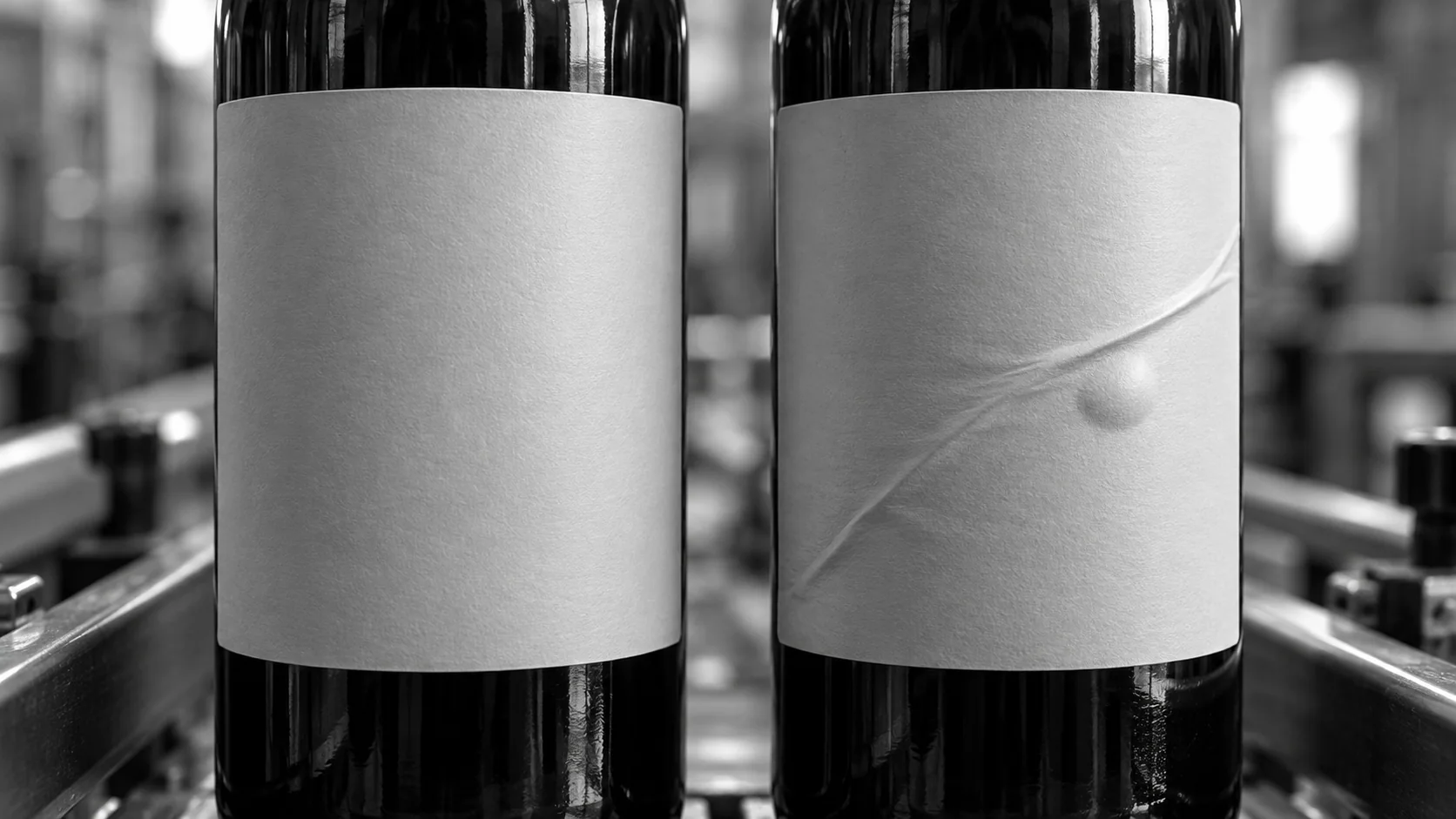
Conceptual illustration of a smooth label beside a creased label with a bubble.
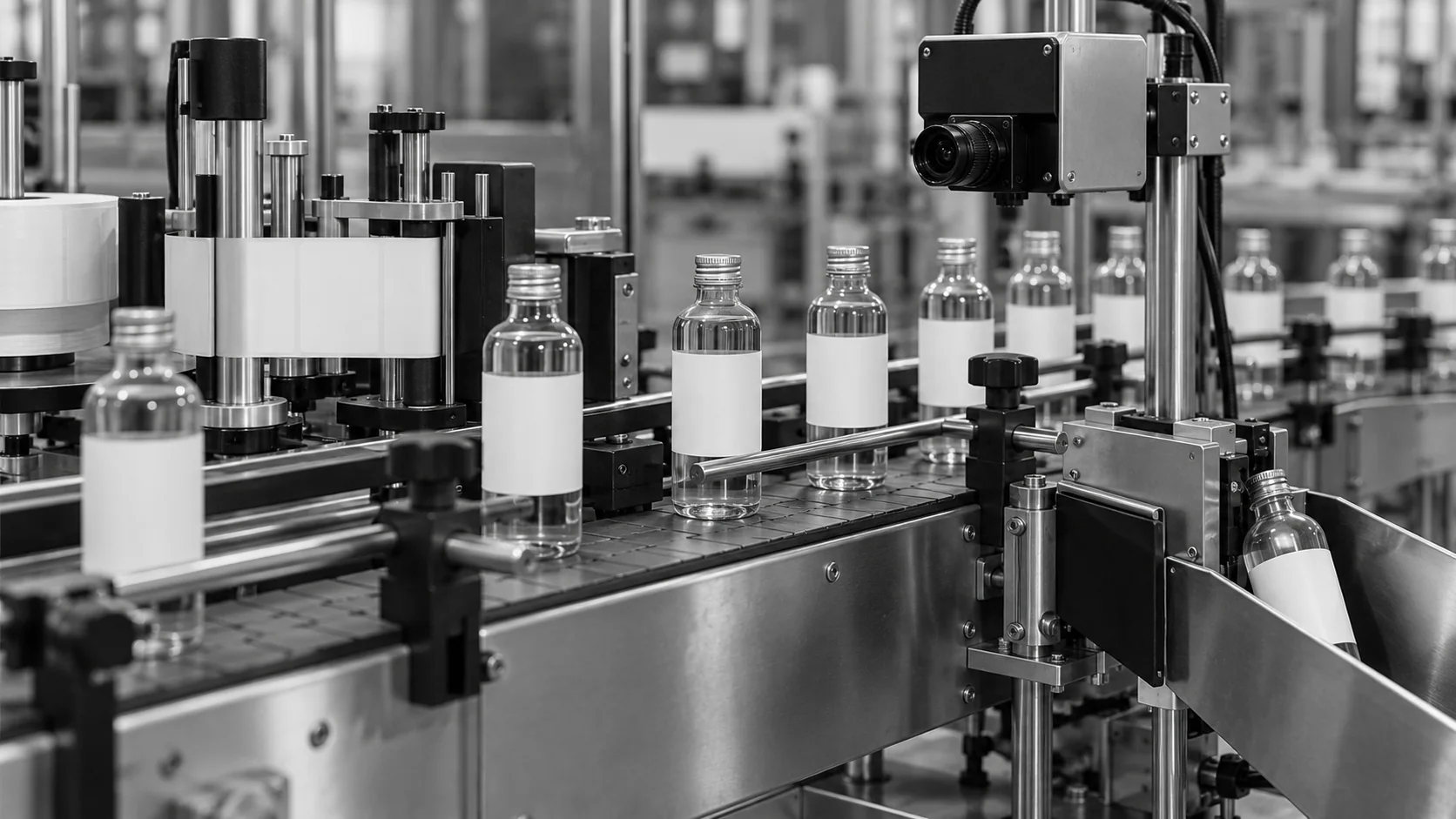
Conceptual illustration of labelled bottles beside an inspection camera and a side collection chute.

Fix the Labeller, Not Just the Container

  • Reject containers with defects that fail your standard
  • Trend skew angle and defect type by labeller and shift
  • Point maintenance to brushes, pads or adhesive settings
  • Store every result with its image for review
Cause visible
Trends by defect type
Image evidence
Every rejection reviewable
HOW IT WORKS

See KOMPASS Inspect Labelled Bottles

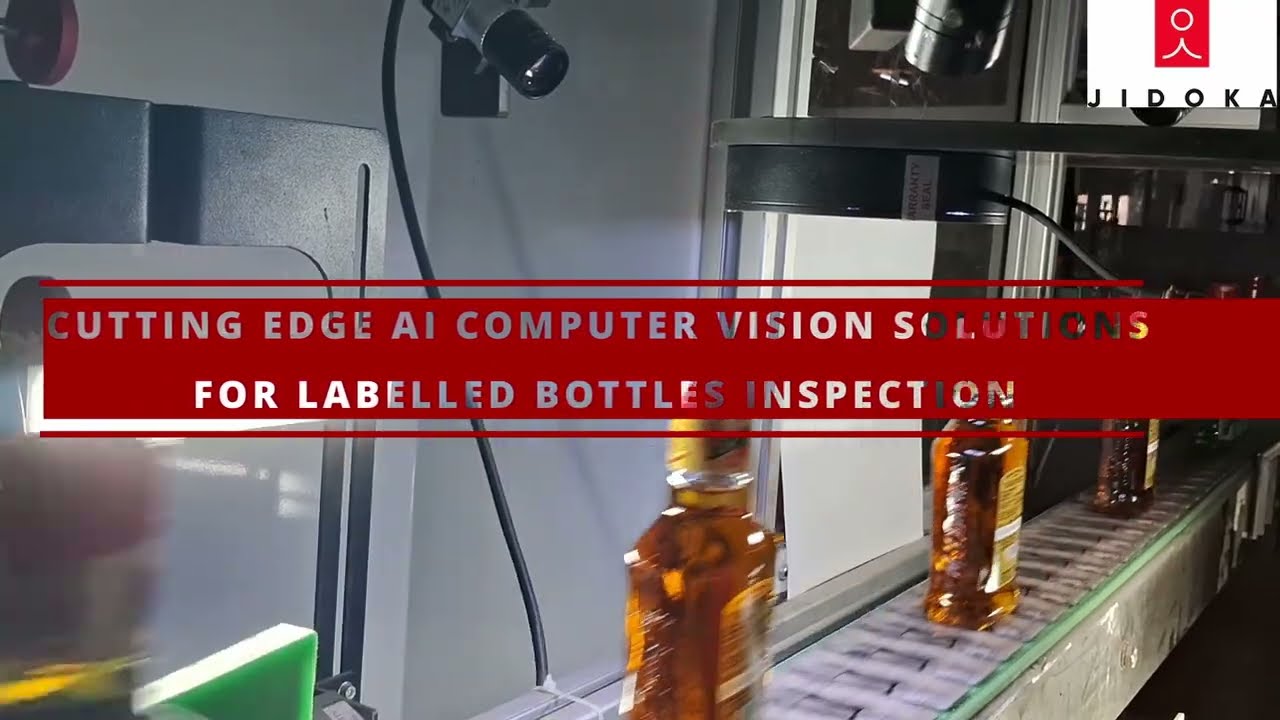
Jidoka's labelled-bottle demonstration shows KOMPASS detecting critical visual defects on labelled bottles in-line, faults that are hard to filter out manually at high speed, with automated ejection of rejected bottles.

Official video frame showing labelled bottles passing the camera inspection station
Labelled-bottle application: inverted and tilted labels are shown around 55 seconds. Wrinkle-specific detection is not demonstrated in this clip.
Highlight #1

Light the Label to Reveal Its Surface

Multiple lights or angles make creases, bubbles and lifted edges visible on glossy and matte labels. Round containers are viewed from several sides.

Highlight #2

Classify Each Defect

The model checks label angle and surface, then classifies skew, wrinkles, bubbles, tears and lifting against your acceptance standard.

Highlight #3

Reject, Trend and Record

Failing containers are ejected, defect trends point to the labeller cause and every result is stored with its image.

Connect With Us

Send us containers with typical label faults and your acceptance standard. We will assess the lighting and views your label wrinkle inspection needs.

Get In Touch

What Changes When Label Application Is Judged Automatically?

Each method needs a view of the label surface. The difference is how label wrinkle inspection separates real faults from print and glare.

Inspection need
Manual inspection
Traditional machine vision
KOMPASS AI
Creases and bubbles
Visible to a careful eye, at low speed
Confused with print and highlights
Trained to separate defects from print and glare
Skew
Noticed when obvious
Measured against a fixed template
Measured and trended by labeller
False rejects
Few, but coverage is low
Rise on glossy or busy labels
Reduced by training on acceptable variation
First-Time-Right
Depends on attention at speed
Stable on simple labels
Stops poorly applied labels before packing
CUSTOMER SUCCESS

Diageo Catches Damaged Labels Before Bottles Ship

For Diageo, KOMPASS on Tigris hardware checks label condition, text and orientation in-process and ejects faulty bottles automatically.

Official Jidoka case-study cover for Diageo labelled-bottle inspection
Diageo Catches Damaged Labels Before Bottles Ship
FMCG

Diageo's labelled-bottle results cover damaged and defective labels as part of the complete inspection.

  • 99%+ accuracy in detecting label defects and text errors
  • Faulty bottles ejected automatically at 300 bottles per minute

Frequently Asked Questions

Which application faults can it detect?

Label wrinkle inspection detects the faults that come from application: skew, wrinkles, creases, air bubbles, lifted edges, flagging, folds and tears. Each is classified separately, so you can set different limits for each one and see which fault is most common. Print defects on the label itself are covered by the misprint inspection use case and can share the same station. The same image can also confirm the label is present and positioned correctly.

Why do simple systems struggle with wrinkles?

Wrinkled labels and bubbles create only faint changes in brightness, while the printed artwork around them has strong contrast. Comparing every pixel with a reference image confuses the two. Multi-angle lighting makes surface changes stand out, and an AI model trained on real examples learns what a crease looks like across different artwork, which reduces both misses and false rejects. That combination matters most on premium packs, where small creases are the main complaint.

How does it cope with glossy labels?

Glossy film behaves like a mirror, so a point light creates highlights that can look like creases. Diffuse or carefully angled lighting reduces those reflections, and training includes acceptable labels with normal highlights so the model learns to ignore them. Matte and textured labels are lit differently, and both can run on the same line. Lighting is fixed once set, so every container is seen under the same conditions.

How is skew measured?

Label skew is the angle between the label edge and the container's reference line, such as its base or shoulder. The station measures it on every container and compares it with your limit. Crooked labels often come from container rotation during application or a misaligned guide, and the trend shows whether skew is constant or growing over a shift. A growing trend usually points to wear, while a constant offset points to a setup error.

Why do label ends lift?

Label flagging happens when a label end lifts away from the container, usually on small diameters, cold containers with condensation or labels with stiff material. Low adhesive coverage and worn wipe-down brushes or rollers contribute too. Because flagging can appear after the label leaves the labeller, the camera is placed far enough downstream to see it develop. Moving the camera a short distance downstream often reveals faults that appear only after application.

Can it detect torn or scuffed labels?

Yes. Torn labels, scuffs and missing pieces are visible surface defects and are classified alongside wrinkles and bubbles. They often come from handling after labelling, such as guide rails, starwheels or container contact. Images of each failure help locate the point on the line where damage happens, which is often different from where wrinkles start. Separating handling damage from application faults sends maintenance to the right part of the line.

Will it reject labels customers would accept?

It should not, if the acceptance standard is set with your quality team. Small wrinkles from normal material flex can be acceptable, while a crease across text is not. Training includes borderline examples labelled by your team, and validation compares the station's decisions with theirs before automatic rejection is switched on. Agreed examples also help new operators understand the standard the station applies.

What should we send to scope wrinkle checks?

Send containers with typical label defects, examples of acceptable labels and your acceptance standard. Add the label materials, container shapes, line speed and where a reject can happen. With that, we can recommend lighting, camera views and training for label wrinkle inspection on your line. Containers from cold storage are worth including if labels are applied to chilled product.

CONNECT WITH OUR EXPERTS

Show Us the Label Defect Your Current Check Misses

Share containers with typical faults, your acceptance standard, materials and line speed. We will design label wrinkle inspection around your labels and explain timing and cost. KOMPASS usually goes live in 6 to 8 weeks.

Discuss Your Label Check
Close video