A quality engineer searches for manufacturing defect prevention software and finds twelve vendors, all using the word "prevention" in their marketing copy. Nine of them are inspection tools that find defects after the part is made, accurately, quickly, automatically, but after. Only the tools that monitor the process condition before the part is made are actually preventing anything.
The word "prevention" has become a marketing label applied to detection tools, and the buyer has no quick way to tell which is which from a product page. This guide gives you that filter.
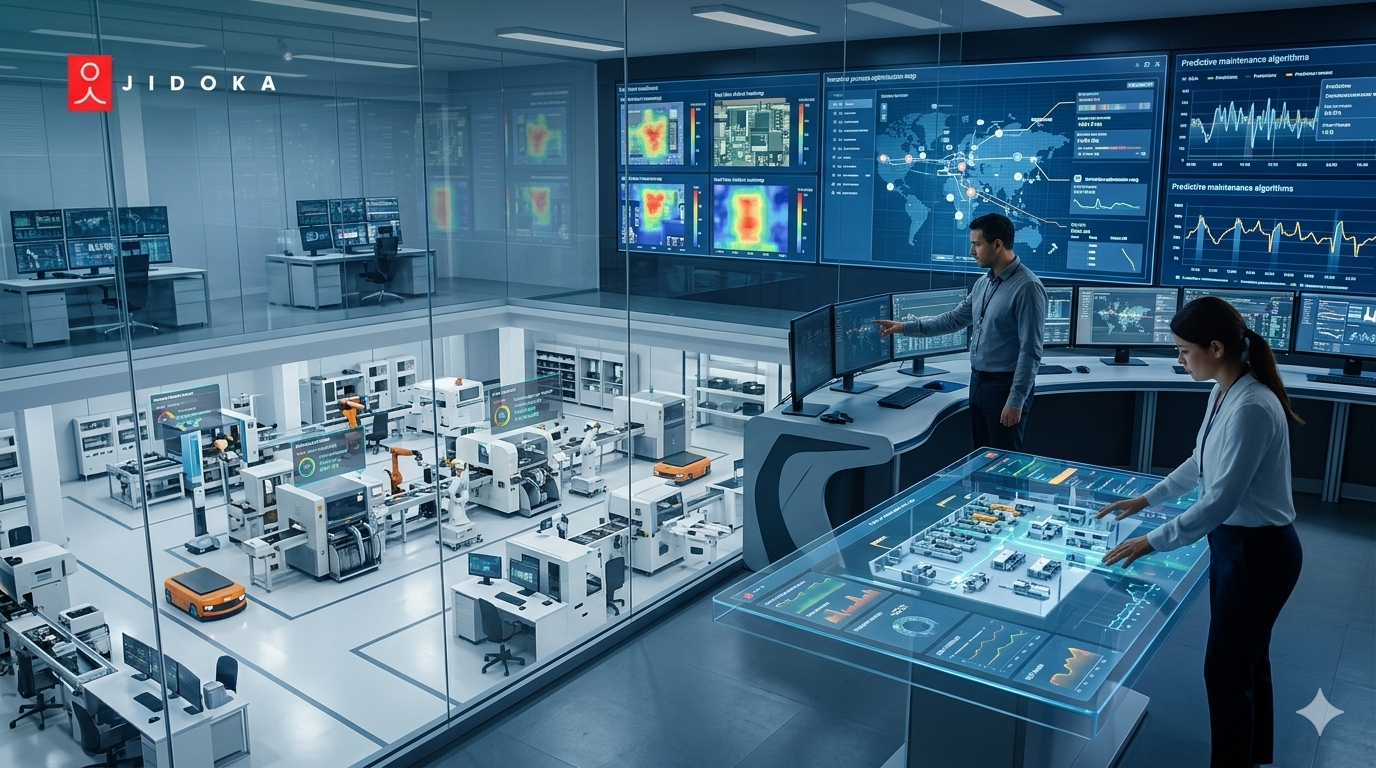
Manufacturing defect prevention software monitors the process conditions that produce defects, not just the finished product. The feature that separates genuine prevention from rebranded detection is process parameter monitoring combined with real-time correlation to defect outcomes. Without this, a platform marketed as "defect prevention platform features" is functioning as inspection software, detecting defects after they occur rather than preventing the conditions that cause them.
Why "Defect Prevention" Has Become a Marketing Label, Not a Capability
Manufacturing defect prevention software, sometimes marketed as defect reduction software, is frequently used as a marketing label for quality control software that inspects finished output faster or more accurately than manual methods. Genuine prevention requires monitoring the process conditions that produce defects, a fundamentally different data requirement than inspecting the product those conditions already created.
Quality control software inspects the product, capturing defect data and verifying finished output meets specification. Quality assurance software focuses on the process, managing the SOPs, training records, and procedures that prevent defects in the first place (Alpha Software QC Software Guide, 2026). That distinction is the vocabulary every buyer needs before evaluating a single vendor.
The Difference Between Detecting a Defect and Preventing One
Detection identifies a non-conforming unit after it has been produced. The defect has already consumed materials, labor, and machine time. Detection software's job is finding that unit before it ships, not stopping it from being made.
Prevention identifies the process condition that would produce a non-conforming unit, before that unit is made. Prevention software's job is flagging or correcting the condition while the process is still running within a state that can be corrected.
The category confusion: software that performs detection extremely well, 100% inspection coverage, sub-100ms classification, automated rejection, is still detection software. Speed and accuracy improve detection. They do not convert detection into prevention.
Why Vendors Use "Prevention" Language for Detection Products
Modern quality control software platforms are explicitly marketed with proactive language: advanced charting, automated alerts, and proactive quality insights to prevent defects (WifiTalents Top 10 Manufacturing QC Software, February 2026). That framing is not necessarily false.
A detection platform that classifies defects by type and feeds that data into SPC trend analysis does support earlier intervention than a binary pass/fail check. But "supports earlier intervention" is a different claim than "prevents defects," and buyers evaluating on the word "prevention" alone cannot distinguish the two.
The practical filter: ask whether the platform's primary data source is the product (images, dimensional measurements, weight) or the process (temperature, pressure, speed, cycle time, vibration). Product-data-primary platforms are detection tools regardless of their marketing language. Process-data-primary platforms, or platforms that combine both, are positioned for genuine prevention.
A Real Example of the Detection-to-Prevention Transition
An aerospace component supplier in the UAE applies predictive quality control methods, studying machine vibration and temperature data to establish baseline performance standards, enabling instant detection of process drift before defects occur (Rockford Computer UAE, November 2025).
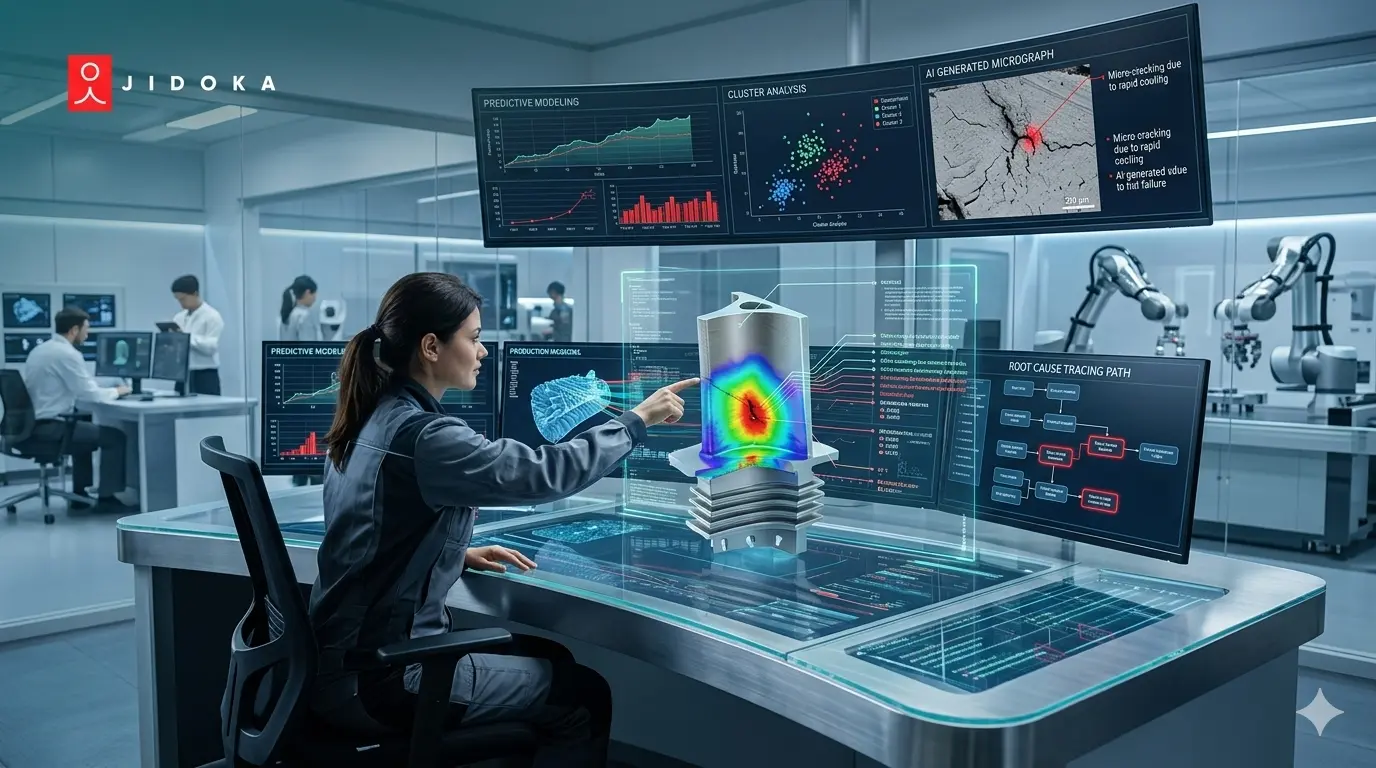
This example illustrates the category distinction concretely: the software is not inspecting the aerospace component after it is machined. It is monitoring the machine's vibration and temperature, the process conditions, to flag drift before the conditions produce a non-conforming part.
The Features That Separate Genuine Defect Prevention Software From Detection Tools
A genuine quality prevention system manufacturing teams can rely on, and the defect prevention platform features that distinguish it from rebranded detection tools include process parameter monitoring (not just product inspection), real-time correlation between process signals and defect outcomes, predictive alerting before control limits are breached, closed-loop feedback to process control, and root cause data capture at the point of occurrence.
Feature 1: Process Parameter Monitoring, Not Just Product Inspection
The test: does the platform ingest data from the production process itself (temperature, pressure, speed, vibration, cycle time) in addition to or instead of data from the finished product?
Why it matters: a platform with no process data source cannot prevent anything. It can only detect defects in what has already been produced, regardless of how that detection is marketed.
Vendor demo question: "Show me a dashboard view of process parameter trends for this line, not just a defect count."
Feature 2: Real-Time Correlation Between Process Signals and Defect Outcomes
The test: can the platform show, in the same interface, a process parameter trend and the defect rate trend it produced, time-aligned, so the relationship between cause and effect is visible?
Why it matters: process data alone is monitoring, not prevention. The platform must connect process conditions to the defects they produce to support a prevention decision, otherwise the operator has two separate dashboards and has to infer the connection manually.
Vendor demo question: "Show me an instance where a process parameter trend preceded a defect rate increase in your platform's own historical data."
Feature 3: Predictive Alerting Before Control Limits Are Breached
The test: does the platform use statistical pattern detection (such as Western Electric Rules on control charts) to flag a process trending toward an out-of-control state, or does it only alert after a control limit is actually crossed?
Why it matters: an alert that fires only after the limit is breached is alerting on a defect that may have already occurred. An alert that fires on a trend pattern gives the operator time to intervene before any defect is produced.
Setting up baseline performance standards allows instant detection of minor deviations that show process drift from acceptable limits before defects occur. This trend-based detection capability is the core mechanism that converts monitoring into prevention (Rockford Computer UAE, November 2025).
Feature 4: Closed-Loop Feedback to Process Control
The test: when the platform detects a process condition trending toward a defect risk, does it generate a specific, actionable process recommendation (adjust temperature, reduce speed, schedule maintenance), or does it generate a generic alert with no recommended action?
Why it matters: an alert without a recommended corrective action requires the operator to already know what to do, which means the platform's predictive intelligence is not actually reducing the diagnostic burden on the team.
Depth indicator: the platform's alert includes the specific parameter that triggered it, its current value relative to the trend, and a suggested corrective range, not just a generic "quality risk detected" notification.
Feature 5: Root Cause Data Capture at the Point of Occurrence
The test: when a defect does occur despite preventive monitoring, does the platform automatically capture and link the process condition data from the time of occurrence to the defect record, or does root cause investigation require manually cross-referencing separate logs?
Why it matters: even a well-functioning prevention system will not catch every defect. The value of root cause data capture is reducing the next CAPA investigation from a multi-system manual reconstruction to an automatic, timestamped record.
Treating any defect elimination platform evaluation as a feature-list exercise misses the point. Request a live demonstration of each feature rather than relying on a vendor's feature list or marketing claims.
How AI Vision Inspection and Process Monitoring Combine for Genuine Prevention
Genuine manufacturing defect prevention software combines AI vision inspection with process and process-compliance monitoring. KOMPASS contributes structured, classified product-condition data at production speed; NAGARE contributes process-compliance data, whether operators followed the correct procedure, closing the gap that pure sensor-based process monitoring cannot address on its own.
What KOMPASS Contributes to the Prevention Stack
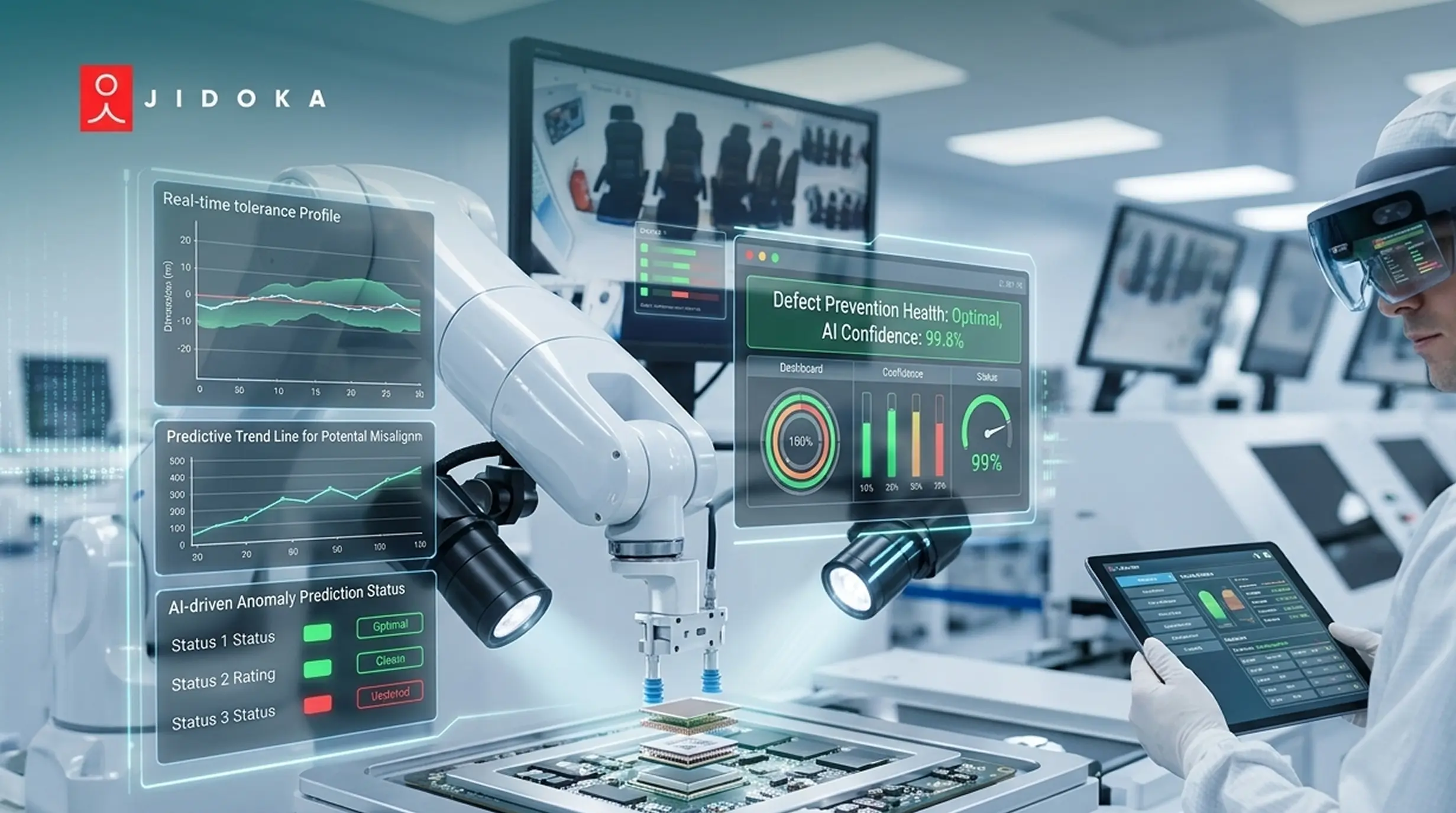
KOMPASS generates continuous, classified defect data, not just an accept/reject signal, that can be correlated against process parameter trends in real time, satisfying Feature 2 (real-time correlation) from the section above. Because KOMPASS inspects 100% of units rather than a statistical sample, its defect frequency data is granular enough to detect a rising trend within minutes rather than waiting for an end-of-shift count, supporting Feature 3 (predictive alerting).
What NAGARE Adds That Sensor-Based Process Monitoring Cannot
Most process parameter monitoring covers machine conditions: temperature, pressure, speed. It does not cover the human-process layer, whether an operator completed a step correctly, in sequence, within standard cycle time.
NAGARE's action recognition data fills this gap, providing process-compliance signals that feed into the same correlation and alerting framework as machine sensor data, satisfying Feature 1 (process parameter monitoring) in its fullest sense, including the human-action dimension most platforms in this category omit.
A defect with a process-driven root cause, an operator deviation, is invisible to pure sensor monitoring but visible to NAGARE, making the combination materially more complete than either capability alone.
What This Combination Does Not Claim to Do
KOMPASS and NAGARE, individually or combined, do not eliminate the need for a feedback and correction mechanism on the production line. Feature 4 (closed-loop feedback) and Feature 5 (root cause capture) depend partly on how the combined data is surfaced through the connected analytics or QMS layer, not solely on the inspection and process-compliance data sources themselves.
Calculating the ROI of Defect Prevention Software
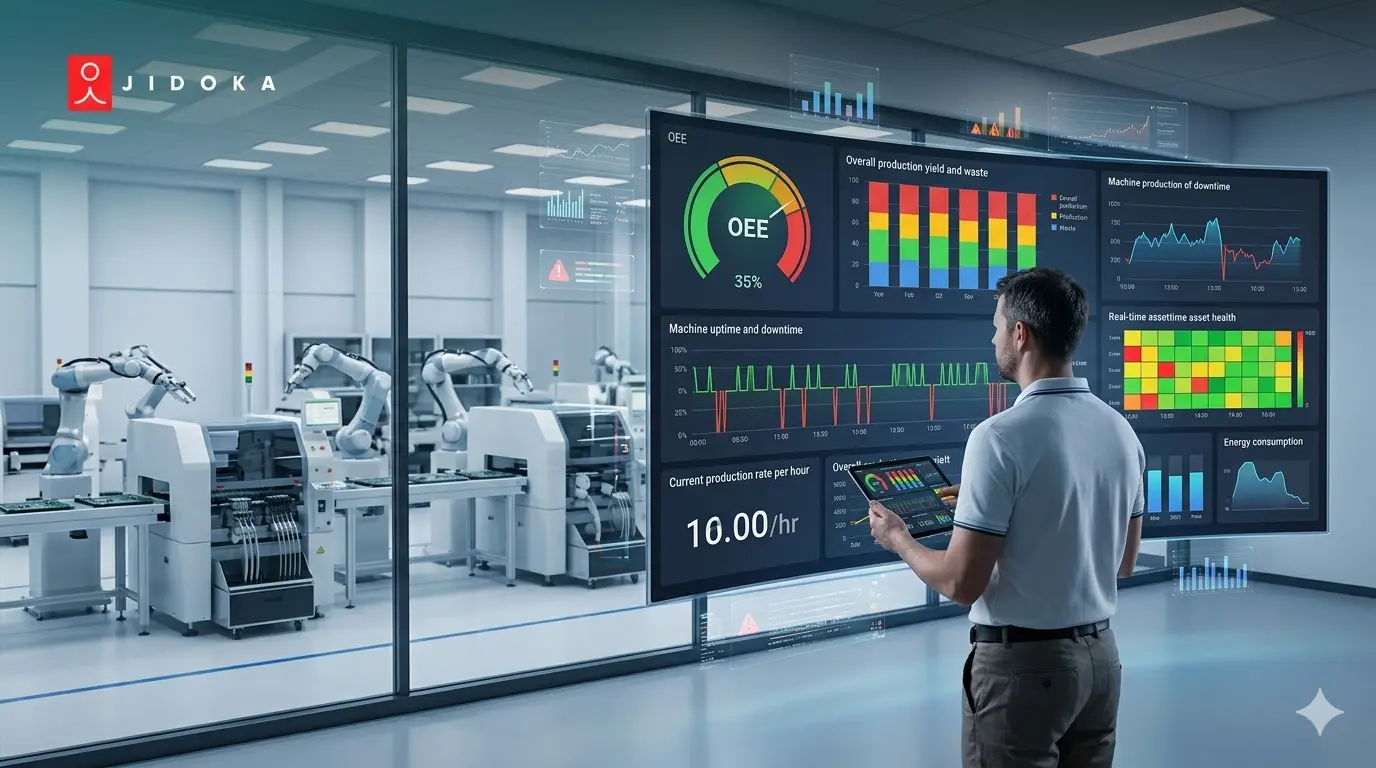
Defect prevention roi is calculated differently than detection software ROI. Detection software ROI is driven primarily by inspection labor savings and faster defect discovery, while genuine prevention software ROI is driven by a falling defect production rate, reducing the scrap and rework volume a facility generates in the first place.
Why Prevention ROI Should Be Measured Against Defect Production Rate, Not Just Detection Speed
Detection software's ROI ceiling is bounded by how fast and cheaply it can find defects that are already being produced at a fixed rate. Prevention software's ROI has no such ceiling, because reducing the underlying defect production rate compounds: less scrap, less rework, less warranty exposure, and less CAPA investigation labor, simultaneously.
A disciplined production defect software selection process tracks defect rate by classification, not just an aggregate count, before and after deployment. A genuine prevention system should show the top defect-driving categories shrinking specifically, reflecting that the process conditions causing them are being corrected, not just that more units are being caught at the same underlying production rate.
Reference ROI Benchmarks for AI-Driven Quality Platforms
Manufacturers implementing AI-driven quality control infrastructure report up to 40% reduction in waste alongside faster inspection cycles, the waste reduction figure specifically reflects defects prevented from being produced, not simply caught faster (AI Innovate, February 2026).
Statistical process control delivers 20 to 40% defect reduction compared with inspection-based approaches, because SPC catches process drift before the defect threshold is crossed rather than after (Oxmaint SPC Manufacturing AI Guide, April 2026).
Full AI quality infrastructure that combines inspection and process monitoring delivers 200 to 300% ROI through the compounding effect of defect reduction across scrap, rework, and CAPA cost simultaneously (tech-stack.com AI Adoption Manufacturing, March 2026).
Conclusion
Nine out of twelve vendors using the word "prevention" are selling detection tools with proactive marketing language attached. The five-feature framework in this guide is what exposes the difference before the contract is signed. Prevention software ROI compounds because it reduces the defects a facility produces, not just the speed at which existing defects are found, documented deployments combining inspection and process monitoring report 200 to 300% ROI. See how KOMPASS and NAGARE combine product and process data for genuine manufacturing defect prevention software at jidoka-tech.ai.
Frequently Asked Questions
1. What Is Manufacturing Defect Prevention Software?
Manufacturing defect prevention software monitors the process conditions that produce defects, temperature, pressure, speed, vibration, and operator process compliance, to flag or correct those conditions before non-conforming units are made. This is distinct from quality control software, which inspects finished output to find defects that have already occurred. Many platforms marketed as "defect prevention software" are quality control tools using proactive language, making the feature distinction more important than the marketing label when evaluating vendors.
2. What Is the Difference Between Defect Prevention Software and Quality Control Software?
Quality control software inspects the product, capturing defect data and verifying finished output meets specification; defect prevention software monitors the process, capturing the conditions that produce conforming or non-conforming output before the unit is finished. A platform's classification as "prevention" should depend on whether its primary data source is process conditions (with or without product inspection data layered on top), not on the marketing language used to describe an inspection-only tool.
3. What Features Should You Look For in Defect Prevention Software?
Look for five features: process parameter monitoring as a primary data source (not just product inspection), real-time correlation between process signals and defect outcomes, predictive alerting based on trend detection rather than control limit breach alone, closed-loop feedback that recommends specific corrective action, and automatic root cause data capture linking process conditions to any defects that do occur. Request a live demonstration of each feature rather than relying on a vendor's feature list or marketing claims.
4. How Does AI Vision Inspection Fit Into a Defect Prevention Strategy?
AI vision inspection contributes the product-condition half of a defect prevention strategy by generating continuous, classified defect data at production speed, which can be correlated against process parameter trends to identify the process conditions causing specific defect types. On its own, AI vision inspection is a detection capability. It becomes part of a prevention strategy only when its classification data is connected to process monitoring data in a system that supports trend-based alerting and corrective recommendation.
5. How Should You Calculate ROI for Defect Prevention Software?
Calculate defect prevention software ROI based on the reduction in defect production rate over time, not just inspection labor savings or detection speed improvements, because genuine prevention reduces the volume of defects a facility generates rather than just finding existing defects faster. Documented AI-driven quality infrastructure deployments report up to 40% waste reduction and combined inspection-and-process-monitoring systems report 200 to 300% ROI, reflecting the compounding financial effect of reduced scrap, rework, and CAPA investigation cost when defect production itself declines.