Anomaly Detection

What is Anomaly Detection? (2026 Guide for Manufacturers)

Learn how anomaly detection is transforming 2026 manufacturing. Discover how to use machine vision and predictive maintenance to achieve 99.5% quality accuracy.

Manufacturing data grows fast. Industrial output stays steady at 1.9 percent. Data from 18.8 billion industrial IoT devices creates noise. Old manual checks fail your budget. 

You need anomaly detection to find invisible errors before they cost money. Today, agentic AI moves beyond simple alerts to fix problems alone. It uses real-time monitoring to stop downtime. 

This guide shows how anomaly detection helps you master Quality 4.0. You will find hidden errors through better fault detection on the production floor right now.

What is Anomaly Detection? Mastering Modern Industrial Machine Vision

Anomaly detection has changed. It no longer relies on a programmer to guess every possible way a part might break. Modern industrial machine vision uses deep learning to learn what a good product looks like. 

Once the system knows "normal," it flags anything else as an outlier detection event. This shift allows your line to catch defects that humans or old sensors miss.

1. The Shift from Hard Rules to Self-Learning Baselines

Old systems used static thresholds. If a part was one millimeter off, the alarm rang. But what if the lighting changed or a new batch of raw material looked slightly different? 

Those systems triggered "alert fatigue" with constant false alarms.

  • Self-learning algorithms now adapt to your factory environment.
  • They adjust for minor shifts in lighting or material texture.
  • These tools reduce false positives by 40%.
  • Your team spends time fixing real problems instead of chasing sensor glitches.

2. Cognitive Pattern Recognition vs. Simple Filters

Modern anomaly detection uses pattern recognition to see like a human expert, only faster. It employs deep learning models to analyze every pixel.

  • Context matters: The AI knows a scratch on a casing is a fail, but a grain in the wood is fine.
  • Unknown unknowns: It detects defects it has never seen before.
  • Multi-dimensional data: The system combines visual feeds with industrial IoT data for a full picture of health.

By moving away from rigid rules, you gain a system that actually thinks. This intelligence is the foundation for combining predictive maintenance with your daily quality checks to save even more on the shop floor.

Revolutionizing Factory Floors with Anomaly Detection and Predictive Maintenance

You get the best ROI when you link quality and reliability. You stop waiting for things to break. Instead, you use predictive maintenance to fix machines before they stop the line. 

Smart industrial machine vision makes this possible and helps you master cognitive manufacturing. You finally hear what your machines tell you. Anomaly detection lets you see the tiny details that matter.

1. Identifying "Drift" Before Failure

Machines rarely quit without warning. They drift. Anomaly detection picks up on micro-vibrations or tiny changes in cycle times. This is why predictive maintenance works so well.

  • Vibration sensors: Catch a bearing issue months before it fails.
  • Power checks: Spot motor stress through industrial IoT data.
  • Noise analysis: Hear a change in the machine's rhythm that human ears miss.

2. Achieving Quality 4.0 and Zero-Defect Production

You reach Quality 4.0 by watching the process, not just the product. Real-time monitoring catches errors while they happen. Big manufacturers now see an 80% jump in fault detection rates thanks to anomaly detection. 

Your team can rely on anomaly detection to ensure every part matches your "Golden Run" every single time.

3. Reducing Waste and Sustainability Impact

Waste kills profit. If you catch an anomaly detection trigger in the first few minutes, you save the rest of the batch.

  • Material savings: Stop the line before you ruin expensive raw goods.
  • Energy use: Fix a dragging belt to lower your power bill.
  • Carbon goals: Less scrap means a smaller carbon footprint for your factory.

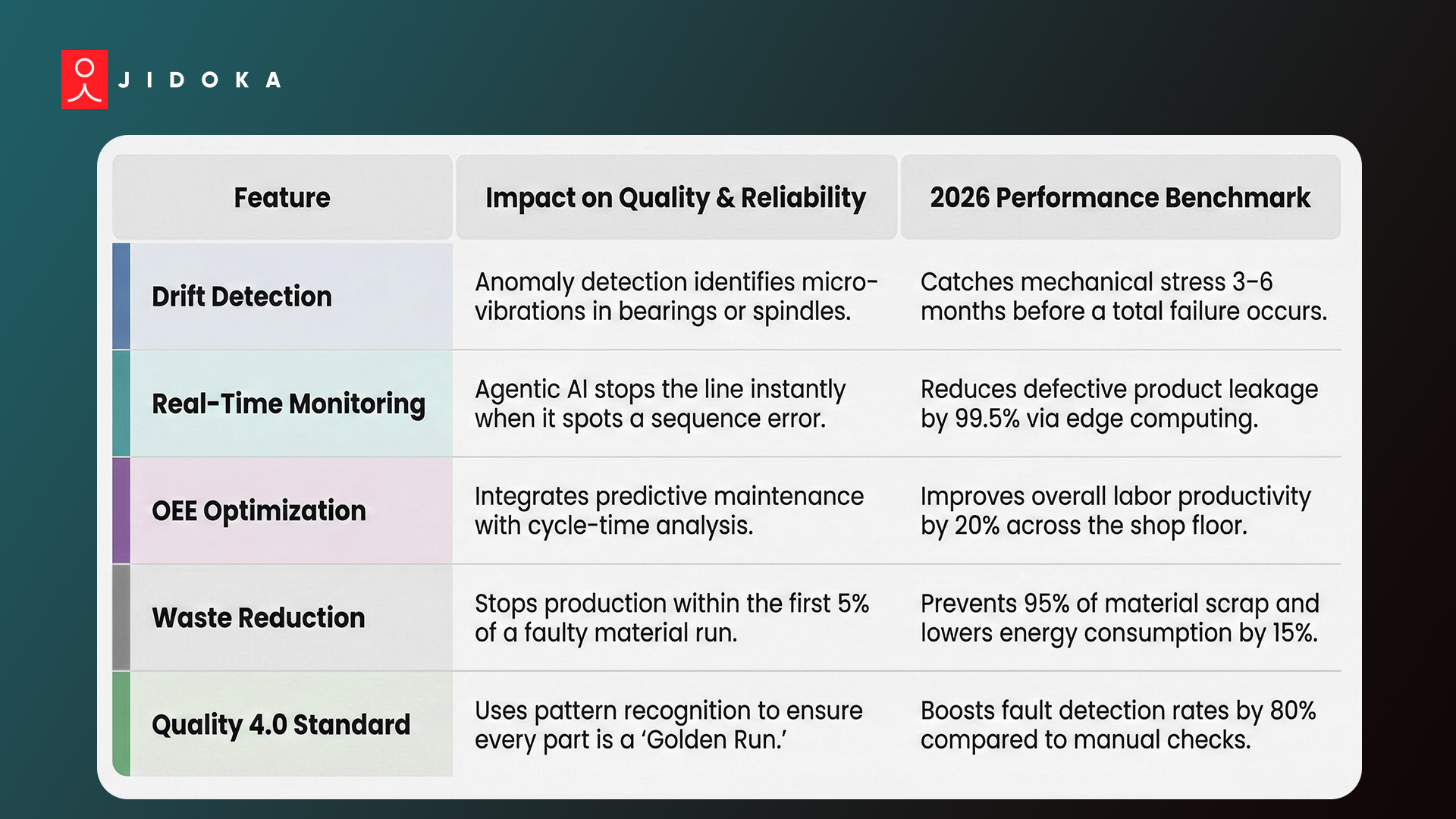
Table For ROI and Impact of Anomaly Detection:

Quality 4.0 Standard

Uses pattern recognition to ensure every part is a "Golden Run."

Boosts fault detection rates by 80% compared to manual checks.

This "predict-prevent" strategy changes your factory from a reactive shop into a proactive leader. Catching errors early with industrial machine vision prepares you for high-speed inspection tasks that require even more precision.

Real-World Use Cases of Anomaly Detection in 2026 High-Speed Inspection 

High-speed lines move too fast for humans. These real-world cases show how anomaly detection and industrial machine vision handle massive volumes with perfect accuracy while ensuring total safety across your entire production facility.

1. Vision AI for Micro-Defect Spying

In electronics and pharmaceutical packaging, real-time monitoring now handles over 12,000 products per minute. Using advanced pattern recognition, these systems spot line marks, dust, or measurement deviations thinner than a human hair. 

This level of fault detection ensures that every microchip and vial meets the strict standards of Quality 4.0 without slowing down your output.

2. Multi-Spectral and Radiography Inspection

Modern systems see what the human eye cannot. By using X-ray and multi-spectral imaging, industrial machine vision identifies internal porosity in metal castings or chemical imbalances in food processing. These tools use industrial IoT data to find hidden cracks or contaminants before they reach the customer, protecting your brand from costly recalls.

3. Behavioral Anomaly Detection for Worker Safety

Safety stays a priority in cognitive manufacturing. Agentic AI monitors human movements to prevent injuries.

  • Uses edge computing for response times under 50 milliseconds.
  • Detects PPE non-compliance or unauthorized zone entry.
  • Anomaly detection halts heavy machinery the moment it spots a safety fault detection event.

These high-speed tools prove automated systems are the only way to scale quality. 

How Jidoka Tech Can help you automate anomaly detection

Jidoka Tech builds an ai inspection system that thrives under real production pressure. Our team aligns cameras, lighting, and edge computing units so the system works across every shift.

Special Capabilities of the Jidoka System:

1. KOMPASS High-Accuracy Inspector: This anomaly detection tool reaches 99.8% accuracy on live lines and reviews frames in under 10 ms. It learns new variants using 70% fewer samples and handles difficult reflective metals or textured parts easily.

2. NAGARE Process Analyst: This tool tracks 100% of assembly steps through real-time monitoring. It flags missing parts or wrong sequences to cut rework by up to 35%.

3. Edge-Native Performance: The system runs on local units to avoid lag, supporting predictive maintenance and fault detection without needing a constant cloud link.

Jidoka Tech provides the pattern recognition you need for Quality 4.0. Our setup ensures your industrial machine vision stays sharp every day. 

Conclusion

Anomaly detection in 2026 is the bridge between human intuition and machine speed. Without it, factories struggle with invisible errors and data fatigue that drain resources. 

Relying on manual checks or old rules leads to missed defects, high scrap rates, and shrinking margins. In today’s market, one bad batch can trigger massive recalls or ruin your reputation.

Jidoka Tech offers a way out with industrial machine vision that catches these "ghosts" early. By automating your fault detection through agentic AI, you build a resilient, zero-defect production line. 

Connect to the experts at Jidoka Tech to see how our anomaly detection tools can automate your quality checks today.

FAQs

1. Does anomaly detection require a massive historical dataset? 

No. In 2026, unsupervised learning models learn "normal" behavior in hours. This anomaly detection shift allows for rapid Quality 4.0 deployment during new product introductions. You achieve high fault detection accuracy using deep learning without needing years of old industrial IoT data.

3. What is the difference between an outlier and an anomaly? 

An outlier detection event is just a data point far from the average. An anomaly detection trigger indicates a specific, actionable process shift. Modern industrial machine vision uses pattern recognition to distinguish harmless data noise from critical predictive maintenance issues on your line.

3. How does edge computing benefit anomaly detection? 

Edge computing processes data directly on your machines to eliminate lag. This allows real-time monitoring systems to trigger fault detection alerts in under 50 milliseconds. It ensures agentic AI can halt production instantly, preventing scrap and maintaining a cognitive manufacturing flow.

4. Can anomaly detection help with cybersecurity in manufacturing? 

Yes. By monitoring network traffic for behavioral outlier detection, it spots unauthorized access to industrial control systems. This anomaly detection layer uses pattern recognition to flag cyber threats, keeping your industrial IoT sensors and Quality 4.0 data safe from external breaches.

5. Is AI-based inspection better than traditional machine vision? 

Yes. Traditional vision uses rigid rules that fail when lighting or textures change. AI-driven industrial machine vision handles variability through deep learning. It lowers false rejections and improves fault detection, making it a more reliable choice for modern predictive maintenance strategies.

February 1, 2026
By
Shwetha T Ramakrishnan, CMO at Jidoka Tech

相談会開催中

品質と生産性を最大化するビジョン検査システムに関する相談会を実施中です。ぜひこの機会にお試しください。

お問い合わせ