Een inspectiechecklist voor productie die afhankelijk is van het geheugen van de operator is geen kwaliteitssysteem. Het is een risico dat leidt tot uitval, afwijkingen in toleranties en retourzendingen van klanten. In 2024 misten faciliteiten zonder een gestandaardiseerd protocol voor kwaliteitsaudits kritieke afmetingen in aanzienlijk hogere mate dan gestructureerde operaties, waarbij het verschil groter werd telkens wanneer een nieuwe operator aan een dienst begon. Meer inspecteurs lossen dit niet op.
Een verificatieproces dat zo nauwkeurig is dat geen enkele operator een stap kan overslaan of een tolerantie verkeerd kan interpreteren, doet dat wel. Deze gids legt uit wat er op die checklist moet staan, waar elk controlepunt moet komen en hoe het automatiseren van de gegevensverzameling kwaliteitsfouten in seconden in plaats van dagen zichtbaar maakt.
Kernpunt: Een inspectiechecklist voor productie specificeert precies wat technici in elke productiefase moeten beoordelen. Een gestructureerde lijst met kwaliteitscontrolepunten elimineert giswerk, voorkomt dat defecten doorstromen naar dure vervolgstappen en creëert het controleerbare nalevingsdossier dat vereist is voor ISO 9001 en klantenaudits.
Waarom heeft u een inspectiechecklist voor het productieproces nodig?
Een inspectiechecklist voor het productieproces haalt menselijke subjectiviteit uit de kwaliteitscontrole door technici exacte toleranties, gereedschapsvereisten en criteria voor goedkeuring of afkeuring te geven, waardoor identieke evaluatienormen worden gegarandeerd, ongeacht de dienst of de operator.
"Kwaliteit is gratis. Het is de non-conformiteit die geld kost." Philip Crosby schreef dit in 1979, en het blijft het meest directe financiële argument voor het opstellen van een formeel inspectiechecklist-proces voor productie voordat de lijn de eerste batch produceert. De kosten van het vinden van een defect vermenigvuldigen zich met elke stap die verstrijkt voordat het wordt gedetecteerd. Het ASQ Cost of Quality-raamwerk hanteert een verhouding van 1:10:100 voor preventie, interne fouten en externe fouten.
Het ASQ cost of quality-raamwerk is de referentie voor deze verhouding. Elke dollar die in de checklistfase wordt geïnvesteerd, levert veelvoudig rendement op in vermeden herbewerking en garantieclaims. Dat is het argument voor het bouwen van de checklist, in plaats van het aannemen van meer inspectiepersoneel.
Elimineren van operatorbias
Schriftelijke richtlijnen voorkomen dat inspecteurs vertrouwen op hun geheugen of persoonlijke kalibratie. Dit beschermt tegen de twee meest voorkomende faalwijzen bij handmatige inspectie: hiaten in de training van nieuwe medewerkers en de geleidelijke verslapping bij ervaren operators die onbewust na verloop van tijd marginale onderdelen gaan accepteren.
Een checklist standaardiseert niet alleen wat er gemeten moet worden, maar ook hoe dit gemeten moet worden, met welk gereedschap, op welke locatie op het onderdeel en tegen welke gedrukte tolerantie. Programma's voor training en vaardigheidsbeoordeling leveren veel betere resultaten op wanneer ze zijn gebouwd op basis van een gedocumenteerde checklist in plaats van als vervanging daarvan. Wanneer training verwijst naar een specifiek checklistitem, leren operators de norm en de verificatiestap tegelijkertijd.
De rol van een lijst met kwaliteitscontrolepunten
De **lijst met kwaliteitscontrolepunten** is de nalevingskaart van de fabriek: deze identificeert precies welke barrières er bestaan tussen een defect onderdeel en de volgende verwerkingsstap. Het fungeert ook als het juridische auditdossier dat externe beoordelaars vereisen. ISO 9001:2015 vereist gedocumenteerde informatie die aantoont dat producten en diensten aan de eisen voldoen. Uw checklist vormt die documentatie. In farmaceutische productie en automobielproductie omgevingen is het ontbreken van een ondertekend checklist-record op zichzelf al een non-conformiteit, ongeacht de werkelijke productkwaliteit.
Naleving en best practices afdwingen
Gereguleerde sectoren vereisen **inspectiechecklist-productie**-documentatie als voorwaarde voor certificering, niet als aanbeveling. De IATF 16949-norm voor toeleveranciers in de automobielindustrie schrijft gedocumenteerde controleplannen voor met inspectiefrequenties, meetinstrumenten en acceptatiecriteria bij elke bewerking. Fabrikanten die gestandaardiseerde digitale checklists bijhouden, voldoen consistent sneller aan kwaliteitsaudit -eisen dan bedrijven die vertrouwen op impliciete kennis, omdat het bewijsmateriaal georganiseerd en voorzien van een tijdstempel is in plaats van achteraf uit het geheugen gereconstrueerd. [VERIFY: CMN 2025 55% faster audit stat before publishing.]
Naast het belang van de checklist is de meer ingrijpende beslissing waar de controlepunten moeten worden geplaatst zodat ze de productiewaarde daadwerkelijk beschermen.
Hoe u uw kwaliteitscontrolepunten voor productie definieert
Kwaliteitscontrolepunten in de productie horen direct na complexe, foutgevoelige bewerkingen en direct vóór onomkeerbare assemblagestappen; dit zijn de twee posities waar het vroegtijdig opsporen van een defect de maximale kosten in de rest van het proces bespaart.
De meest gemaakte fout bij de plaatsing is het positioneren van **kwaliteitscontrolepunten voor productie** op handige locaties in plaats van op strategische locaties. Inspectie aan het einde van de lijn ontdekt problemen pas nadat elke voorgaande bewerking al arbeid en materiaalkosten aan een defect onderdeel heeft toegevoegd. Het ASQ-raamwerk voor kwaliteitskosten classificeert dit als interne faalkosten, en deze schalen direct mee met het aantal stappen dat het defect doorloopt voordat het wordt gedetecteerd.
Verificatie van inkomende grondstoffen
Inspectie van grondstoffen bij de ontvangstkade is het controlepunt met het hoogste rendement in de gehele keten. Elke leverancier verstuurt een analysecertificaat waarin wordt beweerd dat aan de specificaties is voldaan. Dat document is een juridische claim, geen kwaliteitsgarantie. Door dit te controleren aan de hand van een onafhankelijke fysieke meting, verandert u een bewering van de leverancier in een geverifieerd kwaliteitsrecord voor inkomende goederen. NIST-kalibratie- en meetnormen bepalen de metrologische vereisten voor inkomende inspectiemetingen. Defecten die bij de ontvangst worden gevonden, kosten alleen arbeidstijd bij de laadperrons om op te lossen. Defecten die pas bij de assemblage worden ontdekt, kosten alle voorgaande arbeid en materialen die tussen de ontvangst en het punt van ontdekking zijn geïnvesteerd.
Tussentijdse inspectie bij processtappen
Een **inspectie bij een processtap** vlak voor het lassen, verlijmen of afdichten verandert een onomkeerbare handeling in een gecontroleerd punt waar alleen conforme subassemblages doorheen kunnen. Dit controlepunt isoleert het defect bovendien tot een specifiek werkstation voor een snelle analyse van de bronoorzaak, in plaats van het defect door een hele batch te laten verspreiden voordat het wordt ontdekt. Inspectie van assemblage met meerdere componenten use cases laten precies zien hoe verificatie bij processtappen voorkomt dat assemblagefouten door een verkeerde volgorde onomkeerbare processtappen bereiken. [VERIFY: IQR 2024 28% scrap reduction stat before publishing.]
Verificatie van de eindverpakking
De verificatie van de eindverpakking is het laatste controlepunt voordat het product de faciliteit verlaat – en de positie met dubbele verantwoordelijkheid voor productkwaliteit en verzendnauwkeurigheid. Dit controlepunt verifieert het juiste onderdeelnummer, het juiste revisieniveau, het juiste partijnummer en de integriteit van de verpakking. Automatisering van label- en tekstherkenning handelt deze stap af op lijnsnelheid, waardoor fouten bij het labelen en verzendingen met de verkeerde revisie, die de meest ontwrichtende kwaliteitsklachten van klanten veroorzaken, worden geëlimineerd. Handmatige eindverificatie bij grote volumes levert hetzelfde door vermoeidheid veroorzaakte foutenpercentage op als elke andere repetitieve inspectietaak.
Zodra de controlepunten zijn bepaald, is de volgende vraag wat de technicus bij elk punt daadwerkelijk moet doen – met een mate van specificiteit die in elke ploeg voor consistente resultaten zorgt.
Wat moet een kwaliteitsaudit-checklist voor productie bevatten?
Een kwaliteitsaudit-checklist voor productie moet het exacte meetinstrument, de gedrukte tolerantiegrenzen en de verplichte aftekening voor elk inspectiepunt specificeren, nauwkeurig genoeg zodat twee technici die hetzelfde formulier gebruiken tot identieke evaluatieresultaten komen.
"Controleer de diameter" is geen item voor een kwaliteitsaudit-checklist. "Meet de buitendiameter op positie A3 met een Mitutoyo 500-196-30 digitale schuifmaat, kalibratie actueel. Accepteren: 25,00 mm tot 25,05 mm. Afkeuren: buiten deze limieten. Registreer in veld 4B. Ondertekenen." Dat is een checklist-item. Elk element in die instructie elimineert een specifieke foutmodus die de vage versie toelaat.
Specificatie van de meetinstrumenten
Elk item op de **productie-inspectiechecklist** moet het exacte meetinstrument benoemen, niet de categorie instrumenten. "Gebruik een schuifmaat" stelt een operator in staat om een ongekalibreerd exemplaar uit een gereedschapslade te pakken. "Gebruik Mitutoyo 500-196-30 digitale schuifmaat van gereedschapsstation 7, kalibratiesticker actueel" elimineert die optie. NIST-metrologienormen bepalen de vereisten voor kalibratieherleidbaarheid van inspectie-instrumenten. De instrumentspecificatie op de checklist creëert het validatiedossier voor het meetsysteem dat ISO 9001 en IATF 16949 stellen beide als vereiste.
Drempelwaarden voor goedkeuring en afkeuring definiëren
Boven- en ondergrenzen moeten direct op het formulier van de kwaliteitscontrolelijst worden afgedrukt; dit is een basisvereiste voor elke serieuze kwaliteitscontrole in de productie en mag niet worden verwezen naar een tekeningnummer. Een operator die een tekeningbestand moet openen om een tolerantie te vinden, zal die stap onder productiedruk overslaan. Wanneer het engineeringteam een revisie van een tekening vrijgeeft, wordt de checklist tegelijkertijd bijgewerkt. Die synchronisatie is het hele doel van documentbeheer binnen een kwaliteitscontrolesysteem voor productie: de limieten op de werkvloer moeten altijd overeenkomen met de actueel goedgekeurde specificatie.
Digitale handtekeningen verplichten voor verantwoordelijkheid
Verplichte ondertekeningen bij elke fase van de **qc checklist guide** creëren tegelijkertijd psychologisch eigenaarschap en wettelijke aansprakelijkheid. Wanneer een operator een meetrapport ondertekent, bevestigt deze dat de test is uitgevoerd, het juiste instrument is gebruikt en de werkelijke waarde is genoteerd – geen schatting. Deze verantwoordelijkheidsstructuur is gedocumenteerd in de ASQ-vereisten voor kwaliteitsaudits als kernelement van auditeerbare kwaliteitsgegevens. [VERIFY: BQI 2025 19% accuracy improvement stat before publishing.] De digitale werkinstructie en poka-yoke framework automatiseert deze verantwoordelijkheid door het indienen van formulieren zonder een volledig, ondertekend record bij elke stap te voorkomen.
Een nauwkeurige, verantwoorde checklist vormt het fundament. Het digitaliseren ervan zorgt voor schaalbare handhaving over verschillende ploegendiensten heen, zonder dat er extra inspectiepersoneel nodig is.
Hoe u uw productie-inspectiepunten automatiseert
Het automatiseren van productie-inspectiepunten verandert een statisch papieren formulier in een live kwaliteitscontrole voor productie workflow waarbij het management inspectiefouten ziet op het moment dat ze optreden, en niet pas aan het einde van de dienst wanneer corrigerende maatregelen al te laat zijn.
Papieren checklists hebben één fundamentele ontwerpfout: operators kunnen ze achteraf invullen. Onder productiedruk worden metingen geschat in plaats van uitgevoerd, worden velden overgeslagen en worden handtekeningen aan het einde van de dienst in bulk toegevoegd.
Digitale checklists met verplichte velden en via Bluetooth verbonden instrumenten dichten al deze drie gaten tegelijkertijd: elk veld is verplicht, elke meting wordt via het instrument overgedragen en elke inzending krijgt een tijdstempel op het moment van inspectie.
Papier vervangen door verbonden tablets
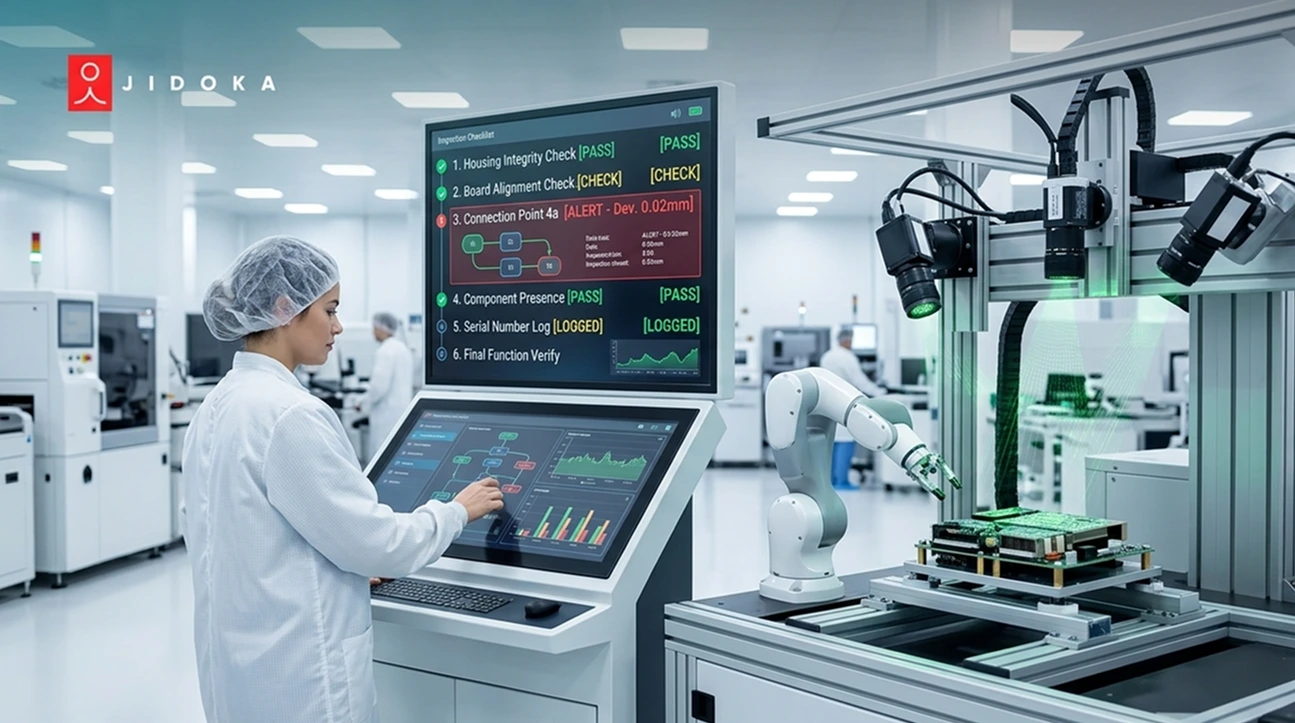
Robuuste tablets met digitale **inspection checklist manufacturing** formulieren vereisen dat operators elk veld invullen voordat het formulier kan worden ingediend. Een digitaal formulier dat is geconfigureerd met verplichte velden, validatie van gegevenstypen – geen tekstinvoer in een numeriek meetveld – en afdwinging van tijdstempels dicht elk gat dat papier toelaat. De digitale werkinstructie en poka-yoke framework maakt het architectonisch onmogelijk voor een operator om naar de volgende stap te gaan voordat aan de criteria van de huidige stap is voldaan en deze zijn vastgelegd. Het management ontvangt een volledig dossier met operator-ID, tijdstempel en meetwaarde - geen handgeschreven formulier dat aan het einde van de dienst moet worden ontcijferd.
Integratie van digitale schuifmaten en scanners
Via Bluetooth verbonden meetinstrumenten sturen afmetingen direct door naar het digitale formulier van de **qc checklist guide**, waardoor typefouten als faalwijze volledig worden geëlimineerd. Wanneer een operator 24,97 mm afleest en 24,79 mm intypt, is het meetrecord onjuist, ook al was de fysieke inspectie correct. Bluetooth-overdracht verwijdert de handmatige invoer volledig. Het instrument verstuurt de waarde, het formulier legt deze vast en het systeem evalueert deze aan de hand van de opgegeven tolerantie - de operator hoeft niets handmatig in te voeren. Dit sluit direct aan op de defectdetectie use case: meetintegriteit garandeert dat de defectgegevens echt zijn en geen gevolg van overtypefouten.
Analyse van real-time QC checklist guide-gegevens
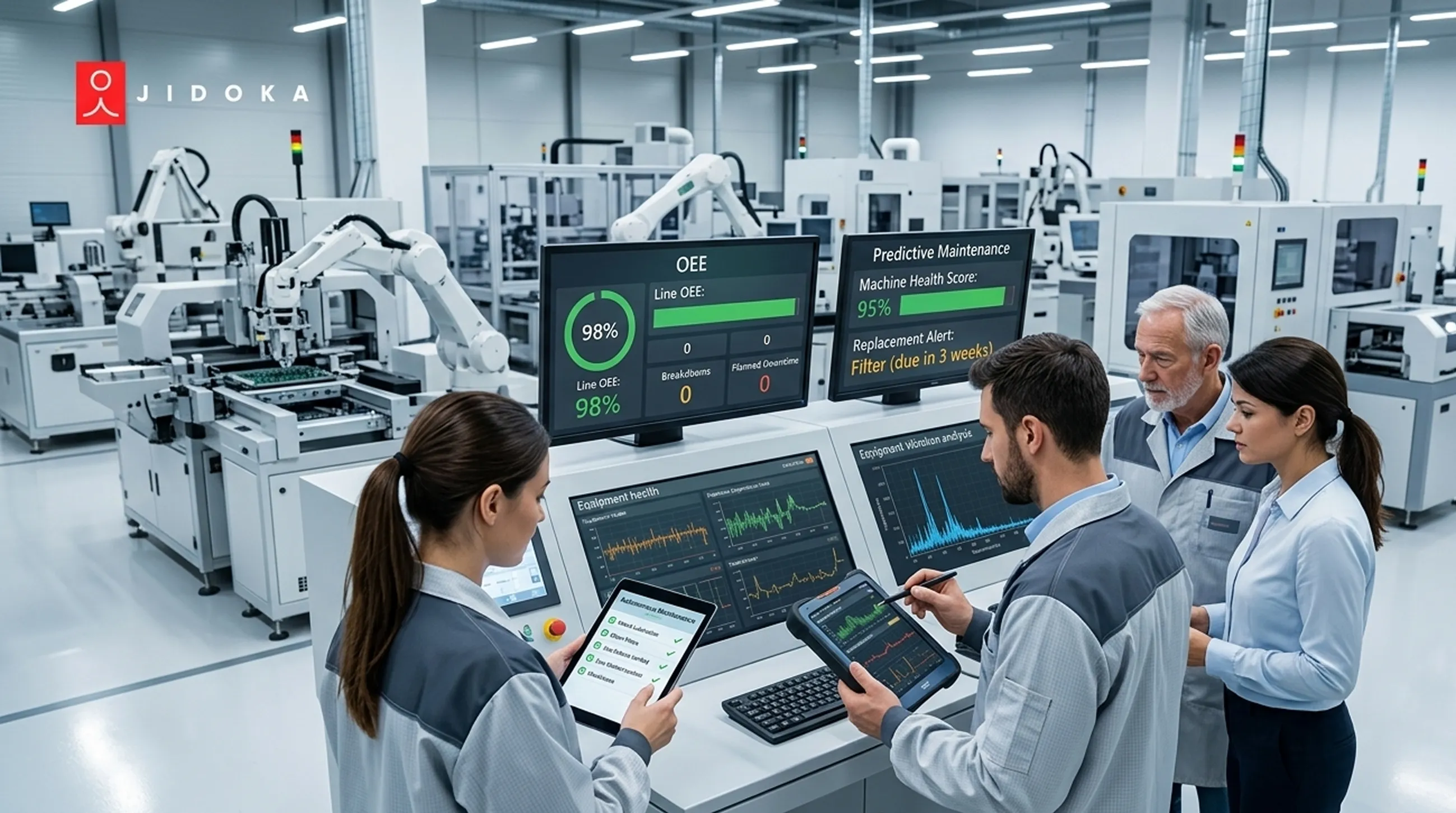
Live dashboards die gegevens van kwaliteitscontrolepunten in de productie aggregeren, maken statistische patronen zichtbaar tijdens de dienst waarin ze ontstaan, niet pas een week later. Wanneer een specifieke afmeting tijdens de tweede ploeg een uitvalpercentage van 12 procent vertoont, maar tijdens de eerste ploeg slechts 2 procent, wijst dat patroon op een verschil in de instelling van het gereedschap en niet op een ontwerpfout - en die diagnose is dezelfde dag nog beschikbaar. Op papier duurt het weken van handmatige gegevensverzameling om hetzelfde patroon te identificeren. De overstap naar geautomatiseerde kwaliteitscontrolepunten in de productie vermindert het totale aantal arbeidsuren voor kwaliteitsborging door het handmatig aggregeren van gegevens aan het einde van de dienst volledig te elimineren.
Hoe Jidoka Technologies uw inspectiechecklist automatisch afdwingt
Wanneer elke montagestap een checklist-item is, vormt het handmatig afdwingen van de checklist de flessenhals. Jidoka bouwt de AI-laag die elke stap in real-time verifieert, op lijnsnelheid, zonder extra inspectiepersoneel of papieren formulieren.
KOMPASS bereikt een nauwkeurigheid van 99,8 procent op actieve lijnen die 12.000 onderdelen per minuut verwerken, beoordeelt elk frame in minder dan 10 ms en leert nieuwe productvarianten met 60 tot 70 procent minder trainingsvoorbeelden dan standaard vision-systemen. Het vervangt de handmatige verificatie van eindproducten door een camera die nooit vermoeid raakt en nooit een meting overslaat - en voert defectdetectie continu uit op elke geproduceerde eenheid.
NAGARE bewaakt 100 procent van de montagestappen via bestaande camera's, signaleert ontbrekende onderdelen en onjuiste sequenties in real-time en vermindert herbewerking met 20 tot 35 procent. Het dwingt de kwaliteitscontrolelijst af op stationniveau - de assemblage van meerdere componenten en digitale werkinstructie use cases laten precies zien hoe NAGARE elke stap afdwingt zonder dat een operator een formulier hoeft in te vullen.
Als uw productieproces voor inspectiechecklists nog steeds afhankelijk is van operators die moeten opmerken wat camera's automatisch kunnen verifiëren, plan een kort gesprek met Jidoka om te zien hoe die implementatie er op uw productielijn uitziet.
Conclusie
Een productie-inspectiechecklist maakt het verschil tussen een kwaliteitssysteem en een kwaliteitsvoornemen. Plaats kwaliteitscontrolepunten in het productieproces bij elke risicovolle fase, specificeer het exacte gereedschap en de tolerantie voor elk item, dwing verantwoording af via ondertekening en automatiseer de gegevensverzameling zodat het management fouten in realtime ziet. Vertrouw niet langer op het geheugen van de operator om uw klanten te beschermen.
Breng uw productie-inspectiepunten vandaag nog in kaart, en wanneer u klaar bent om statistisch risico te vervangen door geverifieerde zekerheid voor elke eenheid, laten we bespreken wat Jidoka op uw productielijn kan betekenen.
Veelgestelde vragen
1. Wat is een productieproces voor inspectiechecklists?
Een productieproces voor inspectiechecklists specificeert de exacte teststappen, gereedschappen en toleranties die technici moeten gebruiken om een onderdeel in elke productiefase te beoordelen. Het creëert een gestandaardiseerde, herhaalbare workflow die subjectieve beoordelingen elimineert en ervoor zorgt dat voor elke ploeg dezelfde kwaliteitscriteria gelden. Zonder dit proces varieert de inspectiekwaliteit op basis van de ervaring van de operator in plaats van op basis van de productspecificaties.
2. Hoe stelt u een lijst met kwaliteitscontrolepunten op?
Begin met het in kaart brengen van elke productiefase en identificeer vervolgens de stappen met de hoogste historische defectpercentages of stappen die leiden naar onomkeerbare bewerkingen. Wijs voor elk controlepunt een specifieke meetmethode, het benodigde instrument en de vastgestelde tolerantie toe. Formatteer het resultaat als een stapsgewijs formulier dat operators in volgorde doorlopen: geen tekeningen opzoeken, geen aannames, geen interpretatie nodig op de werkplek.
3. Wat is een stage-gate-inspectie?
Een stage-gate-inspectie is een verplichte stop waarbij een onderdeel niet verder mag totdat het een specifieke verificatietest heeft doorstaan. Gates die vóór las-, lijm- of afdichtingswerkzaamheden worden geplaatst, vangen fouten op op het moment dat correctie uren in plaats van dagen kost. Elk onderdeel dat niet door de gate komt, wordt in quarantaine geplaatst voor een analyse van de hoofdoorzaak, in plaats van dat het proceskosten blijft opbouwen bovenop een defect.
4. Waar moeten productie-inspectiepunten worden geplaatst?
**Plaats productie-inspectiepunten bij de ontvangst van inkomende grondstoffen, direct na bewerkingen met bekende dimensionale instabiliteit, direct vóór onomkeerbare assemblagestappen en bij het laatste verpakkingsstation vóór verzending.** Die vier posities beschermen de meest kostbare fasen van het proces. Details over elke fase zijn gedocumenteerd in de ASQ quality resources library.
5. Waarom zou een fabriek een digitale kwaliteitscontrole-checklist gebruiken?
**Een digitale checklist voor kwaliteitscontrole voorkomt handmatige overnamefouten, zorgt ervoor dat operators geen verplichte velden overslaan en stuurt direct meldingen naar het management zodra een meting buiten de tolerantiegrenzen valt.** Bij papieren formulieren kunnen operators achteraf gegevens invullen of onder tijdsdruk metingen schatten. Digitale formulieren met Bluetooth-gekoppelde instrumenten leggen de werkelijke meting vast op het moment van inspectie. Ontdek hoe digitale werkinstructies en poka-yoke -systemen dit proces automatisch afdwingen.
6. Hoe automatiseert AI de inspectiechecklist in de productie?
**AI-vision-systemen zoals KOMPASS en NAGARE vervangen handmatige checklist-controles door 100 procent van de eenheden en montagestappen in realtime te inspecteren via bestaande camera's.** KOMPASS behaalt een nauwkeurigheid van 99,8 procent bij 12.000 onderdelen per minuut. NAGARE bewaakt elke montagestap en signaleert afwijkingen binnen milliseconden, waardoor het aantal correcties met 20 tot 35 procent afneemt zonder extra personeel of papierwerk.