.webp)
De meeste fabrieken die stagneren op 94% 'Right First Time'-productie hebben op papier alles goed gedaan. Nieuwe SOP's, omscholingstrajecten, een Six Sigma-project gericht op de defectlijn. Het percentage steeg van 88% naar 93% en bleef daar steken. Dat plafond is geen trainingsprobleem. Het is een bewakingsprobleem, en het herkennen van dat verschil is de enige manier om erdoorheen te breken.
Deze gids legt de RFT-berekening uit, het mechanisme achter de stagnatie en de AI-procesbewakingsarchitectuur die fabrieken gebruiken om 'Right First Time'-productie consistent boven de 99% te krijgen.
Right First Time-productie: definitie en berekening
'Right First Time'-productie meet het percentage eenheden dat bij de eerste poging correct is geproduceerd, zonder nabewerking of correctie.
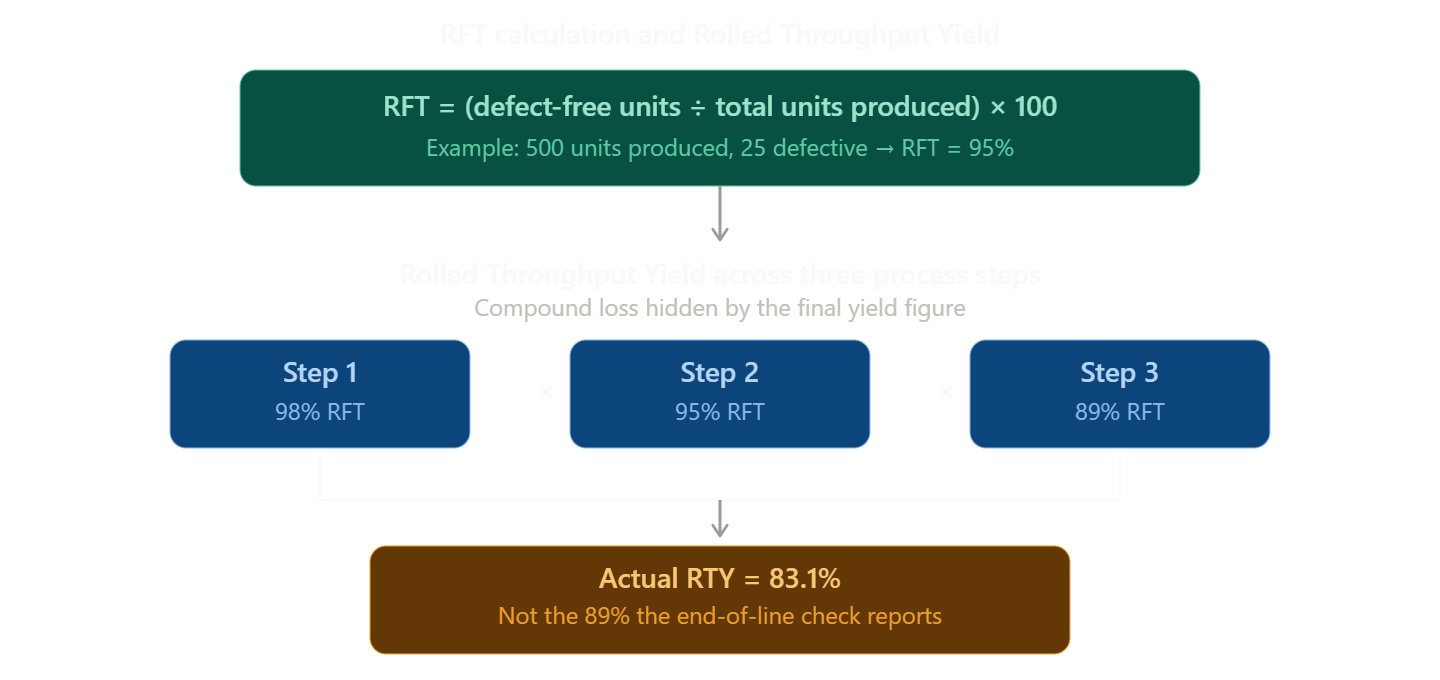
De formule: RFT = (foutvrije eenheden / totaal aantal geproduceerde eenheden) x 100.
Voor lijnen met meerdere stappen vermenigvuldigt Rolled Throughput Yield het 'Right First Time'-percentage van elke procesfase om samengestelde verliezen aan het licht te brengen die in uw uiteindelijke outputcijfer volledig verborgen blijven.
1. De RFT-formule in de praktijk
Een lijn die 500 eenheden per dienst produceert met 25 defecte eenheden, noteert een 'Right First Time'-productiepercentage van 95%. Eén op de twintig eenheden wordt afgekeurd of komt opnieuw in het productieproces terecht als nabewerking, waarbij bij elke volgende stap die het opnieuw doorloopt de volledige kosten worden gemaakt.
De formule legt de outputkwaliteit vast. Het legt niet de procesgezondheid vast. Dat onderscheid stuurt elke zinvolle verbeteringsbeslissing.
2. Rolled Throughput Yield: waar werkelijk verlies zich opstapelt
Rolled Throughput Yield (RTY) vermenigvuldigt het 'Right First Time'-productiepercentage van elke processtap om de werkelijke end-to-end prestaties te berekenen.
Een lijn met drie stappen die draait op 98% x 95% x 89% levert een RTY op van 83,1%. De controle aan het einde van de lijn toont 89%. Het werkelijke 'Right First Time'-productiepercentage over het volledige proces is 83,1%. Dat gat is waar de kosten voor nabewerking zich opstapelen zonder in enig hoofdcijfer te verschijnen.
Fabrieksmanagers rapporteren het uiteindelijke RFT-cijfer. Kwaliteitsingenieurs moeten de RTY in elke fase volgen. RFT vertelt u wat er is verzonden. RTY vertelt u wat uw proces doet.
3. Gewogen RFT voor faciliteiten met meerdere defecten
Faciliteiten die meerdere defectklassen bijhouden, kennen ernstwaarden toe aan elk type en berekenen een gewogen score voor 'right first time'-productie. Een cosmetische beschadiging op een consumentenapparaat brengt andere kosten met zich mee dan een maatafwijking op een veiligheidskritiek automotive onderdeel.
Gewogen 'first time right'-productiestatistieken sturen verbeteringsinspanningen naar de defecttypen met de grootste impact, in plaats van alleen naar die met de hoogste aantallen.
Waarom de meeste fabrikanten blijven steken op 92-95% 'Right First Time'-productie
Training lost kennisgebreken op. SOP's definiëren de procedure. Geen van beide pakt de werkelijke oorzaak aan van het stagneren van 'right first time'-productie: afwijkingen in de procesnaleving die halverwege het proces optreden en onzichtbaar zijn voor eindcontrole. Hetzelfde defect keert terug omdat het inspectiesysteem het resultaat ziet, niet de oorzaak.
Oorzaak 1: Eindcontrole kan defecten niet herleiden naar de bron
Een defecte eenheid die bij de eindcontrole wordt gemarkeerd, levert een afkeuraantal op. Het identificeert echter niet welke processtap het defect veroorzaakte, welke operator de fout maakte of op welk moment in de dienst dit gebeurde. De informatie die nodig is om de 'first time right'-productiecyclus te doorbreken, wordt nooit vastgelegd.
Je registreert de afkeur. Je traint het team opnieuw. Het defectpercentage keert binnen enkele weken terug naar het basisniveau.
Oorzaak 2: SOP-naleving is binair, maar uitvoering niet
De meeste faciliteiten auditen SOP-naleving als geslaagd/niet geslaagd. De operator kent de procedure of niet. De audit slaagt. Het 'right first time'-productiepercentage blijft op 93%.
Het probleem bevindt zich in het grijze gebied tussen het kennen van een procedure en het consistent uitvoeren ervan onder productiedruk. Een assemblagevolgorde van negen stappen bij 1.200 eenheden per dienst laat vrijwel geen ruimte voor afwijkingen. Operators met dezelfde training voeren dezelfde volgorde anders uit in het eerste uur dan in het zevende uur. Die variatie in uitvoering zie je niet terug in een audit. Je ziet het terug in je afkeurpercentage.
Oorzaak 3: Variatie tussen diensten is statistisch onzichtbaar
'First time right'-productieprestaties variëren per operator, per dienst en per tijdstip binnen een dienst. Een wekelijks rapport dat een gemiddelde van 93,4% 'right first time'-productie laat zien, maskeert een nachtdienst die op 89,2% draait, waarbij het grootste deel van het verlies zich concentreert in de laatste twee uur van de run.
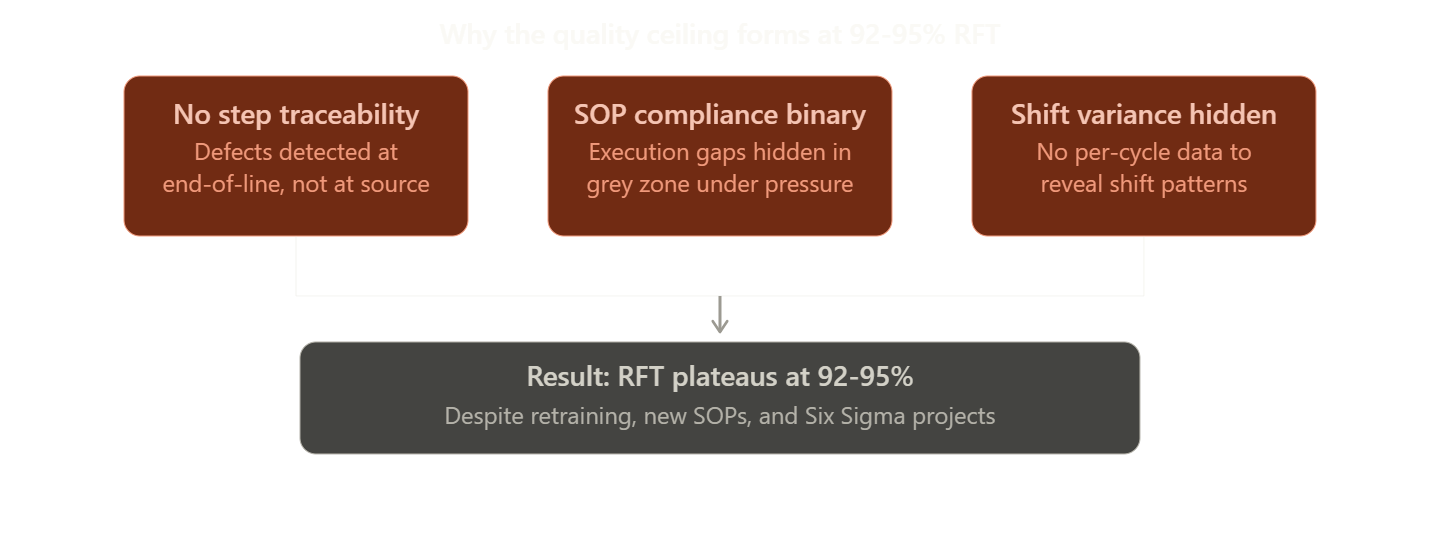
Zonder procesgegevens per cyclus zijn deze patronen onzichtbaar voor elk verbeterprogramma. Je kunt geen hoofdoorzaak aanpakken die je niet kunt isoleren. Om door het plafond te breken is zichtbaarheid per stap en per cyclus op productiesnelheid vereist.
'Right First Time'-productie in Six Sigma: DPMO, Poka-Yoke en kwaliteit bij de bron
'First time right'-productie en Six Sigma zijn gebaseerd op dezelfde rekenkunde. Het begrijpen van de DPMO verbinding herdefinieert wat een "goed" 'right first time'-productiepercentage werkelijk betekent voor procescapaciteit.
1. Van RFT naar DPMO: De Six Sigma-vertaling
Een productiepercentage van 95% 'right first time' staat gelijk aan 50.000 defecten per miljoen mogelijkheden. Dat is een Three Sigma-proces. Six Sigma streeft naar 3,4 DPMO, waarvoor een 'right first time'-productie van meer dan 99,9997% vereist is.
De overstap van Three Sigma naar Five Sigma is geen lineaire inspanning. Het vereist een structurele verandering in de manier waarop procesconformiteit wordt bewaakt. Je kunt niet door middel van training van 95% naar 99,9% groeien.
2. Poka-Yoke: Kwaliteit bij de bron vóór AI
Poka-yoke, uit het Toyota Production System, is het oorspronkelijke mechanisme voor kwaliteit bij de bron in de productie. Foutpreventie-apparaten maken een onjuiste assemblage fysiek onmogelijk. Een centreerpen die een onderdeel alleen in de juiste stand accepteert. Een momentsleutel die blokkeert totdat de doelwaarde is bereikt.
Het verwerkt discrete binaire controles. Onderdeel aanwezig of afwezig. Koppel bereikt of niet. Het kan de complexiteit van een reeks van meerdere stappen niet aan waarbij de fout een overgeslagen stap is, een onjuiste volgorde, of een verkeerd onderdeel dat op een positie is geplaatst die het fysiek wel accepteert, maar functioneel afkeurt.
3. De 'Quality-at-Source'-stack: Een raamwerk met drie lagen
Consistente 'right first time'-productie van boven de 99% vereist drie actieve lagen:
- Laag 1: Standaardwerkinstructie: definieert precies hoe een correcte uitvoering er bij elke stap uitziet.
- Laag 2: Real-time AI-procesbewaking: dwingt een correcte uitvoering af op cyclussnelheid, voor elke eenheid en elke ploeg.
- Laag 3: RTY-analytics: gebruikt uitvoeringsgegevens per cyclus om de procesgezondheid te meten en continue defectpreventie bij de bron te voeden.
Traditionele poka-yoke dekt alleen laag 2 voor binaire controles. Om een 'first time right'-productie van boven de 99% te behalen, moet laag 2 worden uitgebreid naar complexe, meerstaps sequenties waar binaire sensoren niet kunnen komen.
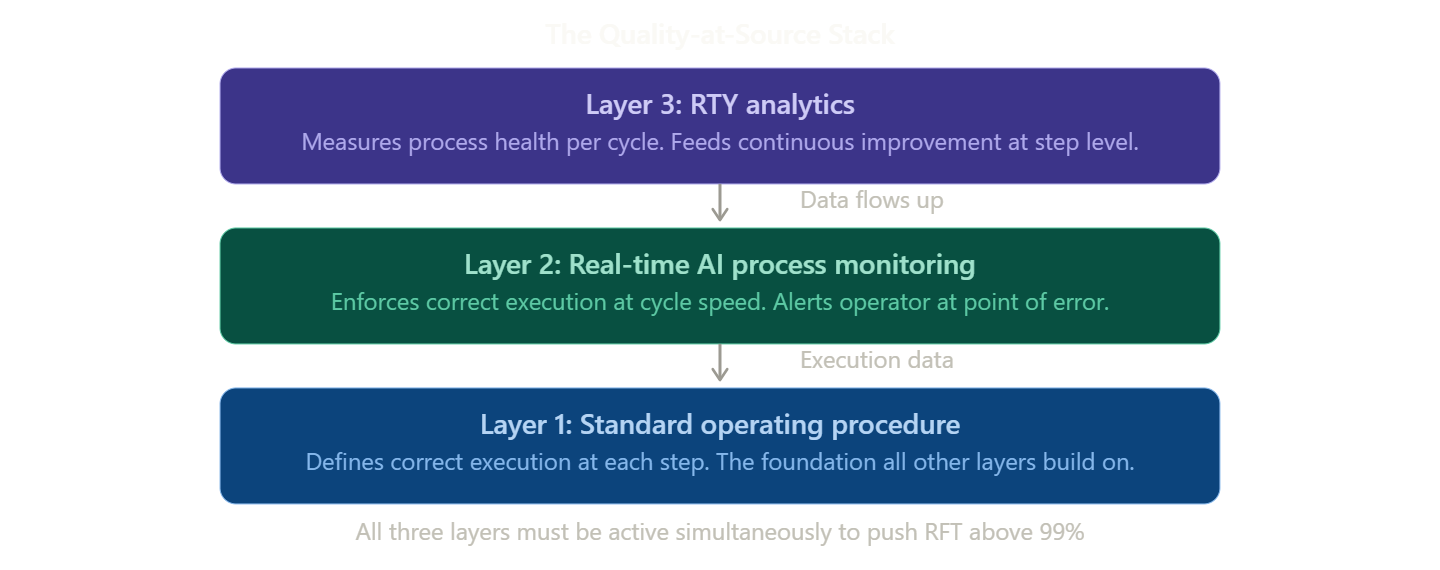
Alle drie de lagen moeten tegelijkertijd functioneren.
Hoe AI-gebaseerde procesmonitoring 'first time right'-productie naar boven de 99% tilt
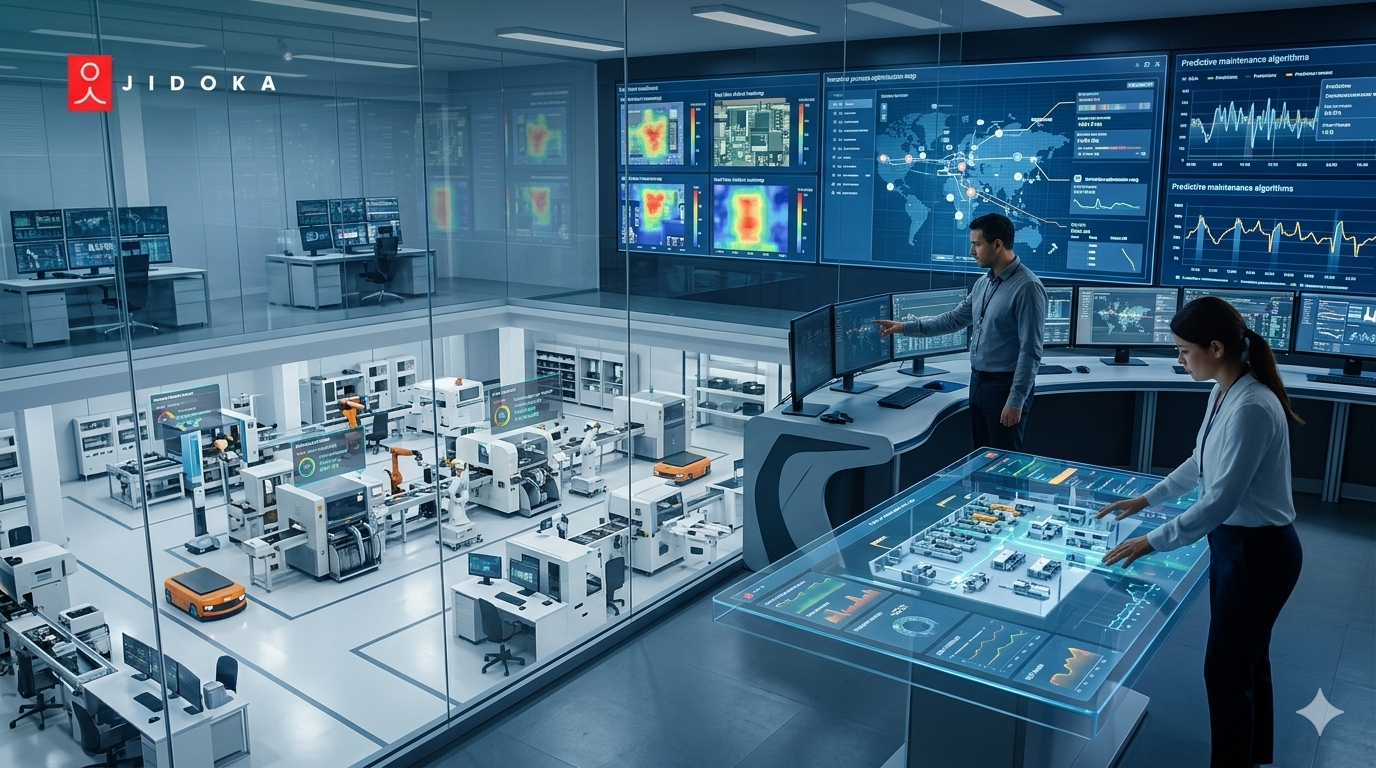
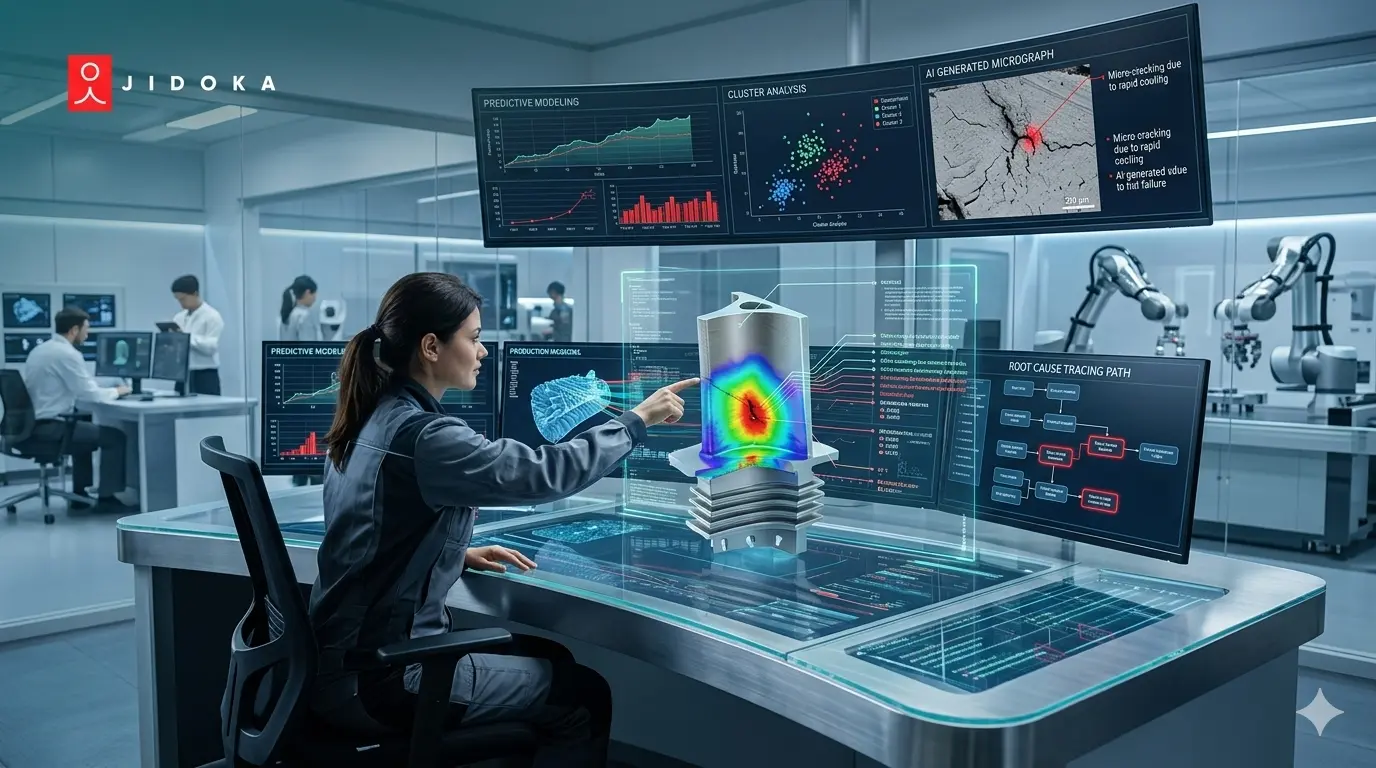
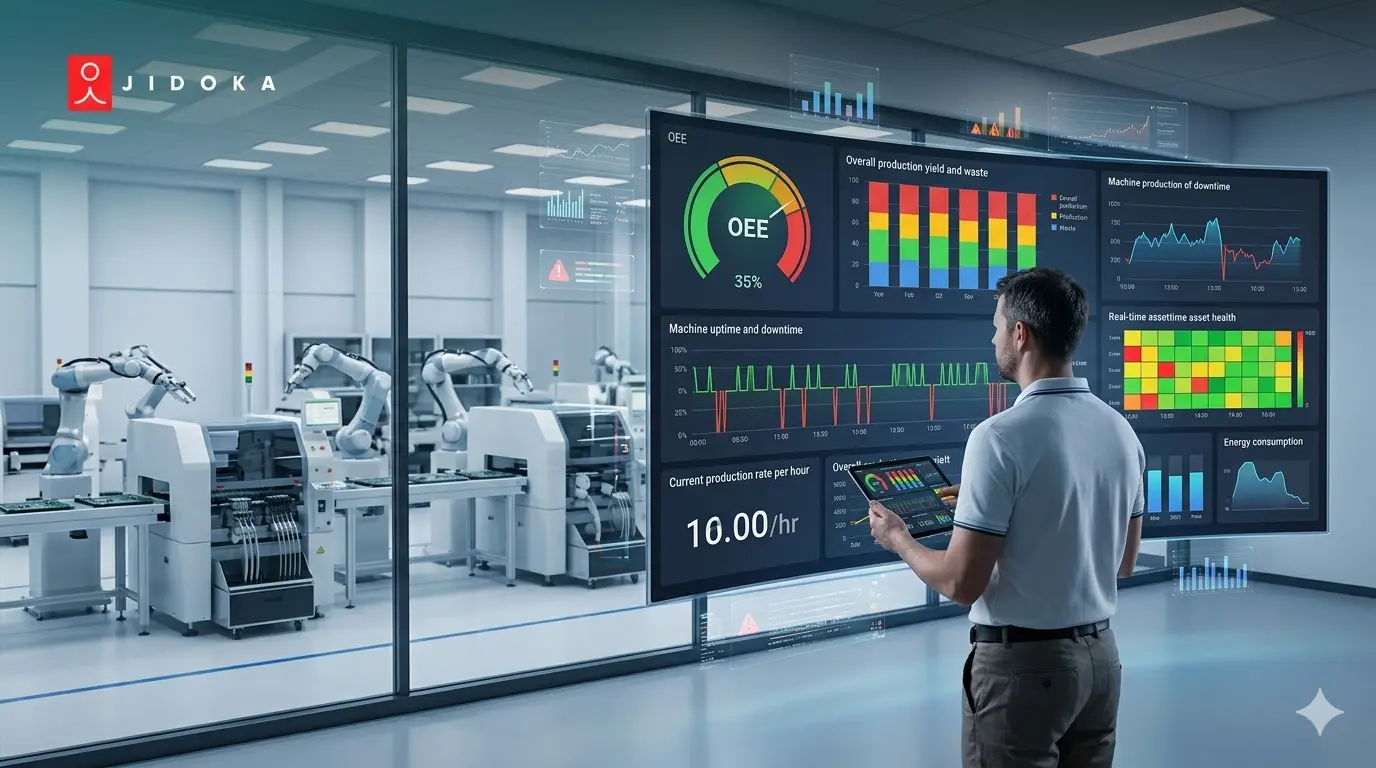
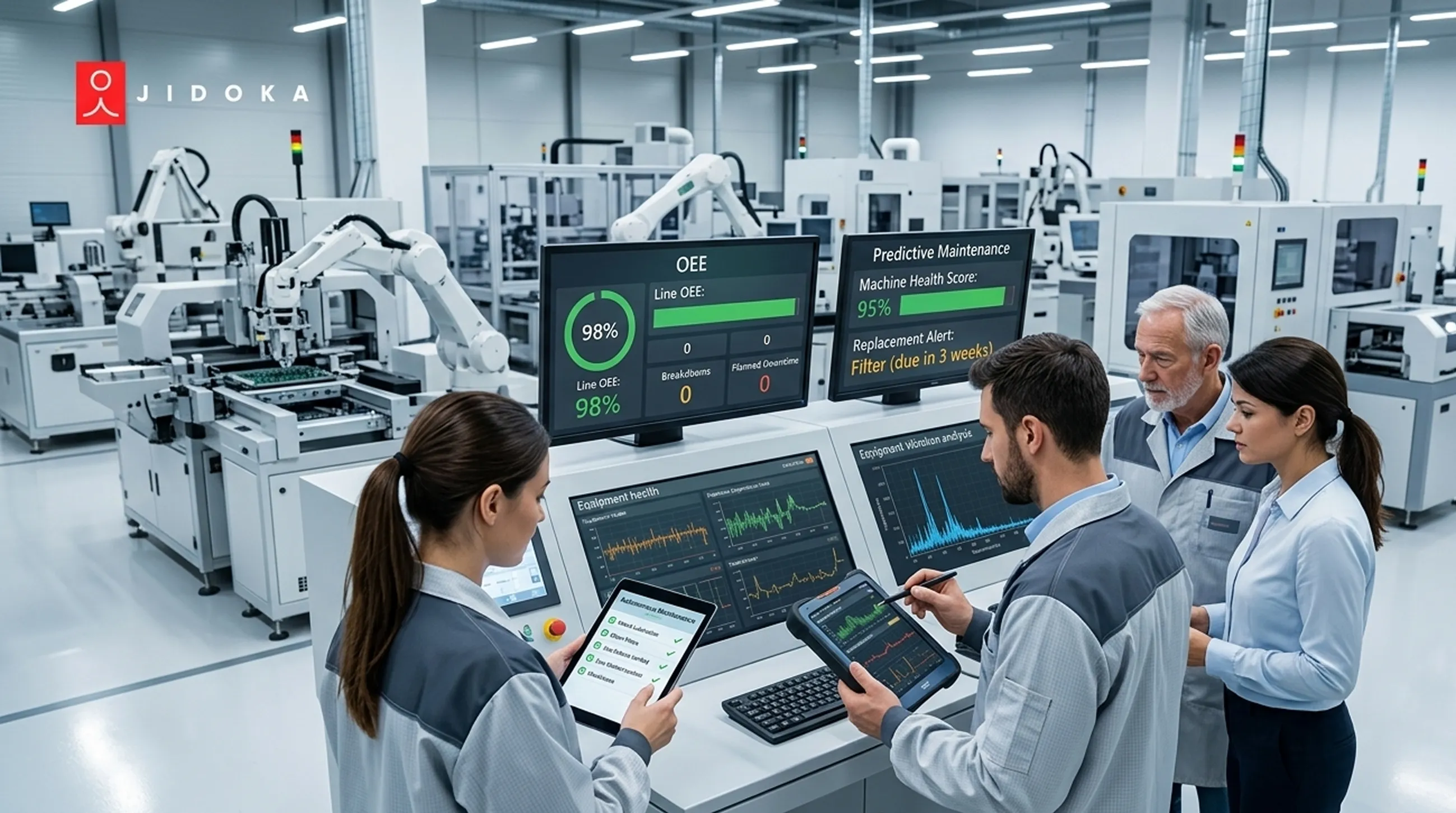
Om een 'first time right'-productie van boven de 99% te realiseren, moet een procesmonitoringsysteem vier dingen doen op productiesnelheid: elke montagestap verifiëren aan de hand van een digitale SOP, afwijkingen detecteren voordat het product verdergaat, de operator in real-time corrigerende instructies geven en per cyclus gegevens loggen voor RTY-tracking. Kwaliteitsrapporten aan het einde van de dienst kunnen geen van deze dingen. Dat is precies waarom ze het plafond niet kunnen doorbreken.
Wat Nagare doet op het niveau van de processtap
Nagare door Jidoka Technologies is speciaal ontwikkeld voor het verbeteren van 'first time right'-productie op het niveau van de montagestap. Het draait op bestaande camera's. Bosch, Hikvision en standaard CCTV-infrastructuur werken allemaal zonder extra hardware-aanschaf, wat de terugverdientijd direct verkort.
- Volgt 100% van de montagestappen in real-time aan de hand van een digitale SOP.
- Signaleert ontbrekende onderdelen, verkeerde sequenties en handelingen in de verkeerde volgorde voordat het product naar het volgende station gaat.
- Geeft corrigerende instructies op het station op het moment dat de fout optreedt, niet na afloop van de dienst.
- Legt gegevens per cyclus vast die direct gekoppeld zijn aan MES- en kwaliteitssystemen voor RTY-berekeningen.
Edge AI verwerkt visuele data lokaal. Geen afhankelijkheid van de cloud. Consistente 'first time right'-productieprestaties over alle diensten, zelfs bij 12.000+ onderdelen per minuut op hogevolumelijnen. Fabrieken die met Nagare werken, rapporteren een vermindering van 35% in herbewerking en een winst van 30% in procesnaleving. Bij de huidige Jidoka-installaties worden dagelijks meer dan 300 miljoen onderdelen onder deze architectuur verwerkt.
KOMPASS: Wanneer defectdetectie op onderdeelniveau het knelpunt is
Waar Nagare de verificatie van de montagesequentie afhandelt, KOMPASS zorgt voor visuele inspectie met hoge nauwkeurigheid op onderdeelniveau. Het bereikt een nauwkeurigheid van 99,8% op actieve lijnen, verwerkt elk frame in minder dan 10 ms en leert nieuwe varianten van onderdelen met 60-70% minder trainingsvoorbeelden dan conventionele vision-modellen.
Samen dichten Nagare en KOMPASS beide faalmodi die leiden tot verlies in 'first time right'-productie: hiaten in procesnaleving op montageniveau en fysieke defecten die door menselijke inspectie heen glippen op onderdeelniveau. Door beide in te zetten, worden de blinde vlekken in de inspectie weggenomen die ervoor zorgen dat programma's voor 'first time right'-verbetering in dezelfde defectcategorieën blijven hangen.
Conclusie: Het kwaliteitsplafond is een monitoringsplafond
Het 92-95% plateau bij 'right first time'-productie is geen bewijs van slechte training of ontoereikende SOP's. Het is een bewijs van onvoldoende monitoringresolutie tussen het moment van uitvoering en het moment van detectie. Die vertraging is waar de kosten voor herbewerking zich opstapelen en waar dezelfde defectcategorieën in elke verbeteringscyclus opnieuw opduiken.
Procesmonitoring per stap en per cyclus heft die vertraging op. Dat is het mechanisme. Als uw 'right first time'-productiepercentage is gestagneerd ondanks aanzienlijke investeringen in verbetering, moet het volgende gesprek gaan over wat uw huidige monitoringsysteem wel en niet kan zien op het niveau van de processtap.
Plan een rondleiding met Jidoka Technologies.
Veelgestelde vragen
1. Wat is het verschil tussen 'right first time'-productie en 'first pass yield'?
'Right first time'-productie en 'First Pass Yield' meten dezelfde onderliggende metriek: het percentage eenheden dat correct wordt geproduceerd zonder herbewerking. De termen worden in de meeste fabrieken door elkaar gebruikt. Waar een onderscheid wordt gemaakt, wordt FPY bijgehouden op het niveau van individuele processtappen, terwijl 'right first time'-productie wordt gerapporteerd op het niveau van de productiebatch. Kwaliteitsingenieurs moeten FPY per stap monitoren. Fabrieksmanagers rapporteren het geaggregeerde 'right first time'-productiecijfer aan de directie.
2. Wat is een goed 'right first time'-productiepercentage?
Een goed 'right first time'-productiepercentage hangt af van de sector en de complexiteit van het proces. Assemblagelijnen in de automobielindustrie met gestandaardiseerd werk en foutpreventie bereiken 99%+ RFT (SixSigma.us). De meeste discrete fabrikanten zitten tussen de 92-98%. Als uw 'right first time'-productiepercentage is gestagneerd ondanks aanzienlijke investeringen, ligt het probleem bijna altijd bij de resolutie van de procesmonitoring op stapniveau, niet bij de kennis van de operator.
3. Kan AI-monitoring worden geïntegreerd met bestaande MES- en kwaliteitssystemen?
Moderne edge AI-platforms maken verbinding met MES-, ERP- en kwaliteitsmanagementsystemen via standaard API's. Nagare van Jidoka Technologies integreert met MES-platforms en kwaliteitssystemen, waardoor de cirkel tussen uitvoeringsgegevens en verbeteringsworkflows voor 'right first time'-productie wordt gesloten. Controleer de API-dekking en de compatibiliteit van het dataschema vóór aanschaf, aangezien deze variëren per versie van het MES-platform.
4. Hoe snel kan AI-procesmonitoring de 'right first time'-productiepercentages verbeteren?
Faciliteiten waar de primaire oorzaak van defecten ligt bij hiaten in de procesnaleving, zien doorgaans meetbare verbeteringen in 'right first time'-productie binnen de eerste paar weken na implementatie. Real-time corrigerende feedback op het werkstation verandert het gedrag van de operator sneller dan omscholing na de dienst, omdat er wordt ingegrepen op het moment van de fout. De verbetering neemt toe over een periode van 12 maanden naarmate gegevens per cyclus worden teruggekoppeld naar de verfijning van SOP's en coachingcycli.