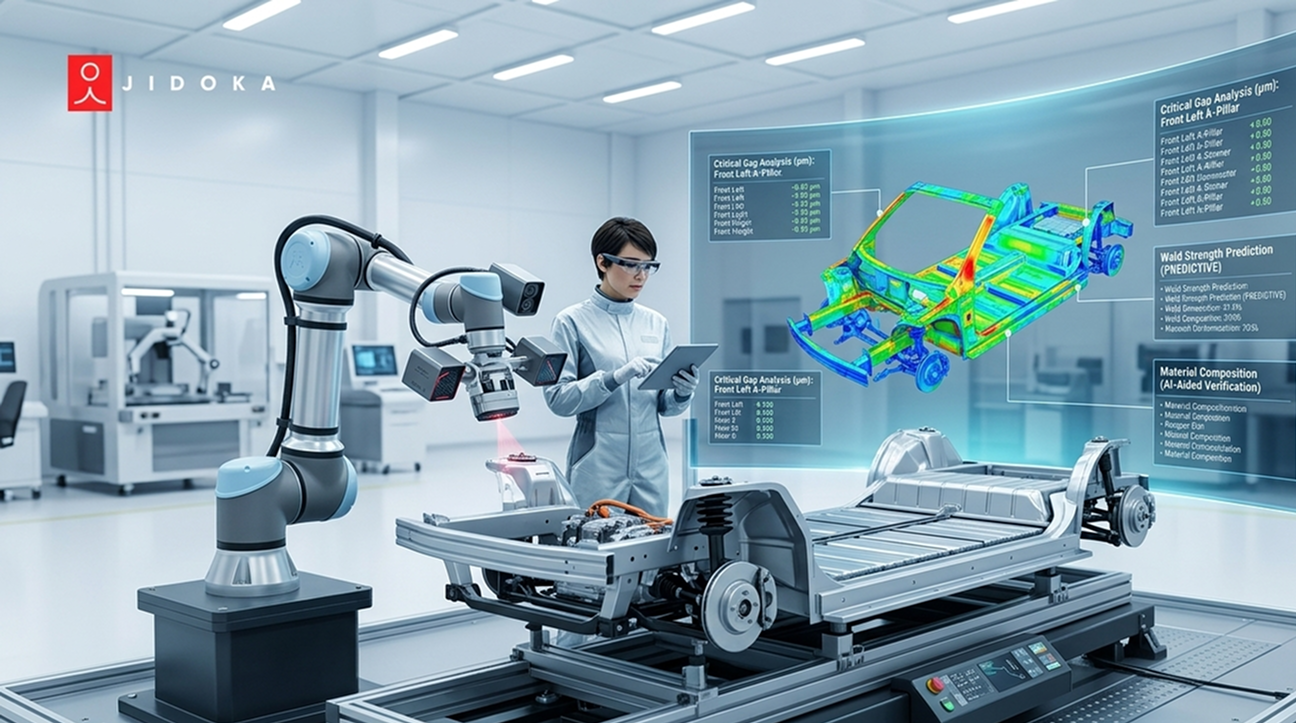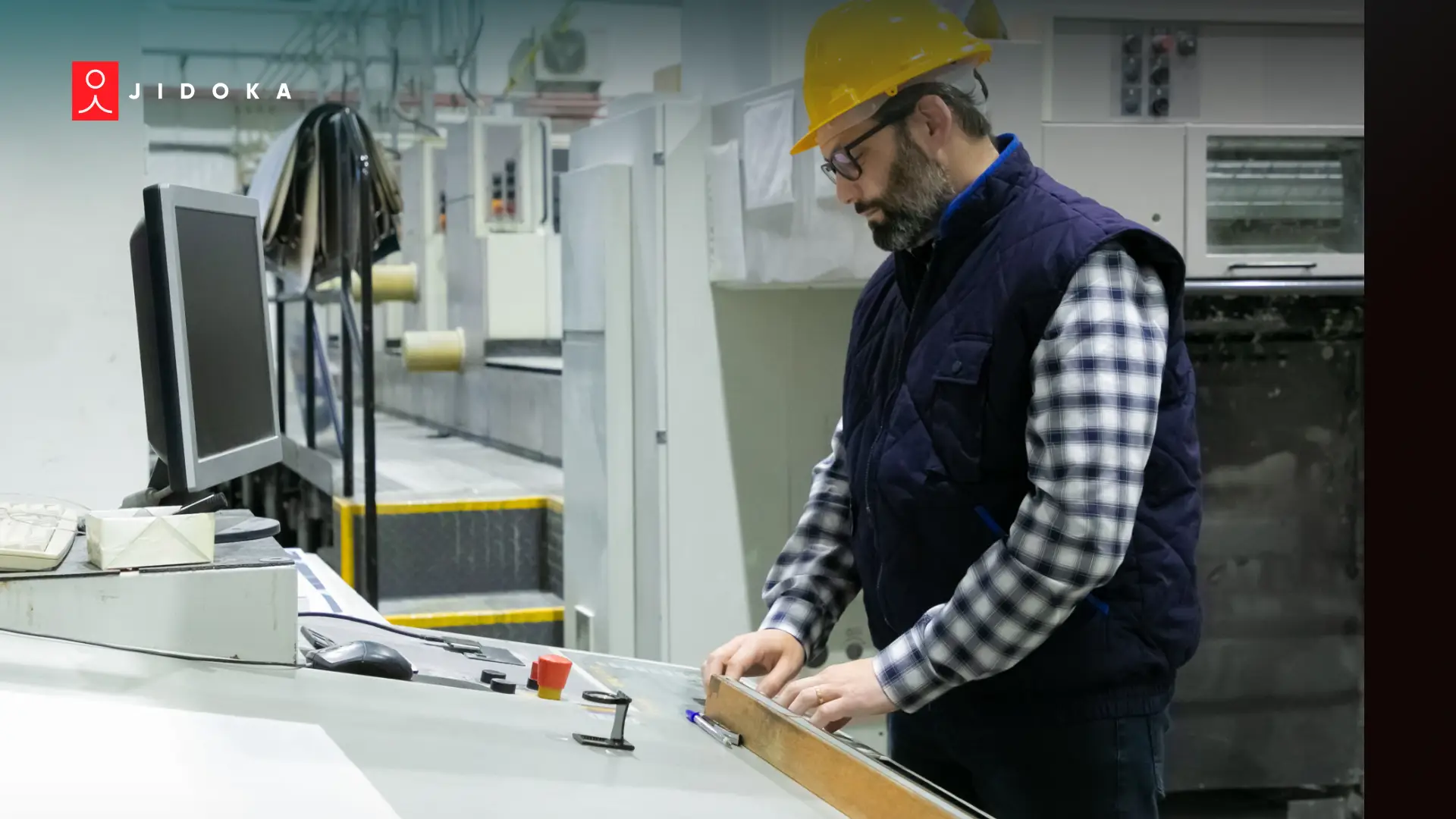
Una planta de montaje de automoción tiene dispositivos poka-yoke en cada estación. Pasadores guía, controladores de par, cortinas ópticas. Todos los errores estructurales están cubiertos. Y aun así, cada trimestre se envían al OEM 400 PPM de unidades con defectos.
Los utillajes detectan aquello para lo que fueron diseñados. Nada más. La pregunta que responde este artículo no es «qué es el poka-yoke». Es dónde termina la prevención física de errores y qué ocupa ese vacío. Esta guía lo desglosa nivel por nivel.
Qué son los dispositivos poka-yoke y qué evitan realmente
Los dispositivos poka-yoke son sistemas de prevención específicos para cada modo de fallo. Cada uno es una respuesta de diseño a un único tipo de defecto documentado. Esa especificidad no es una limitación: es toda su lógica.
Shigeo Shingo trazó una línea clara entre dos mecanismos:
- Los dispositivos de control hacen que el error sea mecánicamente imposible.
- Los dispositivos de advertencia hacen que el error sea inmediatamente detectable antes de que avance por la línea.
Elegir entre ambos no es una cuestión filosófica. Un ciclo de prensa crítico para la seguridad exige un dispositivo de control. Una comprobación de orientación de etiqueta admite un dispositivo de advertencia. Confundirlos produce un sistema que tolera errores que debería haber bloqueado.
Los dispositivos clásicos de prevención de errores se dividen en tres categorías físicas, cada una dirigida a una clase distinta de modos de fallo.
1. Método de contacto
Un pasador guía o un utillaje asimétrico que impide físicamente la inserción incorrecta de la pieza. Si la pieza asienta correctamente, es correcta. Sin criterio del operario. Habitual en submontaje de automoción, útiles de prueba de PCB y fabricación de carcasas de conectores.
2. Método de valor fijo
Un contador, una báscula o un controlador de par que verifica la cantidad o la fuerza antes de que avance la línea. Una estación de kitting aeroespacial no libera la bandeja hasta que la báscula confirma el peso correcto de los tornillos. El modo de fallo es la cantidad y el dispositivo está ajustado exactamente a ella.
3. Método de movimiento o secuencia
Una cortina óptica o un enclavamiento de proximidad que impone la secuencia de operación. La prensa no cicla hasta que ambas manos interrumpen dos haces en orden. Se usa en estampación, conformado de metal y operaciones donde los pasos fuera de secuencia generan riesgo de lesión o fallos de montaje aguas abajo.
Lo que estas tres categorías no cubren:
Defectos visuales de superficie. Variación de color. Errores de colocación de etiquetas. Secuencias de acciones del operario a lo largo de varios pasos. Un pasador guía confirma que un panel embellecedor asienta en la orientación correcta. No puede confirmar que sea del color correcto para esa variante de producto.
«Cada dispositivo poka-yoke es una respuesta de diseño a un modo de fallo concreto. Un dispositivo que aborda errores estructurales no puede abordar los visuales, y viceversa.» Jidoka Technologies
Ese vacío es donde la conversación sobre dispositivos de prevención de errores entra en el terreno de la IA.
Ejemplos de dispositivos poka-yoke: del utillaje físico a los flujos digitales
Los ejemplos de dispositivos poka-yoke abarcan seis tipos distintos en entornos de producción modernos, cada uno dirigido a un modo de fallo que el tipo anterior no alcanza. Contrastar los defectos actuales de su estación con esta lista muestra exactamente dónde termina su cobertura.
1. Utillaje con pasador guía (método de contacto)
Evita la inserción de piezas en orientación incorrecta en el montaje de automoción. El pasador bloquea físicamente el montaje si la pieza está invertida o desalineada. Cero dependencia de la atención del operario en ese punto de decisión.
2. Verificación de piezas por peso (método de valor fijo)
Una báscula confirma el número correcto de tornillos antes de que el operario libere el kit. Un solo perno M6 ausente se registra como un peso insuficiente y detiene la estación. Muy extendido en kitting aeroespacial y en submontajes de alto par, donde los tornillos ausentes provocan fallos en campo que la inspección visual posterior no detecta.
3. Secuenciación mediante cortina óptica (método de movimiento)
La prensa no cicla hasta que el operario interrumpe dos haces en el orden definido. La posición de las manos fuera de secuencia se bloquea físicamente, no se advierte. Estándar en estampación de metal y forja en frío, donde operar fuera de secuencia genera tanto riesgo de lesión como defectos en la pieza.
4. Flujo de trabajo digital con pasos bloqueados
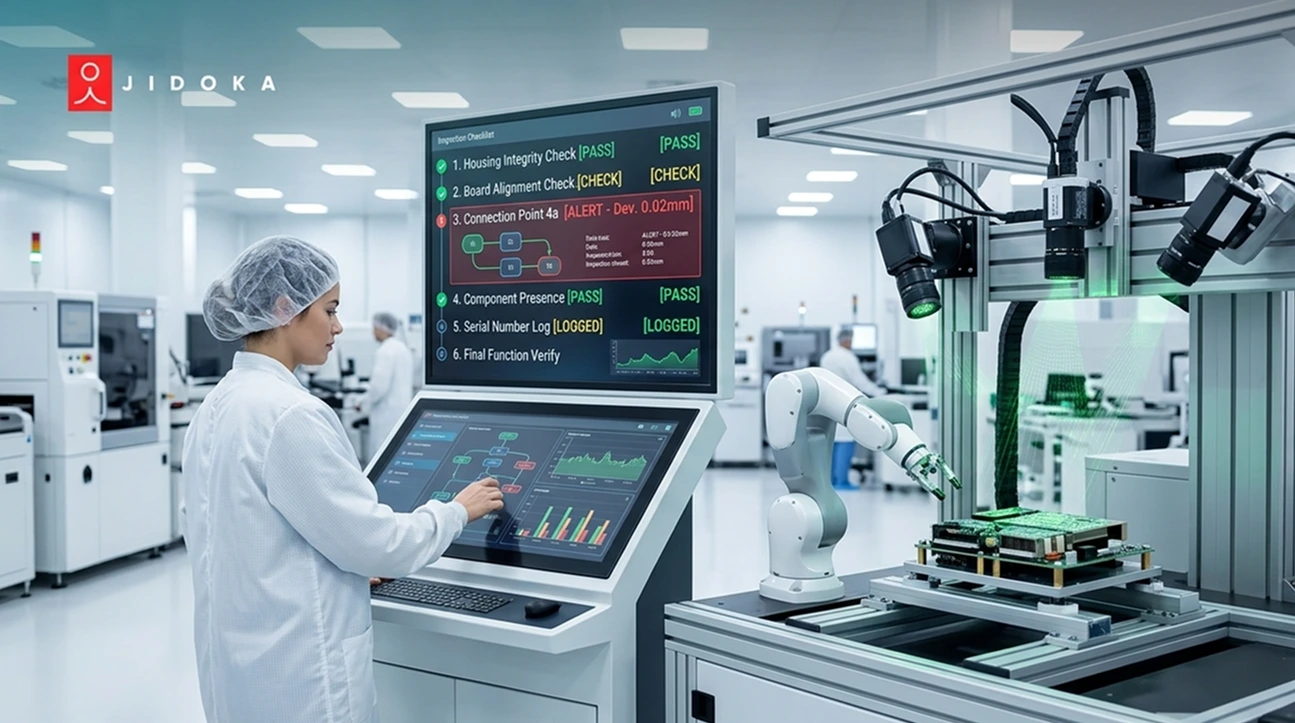
Un SOP en tableta exige confirmación fotográfica o escaneo de código de barras en cada paso antes de desbloquear la siguiente estación. Sin mecanismo de interferencia física. La misma lógica de prevención aplicada al cumplimiento del procedimiento y a las firmas no documentadas. La disciplina del poka-yoke en lean manufacturing extendida a las operaciones digitales.
5. Verificación de piezas por visión artificial
Un sistema de cámaras verifica el color, la orientación y la colocación de la etiqueta antes de que avance la cinta. Es la primera categoría de poka-yoke que aborda modos de fallo visuales a nivel de estación. Prevención de errores asistida por IA en la puerta de inspección, no solo tras el montaje final.
6. Monitorización de secuencia de proceso con IA
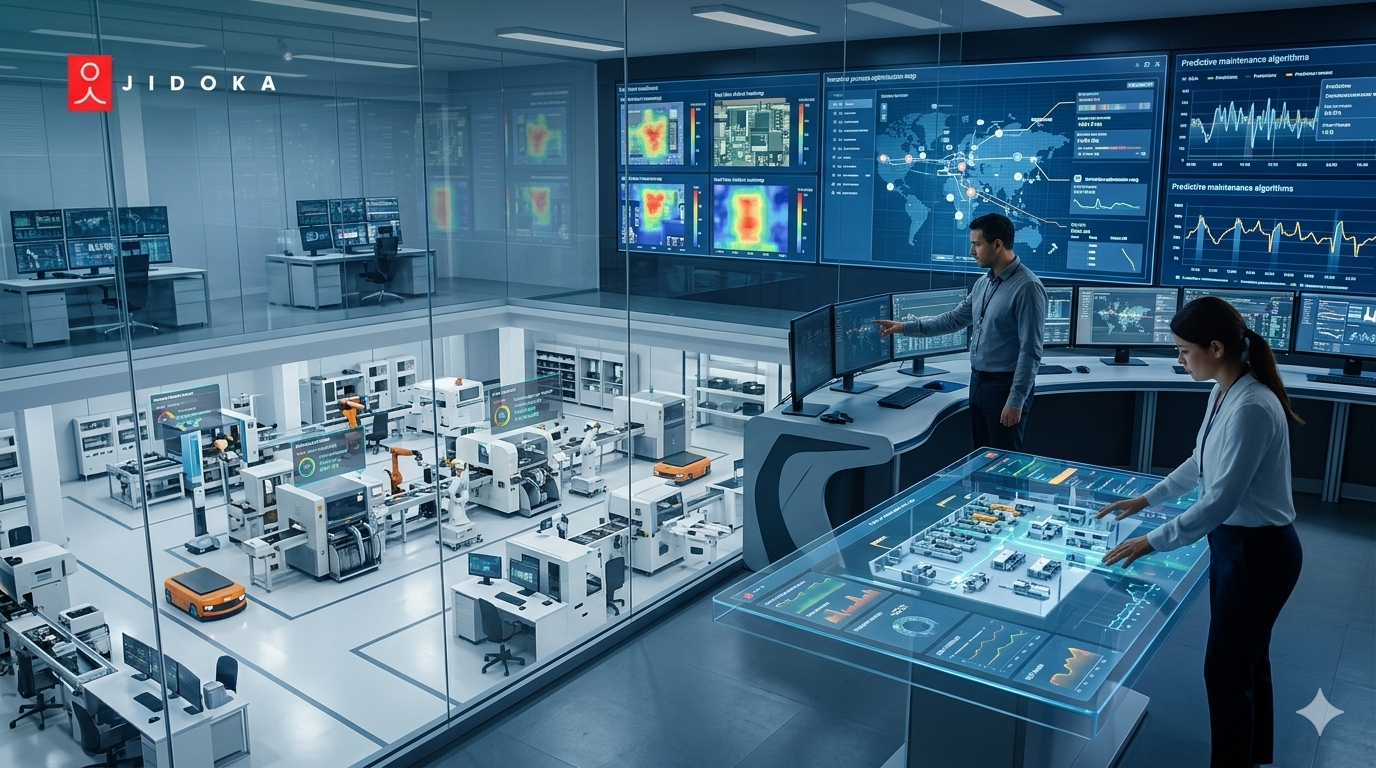
La visión artificial supervisa la secuencia completa de acciones del operario frente al SOP digital y señala en tiempo real cualquier paso omitido o fuera de orden. El sistema NAGARE de Jidoka Technologies opera en esta categoría, convirtiendo el CCTV existente en herramientas activas de inspección poka-yoke sin necesidad de nuevas cámaras.
Cada uno de estos dispositivos de prevención de errores aborda un modo de fallo que el tipo anterior no puede alcanzar estructuralmente. Su perfil de defectos residuales indica qué nivel falta en su línea.
La escalera de capacidades poka-yoke: cinco niveles de madurez
La mayoría de las plantas se sitúan entre el nivel 2 y el nivel 3. La mayoría de los responsables de planta creen estar en el nivel 4. En esa diferencia viven las PPM residuales.
Los dispositivos poka-yoke de los niveles 1 a 3 son la capa física: pasadores, básculas y cortinas ópticas que resuelven errores estructurales, de cantidad y de secuencia de un solo paso, sin depender de cámaras ni software.
No son sustituibles por IA. Son los cimientos. La escalera de capacidades poka-yoke mapea la cobertura de modos de fallo en los cinco niveles para que pueda autoevaluar exactamente dónde está su línea.
| Nivel | Categoría de dispositivo | Modos de fallo cubiertos | Modos de fallo NO cubiertos |
|---|---|---|---|
| 1 | Contacto mecánico | Pieza incorrecta, orientación incorrecta, estructura ausente | Defectos visuales, problemas de color, errores de secuencia, cumplimiento de proceso |
| 2 | Conteo y pesaje de valor fijo | Errores de cantidad, errores de fuerza | Inspección visual, validación secuencial, cumplimiento de proceso |
| 3 | Secuenciación por movimiento | Control de secuencia de un solo paso | Secuencias de varios pasos, defectos visuales, contexto de proceso |
| 4 | Cumplimiento de flujo digital | Pasos omitidos, pasos no documentados | Desviaciones según el contexto, verificación visual en tiempo real |
| 5 | Monitorización visual y de proceso con IA | Validación de orientación, color, etiqueta y secuencia completa de acciones | Interferencia física estructural, donde los niveles 1-3 siguen siendo necesarios |
La columna «Modos de fallo NO cubiertos» es lo que la mayoría de las conversaciones sobre prevención de errores en fabricación pasan por alto. Los dispositivos físicos y digitales de los niveles 1 a 4 tienen cada uno un techo de cobertura. Los dispositivos poka-yoke de nivel 5 se extienden por encima de ese techo. No sustituyen lo que funciona por debajo.
Prevención de errores con IA: qué aporta la visión artificial y qué no sustituye
La prevención de errores asistida por IA es una extensión dirigida al territorio de modos de fallo donde sus dispositivos poka-yoke actuales no pueden operar. No sustituye a los dispositivos que ya cumplen su función en los niveles 1 a 4.
A) Lo que la IA aporta a su línea:
- Verificación visual en tiempo real de color, orientación, colocación de etiqueta y estado superficial a velocidad de producción, en la estación, antes de que la pieza avance.
- Monitorización de secuencias de proceso de varios pasos en operaciones de montaje completas, donde una sola cortina óptica no puede seguir la cadena de acciones completa.
- Mejora adaptativa del modelo a medida que se acumulan datos de producción, reduciendo la tasa de falsos positivos con el tiempo sin ajuste manual de umbrales.
B) Lo que la IA no sustituye:
Los dispositivos poka-yoke físicos para la prevención estructural crítica para la seguridad. Un sistema de visión artificial no puede bloquear físicamente un ciclo de prensa, medir el par aplicado ni igualar la velocidad de los mecanismos de contacto de valor fijo en líneas de altísimo rendimiento por encima de 10.000 piezas por minuto.
El color de embellecedor incorrecto instalado a lo largo de tres estaciones antes de detectarse es exactamente el modo de fallo que resuelve la IA y que los dispositivos físicos no pueden. Es un error visual y dependiente del contexto de producción. Ningún pasador, báscula o cortina óptica tiene un mecanismo para detectarlo.
KOMPASS de Jidoka Technologies lo resuelve en la capa de inspección, alcanzando una precisión superior al 99,8 % en líneas de producción reales, incluidos metales reflectantes, superficies impresas y componentes texturizados, analizando cada fotograma en menos de 10 ms. NAGARE cubre la capa de secuencia de proceso, señalando pasos de montaje omitidos o fuera de orden frente a los SOP digitales mediante la red de cámaras existente.
Cinco decisiones antes de implantar poka-yoke con IA en una línea existente
Son decisiones, no pasos de instalación. Cada una depende de su perfil de defectos concreto y de su base actual de dispositivos de prevención.
Decisión 1: inventario de modos de fallo
Identifique qué tipos de defecto de sus datos de calidad actuales no detectan los dispositivos poka-yoke de niveles 1 a 4. La IA aporta valor solo donde los dispositivos físicos y digitales tienen un vacío de cobertura documentado. Si su defecto principal es un tornillo ausente, necesita una báscula. No una cámara.
Decisión 2: evaluación de la infraestructura de cámaras
Las plataformas de IA en el borde, incluida NAGARE, funcionan con las cámaras RTSP/IP existentes sin hardware nuevo. El ángulo de cobertura importa. Una cámara instalada para vigilancia puede no enfocar el plano de montaje, por completos que sean sus dispositivos poka-yoke de niveles 1 a 3 en esa estación. Normalmente hace falta reposicionar. Rara vez sustituir.
Decisión 3: base de digitalización de SOP
La monitorización de procesos con IA compara las acciones del operario en vivo con los SOP digitales. Si los SOP están en papel o en PDF estáticos, digitalizarlos es un requisito previo para llevar los dispositivos poka-yoke al nivel 5, no una línea de trabajo paralela. Este paso suele llevar más tiempo que el propio despliegue de la IA en líneas que no lo han abordado.
Decisión 4: enrutamiento de alertas
Las alertas de desviación en tiempo real solo son valiosas si llegan a alguien con autoridad para detener la línea o corregir al operario dentro del mismo ciclo de estación. Una alerta que llega 20 segundos tarde es un informe de calidad, no un dispositivo preventivo. Defina la cadena de destinatarios antes de la puesta en marcha.
Decisión 5: línea base de medición
Registre las PPM actuales, la tasa de retrabajo y la frecuencia de desviaciones en auditoría antes del despliegue. Sin una línea base no se puede demostrar el ROI ni justificar ante la dirección de planta el presupuesto de la fase 2.
Cómo Jidoka Technologies amplía su sistema poka-yoke actual
Jidoka Technologies desarrolla sistemas de inspección con IA que rinden bajo presión real de producción. Las plantas que utilizan la instalación de Jidoka mantienen un rendimiento constante a más de 12.000 piezas por minuto y hasta 300 millones de inspecciones al día.
- KOMPASS alcanza una precisión superior al 99,8 % en líneas reales, analiza cada fotograma en menos de 10 ms y aprende nuevas variantes de producto con un 60-70 % menos de muestras de entrenamiento que los modelos de visión estándar. Trabaja con metales reflectantes, superficies impresas y piezas texturizadas.
- NAGARE supervisa el 100 % de los pasos de montaje con las cámaras existentes, señala piezas ausentes y secuencias incorrectas en tiempo real y reduce el retrabajo entre un 20 % y un 35 %.
Ambos sistemas funcionan en unidades locales en el borde. Sin dependencia de la nube ni latencia añadida al bucle de producción. Si sus dispositivos poka-yoke actuales cubren los niveles 1 a 4 pero su tasa de defectos residuales se ha estancado, esa es la señal diagnóstica.
Mapeemos su perfil de defectos frente a la escalera de capacidades e identifiquemos el vacío exacto de cobertura.
Conclusión
Los dispositivos poka-yoke físicos no están fallando. Hacen exactamente aquello para lo que fueron diseñados: bloquear los modos de fallo estructurales concretos para los que se construyeron. El problema de las 400 PPM no es un problema de utillaje. Es un vacío de cobertura. Los defectos visuales, las desviaciones de secuencia y los errores de contexto de proceso viven por encima del techo de los dispositivos mecánicos y basados en sensores.
Ahí es donde opera la inspección con IA. No como sustituto de lo que ya funciona, sino como la capa dirigida que cubre lo que no. Contraste su perfil de defectos con la escalera de capacidades, identifique dónde termina el nivel 1-4 y hablemos de lo que el nivel 5 aporta a su línea concreta.
Preguntas frecuentes
1. ¿Cuál es la diferencia entre poka-yoke e inspección?
Los dispositivos poka-yoke evitan los errores en el punto en que se producen. La inspección los detecta después de que el defecto ya se haya generado y, a menudo, ya haya avanzado por la línea. El argumento central de Shigeo Shingo era que el control de calidad basado en inspección es intrínsecamente un desperdicio, porque el defecto existe antes de encontrarse. La prevención de errores en fabricación elimina el error en el origen, ya sea haciéndolo mecánicamente imposible o activando una alerta antes de que avance.
2. ¿Qué sectores usan más los dispositivos poka-yoke?
Automoción, electrónica, farmacia y aeroespacial tienen la mayor densidad de implantación. En automoción, un solo evento de retirada puede superar años de inversión en prevención. En electrónica, la colocación incorrecta de un componente tras el recubrimiento conformado es indetectable después del proceso, lo que hace de la prevención la única vía viable. En farmacia, los dispositivos de verificación de volumen de llenado y de etiqueta son requisitos normativos GMP, no herramientas opcionales de calidad.
3. ¿Puede el poka-yoke basado en IA funcionar con las cámaras existentes de la fábrica?
Sí. Las plataformas de IA en el borde, incluida NAGARE, convierten las cámaras RTSP/IP existentes en dispositivos poka-yoke activos sin hardware nuevo. El modelo de IA se ejecuta localmente en unidades en el borde, procesando las señales de vídeo frente a referencias de SOP digitales en tiempo real. La condición clave es el ángulo de la cámara respecto a la cara de montaje, no el modelo ni la antigüedad de la cámara.
4. ¿Qué modos de fallo cubre la prevención de errores con IA que el poka-yoke físico no puede?
Los defectos visuales, las variaciones de color y orientación, la colocación de etiquetas y las desviaciones de secuencia de varios pasos quedan fuera del alcance de los dispositivos mecánicos. Un pasador guía confirma la geometría de la pieza. No puede verificar que sea del color correcto para esa variante. Un contador de par confirma la fuerza. No puede verificar que el operario completara todos los pasos previos en el orden correcto. La prevención de errores con IA cubre ese territorio.
5. ¿Cómo apoyan los dispositivos poka-yoke al lean manufacturing?
El poka-yoke en lean manufacturing elimina la producción de defectos, el retrabajo y el sobreprocesamiento en el origen, en lugar de en la inspección posterior. En un sistema lean, la inspección misma es desperdicio. Los dispositivos poka-yoke sustituyen la detección por la prevención. La inspección poka-yoke con IA extiende esta disciplina a modos de fallo que las 5S, el trabajo estandarizado y la gestión visual no pueden evitar: defectos visuales, desviaciones de secuencia y fallos de cumplimiento de proceso que solo son visibles mediante análisis por cámara.