Stop fixing defects after they happen. Make it impossible to fail from the start. Poka-yoke examples show how mistake-proofing works by building quality into your process. Many shops waste time on inspection.
They find errors too late. You can use error prevention techniques to reach zero-defect manufacturing today. Studies show that mistake-proofing manufacturing reduces defects by 30%. It also improves cycle times by up to 60%. These quality control mechanisms act as a guard for your floor.
You can use a simple guide or an AI sensor. Both help with production error elimination. These Poka Yoke examples keep your assembly line safety high. They ensure your team gets it right.
15 Real-World Poka-Yoke Examples
Practical poka-yoke examples show up in every industry. These error prevention techniques stop errors from turning into expensive defects. You can apply mistake-proofing manufacturing to physical tools or digital software.
Here are 15 ways to use poka-yoke examples to improve your shop floor today.
A) Automotive Safety
Automotive safety relies on preventing human error at high speeds. These poka-yoke examples show how smart design keeps drivers safe without needing constant focus or manual checks during every single mile.
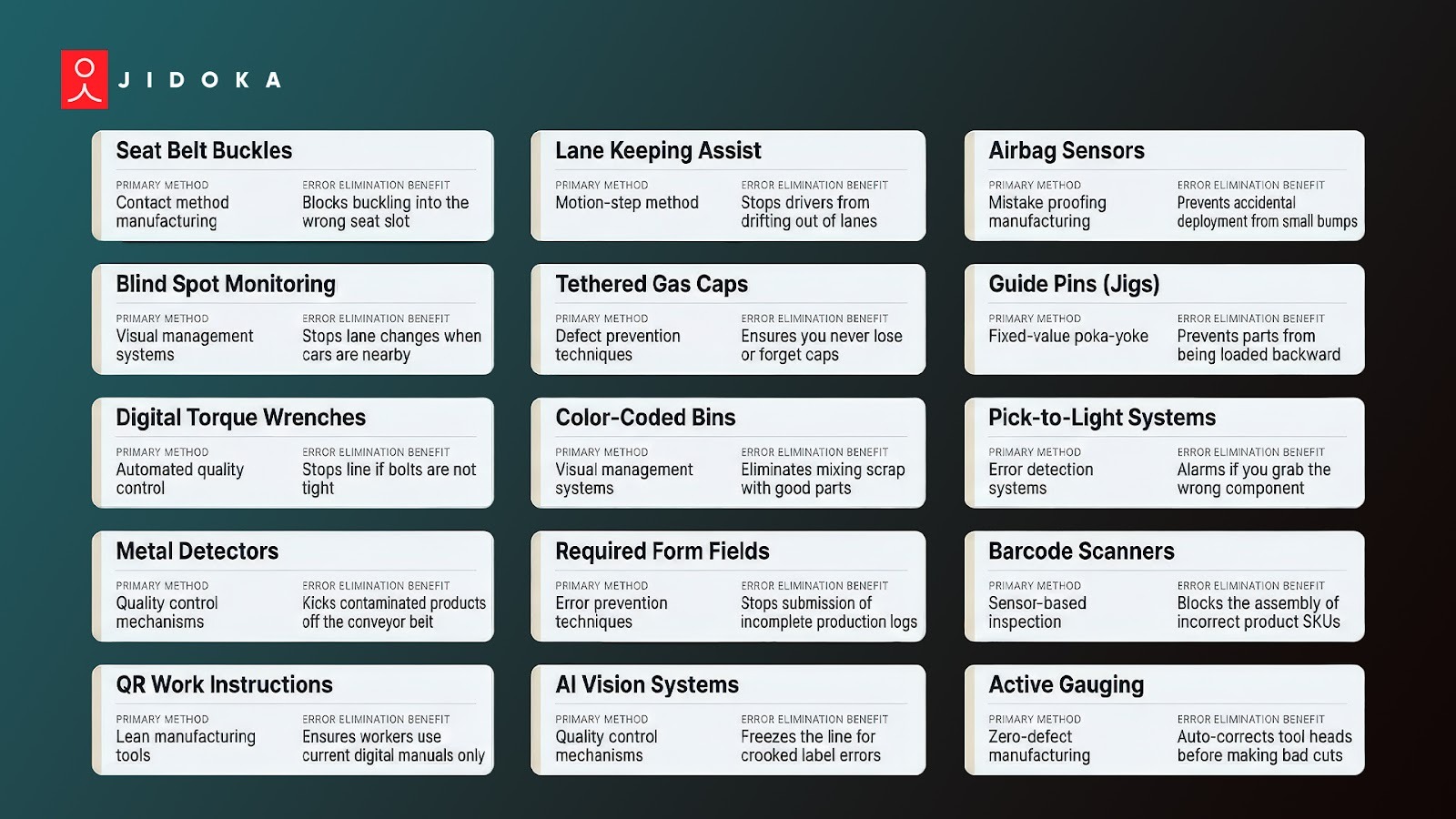
Example #1. Seat Belt Buckles: These use contact method manufacturing with unique shapes. You can only click the belt into the correct slot. These poka-yoke examples stop you from buckling into the wrong seat.
Example #2. Lane Keeping Assist: This technology uses error prevention techniques to nudge your wheel. It stops you from drifting out of your lane. These systems keep every driver safe on every single road trip.
Example #3. Airbag Sensors: Smart logic makes mistake-proofing manufacturing work in your car. Sensors only fire during real crashes. This prevents the error of accidental inflation from a small bump or curb.
Example #4. Blind Spot Monitoring: These visual management systems show you when cars are nearby. These poka-yoke examples act as vital sensors. You won't turn into traffic because the light tells you.
Example #5. Tethered Gas Caps: A simple cord keeps the cap attached. This is one of the best poka-yoke examples. You never lose the part. It ensures you seal the tank before you drive.
These car safety features prove that good design stops accidents before they start.
B) Manufacturing & Assembly
Factory floors use mistake-proofing manufacturing to stop defects at the source. These poka-yoke examples show how physical barriers and quality control mechanisms create a better workflow. You can use error prevention techniques to reach zero-defect manufacturing today.
Example No. 6: Guide Pins: These defect prevention techniques use metal pins on fixtures. You cannot place a part in the machine backward. These fixed-value poka-yoke tools ensure the part fits correctly.
Example #7. Digital Torque Wrenches: These automated quality control tools stop once they hit a limit. You cannot overtighten a bolt. Use these poka-yoke examples to guarantee that every fastener is perfect.
Example #8. Color-Coded Bins: Use red for scrap and green for good parts. These visual management systems make mistakes obvious. Use these poka-yoke examples to stop mixing bad parts.
Example #9. Pick-to-Light Systems: These error detection systems light up the correct box. You cannot grab the wrong component. These tools keep your assembly line safety and accuracy high.
Example #10. Metal Detectors: Food plants use these mistake-proofing strategies. The belt stops if it finds metal. These systems help with production error elimination on every single shift.
These shop floor poka-yoke examples turn complex tasks into simple, error-free actions.
C) Digital & Modern Poka-Yoke
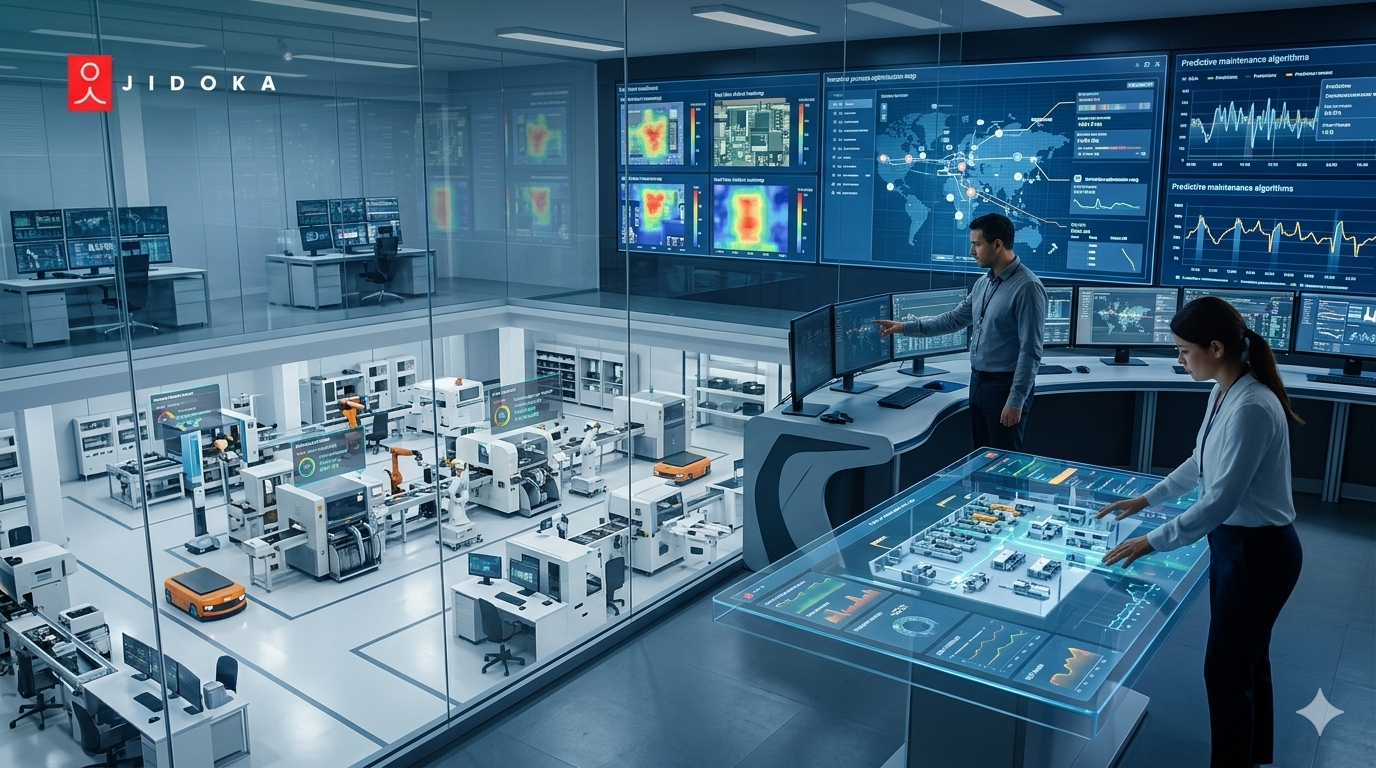
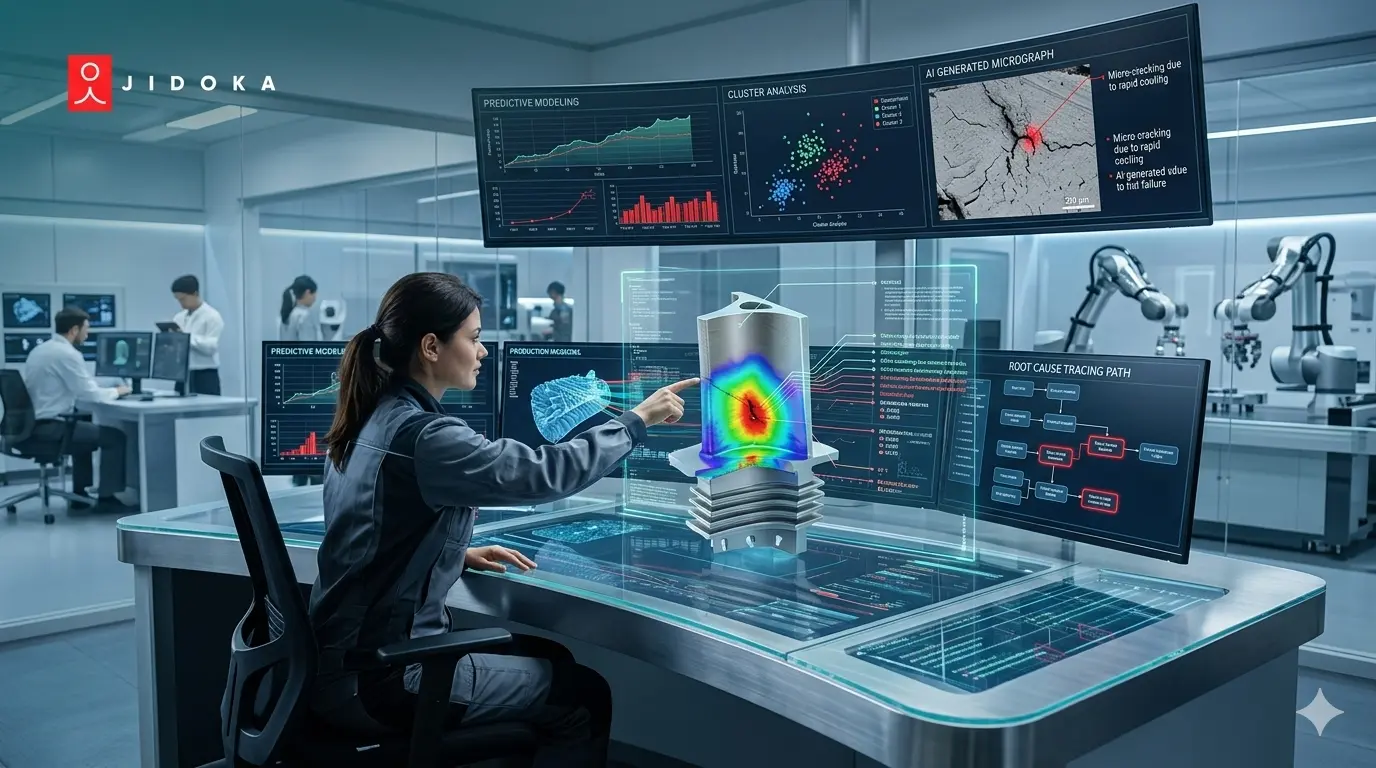
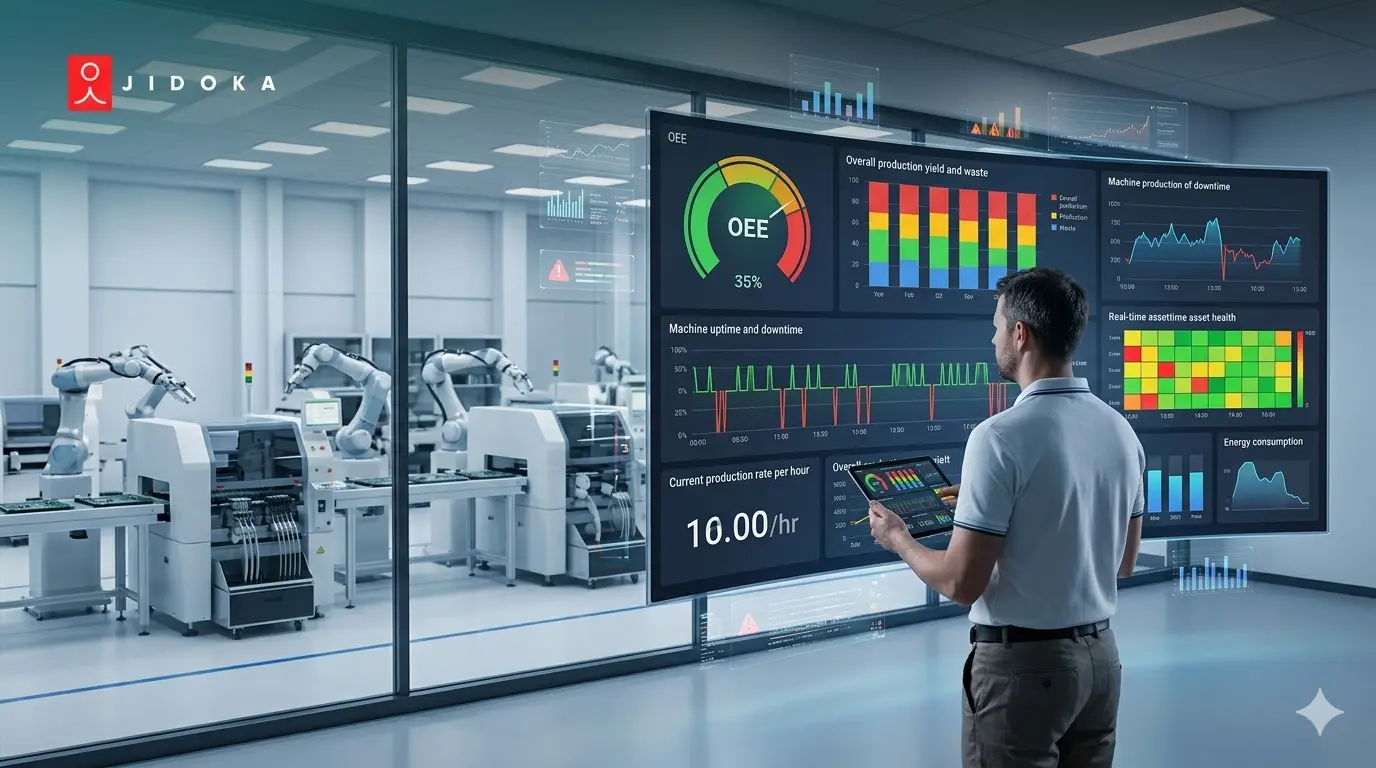
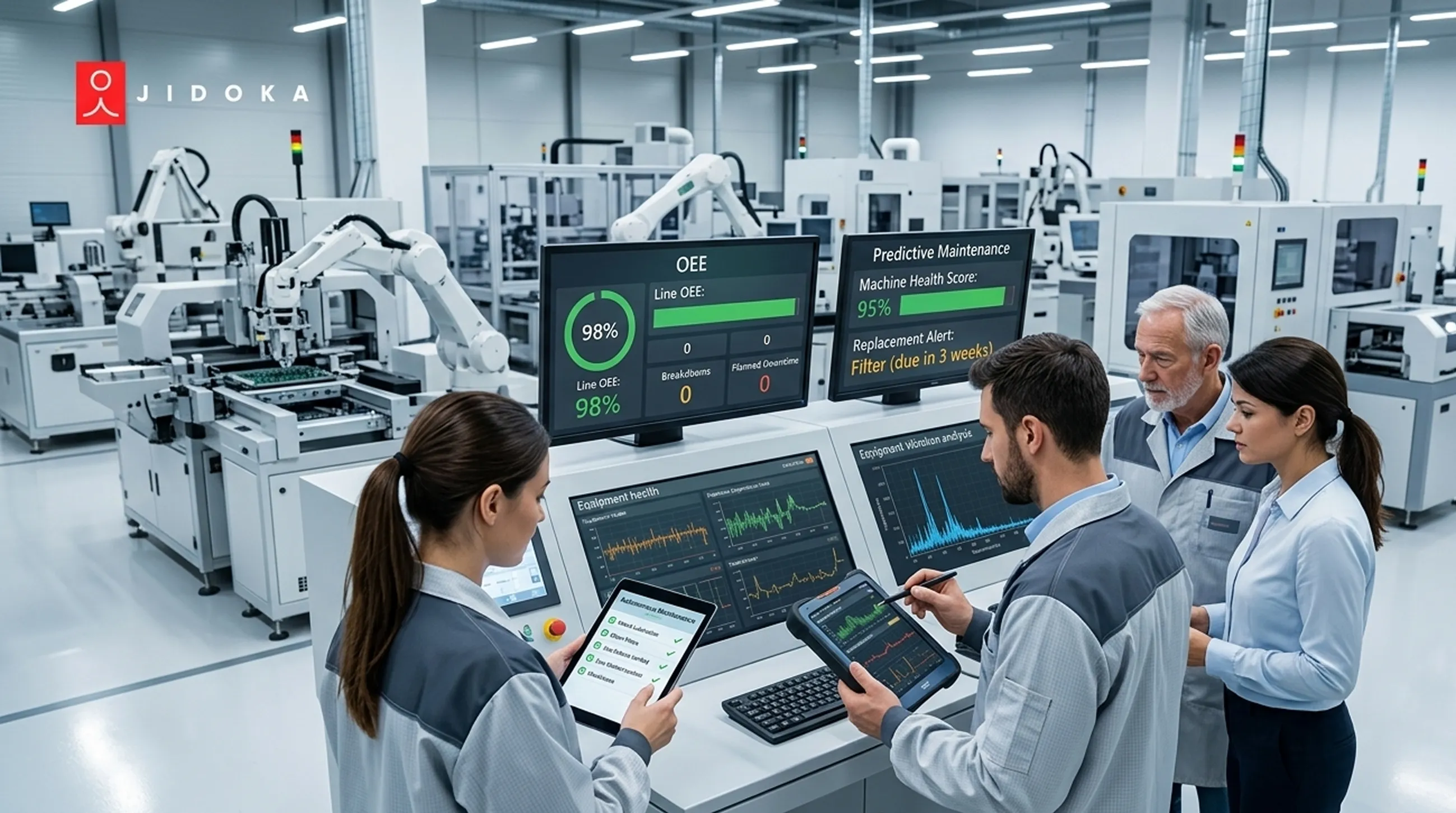
Software and AI bring mistake-proofing manufacturing into the digital age. These poka-yoke examples use real-time data and sensor-based inspection to ensure accuracy. These error prevention techniques help you reach zero-defect manufacturing goals.
Example #11. Required Fields: Software forms use error prevention techniques to block empty inputs. You cannot submit data until you fill every box. These poka-yoke examples eliminate the risk of missing critical manufacturing logs.
Example #12. Barcode Scanners: These provide sensor-based inspection to verify every part. The line stops if the scan shows a mismatch. This digital check ensures every customer receives the exact product they ordered from you.
Example #13. Digital Work Instructions: Use lean manufacturing tools like QR codes at workstations. Workers only see live steps. These poka-yoke examples remove the confusion caused by old paper manuals on the shop floor.
Example #14. Vision Systems: High-speed cameras provide automated quality control on your lines. They catch crooked labels instantly. These poka-yoke examples ensure your products always look professional and meet high-quality control mechanisms.
Example #15: Tesla Rotor Production: Tesla uses the motion-step method to measure parts during the cut. The system fixes tools automatically. These poka-yoke examples lead to zero-defect manufacturing by stopping scrap before it starts.
Modern digital tools make your quality checks faster and more reliable than manual eyes.
15 Best Poka Yoke Examples in Today's Manufacturing Landscape:
Real-World Case Studies (ROI)
Seeing poka-yoke examples in action proves their financial value. These companies used mistake-proofing manufacturing to solve real floor problems. They turned error prevention techniques into high profits and faster growth by focusing on zero-defect manufacturing goals.
1. Companion Baking
The team at Companion Baking struggled with a massive 25% yield loss because of manual mixing errors and inconsistent oven temperatures. To fix this, they implemented digital poka-yoke that monitors every batch in real-time. This system acts as a fixed-value poka-yoke, ensuring every ingredient weight is perfect before the mixer starts.
- The Solution: A digital interface that blocks the next step if weights are wrong.
- The Result: Yield loss dropped to 3% in just 60 days. Their OEE grew by 30% through these better quality control mechanisms.
2. Raining Rose
At Raining Rose, outdated paper instructions caused frequent mix-ups during product changeovers for their hundreds of SKUs. They needed better production error elimination to stay competitive. They added QR codes for digital poka-yoke examples at every station to provide instant, correct SOPs.
- The Solution: QR-driven instructions that load the exact manual for the current job.
- The Result: Changeover time dropped by 50%. This improved their assembly line safety and ensured every label was applied correctly.
These results show that mistake-proofing manufacturing pays for itself quickly. High ROI comes from using poka-yoke examples to stop waste before it ever starts.
How Jidoka Tech Enables "Digital Poka-Yoke"
Traditional poka-yoke often relies on physical metal guides or expensive custom jigs. Jidoka Tech changes the game by using AI-driven mistake-proofing manufacturing. Our system acts as a digital "AI Suit" for your floor, providing automated quality control that never blinks or gets tired.
We use sensor-based inspection that works under real production pressure. Our team sets up cameras, lighting, and PLC timing so your error prevention techniques work across every shift. Plants using Jidoka report steady performance even at 12,000+ parts per minute. We combine two powerful systems to reach zero-defect manufacturing levels:
- KOMPASS (High-Accuracy Inspector): This acts as the ultimate contact method manufacturing tool. It reviews frames in under 10 ms with 99.8%+ accuracy. It handles shiny metals and textured parts where other quality control mechanisms fail.
- NAGARE (Process and Assembly Analyst): This system manages the motion-step method. It tracks 100% of assembly steps through your cameras. It flags missing parts or wrong sequences in real-time to ensure production error elimination.
Our technology helps you cut rework by 20–35% without needing custom-machined hardware.
Conclusion
Small floor errors create massive risks. Workers miss a bolt or misplace a part when they get tired. If a defective item ships, your reputation dies. One bad batch leads to massive recalls and lawsuits.
You will lose your best customers and face bankruptcy if you keep guessing. Manual checks fail too often to protect your shop. You cannot afford to wait for a disaster. Your entire business future is on the line right now.
Jidoka Tech fixes this with AI poka-yoke. Our systems provide mistake-proofing manufacturing using smart cameras. You get error prevention techniques and poka-yoke examples.
Connect to Jidoka Tech today to implement these poka-yoke examples and master mistake-proofing manufacturing for your factory floor.
Related Blogs
Quality Inspection in Manufacturing: Every Method, Stage, and Standard Explained
- What Is Quality Control Inspection? (2026 Guide)
- Quality Assurance Process: Definition, Roles & Methods
- Inspection and Quality Control: A Practical Reference for Plant Engineers
- Product Quality Inspection: A Stage-by-Stage Checklist From IQC to Final Release
- 25 Best AI Visual Inspection Systems for Quality Control in 2025
- Manufacturing Inspection Checklist: What Every QC Team Should Be Verifying at Each Stage
Production Monitoring: The Complete 2026 Guide for Manufacturing Teams
- Top 8 Production Monitoring Tools for Manufacturing Automation in 2026
- What Is Production Process Monitoring Software? (And How Nagare Redefines It)
- How to Set Up Real-Time Production Monitoring Using Your Existing Camera Infrastructure
- Real-Time OEE Monitoring Without New Sensors: How-To Guide
- CCTV Analytics for Manufacturing: How to Turn Passive Cameras Into an Operational Intelligence Layer
- Nagare: CCTV Into Real-Time Ops Monitoring (2026)
Manufacturing Automation in 2026: Trends, Technologies & Real-World Examples
- Do You Know Any Factory Automation Companies? Yes We Do!
- All Types of Factory Automation Solutions + Reputed Brands List!
- Top 10 Manufacturing Automation Companies in India 2026
- What Is Industrial Automation? Top 5 Components 2026
- Manufacturing Optimisation in 2026: Where AI Monitoring Beats Traditional Lean Methods
- Manufacturing Process Optimisation in 2026: A Framework That Combines Lean and AI
Inspection System in Manufacturing: Types, Use Cases, and Selection Criteria
- 7 Types of Automated Quality Inspection Systems (2026)
- Which Industrial Vision System Wins: AI or Traditional Rules?
- How Does an Automated Inspection System Work?
- Machine Inspection: Every Method From Manual Gauging to AI Vision Compared
- 7 Best Vision Systems for Quality Inspection in 2025
- Which Visual Inspection Machine to Get in 2025?
What Is AI Visual Inspection? A Beginner’s Overview
- How Does AI Vision Inspection Work? How Can You Set it Up?
- What is an AI Inspection System & How Does It Work?
- AI Defect Detection: 99.9% Accuracy Guide for 2026
- 5 Best AI Inspection Softwares in India
- 10 AI Visual Inspection System Vendors to Evaluate Today
- Case Studies: Real Results from Visual Defect Detection with AI
Total Quality Management in Manufacturing: Principles, Implementation, and AI-Driven Evolution
- Six Sigma Process Optimization With AI | Closing the DMAIC Loop
- Continuous Improvement in Manufacturing: The Frameworks, the Tools and What AI Adds in 2026
- Right First Time Manufacturing: The Metric, the Method and the AI Systems
- Root Cause Analysis: Definition, Methods & Examples for 2026
- FMEA in Manufacturing: How Failure Mode Analysis Works and Where AI Closes the Loop
- Total Productive Maintenance (TPM): What It Is and How AI Monitoring Delivers the Data It Needs
Manufacturing Traceability: A Practical Guide for 2026
- Manufacturing Data Analytics: Turning Shop Floor Data Into Quality and Efficiency Decisions
- Non-Conformance Reports in Manufacturing: How to Write, Track and Prevent Recurrence
- Manufacturing KPI Dashboard: The 12 Metrics Every Plant Manager Should See in Real Time
- SOP Compliance in Manufacturing: Steps & Audits (2026)
- What Is OEE? How to Calculate It (2026 Guide)
Smart Factory Monitoring: What It Actually Requires and How Nagare Delivers It
- IIoT in Manufacturing: How Industrial IoT and AI Vision Are Reshaping Quality Monitoring
- What Is Smart Manufacturing? 2026 Updated Guide
- What Exactly Is Manufacturing Intelligence? Trends, Use Cases And Examples
- Digital Twin in Manufacturing: What It Is, How It Works and Why Quality Teams Need It
- Worker Monitoring Software for Manufacturing: What's Measurable, What's Ethical and What Works
- 5 Workflow Monitoring Tools That Reduce Manufacturing Bottlenecks Without New Hardware
Related Product
KOMPASS Vision AI — 360° Cognitive Product Inspection at 12,000 PPM
- KOMPASS vs Traditional Inspection Methods (2026 Guide)
- Cognex vs Landing AI: Deep Dive Comparison for Vision Inspection
- Lincode Vs Jidoka: A Comparative Analysis and Review
- Machine Vision for Quality Control: KOMPASS vs Nagare Explained
- Factory Quality Management Software: What Nagare and KOMPASS Do That Legacy Systems Can't
- 25 Best AI Visual Inspection Systems for Quality Control in 2025
- 10 AI Visual Inspection System Vendors to Evaluate Today
- AI Defect Detection: 99.9% Accuracy Guide for 2026
Nagare™ Vision AI for Real-Time Assembly & Process Optimization
- Nagare: CCTV Into Real-Time Ops Monitoring (2026)
- Machine Vision for Quality Control: KOMPASS vs Nagare Explained
- Smart Factory Monitoring: What It Actually Requires and How Nagare Delivers It
- What Is Production Process Monitoring Software? (And How Nagare Redefines It)
- Assembly Line Inspection With AI: How Nagare Catches Build Errors Before They Move Downstream
- Production Monitoring: The Complete 2026 Guide for Manufacturing Teams
- Real-Time OEE Monitoring Without New Sensors: How-To Guide
- MES Software vs AI Process Monitoring: What Mid-Market Manufacturers Should Choose in 2026
Modular Vision Hardware Suite for AI Inspection
- 10 Best Cameras for Machine Vision Across Use Cases
- 5 Best Industrial Camera Systems Out There for Machine Vision Application
- What Are Industrial Cameras and How do They Help With Defect Detection?
- Vision System Integrations: Everything You Need To Know
- How to Optimize Your Machine Vision System Implementation Experience?
- 3 Finest 3D Vision Inspection Systems in the World!
Related Use Case
AI Defect Detection for Zero Escapes & Built-in Quality in Manufacturing
- AI Defect Detection: 99.9% Accuracy Guide for 2026
- How AI Detects Surface Defects: Techniques & Technologies
- Automated Defect Detection, Machine Vision & Everything You Need to Know
- How to Detect Surface Defects with Computer Vision Effectively?
- Production Defect Analysis: How to Identify Root Causes Before They Become Line Shutdowns
- Predictive Quality Control: How AI Shifts Manufacturing From Inspection to Prevention
AI-Based Digital Work Instructions & Poka Yoke for Assembly
- Digital Standard Operating Procedures: Implementation Playbook for Factory Floors
- Digital Work Instruction Software: What It Does and What to Look For
- Poka Yoke Devices in 2026: From Physical Fixtures to AI-Driven Error Prevention
- 15 Poka Yoke Examples: Real-World Mistake-Proofing
Real-Time Inventory Accuracy with Vision AI for Manufacturing & Logistics
- 7 Key Benefits of Physical Stock Verification in 2026
- What Is Inventory Management? Types & Benefits 2026
- Top 20 Warehouse Inventory Management Software in India in 2026
- Top 8 Best Manufacturing Inventory Management Software in 2026
AI-Powered Kitting Accuracy & Real-Time Verification
- Kitting Verification in Manufacturing: How to Eliminate Wrong-Kit Errors at the Source
- 10 Best Small Parts Counting Machine for Bulk Counting and Bagging
- Screw Counting Machine: How Vision Counting Works for Fasteners?
AI Label Verification & Text Recognition for Zero Label Errors
- Label Inspection: Don't Miss Out on These Important Steps!
- Packaging Inspection: Use Cases, Print Quality, OCR, Seal Failures and Damage
AI Assembly Inspection & Traceability for Manufacturing & Logistics
- Assembly Line Inspection With AI: How Nagare Catches Build Errors Before They Move Downstream
- Electronics Manufacturing Quality: How to Monitor Assembly Accuracy Without Slowing Throughput
- First Article Inspection: A Step-by-Step Guide for Manufacturers Launching New Parts
AI Sorting & Counting for Real-Time Classification in Manufacturing
- Robot Sorting with Machine Vision: How Pick and Pack Sorting Works?
- Vision Counting Packing Machine: What It Does and Where It Fits in Packaging
- 10 Best Small Parts Counting Machine for Bulk Counting and Bagging
AI-Based Operator Training & Skill Assessment for Manufacturing
- Worker Monitoring Software for Manufacturing: What's Measurable, What's Ethical and What Works
- 5S Lean Manufacturing: The Foundation Every Smart Factory Needs Before Deploying AI
Related Industry Page
Vision AI for Automotive QA — 360° Inspection, Assembly Verification & OCR
- Automotive Quality Control in 2026: How AI Process Monitoring Meets IATF 16949
- First Article Inspection: A Step-by-Step Guide for Manufacturers Launching New Parts
- FMEA in Manufacturing: How Failure Mode Analysis Works and Where AI Closes the Loop
AI Vision for Electronics Inspection — Solder, PCB & Connector Quality

- Top AI Tools for PCB Inspection in Electronics Manufacturing
- Solder Paste Inspection: Everything You Need to Know In 2026
- X Ray Solder Joint Inspection: Defects, Voids, Bridges, Opens, & Shorts
- Electronics Manufacturing Quality: How to Monitor Assembly Accuracy Without Slowing Throughput
- Wafer Inspection Methods: Optical, E-Beam and AI Based Defect Classification
Vision AI for FMCG — Quality Inspection, Packaging Verification, Kitting & OCR
- FMCG Quality Control: Why Consumer Goods Manufacturers Are Moving to AI Process Monitoring
- Food Manufacturing Quality Control: How AI Cameras Replace Reactive Audits With Real-Time Monitoring
- Fill Level Inspection: Beginner-Friendly Guide
- Seal Inspection Using Vision vs Thermal Cameras: When Each Works?
AI Visual Inspection for General Manufacturing — Welds, Assemblies & Components
- Manufacturing Automation in 2026: Trends, Technologies & Real-World Examples
- Quality Inspection in Manufacturing: Every Method, Stage, and Standard Explained
- 7 Benefits of Computer Vision in Manufacturing Plants
- Manufacturing Quality Software: How to Evaluate, Compare and Choose the Right Platform in 2026
Vision AI for 99.5% Pharma Quality & Compliance
- Pharmaceutical Quality Management: Bridging GMP Compliance and Real-Time Process Monitoring
- GMP Self-Inspection: What Auditors Actually Check and How AI Monitoring Supports It
- Top 10 Tablet & Capsule Inspection Providers 2025
AI Vision Solutions for Warehousing & Logistics — Inventory, Kitting & Labels
- Warehouse Automation Explained: 2026 Updated Guide
- What Is Warehouse Management? 2026 Guide
- Top 20 Warehouse Inventory Management Software in India in 2026
- The Future of Supply Chain Optimization in Lean Manufacturing
- Pre-Shipment Inspection: How to Run It, What to Check and How AI Makes It Faster
FAQs
1. What are the main benefits of using poka-yoke examples?
Using poka-yoke examples drives production error elimination and ensures zero-defect manufacturing. These mistake-proofing manufacturing tools strengthen assembly line safety through error prevention techniques. You achieve continuous improvement kaizen by adding automated quality control and quality control mechanisms to your shop.
2. How do contact method and motion-step methods differ?
Contact method manufacturing uses physical shapes to block errors. The motion-step method monitors the sequence of actions. Both poka-yoke examples serve as vital mistake-proofing strategies. These lean manufacturing tools provide sensor-based inspection and error detection systems for consistent quality results.
3. Why is mistake-proofing manufacturing vital for assembly line safety?
Mistake-proofing manufacturing stops dangerous equipment if workers miss a step. These poka-yoke examples act as quality control mechanisms that protect your team. You improve assembly line safety by using fixed-value poka-yoke tools and high-tech automated quality control sensors every day.
4. Can visual management systems count as poka-yoke?
Yes. Visual management systems like color-coded bins are effective poka-yoke examples. They guide workers toward production error elimination using simple mistake-proofing strategies. These error prevention techniques simplify quality control mechanisms and support lean manufacturing tools without requiring expensive custom digital machinery.
5. How does sensor-based inspection help with zero-defect manufacturing?
Sensor-based inspection provides real-time data for automated quality control. These poka-yoke examples identify flaws instantly, ensuring zero-defect manufacturing. By integrating error detection systems, you enhance defect prevention techniques. These mistake-proofing manufacturing steps lead to higher profits and better worker safety.