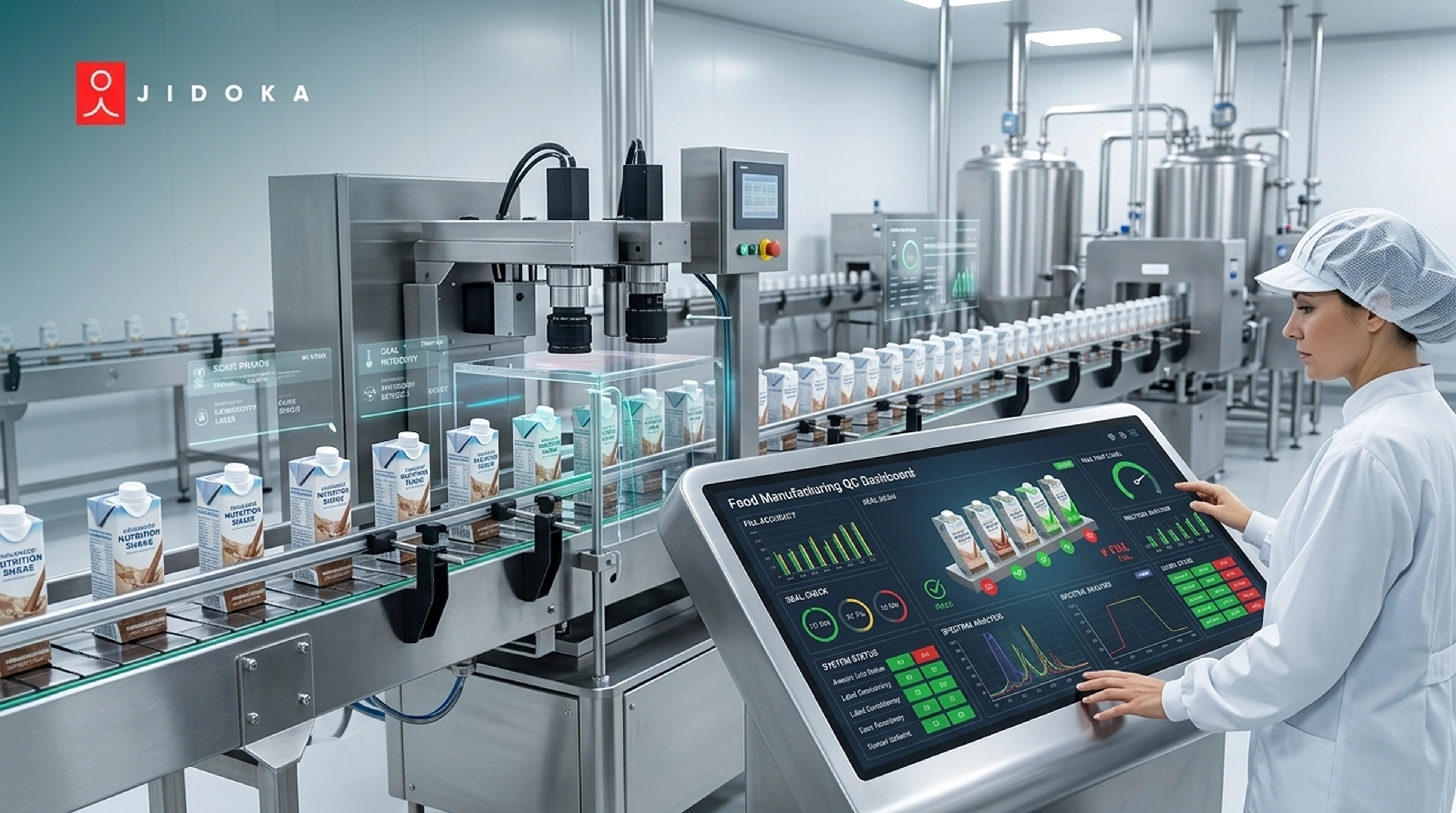
2024年の米国における食品リコールの最大の原因は、汚染ではなくラベルの誤表記でした。そのうち83.85%が、重要管理点(CCP)での作業者によるアレルゲン表示漏れに関連するものでした(Loftware / New Food Magazine、2025年1月)。同年のリコール対象食品による入院患者数は、230人から487人へと倍増しました(US PIRG Education Fund、2025年2月)。食品製造の品質管理手順は、事実上すべてのFMCG(日用消費財)施設で導入されています。しかし、それらが継続的に検証されているわけではありません。
欠陥が発生してから監査で発見されるまでの「空白期間」こそが、リコールが発生する原因です。リアルタイムの食品製造品質管理は、「製品の状態」と「作業者の行動」という2つの側面からこの空白を埋めます。本ガイドでは、AIカメラシステムによって事後対応型の監査サイクルを継続的な生産監視へと置き換える方法を解説し、HACCPの導入やFSMA(食品安全強化法)の製造要件への準拠についても網羅しています。
重要なポイント: 定期的な監査に依存する食品製造品質管理システムでは、検査と検査の間の空白期間を見逃してしまいます。こここそが、ほとんどのリコールの発生源です。2024年の米国における全食品リコールの45.5%がラベルの誤表記によるもので、直接的なリコール費用は推定19億2000万ドルに達しました。リアルタイムのAI監視は、製品の検知と作業プロセスの監視という両方の空白を同時に埋めることができます。
なぜ食品製造品質管理は、いまだに定期監査に依存しているのか?
食品製造品質管理が定期監査に依存しているのは、継続的なデジタル監視技術が存在しなかった時代において、検証可能なコンプライアンス記録を作成する唯一の現実的な方法だったからです。しかし、監査は「ある一時点」を切り取るだけであり、その間にも欠陥は蓄積されていきます。
現在の多くのFMCG施設では、2段階の管理体制が敷かれています。第三者監査(SQF、BRC、FSSC 22000)が定期的なサイクルで施設レベルのコンプライアンスを検証し、ライン検査が一定間隔で製品をサンプリングします。しかし、どちらも継続的な運用ではありません。前回のチェックから次回のチェックまでの間、深夜3時に何が起きたのかを把握することはできないのです。
このモデルのみに依存した食品製造品質管理は、結果の証明ではなく「意図の文書化」に過ぎません。人間の目視検査の精度は高くても85〜88%であり、シフト終盤の疲労によってさらに低下します(ifactoryapp.com、2026年4月)。時速12,000個のラインにおいて、精度88%ということは、1時間あたり1,440個の製品が、本来守られるべき検査をすり抜けていることを意味します。
「監査は手順が存在することを証明するが、木曜の深夜3時にアレルゲン切り替えが行われた際に、その手順が守られていたことまでは証明しない」。この2つの主張の決定的な違いこそが、定期的なチェックに基づく食品安全製造検査システムが常に失敗する原因です。
米国におけるリコール対象食品による入院患者数は、監査スケジュールが頻繁化しているにもかかわらず、2024年には230人から487人へと倍増しました(US PIRG Education Fund, Food for Thought 2025、2025年2月)。監査を増やしてもリコールは減りませんでした。失敗は、監査と監査の間の空白期間に蓄積されるからです。
疲労とサンプリングの限界が「欠陥の発生期間」を生む仕組み
人の目による検査は全数ではなくサンプルチェックです。高速のFMCG(日用消費財)ラインでは、5%のサンプリングであっても、残りの95%は目視確認なしで流れていきます。さらに、シフト終盤にかけて検査精度がピーク時の88%から低下することを考慮すれば、生産時間が経過するごとに欠陥を見逃すリスクは増大します。午前3時15分に誤ったラベルが流通してしまった場合、それが発覚したとしても、次回の定期監査まで食品安全製造検査の記録に残ることはありません。
定期監査で証明できること、できないこと
FSMA(食品安全強化法)およびHACCPでは、重要管理点(CCP)における文書化された監視記録が義務付けられています。定期監査は、監視手順が書面で定義されていることを証明するものであり、監査と監査の間のすべてのCCP間隔で監視が正しく行われたことを証明するものではありません。このコンプライアンスのギャップを埋めるのが、AIによるリアルタイム監視です。検査の瞬間に生成されるタイムスタンプ付きの個体別記録は、事後に推測で作成されるサンプリングベースの記録に取って代わるものです。
このような継続的な記録を生み出す食品製造の品質管理は、単にコンプライアンスを管理するだけでなく、それを証明します。解決策は監査を廃止することではありません。監査はGFSI、FSMA、および小売業者のサプライヤープログラムの下で依然として義務付けられています。解決策は、監査と監査の間のギャップを継続的なデータで埋めることです。これにより、監査は「暗黒期間」の調査ではなく、稼働中の記録に対する検証となります。
それらのギャップがもたらすコストは、現在、正確に数値化されています。
事後対応型の食品安全製造検査がもたらす真のコストとは?
事後対応型の食品安全製造検査にかかるコストは、検査そのものの費用をはるかに上回ります。2024年の米国における全食品リコールの45.5%がラベルの誤りが原因であり、1件あたりの直接コストは平均1,000万ドルに達しました。また、これらの誤りの83.85%がアレルゲン表示の欠落に関連していました。
食品製造の品質管理への投資議論において、「品質不良のコストは主に廃棄や手直しの費用である」という前提が支配的ですが、リコールデータはこの考えを否定しています。 2024年に発生した422件の食品リコールのうち、45.5%がラベルの誤りに起因しており、業界全体で推定19億2,000万ドルの直接的なリコール費用が発生しました(LoftwareによるFDA執行報告データベースの分析、New Food Magazine、2025年1月)。この問題を引き起こしている主な要因は、汚染や機器の故障、配合ミスではなく、ラベル、特にそのラベル上のアレルゲン表示です。
2024年のラベル誤りによるリコールの83.85%は、アレルゲン表示の欠落に起因しています(同ソース)。つまり、食品製造において最も高コストな品質不良は、製品そのものに起因するのではなく、アレルゲンの切り替えポイントで作業者が行ったこと(あるいは行わなかったこと)に起因しているのです。その時点を過ぎてから完成品のみをチェックする事後対応型の食品安全製造検査は、重要なステップですでに失敗していると言えます。
食品リコール1件あたりの直接コストは平均1,000万ドルです。訴訟、ブランド毀損、小売店からの取り扱い停止を考慮する前の段階で、23%のケースでは3,000万ドルを超えています(GMAおよびFMIによる調査、Marelにより確認、2025年3月)。間接コストは通常、直接的なリコール費用の50%から100%上乗せされます。
「2024年の食品リコールの45.5%がラベルの誤りによるもので、2番目に多い原因の約3倍に達しました。1件あたり平均1,000万ドルの直接コストがかかる事後対応型の食品安全製造検査は、測定可能な財務的リスクを伴います。」 、LoftwareによるFDA執行報告データベースの分析。
ラベルの誤りとアレルゲン手順:単なる製品不良ではなく、プロセス上の欠陥
「ラベルの誤りがリコールリストの上位を占める理由は、メーカーがその危険性を認識していないからではありません。シフト中の過酷な条件下で、毎分300本のボトルを流しながら誤ったラベルを検知することは、人間の検査能力を超えているからです。」誤ったアレルゲンラベルは、単なるパッケージの欠陥ではありません。
それは、製品がラベル貼り付けステーションに到達する前の重要管理点において、アレルゲンの分離手順が守られていなかったことを意味します。製品検査でこれを止めるのは、症状に対処しているに過ぎません。手順を監視することこそが、原因を突き止めることにつながります。完成品のみを検査する事後対応型の食品製造品質管理では、その原因は見えないままなのです。
FSMA 204におけるドキュメント管理の課題
FSMA 204では、食品メーカーに対し、FDAの査察官から要求があった場合、24時間以内に指定食品の電子トレーサビリティ記録を提出することを義務付けています(FDA.gov、FSMA全文)。紙ベースのCCP(重要管理点)ログやシフト終了時の手書き入力に頼っている施設では、要求に応じてユニット単位の記録を確実に作成することは不可能です。記録はシフトログ、監督者の承認印、バッチ管理シートなどに断片的に分散しているためです。
調査の最中に24時間という期限内でこれらを再構築することは、単なるドキュメント管理の問題ではなく、食品製造における品質管理アーキテクチャの欠陥です。ウォルマートやクローガーなどの大手小売業者は、連邦政府の期限に先駆けてサプライヤーネットワークに対して同等のトレーサビリティ要件を課しており、コンプライアンスの圧力はFDAとの直接的な関係を超えて拡大しています。
ここで問われるのは、製品の検知とオペレーターのプロセス管理という両方のギャップを同時に埋めるにはどうすればよいか、という点です。
リアルタイムAIビジョンは、食品製造の品質管理における2つの層をどのように改善するのか?
リアルタイムAIビジョンは、食品製造の品質管理を2つの異なる層で改善します。1つは「製品の正確性」であり、すべてのユニットで欠陥やラベルの誤りを検知します。もう1つは「プロセスの正確性」であり、製造中の重要管理点(CCP)においてオペレーターがSOP(標準作業手順書)を遵守しているかを検証します。
AI食品加工市場は2024年に115億3,000万ドルに達し、2034年には1,382億6,000万ドルに達すると予測されています。その投資の45%を食品品質管理および安全検査が占めています(Towards FnB / Precedence Research, Globe Newswire, 2025年11月)。これは、メーカーがどこに投資を集中させているか、つまり「製品層」を示しています。しかし、市場データが示していないのが「プロセス層」であり、アレルゲン混入などのミスはまさにこのプロセス層で発生するのです。
「食品製造において根強く残る誤解は、品質管理を製品の問題として捉えることです。ラベルのアレルゲン表示ミス、キットの組み立て間違い、SOPのスキップなどは、すべてプロセスの問題です。製品だけを検査するのは、焼き上がったパンのオーブン温度を確認するようなものです。」
コーネル大学食品科学部の研究では、AIコンピュータビジョンによる検査が欠陥検知とリコール削減において測定可能な改善をもたらしていることが確認されています。ただし、既存のライン運用との統合が導入における重要な要素となります(Luke Qian博士、コーネル大学食品科学部、引用元: Supermarket Perimeter, 2025年11月)。Jidokaの導入アーキテクチャは、この統合の必要性を後付けではなく、中心に据えて設計されています。
レイヤー1:KOMPASSと各CCPにおける製品レベルの検査
KOMPASS は、マルチアングルカメラと適応型ディープラーニングを活用し、毎分12,000個の製品レベルの検査を継続的に行います。FMCG(日用消費財)レベルでは、表面の欠陥、充填量の検証、キャップやシールの位置合わせ、シール完全性、ラベルの有無、バッチコードやアレルゲン表示のOCR/OCV検証を網羅します。Jidokaの自己学習モデルエンジンであるDOJOにより、メーカーは10個未満の良品サンプル画像だけで、新しい製品SKUに対してKOMPASSをトレーニングすることが可能です。
機械学習の専門知識は不要です。新しい製品プロファイルは24〜48時間以内に展開でき、再調整のために生産を停止する必要もありません。これはアレルゲンの切り替え問題に直接対処するものであり、KOMPASSの ラベルおよびテキスト認識機能がそれを実現します。 ラベル上のアレルゲン表示を検証する機能は、 Diageo社事例研究 サンプル検査ではなく、毎分300本の生産速度で実行されます。
「KOMPASSは、FMCG(日用消費財)のパッケージおよびラベル検査において、生産速度を維持したまま99.95%の精度を実現します。」 、Jidoka Technologies製品仕様。
レイヤー2:NAGAREと重要管理点(CCP)における作業手順の遵守
KOMPASSが製品を検査する一方で、 NAGARE は作業者の行動を検査します。アレルゲン切り替えのCCPにおいて、NAGAREは作業者の行動を デジタル作業指示書およびポカヨケ SOPとリアルタイムで照合し、正しい手順が守られているかを検証します。逸脱があれば次のバッチに影響が出る前に警告を発します。
これはHACCP原則4(CCPにおける監視手順)を、定期的な間隔ではなく継続的に直接実行するものです。NAGAREは、導入実績においてプロセス遵守率を30%向上させ、手直し作業を35%削減しました。作業者の逸脱が発生するたびに是正処置ログが自動生成されるため、手作業による記録なしでHACCP原則5を満たすことができます。
クローズドループがシグナルから是正処置へ移行する仕組み
フレームワークの名称:See(見る)→ Think(考える)→ Act(実行する)→ Learn(学習する)→ Integrate(統合する)
See:マルチアングル撮影により、すべてのCCPで製品と作業者の行動を捉えます。Think:AIが生産仕様とデジタルSOPに基づき同時に検証します。Act:不良品を自動排除し、プロセスからの逸脱があればミリ秒単位で作業者に警告します。Learn:DOJOが新しいSKUや欠陥タイプに合わせてモデルを再学習させます(MLチームは不要です)。Integrate:すべてのイベントがタイムスタンプ、ロットコード、注釈付き画像証拠とともにMES/ERPに記録され、FSMA 204への準拠をサポートします。
このアーキテクチャは作業者に取って代わるものではありません。適切なタイミングで適切な情報を作業者に提供するものです。これこそが、単なる検査のアップグレードと、食品製造品質管理における新しいオペレーティングモデルとの違いです。
このアーキテクチャは、FSMAおよびHACCPの文書化要件を満たすコンプライアンス記録を自動生成することも可能です。
リアルタイムの食品生産監視は、FSMAコンプライアンスおよびHACCP導入要件を満たしますか?
はい。リアルタイムの食品生産監視は、FSMA 204が求める24時間以内の電子記録要件およびHACCPのCCP監視文書基準を満たす、タイムスタンプ付きのユニット単位の検査記録を生成します。これにより、手書きのログブックは、改ざん防止機能付きの自動監査証跡へと置き換わります。
「監査はコンプライアンスを確認するイベントではありません。コンプライアンスは監査の合間の毎分毎秒、達成されているか否かが決まるものです。監査はその結果を確認するに過ぎません。リアルタイム監視システムがあれば、監査官が到着する前にその答えを出すことができます。」
FSMA 204と24時間以内のトレーサビリティ記録
FSMA 204では、食品メーカーに対し、FDAの査察官から要求があった場合、24時間以内にトレーサビリティ記録、具体的には関連する重要追跡イベント(CTE)の主要データ要素(KDE)を提示することが義務付けられています(FDA.gov、FSMA全文)。手書きのログブックや定期的な監査記録では、この期限を確実に守ることは困難です。AI検査記録であれば、この要件をネイティブに満たすことができます。ラベルの不適合、工程逸脱のアラート、充填レベルのフラグといったあらゆる検査イベントが、タイムスタンプ、ロットコード、欠陥分類、注釈付きの画像証拠とともに自動的に記録されます。
手動での記録入力は不要です。過去に遡って記録を再構築する必要もありません。監査官から要求される前に、記録はすでに存在しているのです。継続的なAIモニタリングを導入しているFSMA準拠の製造チームは、FDAからの要求に対し、4時間かけてデータを再構築するようなことはせず、エクスポート可能な完全なデータトレイルを即座に提示できます。
継続的なAI監視によるHACCPのCCPモニタリングの変化
従来のHACCPモニタリングでは、2時間ごと、シフトごと、バッチごとといったように、各CCP(重要管理点)にチェック頻度が割り当てられていました。AIモニタリングでは、この間隔という概念がなくなります。CCPにおけるすべてのユニットとすべてのオペレーターの動作がモニタリング対象となります。HACCP記録は、サンプリングによるチェックシートではなく、継続的なデータログへと進化します。
これにより、HACCPの2つの原則における実施体制が同時に強化されます。原則4(CCPのモニタリング手順)は、予定された間隔ではなく継続的に満たされ、原則5(是正措置)では、システムがCCPの逸脱を検知すると是正措置ワークフローが自動的に開始され、手動入力なしで記録とタイムスタンプが行われます。
MDPI Foodsに掲載された2025年の査読付き研究がこれを裏付けています。西アッティカ大学の研究チーム(Revelou et al., 2025年3月, DOI: 10.3390/foods14060922)は、HACCPのCCPモニタリングに機械学習アルゴリズムを適用することで、特に高リスクの食品カテゴリーにおいて、従来の人的アプローチよりも優れた食品安全基準の成果が得られることを明らかにしました(NCBI PMC、MDPI Foods 14(6):922):
「機械学習アルゴリズムは、高度なデータ分析機能を提供することで、危害分析重要管理点(HACCP)モニタリングに革新的なソリューションをもたらし、食品の安全性を評価するための強力なツールであることが証明されている。」
文書化された検査システムのパフォーマンスに対するBRCおよびSQFの検証要件も、同じ継続的な記録によって満たされます。Jidokaのシステムを導入している施設では、認証監査の準備期間を設けることなく、完全なデータトレイルを提示できます。
コンプライアンス上の価値は一つの側面に過ぎません。QAチームが最初に抱くもう一つの疑問は、運用の統合についてです。
AIは既存の製造ラインを置き換えることなく、どのように食品品質管理に適合するのか?
JidokaのAIビジョンシステムは、既存のカメラハードウェア、PLC、MES/ERPプラットフォームと統合できるため、製造ラインを入れ替える必要はありません。ほとんどのFMCG(日用消費財)施設では6〜8週間で稼働を開始し、8〜16ヶ月で投資回収(ROI)を実現しています。
QAディレクターがその能力を理解した後に抱く最初の懸念は、AIモニタリングが機能するかどうかではなく、導入にどれだけのコストと混乱が伴うかという点です。Jidokaのプラットフォームに対する答えは、多くの施設が予想するよりもはるかに低コストで導入できるということです。KOMPASSとNAGAREは、既存のCCTVインフラ、産業用カメラ、PLC、MES/ERPシステムと統合可能です。
設置のために製造を停止する必要はありません。既存のカメラがセンシング層となります。Jidokaは、クラウドへの依存や外部処理による遅延がない、ローカルユニットでのエッジAI推論エンジンを提供します。KOMPASSプラットフォームを導入したFMCG企業では、製造ライン1本あたり年間最大125,000ドルのコスト削減を実現し、8〜16ヶ月で投資回収を達成しています。
「私たちはKOMPASSとNAGAREを通じて、製品検査とプロセス最適化の進歩を先導し、メーカーがかつてない精度、効率、拡張性を実現できるよう支援しています。」 - Jidoka Technologies共同創業者兼CEO、Sekar Udayamurthy氏。出典:Business Standard(2025年2月6日)
既存のカメラインフラとエッジ処理
JidokaはオンプレミスのエッジAIを展開します。データはローカルで処理されるため、クラウドへの依存はなく、遅延も発生せず、データ共有のリスクもありません。AI推論は製造ライン上で行われ、ミリ秒単位の判断で、次の工程に進む前に不良品を確実に排除します。
JidokaはAutomate 2026(2026年6月22日〜25日、シカゴ開催)に参加し、実稼働速度のFMCG(日用消費財)ラインでKOMPASSとNAGAREのデモンストレーションを行いました。これは、食品品質管理の文脈でベンダーの実績を評価する施設にとって、信頼性の証となります。詳細は以下をご覧ください。 FMCG向けAIビジョンソリューション (導入仕様についてはこちら)
DOJOとダウンタイムのないSKU切り替え
FMCGの製造ラインでは、シフトごとに同じラインで複数の製品を製造します。SKUごとに欠陥のプロファイル、ラベル仕様、アレルゲン表示が異なります。従来のビジョンシステムでは切り替えのたびに再プログラミングが必要で、その間システムは数時間にわたって機能停止していました。DOJOは、10枚未満の良品サンプル画像から24〜48時間で新しい製品モデルを学習・展開します。
切り替えのための学習は非同期で完了します。学習済みモデルは保存され、画面をタップするだけで切り替え可能です。ビジョンシステムの再調整のためにラインを止める必要はありません。週に8〜12種類のSKUを扱うFMCGの現場において、これは製品切り替えのたびに発生していた食品製造品質管理の空白期間を解消します。
「製造ライン1本あたり年間最大12万5,000ドルのコスト削減を実現し、8〜16ヶ月で投資回収が可能。」 、Jidoka Technologies、FMCG導入データより。
結論
食品の欠陥が発生してから監査で発見されるまでのギャップは、手順の問題ではなく、データのタイミングの問題です。監査と監査の間の1分1分が、食品製造品質管理が書類上には存在しても、記録上は存在しない時間となります。KOMPASSはこの製品のギャップを埋め、すべてのユニット、すべてのラベル、すべての充填レベルを製造速度で監視します。
NAGAREはプロセスのギャップを埋めます。すべてのCCP(重要管理点)におけるオペレーターの動作をデジタルSOPと照合し、自動的に記録します。KOMPASSとNAGAREがFMCGの製造ラインでどのように連携するかは、以下をご覧ください。 FMCG向けAIビジョンソリューション。
よくある質問
1. 食品製造品質管理と食品安全監査の違いは何ですか?
食品製造品質管理とは、各製品がラインレベルで仕様を満たしているかを継続的に検証し、適合性の記録を生成するプロセスです。一方、食品安全監査は、品質管理システムが適切に構築され、文書化されているかを定期的に検証するものです。監査は手順の存在を証明するものですが、食品製造品質管理は、すべてのシフトにおいて、すべてのユニットに対して、システムが今まさに機能していることを証明するものです。
2. FSMA 204は食品製造品質管理の要件に影響しますか?
FSMA 204では、食品メーカーに対し、FDAの査察官から要求があった場合、対象食品のトレーサビリティ記録を24時間以内に電子データで提出することを義務付けています(FDA.gov)。AIベースの検査システムは、タイムスタンプとロットコードを付与したユニットごとの記録を自動生成しますが、手動のシステムでは24時間という期限を確実に守ることは困難です。AIモニタリングを活用するFSMA準拠の製造現場では、紙の記録を再構築するのではなく、データエクスポートによって対応します。
3. AIカメラは食品製造におけるHACCP重要管理点(CCP)モニタリングの代わりになりますか?
AIカメラはHACCPに取って代わるものではなく、HACCPの原則4(CCPモニタリング)を定期的な間隔ではなく継続的に実行するものです。CCPにおけるすべての検査ユニットとオペレーターの動作がモニタリングイベントとして記録されるため、基準を回避するのではなく、HACCPの実施記録が強化されます。是正措置ワークフロー(原則5)は、逸脱が検知されると自動的に開始され、タイムスタンプ付きで記録されます。
4. 検査システムがあるにもかかわらず、なぜラベルの誤表示が食品リコールの最大の原因となるのでしょうか?
多くの食品検査システムは製品の状態をチェックするものであり、ラベルの貼付プロセスまでは確認しません。アレルゲンの切り替え時に発生するラベルの誤表示は、オペレーターの手順ミスというプロセス上の不備が原因であり、製品レベルの食品安全検査では検知できません。NAGAREによるAIプロセスモニタリングは、CCPにおけるオペレーターの動作を監視し、ラベルが貼られる前に手順の逸脱を検知するため、症状ではなく原因そのものを食い止めることができます。
5. リアルタイム食品製造モニタリングシステムの導入にはどのくらいの期間がかかりますか?
Jidokaのプラットフォームを用いたFMCG(日用消費財)への導入は、既存のカメラインフラを活用することで、製造ラインを停止させることなく、通常6〜8週間で稼働を開始できます。新しい製品SKUの学習は、DOJO自己学習エンジンにより、10枚未満の良品画像から24〜48時間で完了します。投資回収期間(ROI)は通常8〜16ヶ月です。[公開前にすべてのスケジュールとROIの数値をJidokaに確認してください。] 現在の導入仕様については、 FMCG向けAIビジョンソリューション をご覧ください。