サプライチェーンの混乱は今や恒常的な変数となりました。メーカーは無駄を排除するためにサプライチェーン最適化を活用しています。2026年までに、先進的な企業は需要予測AIと リーン生産方式におけるAI を活用し、在庫レベルを35%削減します。
本ガイドでは、サプライチェーン最適化がリーン生産方式の目標にどのように適合するかを解説します。JITサプライチェーンの論理のような最適化戦略が、いかにして世界的な変動に対応するのかをご覧ください。リーンシステムは、無駄が発生する前にそれを防ぐことで初めて成功します。ここでは、そのフローを再構築する方法を紹介します。
従来のリーンサプライチェーンの論理が現在の状況下で破綻している理由
世界が変化する中で、静的な計画は通用しません。無駄を増やさずに衝撃を吸収するには、サプライチェーン最適化が必要です。先手を打つためには、全体像を把握しなければなりません。
1. JITの核心的な脆弱性:ゼロに近いバッファへの要求
ジャストインタイム生産方式には完璧なタイミングが求められます。港湾の遅延や資材不足は、JITサプライチェーンをリスクに変えてしまいます。部品が届かなければ、リーンな現場運営は不可能です。効果的なサプライチェーン最適化には、今やスピードと安全性のバランスを見極めることが不可欠です。
- 多国籍企業は、サプライチェーンの欠落により年間323時間の生産時間を損失しています。
- 可視化は、単なるコスト削減よりも高いレジリエンス(回復力)を生み出します。
2. サプライチェーンデータが見落としている隠れたコスト
多くの管理者は、リーン生産方式のサプライチェーンにおいて遅行指標となるデータを使用しています。これが「データ負債」を生みます。ほとんどのチームは在庫回転率を追跡していますが、サプライチェーンにおける品質欠陥コストを見落としています。
1回の不具合による損失は 28万ドル にのぼり、手直しやペナルティが発生します。真の無駄のない製造を実現するには、あらゆる工程を追跡する必要があります。サプライチェーン最適化は、こうしたコストを浮き彫りにします。
効果的なサプライチェーン最適化戦略は、ラインが停止する前にこうした隠れたギャップを見つけるのに役立ちます。これらのツールは現場の稼働を維持します。それでは、これらの改善策をどのように現場に適用できるかを見ていきましょう。
リーン環境で機能するサプライチェーン最適化戦略
効果的なサプライチェーン最適化とは、問題への事後対応をやめることです。サプライチェーン最適化戦略を活用して、常に先手を打ちましょう。これらのツールは、リーン生産方式のサプライチェーンを俊敏かつ収益性の高いものに保ちます。
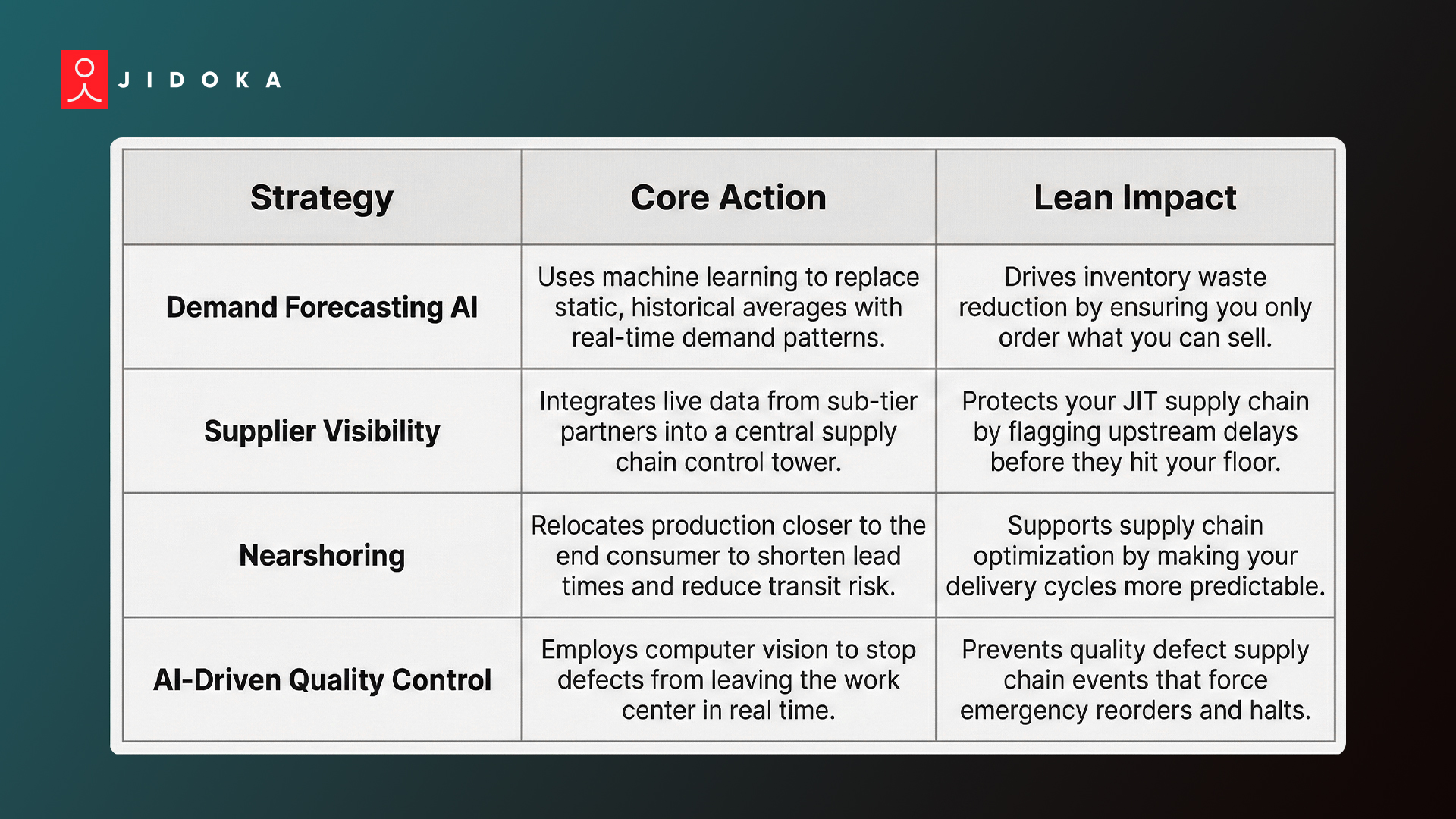
1. AI主導の需要予測:予測誤差をデータで置き換える
未来を予測するのは困難ですが、需要予測AIがそれを容易にします。誤差を最大50%削減することで、過剰在庫を抱えることなくジャストインタイム(JIT)のサプライチェーンを維持できます。必要な部品を、必要なタイミングで確実に確保しましょう。
- リーン生産方式におけるAIは、市場トレンドと売上データを分析します。
- 注文データに現れる前の変化をいち早く察知します。
- 過剰発注を防ぐことで、 在庫廃棄の削減 といった課題を回避できます。
2. サプライヤーのリアルタイム可視化:一次サプライヤーを超えた先へ
見えないものは改善できません。サプライヤーの可視化により、ネットワークの深部まで把握が可能になります。多くの問題は2次、3次サプライヤーで発生するため、生産を守るためのサプライチェーン最適化にはこのデータが不可欠です。
- コントロールタワーを活用すれば、リスクを早期に発見し、高い投資対効果(ROI)が得られます。
- 遅延が発生する前に察知し、 生産計画への影響を防ぎます。
- 大規模な安全在庫を抱えることなく、計画を柔軟に調整できます。
3. ニアショアリングとサプライヤーの多角化によるリーンなリスク管理
サプライチェーンは短いほど安全です。ニアショアリングはリードタイムを短縮し、 バリューストリームマッピング における長距離輸送の無駄を省くのに役立ちます。調達先の多角化は、無駄を排除する製造業において重要な要素です。
- ジャストインタイム生産方式 は、サプライヤーが近隣にある場合に最も効果を発揮します。
- マルチソーシング(複数調達)により、単一のトラブルによる工場停止を防ぐことができます。
- エージェント型AIが、港湾閉鎖時の再注文やルート変更を自動的に処理します。
こうしたサプライチェーン最適化の取り組みは強固な基盤を築き、資材を計画通りに到着させることを可能にします。しかし、どれほど配送が完璧でも、届いた部品が破損していては意味がありません。
これらのサプライチェーン最適化戦略を活用すれば、生産を止めることなく継続できます。各戦術は特定の無駄を排除し、リーン生産方式におけるサプライチェーンのパフォーマンスを向上させます。
品質不良がリーンサプライチェーン最適化を阻害する理由
品質の低さはサプライチェーン最適化を台無しにします。部品が破損していては、リーン生産方式のサプライチェーンを維持することはできません。高速ラインで収益性を維持するには、完璧な入力が不可欠です。
1. 不良品がバリューストリーム全体に「リーンではない無駄」を生む仕組み
不良品は予期せぬ再起動を強いるため、在庫の無駄を削減する取り組みを妨げます。例えば、自動車メーカーが欠陥のあるセンサーのバッチを受け取った場合、組立ラインは即座に停止してしまいます。
これにより緊急の再注文や航空便による特急輸送が発生し、全面的なダウンタイムを防ぐための混乱が生じます。こうした事態はJIT(ジャストインタイム)サプライチェーンのあらゆる原則に反し、組立工程で不良が発生した時点で、無駄を排除する製造の目的は達成できなくなります。
2. 品質管理機能を超えた、サプライチェーン機能としての検査
検査はフロー制御ツールとして扱うべきです。これはサプライチェーン最適化戦略の一部です。初期段階で不良品を検知することは、配送スケジュールの保護につながります。
- 品質不良とサプライチェーン データは、プロセスのズレを即座に修正するのに役立ちます。
- AIを活用した品質管理は、リアルタイムの初回合格率統計を提供し、より精度の高い計画立案を可能にします。
- サプライチェーン最適化では、このデータを使用して、無駄が蓄積される前に生産レベルを調整します。
発生源で不良を食い止めることで、ジャストインタイム生産を軌道に乗せることができます。これにより、隠れたコストを発生させることなく、サプライチェーン最適化の目標を達成できます。
Jidoka Techが製造現場におけるリーンサプライチェーン最適化を支援する方法
Jidoka Tech は、プレッシャーのかかる環境下でも機能する、リーン生産方式向けのAIソリューションを構築しています。当社のチームはハードウェアとソフトウェアを最適に連携させ、ジャストインタイム生産を停滞させません。
当社のシステムは 毎分12,000個以上の部品を処理します、すべてのシフトを通じてサプライチェーンの最適化を維持します。
1. KOMPASS (高精度検査システム): このAI搭載の検査システムは、 99.8%以上の精度を実現します。反射性の金属やテクスチャのある部品にも対応し、 70%少ないサンプル数で新しいバリエーションを学習します。
2. NAGARE (工程分析システム): このツールは、 100% の組み立て工程を追跡します。部品の欠落をリアルタイムで検知し、手直しを 最大35%削減します。
このインライン検査AIシステムはローカルのエッジユニットで動作するため、遅延が発生しません。 Jidoka Techに問い合わせる KOMPASSとNAGAREが、貴社のリーン生産方式におけるサプライチェーンの流れをどのように最適化できるか、ぜひご確認ください。
結論
サプライチェーンの最適化は、工場の収益性を維持するために不可欠です。多くの管理者が、在庫の無駄の削減や、突然のJIT(ジャスト・イン・タイム)サプライチェーンの寸断に頭を悩ませています。こうした課題を放置すれば、リーン生産方式のサプライチェーンは崩壊しかねません。
たった一つの欠陥の見落としが数日間の生産停止を招き、キャッシュフローを悪化させ、顧客からの信頼を失墜させる恐れがあります。競合他社がより優れたサプライチェーン最適化戦略を採用する中で、取り残されるリスクがあるのです。
Jidoka Tech は、貴社の生産フローを安定させます。当社のインテリジェントな検査ソリューションと自動欠陥検出システムは、エラーが流出する前に確実に捕捉します。強固なサプライチェーン最適化により、無駄を排除する製造目標を確実に達成できます。
Jidoka TechのAI検査ツールが、 欠陥による無駄を排除し、リーン生産フローをどのように守るかをご覧ください。
よくある質問
1. リーン生産方式におけるサプライチェーン最適化とは何ですか?
サプライチェーンの最適化とは、あらゆる工程を調整して無駄を排除することです。リーン生産方式のサプライチェーンを維持するには、需要予測AIなどの具体的な最適化戦略が不可欠です。これにより、生産スケジュールと実際の顧客需要、およびサプライヤーの可視性を同期させ、無駄のない製造を実現します。
2. AIはリーン生産を行うメーカーのサプライチェーン最適化をどのように改善しますか?
リーン生産におけるAIは、サプライヤーの可視性を高め、強力な需要予測AIを提供することでサプライチェーンの最適化を促進します。これらのツールは、予測誤差を減らすことでJITサプライチェーンを支えます。これにより、ジャスト・イン・タイムの製造フローを円滑かつ確実に保ちながら、在庫の無駄を効果的に削減できます。
3. なぜ欠陥がリーンサプライチェーンのパフォーマンスを脅かすのですか?
品質欠陥によるサプライチェーンの問題は、現場全体に甚大な無駄を生じさせます。こうしたエラーはバリューストリームマッピングを乱し、高コストな緊急発注を余儀なくさせます。現代のサプライチェーン最適化は、このリスクを解消します。不具合がジャスト・イン・タイムの製造フローを止める前に検知することで、無駄を排除する製造目標を維持できるのです。
4. リーンサプライチェーンの最適化において、サプライヤーの可視性はどのような役割を果たしますか?
サプライヤーの可視性は、現代のサプライチェーン最適化戦略の中核です。これにより、生産スケジュールに影響が出る前に、遅延に関する早期警告を得ることができます。このデータがなければ、リーン生産方式のサプライチェーンは高いリスクにさらされ、現場でのジャスト・イン・タイムの取り組みが台無しになってしまいます。
5. 2026年、メーカーはどのようにしてJIT原則とサプライチェーンのレジリエンスを両立させていますか?
現代のチームは、サプライチェーンの最適化を活用してスピードと安全性のバランスをとっています。需要予測AIとニアショアリングを組み合わせることで、JITサプライチェーンをショックから守っています。こうした最適化戦略により、工場全体の停止や破綻のリスクを冒すことなく、真の在庫削減を実現しています。
6. インライン検査はサプライチェーンの最適化にどのように貢献しますか?
インラインツールは、不良品が製造ラインから流出するのを防ぐことで、サプライチェーンの最適化を保護します。これにより、品質不良に伴うサプライチェーンコストを低く抑えることができます。エラーを未然に防ぐことは、バリューストリームマッピングを支え、ジャストインタイム生産方式のフローを常に安定させ、無駄のない、収益性の高い製造体制を実現します。