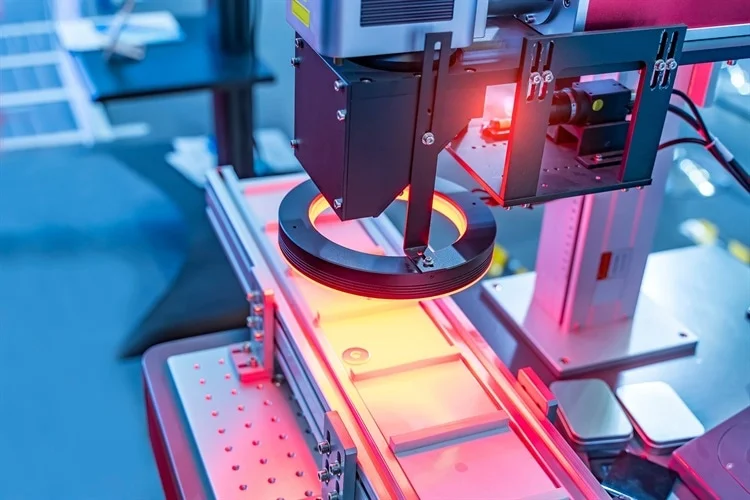
Hybrid 2D Vision and 3D Laser Inspection Systems for High-Speed Manufacturing Quality Control

Jidoka delivers Vision AI for quality inspection, partnering with industry leaders to build hybrid 2D 3D systems that perform under production pressure.

Defect detection
By
Sekar Udayamurthy, CEO of Jidoka Tech
|
February 26, 2026

Quality inspection in modern manufacturing demands both speed and precision to handle high-volume lines, complex geometries, and zero-defect standards. Traditional 2D vision systems excel at surface checks, but they miss depth-related issues like warping and volumetric defects. Combining 2D vision with 3D laser technology creates hybrid inspection systems that deliver comprehensive analysis, reducing false positives and enabling real-time quality assurance.​

Limitations of Standalone 2D Vision Systems

2D vision systems have long been the backbone of automated inspection, capturing flat images to detect surface defects, color inconsistencies, and shape deviations. They work well for identifying scratches, dents, stains, missing labels, or print errors using high-speed cameras from leaders like Omron and Basler.

However, 2D cameras operate in a single plane, limiting their ability to spot subtle 3D issues. Common blind spots include:

  • Warping, bowing, or uneven surfaces that appear flat in 2D
  • Height variations, steps, or gaps invisible without depth data
  • Dimensional inaccuracies and volumetric defects beyond surface level

As manufacturing tolerances tighten to microns and line speeds exceed 1,000 parts per minute, these gaps lead to escapes, rework, and costly recalls.​

Power of 3D Laser Inspection Technology

3D laser scanning addresses these limitations by capturing spatial data through laser triangulation or structured light, generating point clouds or depth maps. This reveals the full geometry of parts, enabling precise measurements of:​

  • Height, depth, flatness, and profile against master references
  • Volume, thickness, and deformation in real time
  • Surface irregularities like dents or protrusions missed by 2D

Sensors like LMI Technologies' Gocator series excel here, offering inline profiling for sheet metal, rubber, and continuous materials with onboard processing for high-speed accuracy. Jidoka integrates such 3D capabilities into its Kompass platform for production-grade performance.​

Benefits of Hybrid 2D + 3D Inspection Systems

Hybrid systems fuse 2D image data with 3D depth maps for multi-layered validation, leveraging the strengths of both technologies. 2D handles fast surface anomaly detection (e.g., color, texture, presence), while 3D maps geometry for volumetric and dimensional checks.​

Key advantages include:

Comparison of 2D Alone, 3D Alone, and Hybrid 2D + 3D Inspection
Aspect 2D Alone 3D Alone Hybrid 2D + 3D
Defect Detection Surface only Geometry only Surface plus depth
False Positive Rate Higher on 3D issues Higher on surface 30–40 percent reduction
Line Speed Capability High (pixels) Medium (point clouds) High (fused data)
Inspection Coverage Flat view Profile or depth Multi perspective

This synergy boosts overall accuracy to 99%+ at speeds up to 12,000 parts per minute, minimizes manual intervention, and supports data-driven process optimization.

Real-World Applications in Automotive and Electronics

In automotive and electronics, where minor defects trigger recalls, hybrid inspection shines. Examples include:

  • Machined parts: 2D checks surface finish; 3D verifies flatness and warp
  • Connectors/PCBs: 2D spots misalignment; 3D measures pin height and solder volume
  • Bearings/seals: 2D detects cosmetic flaws; 3D ensures dimensional integrity

Integrated systems flag irregularities in real time, comply with standards, and streamline workflows for faster cycles.​

Jidoka's Hybrid Inspection Solutions with Trusted Partners

Jidoka Technologies delivers turnkey Vision AI for quality inspection, partnering with industry leaders to build hybrid 2D 3D systems that perform under production pressure. Their Kompass platform serves as the intelligent AI layer that fuses and interprets 2D camera data with 3D laser point clouds, delivering sub-10ms decisions with 98%+ accuracy.

2D Vision Partnerships: Omron and Basler

Jidoka integrates Omron FH Series controllers for multi-camera 2D setups with PLC/robot compatibility, and Basler cameras for flexible, high-resolution imaging. These enable rapid surface checks in high-mix environments.

3D Laser Expertise: LMI Technologies

Working with LMI's Gocator sensors, Jidoka achieves micron-level 3D profiling for inline flatness, volume, and shape verification, ideal for challenging surfaces like metals or textures.​ Kompass fuses and interprets 2D/3D data with edge AI for sub-10ms decisions, adapting to variants without retraining.

Future of Quality Assurance in Manufacturing

Adopting hybrid 2D vision and 3D laser inspection is essential for competitive manufacturing, cutting defects, and delivering reliable products. Jidoka's partnerships with Omron, Basler, and LMI position it to lead this shift toward smarter, more precise quality control.

Conclusion

相談会開催中

品質と生産性を最大化するビジョン検査システムに関する相談会を実施中です。ぜひこの機会にお試しください。

お問い合わせ